
Or leading the U.S. SEC, will Teresa become a crypto-friendly Crypto sword-bearer?
TechFlow Selected TechFlow Selected
Or leading the U.S. SEC, will Teresa become a crypto-friendly Crypto sword-bearer?
Will Teresa, with her expertise in both traditional finance and extensive experience in crypto law, bring crypto into a perpetual era?
 Navigating Web3 tides with focused insights
By: Web3 Farmer Frank

On November 21, a news item was posted on the U.S. SEC’s official website—cheers erupted across the crypto world.
Gary Gensler may not have expected that his legacy would be defined both by crypto and undone by it. Though his term wasn’t set to expire until 2026, he chose to step down on the very day Biden resigned and Trump took office.
History will judge Gensler’s tenure at the SEC. But beyond pressure from lawmakers and institutions, a key factor behind his early departure was the so-called “Crypto President” Trump, who had publicly vowed to fire Gensler upon taking office and appoint Teresa Goody Guillén—a blockchain-friendly legal expert—as the new SEC Chair.
So who exactly is Teresa Goody Guillén? Why has she won Trump’s favor? And if she takes the helm of the SEC, what changes might she bring to the crypto industry?
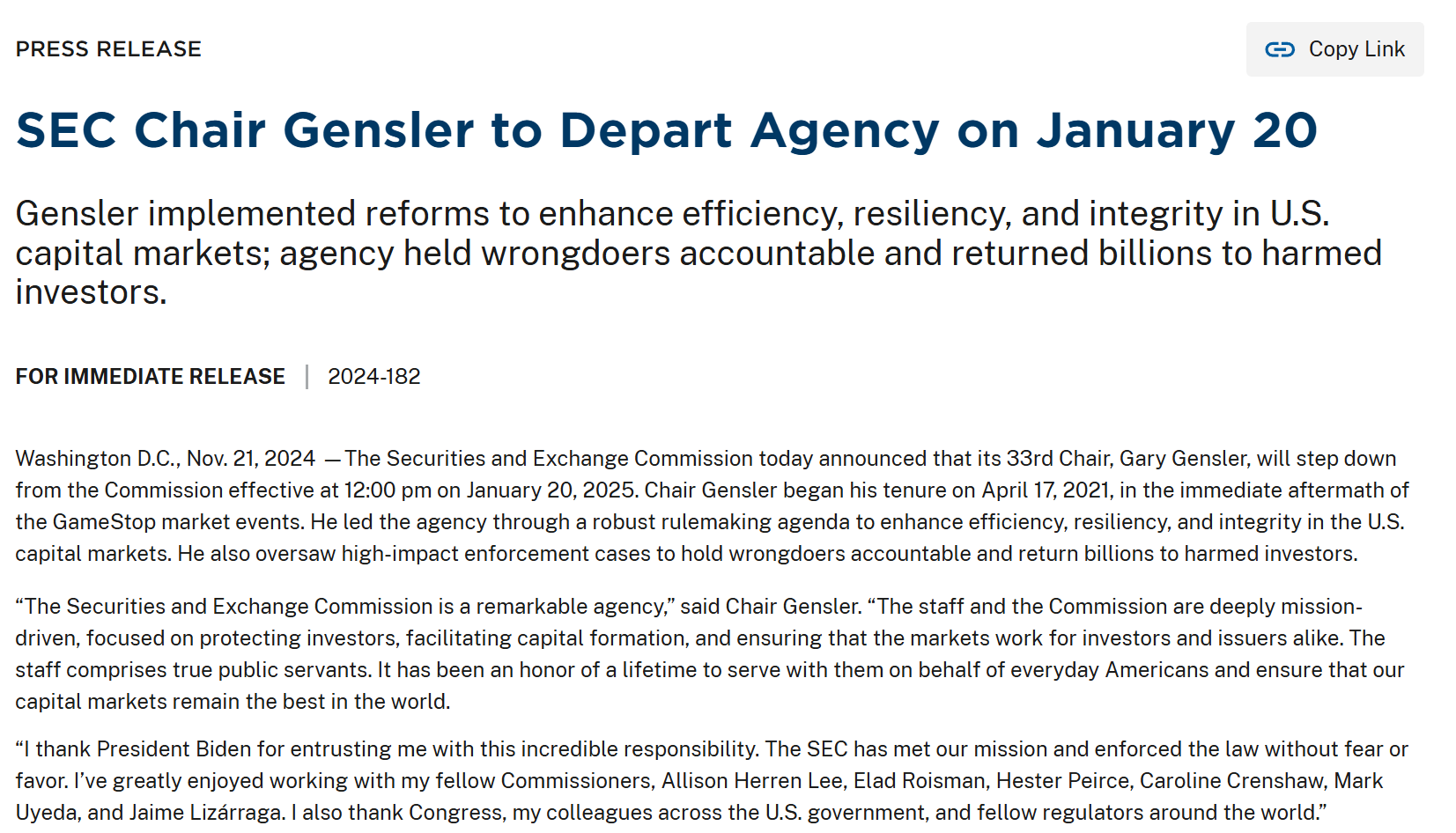
Image source: SEC Official Website
A Regulatory Revolution at the U.S. SEC in the 'Trump Era'
Since April 17, 2021, under Gary Gensler's leadership, the U.S. SEC has become synonymous with the "stick" in the crypto industry, leading nearly every major enforcement action in recent years:
From large-scale lawsuits against major exchanges like Binance and Coinbase, to its hardline stance on classifying most digital assets as securities, in just three and a half years, the SEC has carried out over 2,700 enforcement actions and collected more than $21 billion in penalties from the crypto sector.
Despite once being a MIT professor who taught blockchain technology, Gensler’s aggressive regulatory approach has stirred repeated storms in the crypto markets. The initial optimism the industry had for his appointment quickly faded, opinions polarized, and he became one of the most controversial figures in crypto.
In the 2024 U.S. presidential election, Trump emerged as a beacon of hope for the crypto community. He repeatedly criticized Gensler’s crypto policies, even declaring in public speeches that if elected, he would remove Gensler from office on Day One.
Central to Trump’s reform agenda is finding an SEC Chair who understands both traditional finance and the crypto industry. It is precisely for this reason that Teresa Goody Guillén, with her unique cross-sector experience and broad industry support, has gradually emerged as a top candidate: a seasoned securities law expert with deep roots in traditional finance, yet maintaining close ties with blockchain firms and possessing a profound understanding of how the crypto ecosystem operates.
Who Is Teresa, the Potential New Head of the U.S. SEC?
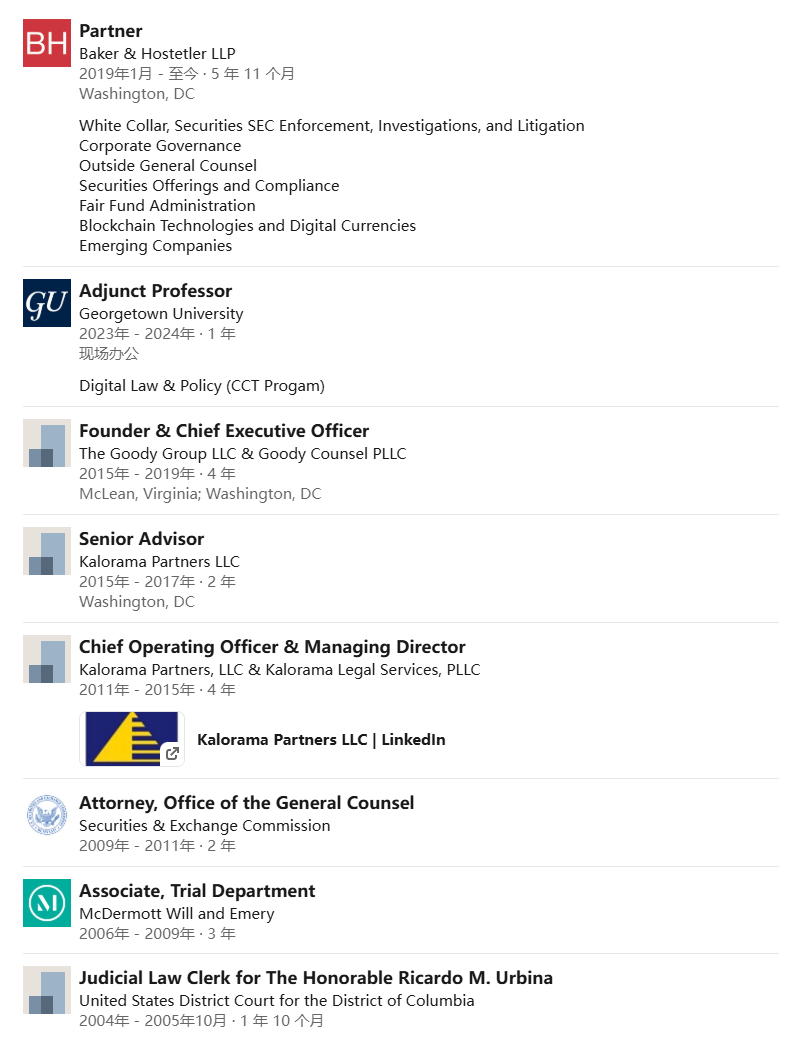
Public records show that Teresa Goody Guillén is currently a partner and co-leader of the blockchain team at BakerHostetler law firm. She joined in January 2019, leading legal initiatives involving blockchain technology and digital assets, accumulating extensive practical experience in areas including NFTs, DAOs, and DeFi.
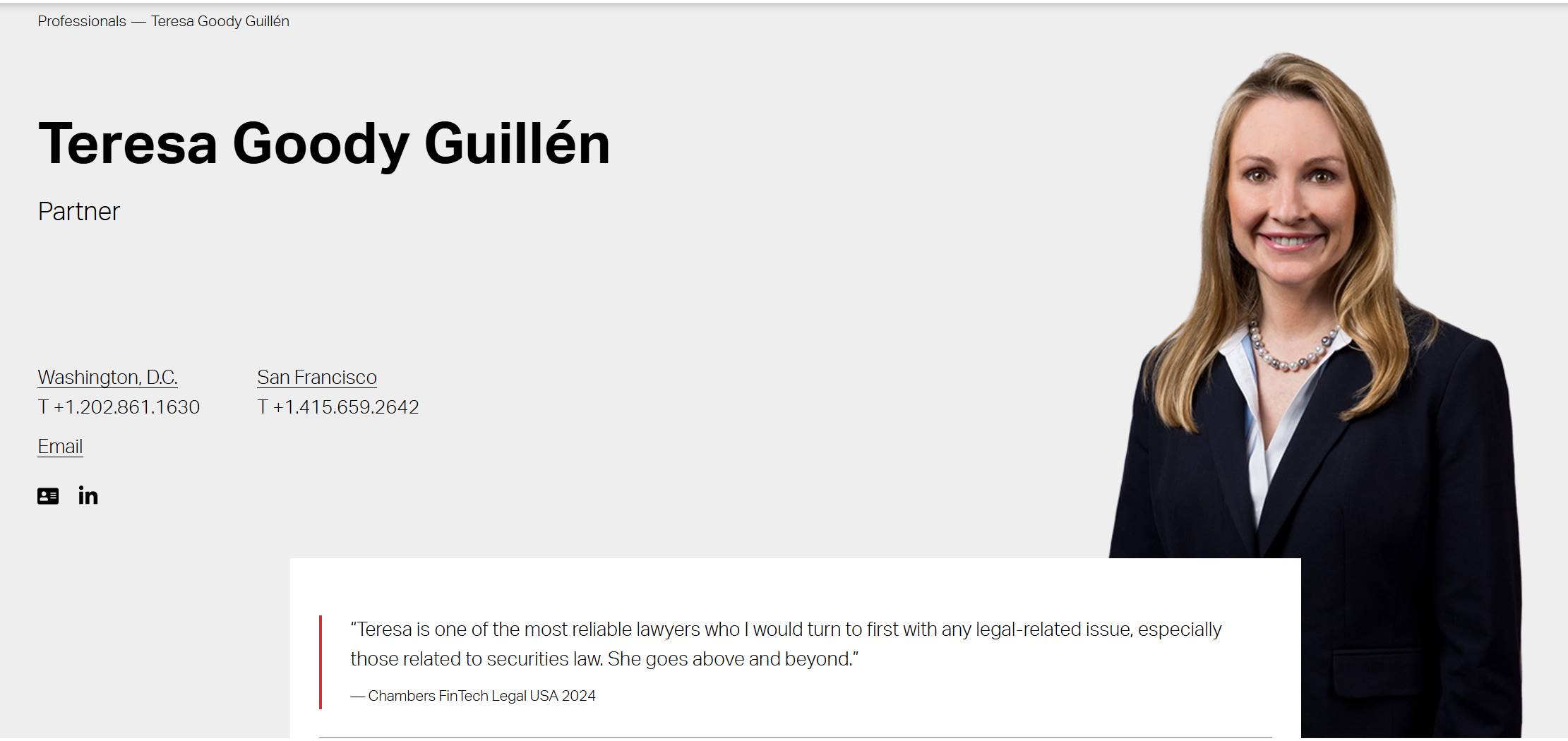
Image source: BakerHostetler Official Website
Prior to this, Teresa served as litigation counsel in the Office of the General Counsel at the U.S. SEC, and held senior roles at Kalorama Partners—an advisory firm focused on corporate compliance, risk management, and legal strategy—and at The Goody Group LLC and Goody Counsel PLLC, which provide legal and consulting services.
-
2009–2011: Litigation attorney in the Office of the General Counsel at the U.S. Securities and Exchange Commission (SEC), handling complex securities litigation and enforcement matters;
-
2011–2015: Joined Kalorama Partners, founded by former SEC Chair Harvey Pitt, serving as Chief Operating Officer and Managing Director, collaborating with Pitt to advise clients on SEC enforcement cases;
-
2015–2019: Co-founded The Goody Group LLC & Goody Counsel PLLC, serving as CEO;
This highlights Teresa’s uniquely interdisciplinary career path: her time at the SEC provided her with a solid foundation in traditional securities law, while her active engagement in the blockchain space makes her a rare professional at the intersection of law and technology. Her academic teaching experience further strengthens her authority in this hybrid domain.
Notably, BakerHostetler has handled several high-profile blockchain-related cases in recent years and provided legal advisory services to numerous Web3 projects. Teresa’s team specializes in helping startups navigate complex regulatory challenges—designing compliance strategies, responding to regulatory inquiries, and defending clients in litigation.
It is reported that her team has collaborated with prominent blockchain projects such as Masa, a decentralized "AI data chain," supporting the integration of innovative Web3 technologies within legal frameworks.
Teresa herself has long been seen as a symbol of friendliness toward the crypto industry. She has repeatedly stated that the U.S. should adopt a more open approach when crafting crypto regulations, offering a supportive framework for technological innovation rather than relying on the current "enforcement-over-regulation" model—an outlook that has earned her widespread support from the Web3 community.
Will the U.S. SEC Enter an Era of Full-Speed Crypto Embrace?
All current signs suggest that Teresa’s emergence as a leading candidate for SEC Chair reflects not only her personal qualifications aligning perfectly with the needs of a "Trump-era" SEC, but also the market’s strong anticipation of a policy shift in crypto regulation:
She is widely viewed as the ideal candidate—one who deeply understands traditional financial rules while also championing Web3 innovation. If she succeeds Gary Gensler, the SEC could embark on an entirely different trajectory, injecting fresh momentum into America’s crypto industry.
One of the biggest hurdles facing the U.S. crypto sector today is regulatory uncertainty. On May 22, the House of Representatives passed the FIT21 Act (Financial Innovation and Technology for the 21st Century Act) by an overwhelming margin of 279 to 136 votes. A key provision of the bill is clarifying regulatory jurisdiction, designating two agencies—the CFTC and the SEC—to oversee digital assets.
Teresa has repeatedly advocated for establishing a new classification system for digital assets, arguing that they should no longer be fully subject to the traditional Howey Test. She believes the Howey Test should not determine the future of an entire industry or technology. If realized, this vision would undoubtedly provide the industry with clear, actionable rules, significantly reducing uncertainty, attracting more institutional capital into crypto, and accelerating the institutionalization of digital assets.
Brendan Playford, co-founder of Masa, commented: "Teresa is the change agent the SEC desperately needs. She champions light-touch regulation, believes the Howey Test shouldn't dictate the fate of industries or technologies, and will end the era of 'regulation by enforcement.' By uniting key stakeholders from Wall Street and the crypto world, she can help establish clear market structures that allow the crypto industry to thrive in the United States. As a lawyer who has challenged the current SEC policies in Washington D.C. and defended innovators' rights, her qualifications go far beyond what’s required—let’s ‘Make the SEC Goody Again!’"
Conclusion
If Teresa Goody Guillén is appointed, it would mark an unprecedented policy shift for the U.S. SEC—potentially ending the current paradigm of "enforcement over regulation" and revitalizing American crypto competitiveness through light-touch oversight and clear market rules.
As a legal expert fluent in both traditional finance and blockchain technology, her collaborative experience with blockchain projects like Masa suggests that the crypto industry could gain a more direct and pragmatic channel of communication with the SEC. Serving as a "bridge between technology and regulation," Teresa would be better equipped to understand industry needs and craft regulatory frameworks that balance innovation with compliance.
Yet, alongside these hopes come challenges—can Teresa balance the interests of traditional financial institutions and emerging crypto players? How will she protect investor interests and maintain market stability amid transformation?
The answers to these questions may only emerge once she assumes office.
Join TechFlow official community to stay tuned
Telegram:https://t.me/TechFlowDaily
X (Twitter):https://x.com/TechFlowPost
X (Twitter) EN:https://x.com/BlockFlow_News
 @Farm_Web3