








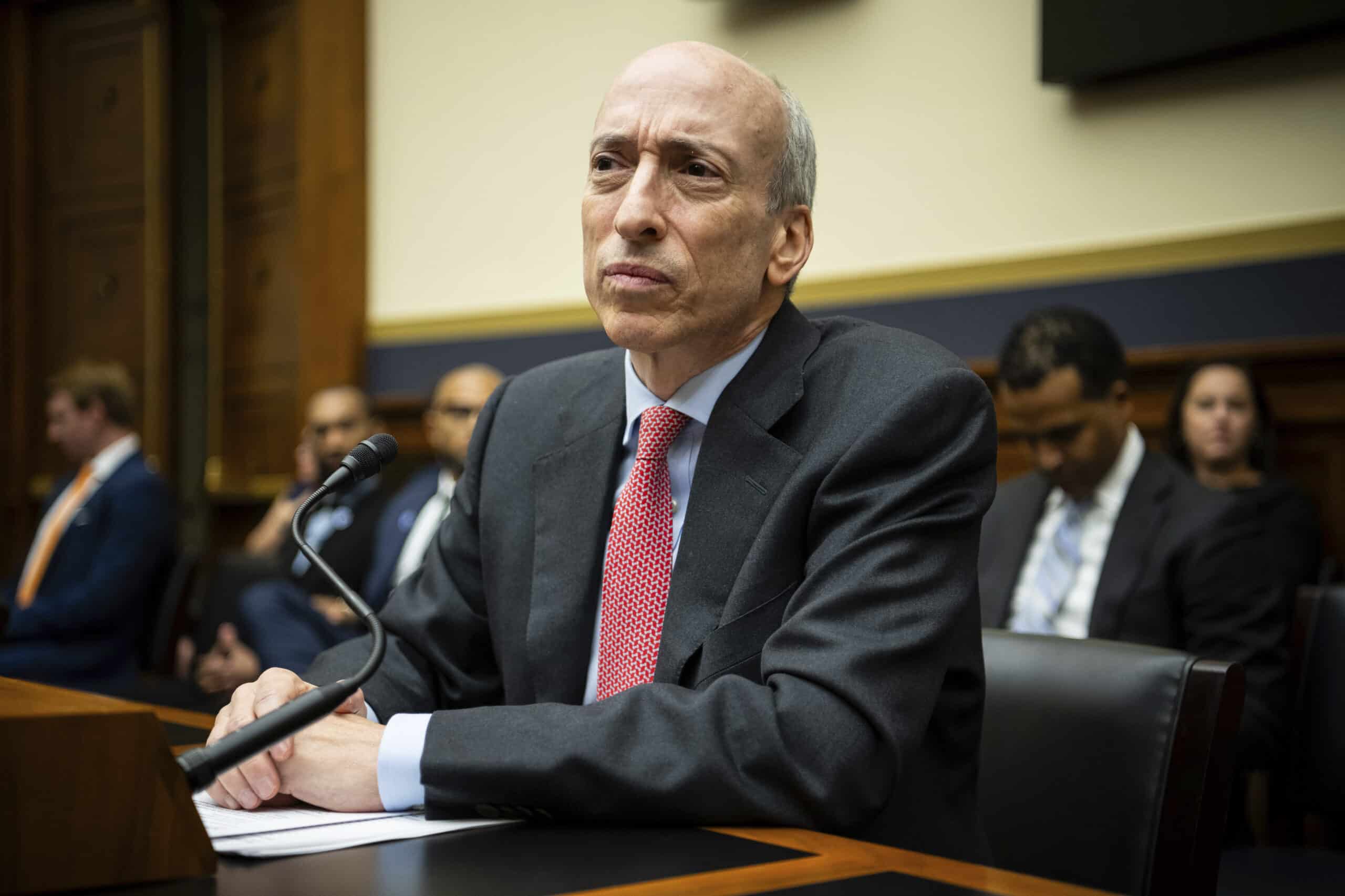
SEC Chair Gensler's Departure "Countdown" — Crypto Industry Sees Light After the Storm
TechFlow Selected TechFlow Selected
SEC Chair Gensler's Departure "Countdown" — Crypto Industry Sees Light After the Storm
Gensler chose to resign voluntarily, and Trump has not yet nominated a successor for the chair position.
 Navigating Web3 tides with focused insights
Article: BitpushNews
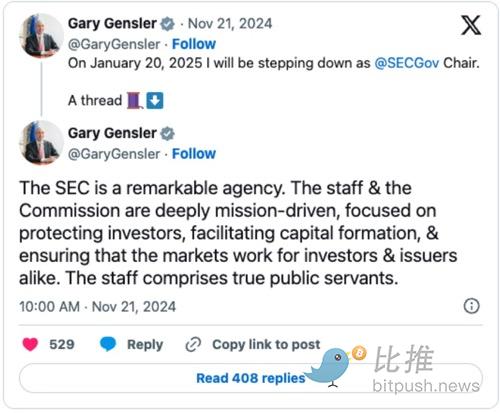
The crypto industry is celebrating—SEC Chair Gary Gensler has set his departure date: January 20, 2025, the same day as Donald Trump's inauguration.
Gensler will not only step down from his role as chair but also resign entirely from the commission. Following this announcement, BTC briefly surged to $99,014.21, with the long-anticipated $100K milestone seemingly within reach.
In his statement, Gensler thanked President Joe Biden and his colleagues, calling the SEC "an extraordinary institution... It has been the honor of a lifetime to serve alongside them on behalf of ordinary Americans and to help ensure our capital markets remain the best in the world."
Shortly after news of Gensler’s departure broke, Ian Katz, Managing Director at Capital Alpha Partners, commented: "The crypto industry got what it wanted—next SEC chair will be friendlier than Gensler."
From Blockchain Professor to Crypto’s Public Enemy No. 1
Graduating from the Wharton School at the University of Pennsylvania, Gary Gensler has deep academic roots in blockchain technology.
Prior to joining the SEC, he served as a professor at MIT’s Sloan School of Management, where he frequently expressed interest in blockchain technology in public forums.
While teaching at MIT, Gensler offered a course titled “Blockchain and Money,” exploring the potential applications of blockchain in finance.
In 2018, he assigned his students at MIT one notable task: read the Bitcoin white paper.
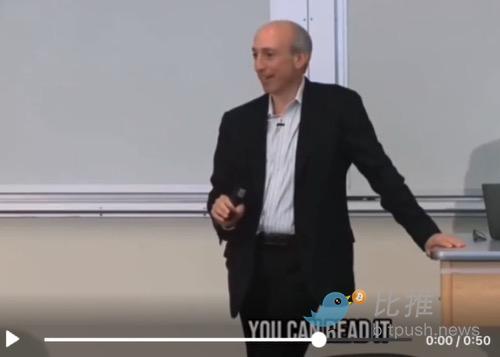
MIT has since released Gensler’s course as an open-access series, available for free viewing on YouTube.

However, after assuming office as Chair of the U.S. Securities and Exchange Commission (SEC) on April 17, 2021, Gensler became widely viewed as the crypto industry’s arch-nemesis.
So where does the industry’s resentment toward Gensler come from?
Gensler repeatedly emphasized that many cryptocurrency projects may be violating securities laws.
After the FTX collapse in 2022, Gensler spearheaded an industry-wide crackdown, filing lawsuits against Binance, Binance.US, Coinbase, Kraken, Shapeshift, and others, accusing these exchanges of operating as unregistered securities brokers and clearing agencies.
In 2023, the SEC intensified its regulatory enforcement in crypto like never before. Data shows the agency initiated 46 enforcement actions that year—an increase of 53% year-on-year—with total penalties reaching $2.89 billion, including $281 million in settlements.
According to the Blockchain Association, which represents nearly 100 industry participants including Grayscale and Paradigm, Gensler oversaw more than 100 lawsuits against the digital asset sector during his tenure. Members collectively spent approximately $429 million on litigation-related expenses.
This hardline approach significantly strained relations between Gensler and the crypto community. Many in the industry argue that the SEC’s regulations are overly stringent and ill-suited for the emerging crypto ecosystem.
Yet Gensler did contribute positively to crypto as well. In January this year, the SEC approved spot Bitcoin exchange-traded funds (ETFs), followed by approvals for Ethereum ETFs. These products allow investors to gain exposure to cryptocurrencies without directly holding them, opening a gateway for broader adoption.
From Gensler’s perspective, he never sought to reject crypto outright; instead, he aimed to bring traditional finance into the space through compliance. After ETF approvals, Wall Street giants such as Goldman Sachs, BlackRock, and Franklin Templeton rushed into the crypto market, accelerating crypto’s integration into mainstream finance.
In an interview, Gensler stated that crypto could benefit economic development—but only under strong regulation. He compared it to the automotive industry, which only became mainstream after traffic signals and speed limits were introduced.
Trump Wins, Gensler’s Successor Remains Uncertain
Trump, who once called Bitcoin a "scam," fully embraced cryptocurrencies during this campaign. He pledged to make the U.S. the "global capital of cryptocurrency," launched his family’s own crypto venture, and promised to fire Gensler on his first day in office.

Gensler chose to resign voluntarily, and Trump has yet to nominate a successor. Potential candidates include former SEC member and private practice attorney Teresa Goody Guillén, Robinhood Chief Legal Officer Dan Gallagher, former Acting Comptroller of the Currency Brian Brooks (who briefly led Binance.US), and former SEC Commissioner / Token Alliance co-chair Paul Atkins.

The new SEC chair may maintain some of Gensler’s regulatory policies or introduce a new framework altogether.
With Gensler stepping down, the commission will consist of two members from each party. Until Republicans gain a majority on the committee, significant policy shifts or enforcement decisions may take longer to materialize.
Major SEC decisions—including dismissals, settlements, and enforcement actions—are not solely determined by the chair. For example, litigation-related decisions require majority approval from the commission, even if closely monitored by the chair’s office. Dismissing existing cases requires a commission vote, and Republicans currently do not hold a majority at the SEC.
According to Tom Krysa, a former SEC enforcement attorney and current partner at Foley & Lardner LLP, matters like case dismissals at the federal appellate level are overseen by the agency’s General Counsel. While the office might seek delays under close coordination with the chair’s office, full withdrawal of appeals requires majority commission approval.
Krysa believes that if Trump appoints Mark Uyeda as acting SEC chair, the political balance of the commission would shift—but not lead to an immediate "180-degree turn." Even as Democratic commissioners near the end of their terms, they still retain influence over policy direction in the short term.
As for how the SEC handles pending cases, changes there could occur more swiftly. A new chair can shape the trajectory of these cases by adjusting internal enforcement strategies.
Trump has pledged to appoint a crypto-friendly SEC chair. How the incoming leadership manages the agency’s ongoing legal battles with crypto firms and projects remains to be seen.
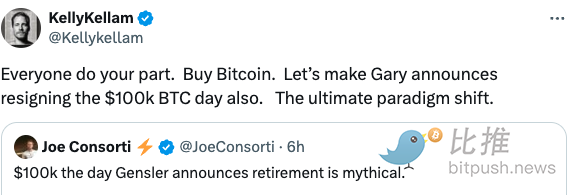
But one thing is certain: the entire crypto world is now waiting for $100K/BTC.
Join TechFlow official community to stay tuned
Telegram:https://t.me/TechFlowDaily
X (Twitter):https://x.com/TechFlowPost
X (Twitter) EN:https://x.com/BlockFlow_News
 比推 BitpushNews






