Kevin Warsh, what is his connection to crypto?
TechFlow Selected TechFlow Selected
Kevin Warsh, what is his connection to crypto?
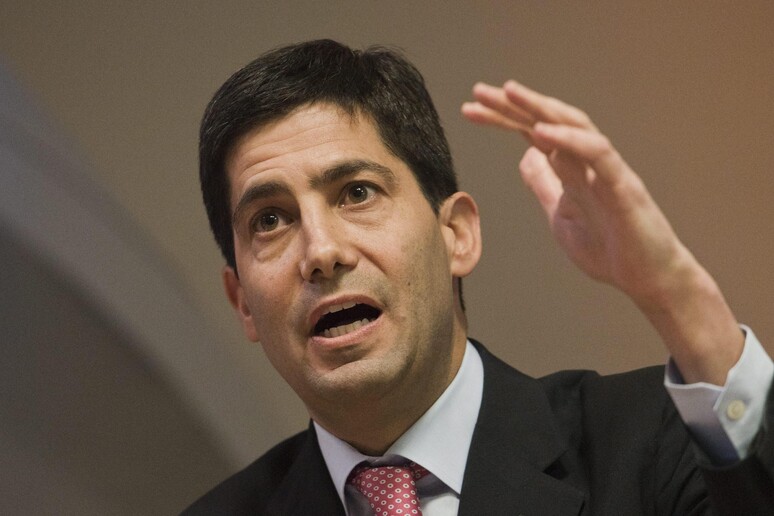
Kevin Warsh, who has been considered by Trump for appointment as Treasury Secretary and could potentially succeed Powell, what is his connection to crypto?
 Navigating Web3 tides with focused insights
By Karen, Foresight News
On November 12, according to the Wall Street Journal citing sources familiar with the matter, U.S. President-elect Donald Trump is considering appointing Kevin Warsh, former Federal Reserve governor, as Treasury Secretary. The report also indicates that after current Fed Chair Jerome Powell’s term ends in 2026, Kevin Warsh could be nominated as the next Fed Chair.
Some insiders say Trump is considering appointing Scott Bessent to lead the White House economic council, and if Warsh becomes Fed Chair, Bessent might later be nominated by Trump for Treasury Secretary during his second term.
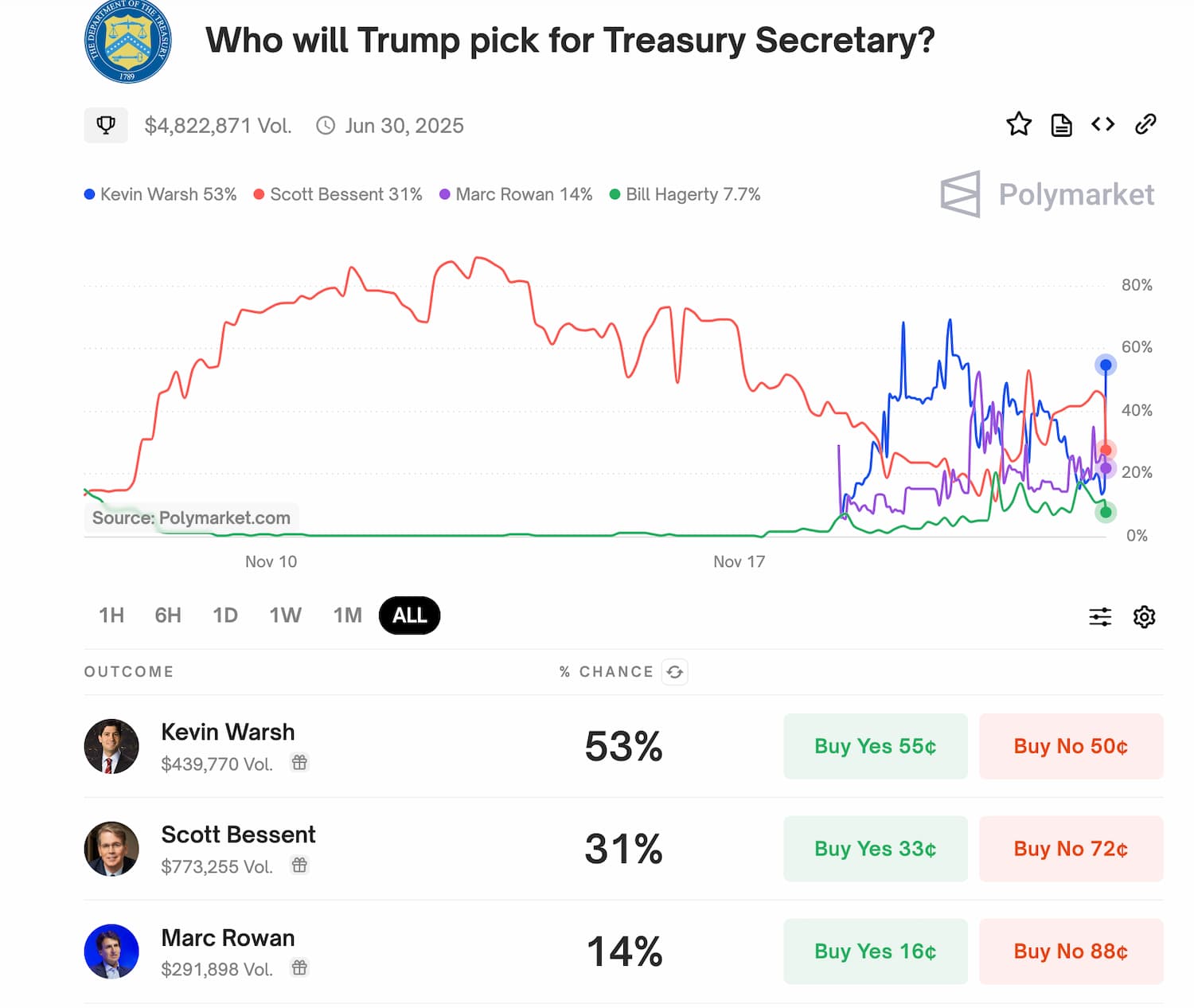
On Polymarket, the prediction market for “Who will Trump choose as Treasury Secretary?” shows Kevin Warsh’s odds rising to 52%, while Scott Bessent stands at 29%.
The Wall Street Journal cited a source saying that during a meeting on Wednesday, Trump also asked Warsh about his past positions on tariffs. Warsh has previously criticized protectionist trade policies. In a 2018 article published in the Wall Street Journal, he argued that Trump’s tariff plans could lead to what he called “economic isolationism,” which would significantly harm the outlook for economic growth.
In fact, Kevin Warsh—previously considered during Trump’s first term as a potential candidate for Fed leadership—is once again emerging as a possible Treasury Secretary nominee and potentially the next Fed Chair succeeding Powell. This move could not only profoundly impact U.S. economic policy but may also trigger ripple effects across financial markets and even the cryptocurrency sector.
Who is Kevin Warsh?
Born in 1970 in Albany, New York, Kevin Warsh studied public policy at Stanford University with a focus on economics and statistics, graduating with honors in 1992. He then attended Harvard Law School, specializing in the intersection of law, economics, and regulatory policy, earning his JD in 1995. Additionally, he completed coursework in market economics and debt capital markets at Harvard Business School and MIT Sloan School of Management.
In 1995, Warsh joined Morgan Stanley's mergers and acquisitions department in New York, serving as a financial advisor for companies across various industries including manufacturing, basic materials, professional services, and technology. He also helped structure capital market transactions and facilitated fixed-income and equity financing.
In February 2002, Warsh left his position as vice president and executive director at Morgan Stanley to join George W. Bush’s administration. He served as Special Assistant to the President for Economic Policy and Executive Secretary of the National Economic Council, advising the president and senior officials on issues related to the U.S. economy, particularly capital market flows, securities, banking, and insurance.
During this time, he was also a member of the President's Working Group on Financial Markets. In 2006, President Bush nominated Warsh to serve as a Federal Reserve Governor—a role he held until 2011. At age 35, he became the youngest-ever member of the Fed Board.
Currently, Warsh is a visiting fellow at Stanford University’s Hoover Institution and a lecturer at its Graduate School of Business.
Notably, according to a 2017 report by Politico, Warsh’s father-in-law, Ronald Lauder, is a longtime friend of Trump and heir to the Estée Lauder cosmetics empire. Trump even collaborated with Estée Lauder in 2004 to launch a cologne called "Donald Trump Fragrance."
What Are Kevin Warsh’s Stances on Economic and Financial Policies?
As noted above, Kevin Warsh is an expert with extensive experience and deep expertise in finance and public policy, having worked across academia, finance, and government. So what are his previous stances on economic and financial policy?
On monetary policy, Warsh has been critical of the Fed’s prolonged use of quantitative easing, warning that such policies could create excessively loose monetary conditions, potentially fueling inflation or asset bubbles. He has also emphasized the importance of maintaining the Fed’s independence from political pressure—contrasting sharply with Trump’s tendency to influence central bank decisions.
On economic growth and trade, Warsh has long advocated for free trade, emphasizing its role as a key connector of the global economy and essential to sustained growth and stability.
Additionally, Warsh supports fiscal discipline and opposes large increases in national debt, arguing that excessive borrowing could undermine long-term U.S. economic growth.
What Is Kevin Warsh’s Connection to Crypto?
Kevin Warsh has expressed caution toward Bitcoin’s volatility and most stablecoins, yet remains open to wholesale central bank digital currencies (CBDCs). As early as 2018, Warsh stated, “If cryptocurrencies and blockchain technologies are truly the future of money, central banks around the world need to engage. If I return to the Fed, I would appoint a team to consider creating Fedcoin.”
In March of the same year, Warsh wrote a commentary in the Wall Street Journal, noting that the extreme price volatility of cryptocurrencies severely undermines their utility as reliable units of account or effective payment instruments. However, he suggested that a new generation of crypto assets may emerge with more genuine monetary properties, better fulfilling Bitcoin’s original purpose.
Warsh has also invested personally in two crypto-related ventures: in 2018, he backed Basis (formerly Basecoin), an algorithmic stablecoin project that has since shut down; and in 2021, he invested in Bitwise, a cryptocurrency index fund manager. Basis had raised $133 million in funding from firms including Bain Capital Ventures, GV, Stanley Druckenmiller, Kevin Warsh, Lightspeed, Foundation Capital, and Andreessen Horowitz. Bitwise’s website currently lists Warsh among its advisors and investors.
In November 2022, Warsh published an essay titled “Money Matters: The US Dollar, Cryptocurrency, and the National Interest,” where he stated: “Cryptocurrencies are not mysterious—they are not money, but software. With the advent of stablecoins, this revolutionary new software begins to resemble money. By improving operational efficiency, a small number of stablecoins may become highly valuable. Yet, most stablecoins will prove worthless. The Federal Reserve should establish a wholesale digital currency, which would enhance America’s economic and geopolitical standing while ensuring volatility does not threaten the dollar’s dominance. Now more than ever, the United States and its allies need sound and stable money to overcome periods of weak output, high inflation, and geopolitical rivalry. A narrow, resilient, and efficient digital dollar backed fully by the full faith and credit of the United States should be a core component of reforms to America’s financial and monetary architecture.”
Summary
The potential appointment of Kevin Warsh could have far-reaching implications—not only for U.S. economic policy but also for financial markets and the crypto industry. Market participants and crypto enthusiasts alike should closely monitor his policy direction and potential regulatory shifts.
If Warsh influences Trump’s trade agenda, it could lead to more open and stable U.S. trade policies, benefiting global trade and economic growth. His appointment may boost investor confidence, though concerns remain about whether his policy views can align with Trump’s broader economic vision.
Join TechFlow official community to stay tuned
Telegram:https://t.me/TechFlowDaily
X (Twitter):https://x.com/TechFlowPost
X (Twitter) EN:https://x.com/BlockFlow_News
 Foresight News