Trump 2.0 Era: What Awaits Us?
TechFlow Selected TechFlow Selected
Trump 2.0 Era: What Awaits Us?
If Trump's verbal support can be successfully implemented, the crypto industry will usher in a regulatory spring and a surge of institutional investment.
 Navigating Web3 tides with focused insights
By BitpushNews
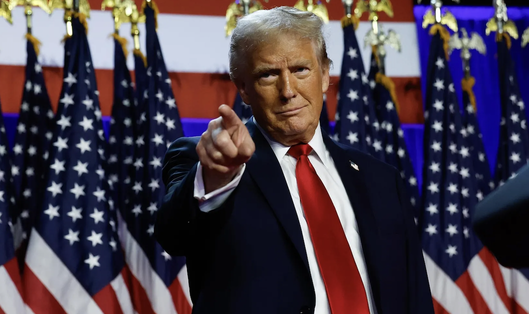
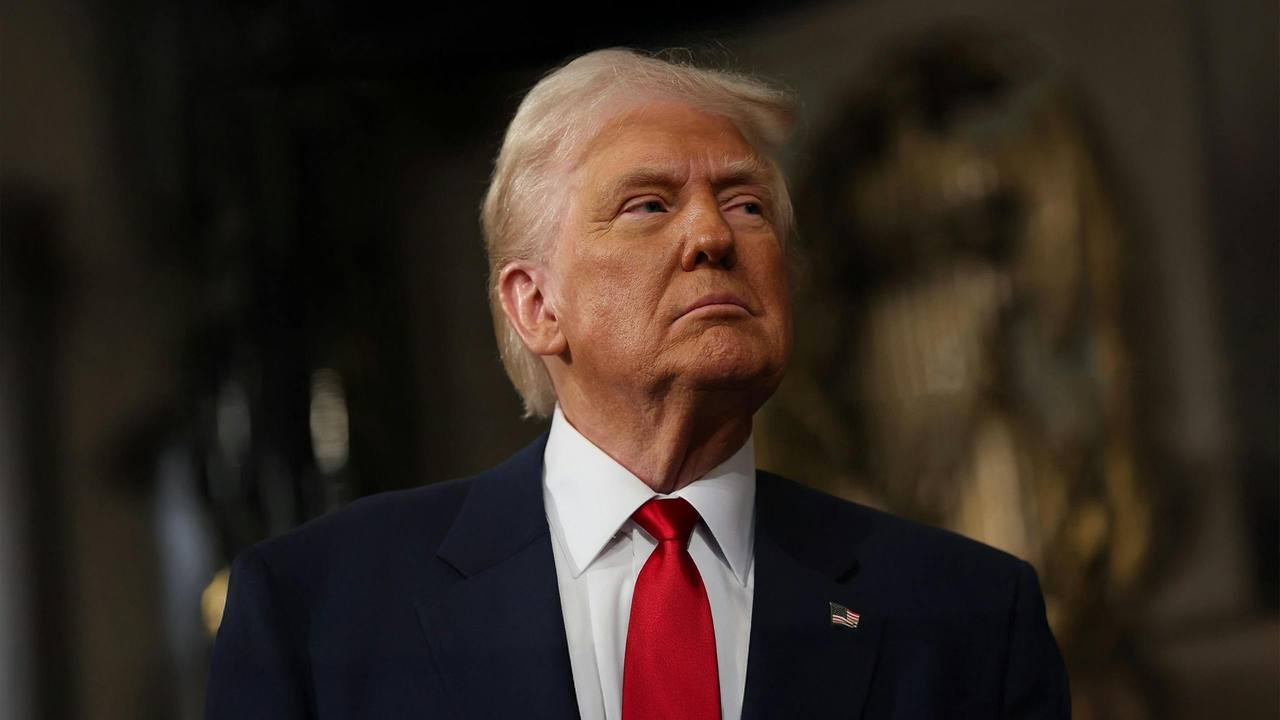
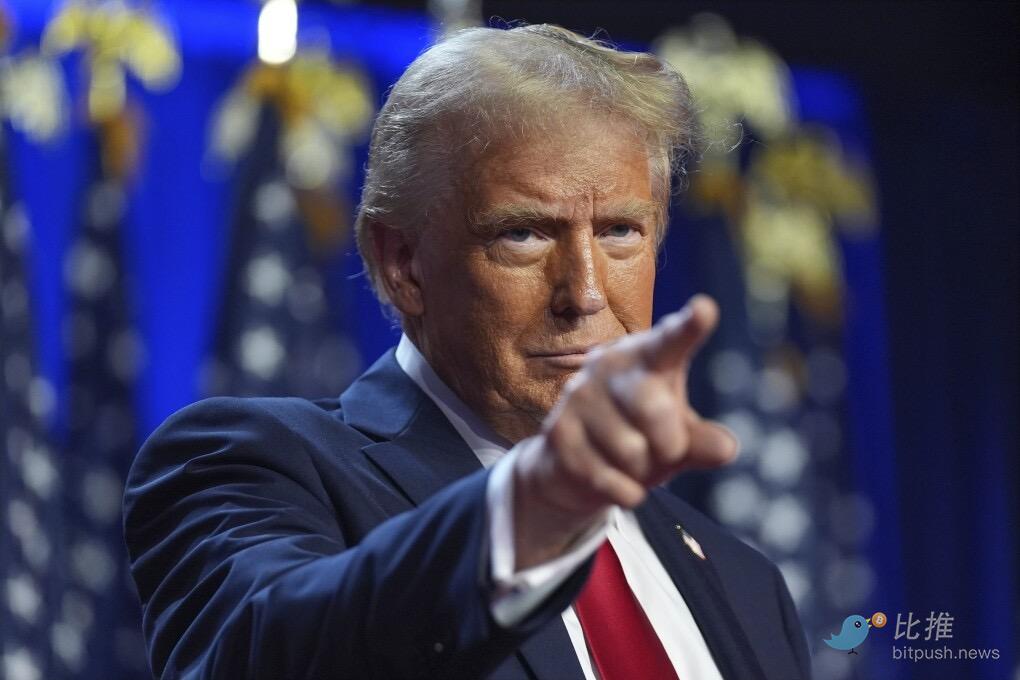
In the early hours of November 6 local time, 78-year-old Donald Trump defeated Democratic candidate Kamala Harris by a landslide, becoming the 47th President of the United States.
Financial markets reacted strongly to the news, with "Trump trades" gaining full momentum. On election day, U.S. major stock indices and Bitcoin hit record highs, cryptocurrency market capitalization surpassed $2.6 trillion, and the U.S. dollar index rose above 105—reaching its highest level in nearly four months.
Historically, regardless of which party occupies the White House, the U.S. stock market tends to rise. Since 1945, Democratic administrations have seen higher average gains. However, Republican control could mean significant shifts in policy direction. This, of course, depends on whether the Republican Party, led by Trump, can secure control of Congress. The Senate has already been secured, and although the final outcome for the House of Representatives remains undetermined, Republicans hold a clear advantage. Polymarket data indicates a 99% probability that Republicans will win control of the House.

Trump’s overwhelming victory comes at a pivotal moment in U.S. politics and the global economy. The next four years will be filled with uncertainty and challenges, bringing profound and complex impacts across industries.
"The Golden Age of Crypto"
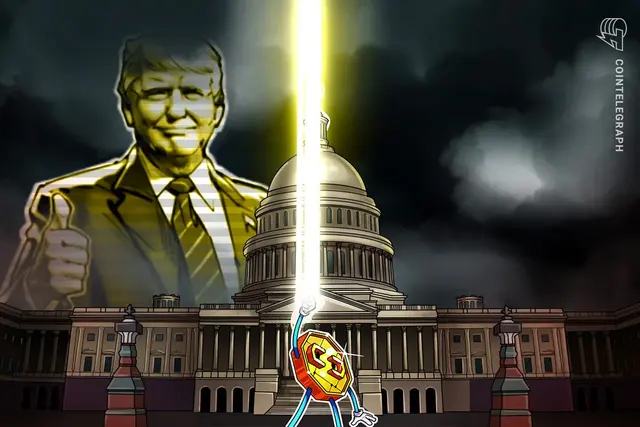
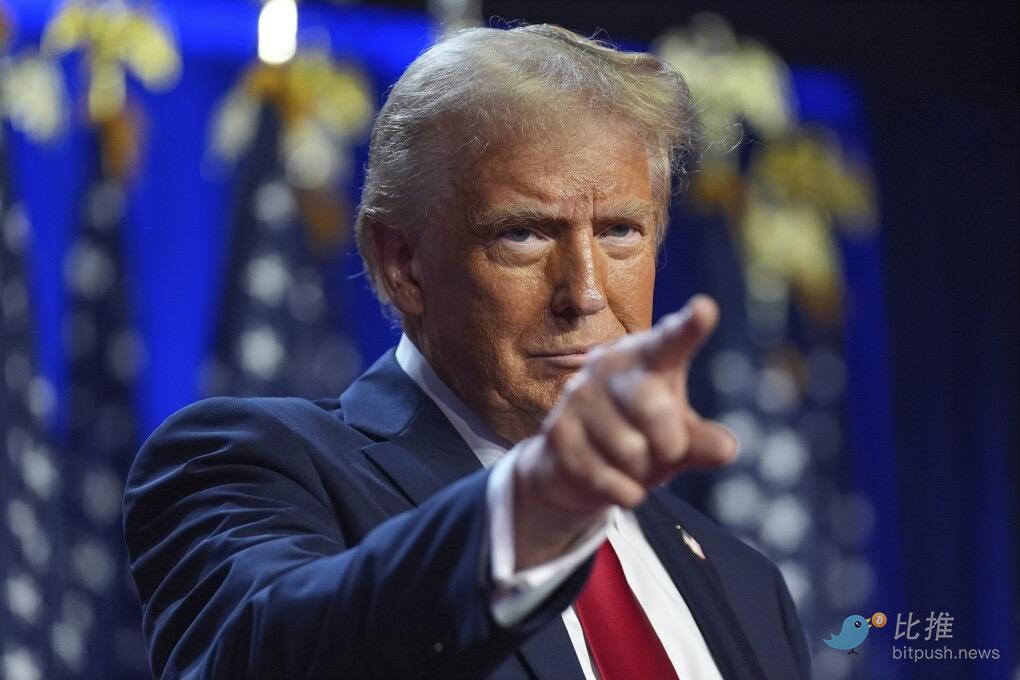
On the positive side, major figures in the crypto industry haven’t bet their money in vain. Trump has pledged to make the U.S. the "global capital of cryptocurrency" and promised never to sell any Bitcoin currently or prospectively held by the government.
Trump has positioned himself as a pro-crypto candidate, vowing to end what he calls the industry's "persecution" and ensure the U.S. enacts more crypto-friendly legislation.
Kris Marszalek, CEO of Crypto.com, said: "The future of cryptocurrency has never looked brighter."
Matthew Hougan, Chief Investment Officer at Bitwise, stated in a memo on November 6 that Donald Trump’s victory in the U.S. presidential election would catalyze a "golden age for cryptocurrency," as the new administration is expected to improve the regulatory environment.
Over the past four years, the crypto industry has operated under tight constraints. Given Trump’s consistently friendly stance toward the sector during his campaign, the incoming administration is expected to offer strong support—such as replacing the SEC leadership and ending Operation Chokepoint 2.0.
If these verbal commitments materialize, the crypto industry could experience a regulatory spring and an influx of institutional investment. The sector would become more standardized, innovation would flourish, and cryptocurrencies could truly integrate into the global financial system.
Tariff Butterfly Effect: Global Supply Chain Earthquake
Trump has stated that if re-elected, he would significantly raise tariffs on foreign goods imported into the U.S.—including a proposed 20% tariff on all foreign goods, 60% on Chinese imports, and even up to 200% on certain imported vehicles.
High tariffs would directly reduce import volumes. Some economists warn that Trump’s protectionist trade proposals could send shockwaves through economies worldwide, including those of the Eurozone and the UK.
Ahmet Kaya, chief economist at the UK’s National Institute of Economic and Social Research (NIESR), said the UK could be “one of the most severely affected countries” under such plans, with projected GDP growth slowing from 1.2% to 0.4% by 2025.
UK Chancellor Rachel Jane Reeves said the UK would “strongly convey” the necessity of free and open global trade to Trump. She added: “The U.S. also benefits from free and open trade with us and with the rest of the world. This openness creates a win-win situation.”
Tariffs are a key tool of protectionism. While they may bring short-term benefits, in the long run, they often backfire. If Trump attempts to stimulate the U.S. economy through protectionism, not only will low-income countries find it harder to use export-driven growth, but American consumers will likely bear the brunt of increased costs.
Worsening Inflation 'Chronic Illness'
The Democratic Party’s defeat reflects long-simmering public resentment. Soaring prices and housing costs in recent years, along with shrinking wallets and savings, have left middle- and low-income voters dissatisfied. Voters have increasingly lost trust in government officials, so-called liberal elites, and left-leaning media—a major factor undermining the Democrats. Trump’s promise to “make America affordable again” became one of his winning cards.

However, investors are betting that Trump’s tax-cut and tariff-hike plans will push inflation higher and delay interest rate cuts.
Andrzej Skiba, Head of U.S. Fixed Income at BlueBay Asset Management, part of RBC Wealth Management, said: “If Trump imposes a 10% tariff on all global trading partners, that’s a big deal—it could push inflation up by 1%. If inflation rises by 1% next year, we might say goodbye to rate cuts.”
Peter Esho, founder of Esho Capital, said: “The market is trying to figure out what comes next, but right now, it’s pricing in higher growth and higher inflation expectations.”
A major reason behind the continued record highs in U.S. stocks this year has been expectations of upcoming Federal Reserve rate cuts, as inflation moves closer to the 2% target. CME FedWatch data shows the Fed will announce its latest interest rate decision on Thursday. Markets still expect a rate cut, but traders have already reduced their expectations for the number of cuts by mid-next year.
"Mass Deportation of Undocumented Immigrants"
In recent years, American society has grown increasingly divided, and the deportation of undocumented immigrants has become a frequent talking point among populists. They argue that undocumented immigrants take jobs from locals, increase crime rates, and burden public resources—successfully shifting public attention away from deeper issues like economic inequality and social injustice, redirecting blame toward vulnerable groups.
Such deportation policies could further deepen societal divisions and intensify tensions between different ethnic groups and social classes.
Trump has promised that one of his first actions upon taking office will be the mass deportation of millions of undocumented immigrants—though this is no easy task. While the president holds specific powers over immigration, large-scale deportations face significant operational challenges.
Organizations such as the American Immigration Council estimate that implementing Trump’s deportation plan would cost billions of dollars. If industries like construction, hospitality, and agriculture lose large numbers of workers, the economic impact could be substantial. Additionally, there are resource constraints—U.S. Immigration and Customs Enforcement (ICE) must decide how to allocate its limited resources.
In short, whether Trump can usher in a “MAGA 2.0” era remains to be seen. Time will tell.
Join TechFlow official community to stay tuned
Telegram:https://t.me/TechFlowDaily
X (Twitter):https://x.com/TechFlowPost
X (Twitter) EN:https://x.com/BlockFlow_News
 比推 BitpushNews