Payment Giants Bet on Stablecoins: What Are the Common Misconceptions?
TechFlow Selected TechFlow Selected
Payment Giants Bet on Stablecoins: What Are the Common Misconceptions?
Stablecoins offer an opportunity to rapidly modernize the financial services system and transform the industry leadership landscape.
 Navigating Web3 tides with focused insights
Author: Christian Catalini
Translation: TechFlow

Stripe Inc. headquarters in South San Francisco, California, on Tuesday, April 16, 2024.
Stripe's recent acquisition of Bridge, a stablecoin orchestration startup, has sent shockwaves through the crypto world. It marks the first time a major payments company has committed over a billion dollars to advance this technology. While not Stripe’s first foray into crypto, the timing is notably different now—market enthusiasm for stablecoins is at an all-time high, and Bridge co-founder Zach Abrams successfully positioned his company as the “Stripe of crypto,” capturing the attention of the Collison brothers.
What many may have missed is that while Bridge was worth $1.1 billion to Stripe, it likely wasn’t worth that much on its own. This isn’t due to any lack of talent—Zach and his team brought together some of the best engineers—but because making money in the stablecoin space is extremely difficult. Whether it’s issuance, orchestration (i.e., converting between different stablecoins), or integration with traditional banking systems, achieving sustainable profitability remains a significant challenge.
Why is that? After all, Circle and Tether have reaped handsome profits amid rising interest rates over the past two years, and with growing market anticipation around Circle’s potential IPO, it seems the stage is set for further growth and consolidation.
The reality, however, is that network effects in the stablecoin market may be far weaker than expected—and it’s not a winner-take-all game. In fact, stablecoins might just be loss-leading customer acquisition tools, or even loss-making ventures without complementary assets. While industry insiders often assume liquidity will naturally consolidate around only a few dominant players, the truth is more complex.
What are the common misconceptions about stablecoins? Let’s dive deeper.

Paolo Ardoino, CEO of Tether Holdings Ltd.
Photographer: Nathan Laine/Bloomberg © 2023 Bloomberg Finance LP
1. Stablecoins need a complementary business model
When designing Libra, we realized that for stablecoins to succeed, they must rely on a complementary business model. The Libra ecosystem was built around a nonprofit association bringing together wallets, merchants, and digital platforms to support stablecoin issuance and payment networks.
Relying solely on reserve interest to profit from stablecoins is unsustainable. We recognized this early when planning to issue stablecoins backed by low-interest currencies like the euro—or even negative-rate ones like the yen. Companies like Circle and Tether appear to overlook the fact that today’s high-interest environment is a temporary anomaly, and a sustainable business model cannot be built on something so volatile.

Of course, stablecoins can generate revenue not just from "stock" (holdings) but also from "flow" (transactions). Circle recently increased redemption fees, signaling they’re beginning to recognize this. But such practices violate a core principle in payments: seamless entry and exit of funds are essential for building user trust and loyalty. While exit fees may be acceptable in gaming, in mainstream payments they undermine fundamental expectations around financial freedom. Transaction fees could become a viable revenue stream, but implementing them on blockchains is challenging without tightly controlled protocols—and even then, intra-wallet transactions can’t be charged. These were scenarios we deeply explored during the Libra project, highlighting the complexity and uncertainty of the nonprofit association model.
So what options do stablecoin issuers have? Unless they depend on temporary regulatory arbitrage—unlikely to last long (more on this in the next section)—they must begin competing directly with their own customers.
Circle’s recent moves—including launching programmable wallets, cross-chain protocols, and the Mint program—clearly signal its strategic direction. But this news isn’t welcome for many close partners. In platform strategy, this dynamic is familiar: never let a partner stand between you and your customers. Yet many exchanges and payment firms made this mistake by embedding Circle into their ecosystems. To survive, Circle must transform into a payments company—even if that means encroaching on allies’ turf. This pattern isn't new—consider Amazon vs. third-party sellers, travel platforms vs. hotel chains, or Facebook vs. publishers. When platforms succeed, they often internalize functions once outsourced to partners and monetize what works. Developers in Apple’s and Google’s ecosystems know this all too well.
Stripe faces no such dilemma. As one of the world’s most successful payment companies, it already knows how to build and monetize lean software layers atop global money flows—a model that scales efficiently via network effects without relying on country-specific banking licenses. Stablecoins accelerate this process by bridging Stripe with domestic banks and payment networks, helping overcome the last-mile problem and delivering greater value to merchants and consumers beyond traditional institutions like card networks.
This is why PayPal launched its own stablecoin, and other fintech giants like Revolut and Robinhood are following suit. Unlike before, they’re now competing on open protocols, adjusting their stablecoin strategies to strengthen core businesses. In doing so, they’ll make stablecoins extremely cheap and convenient for consumers and enterprises alike.

On Tuesday, September 26, 2023, paper Argentine pesos equivalent to 1,000 U.S. dollars were arranged in Buenos Aires, Argentina
© 2023 Bloomberg Finance LP
2. Dollarization is not a product
The crypto space once severely underestimated how regulation would shape its future. We experienced this firsthand when releasing the first version of the Libra whitepaper, which triggered two grueling years of regulatory dialogue to align the project with policymakers’ and regulators’ expectations.
Today’s stablecoins face similar challenges. Many believe stablecoins can seamlessly offer consumers and businesses low-cost global dollar accounts. After all, during crises, people worldwide want to hold dollars in a “too big to fail” U.S. institution. Some might assume the U.S. government would support this trend, as it reinforces the dollar’s role as the world’s reserve currency.
But reality is far more complicated. Even though the U.S. stands to lose significantly if it loses its financial and sanctions infrastructure as the global standard—especially if the dollar’s “exorbitant privilege” erodes like previous reserve currencies—that doesn’t mean the Treasury Department will always back accelerated dollarization. In fact, its Office of International Affairs may view it as a major challenge to diplomacy and global financial stability.
Countries that value monetary policy independence, fear capital flight during crises, or worry about domestic banking stability will strongly resist widespread adoption of frictionless dollar stablecoin accounts. They’ll use every tool available to block or limit access, just as they’ve resisted other forms of dollarization. While outright bans on crypto transactions may be impractical—as internet history shows—governments still have multiple ways to restrict access and suppress mainstream adoption.
Does this mean stablecoins are doomed in emerging economies with capital controls or concerns about capital flight? Not at all—the rise of domestically regulated stablecoins aligned with local banking frameworks is inevitable. Though the dollar has dominated the stablecoin market, this could change quickly. In Europe, with the implementation of the Markets in Crypto-Assets (MiCA) regulation, banks, fintechs, and startups are racing to issue euro-denominated stablecoins. This approach helps preserve the stability of local banking systems and will grow increasingly important across Latin America, Africa, and Asia.
Clear regulation also allows banks to compete on a level playing field—an advantage not yet available in the U.S. Beyond issuing fully backed stablecoins, banks can issue deposit tokens, leveraging money creation to boost profits. This puts pure stablecoin issuers—without banking licenses, discount windows, or government deposit insurance—at a clear competitive disadvantage.
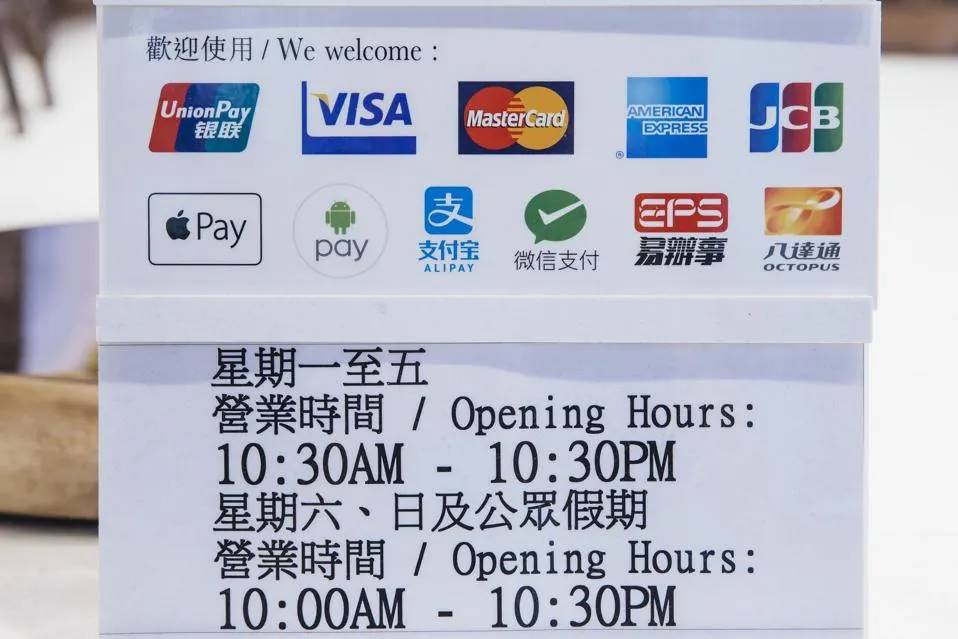
Icons for various payment services displayed in Hong Kong, China
Photographer: Anthony ... [+] © 2016 Bloomberg Finance LP
3. There won’t be a single stablecoin winner
Issuers can certainly build network effects around their stablecoin’s global liquidity and availability, but as decentralized exchange (DEX) protocols know, liquidity is easy to gain—and easy to lose. Similarly, brand and scale advantages may help capture market share, but these don’t always translate into truly sustainable competitive moats.
The truth is, the very feature that defines stablecoins—their peg to currencies like the dollar or euro—is also their greatest weakness. Right now, these assets are seen as distinct entities, but once regulations standardize safety across the board, individuals and businesses will treat them as interchangeable dollars or euros. Legally, there are differences—as shown during the Silicon Valley Bank run—but most people don’t care whether their dollars sit at Bank of America or JPMorgan Chase. That’s the magic of the dollar as money, powered behind the scenes by the Federal Reserve.
Stablecoins will go through a similar evolution. While dozens may exist in each major market, users will ultimately ignore the complexity. Once that happens, the economics of stablecoins will favor companies with complementary business models or those controlling the interface between stablecoins and their underlying assets—such as bank deposits, U.S. Treasuries, or money market funds.
This is bad news for pure-play stablecoin issuers like Circle, whose access to the banking system depends on firms like BlackRock and BNY Mellon. These financial giants could become direct competitors. For instance, BlackRock already runs the world’s largest tokenized U.S. Treasury and repo fund (BUIDL).
A common myth in the history of technological disruption is that incumbents usually manage to fend off challengers. Even Clayton Christensen’s classic case of disruptive innovation—the rise of small-disk-drive makers in the hard drive industry—isn’t entirely accurate: Seagate not only survived the disruption but remains the world’s largest manufacturer today. In highly regulated industries like financial services, new entrants face even steeper barriers.

Tech companies with banking licenses, such as Revolut, Monzo, and Nubank, are already well-positioned, and others may rush to obtain licenses to gain similar advantages. Meanwhile, many participants in the stablecoin space will struggle to compete with traditional banks and may face acquisition or failure. Banks and credit card companies will resist a market dominated by just a few stablecoins, instead favoring a fragmented landscape of interoperable, interchangeable issuers. When this happens, liquidity and availability will be driven by existing consumer and merchant distribution channels—precisely where neobanks and payment firms like Stripe and Adyen excel.
Fully backed stablecoins like USDC and USDT will need to find high-frequency use cases—such as cross-border remittances—to maintain their position, or attract a decentralized finance (DeFi) ecosystem capable of introducing transparent fractionalization to support their narrow-banking model. Meanwhile, deposit tokens or tokenized funds issued by banks will see broader adoption due to stronger economic foundations, especially among consumers and institutions. Institutional users are already accustomed to managing diversified assets like money market funds and are highly sensitive to opportunity costs. In this arena, competition over stablecoin yield-sharing is already underway.
In every region, both banks and crypto firms will strive to become key gateways into local markets. But they must carefully consider how stablecoins lower the barrier for foreign competitors by connecting local payment systems with blockchain networks. After all, the core commercial shift is that these systems will operate on open protocols.

Agustin Carstens, General Manager of the Bank for International Settlements
Vernon Yuen/NurPhoto via Getty Images
So what does all this mean?
The outlook is bright for leading payment companies, fintech firms, and neobanks. They can leverage stablecoins to streamline operations and accelerate global expansion. It also creates new opportunities for domestic stablecoin issuers to elevate their roles and prepare for global payment interoperability—a domain where stablecoins may succeed where the BIS vision of an “internet of finance” has struggled.
Leading crypto exchanges will also use stablecoins to aggressively enter consumer and merchant payments, becoming strong competitors to top fintech and payment providers.
While questions remain about how anti-money laundering and compliance controls will scale with stablecoin adoption, there’s no doubt they offer a powerful opportunity to rapidly modernize financial services and reshape industry leadership.
Join TechFlow official community to stay tuned
Telegram:https://t.me/TechFlowDaily
X (Twitter):https://x.com/TechFlowPost
X (Twitter) EN:https://x.com/BlockFlow_News
 Forbes