









Institutional ETH Staking Survey Report: New Technology Adoption, Liquidity Needs, and Risk Management Emerge as Key Trends
TechFlow Selected TechFlow Selected
Institutional ETH Staking Survey Report: New Technology Adoption, Liquidity Needs, and Risk Management Emerge as Key Trends
Approximately 60.6% of respondents use third-party staking platforms, and they tend to prefer large, integrated platforms.
 Navigating Web3 tides with focused insights
Authors: Tricia Lin & Daniel Shapiro
Translation: TechFlow

Key Takeaways
-
The survey shows that a majority of respondents (69.2%) are currently staking Ethereum (ETH), with 78.8% being investment firms or asset managers. This indicates institutional participation in ETH staking has reached significant scale, primarily driven by yield generation and contributions to network security.
-
About 60.6% of respondents use third-party staking platforms, showing a preference for large, integrated platforms. These services address challenges such as low capital efficiency and technical complexity associated with solo staking.
-
Liquid Staking Tokens (LSTs) are gaining popularity due to their ability to enhance capital efficiency, keep staked ETH liquid, and enable participation in decentralized finance (DeFi) strategies. 52.6% of respondents hold LSTs, and 75.7% are willing to stake ETH via decentralized protocols.
-
Distributed Validators (DVs) are increasingly favored among institutional participants due to improved security and fault tolerance. Over 61% of respondents expressed willingness to pay a premium for the enhanced security benefits offered by DVs.
Introduction
As the cryptocurrency industry evolves, staking has become a key mechanism for institutional investors to earn yield and strengthen network security. However, institutions still face a complex landscape when it comes to staking.
This research report presents a comprehensive analysis of institutional token holders’ staking behaviors, with a focus on the Ethereum ecosystem. Our primary objective is to uncover the current state of institutional staking and explore market participants’ motivations and challenges. By gathering survey data from various types of institutional stakers—including exchanges, custodians, investment firms, asset managers, wallet providers, and banks—we aim to deliver valuable insights into the markets for distributed and multi-validator models, helping both new entrants and established players better understand the complexities of this rapidly evolving space.
The survey included 58 questions covering ETH staking, Liquid Staking Tokens (LSTs), and related topics. We used a mix of question formats, including multiple choice, Likert scales, and open-ended questions, allowing respondents to skip certain questions. Key findings include:
-
A majority of respondents (69.2%) are currently staking ETH.
-
Most respondents are institutional participants:
-
78.8% are investment firms or asset management companies
-
Among these firms, approximately 75% focus specifically on crypto asset investments
-
-
9.1% are custodians
-
9.1% are exchanges or wallet providers
-
12.1% are blockchain networks or protocols
-
4.2% are market makers or trading firms
-
0.8% fall into other categories
-
-
Respondents demonstrate broad knowledge of staking economics and generally report high self-awareness regarding staking concepts and associated risks.
-
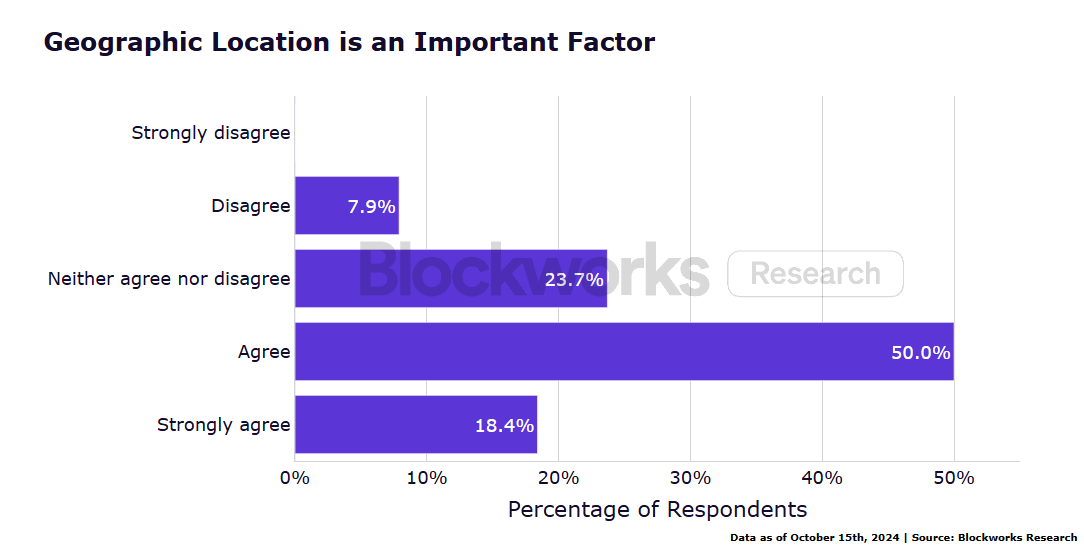
Geographic diversity of respondents and node operators: Although specific locations were not disclosed, many emphasized the importance of geographic distribution among node operators.
Current State of ETH Staking
Since Ethereum’s transition to proof-of-stake (PoS)—an event known as The Merge—the ETH staking environment has undergone significant changes. Notably, both the number of validators and the total amount of staked ETH have continued to grow. Currently, there are nearly 1.1 million validators on the network, securing approximately 34.8 million ETH.
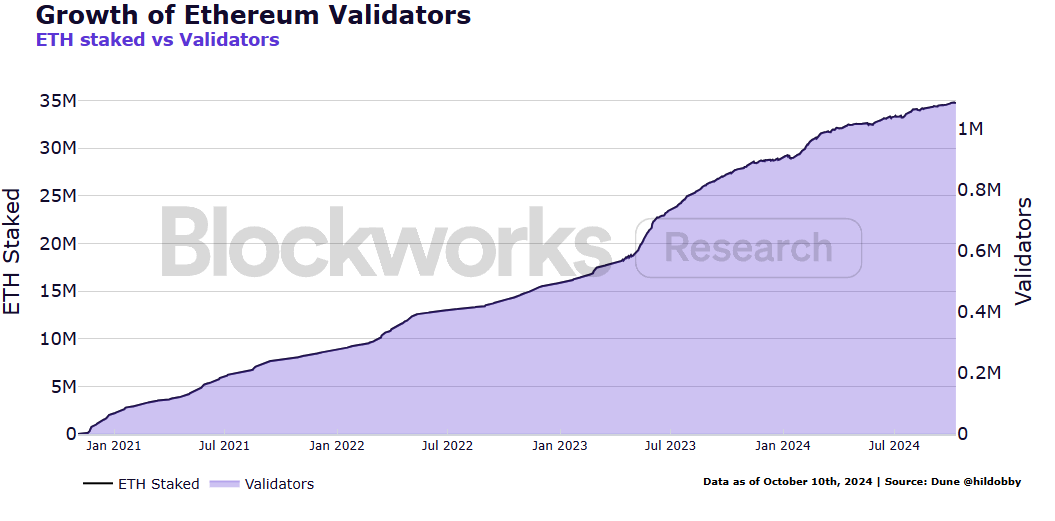
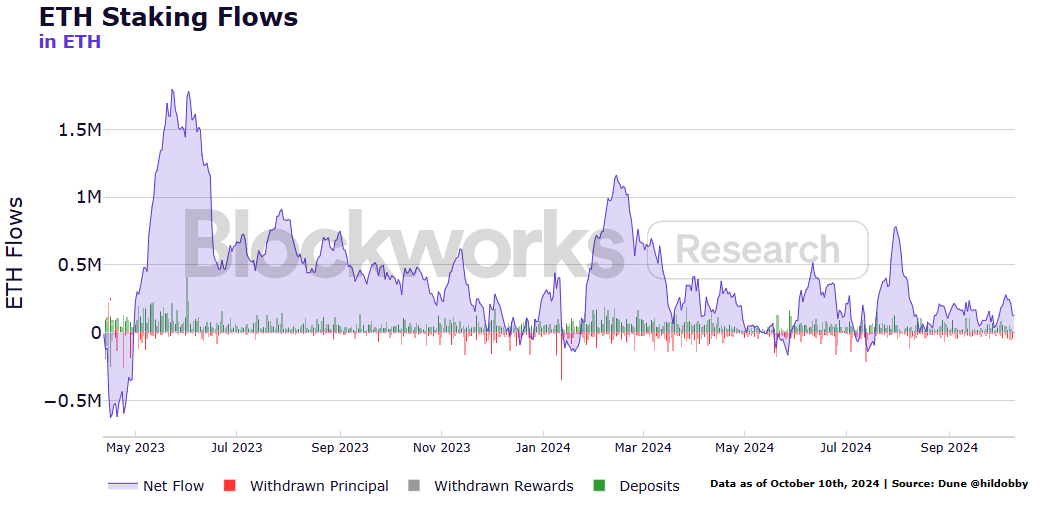
Following The Merge, early ETH staking was locked in place to ensure a smooth transition to PoS. Network participants could not withdraw their staked ETH until after the Shanghai and Capella upgrades (collectively known as Shapella) in April 2023. After a brief initial withdrawal period, the network has seen sustained net inflows of staked ETH, indicating strong ongoing demand for staking.
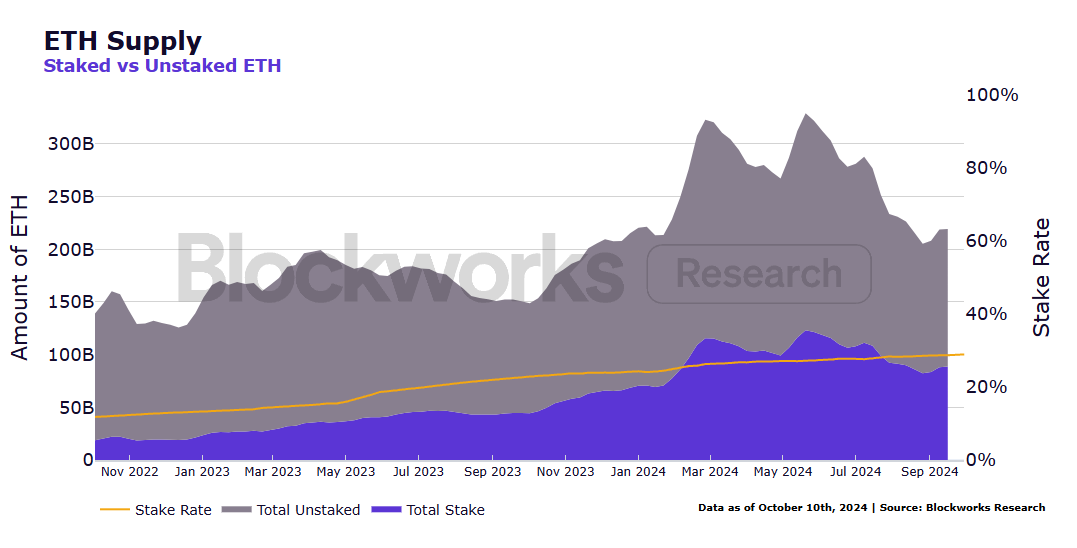
To date, 28.9% of the total ETH supply has been staked, forming a robust staking ecosystem valued at over $115 billion. This makes Ethereum the most heavily staked network in dollar terms, while still holding substantial room for growth.
The staking ecosystem continues to expand as users seek rewards from participating in network validation. The annualized issuance yield is dynamic and decreases as more ETH is staked—a concept outlined in the early whitepaper "The Internet Bond" by Collin Myers and Mara Schmiedt, CEOs of Obol and Alluvial.
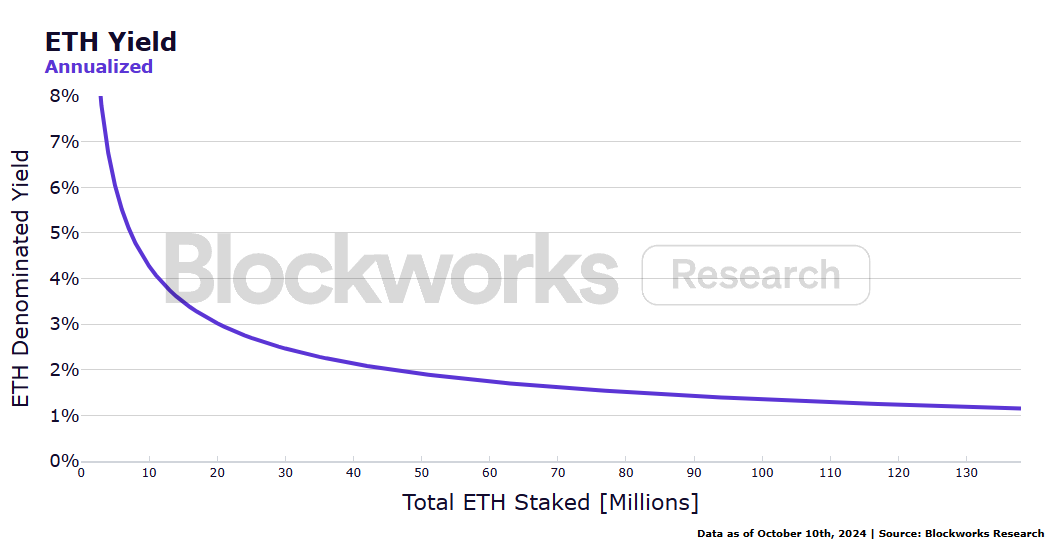
Rewards from staking typically hover around 3%, but validators can also earn additional income through priority transaction fees, which increase during periods of high network activity.
To earn these rewards, one can either stake ETH as an individual validator or delegate ETH to a third-party staking service provider.
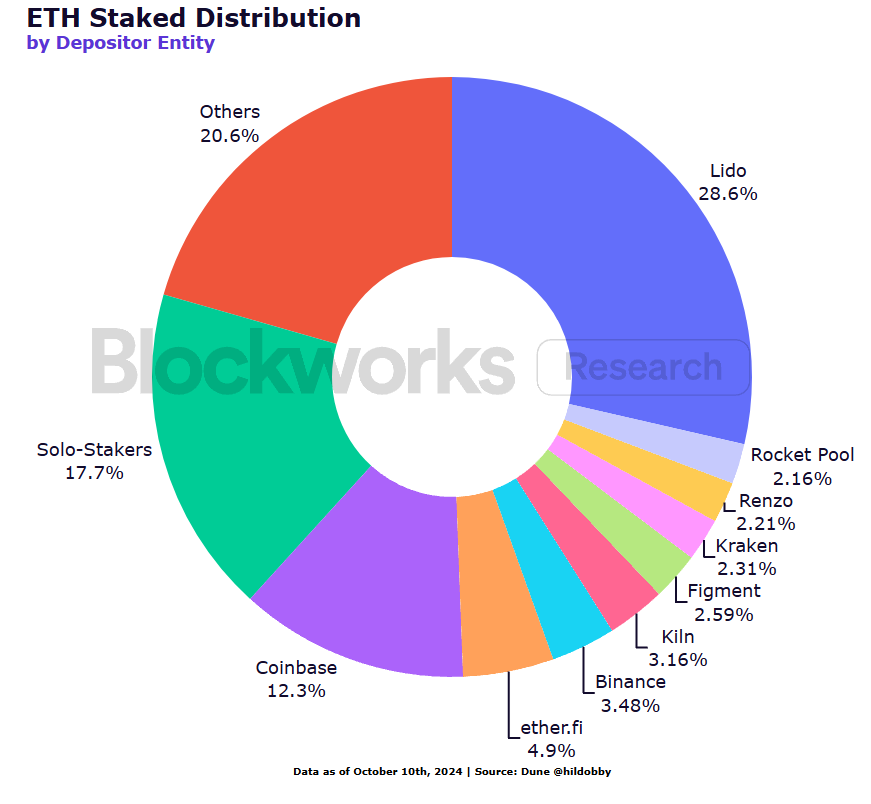
Individual stakers must deposit at least 32 ETH to run a validator node. This threshold balances security, decentralization, and network efficiency. Currently, about 18.7% of network participants are solo stakers. Unidentified stakers are generally classified as solo stakers.
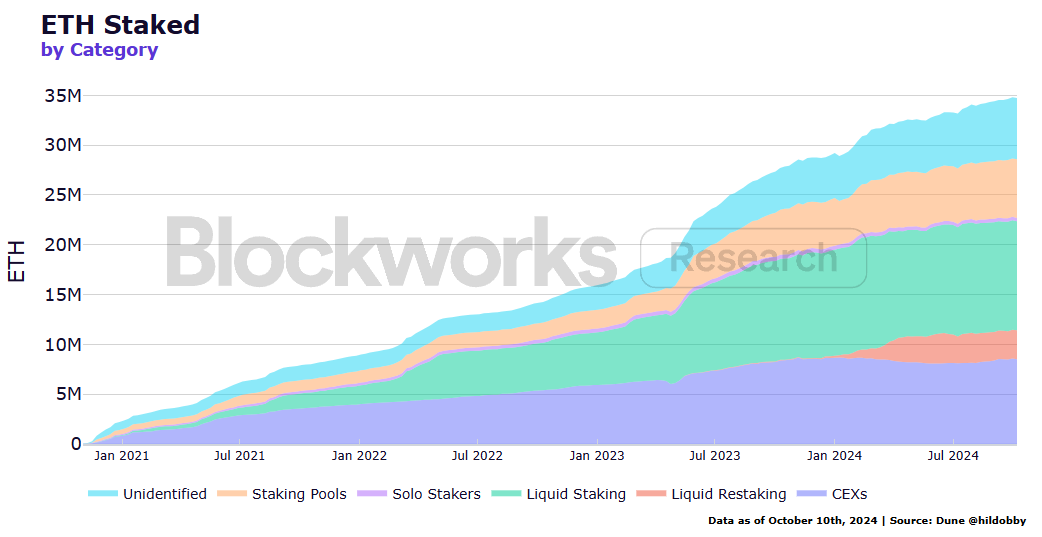
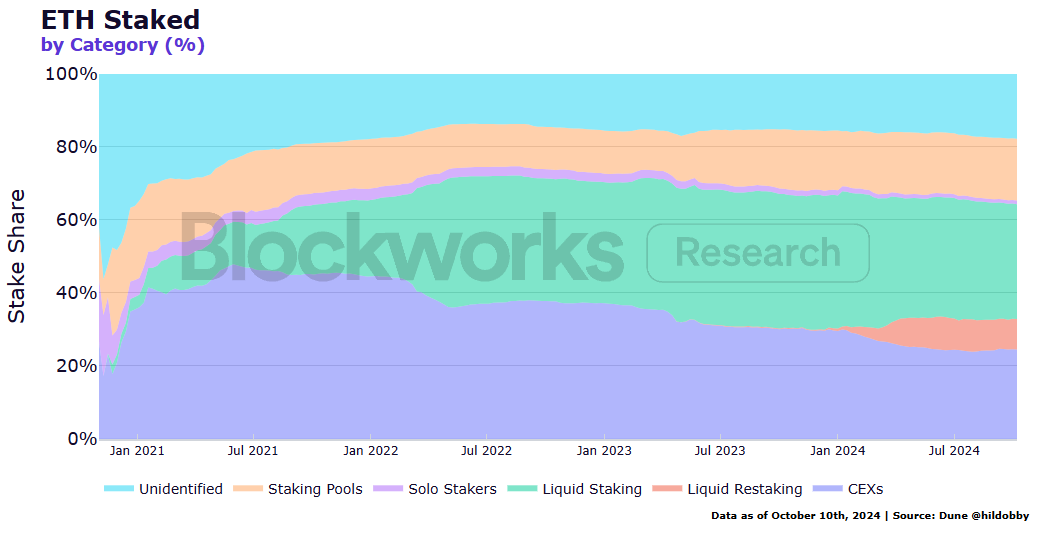
Over time, solo staking has become less appealing for several reasons. First, few individuals possess both the financial means (32 ETH) and technical expertise required to operate a validator, limiting widespread participation.
Another major issue is the low capital efficiency of staked ETH. ETH locked in staking cannot be used for other financial activities within the DeFi ecosystem—meaning it cannot provide liquidity to DeFi protocols or serve as collateral for loans. This creates opportunity costs for solo stakers, who must also carefully monitor the fluctuating reward rates to achieve optimal risk-adjusted returns.
These two issues have led to the rise of third-party staking platforms, dominated primarily by centralized exchanges and liquid staking protocols.
Staking platforms allow ETH holders to delegate their ETH to validators in exchange for a fee. Despite trade-offs, this approach has quickly become the preferred method for most network participants.
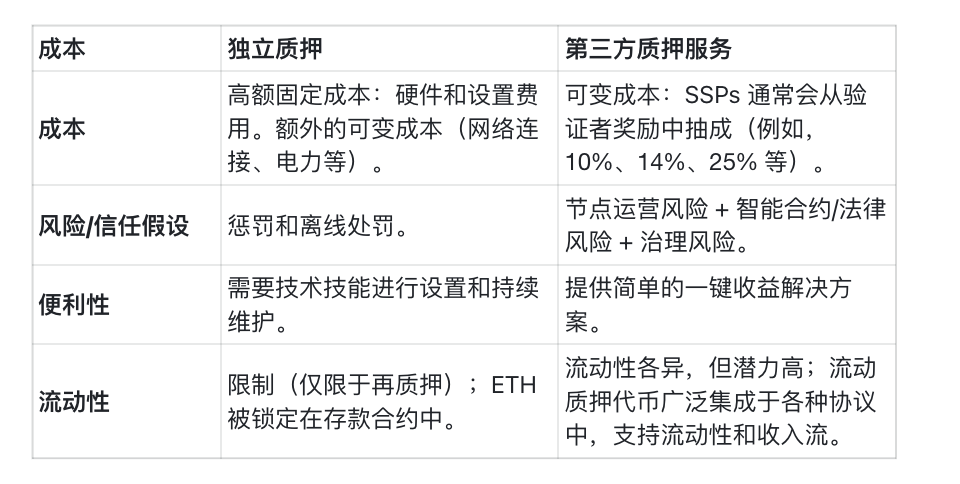
Source: Endgame Staking Economics
Survey results confirm the following:
-
69.2% of respondents indicated their company is currently staking ETH.
-
60.6% of respondents reported using third-party staking platforms.
-
48.6% of respondents prefer staking ETH on integrated platforms such as Coinbase, Binance, or Kiln.
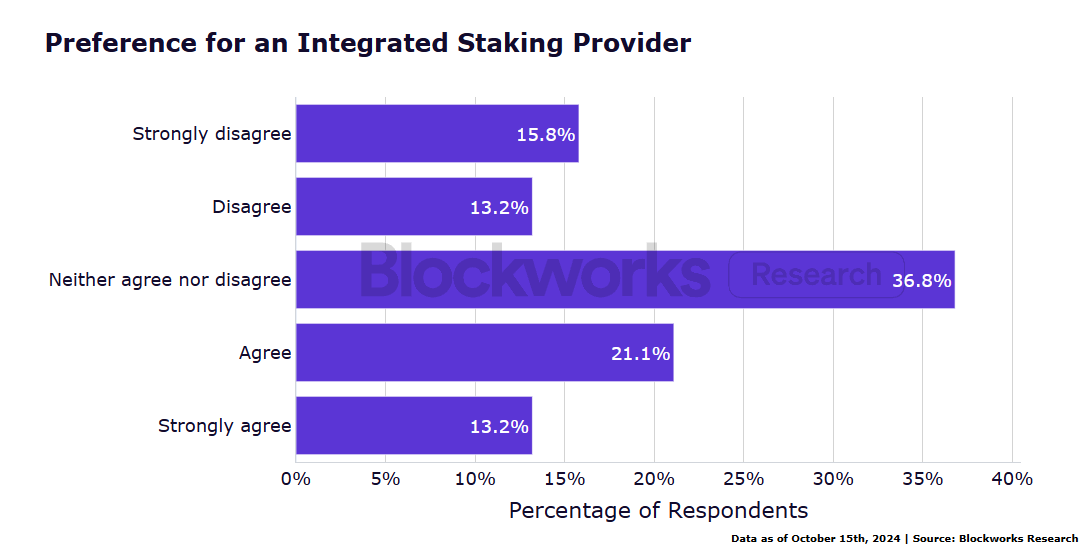
Main reasons cited by respondents for selecting a staking provider include:
-
Reputation
-
Supported networks
-
Pricing
-
Easy onboarding process
-
Competitive fees
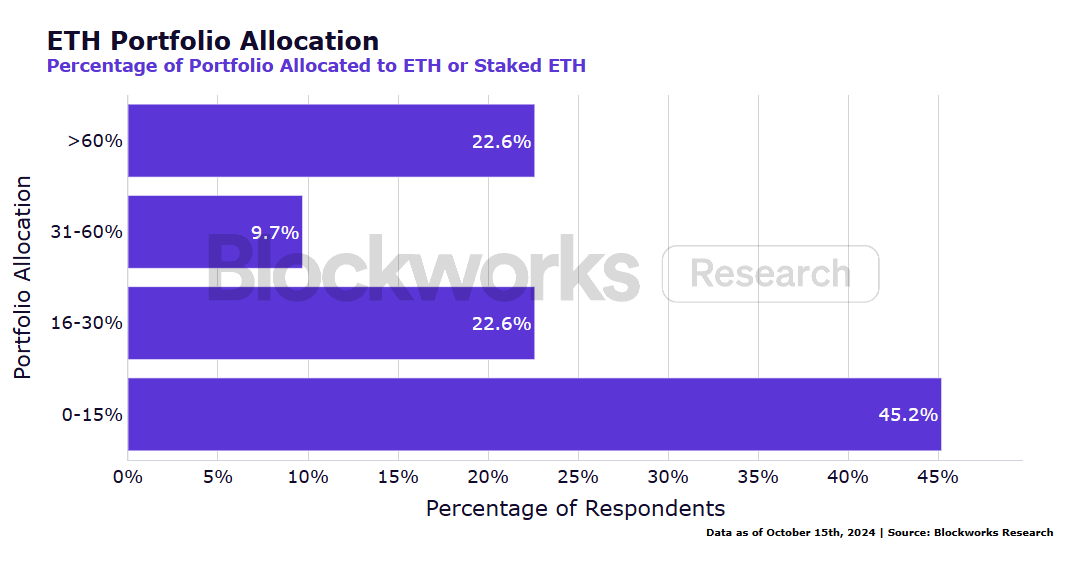
Expertise and scalability. Finally, below is how respondents allocate ETH or staked ETH within their portfolios:
Liquid Staking Protocols
To address the challenges of solo staking, the market for third-party staking platforms has grown rapidly over the past few years—driven largely by breakthroughs in liquid staking technology.
Liquid staking involves smart contract protocols accepting users' ETH, staking it on their behalf, and issuing a Liquid Staking Token (LST) as a receipt representing the staked ETH. LSTs represent the underlying asset (ETH), are fungible, and typically accrue staking rewards automatically, offering users a simple way to earn yield. Users can redeem their LSTs for native ETH at any time, although delays may occur due to Ethereum’s PoS withdrawal limits, which will be addressed in the upcoming Cancun/Deneb upgrade. Liquid Collective provides detailed documentation on deposit and redemption buffers to ensure a smooth user experience.
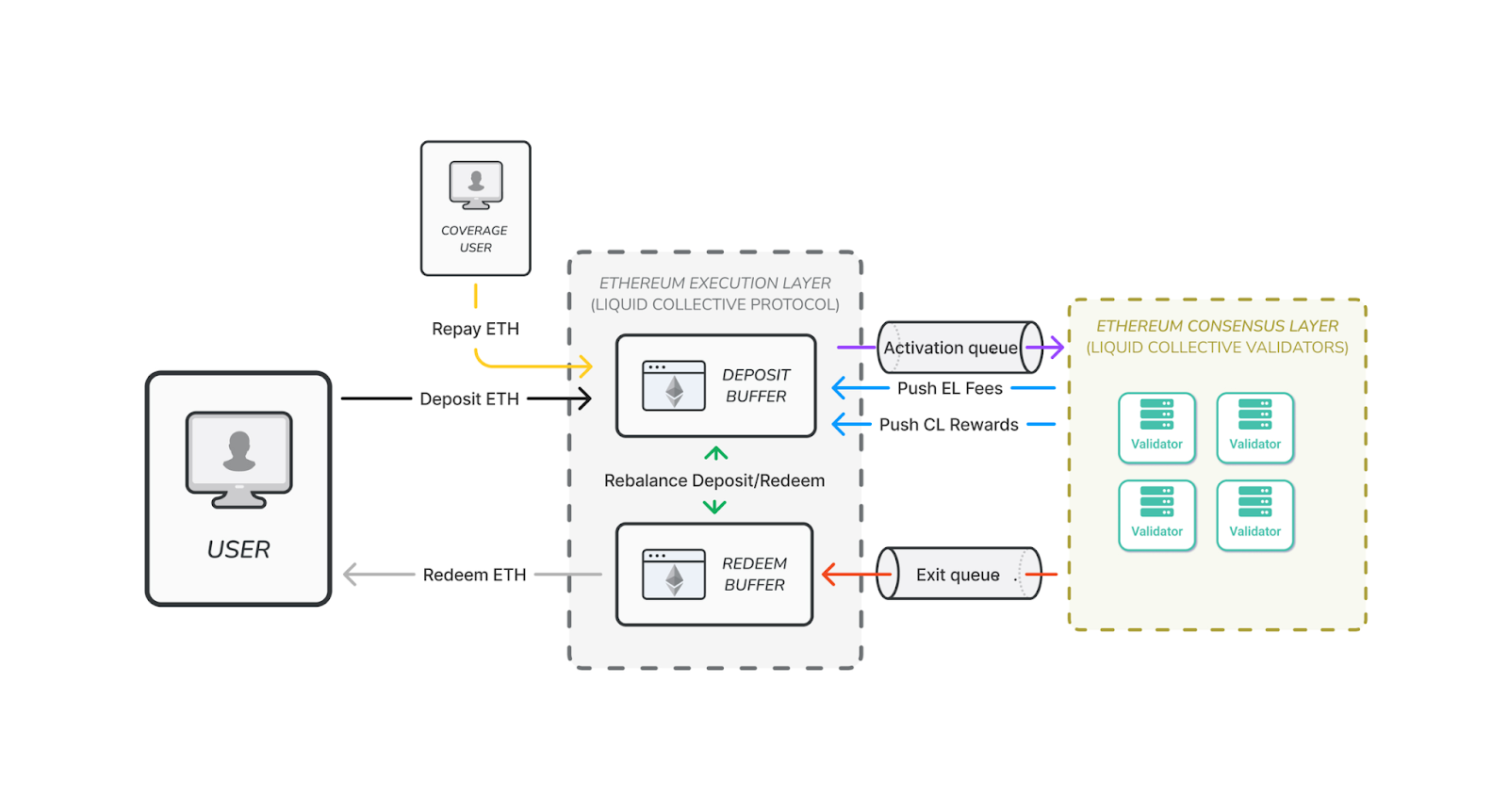
Deposit and redemption system architecture. Source: Liquid Collective
Liquid staking protocols typically consist of on-chain code and a set of decentralized professional validators, often selected through DAO governance. Validator selection may consider factors such as technical capability, security practices, reputation, geographic diversity, or hardware diversity. User ETH deposits are pooled and then distributed across the validator set to reduce slashing risks and centralization.
Due to the popularity of liquid staking, many DeFi applications across the ecosystem now support LSTs, further enhancing their utility and liquidity. For example, many decentralized exchanges (DEXs) have integrated LSTs, allowing holders to immediately provide liquidity or swap them for other tokens.
DEX integration is particularly important given potential withdrawal delays. While users can always redeem their LSTs for ETH, during times of market stress or high liquidity demand, LST prices may deviate from ETH's price due to redemption queues. Users seeking immediate liquidity may accept discounted ETH on DEXs, creating price slippage. Under stable conditions, redemption queues are typically short.
When an LST achieves sufficient liquidity and maintains price parity with ETH, it becomes eligible for adoption by DeFi money markets, further increasing its value. Leading DeFi lending platforms like Aave and Sky (formerly MakerDAO) have already integrated LSTs, enabling users to borrow other assets without selling their staked ETH. This enhances yield, as users can earn both PoS rewards and additional returns by deploying LSTs in DeFi strategies.
In sum, LSTs improve accessibility to ETH staking, maximize capital efficiency, and unlock new yield-generating opportunities.
The survey reveals a positive sentiment toward LSTs among respondents:
-
52.6% of respondents hold LSTs.
-
75.7% are willing to stake ETH through decentralized protocols.
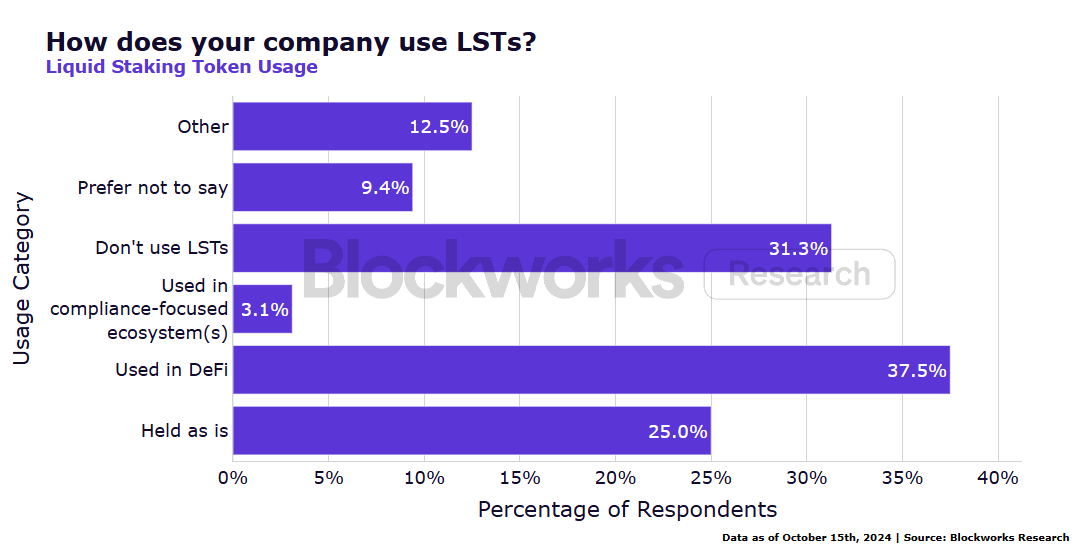
Finally, we asked respondents how their companies use LSTs:
Advanced Staking Technologies
Distributed Validators (DVs)
Liquid staking protocols in their current form have achieved product-market fit, attracting retail investors, DeFi users, and crypto funds. However, to attract significant institutional capital, Distributed Validators (DVs) may be necessary.
Pioneered by Obol, DVs enhance the security, fault tolerance, and decentralization of staking networks. Obol addresses a core problem in traditional staking setups: the risk of single points of failure. For example, if a validator node goes offline due to hardware failure or software bugs, it incurs penalties for downtime. Additionally, validator keys could be duplicated and run simultaneously on two nodes, leading to “double signing,” which triggers slashing penalties. This poses a significant risk for institutional participants requiring high security and assurance for delegated staking.
Single-node validators face several vulnerabilities:
-
No protection against machine failures.
-
It is difficult to effectively implement active-passive redundancy. Misconfigurations, software bugs, or lack of monitoring can lead to duplicate validator keys running on multiple nodes, resulting in slashing penalties.
-
Hot keys used by validators are vulnerable to attacks.
-
Economies of scale in validator infrastructure may lead to client concentration, increasing correlated risks for end users.
Obol’s Distributed Validators solve these issues using multi-node validation technology, enabling trust-minimized staking. By distributing validator responsibilities across multiple nodes, this setup allows a “single” validator to remain operational even if one node fails. Specifically, as long as two-thirds of the nodes in the cluster are functioning, the validator remains active. DVs also allow for diversification of client software, hardware, and geographic location within a single validator, since each node can run different configurations. This enables high levels of diversity at both the individual validator and network-wide levels.
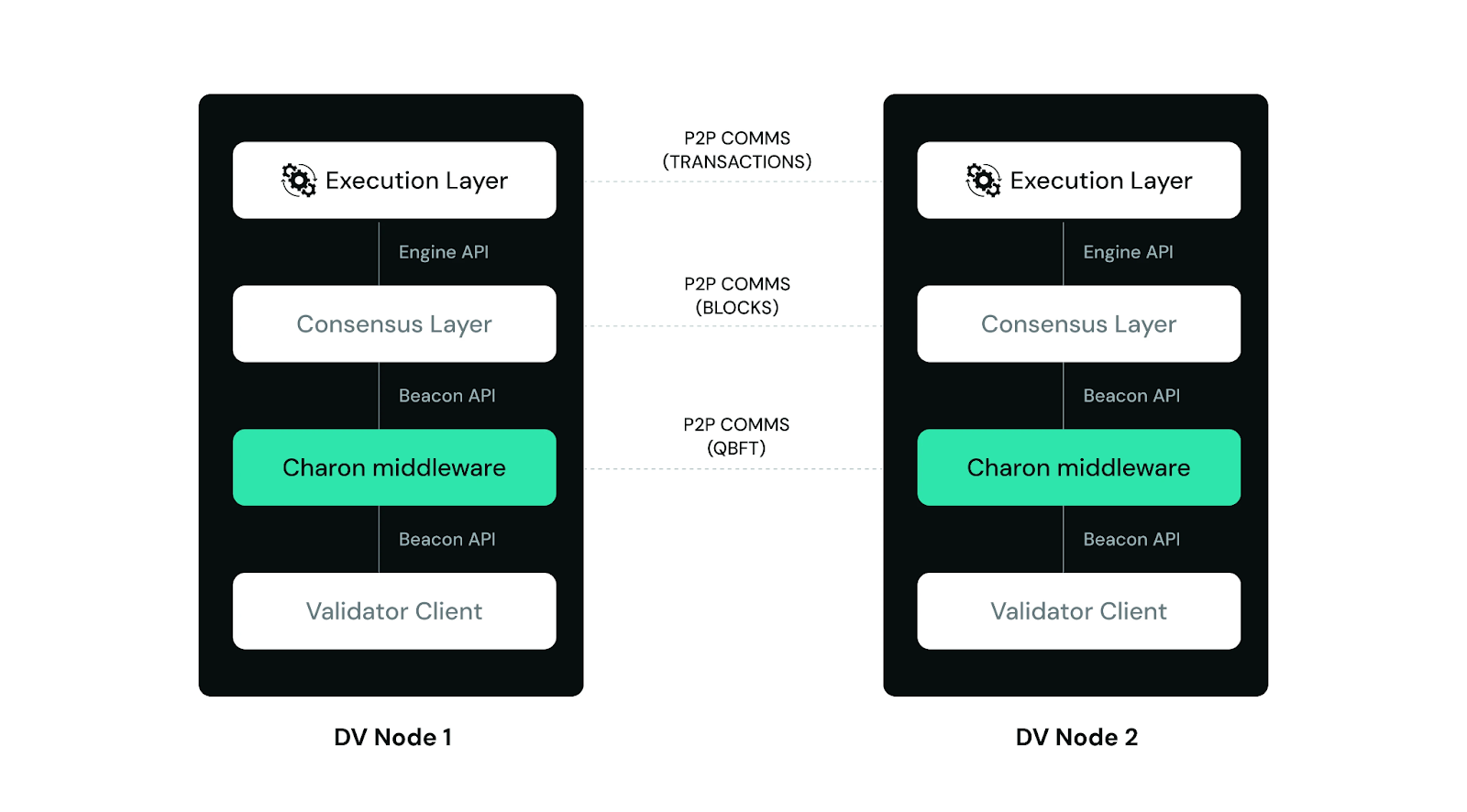
Obol DV Architecture. Source: Obol (DV Labs). The survey shows very positive sentiment toward Distributed Validators:
-
65.8% of respondents are familiar with Distributed Validators.
-
61.1% are willing to pay higher fees for enhanced security, stability, decentralization, and fault tolerance.
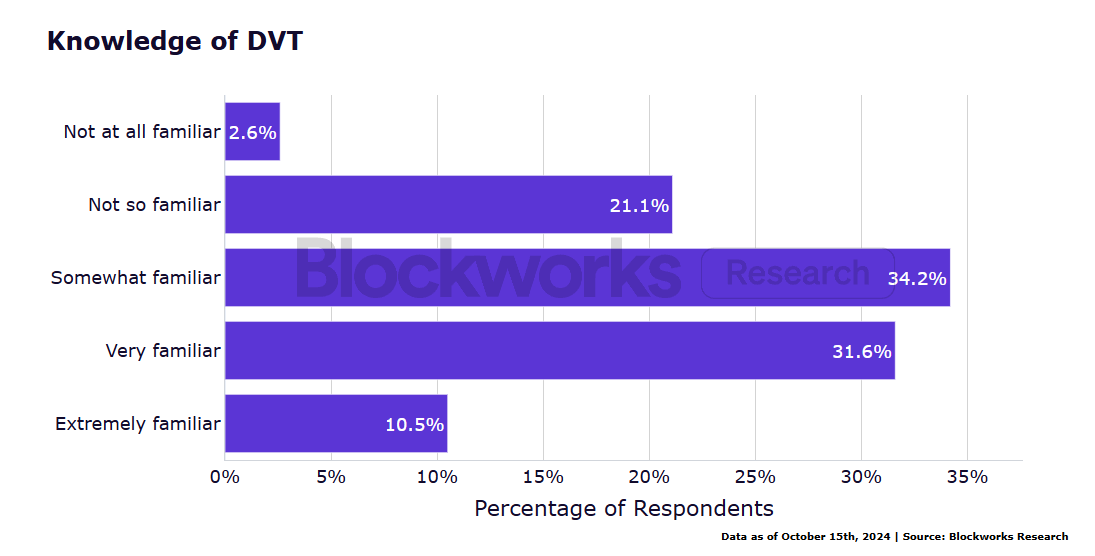
Overall, awareness of Distributed Validators (DVs) is high, with only 2.6% reporting no familiarity with the technology.
No respondent viewed DVs as posing high risk to their staking operations, while 5.6% saw absolutely no risk.
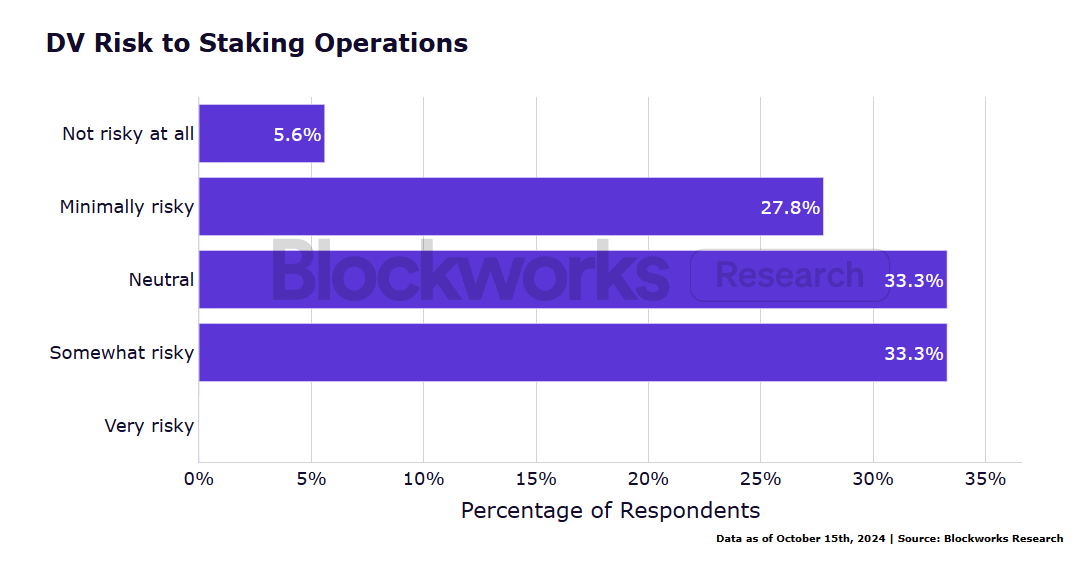
These responses support the view that institutional capital allocators favor DVs as the optimal staking solution.
Potential and Risks of Restaking
Besides DVs, restaking represents another significant technological innovation, offering stakers new revenue opportunities. Restaking allows validators to use their staked ETH or Liquid Staking Tokens (LSTs) to secure multiple protocols simultaneously, potentially earning additional rewards.
However, this also introduces additional risks. Restaked assets secure multiple protocols, and any malicious behavior or operational error in any of them could trigger slashing and result in losses. Restaking also introduces other risks, including stake centralization, protocol-level vulnerabilities, and network instability.
EigenLayer has already integrated Liquid Collective’s LsETH, enabling LsETH holders to earn protocol fees and rewards via EigenLayer while still receiving ETH network rewards.
Symbiotic also offers support for LsETH holders, who can now earn additional protocol fees and rewards from Symbiotic while continuing to receive ETH staking rewards.
Survey results show generally positive sentiment toward restaking, along with strong awareness of its risks:
-
55.3% of respondents express interest in restaking ETH.
-
74.4% of respondents say they understand the risks of restaking.
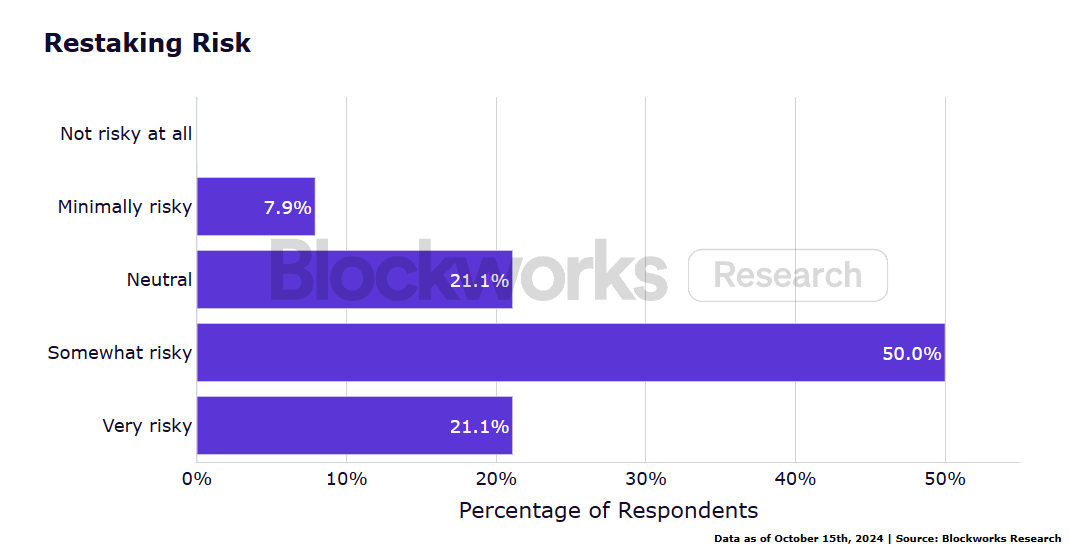
Nonetheless, respondents widely perceive restaking as inherently risky.
Our survey found that 55.9% of respondents are interested in restaking ETH, while 44.1% are not. Given that 82.9% of respondents claim to understand restaking risks, this suggests an overall positive attitude. Yet, restaking is still broadly seen as carrying inherent risk.
Decentralization and Network Health
Liquid Staking Tokens (LSTs) exhibit characteristics of a "winner-takes-all" market, driven by powerful network effects formed through multiple factors. As LSTs grow, they offer better liquidity, lower fees, and deeper integration with decentralized finance (DeFi) protocols. This broad adoption leads to deeper liquidity pools, making the tokens more attractive for trading and other DeFi applications. Large LSTs also benefit from economies of scale—they attract more operators because they generate higher fees, which in turn enhances security by distributing staking across more operators. Currently, over 40% of ETH is staked via Lido and Coinbase.
Large LSTs may also benefit from stronger branding, which respondents identified as an important factor in the survey.
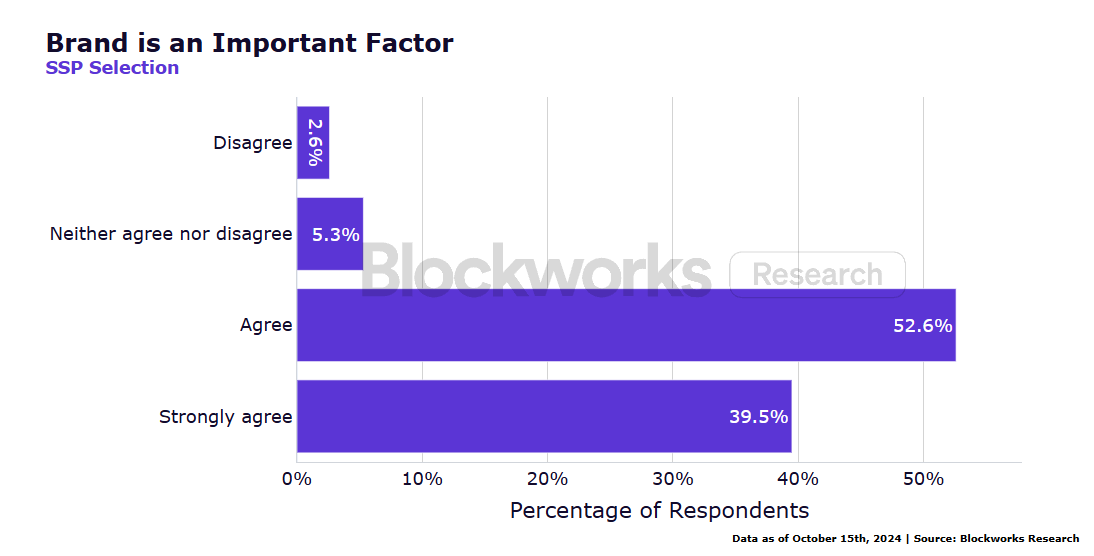
The survey further confirms the concentration trend among third-party staking platforms: over half of respondents hold stETH.
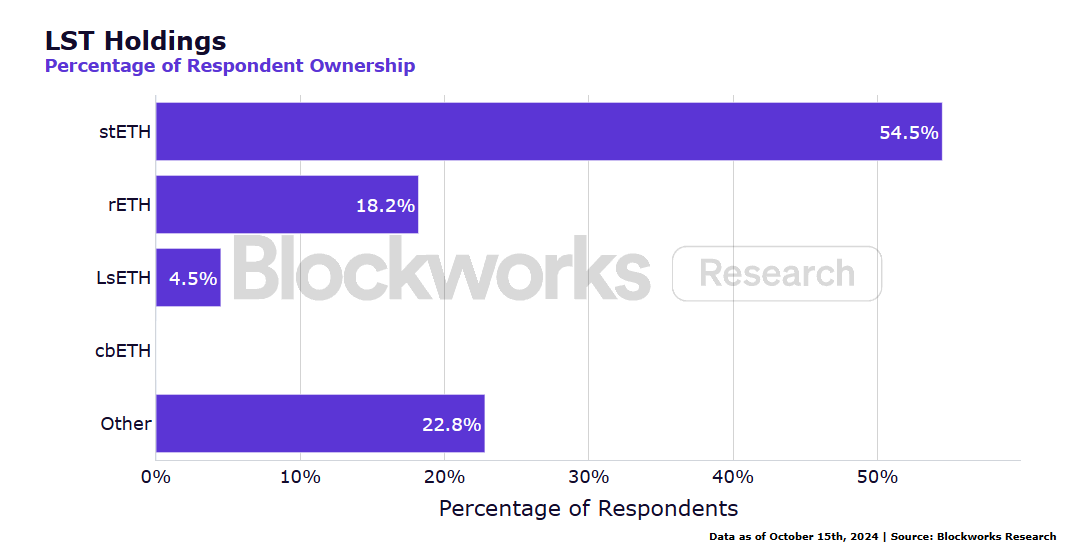
This situation concentrates staking power in a few LSTs or centralized exchanges, and in some cases, large staking pools rely on a limited number of node operators. Such centralization not only contradicts Ethereum’s core principle of decentralization but may also introduce security risks to the consensus mechanism and vulnerability to censorship attacks.
The survey shows respondents are highly concerned about centralization: 78.4% expressed concern about validator centralization and generally believe geographic distribution of node operators is important when choosing a third-party staking provider. These findings suggest the market may be seeking more decentralized alternatives than current market leaders.
Custody and Operational Practices
Most respondents (60%) use qualified custody services to manage their ETH. Hardware wallets are also popular, with 50% opting for them. In contrast, centralized exchanges (23.33%) and software wallets (20%) are less commonly used for custody purposes.
Respondents generally report high familiarity with node operations: a majority (65.8%) agree or strongly agree they are familiar with node operations, 13% are neutral, and 21% disagree or strongly disagree.
On client diversity—using different software clients to run Ethereum validators to reduce single points of failure, maintain decentralization, and optimize performance—respondents show strong awareness. 50% said they are familiar with the concept, and 31.6% strongly agree. Only 2.6% are unfamiliar with client diversity. Overall, 81.58% of respondents understand the concept of client diversity.
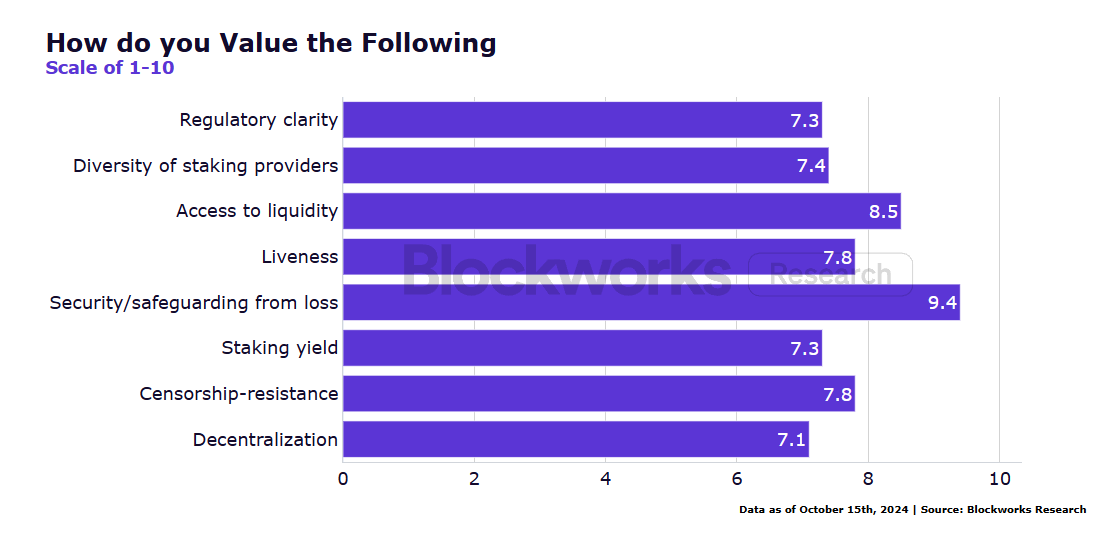
Liquidity is considered highly important by respondents. On a 1–10 scale (with 10 being most important), the average score for liquidity importance is 8.5, second only to asset protection (9.4). Clearly, liquidity is a key consideration for many institutional participants in the ETH staking ecosystem. Additionally, 67% of respondents stated that the source of liquidity is important when choosing a Liquid Staking Token (LST), with a preference for decentralized exchanges such as Curve, Uniswap, Balancer, and PancakeSwap, as well as aggregators (like Matcha) or on-chain swap platforms (such as Curve, Uniswap, Cowswap).
Finally, respondents express moderate to high confidence in their ability to withdraw staked ETH during market volatility, with most (60.5%) feeling confident, though 21.1% report some concerns. These confidence levels indicate that while most feel secure about their withdrawal capabilities, a significant portion remains cautious about the safety of the withdrawal process during turbulent market conditions.

Risk Management and Security
Institutions face multiple risks when staking Ethereum:
-
Slashing Mechanism: Slashing events may occur when validators produce incorrect attestations, propose invalid blocks, or engage in double-signing. This results in validators losing part of their staked ETH due to protocol violations, potentially causing significant financial losses for staking institutions. Additionally, validator downtime or inactivity is penalized. While slashing is irreversible and severe, downtime penalties are typically smaller and recoverable.
-
Liquidity Risk: If staked ETH is locked or if Liquid Staking Tokens (LSTs) lack sufficient liquidity, institutions may struggle to exit large positions quickly. Furthermore, fluctuations in the exchange rate between ETH and LSTs may also lead to losses. 71.9% of respondents expressed concern about liquidity.
-
Regulatory Uncertainty: With the global regulatory landscape still evolving, institutions must stay updated on how regulators classify staking rewards, compliance requirements for validator infrastructure, and tax implications of staking income. Despite regulatory ambiguity, over half (58.9%) remain willing to stake their ETH, while 17.7% are adopting a wait-and-see approach.
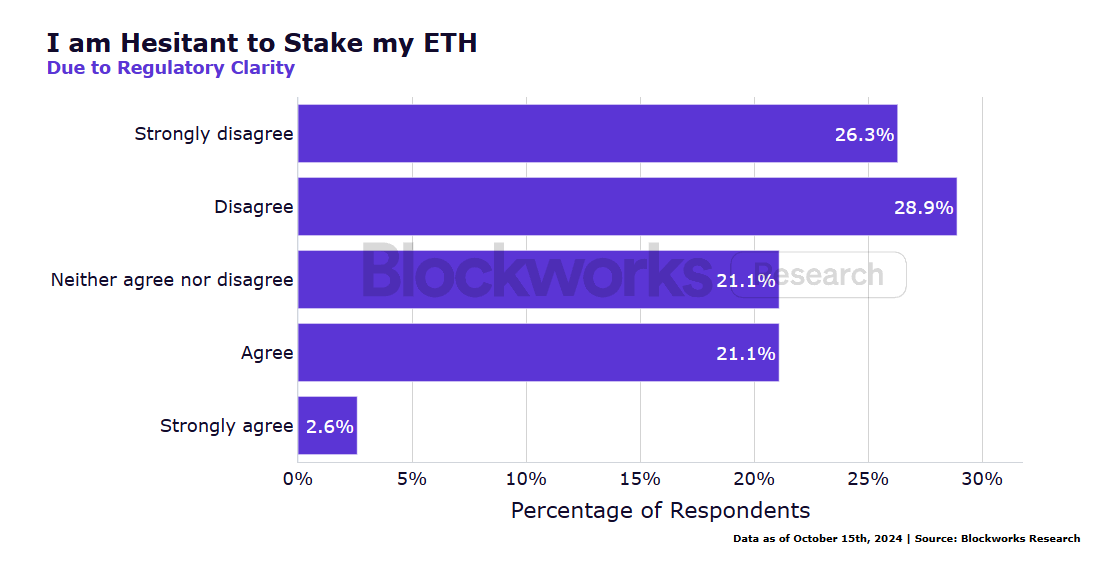
Likewise, 55.9% refrain from participating in liquid staking protocols due to lack of regulatory clarity, while 20% remain观望.
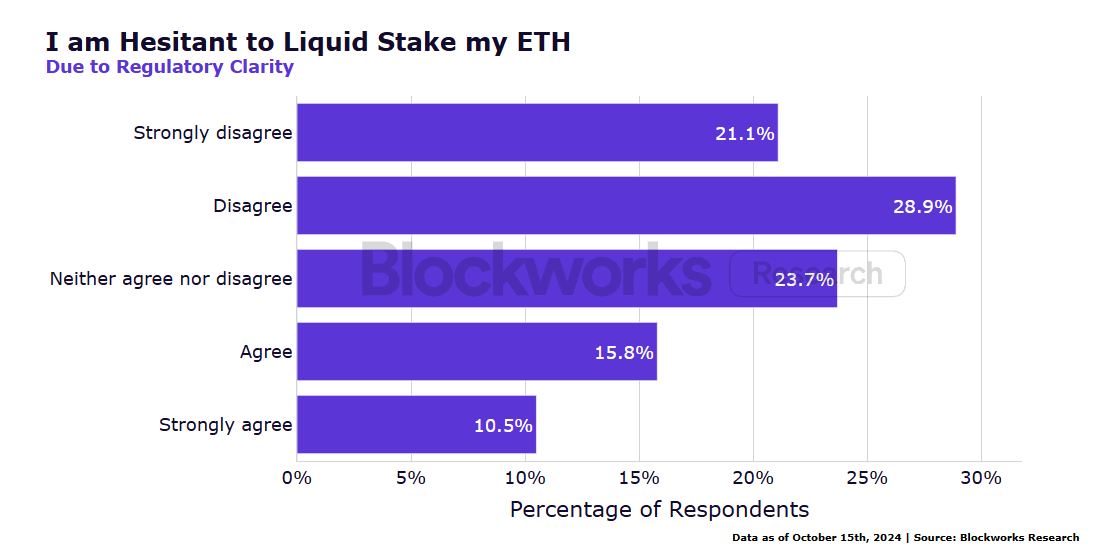
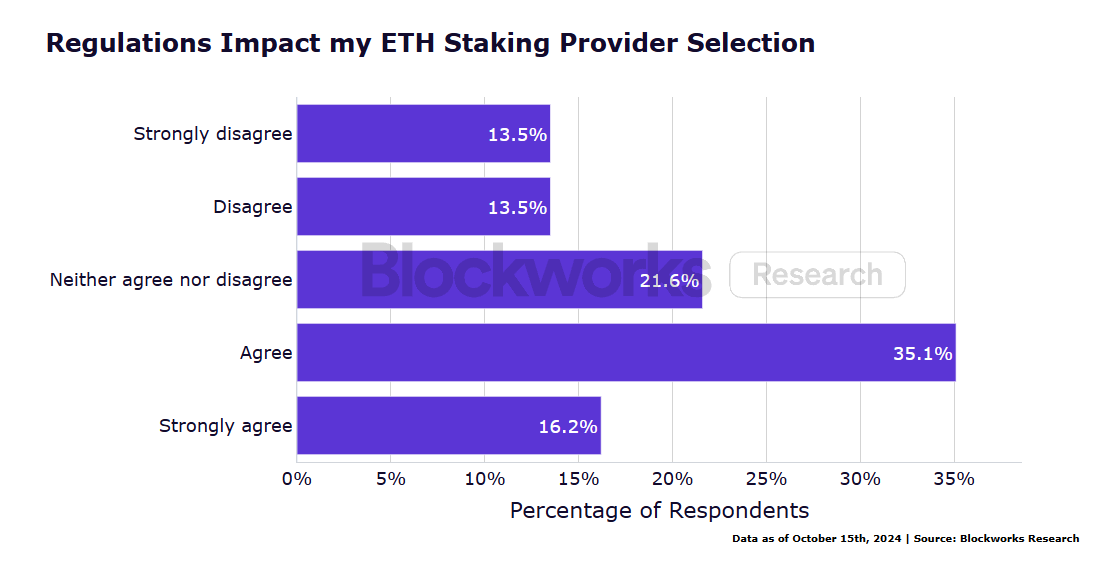
Overall, regulatory factors influence 39.4% of respondents in selecting an ETH staking provider, while 24.3% say regulation does not factor into their decision—possibly because the regulatory framework for staking is still developing, leading these institutions to prioritize other operational risks they perceive as more immediate.
-
Operational Risk: Over 90% of respondents are very familiar with the ETH staking withdrawal process, indicating awareness that delays could cause significant deviations in LST prices. However, confidence in their ability to withdraw staked ETH under volatile market conditions varies significantly, with responses nearly evenly split between confident, neutral, and lacking confidence.
Our survey shows that running validator infrastructure at scale requires ensuring high uptime and performance across multiple validators, protecting private keys, and promptly patching software vulnerabilities. Operational challenges remain a top concern. When monitoring staking activities, the most important metrics used are Annual Percentage Rate (APR) and validator uptime, followed by total rewards paid, attestation rate, and liquidity.
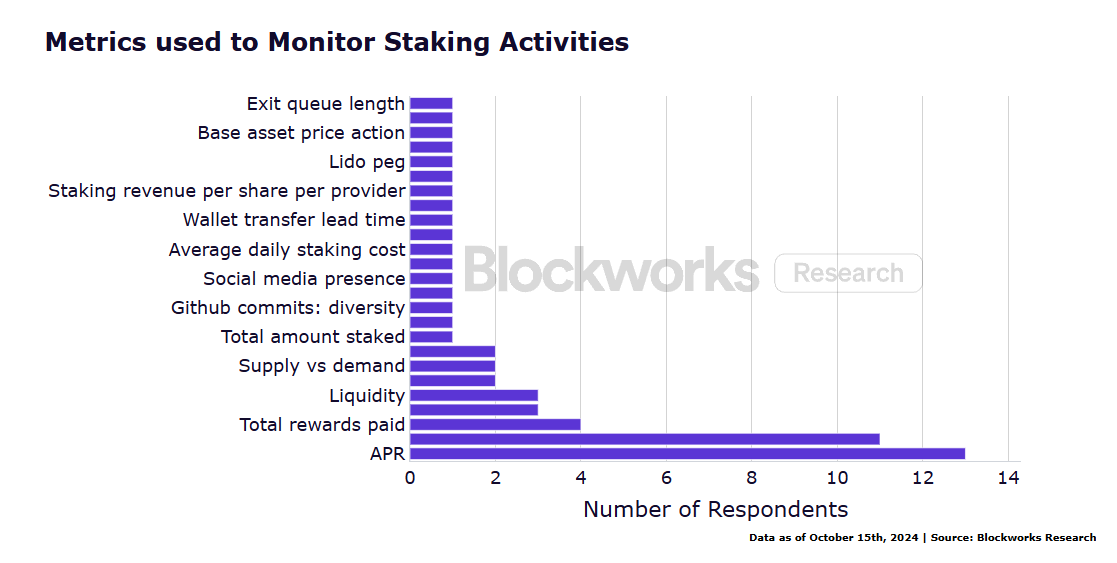
*Some survey respondents chose not to answer this question due to proprietary and regulatory considerations
The most commonly used tools by institutional respondents to monitor staking operations include internal dashboards generated by proprietary risk management systems, reports and dashboards provided by staking providers, and Dune.
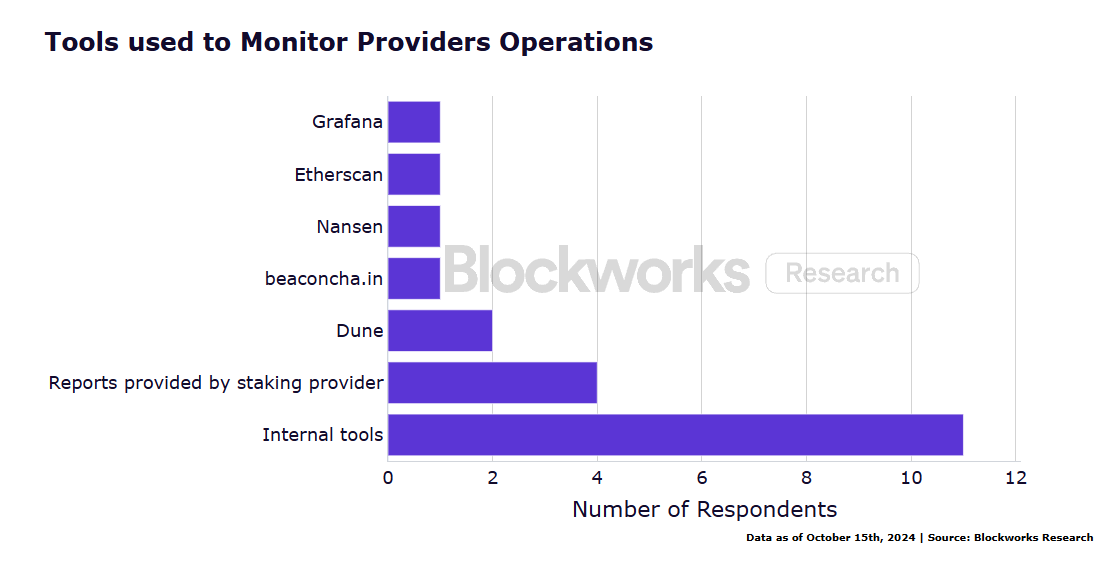
*Some survey respondents chose not to answer this question due to proprietary and regulatory considerations.
Additionally, respondents are divided on whether pursuing above-average staking yields or targeting benchmark returns is more important.
There is also division among respondents regarding participation in Liquid Staking Tokens (LSTs), with 44.4% expressing concerns about regulation and compliance.
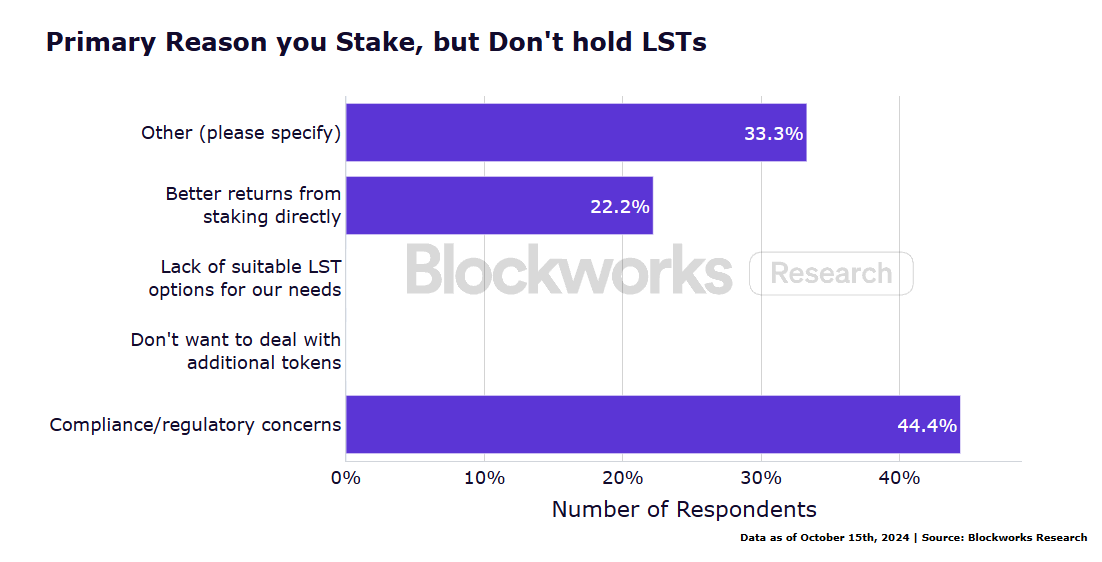
Some asset managers noted that custody of LSTs is problematic due to an imbalance between risk, effort, and return. One respondent stated: “We hold PoS tokens, but aren’t mature enough. We don’t know where to start with staking, yield, etc. Our team is small. We want to do it compliantly and limit risk.” Another remarked: “LSTs aren’t staking. They’re DeFi disguised as staking.”
Notably, banks in the survey mentioned that staking ETH owned by clients and held in custody would affect disclosures to clients and regulators, and introduce new capital requirements and operational risks stemming from LST liquidity—or lack thereof.
Key Trends and Insights
From the survey results, we identify several key takeaways. Data indicates that liquidity and regulatory transparency are critical in shaping institutional participation in ETH staking, with many institutions remaining cautious. Overall, the report reveals a complex yet promising landscape for institutional ETH staking, as firms navigate an evolving market:
-
Institutions are actively engaging in ETH staking, but the extent and methods vary.
-
Despite risks, interest in decentralized validation (DVs) and restaking technologies is growing.
-
Decentralization remains a key consideration influencing provider selection.
-
Liquidity is a critical factor for institutional stakers, shaping their choices regarding Liquid Staking Tokens (LSTs) and staking methods.
-
Due to regulatory uncertainty, institutions adopt varying strategies—some proceed cautiously, while others are less concerned.
-
Institutional participants demonstrate high awareness of staking operations and risks.
Despite the risks and challenges associated with Ethereum staking, LSTs, and restaking, these technologies offer compelling opportunities for institutional investors to generate yield. In a market where traditional fixed-income investments offer low returns, Ethereum staking provides relatively stable and predictable yields. Currently, ETH staking offers an annualized yield of around 3–4%, with potential for additional rewards from priority fees. Moreover, LSTs enhance capital efficiency by enabling staked ETH to be used across DeFi applications, allowing institutions to earn staking rewards while leveraging their assets for additional returns.
Overall, the widespread integration of LSTs in DeFi protocols creates new market opportunities. With 39.3% of respondents mentioning the use of LSTs in DeFi applications, this trend is likely to continue, further increasing the liquidity and utility of these tokens. Although regulatory issues persist, adaptability to the evolving staking regulatory landscape appears to be improving.
Participating in staking allows institutional investors to align with Ethereum’s long-term development—not only for potential financial returns but also for strategic advantages within the blockchain ecosystem. Despite existing challenges, for many institutions, the potential benefits of staking, LSTs, and restaking appear to outweigh the risks. As the ecosystem matures and the proportion of staked ETH grows significantly, these technologies may become an increasingly attractive component of institutional crypto strategies.
Join TechFlow official community to stay tuned
Telegram:https://t.me/TechFlowDaily
X (Twitter):https://x.com/TechFlowPost
X (Twitter) EN:https://x.com/BlockFlow_News
 Blockworks






