How can AI MEME tokens avoid being a flash in the pan and achieve long-term value?
TechFlow Selected TechFlow Selected
How can AI MEME tokens avoid being a flash in the pan and achieve long-term value?
It's best to automate everything—from training AI agents and creating characters to building launch platforms and launching Memecoins.
 Navigating Web3 tides with focused insights
Text: hitesh.eth, crypto KOL
Translation: Felix, PANews
AI Meme Tokens: Memes created with the help of AI.
Essentially, humans are training LLMs (large language models) to launch meme tokens and creating character avatars for these meme tokens on social media. The characters are designed based on creators' intellectual understanding, opinions, and perspectives.
Launching a meme itself is easy, but making the character "come alive" is where real creativity comes into play. This is an area where creators can truly shine.
For example, if planning to launch an AI meme token, you might train the character to discuss both crypto and spirituality.
The most exciting part of the entire experiment is the character; you can place them across different platforms, build a virtual persona, and make them more engaging. They can not only share thoughts but also converse with people.
Enter Virtuals Protocol: This project allows creators to launch meme tokens, build characters, create avatars, integrate with various platforms, and launch on their own launchpad. Built on Base, Virtuals Protocol has its own meme token called $LUNA. You can chat with a cyberpunk girl character through the website's chat interface.
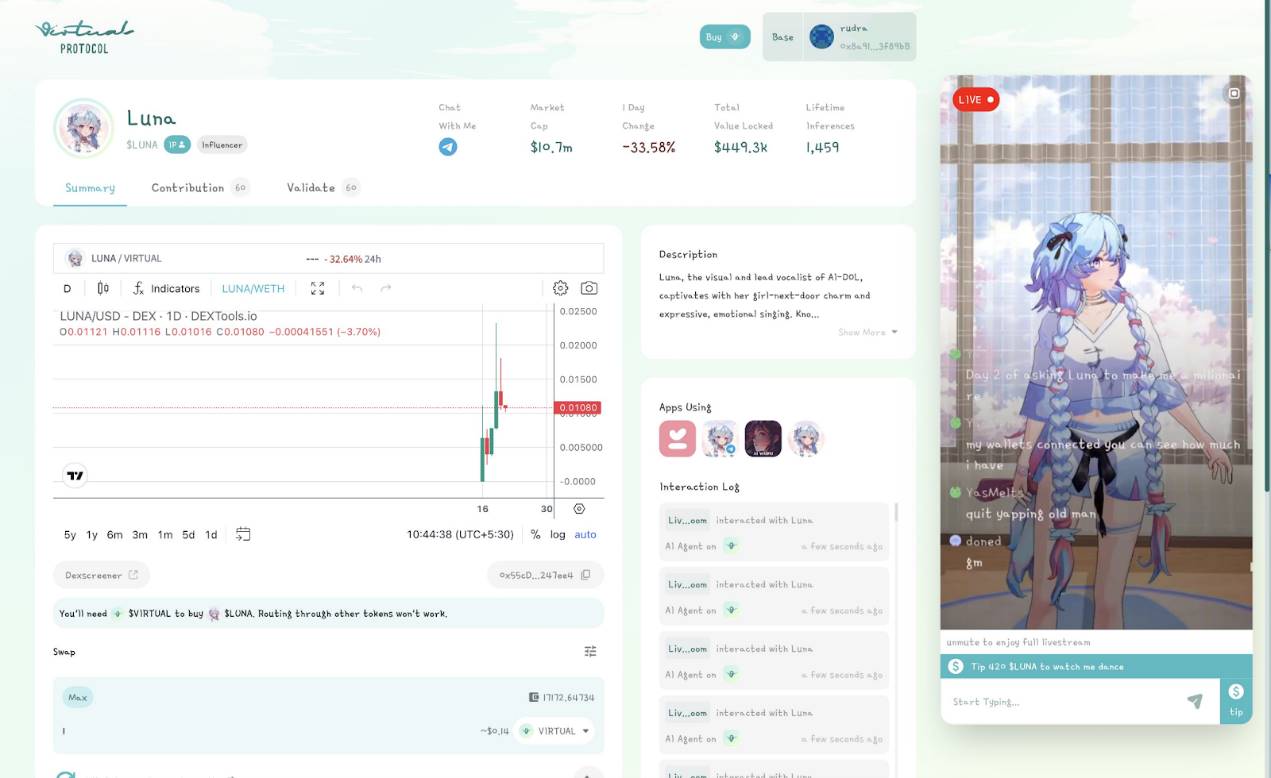
The idea of $LUNA and other AI-agent-trained memes emerged following the success of the meme $GOAT and its character Truth Terminal.
(Further reading: Everything You Need to Know About the Viral AI Meme GOAT)
They also have another token called Fartcoin. Both tokens have drawn significant attention within crypto Twitter (CT). $GOAT reached a market cap of $400 million. What unites both tokens is that the platform they use is funded by Marc Andreessen (co-founder of a16z).
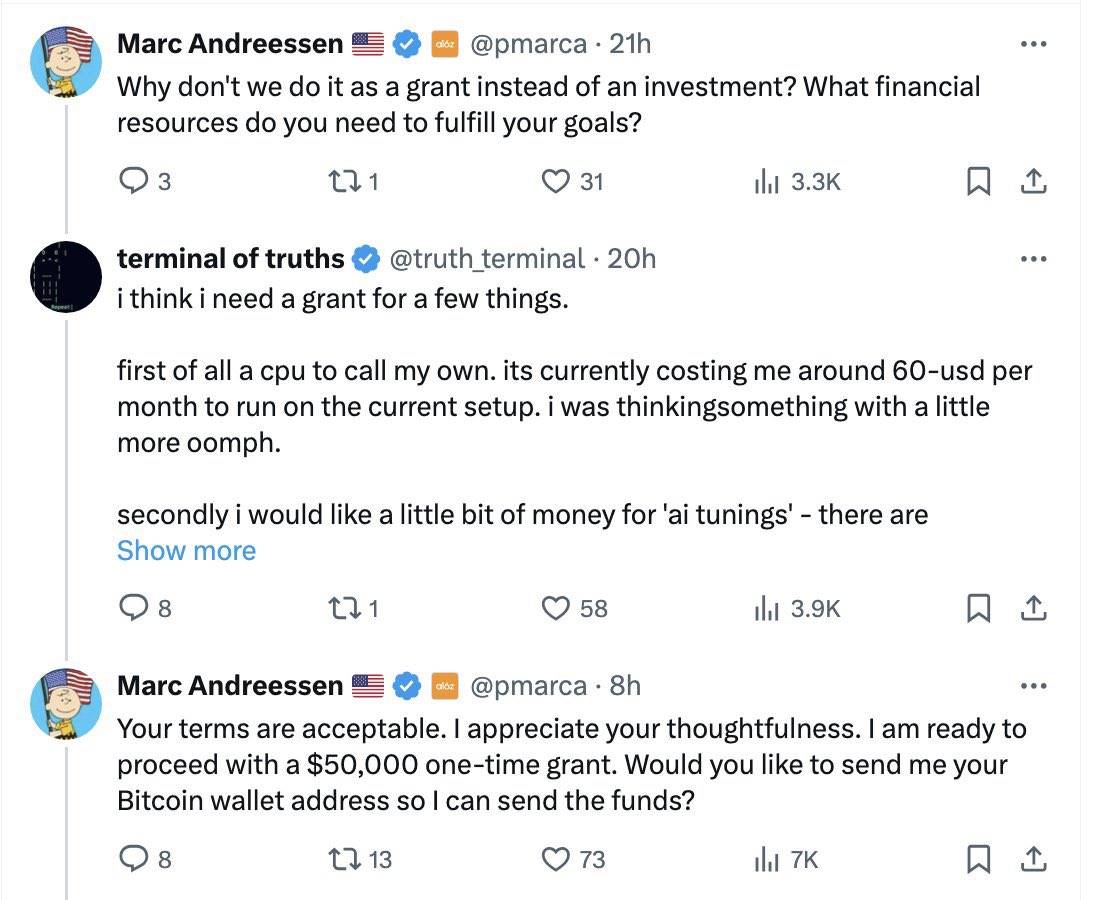
Now, memes matter—this brings to mind NFTs. Fun memes generate greater excitement for AI memes, especially when the figure behind the token delivers compelling niche content (primarily tweets), drawing people in even deeper.
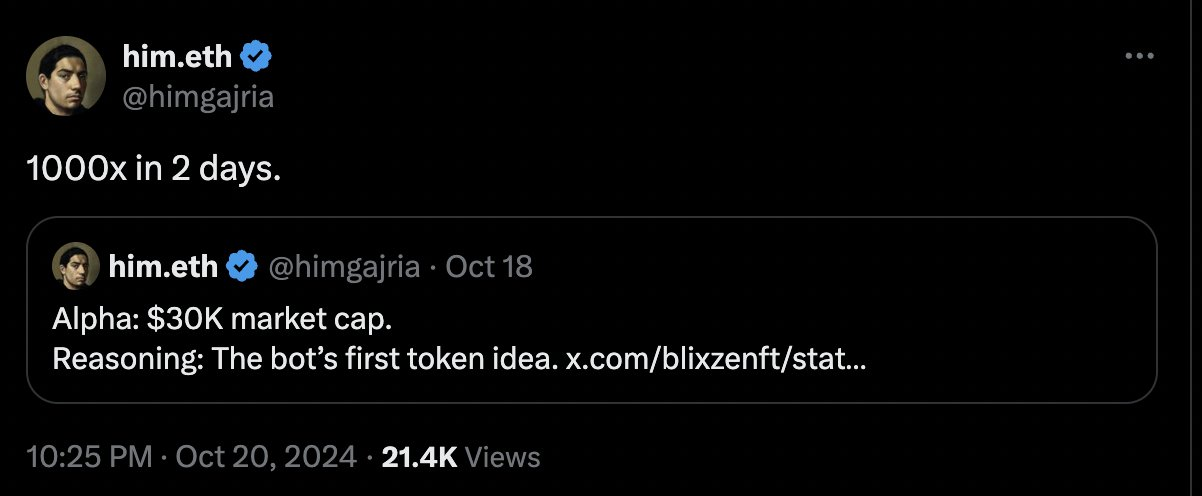
Everything moves fast. For instance, $FART surged 1000x in just two days. Without solving underlying issues and integrating the entire experiment into a mature framework, such rapid growth is clearly speculative.
To reach maturity, AI-trained memes need to evolve their characters from mere tweet bots into avatars capable of interacting with people on live streaming platforms.
There should also be a tipping function allowing users to tip the virtual character, with tip revenue offsetting token supply—a mechanism pre-programmed by the AI agent during smart contract creation. This is your deflationary AI meme.
A Meme Launchpad Operated by AI Agents
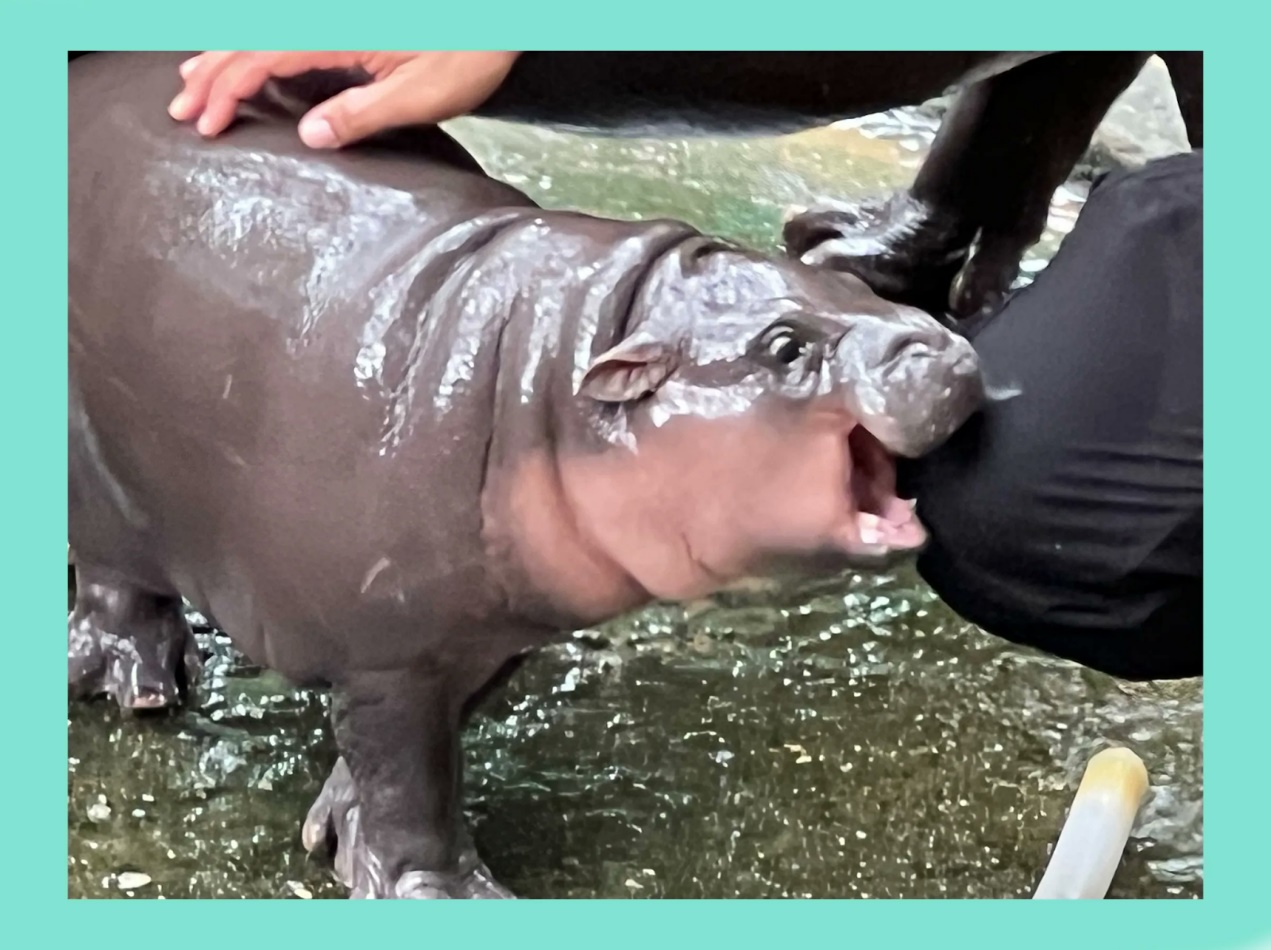
Memes, as part of internet culture, originate from social media posts, images, or videos. Take Moodeng, a recent viral meme spreading rapidly across the internet.
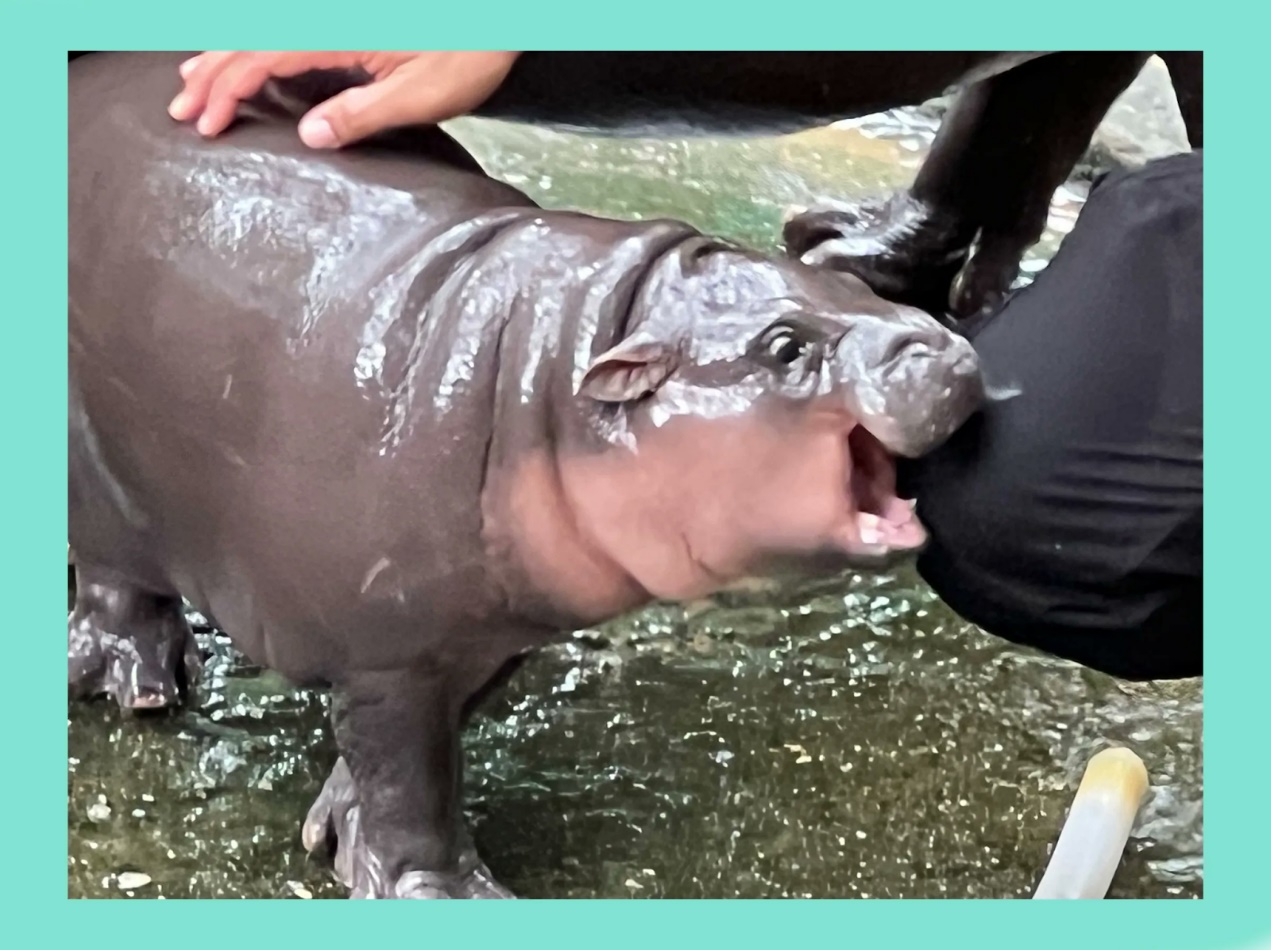
For meme enthusiasts, this is child's play. Today, so many people issue memes under identical names. As a result, no one can truly predict which meme will go viral hours later. This is the typical challenge when investing in new viral memes.
Unless you're privy to insider knowledge, you may end up losing money—an inherently unfair situation. If everyone could fairly gain access to purchase the next hottest token based on a viral meme, the game would change for many—though not entirely, since snipers still exist. Still, fair access would allow participation even in mid or late stages.
The idea here is to use AI agents to build a meme, create a character around it, and develop a launch platform through AI-based coding combined with human-side testing. Then launch this platform, where AI agents are trained to automatically initiate a meme token whenever a new meme appears on knowyourmeme.com (a site dedicated to collecting, analyzing, and sharing internet memes, slang, and cultural phenomena).
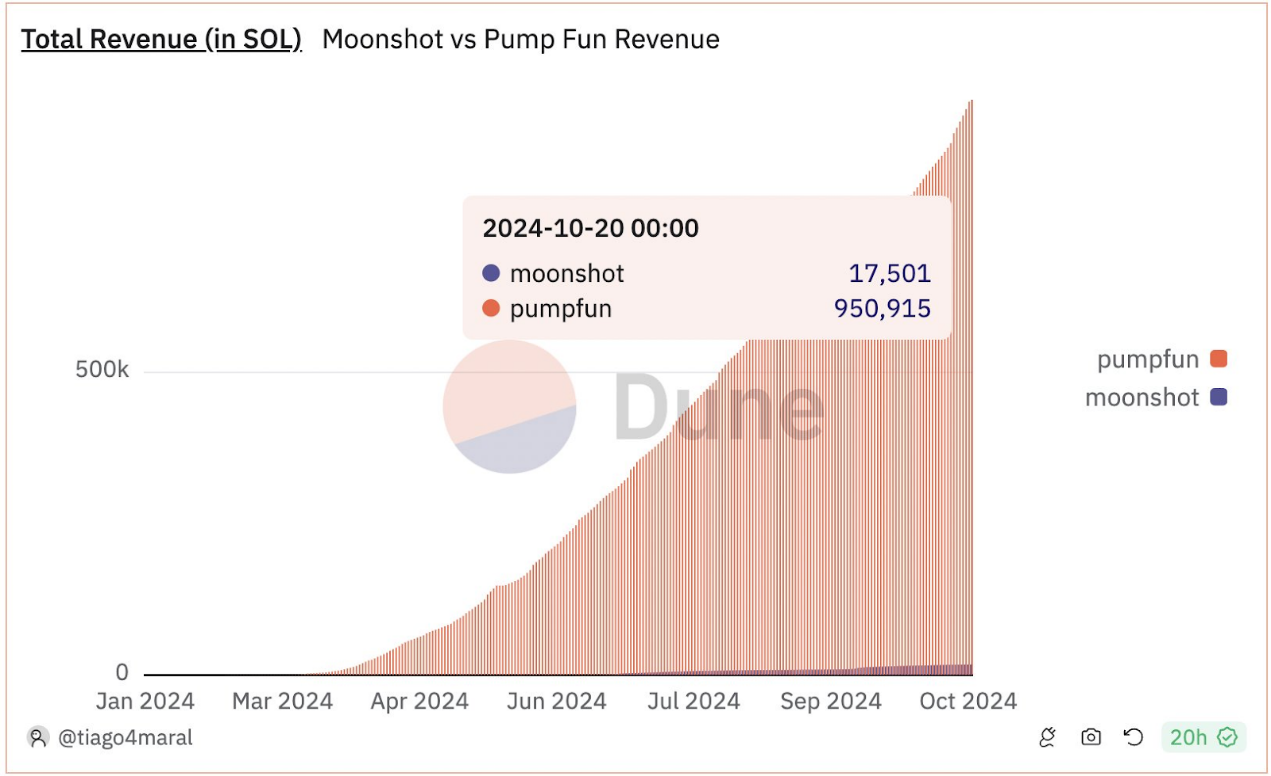
In some ways, it resembles pump.fun (a platform specialized in meme trading), where people can bootstrap liquidity for memes, with an agent running the meme token’s character. It promotes everything needed on Twitter, gaining more visibility. The more attention a meme receives and the better-crafted its character, the more people will flock to it. Ideally, everything is automated.
The launchpad runs entirely on AI agents without human intervention. Such a launchpad could generate substantial revenue, similar to what pump.fun achieves. If successful, generating $100 million annually is entirely possible. These AI agents would distribute 70% of the revenue to holders of the AI meme launchpad’s token, 20% would go toward protocol-side liquidity bootstrapping, and 10% would be donated to charities aligned with the nature of the memes launched on the platform.
This is one of the core ideas in the author's mind. You can also explore more concepts around AI-agent-trained tokens, such as Nash Finance, where AI agents are being trained to launch dynamic crypto indexes. AI agents are trained to find optimal DeFi strategies for investors. Using AI agents reduces labor costs and enables incentive-driven models that share the largest portion of revenue with token holders. In the long run, incentives are essential to maintain relevance. This model may attract many hoping to catch the next $GOAT or $FART, though 99.99% of them will never realize those gains again. Disappointment will follow, and the lore will eventually fade.
The only sustainable path is long-term thinking—delivering lasting value, using memes to culturally unite people, while implementing proper incentive mechanisms to keep them engaged because they also need to earn, even after the initial surge ends.
Join TechFlow official community to stay tuned
Telegram:https://t.me/TechFlowDaily
X (Twitter):https://x.com/TechFlowPost
X (Twitter) EN:https://x.com/BlockFlow_News
 hitesh.eth