The Battle Between VC Coins and Meme Coins: Does the Rise of Eight Major Value Tokens Signal a New Market Turning Point?
TechFlow Selected TechFlow Selected
The Battle Between VC Coins and Meme Coins: Does the Rise of Eight Major Value Tokens Signal a New Market Turning Point?
Although VC coin has faced skepticism due to issues such as slow delivery and unclear business models, its long-term potential is gradually emerging, and it is progressively dominating the market.
 Navigating Web3 tides with focused insights
Author: Alvis, Mars Finance
Over the past month, as Bitcoin broke through $69,000, VC-backed value tokens have made a dramatic comeback. Frequent project updates emerged one after another—like holding a winning hand ready to be revealed—and the market response was even stronger than expected! From Worldcoin's mainnet launch to Uniswap’s Layer 2 expansion chain Unichain, and ApeCoin’s deployment of ApeChain and its cross-chain bridge, value tokens delivered substantial technical milestones. In just a few weeks, prices surged sharply—outpacing even most meme coins in terms of momentum.
The irony of this market cycle lies in the fact that many assumed meme coins would remain dominant, driving price action through hype and short-term pumps. Instead, projects perceived as "slow burn" value plays reversed the trend by delivering real technological progress and ecosystem growth. This surge in VC-backed tokens represents nothing short of a quiet but powerful rebuttal from fundamental-driven projects against speculative meme assets.
The glory of meme coins remains fleeting—a soulless feast that fades quickly after empty posturing. Meanwhile, value tokens are gradually reclaiming market leadership through multi-chain ecosystem expansion, tangible DeFi functionality, and continued infrastructure improvements. Rather than relying on sentiment, they compete with hard capabilities. Is this merely a short-lived rally or the beginning of long-term dominance? At this point, value tokens appear to be steadily retaking the throne of the crypto market.
Why Were VC Tokens Previously Subject to FUD?
VC tokens faced widespread skepticism primarily due to the following shortcomings:
-
Slow delivery: Many VC-funded projects involve complex infrastructure development with lengthy R&D cycles. As a result, despite securing early funding, numerous projects failed to deliver usable products or services within the timeframe expected by the market, falling behind lofty expectations.
-
Unclear business models: Even technically advanced projects often lacked well-defined business models. Teams frequently failed to roll out revenue-generating products and services, leaving token value propositions vague. For example, some VC project tokens offered no sustainable mechanism for long-term value accrual for investors.
-
Weak token economics: In many VC-backed projects, tokens served only as payment for network fees without participation in governance or incentive mechanisms. With limited utility and demand, these tokens struggled to justify high valuations, leading to declining investor confidence.
Reviving VC Tokens: Utility and Long-Term Value
Despite their challenges, VC-backed tokens are far from obsolete. On the contrary, many such projects demonstrate strong long-term potential thanks to solid technological foundations, robust ecosystem support, and real-world applications. Key factors worth noting include:
-
Utility and technical foundation: Many value tokens are backed by significant technological innovation. For instance, Uniswap’s advancements in DeFi—such as its automated market maker (AMM) mechanism—have driven the evolution of decentralized finance. Sui leverages the unique design of the Move programming language to enhance transaction speed and security, attracting developers from both DeFi and NFT sectors.
-
Extensive ecosystems: Numerous value tokens support broad application scenarios. For example, multiple decentralized lending platforms like Suilend on the Sui network showcase its expanding DeFi ecosystem. Similarly, ApeCoin has built a multi-chain ecosystem by launching a cross-chain bridge and integrating DeFi features.
-
Long-term growth potential: The true advantage of value tokens lies in their sustainability. For example, Uniswap’s Layer 2 expansion chain, Unichain, is actively addressing Ethereum’s scalability issues while enhancing network security through staking mechanisms. As these projects mature and deploy incrementally, the long-term value of VC tokens will continue to unfold.
-
Relative market stability: Compared to meme coins, value tokens exhibit lower volatility, making them more suitable for long-term investors. While meme coins can generate outsized returns in the short term, their prices are highly susceptible to emotional swings and market manipulation. In contrast, value tokens benefit from real use cases and technical underpinnings, resulting in smaller price fluctuations and better downside resilience.
The Rise of Value Tokens: Analysis of 8 Projects
As the market gradually returns to rationality, several technologically advanced projects are demonstrating immense potential. Below are eight notable value tokens whose technical foundations, ecosystem expansions, and market performance highlight the resurgence of fundamentally sound assets:
1. ApeCoin (APE): From Meme Token to DeFi Bridge
-
Overview: ApeCoin is a token launched by Bored Ape Yacht Club (BAYC), designed to support the BAYC community and its associated DeFi and NFT ecosystems. With the release of ApeChain and its cross-chain bridge, APE is evolving into a key player within a multi-chain ecosystem. As the native gas token of ApeChain, APE now plays a critical role in facilitating cross-chain transactions.
-
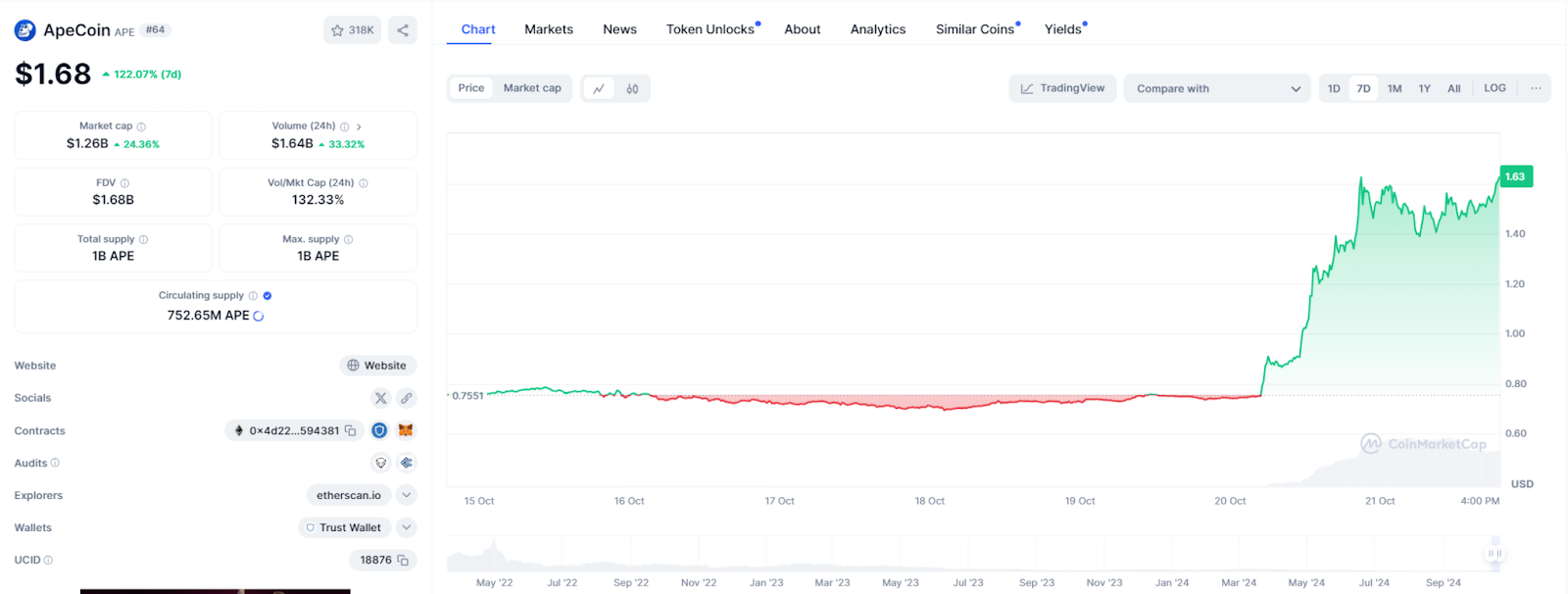
Circulation: ApeCoin has a total supply of 1 billion tokens, with approximately 753 million currently in circulation. The token unlock schedule is progressively slowing down.
-
Price movement: Over the past month, ApeCoin rose from $0.74 to $1.68, an increase of over 127%.
-
Future potential analysis: ApeCoin initially gained popularity due to its cultural connection with Bored Ape Yacht Club. However, long-term price appreciation cannot rely solely on community hype and branding.
-
On October 20, ApeChain and its official cross-chain bridge went live. Market data showed immediate price increases for initial meme coins launched within its ecosystem. According to ApeCoin’s official announcement, stablecoins bridged to ApeChain will be converted into DAI and deposited into sDAI, earning yield based on MakerDAO’s savings rate. LayerZero also announced it has gone live on ApeChain as the network’s standardized interoperability provider.
The launch of ApeChain and its cross-chain bridge provides APE with concrete utility, particularly as a gas token across multi-chain DeFi environments. Additionally, integration with LayerZero’s cross-chain technology enables seamless transfers of APE across multiple blockchains, significantly enhancing the token’s usability and liquidity. Overall, APE’s future upside depends on the growth of its cross-chain ecosystem and its ability to consistently introduce valuable applications. If the ApeChain ecosystem continues to expand and attract more developers and projects, APE holds considerable growth potential.
2. Uniswap (UNI): The Core Engine of Decentralized Finance
-
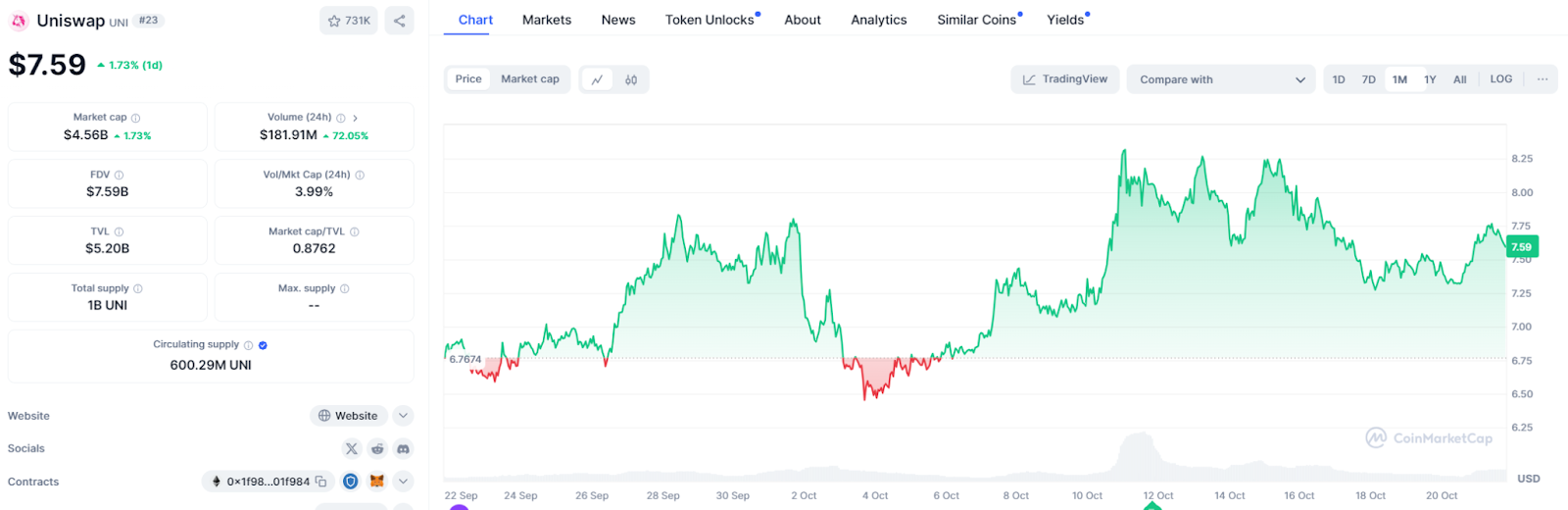
Overview: Uniswap is the leading project in the DeFi space, utilizing an Automated Market Maker (AMM) model that greatly simplifies decentralized trading. Its technological innovations—such as liquidity aggregation and Layer 2 solutions—have propelled the advancement of DeFi.
-
Circulation: UNI has a total supply of 1 billion tokens, with 600 million currently in circulation. The remaining tokens will be released gradually via a linear vesting schedule.
-
Price movement: Over the past month, UNI increased from $5.50 to $7.60, a rise of about 38%, largely driven by the launch of the Unichain testnet.
-
Future potential analysis: Uniswap has firmly established itself as a leader in DeFi, maintaining top-tier market cap and trading volume rankings over time.
On October 10, Uniswap Labs announced the launch of Unichain, stating that after years of building and scaling DeFi products, they identified areas for improvement and the requirements needed to advance Ethereum’s scaling roadmap. Unichain is a fast, decentralized Optimism Superchain L2 designed to serve as the chain for cross-chain DeFi and liquidity.
The introduction of Unichain as a Layer 2 scaling solution marks a significant acceleration in Uniswap’s technological innovation, directly tackling Ethereum’s scalability limitations. This provides strong technical backing for future price growth of UNI. Furthermore, Uniswap continues to enhance its liquidity aggregation and cross-chain trading functionalities. As Layer 2 adoption grows, reduced transaction costs and faster processing speeds will further strengthen its competitive edge. Given Uniswap’s dominant position in DeFi and its ongoing innovation, UNI possesses strong long-term upside potential, although short-term volatility remains inevitable.
3. Sui (SUI): High-Performance Blockchain and DeFi Innovator
-
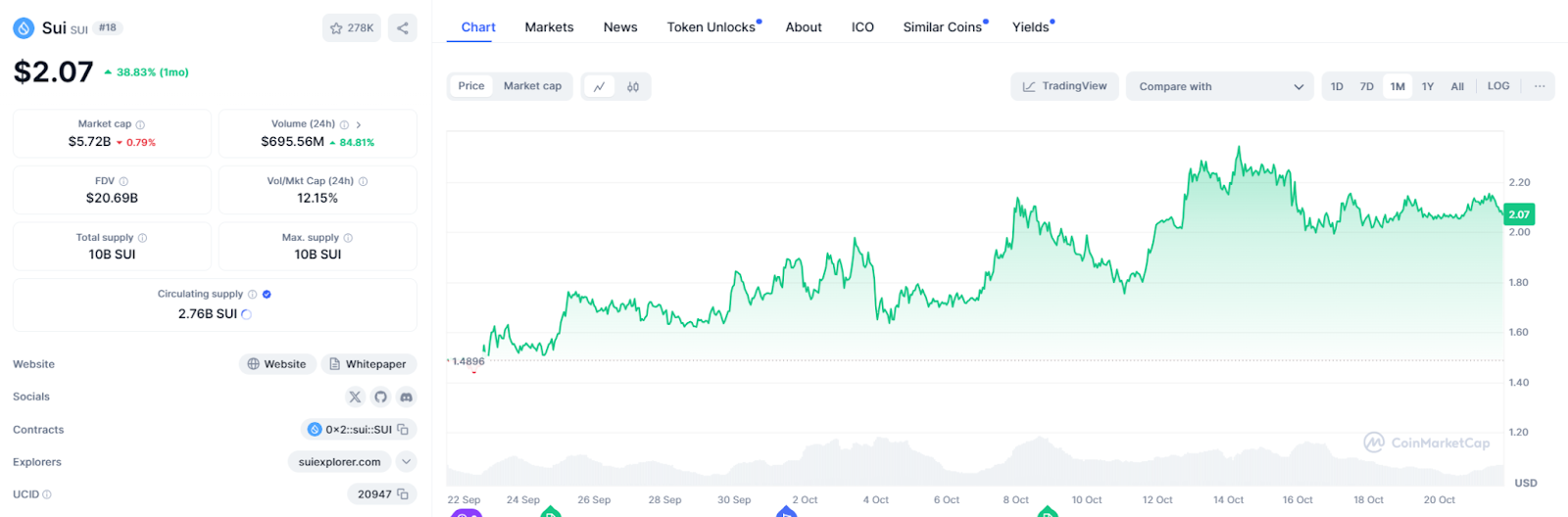
Overview: Sui is a high-performance blockchain built on the Move programming language, specifically designed to support DeFi and NFTs. Its innovative architecture and superior technical performance have enabled rapid growth in the decentralized application space.
-
Circulation: Sui has a total supply of 10 billion tokens, with approximately 2.7 billion currently circulating. The token unlock schedule is steady, helping avoid excessive market sell pressure.
-
Price movement: Over the past month, SUI rose from $1.80 to $2.10, a 16.7% increase, driven by institutional backing, USDC integration, and the launch of decentralized lending platforms.
-
Future potential analysis: Sui’s technical strength lies in its Move-based architecture, which offers exceptional scalability and security—particularly advantageous in DeFi and NFT markets.
On September 12, Grayscale announced that its Sui Trust (Grayscale Sui Trust) is now open to qualified investors seeking exposure to SUI.
On September 17, SUI partnered with Circle to bring native USDC to its network, significantly boosting its utility in decentralized finance.
In addition, the launch of decentralized lending platforms like Suilend has led to a surge in DeFi activity within the Sui ecosystem, with Total Value Locked (TVL) continuously rising—an indicator of strong momentum. Sui’s technological innovation and expanding DeFi ecosystem suggest long-term growth potential, though its success ultimately hinges on attracting more developers and users.
4. Jupiter (JUP): Liquidity Provider for the Solana Ecosystem
-
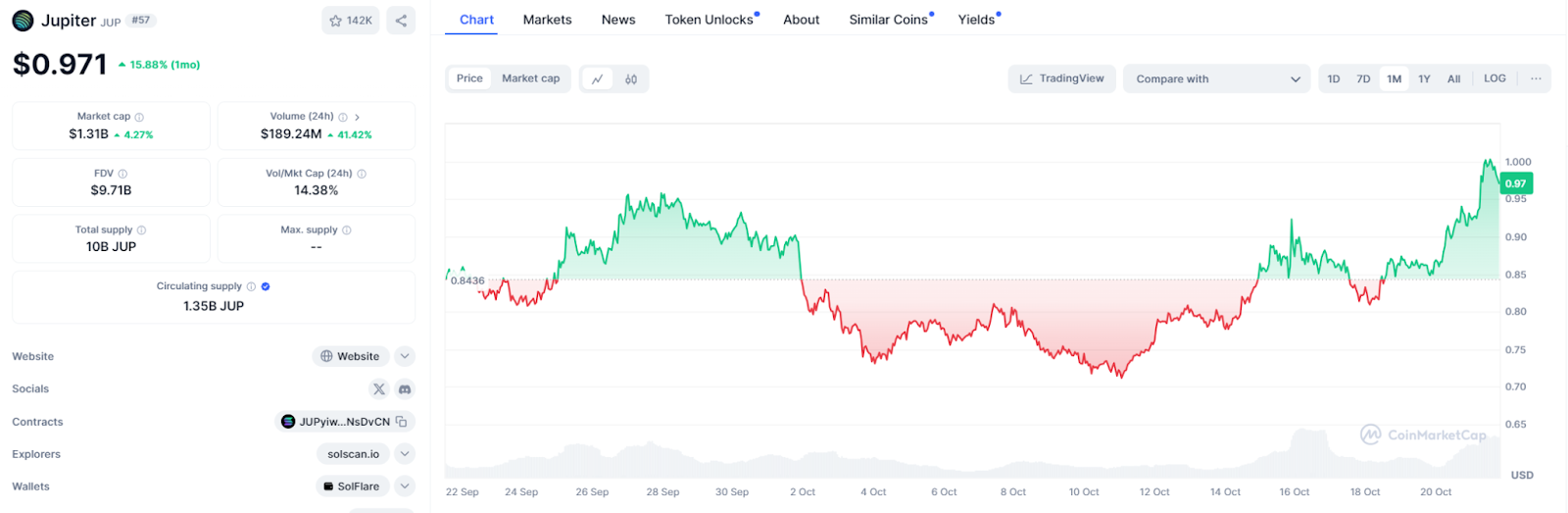
Overview: Jupiter is a decentralized exchange aggregator within the Solana ecosystem. By offering users optimal trade routes and low-slippage execution, Jupiter serves as a liquidity bridge for Solana. It aggregates liquidity from various sources across the Solana ecosystem to ensure best-price trades and has recently launched a mobile app to improve user experience.
-
Circulation: Jupiter has a total supply of 10 billion tokens, with around 1.35 billion currently in circulation. As Jupiter’s liquidity management improves, demand for JUP increases. Gradual unlocking of team and community staking rewards also contributes to growing token circulation.
-
Price movement: Over the past month, JUP rose from $0.70 to $1.00, a gain of approximately 42%. This surge was primarily driven by Solana’s ecosystem expansion and enhancements in Jupiter’s liquidity aggregation capabilities.
-
Future potential analysis: On September 20, Jupiter, the Solana-based DEX aggregator, rolled out multiple updates. Throughout October, it introduced a mobile app, email newsletter, and DAO website to further enhance user engagement.
JUP’s future performance is heavily tied to the health and growth of the Solana ecosystem. If Solana resolves its technical bottlenecks effectively, JUP could unlock new growth opportunities. Continued expansion of the Solana ecosystem would likely drive further appreciation in JUP, though risks related to Solana’s network stability and market conditions must be carefully monitored.
5. Bittensor (TAO): Pioneer of Decentralized Computing Networks
-
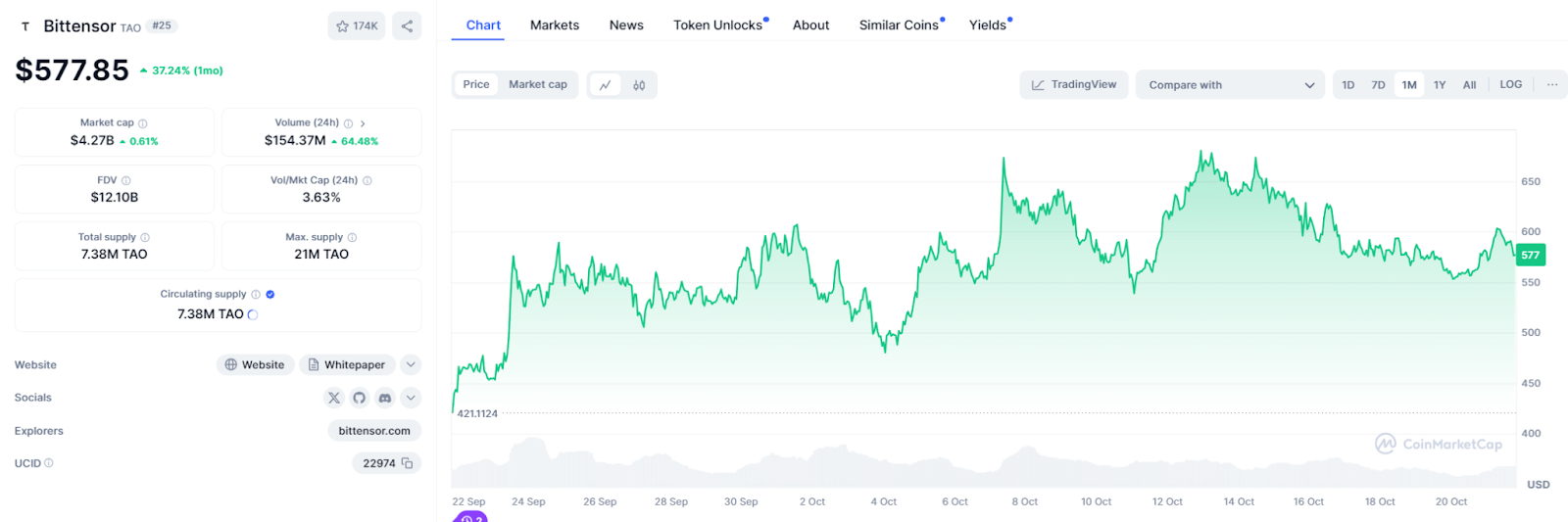
Overview: Bittensor is a decentralized machine learning network aiming to advance Web3 and AI by providing decentralized computing resources. It operates a GPU-based compute rental platform where users pay TAO tokens to access computational power, while participants who contribute their GPU resources earn TAO in return.
-
Circulation: TAO has a maximum supply of 21 million tokens, with approximately 7.38 million currently in circulation. The remaining tokens will enter circulation gradually, primarily used for paying compute resource leases. Since TAO liquidity depends directly on network demand for computation, Bittensor’s growth directly impacts TAO’s token demand.
-
Price movement: Over the past month, TAO surged from $250 to $575, a staggering 130% increase. This rally was fueled by Grayscale launching a Bittensor Trust Fund and rising demand for decentralized computing resources.
-
Future potential analysis: Bittensor uniquely combines blockchain with decentralized AI compute, positioning it strongly in Web3. The growing need for compute-intensive applications will likely drive increasing demand for the Bittensor network. As the native payment token within this ecosystem, TAO stands to benefit from network expansion. The launch of Grayscale’s Bittensor Trust has further boosted market confidence. With the Web3 ecosystem continuing to evolve, TAO holds significant long-term upside, especially amid rising demand for decentralized compute.
6. dYdX (DYDX): Giant of Decentralized Derivatives Markets
-
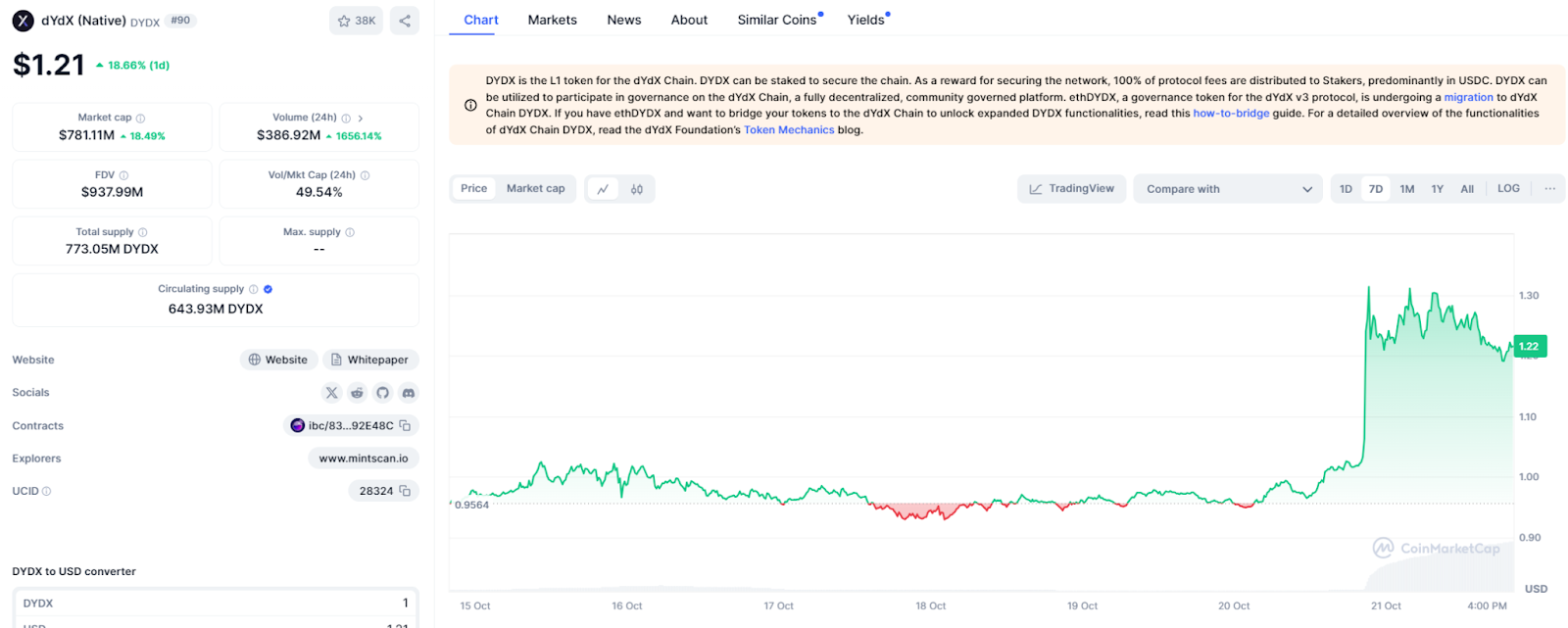
Overview: dYdX is the leading platform in decentralized derivatives trading, focusing on perpetual contracts and leveraged trading. Its permissionless architecture and efficient order book system provide a highly transparent trading environment, attracting institutional players and high-frequency traders alike.
-
Circulation: DYDX has a total supply of 400 million tokens, with approximately 220 million currently in circulation. Team and investor tokens are subject to gradual unlocking to prevent market shocks from sudden large-scale selling.
-
Price movement: Over the past month, DYDX rose from $0.80 to $1.25, a gain exceeding 56%. The return of founder Antonio Juliano boosted market confidence, while platform upgrades and rising trading volumes further supported the price.
-
Future potential analysis: dYdX maintains an unchallenged lead in the decentralized derivatives space. Its technical infrastructure and product offerings are highly favored by institutions and large traders. With Antonio Juliano’s return, dYdX’s strategic direction has become clearer, and the platform is expected to further strengthen its derivatives offerings.
On October 20, dYdX Foundation CEO Charles d'Haussy tweeted: “At tomorrow’s dYdX Day event, speakers will reveal secrets about moats, Trojan horses, and flywheels.”
Beyond this, the transparency and trustless nature of decentralized exchanges give dYdX strong long-term growth potential. As the leader in decentralized derivatives trading, dYdX is well-positioned for sustained expansion, particularly if the broader derivatives market continues to grow.
7. SushiSwap (SUSHI): An Innovative Force in DeFi
-
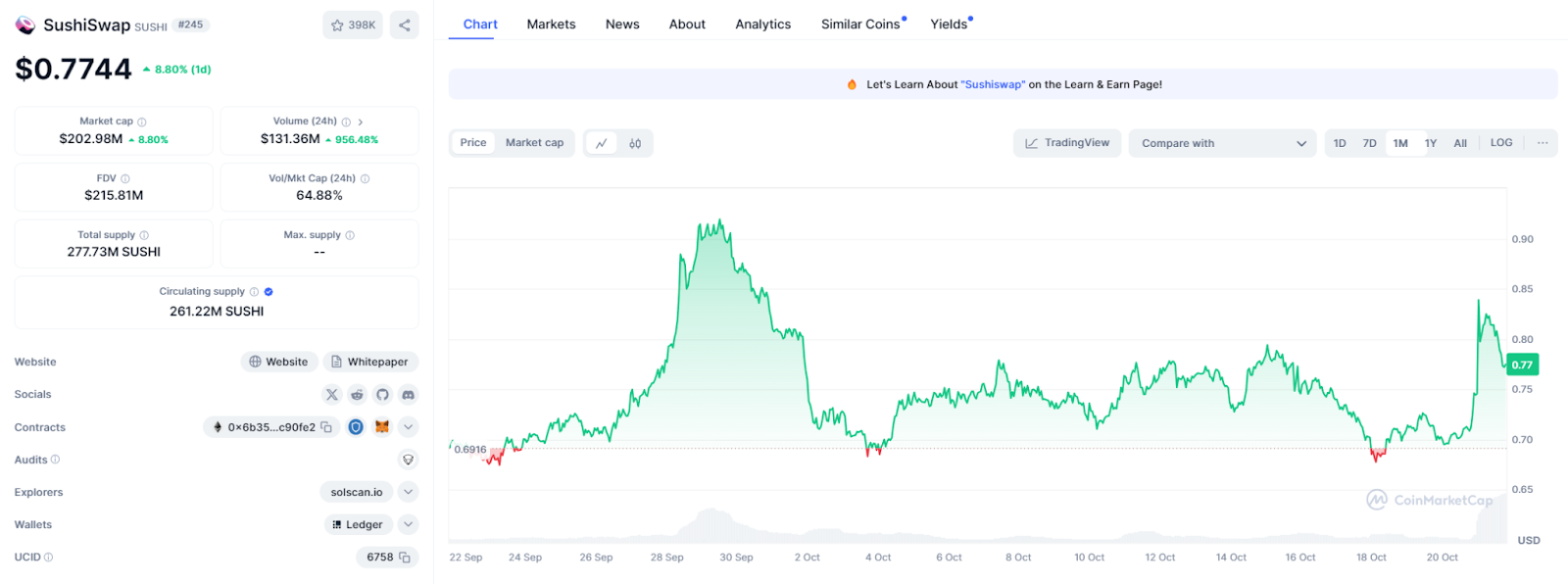
Overview: SushiSwap is a pioneering innovator in DeFi. Originally a fork of Uniswap, it has carved out its own identity through continuous innovation and expansion. Offering features like liquidity mining and leveraged trading, SushiSwap has cultivated a broad user base through distinctive product design.
-
Circulation: SUSHI has a total supply of 250 million tokens, with approximately 140 million currently in circulation. Tokens allocated to teams and early investors are being unlocked gradually, while staking incentives and liquidity mining programs boost market demand.
-
Price movement: Over the past month, SUSHI climbed from $0.52 to $0.80, a rise of about 53%, driven by anticipated technical upgrades and a strategic acquisition.
-
Future potential analysis: On October 21, Sushi Labs CEO Jared Grey stated on X that Sushi outperforms major aggregators on competing networks across key metrics including price, gas cost, and latency, with monthly aggregated volume steadily increasing. Sushi is set to announce a strategic acquisition that will allow it to integrate innovative DeFi primitives—currently operating invisibly—into its AMM and perps verticals.
SushiSwap’s recent tech upgrades and acquisition plans reflect the team’s ambitious vision for the future of DeFi. The future performance of SUSHI will largely depend on whether these innovations successfully translate into real-world usage and liquidity growth. Through ongoing innovation and expansion, SushiSwap continues to strengthen its competitiveness in the DeFi landscape. In the long run, SUSHI holds clear upside potential.
8. Worldcoin (WLD): Experimenting with Identity Verification and Web3 Infrastructure
-
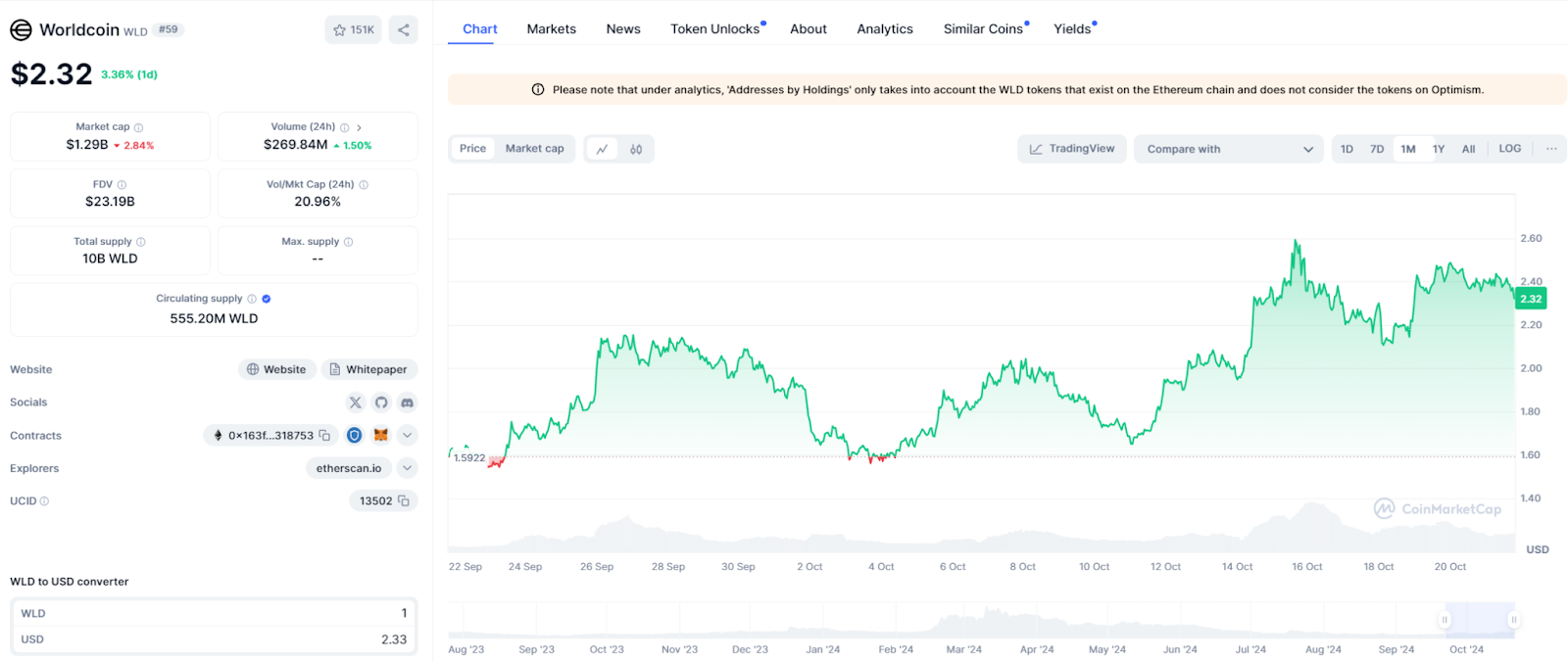
Overview: Worldcoin is a global digital identity and Web3 infrastructure project backed by OpenAI co-founder Sam Altman. Using World ID, it provides verifiable human identity through a decentralized identity system. Its Layer 2 network, World Chain, is built on Optimism, supports cross-chain transactions, and collaborates with major projects such as Uniswap and Etherscan.
-
Circulation: WLD has a total supply of 10 billion tokens, with approximately 550 million currently in circulation. More tokens will gradually unlock as the number of verified users increases.
-
Price movement: Over the past month, WLD rose from $1.30 to $2.30, a 76% increase. Key drivers include the mainnet launch of World Chain, a partnership with Dune Analytics to improve on-chain transparency, and Uniswap’s support for trading on World Chain.
-
Future potential analysis: Worldcoin targets use cases in identity verification, financial transactions, and Web3 applications, aiming to build an ecosystem grounded in verifiably unique human identities. Price momentum was boosted by the mainnet launch of World Chain and improved on-chain transparency via collaboration with Dune Analytics.
Additionally, Uniswap has officially launched on World Chain, significantly increasing its trading volume. Worldcoin has become one of the largest applications on OP Mainnet. If Worldcoin’s identity protocol continues to expand its reach and sustain global user growth, demand for its token will steadily rise. Moreover, as usage of its Layer 2 network World Chain increases and more developers build applications on the platform, the utility and demand for WLD will grow substantially.
Conclusion: The Long-Term Rise of Value Tokens
Although meme coins dominated the market over the past year, as the industry matures, value tokens are regaining investor attention through technological substance, ecosystem expansion, and long-term viability. These eight projects exemplify the latent potential of fundamentally strong assets. Looking ahead, as these projects continue to execute and deliver, value tokens may well lead the next bull market.
Join TechFlow official community to stay tuned
Telegram:https://t.me/TechFlowDaily
X (Twitter):https://x.com/TechFlowPost
X (Twitter) EN:https://x.com/BlockFlow_News