









It's already 202X—can we still farm this airdrop?
TechFlow Selected TechFlow Selected
It's already 202X—can we still farm this airdrop?
This article reviews the major airdrop projects of 2024 while addressing the question of whether airdrops are still worth farming.
 Navigating Web3 tides with focused insights
Written by: Biteye Xiaoshimei @biteye_sister
Edited by: Biteye Core Contributor Crush
Note: The following content is adapted from a speech delivered by a Biteye colleague at an airdrop strategy sharing session. All airdrop earnings mentioned are based on personal real-life experiences.
Airdrop—an expression seen by the vast majority of crypto users—might be the easiest way to make money, or it could be the fastest path to burning out.
Debates over the pros and cons of airdrops have persisted for two to three years now, from "fair distribution" to "basic income," then to "Sybil detection," "points," and more...
No matter your stance on this model, it has deeply influenced numerous blockchain projects.
On September 17, 2020, UNISWAP conducted an airdrop offering a minimum of 400 tokens, worth up to $16,000. The only requirement was having used the protocol before.
For users, a successful airdrop earns you the title of “Director X,” while missing out makes you “X who got rugged.”
For projects, a well-executed airdrop garners community worship—“Founders deserve eternal honor!”—while a poorly handled one might lead angry users to dig up the founder’s ID number.
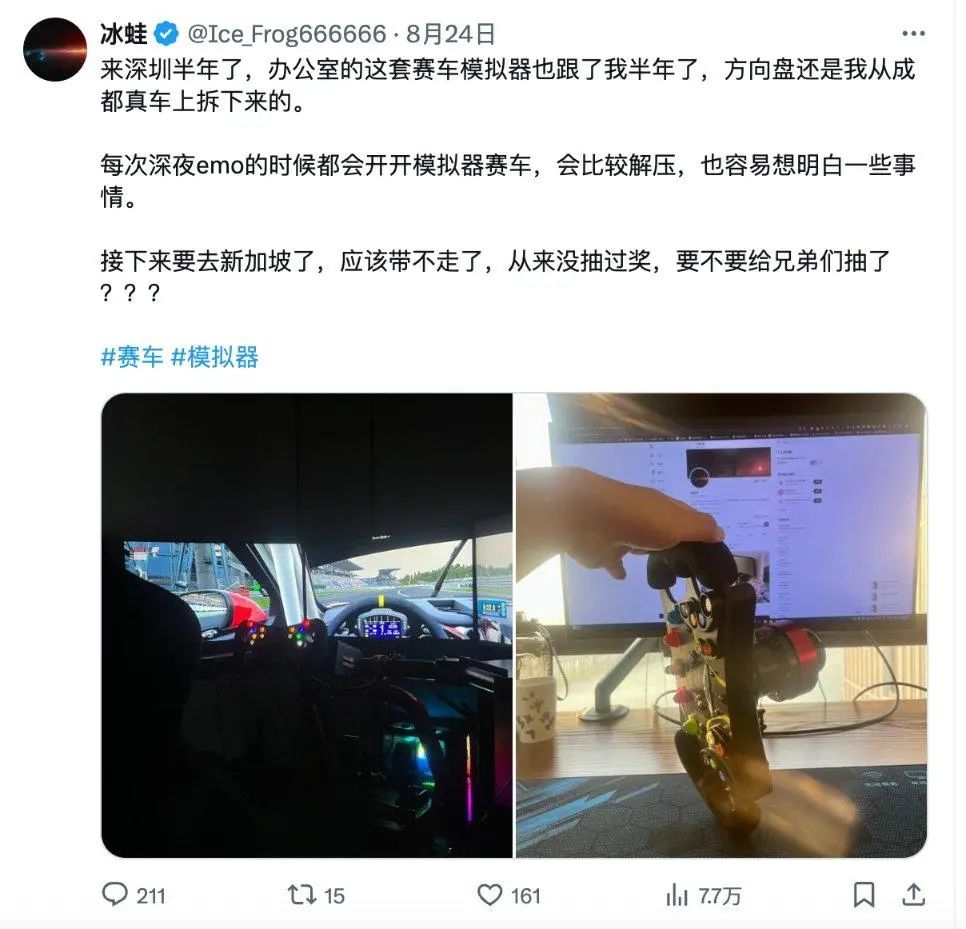
Bingwa reaped multiple windfalls from airdrops such as ARB and BLUR, earning him the nickname “Director Frog” among fans.
No matter how one feels about airdrops, after each event, one question always resurfaces:
In 202x, can we still farm airdrops?
The reason this question keeps coming up boils down to shrinking allocations, increasingly strict Sybil checks, and post-listing price dumps.
To address whether airdrop farming is still viable—and to review major 2024 airdrops—this article will take you through 15 minutes of insights. (Excerpted from a senior colleague's presentation at Biteye’s Airdrop Strategy Sharing Session)
For clarity, I’ll organize this discussion around key events and sectors as the main thread, with timelines serving as secondary reference.
In 2024, three major events and trends stood out:
-
January 10: Bitcoin ETF approved, inscriptions launched on top exchanges; founder Casey bet he would "live-stream hara-kiri" if the new Runes market cap stayed below $1 billion;
-
March 13: Ethereum’s Cancun upgrade, reducing L2 transaction fees by 90%; various restaking assets followed Blast’s lead in launching points programs;
-
March 18: Solana price breaks $210, up 20x since FTX collapsed at the end of 2022, becoming a MEME coin paradise and driving momentum in the DePIN sector.
01 Bitcoin Ecosystem
We begin with Bitcoin. Major airdrop opportunities in the Bitcoin ecosystem in 2024 included: Babylon Pioneer NFT, Pizza airdrop, and OKX Wallet Drops.
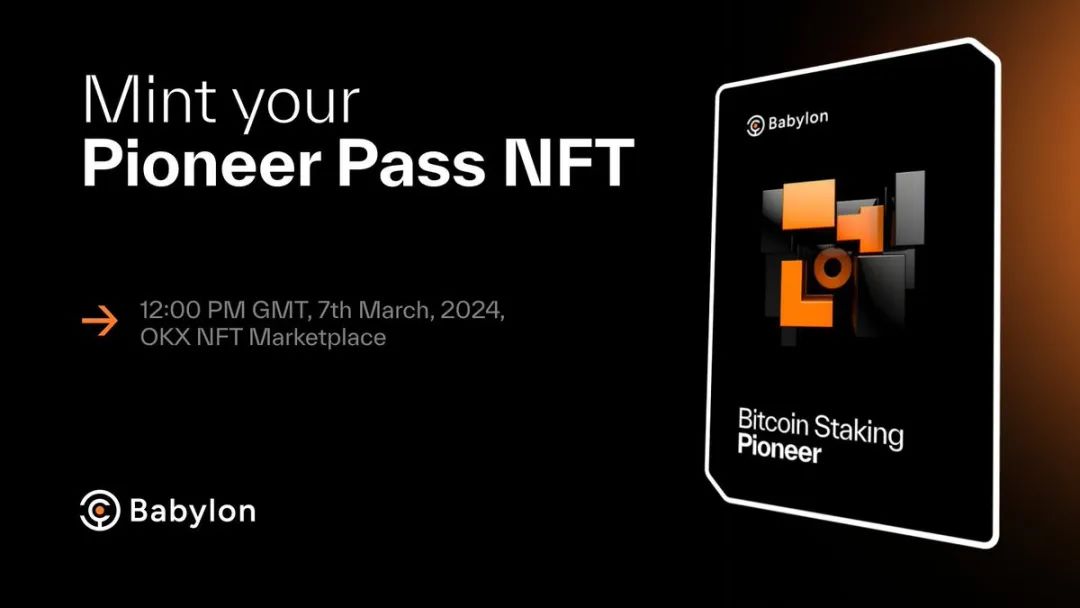
1.1 Babylon Pioneer NFT
The Babylon NFT was undoubtedly the fastest return on an “airdrop” in 2024! They had already hinted at rewards during their collaboration with okxweb3. Claiming the NFT was simple: deposit testnet sbtc into the test pool and bind an EVM wallet (to claim the NFT).
Challenges
1. Faucet funds were extremely hard to obtain—most participants got stuck trying to claim testnet tokens; 2. Should we worry about Sybil detection? Initially, I managed to get enough water for just 10 accounts. Later, I bought $100 worth of sbtc from off-chain groups (exact amount forgotten), which supported roughly 200 accounts.
After careful consideration, I decided against implementing anti-Sybil measures. BTC ecosystem rarely conducts Sybil checks, and given faucet scarcity, sharing test tokens is perfectly normal.
Only the first 100k users received rewards, making time critical—around two days total. The main effort involved distributing testnet tokens. I completed ~200 accounts and received ~200 NFTs.
Profit Assessment
ROI here was outstanding—I sold about 100 NFTs on secondary markets and OKX at an average price of 160u, netting ~15,000u profit. I held onto the rest, but prices later dropped below 30u per NFT. In hindsight, selling everything during the FOMO phase would’ve been smarter.
1.2 OKX Drops
https://www.okx.com/zh-hans/web3/marketplace/launchpad
OKXWeb3’s BD team partners weekly with high-quality projects to secure whitelist spots for the community—some of which carry significant value.
Whitelists like Tinfun NFT, Bitsmiley Smiley, and INK have yielded profits exceeding $1,000 per slot, all at zero cost to participate.
However, as participation grew, OKXWeb3 implemented measures to reduce "farmer" win rates.
They introduced tiered EVM addresses: wallets with rich DeFi/NFT activity ("premium accounts") enjoy much higher odds than regular ones, while bot-like accounts face reduced chances.
Therefore, the optimal strategy is for users with premium accounts to join every round—essentially free gains. (It remains unclear whether similar tiered lotteries apply to BTC or Solana wallets.)
I noticed the Bitsmiley campaign—given the heat in the BTC ecosystem and low entry barrier, I decided to participate.
Profit Assessment
1. Bitsmiley used BTC wallet draws, requiring ~$10 worth of BTC verification. I deployed 100 wallets, with an overall win rate above 1/20—I secured 6 whitelists;
2. Each NFT peaked at $2,000, resulting in nearly $10,000 in profit. (This OKX draw setup later brought me even bigger surprises in the BTC ecosystem—see below.)
1.3 Pizza

Pizza is a meme coin issued officially by Unisat—excellent theme, massive hype.
Unisat announced that any wallet interacting (transferring) via the Unisat wallet within three months prior to snapshot time would receive a baseline allocation. Additional bonuses applied for using Unisat services, holding points, or being a Unisat OG.
Earlier, I mentioned splitting 100 wallets for the OKX Drops. In May, I planned to stake BTC across these 100 wallets on Solv’s BTC staking product—by accident, almost every wallet ended up with a transfer record, qualifying them for the Unisat airdrop.
Profit Assessment
The baseline reward was 100 Pizza per wallet. After full distribution, each wallet reached ~$600 in value, peaking at $800. Estimated profit: ~80 wallets × $550 ≈ $40,000.
In summary, BTC ecosystem airdrops often occur shortly after BTC hits new highs—i.e., during periods of “liquidity overflow.”
These tend to feature high barriers (BTC chain gas costs, interaction complexity), high returns (per-account profits), and low requirements (no large-scale Sybil checks).
But airdrop value lies in expectations—selling mid-cycle often yields maximum profit, whereas holding until the end usually turns feast into leftovers.
02 ETH Ecosystem
Next, the ETH ecosystem. Key airdrops in 2024: Friendtech, Stark, Zksync, LayerZero.
2.1 Friendtech
FT was a breakout socialFi phenomenon at the end of 2023. I joined a month later, so I didn’t hold big influencer shares—instead, I opted for matrix farming.
But the journey wasn’t smooth. Rule changes required position migrations (buy/sell actions incurred a 10% fee).
Ultimately, I invested over 5 ETH. With threefold leverage via the matrix, my portfolio peaked at under 20 ETH in value, with less than 1 ETH in wear-and-tear loss.
Profit Assessment
Airdrop began in May 2024. I received 15,000 points. Sold 2,500 points on Whales Market Pro at 4u each; remaining points liquidated at 1–2u post-launch. Final profit: ~$30,000.
Cost-wise: under 1 ETH lost to slippage. But the remaining ETH rose from $1,800 to a peak of $3,500—making the effective cost negative.
2.2 Stark
Stark was the third of the “Big Four” L2s to launch its token. Unlike the universally praised earlier two, Stark’s airdrop drew mixed reactions.
The most controversial aspect was the hard cutoff on on-chain balances: wallets with less than 0.005 ETH were completely disqualified.
Other criteria—active for at least 3 months, $100+ transaction volume—were relatively easy to meet.
This rule unfairly excluded many users who had deposited ETH into DeFi protocols—effectively backstabbed, losing everything.
Additionally, TrustGo’s Sybil detection flagged clusters of wallets with similar on-chain behavior. However, due to lack of transparency in TrustGo’s database and detection logic, this centralized approach faced backlash.
Still, for those meeting the criteria, Starknet proved a solid “Eat Well” airdrop—worthy of its “Big Four” status.
Baseline rewards started at 500 tokens—prompt sale yielded ~$1,100. Mid-tier accounts received 1,000–3,600 tokens (~$2,000–$8,000). Over 1 million addresses received airdrops—massive scale.
The top tier rewarded 10,000 tokens per account ($20,000)—rarely achieved.
Profit Assessment
I deployed ~50 accounts (lost some due to insufficient monthly activity and balance). Each earned between 650–3,600 tokens, totaling ~50,000 tokens. At launch, this translated to ~$100,000 in value.
In short, Stark was a clear win for multi-account baseline farmers—the baseline bar was low.
Just 0.005 ETH + 3-month MAU + $100 volume—$5 cost for $1,000 return.
Top-tier rewards, though over 10x baseline, came with prohibitively high difficulty and cost—low ROI.
Notably, Stark also rewarded ECMP contributors. Combined with the harsh balance cutoff, some suspected insider allocations (“insider trading”).
Unfortunately, post-token launch, Stark failed to retain TVL and user engagement. Subsequent ecosystem airdrops like Zklend and Ekubo, while decent DeFi projects, delivered poor token prices and returns.
2.3 Zksync
By the second half of the year, Zksync and L0 airdrops shattered expectations across the entire farming landscape.
Zksync innovatively introduced a scoring system based on time-weighted TVL multiplied by bonus factors—making deposited amounts the primary metric, contradicting prior assumptions around MAU, transaction volume, or tx count.
Moreover, zk rewarded holders of niche zk-native tokens and select NFT collections—fueling accusations of “insider favors.”
That said, personally, I believe Zksync fairly rewarded genuine DeFi users—many real players received over 50,000 in airdropped tokens. This was clearly a premium-account-focused drop.
Profit Assessment
My main account held over 10,000 zk; others had just thousands. Half my accounts didn’t qualify due to insufficient deposits—total haul: only 80,000 zk.
Given weak launch pricing, I held and remain underwater. Costs weren’t low, and effort was substantial.
Some users farming for 3 years got nothing. Even outdated studios missed out. Overall, deeply disappointing for most.
2.4 LayerZero
L0 was worse than ZK—a complete shitshow. Extremely low allocations, harsh conditions, and unpleasant “Sybil hunting” drama. Not worth elaborating.
Profit Assessment
L0 returns were minimal—most accounts barely broke even. Large accounts saw ~2x returns. I didn’t have a single account earning over $1,000. A follow-up retro airdrop offered only marginal improvement.
In summary, the ETH ecosystem remains a hub for airdrop projects, but rules are tightening, Sybil checks growing stricter, and per-account returns unlikely to match past highs.
The shift from the “multi-account era” to today’s “premium account era” signals a transition from “free farming” to “capital-invested farming.”
03 Solana Ecosystem
Finally, the Solana ecosystem. Key 2024 airdrops: Jupiter, Wormhole.
3.1 WEN

In January, before $JUP launched, a meme coin experiment distributed 70% of WEN tokens evenly across over 1 million Solana wallet addresses.
Eligibility included Jupiter users, Ovols NFT holders, blue-chip NFT holders, Genesis Saga NFT holders, and mockJUP testers.
Profit Assessment
Each address received ~643,652 tokens. Depending on exit timing, individual accounts earned $50–$100.
3.2 JUP
JUP airdrop launched on January 31. Snapshot cutoff: November 2, 2023. Over 950,000 wallets that directly interacted with Jupiter qualified for the initial airdrop—336,000 received 200 JUP.
The baseline was 200 tokens (~$120). Additional bonuses applied for OG status, trading volume, sustained usage, continued use during 2023 (bear market), and use of limit orders. Bot accounts were flagged and excluded.
As a 2022 entrant, most Solana users have likely used Jupiter. But from personal observation, most received fewer than 500 tokens per wallet—Solana’s ecosystem remained dormant for nearly a year after FTX’s collapse in late 2022, making consistent Jup usage challenging.
Profit Assessment
I had 10 Solana wallets that used Jupiter. Only my primary wallet received a large amount. Total: 10 baseline claims of $Wen (~$800 sold), 10 baseline claims of $JUP (~$2,000 sold).
From an ROI perspective, Jupiter series returns were excellent—Solana interactions are cheap. But casual users only grabbing baselines won’t earn much—more of a decent meal than a jackpot.
For bulk farmers who avoided bot detection, JUP was a clear win for multi-account baseline hunters. No obvious signs of insider bias in the rules.
3.3 Wormhole Airdrop
$W is considered the highest-yielding cross-chain protocol airdrop to date.
Main reasons: strong funding, backed by Solana, less competitive compared to LayerZero, and fewer eligible addresses (~400k).
Wormhole evaluated users’ cross-chain activity, set a minimum interaction threshold of ~$1,500, and rewarded early adopters, consistent users, and those active even during bear markets.
Naturally, Wormhole implemented anti-Sybil measures—beyond standard fund-source analysis, they used behavioral clustering (https://arxiv.org/abs/0803.0476) and spam transaction detection.
Profit Assessment
Some Solana and EVM wallets received minor allocations, but official criteria weren’t fully disclosed—reasons for non-receipt remain unclear.
In summary, Wormhole’s high ROI stemmed from limited recipients (“few monks, plenty of meat”). However, lack of transparency in anti-Sybil methods and allocation rules led to criticism from users who missed out.
Overall, the Solana ecosystem remains a capital-driven game—only projects with strong backing can deliver profitable airdrops. Other Solana-based drops offered minimal returns.
04 Summary & Outlook
Looking at broader trends, airdrops in 2022–2023 (e.g., OP, Arbitrum) rarely sparked “insider favoritism” controversies.
Those airdrop criteria felt more “natural” and fair—even when rewarding NFT collections like Galxe or ZKBridge, those NFTs were task-based and widely known (e.g., “Galaxy Girls,” “Panda King”).
Any insider advantages were limited to knowing snapshot timing and selling afterward—ordinary users holding NFTs long-term weren’t significantly impacted.
But recent drops like zk and L0 have made criteria unpredictable. Projects now reward obscure tokens and niche communities—average users without insider info struggle to prepare.
Hence, EVM airdrop strategies must evolve—and focus shouldn't remain solely on EVM.
Future EVM Airdrop Strategies
1. DeFi Yield Farming
Projects combining (re)staking, RWA stablecoins, or L2s with DeFi allow multi-layered returns—earning 10%+ APY plus points. Ideal for large, risk-averse capital. For higher point yields, consider PT mechanics involving deeper strategic plays.
Example: Around May, Stone project allowed staking ETH into Stone, bridging to Scroll, buying PT, and selling by end-June—profiting or breaking even while “freely” collecting Stone points. For safety, split QueenStone for steady yield and points.
This sequence engaged Stone + LayerZero + Scroll—earning dual points. Classic “one fish, multiple meals.”
More examples:
Bridge ezETH to Linea, deposit into Mitosis. This engages four projects: Renzo + Hyperlane (bridge) + Mitosis + Linea.
For pure APY, consider USDe/Usual or Anzen—stablecoin/RWA plays.
2. Account Creation & Nurturing
While no exciting new EVM airdrop projects stand out currently, many testnet faucets already impose wallet requirements—e.g., Initia requires Gitcoin score of 20.
Some projects reward legacy wallets—e.g., Particle grants extra points for older wallets with transaction history.
3. Alpha Projects & High-Potential Sectors
Currently, Base ecosystem offers richer alpha—though Base may not issue a token. Optimism-led Superchain is another promising narrative—given we don’t need endless L2s.
Shifting to Other Ecosystems
1. BTC Ecosystem
The BTC ecosystem has already seen a wave of inscription mania—with ample room ahead. In 2024, BTC spawned major wins like RSIC/DOG/PIZZA/Bitsmiley/Babylon NFT—all sharing traits of “passive earning” and reliance on tx history and asset holdings.
Current strategy: frequently use wallets like Unisat, Wizz, or platforms like Gennidata to mint unique assets—e.g., Rune #0 / BRC20—or buy popular assets (Pizza, Sats, Ordi, RSIC) on marketplaces.
Once properly configured, these accounts gain low-cost access to new BTC ecosystem projects (via whitelist eligibility).
2. Solana Ecosystem
Solana is a capital-rich ecosystem—foundation support for quality projects is strong. Long dubbed the “ETH killer,” if Ethereum has successful apps, Solana should too—e.g., Lido equivalent on Solana: Jito. Jito airdrop rewarded users who staked just 1 SOL with tens of thousands in returns.
Similarly, Opensea/Blur equivalent: Magic Eden; unfunded but promising: Squads (Safe equivalent on Solana). Despite fewer users than EVM chains, opportunity abounds.
3. Ton Ecosystem
Ton is a contradictory space: low barrier, ideal for retail. Unlike EVM/BTC, Ton only requires a Telegram account and minimal funds. Yet, retail users rarely strike it rich.
Mass adoption means player base is in the millions—individual airdrops may only yield hundreds of dollars. Even with 10 accounts, retail users won’t earn big.
Bulk farming demands high-level device/IP/account anti-detection management—newcomers risk losing half their accounts quickly.
But for experienced studios with resources, since 90% remain focused on EVM/Solana, early Ton-focused teams could capture outsized first-mover profits. That said, I see little room for retail success here.
4. Move Ecosystem
Recently, the Move ecosystem has surged—SUI hitting new highs, APT reclaiming $10.
Note SUI’s Deepbook airdrop: simply stake or interact with staking DeFi protocols to qualify—rewards ranged from dozens to hundreds of USD per account.
APT Foundation also reserves tokens for future airdrops. A conservative move: stake APT or engage with protocols like Amnis to await rewards.
The rising star in Move is Movement. Its testnet already offers tasks for dedicated grinders.
However, studio automation scripts are mature—manual players must focus on excelling in per-account task completion, role acquisition, and item quality rather than mass-lining for baseline rewards.
Join TechFlow official community to stay tuned
Telegram:https://t.me/TechFlowDaily
X (Twitter):https://x.com/TechFlowPost
X (Twitter) EN:https://x.com/BlockFlow_News
 @BiteyeCN









