Brief Review of the First Bitcoin-Native Stablecoin YU: Ethereum's DAI Moment?
TechFlow Selected TechFlow Selected
Brief Review of the First Bitcoin-Native Stablecoin YU: Ethereum's DAI Moment?
Yala uses native BTC as collateral, enabling over-collateralization to mint a circulating stablecoin called YU.
 Navigating Web3 tides with focused insights
By Haotian
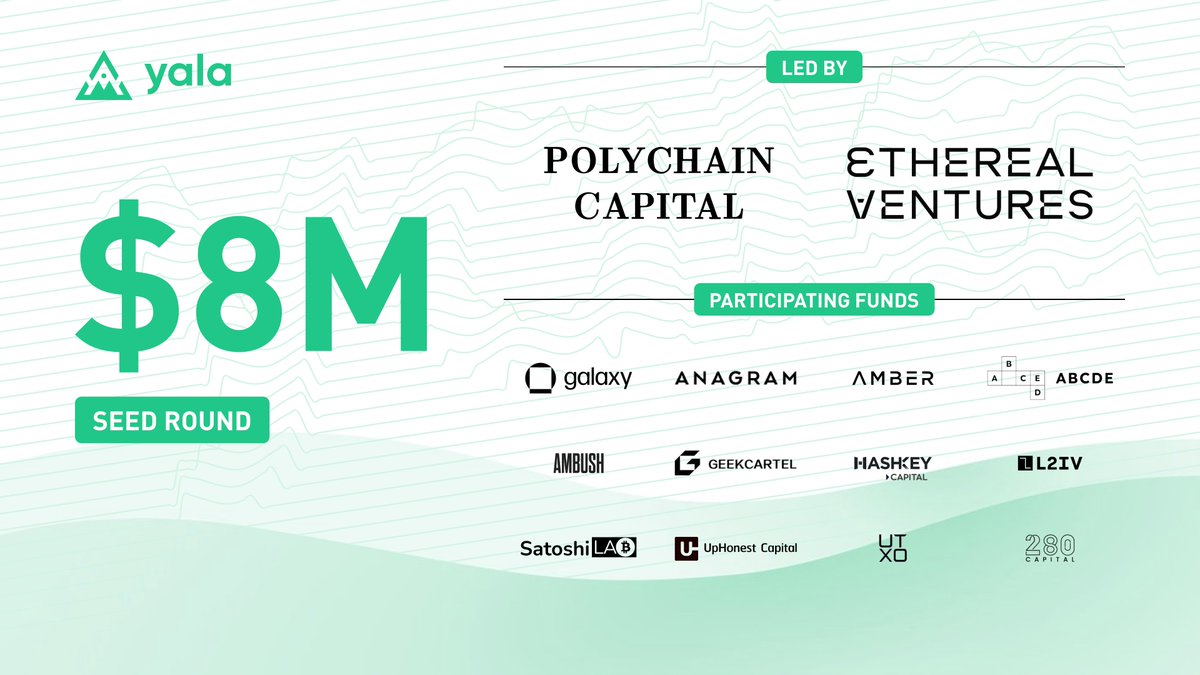
As the first native Bitcoin stablecoin YU, @yalaorg last night announced an $8M seed round led by @polychaincap and @etherealvc, officially unveiling its ambitious vision of unlocking BTCFi liquidity yield markets through a stablecoin. How should we view what Yala is doing? It’s somewhat akin to Ethereum's "DAI moment" — Yala aims to bring a "YU moment" to the BTCFi ecosystem. Here’s my take:
1) If I recall correctly, the last time these two firms co-led a seed round was for Eigenlayer. This round also includes Galaxy, Anagram, Amber Group, and others — making it a fairly serious fundraising effort, primarily backed by top-tier U.S. institutions.
2) The narrative around BTCFi has been building quietly beneath the surface. Yala seeks to enter this space by leveraging a highly liquid and stable "stablecoin" as the entry point, enabling users to access partial liquidity for DeFi participation without selling their native BTC holdings.
In simple terms, Yala’s role resembles that of MakerDAO in early Ethereum DeFi — sparking a revolution via DAI. Similarly, Yala’s stablecoin YU follows design principles closely inspired by DAI.
Yala uses native BTC as collateral, allowing users to over-collateralize and mint a circulating stablecoin called YU. By dynamically adjusting collateral ratios and leveraging arbitrage opportunities tied to liquidation mechanisms, Yala controls the supply of YU to maintain its value around $1, ultimately positioning YU as a unified liquidity asset across Bitcoin-based chains, EVM chains, and other multi-chain environments.
3) So how does it work? Based on the whitepaper, here’s my summary of the core logic:
1. Yala leverages Bitcoin’s mainnet as a data index layer: users send transactions on Bitcoin’s mainnet, embedding target chain and recipient address information directly within the OP_RETURN field;
2. Users deposit native BTC to a designated address. Yala’s bridge system detects these deposits and mints a 1:1 equivalent of yBTC on the target chain. To prevent data manipulation, there is a default waiting period of 6 blocks;
3. The minted yBTC can then be locked into the Yala protocol as over-collateralized assets to generate the stablecoin YU. The collateral ratio, similar to DAI, is dynamically adjusted;
4. When users wish to withdraw BTC, they simply initiate a burn transaction on the respective chain. The smart contract triggers the destruction of yBTC, which prompts a response from the BTC mainnet custody pool. For security, the system waits for 12 confirmations before sending the BTC back to the user’s specified Bitcoin address.
Clearly, Yala relies on Bitcoin’s decentralized and immutable on-chain data as the source of truth, using this data index to govern cross-chain bridge operations and control token minting behavior on other integrated chains — a mechanism Yala defines as “MetaMint.” This approach harnesses Bitcoin’s native strengths differently from Ordinals, which issues assets directly on Bitcoin. Instead, MetaMint uses Bitcoin-generated data indices to orchestrate actions across connected chains.
4) Due to inherent limitations of Bitcoin’s scripting language, this native BTC-based stablecoin minting process requires built-in safety buffers — specifically, mandatory block confirmation windows — to maximize security. Additionally, during high volatility, risks related to liquidations pose challenges both for the system’s ability to adjust dynamic collateral ratios and for users needing timely collateral adjustments.
To address this, beyond over-collateralization as a buffer against market swings, Yala implements stability fee adjustments, a liquidation engine, and various market-driven incentive mechanisms to stabilize YU’s price.
For example: users pay a stability fee when generating YU. When YU trades below $1, increasing the fee discourages further minting; conversely, lowering it encourages minting. Yala also plans incentive programs around market-making, arbitrage, and auctions — harnessing market forces themselves to absorb volatility-related uncertainty. We’ll get clearer insights once Yala launches its testnet next week.
Overall, the BTCFi sector continues evolving its “yield-bearing” narrative — from @babylonlabs_io’s secure consensus export, to @GOATRollup’s ZK general-purpose framework, to @SolvProtocol’s focus on unifying liquidity abstraction layers. Now with Yala aiming to enrich DeFi infrastructure via a native stablecoin, the BTCFi landscape is maturing rapidly. There’s strong reason to look ahead with growing optimism.
Join TechFlow official community to stay tuned
Telegram:https://t.me/TechFlowDaily
X (Twitter):https://x.com/TechFlowPost
X (Twitter) EN:https://x.com/BlockFlow_News
 Haotian | CryptoInsight