








From ICOs to Community Tokens: A Journey Through the Evolution of Cryptocurrency Issuance
TechFlow Selected TechFlow Selected
From ICOs to Community Tokens: A Journey Through the Evolution of Cryptocurrency Issuance
The best returns typically occur in the early stages of emerging trends.
 Navigating Web3 tides with focused insights
Author: Ignas | DeFi Research
Translation: TechFlow
I started getting interested in memecoins and even bought MOODENG. FOMO drove me to act. My default expectation was that the price could go to zero, but I didn’t want to miss the chance of it becoming the next Doge. I wanted to be part of a success story and join a community filled with optimism.
In fact, buying memecoins satisfies an inner need for belonging more than purchasing other utility tokens—it’s about being part of a narrative and joining a community sharing bullish sentiment around potential “success.”
You see, this kind of optimism and bullishness is hard to find elsewhere in crypto.
Ethereum holders expect ETH might only 3x or 4x in this cycle, BTC perhaps similar. SOL may reach $1,000. For tokens with low circulating supply and high fully diluted valuations (FDV), market sentiment is generally bearish.
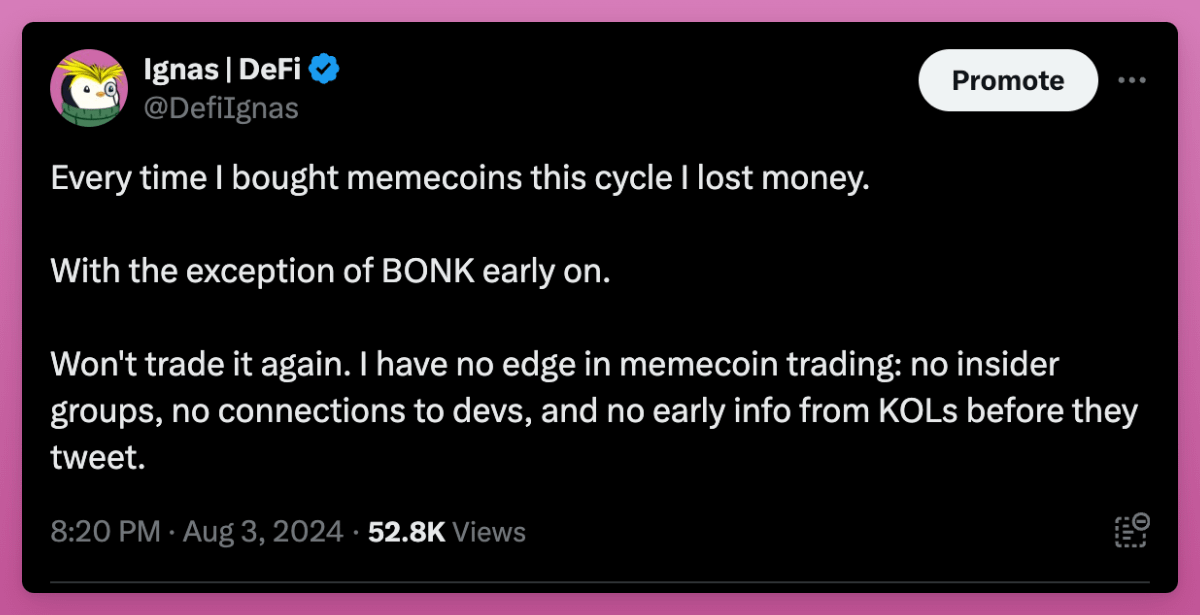
This also goes against my own promise not to trade memecoins. I won’t buy coins heavily promoted in X posts, but I’m willing to experiment with ones I believe have potential.
I changed my mind because my primary principle in crypto is to stay open-minded and try new things. Being an extremist yourself is risky, but identifying and investing in communities of extremists can yield massive returns.
Therefore, this blog post explores some emerging developments, especially new ways of bringing tokens to market.
Identifying the latest token launch trends may be the most profitable trade we can make. Memecoins are just one such trend—others are emerging in this cycle.
A Brief History of Token Launches
Viewing cryptocurrencies as a hedge against fiat overprinting might be our biggest self-delusion. While Bitcoin may be an exception, the crypto industry's way of "printing money" would make central banks jealous. CoinGecko lists 14,741 cryptocurrencies, plus thousands more that didn’t survive long enough to be listed. Each cycle, launching tokens becomes easier.
Below are key token launch trends you should know—and how they changed the game (feel free to skip if you’ve read my previous posts).
-
Litecoin & Early Altcoins (2011): Litecoin was among the first altcoins, launched in 2011 as a Bitcoin fork. Before Litecoin, many believed Bitcoin was all blockchain would ever be! However, Bitcoin forks revealed that private currencies could be created. This era saw a few Bitcoin forks and Proof-of-Work altcoins like Bitcoin Cash and Bitcoin SV. Forked tokens provided Bitcoin holders with “free” tokens during the fork process, creating profit opportunities.
-
ICO Mania (2017): The ICO boom was fueled by Ethereum’s ERC20 standard, making new token creation cheap and easy. No more PoW hardware needed! Thousands of tokens were launched, each accompanied by grand promises. ICOs often raised substantial funds, but the 2018 market crash led to huge losses as many projects failed to deliver. This phase marked a speculative “money printing” era, where teams issued tokens with minimal effort, ultimately leading to market collapse.
-
DeFi & Liquidity Mining (2020): The next innovation came in DeFi Summer 2020, when liquidity mining and yield farming became popular. Projects like Compound (COMP) and Sushiswap introduced liquidity mining rewards, distributing governance tokens to users who participated in protocols. This incentivized liquidity and user engagement, but excessive token issuance eventually outpaced demand, causing another market crash.
-
Era of Fair Launches: This period was very short-lived. Yearn Finance’s YFI token exemplified the “fair launch” concept—no ICO or pre-sale, tokens distributed directly to users. Anyone could participate; YFI’s initial mining rewards attracted widespread attention. Yet, people quickly realized “fair launches” weren’t truly fair. Pre-mining was already common before marketing campaigns began, and teams gained little from genuinely fair launches, so incentives were misaligned.
-
NFTs & Ponzi Tokenomics (2021): The NFT craze, epitomized by Bored Ape Yacht Club, introduced a new form of “money printing.” Numerous NFT collections emerged, repeating the speculative token issuance patterns that previously caused market crashes. As attention and capital diluted, many new NFT projects collapsed. NFTs resemble memecoins, but with each collection capped at around 10,000 NFTs and high prices, they excluded many people, limiting community size.
Despite different methods of issuing “currency,” markets inevitably crash when “printing” exceeds incoming “hard cash.” We ended up minting too many tokens to meet demand.
The Token Launch Narrative in the 2023–2024 Bull Market
The first phase of the current bull market was defined by the rise and fall of the points-for-airdrop trend.
Points systems evolved naturally to address some liquidity mining issues. By giving teams greater flexibility in executing token generation events (TGEs) and attracting capital into protocols, they boosted Total Value Locked (TVL), “proving” product-market fit. This also allowed teams to secure higher valuations from venture capitalists.
Initially, this worked remarkably well when Jito and Jupiter generously rewarded users. But once the meta-game of points farming became clear, air-drop ROI often turned negative.
Speculators tried farming points, only to find that gas costs frequently exceeded air-drop gains. Additionally, point systems lacked the transparency of DeFi Summer liquidity mining programs.
They misled you into thinking staking “DYM” or “TIA” would earn you multiple airdrops (which never materialized), making you rich.
However, the biggest issue causing this trend’s decline was the launch of tokens with low circulating supply and high Fully Diluted Valuation (FDV). As TVL grew, markets perceived these protocols as more expensive, so tokens launched at inflated valuations, leaving little upside for new buyers.
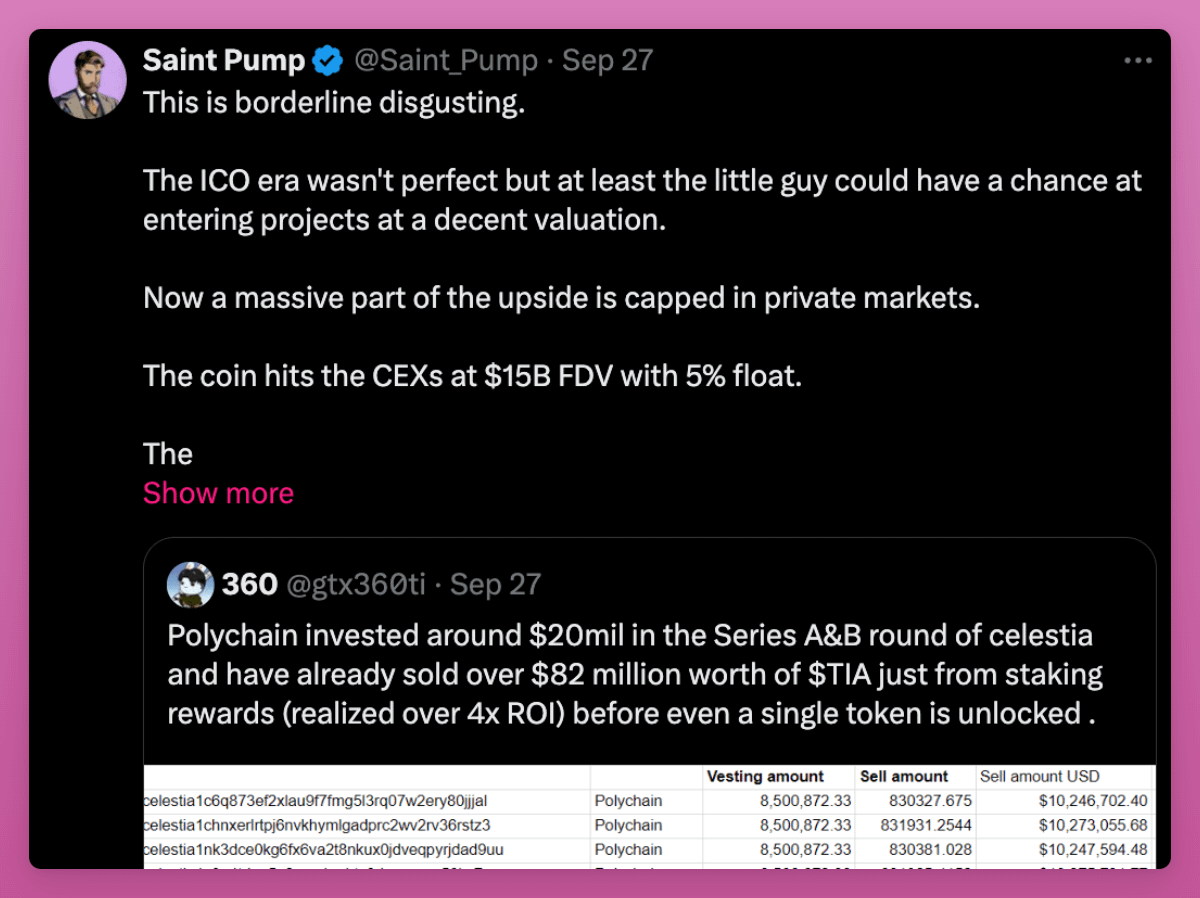
We’ve learned that high FDV isn’t a meme.
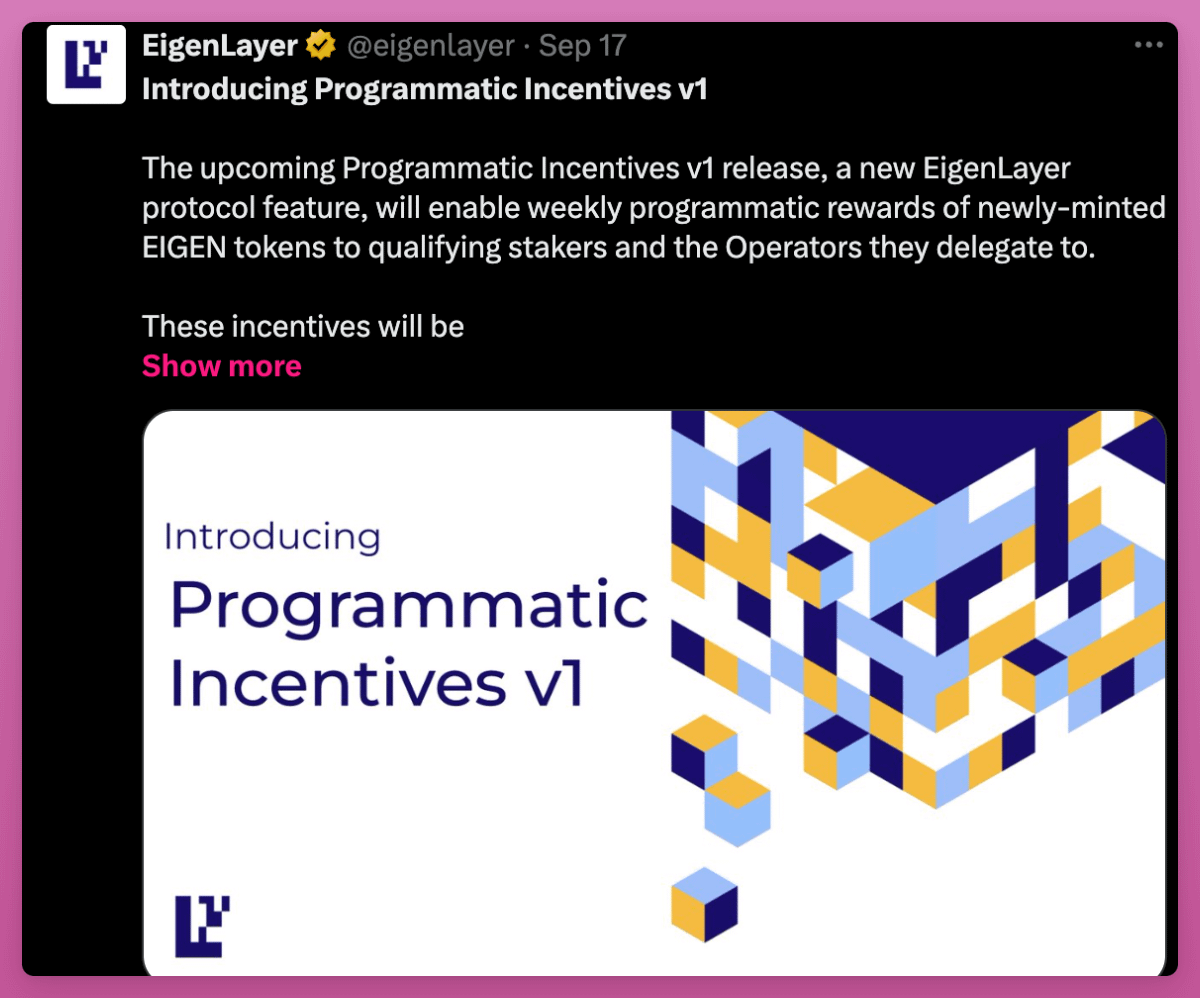
While points systems haven’t disappeared entirely, declining market sentiment and usage are evident. For example, EigenLayer decided against a third season of airdrops, opting instead for “programmatic incentives”—essentially a rebranded form of liquidity mining.
Most major protocols are now in their second, third, or fourth season of points farming, while enthusiasm for new protocol points programs has waned. I used to share a “Farm of the Week” on this blog, but now it’s hard to find attractive points opportunities.
New protocols missing the points wave must innovate in token distribution models to attract users and create wealth. Below are some emerging token launch models.
Public-Private Token Sales
ICOs are no longer trendy, but their spirit lives on.
Cobie, possibly crypto’s most influential trader, pointed out in his May blog post that a major problem in today’s crypto market is that new token launches “privately capture” upside, leaving almost no room for retail investors.
Most price discovery happens during private VC funding rounds, where investors buy in at low prices before public listing. Thus, when these tokens hit the market, they’re overvalued, FDVs are bloated, and profits for public investors are slim. This benefits insiders while retail buyers face high risk and low returns.
For example, ETH offered massive upside at seed or ICO stages.
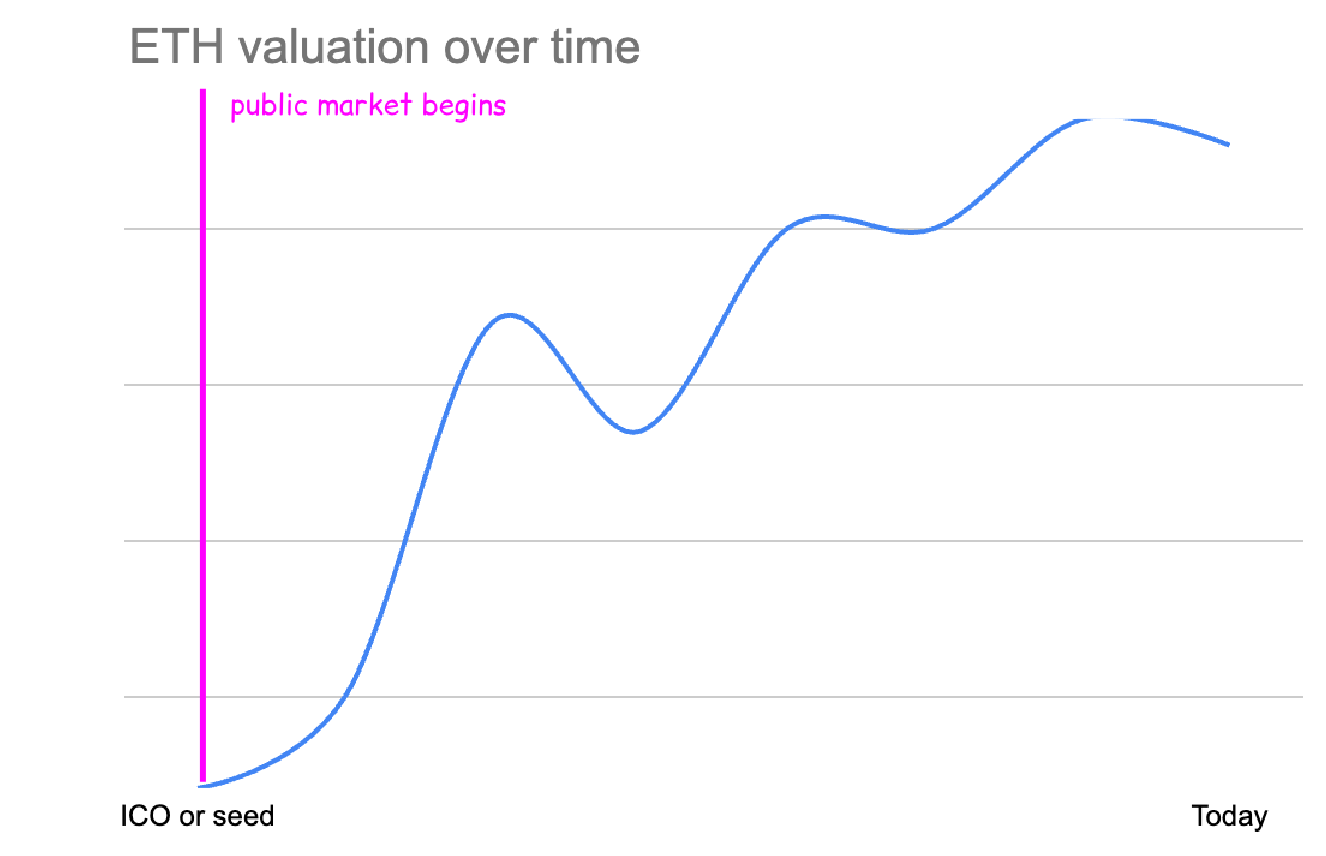
But for tokens like STRK, EIGEN, or other low-circulating, high-FDV tokens in this cycle, the situation is different.
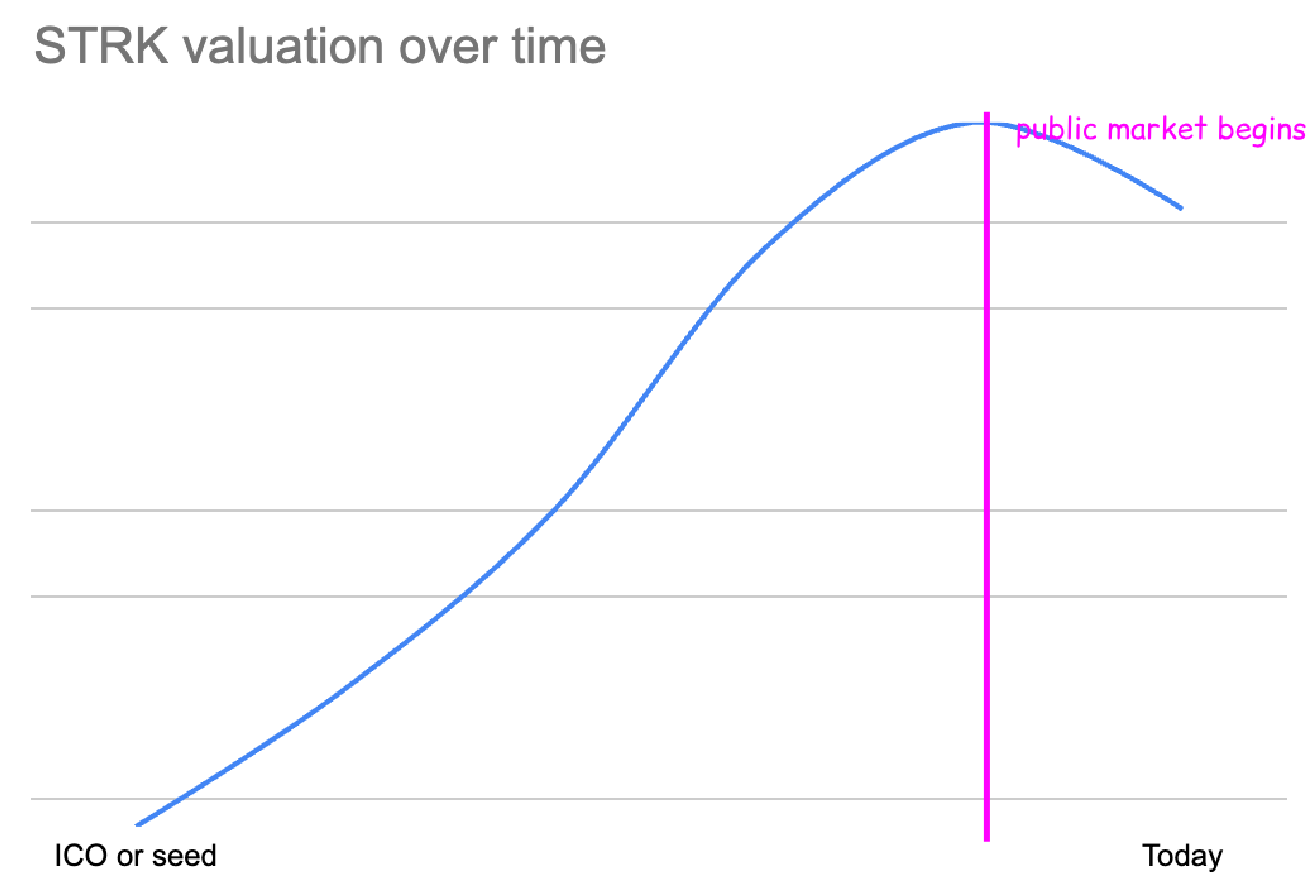
Hence, Cobie proposed a solution: launching Echo, a platform for early-stage token investments. Here’s how it works:
-
Group Leaders: “Experienced investors” (or KOLs) create groups and share investment opportunities with members. Members can choose to follow leaders and invest under identical terms.
-
On-chain Investment: All investments occur on Base L2 using USDC.
-
Smart Contracts: Investments are legally managed via smart contracts through Echo, so lead investors never touch your funds. In token investments, only you decide when to sell your tokens.
-
For Founders: Founders seeking decentralized, community-driven funding can raise capital through Echo groups, avoiding centralized VC stakes and allocating equity or tokens to genuine on-chain native investors.
You must pass KYC, connect your X or Farcaster account, complete a questionnaire, then join a group to view opportunities.
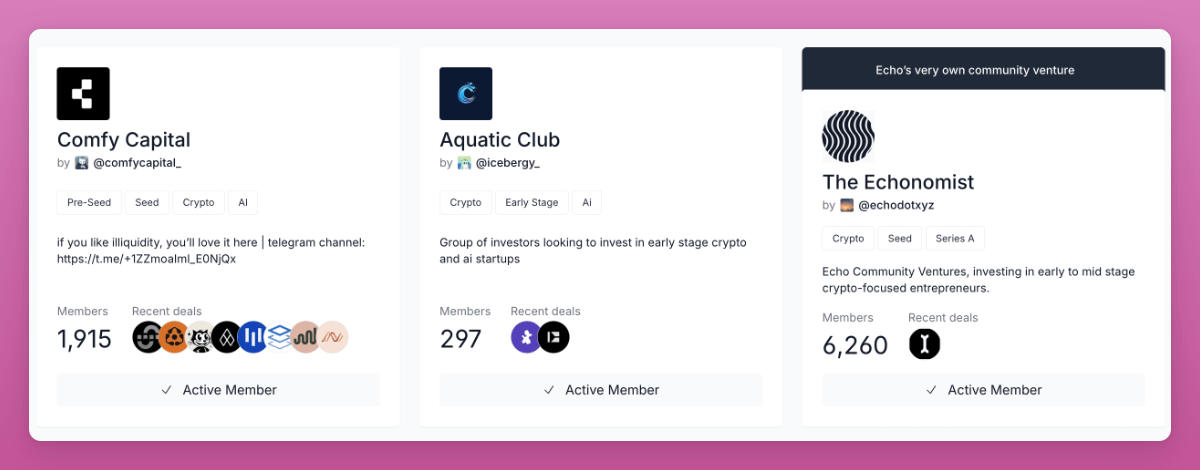
Their first major deal was Initia, which raised $2.5 million from at least 500 participants at a $250M valuation—28.57% lower than its Series A $350M valuation (per The Block). Maximum allocation: $5,000.
Echo participants invested at valuations below Series A—a compelling advantage. Still, this model largely reverts to early ICO days, which many back then couldn’t access.
Of course, I could create my own group and invite followers to co-invest in early-stage protocols. These protocols benefit from broader communities versus relying solely on VCs—but this doesn’t solve many project needs like larger capital infusions, industry connections, strategic guidance, marketing credibility, or long-term support.
Nonetheless, I believe projects benefit from diversified funding: gaining crucial backing from top VCs while running community-building rounds via platforms like Echo, as Initia did.
Yet, Echo remains a relatively closed community—one reason it’s highly profitable. Popular ICO platforms like CoinList are also hard to access, with typically small allocations. If you get the chance, give it a try.
"Sponsored Sales"
I’ve participated in only two KOL-led investment rounds: Bubblemaps and Vertex.
Recently, I sort of joined a third: Infinex. I say “sort of” because it wasn’t a typical KOL investment. In classic KOL deals, projects contact influencers offering better investment “opportunities” than VCs. In return, KOLs promote the project on social media. That’s why I liked Bubblemaps and Vertex—they had no such promotional requirements. But if I don’t promote, what’s the point of being an investor?
Synthetix’s Kain took a different approach with Infinex’s token sale.
Besides gamified yield farms, he launched Patron NFT sales. I received a direct message from Kain offering three lockup and valuation options: no lockup, annual vesting, or 1-year cliff + 2-year vesting with a 75% discount.
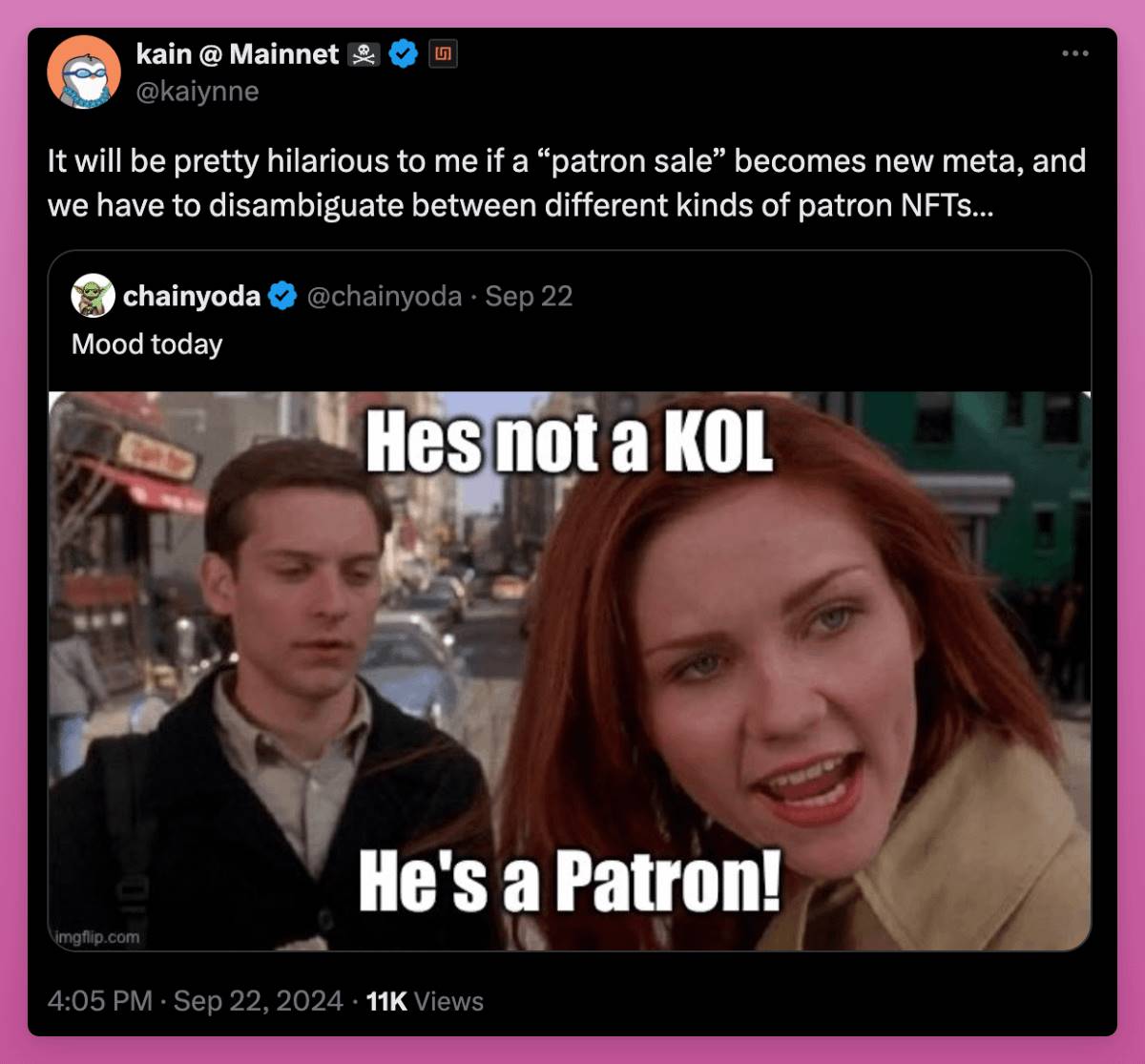
Infinex raised $65 million from 41,000 supporters!
In a podcast with Blockworks, Kain noted that current popular token distribution methods—airdrops and private sales to accredited investors—are flawed.
He advocates a fairer method: giving everyone—VCs, influencers, and retail investors—the same opportunity to buy tokens at the same price.
“Everyone starts on equal footing. Isn’t that the fairest way? If everyone follows the same rules and gets as much information as possible, you prevent uninformed people from blindly jumping in out of FOMO.” – Kain
Like Echo, Infinex draws inspiration from ICO-era models and adapts them to modern conditions. While many participants were influential crypto Twitter figures—potentially excluding other large communities—there were various ways to qualify for the sale (e.g., earning points).
Unfortunately, this model may not work for less-known projects. However, if they offered unconditional KOL sale options on their websites instead of requiring ambiguous SAFT agreements with vague TGE timelines, I’d definitely participate in more token sales.
Now, a new trend allows anyone to join token sales.
Runes or Other Token Models on Bitcoin
To me, BTCfi is the most exciting 0-to-1 innovation in this crypto cycle. I thoroughly enjoy minting Ordinal NFTs and playing with BRC20/Rune tokens.
I admit current infrastructure and UX/UI aren’t great yet, but they’re improving. Even so, ORDI—the first BRC20 token—was minted for free and reached an $1.8 billion market cap, delivering massive profits to early adopters. This is the success case we should chase!
I held it too, but sold too early.
BTCfi was once a hot topic, but faded shortly after Runes launched.
Still, I believe BTCfi can succeed: infrastructure keeps improving, and the community is strong (mainly in Asia, hence less discussed on crypto Twitter). Prices are rebounding. Check the 7-day performance of the top 10 Runes.
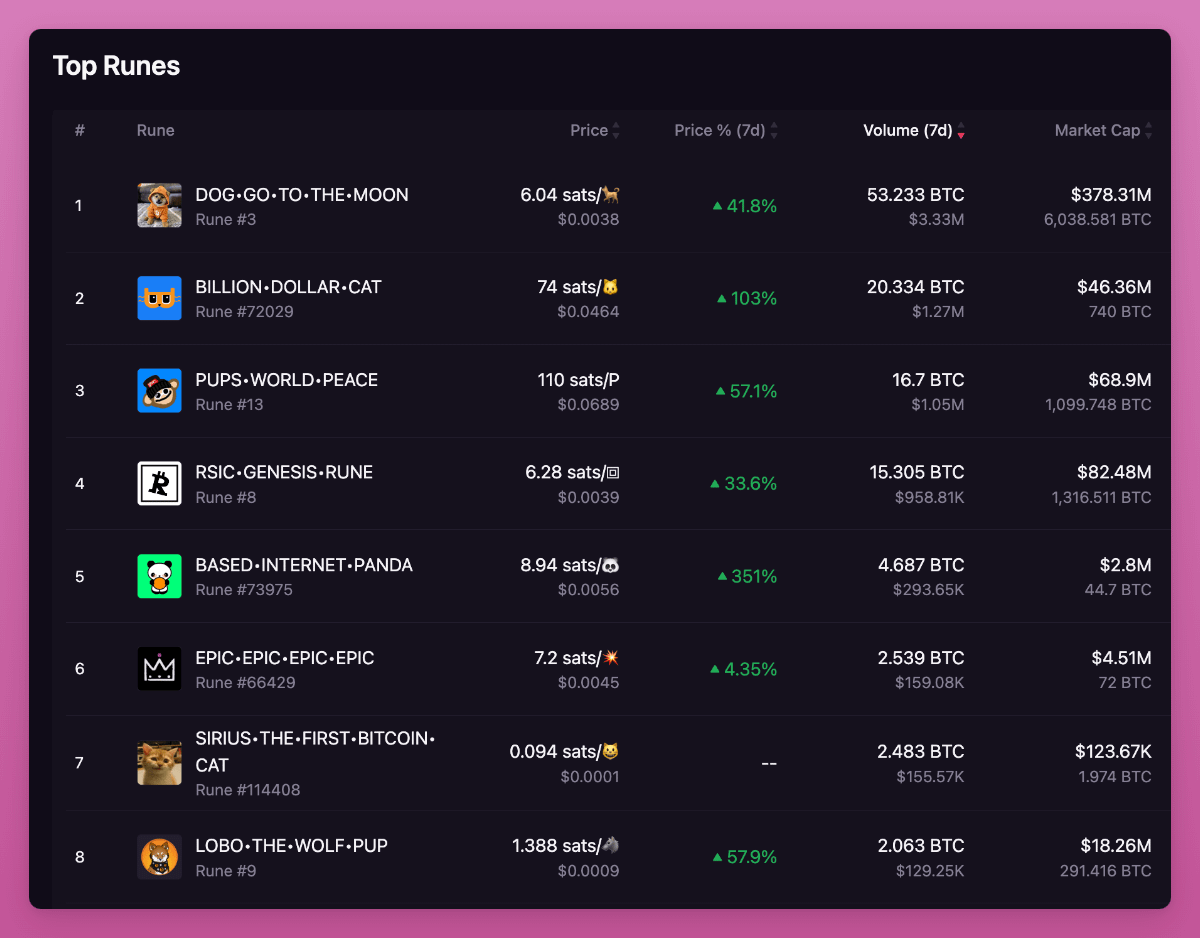
The biggest innovation of BRC20 and Runes lies in their market distribution model.
Anyone can mint Rune tokens on Bitcoin by simply paying a Bitcoin transaction fee. To try, visit Luminex and mint a token. Or, create your own memecoin with a chosen percentage of pre-mine—transparently disclosed to all.
I like Runes because they solve our frustrations with VC rounds, presales, low-circulating tokens, and the lack of transparency in current memecoin launches. Runes represent the fairest token distribution model available today.
Additionally, small Bitcoin transaction fees and slow speeds act as natural barriers against excessive token issuance and concentration in few wallets—problems faced by memecoins on other chains.
I believe we need a new catalyst to reignite FOMO. Currently, Fractals L2 is gaining attention and could bring renewed heat to Runes. Runes can first be minted on Bitcoin, then bridged to Fractals (or other Bitcoin L2s), where they gain smart contract functionality.
By the way, Fractal’s token FB is mined similarly to BTC—you can participate in cloud mining by renting PoW machines. Due to high inflation, FB’s price has been falling.
Finally, new token standards on Bitcoin may emerge, perhaps innovative models enabled by OP_CAT upgrades. My view: fairly launched tokens on Bitcoin hold enormous speculative potential, making the BTCfi ecosystem worth watching closely.
Ton Mini-Apps: "Tap-to-Earn" Games
Although I dislike earning money by tapping smartphone screens, Ton and Telegram’s “tap-to-earn” mini-apps have attracted millions of users. Most are outside the U.S., so much of the crypto Twitter crowd likely missed this trend.
In my previous article, we explored why South Asia is a unique crypto market.
We learned that for many people in developing countries, “tap-to-earn” airdrops offer a new income source amid economic hardship. This aligns better with blockchain’s promise of democratizing crypto access for all—not just letting the wealthy profit from airdrop schemes.
However, after the DOGS, Catizen, and Hamster hype, the next step is unclear. All tokens are currently down, so Ton mini-apps need a new catalyst to attract fresh speculators.
Being the first to spot a trend shift offers the greatest reward.
Memecoins
Memecoins are tokenized communities. Murad eloquently explains the value proposition of memecoins in the video below, clearly showing how memecoins can outperform many utility tokens in today’s market environment (e.g., VC unlocks, lack of transparency, regulatory concerns).
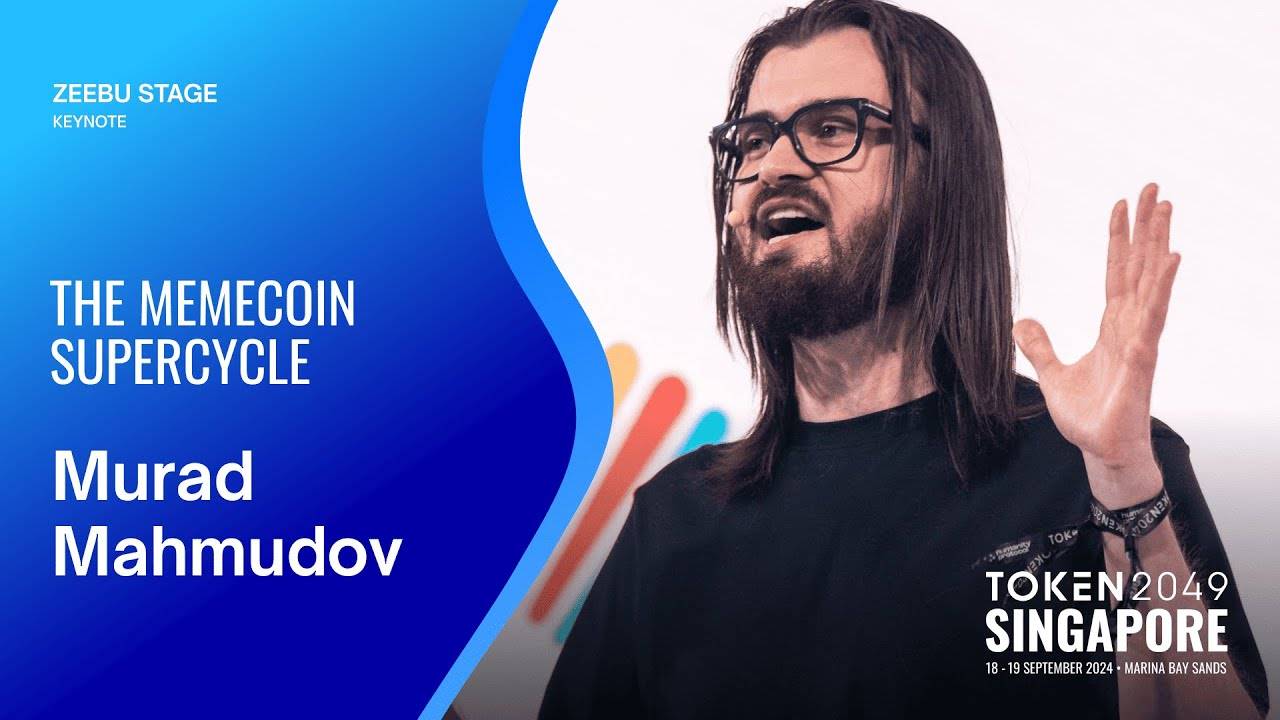
Yet, he only tells one side of the memecoin story.
The screenshot showing strong memecoin performance ignores the fact that 99.5% of memecoins drop to zero within one or two days.
Contrary to his optimistic take, memecoins are often launched by insider groups holding large pre-mined supplies, promoted by paid or heavily allocated KOLs, ready to dump on new buyers.
No real community exists—only the illusion of one is sold. This is why I avoid memecoins: finding true gems among junk is chaotic and time-consuming. Constantly jumping from one memecoin to another can rapidly deplete your funds. Holding Bitcoin (BTC) might be safer.
Nevertheless, memecoins host the most optimistic communities in crypto. This greed creates fertile ground for real contenders like Doge to emerge. That’s why I haven’t completely abandoned memecoins.
Moreover, platforms like Pumpdotfun have improved fairness this cycle by introducing mechanisms to prevent insider trading, using dynamic bonding curves to solve initial liquidity issues, and reducing many security risks.
A decent option might be tracking memecoin launchpad tokens like Ethervista or the upcoming Rush platform. I know Rush’s dev team, so it’s unlikely a scam. But be cautious: Ethervista’s token has been declining since launch.
Rebranding + New Tokens
Old tokens feel stale; speculators crave novelty. What if you change the brand name, create a new token symbol, and restart with a fresh chart? That’s exactly what’s happening now. I first mentioned this trend in June (see: Seven Emerging Trends in Crypto).
We’re seeing multiple rebrands: MATIC renamed to Polygon and launched new POL token, Orion rebranded as Lumia (from ORN to LUMIA), Covalent (DA protocol for AI era) migrated from CQT to CXT, Connext rebranded to Everclear (with new tokenomics), etc.
The most interesting cases are Fantom migrating from $FTM to $S, and Arweave launching the AO protocol.
Arweave decided to launch a new token AO for the AO protocol instead of using existing AR. It makes sense since AO is a different protocol, but interestingly, simply holding AR in your wallet allows you to mine AO tokens. It’s like printing money!
Unfortunately, these rebranded tokens haven’t performed well, offering little hope for the trend. Perhaps only Fantom’s rebrand is gaining traction, while even Polygon faces challenges this cycle.
Still, watch rebrands that spark community interest. It signals active teams who haven’t given up on the protocol and continue development.
Community / Social Tokens
Got burned by FriendTech and 0xRacer.
This was one of my biggest mistakes this cycle.
They had a chance to build a consumer app appealing to a broader audience but chose the easy path to make quick money.
That said, FT changed the industry by popularizing Privy to improve UX and promoting social tokens.
In FT v1, social tokens were based on individual KOL personalities; in v2, the goal is to tokenize entire communities.
Like memecoins, community tokens center around community, offering access to an exclusive club.
The most successful example is the DEGEN token, which recently listed on Coinbase and surged 127%! Initially, it was airdropped to active Farcaster members. Personally, I earned about $40,000 posting on Warpcaster.
DEGEN succeeded due to its community-driven launch and seamless integration with Farcaster, aided by the platform’s openness. Similar tokens solve a classic social platform dilemma—users don’t post because there aren’t enough users—by generously rewarding early contributors. Other apps can adopt this strategy. Lens also conducted an airdrop.
My advice: try new decentralized social apps like Phaver (I posted a few times and got a $250 airdrop).
However, these tokens’ limited utility within specific apps restricts broad adoption. DEGEN decided to launch its own L3 for expansion, so watch what other community tokens do next.
More excitingly, we may soon see Farcaster, Lens, OpenSocial, and other SocialFi tokens emerge.
What Should You Watch in This Bull Market?
The best returns usually come early in emerging trends. Liquidity mining, points farming, fair launches, and NFT mints have already generated millions for early adopters. My job is to identify these new token launch trends and figure out how to ride them.
A good sign of high-potential projects is initial community chaos—accompanied by love or hate. As long as people care, it’s worth watching.
Analyze how these token launches create flywheel effects: early users get rewarded and are thus incentivized to stay in the ecosystem. Though this may resemble a Ponzi scheme, the most successful “money printing” mechanisms often share such traits.
Remember to stay open-minded. Try new things—and if you find something interesting, let me know!
Join TechFlow official community to stay tuned
Telegram:https://t.me/TechFlowDaily
X (Twitter):https://x.com/TechFlowPost
X (Twitter) EN:https://x.com/BlockFlow_News
 Ignas | DeFi Research


