Crypto X AI's "Arranged Marriage": From Surface Conflict to Coordination, Data, and Innovation at the Training Layer
TechFlow Selected TechFlow Selected
Crypto X AI's "Arranged Marriage": From Surface Conflict to Coordination, Data, and Innovation at the Training Layer
If they're not spreading FUD about you, then you're not building anything worth having FUD spread about it.
 Navigating Web3 tides with focused insights
Author: brody
Translation: TechFlow
On the surface, "crypto and AI" may seem like a forced marriage.
Yet within these asymmetries lie latent opportunities where the risk-to-reward ratio appears heavily skewed toward upside. This is precisely why it's worth our time to think deeply about this space.
I'm frequently asked for my thoughts on the convergence of crypto and AI, which has prompted me to develop this simple framework:
-
In what ways does blockchain unlock entirely new advantages for AI applications?
-
Which components of the AI tech stack are improved through decentralized protocols?
-
Where do open-source, decentralized AI applications reach performance parity with their closed-source counterparts?
Here are several key areas I’m watching closely that aim to address these questions:
In What Ways Does Blockchain Unlock New Advantages for AI Development?
Coordination Layer: These protocols aim to coordinate AI/ML developers in collectively building "intelligence," rewarding contributors—typically based on the value of intelligence produced—for providing models and computational resources.
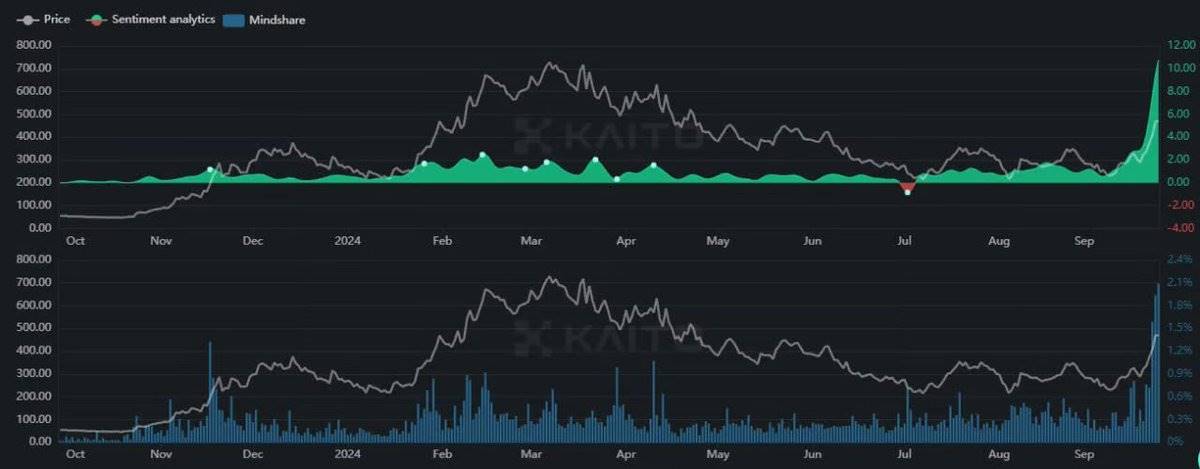
This is why I’m particularly enthusiastic about Bittensor. It’s scaling this vision at significant levels (currently 48 subnets and growing), backed by a deep talent moat and an exceptionally passionate token-holder community that few ecosystems can replicate.
On the other hand, teams like Sentient, Allora, and Nous Research are pursuing similar initiatives, albeit with differing protocol designs and strategic directions.
Incentive alignment is one of the core reasons blockchain can function effectively at scale, and its application to support open-source AI development is fundamental.
People are beginning to recognize this.
Which Components of the AI Tech Stack Are Improved Through Decentralized Protocols?
Data: Access to high-quality, verified, and robust datasets is crucial for AI—but remains a major bottleneck today. Optimizing data collection will help us break through the "data barrier."
Teams we’re closely monitoring include Grass and Vana, both of which are creating novel, efficient, and optimized data collection mechanisms through incentives and ownership models.
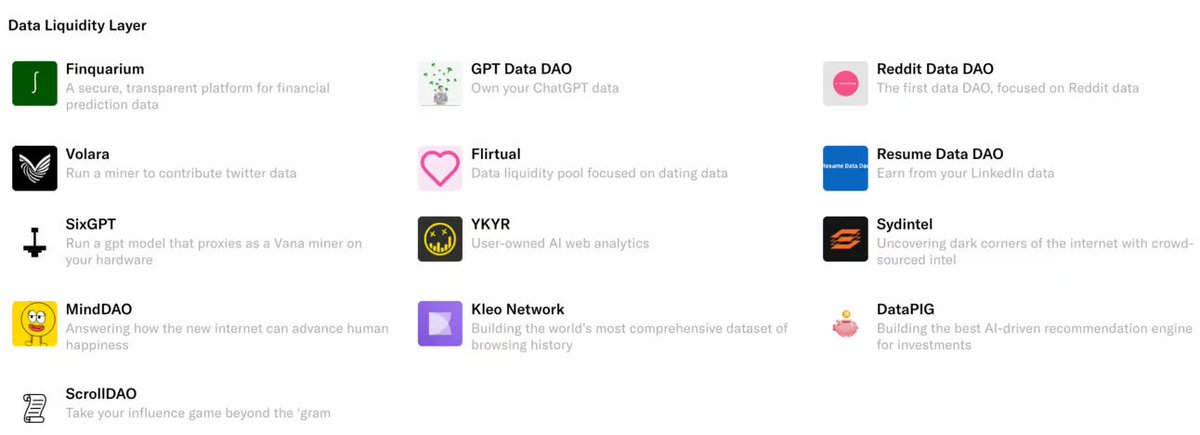
In short, Vana enables Data DAOs (decentralized autonomous organizations), allowing users to contribute unique datasets and earn rewards based on demand from AI developers for specific data types.
Multiple methodologies are being tested in this domain, all of which objectively outperform their Web2 equivalents.
Example of a Data DAO
Where Do Open-Source, Decentralized AI Applications Reach Performance Parity With Their Closed-Source Counterparts?
Distributed Model Training: AI model training is an extremely resource-intensive process involving feeding large datasets through neural networks to teach models how to perform specific tasks. Until just a month ago, doing this in a distributed manner was widely considered highly improbable.
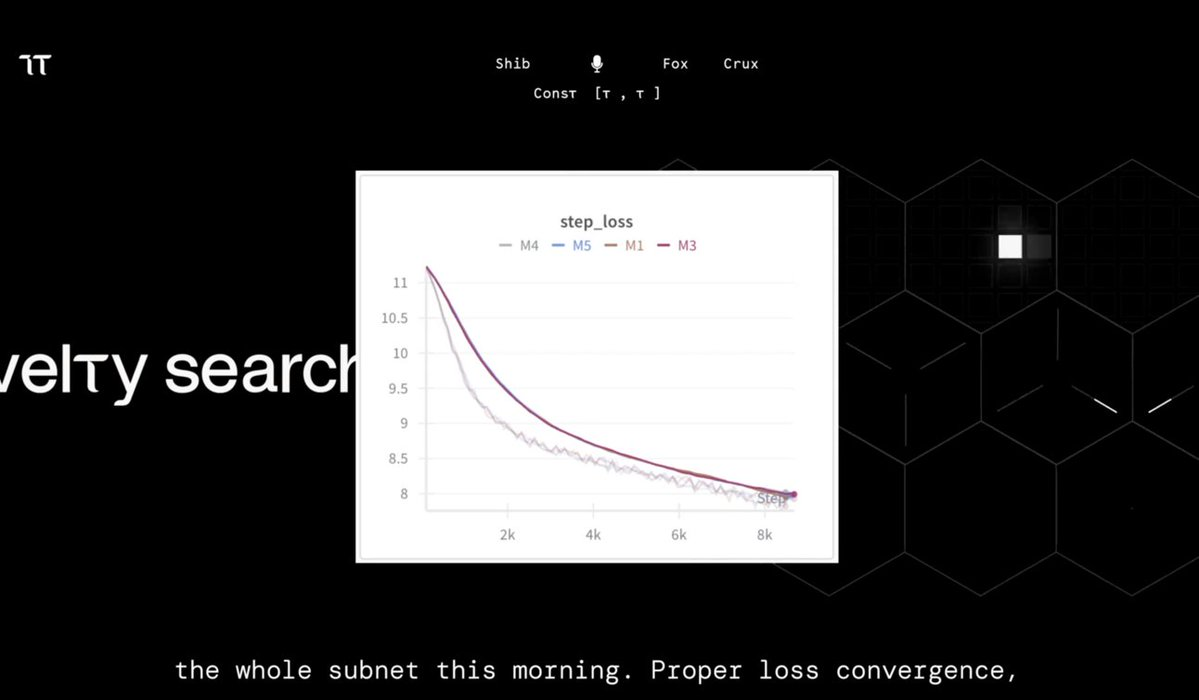
Thanks to pioneers like Nous Research (DisTrO) and Prime Intellect (DiLoCo), breakthroughs in distributed model training are accelerating within open-source and decentralized AI, reaching performance parity with closed-source alternatives.
It’s exciting to witness foundational advances in this space, as they clearly demonstrate that viewing this field as merely a hype-driven "arranged marriage" is fundamentally mistaken.
DisTrO was deployed on a Bittensor subnet during last week’s Novelty Search event.
There’s a saying: “If they aren’t spreading FUD (fear, uncertainty, doubt), then you aren’t building something worth FUD-ing.” We believe this applies well here.
After all, we welcome FUD. It pushes us to step back, build stronger frameworks, and develop better evaluations to navigate these seemingly complex and difficult-to-interpret domains.
Thank you to all the builders contributing to this work! Your efforts are recognized and appreciated.
Join TechFlow official community to stay tuned
Telegram:https://t.me/TechFlowDaily
X (Twitter):https://x.com/TechFlowPost
X (Twitter) EN:https://x.com/BlockFlow_News
 @brodyadreon