Who Is the Founder of Basis, Who Fooled a16z Twice?
TechFlow Selected TechFlow Selected
Who Is the Founder of Basis, Who Fooled a16z Twice?
In a way, Al-Naji's prank is just another story of a crypto figure deceiving his followers.
 Navigating Web3 tides with focused insights
Text: Jeff John Roberts, Fortune Magazine
Translation: Luffy, Foresight News
Carnegie Lake, stretching three miles east of Princeton University in central New Jersey, glistens with rippling water and lush greenery, home to swans, herons, and other wildlife. In 2011, many mornings for freshman Nader Al-Naji began here, training at dawn alongside teammates from the rowing crew. Many of Al-Naji’s fellow Princeton rowers would go on to impressive careers—Olympians, executives at firms like JPMorgan Chase and Tesla.
Al-Naji was a bona fide prodigy who secured his place among America's elite. He sold Silicon Valley insiders on his world-changing vision, later described by investors as an archetypal "outsider" startup founder. Al-Naji eventually convinced institutions like Sequoia Capital, Google, and Bain Capital to pour hundreds of millions into his ventures. But his bold vision was built on illusion.
Al-Naji’s first startup attempted to create a cryptocurrency firm so promising it seemed too good to be true—and failed. Yet he persuaded investors it had been a learning experience. Soon after, he reemerged with an even bolder plan: launching a social network under the pseudonym “Diamondhands,” which unilaterally transformed people’s public social profiles into tradable assets using cryptocurrency. That project, too, collapsed.
Despite two failures—both, in hindsight, rooted in implausible premises—many of Al-Naji’s supporters continued to believe in him. But in July this year, Al-Naji’s luck ran out. The Department of Justice arrested him and, together with the Securities and Exchange Commission (SEC), accused him of misappropriating investor funds, living extravagantly in Beverly Hills, and transferring $1 million in cash to family members. Al-Naji dismissed the allegations as a “mistake” by the U.S. government.
In one sense, Al-Naji’s saga is just another tale of a crypto figure deceiving followers. But it raises a deeper question: How did Diamondhands fool Silicon Valley’s supposedly “smartest” investors? It also places one of those investors—the prominent venture capital firm Andreessen Horowitz (a16z)—in an awkward role: both victim of fraud and witness for prosecution.
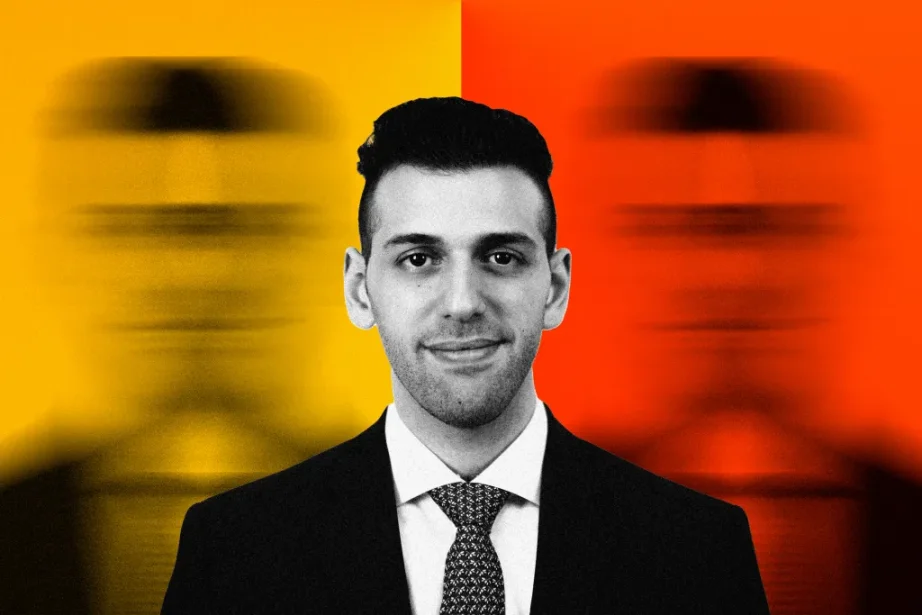
Nader Al-Naji, founder of Basis
The Princeton Years
Nick Bax, CEO of a cryptocurrency forensics firm, frequently testifies as an expert witness. Recalling grueling training days at Princeton, he remembers spending 25 hours a week on the water, where ambitious young men constantly pushed each other to excel. Even within that group, Al-Naji stood out.
“Everyone knew Al-Naji,” Bax said. “He rowed fast and was outgoing. We all recognized his ambition—even by Princeton standards, he was exceptional.”
During his time at Princeton, Al-Naji had another unusual hobby: cryptocurrency. According to his LinkedIn profile, he graduated a year early with honors and “mined about 23 bitcoins using free campus electricity.”
After earning his computer science degree, Al-Naji followed a familiar path for top Ivy League graduates—landing roles at prestigious finance and tech firms such as hedge fund DE Shaw and Google. But in mid-2017, Al-Naji left the search giant to launch his own venture. He became founder and CEO of Basis, a cryptocurrency startup.
The new company showcased the hallmarks of Al-Naji’s projects: grand, disruptive visions cloaked in technical jargon—so compelling they border on unbelievable upon closer inspection.
Basis was a new kind of cryptocurrency stablecoin, backed not by traditional reserve assets but by what Al-Naji called a sophisticated algorithmic mechanism. If Basis rose above $1, the system would issue new shares redeemable for stablecoins, pushing the price down. If it dropped below $1, Basis would sell discounted bonds redeemable at full value later.
Many were skeptical. One crypto observer labeled Basis a scam akin to turning lead into gold, noting its reliance on a “first-in-first-out” model typical of pyramid schemes. (Three years later, in 2021, another algorithmic stablecoin with identical design—Terra—defrauded investors of over $2 billion and triggered a market-wide crypto crash, vindicating Basis skeptics.)
Despite shaky economic foundations, Al-Naji quickly raised $133 million from wealthy backers, including Andreessen Horowitz, Google Ventures, Bain Capital Ventures, and a former Federal Reserve governor.
But nine months after its successful initial funding round in October 2017, Basis collapsed. After initial hype and a quiet period, Al-Naji announced the project was being canceled due to regulatory challenges and promised to return remaining funds to investors after deducting expenses.
Yet one VC investor in the project questioned this public explanation, telling Fortune that Al-Naji abandoned Basis because he realized it wouldn’t work.
Regardless of why Basis failed, the fact that such a sharp cohort of investors bet on a project seemingly violating basic economic principles remains puzzling. One explanation is that venture capital inherently involves backing ideas that sound crazy. Another is that investors were betting on Al-Naji himself.
Many VCs rely heavily on “pattern matching”—seeking founders who resemble past successes. In Al-Naji’s case, he fit the mold perfectly. Two investors from different firms who backed Al-Naji used the same phrase when describing him in interviews for this article: “outsider archetype.” This applied not only to his education and career background but also to his confident demeanor.
Another investor who funded Al-Naji noted he resembled another infamous crypto figure, exploiting the VC world’s love of pattern recognition.
“Looking back, they shared very similar personality traits. Like Sam Bankman-Fried, Al-Naji spoke so fast you didn’t always catch everything—but came across as sincere and fundamentally good,” said the VC.
A fourth investor, who backed both of Al-Naji’s startups, offered a more measured assessment based on prior experience evaluating founder misconduct.
“Half the job in these stories is figuring out whether someone is a psychopath or a narcissist,” said the venture capitalist. “I never seriously considered Al-Naji a psychopath, but to me, he leaned toward narcissism.”
Meanwhile, questions arose about how Al-Naji spent the money he didn’t return. He claimed to have repaid over 90% of Basis investments. In a 2021 interview with TechCrunch, he explained: “The $10 million I didn’t return to investors was actually spent on lawyers.”
Still, several investors found it hard to believe a small startup could burn through $10 million in legal fees in just months.
The Birth of Diamondhands
In 2021, the largest crypto boom in history was in full swing. Elon Musk propelled Dogecoin to record highs during a Saturday Night Live appearance, while crypto enthusiasts poured millions into digital monkeys. Across Silicon Valley and New York, venture firms had amassed billions to invest in crypto projects.
This was the perfect moment for Al-Naji’s next move. When he resurfaced, it was under the alias “Diamondhands,” an anonymous figure who would launch a decentralized social network and then vanish into the internet’s ether—much like Bitcoin’s creator Satoshi Nakamoto had done years earlier.
While Basis had been pitched as a breakthrough in economics, Al-Naji’s social network idea was even grander. BitClout would disrupt giants like Facebook and Twitter with a platform having no central control or servers—running “on code and tokens alone.”
To kickstart BitClout, Al-Naji borrowed Silicon Valley’s famed growth-hacking tactics. The platform scraped personal data from 15,000 Twitter users to populate the new network. The site itself resembled a hastily assembled knockoff of Twitter.
The name BitClout evoked Klout, a defunct social network that ranked users by influence—a concept widely mocked as “Yelp for people.” Al-Naji took it further, encouraging users to buy and sell tokens tied to individuals’ identities on the site. Users had to exchange Bitcoin for the network’s new cryptocurrency.
Like Basis, the idea seemed immature. For starters, no one could explain the actual technology behind Al-Naji’s touted “code and tokens” operation. Meanwhile, pre-filling the network with existing Twitter profiles was rightly seen as a blatant intellectual property violation.
Then there was the manufactured mystery around “Diamondhands,” a name drawn from crypto slang referring to those who hold through market crashes—yet doing little to conceal that Al-Naji was BitClout’s mastermind.
In March 2021, when Al-Naji launched the BitClout website, he shared the URL casually with others, saying offhandedly not to spread it. When the link went viral, Al-Naji claimed it was accidental—though every sign pointed to it being part of a calculated growth-hacking strategy.
While Basis’s failure might have deterred investors, the crypto market was now frenzied. Not only did major institutions reinvest in Al-Naji—they agreed to play along with the Diamondhands anonymity ruse.
Months before BitClout launched, firms like Andreessen Horowitz and Coinbase Ventures struck deals to buy tokens at a presale price of $6 (rising to $16 for later buyers). While many Basis backers returned, new names joined—including Sequoia, the crypto arm of which later lost $214 million investing in Sam Bankman-Fried.
Repeating the treatment once given to SBF, Sequoia published a glowing profile of “Diamondhands,” explaining why BitClout lacked executives, a board, or any standard corporate accountability mechanisms.
“BitClout has no CEO, board, or shareholders—only token holders. They believe an open, blockchain-based organization, whose direction is determined by the community, will surpass traditional ad-driven social media business models,” wrote Sequoia, which did not respond to multiple requests for comment.
After launch, early token buyers quickly profited as the site’s namesake token surged to nearly $200. But the gains didn’t last. Al-Naji soon announced he was abandoning the project, claiming it was always meant to be a “beta version” that shouldn’t have grown this large. Instead, he said, BitClout’s proceeds (by then worth zero) would be funneled into another project focused on decentralized social networks. Meanwhile, retail investors who had exchanged Bitcoin for BitClout tokens found they couldn’t convert them back.
The SEC alleges Al-Naji raised $257 million by selling BitClout tokens to investors and the public—and contrary to the “only code and tokens” claim, he had direct access to the funds. Court documents accuse him of using BitClout proceeds to pay credit card bills, purchase a six-bedroom house in Beverly Hills, and gift nearly $3 million to family members. The whereabouts of the remaining funds remain unclear, according to filings.
The Star Witness
a16z’s headquarters sits on Sand Hill Road, a picturesque artery winding down from Interstate 280 past Stanford University. Over the past decade, a16z leveraged early wins from investments in Facebook and Airbnb to build a multibillion-dollar empire, recently expanding influence into politics and culture. The firm has also aggressively cultivated its own mythology—some joke it’s a PR company disguised as a venture capital firm.
Recently, a16z acquired a new, unexpected identity: designated as “Investor 1,” a fraud victim, in the DOJ’s criminal case against Al-Naji.
This role is surprising, given a16z invested only $3 million in BitClout. For a firm that routinely pours $100 million or more into startups, it was a trivial sum—and one typically absorbed quietly, especially given the firm’s sensitivity to negative publicity.
“Generally, funds don’t turn on entrepreneurs they’ve backed. They just eat the loss silently,” a crypto lawyer familiar with BitClout told Fortune. “When a fund loses money, they don’t go after the founder—they take the hit themselves.”
Risk capitalists interviewed agreed, noting firms avoid public litigation to prevent appearing hostile toward founders they supported. According to the crypto lawyer, a16z may have become a witness under compulsion.
Renato Mariotti, a former federal prosecutor now in white-collar defense at Paul Hastings, said this arrangement aligns with DOJ strategy in such cases. “It’s more persuasive when victims say, ‘I lost money, and they lied,’” he said.
a16z declined to comment for this article, but after the BitClout incident, the firm appeared to bear no ill will toward Al-Naji. In fact, a16z seemed to agree to Al-Naji’s plan to redirect BitClout funds into a new social network venture called the Deso Foundation. According to Crunchbase, Deso Foundation is ostensibly decentralized and aims to support other crypto businesses, though it has made only three small investments—the most recent in early 2023.
DeSo has funded AODAO, promoted by Al-Naji, which seeks to form decentralized communities for NFT investment. In a 2022 interview, Al-Naji told me DAODAO represented “the next opportunity for real ownership by the people.”
In mid-July this year, Al-Naji was arrested in Los Angeles. Federal prosecutors filed criminal charges alleging fraud. Mariotti said if convicted, Al-Naji could face 3 to 6 years in prison. Court records show Al-Naji’s legal team—which includes attorneys from several elite law firms—is negotiating with the DOJ, but so far, no settlement or formal plea has been entered.
For now, Al-Naji appears unfazed by his legal troubles. When asked to share his perspective, he politely declined.
“I’d really like to help, but right now I need to be careful. Still, I trust this will be a thoughtful piece, and I’ll reach out as soon as I’m able to share the full truth,” he replied via Telegram.
Meanwhile, he remains active on a new social media platform called Diamond, where fans worry his arrest might delay the launch of a promised token called Focus. He’s tried to ease concerns with a series of video and text posts, one suggesting the government’s accusations are a mistake that will soon be cleared up.
“But after some reflection and discussion, the impact isn’t clear—and could even be positive. On one hand, negative press around Focus’s launch might hurt people’s willingness to share the app. On the other, it could bring more attention to it,” Al-Naji wrote.
Join TechFlow official community to stay tuned
Telegram:https://t.me/TechFlowDaily
X (Twitter):https://x.com/TechFlowPost
X (Twitter) EN:https://x.com/BlockFlow_News
 @FortuneMagazine