








How should we adjust our asset allocation in response to the Fed's interest rate cut?
TechFlow Selected TechFlow Selected
How should we adjust our asset allocation in response to the Fed's interest rate cut?
In this episode of the podcast, David and Alfonso discuss the Federal Reserve's monetary policy and its impact on the economy.
 Navigating Web3 tides with focused insights
Compilation & Translation: TechFlow
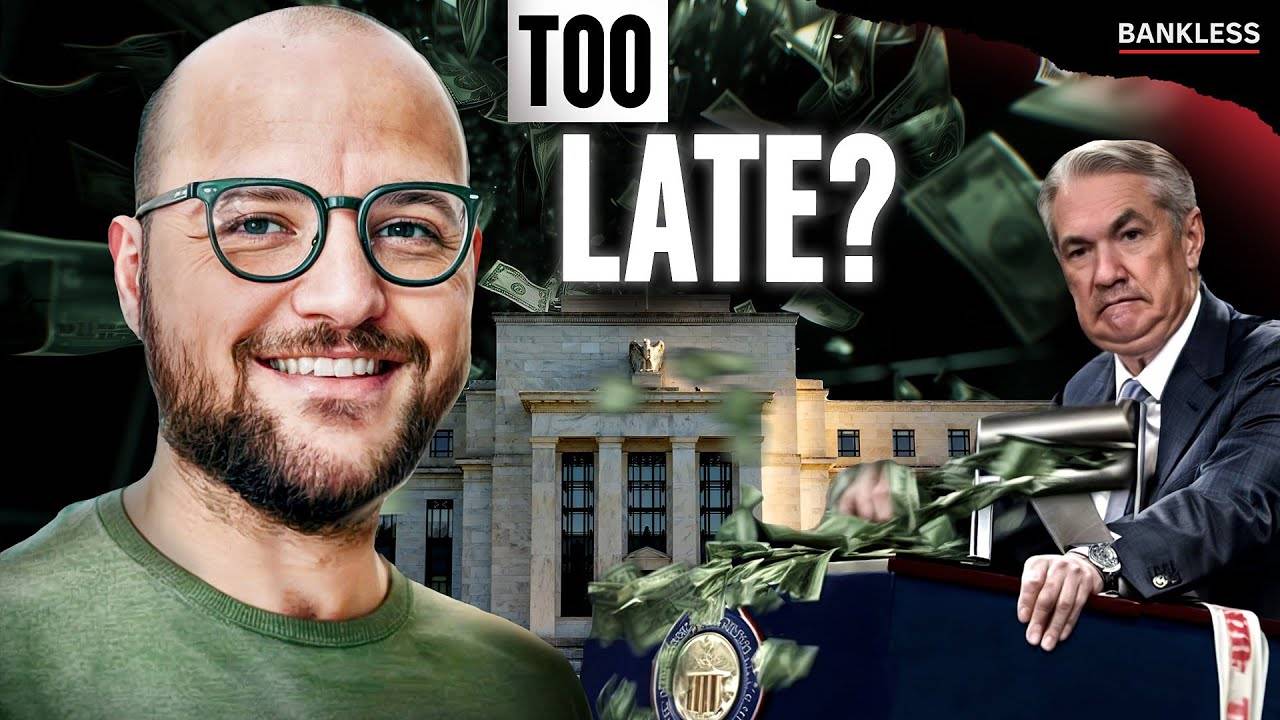
Guest: Alfonso Peccatiello, macro expert, founder of The Macro Compass
Hosts: Ryan Sean Adams, co-founder of Bankless; David Hoffman, co-founder of Bankless
Podcast Source: Bankless
Original Title: Fed Rate Cut: What Will Happen to Markets?
Release Date: September 18, 2024
Background Information
Jerome Powell and the Federal Reserve are about to cut interest rates, but the question on everyone's mind is... what happens next?
Alfonso Peccatiello, known as "Macro Alf," a macroeconomic analyst and investment strategist, joins this panel to help us answer that very question.
-
Are these rate cuts timely or too little, too late?
-
Will the Fed cut rates by 25 basis points or 50 basis points?
-
Will we face the economic recession or achieve the soft landing the Fed hopes for?
-
What will happen to crypto assets?
We discuss all this and more with Macro Alf, one of the leading thinkers in macroeconomics.
The Fed's Policy Lag
In this episode, David and Alfonso explore the Federal Reserve's monetary policy and its impact on the economy.
-
Alfonso points out that the Fed appears lagging in the current economic environment, especially regarding rate cuts. He notes that while the Fed’s official mandate is to maintain price stability near 2% inflation and a healthy labor market, its primary practical role is to stabilize the economy.
-
Alfonso explains that over the past two years, the Fed has focused on curbing inflation, pushing real interest rates into positive territory. This has different implications for borrowers and investors. For investors, high real rates make holding cash more attractive, reducing the incentive for risk-taking. For borrowers, higher repayment costs slow down economic activity.
Risk of Excessive Tightening
-
David raises the concern: could the Fed's delay in lowering rates lead to an economic slowdown?
-
Alfonso believes the Fed may again be lagging in easing policy. He warns that if the Fed remains inactive, there’s a significant risk of a sharp economic slowdown.
-
Alfonso emphasizes that the degree of monetary tightening over the past 18 months exceeds that seen during 2006–2007, meaning current policy is highly restrictive. Historically, monetary policy takes time—typically 12 to 15 months—to fully manifest its effects. Therefore, even though many believe the economy can withstand high rates today, the delayed impact of tight policy may show negative consequences in the coming months.
Outlook for the Future Economy
-
Towards the end of the podcast, they discuss future economic trajectories. Alfonso notes that despite widespread market optimism, historical patterns suggest that apparent stability often precedes emerging problems. He reminds listeners that although current policies seem effective now, long-term lag effects cannot be ignored—and greater economic challenges may lie ahead.
Why Hasn’t the Economy Collapsed Yet?
-
In the podcast, Ryan poses a key question: despite the Fed implementing one of the most contractionary monetary policies in history, why hasn’t the economy collapsed? Alfonso explains this phenomenon.
-
Alfonso points out that the current economic lag effect is unusually long due to several factors. Typically, when interest rates rise, borrowers (households and businesses) reduce borrowing and spending. However, the current situation is different. Over 90% of U.S. mortgages are 30-year fixed-rate loans, so many households don’t immediately feel the impact of rising rates. Fixed-rate homeowners aren't directly affected even when new mortgage rates reach 7%, because their existing loan rates remain low.
Corporate Response Strategies
-
The same applies to corporations. Many large companies (like Apple and Microsoft) extended debt maturities before the pandemic, locking in low rates for long-term borrowing. As a result, even as the Fed raises rates, these firms don’t face immediate increases in borrowing costs. Thus, they retain strong cash flows and aren’t forced to cut investment or spending in the short term.
Impact of Fiscal Policy
-
Additionally, Alfonso highlights that fiscal policy in 2023 also supported the economy. The Biden administration ran massive fiscal deficits, injecting additional funds into households and businesses. This fiscal stimulus partially offset the contractionary impact of monetary tightening, allowing net household and corporate wealth to actually increase despite higher interest rates.
The Bad News
-
In the podcast, Ryan and Alfonso discuss the meaning of “bad news” in the current economic context. Ryan observes that the Fed’s tools don’t seem to be working as expected—the underlying economic risks resemble a distant tsunami: not visibly impactful yet, but approaching fast.
-
Alfonso notes that market reactions to bad news have changed dramatically in recent years. In pre-pandemic times, weak economic data was often seen as good news because it signaled potential rate cuts and fiscal stimulus. However, Alfonso argues that now, bad news really is bad news.
Changing Economic Environment
-
Alfonso explains that in past economic environments, markets were conditioned to interpret bad news as “good news,” since it usually meant the Fed would step in to support the economy. From 2013 to 2019, markets generally assumed weak data didn’t imply real risk, given the Fed’s consistent backing.
-
Now, however, the economy is nearing recession, and the impact of bad news is becoming more pronounced. Alfonso stresses that when growth is weak, tolerance for rising unemployment drops. Any data below expectations may trigger market panic. For example, the U.S. currently needs around 120,000 new jobs per month to keep unemployment stable, but the private sector creates only about 100,000. This gap means that any bad news could rapidly trigger stock market declines.
Past Memories
-
Ryan asks when investors last truly felt that “bad news is bad news.” Alfonso replies that this sentiment dates back to the 2008 financial crisis, when poor economic data signaled imminent recession and fundamentally shifted market psychology.
Signals from the Bond Market
-
Alfonso also notes that the bond market is sending signals. Weak economic data tends to push bond prices up and yields down, reflecting market expectations for further Fed easing. Yet, equities often fall simultaneously, indicating growing concern about the economic outlook. In this context, bad news isn’t just bad—it amplifies market anxiety.
-
Alfonso emphasizes that under current conditions, the impact of bad news has fundamentally changed. Markets can no longer easily dismiss negative data. With slowing growth, reactions to bad news will become increasingly sensitive, requiring investors to reassess this new environment.
Fed Rate Cut Predictions
-
In the podcast, David and Alfonso discuss the likelihood of an upcoming Fed rate cut. David mentions market speculation, particularly around a 50-basis-point cut.
Alfonso’s Viewpoint
-
Alfonso believes the Fed is likely to cut rates by 50 basis points, for the following reasons:
-
Missed Opportunity: Alfonso notes the Fed should have cut rates in July but failed to act. Now that the economy is weakening, they shouldn’t stubbornly delay further—they need to correct prior mistakes.
-
Communication Strategy: He argues the Fed must clearly explain the rationale behind the cut—framing it as a correction for earlier inaction—and signal awareness of slowing growth and readiness for further easing.
-
Next Meeting Schedule: The next Fed meeting is in November. If they only cut 25 basis points now and conditions worsen, they’ll have to wait until November for another move—an unwise approach to risk management.
-
Market Expectations: Currently, bond markets are pricing in future rate cuts, expecting around 250 basis points of easing over the next year. If the Fed fails to follow through, equity markets may react nervously, as they rely on bond market signals.
-
Nature of the Rate Cut
-
David asks whether a 50-basis-point cut would signal rapid action.
-
Alfonso says such a cut would serve as a correction for the missed July opportunity, showing the Fed takes economic slowdown seriously.
Global Economic Impact
-
Alfonso adds that global economic conditions are also influencing Fed decisions, especially China’s slowdown affecting the U.S. He stresses the Fed must proceed cautiously while clearly communicating its understanding and response plan.
-
Alfonso believes the Fed should implement a 50-basis-point cut to address current challenges and calm markets through clear communication. He emphasizes this cut isn’t just a reaction to slowdown but also an insurance policy against future risks.
Elizabeth Warren’s Open Letter
-
Ryan mentions Senator Elizabeth Warren’s recent open letter urging the Fed to cut rates by 75 basis points. He asks Alfonso for his take and whether this could influence Fed decisions.
Alfonso’s Analysis
-
Alfonso views Warren’s letter as a political bargaining tactic. His key observations:
-
Political Bargaining: Alfonso believes Warren’s demand for a 75-basis-point cut is strategic—aiming to pressure the Fed into a 50-basis-point decision. By asking for more, she hopes to pull the outcome toward a more aggressive easing.
-
Fed Communication Strategy: Alfonso notes the Fed cannot communicate publicly during blackout periods (before policy meetings), but still uses media channels to send signals. He references Nick Timiraos of *The Wall Street Journal*, who has historically conveyed the Fed’s intentions.
-
Market Reaction: At the start of the blackout period, market odds of a 50-basis-point cut were only 10%. But after Timiraos’ reporting, expectations jumped to 55%, showing the Fed can still shape market sentiment indirectly.
-
Stability vs. Instability: Alfonso cites economist Hyman Minsky, noting that “artificial stability leads to instability.” He argues that the Fed’s attempts to suppress volatility to avoid recessions and panic may ironically create greater instability.
-
-
Alfonso emphasizes that investors must understand how the system works and manage risk accordingly. He believes the Fed is signaling a 50-basis-point cut, while Warren’s letter is part of political theater unlikely to sway the final decision.
Market Reaction
In the podcast, David and Alfonso discuss market reactions to potential Fed rate cuts, particularly the impact of Elizabeth Warren’s call for a 75-basis-point reduction on both markets and Fed decision-making.
Alfonso’s Analysis
-
Market Expectations: Alfonso notes markets are already pricing in a 60% chance of a 50-basis-point cut in September. He adds that markets expect a 25-basis-point cut in November and a higher probability of another 50-basis-point cut in December—indicating broad anticipation of continued easing over the coming months.
-
Importance of Economic Response: Alfonso stresses that the effectiveness of rate cuts depends on economic response. If the economy adapts quickly, outcomes could be positive. However, benefits typically take one to two years to materialize, so Fed policy must be forward-looking, not merely reactive.
-
Risk Asset Performance: David brings up investor focus on risk assets like cryptocurrencies amid rate cut expectations. Alfonso notes that rate cuts usually benefit risk assets—especially when the economy is strong and cuts are seen as supportive. But if cuts stem from weakness, risk asset reactions may differ.
-
Historical Case: Alfonso references Japan in the 1990s—after the bubble burst, the central bank cut rates rapidly, yet markets didn’t recover. Because cuts were reactive rather than proactive, they failed to restore confidence.
-
Alfonso concludes that the market impact of Fed rate cuts depends on their nature. If perceived as supportive, markets may rally; if seen as damage control, reactions may be muted. Investors must closely monitor both Fed actions and actual economic performance to guide investment decisions.
How to Prepare
Understanding the Current Market Environment
-
Risk Asset Performance: Alfonso warns that if the economy enters recession, risk assets—including crypto and equities—may suffer. As crypto is increasingly treated as a risk asset, it may be sold off during downturns to raise cash.
-
Deleveraging Effects: During economic stress, investors face deleveraging pressures, causing correlations across asset classes to rise and move together. When liquidity is needed, investors won’t carefully choose which assets to sell—they’ll liquidate whatever can be converted quickly.
Portfolio Adjustment Strategies
-
Maintain Diversification and Risk Balance: Alfonso advocates for a “risk parity” approach—focusing on each asset’s contribution to portfolio risk, not fixed allocation percentages. For example, ensure each asset contributes equally to overall risk exposure.
-
Historical Data Reference: Historically, investors tend to underestimate the scale of Fed rate cuts during recessions. Typically, the Fed acts aggressively, making bonds strong performers in such periods.
Recommended Asset Classes
-
Bonds: Bonds typically hold value during recessions, especially when the Fed is cutting rates. Even with prior price gains, they remain a relatively safe haven during economic slowdowns.
-
Gold: Gold performs well during uncertainty. With central banks globally increasing gold reserves, demand may continue to grow.
-
Safe-Haven Currencies: During crises, investors flock to currencies like the Japanese yen and Swiss franc, which tend to remain stable during market turbulence.
Avoiding Large Losses
-
Focus on Risk Management: Alfonso stresses that investors should prioritize reducing portfolio risk over seeking hedging instruments. Avoiding large losses is paramount—because deep drawdowns are extremely difficult to recover from.
-
Reevaluate Portfolio: Given potential recession, investors should review asset allocations to avoid excessive concentration in high-risk assets.
Probability of Recession
-
Discussing recession likelihood, Alfonso shares his view on the next 12 months. He estimates a roughly 50% chance. Key factors include:
Impact of Fiscal Policy
-
Swift Fiscal Stimulus: Alfonso notes the current political environment enables governments to respond quickly with fiscal spending when the economy weakens. Unlike 2008, when stimulus took 6–12 months to pass, today’s faster response helps stabilize the economy.
Leverage Levels in the Private Sector
-
Lower Leverage: Currently, private sector leverage is relatively low—meaning households and businesses carry lighter debt burdens. This reduces the severity of potential shocks compared to 2007, when high leverage amplified the financial crisis.
Market Expectations
-
Market-Implied Recession Probability: Markets currently price in a 35%–40% chance of recession, below Alfonso's 50% estimate. This suggests relative confidence—but also possible underestimation of risks.
-
Although Alfonso sees a 50% chance of recession, he believes its depth and impact would likely be less severe than past episodes—thanks to faster government response and lower private leverage. Investors should factor this in when adjusting strategies and managing risk.
Currency Depreciation
During discussions on currency depreciation, Ryan and Alfonso examine changes in money supply and their effects on the economy and asset prices.
Definition of Currency Depreciation
-
Currency Depreciation: This refers to a decline in purchasing power—meaning the same amount of money buys fewer goods and services over time. Ryan notes that while recession is possible, currency depreciation is almost inevitable.
Changes in Money Supply
-
Fiat Monetary System: Alfonso points out that since the U.S. abandoned the gold standard in 1971, monetary policy has fundamentally changed. The dollar is no longer tied to hard assets like gold, allowing unlimited creation of new dollars.
-
Inflation Impact: As more dollars are created, the risk of currency depreciation rises. Alfonso explains that when governments run deficit spending and inject excess disposable dollars into the economy, but goods and services can’t expand quickly enough, prices rise—resulting in inflation.
Roles of Government and Banks
-
Government Deficit Spending: Governments create new disposable dollars through deficit spending—for example, sending checks to citizens, thereby increasing money supply. This has been ongoing for the past 30 years, contributing to currency depreciation.
-
Banks’ Credit Creation: Banks inject credit into the economy via lending (e.g., mortgages). Alfonso explains that banks assess borrowers’ future cash flow potential to extend loans—effectively creating new money. This credit expansion fuels asset price increases.
Impact on Asset Prices
-
Housing Market: Due to low rates and continuous credit creation, home prices keep rising. Even without significant wage growth, increased borrowing capacity allows people to afford more expensive homes.
-
Comparison with Gold: Alfonso notes that if house prices were measured in gold, real appreciation might appear minimal. This suggests that home price gains are largely driven by fiat monetary dynamics, not intrinsic property value growth.
Monetary Liquidity
Concept of Monetary Liquidity
-
Importance of the Denominator: Ryan highlights that understanding money flows hinges on the “denominator.” He notes that terms used by governments and central banks—like quantitative easing or fiscal deficits—are essentially descriptions of money creation or destruction. Most often, these represent expansions in money supply.
Normalization of Fiscal Deficits
-
Shift in Deficits: Alfonso observes that fiscal deficits have transformed from being seen as a “flaw” to a “feature.” Annual trillion-dollar deficits are now normalized, profoundly impacting liquidity and the economy.
-
Impact on Investors: This persistent fiscal spending supports growth but may also fuel inflation and market volatility. Investors must monitor how these policies affect bank reserves, inflation, growth, and market performance.
Indicators Investors Should Watch
-
Government Spending and Deficits: Investors should track major government programs and stimulus packages—especially those involving tens or hundreds of billions of dollars—as well as annual budget deficits. These figures are public; monthly deficit data from the U.S. Treasury offers insight into spending trends.
-
Spending Efficiency: Beyond the deficit itself, Alfonso stresses the importance of spending efficiency. How the government allocates funds and where money flows will directly affect productivity and long-term growth.
Widening Wealth Inequality
-
Exacerbated Wealth Gap: Alfonso also notes that fiscal policies are widening wealth inequality. As younger generations (Millennials and Gen Z) become dominant voters facing mounting economic pressure, they may push for different policies focused on wealth redistribution.
-
Sustainability Concerns: He believes the current economic system is unsustainable, and growing social and economic pressures may eventually force policy shifts.
Anti-Depreciation Assets
Categorization of Anti-Depreciation Assets
-
Stock Market: Alfonso identifies equities as a key anti-depreciation asset because companies generate dollar-denominated cash flows. While companies grow over time, he cautions investors to pay attention to valuation at entry. Buying quality companies at reasonable valuations increases the likelihood of solid returns over 10–20 years.
Allocation of Risk Assets
-
Aggressive Assets: Within portfolios, Alfonso recommends including some risk assets like cryptocurrencies and gold. Though they produce no cash flows, their distinct monetary properties offer diversification benefits.
Defensive Asset Selection
-
Bonds: As defensive assets, bonds typically protect portfolios during recessions or deflation—but can underperform in certain environments, such as in 2022.
-
Commodities: Alfonso also notes that commodities, priced in dollars, can hedge against inflation and thus serve as valuable defensive assets.
Macro Investment Strategy
-
Macro Hedge Fund: Alfonso shares plans for his upcoming macro hedge fund. He believes the shifting macro landscape presents significant opportunities, and targeted strategies can harness macroeconomic volatility to deliver diversified returns.
Conclusion
Key Takeaways:
-
Fed Decision-Making: Alfonso expects a 50-basis-point rate cut to address current economic challenges. He advises investors to watch market reactions across different environments, stay flexible, and avoid rigid thinking.
-
Importance of Asset Allocation: In uncertain markets, properly allocating anti-depreciation assets (e.g., gold, equities, crypto) is crucial for protecting portfolios. Investors should adjust strategies based on personal risk tolerance and evolving conditions.
-
Continuous Learning and Adaptation: Markets evolve rapidly. Investors must keep learning and adapting. Alfonso's educational platform, “Macro Compass,” offers rich resources to deepen understanding of macroeconomics.
Finally, thank you to all our listeners. Remember: investing involves risk—decisions require caution. The future is uncertain, but we’ll keep moving forward on this journey of exploration. Stay open-minded, face challenges proactively, and thank you for your support. See you next time!
Join TechFlow official community to stay tuned
Telegram:https://t.me/TechFlowDaily
X (Twitter):https://x.com/TechFlowPost
X (Twitter) EN:https://x.com/BlockFlow_News
 深潮TechFlow


