Finding angles, playing conspiracies—the疯狂 ETH MEME week. At the end of all the hype, who emerges as the winner?
TechFlow Selected TechFlow Selected
Finding angles, playing conspiracies—the疯狂 ETH MEME week. At the end of all the hype, who emerges as the winner?
Has the market secretly evolved again without me noticing?
 Navigating Web3 tides with focused insights
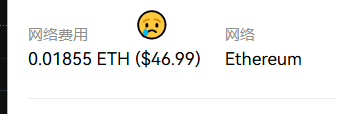
Over the past week, the on-chain activity on the ETH mainnet can no longer be described simply as “lively.” A single rate cut comment from Chair Powell reignited already-bubbling on-chain momentum: at least one new memecoin pumping every day, with multiple waves of action over the weekend. Mainnet gas fees even spiked to around 70 Gwei—just breathing on-chain was expensive.
From Hunting Concepts to Grinding Angles: The 'No Bag Holding' Mentality Spreads to Memes
In terms of recent on-chain market dynamics, "fragmented chaos" is an accurate description. What felt like a fleeting weekend for ordinary workers was packed and intense for on-chain traders.
The dog of Doge’s founder, Musk’s “Mars City” plan, Trump coins—every conceivable concept flooded in with its entire family of tokens. It seemed wasteful not to capitalize on this surge of on-chain sentiment and liquidity.
Yet today's market has evolved beyond simple concept-chasing. Meme trading has upgraded from “finding narratives” to “grinding angles”: as soon as a new hype narrative emerges, a flood of same-name tokens sprout up overnight. Old, new, big, small—everyone pushes their own self-justifying spin.

Take Musk’s “Mars City” over the weekend—it spawned several high-market-cap tokens: $TERMINUS (Mars City Name 1), $BAR (Mars City Name 2), plus tokens for spaceships, interstellar hotels, astronaut dogs, and more. Not to mention each token having both uppercase and lowercase variants.
Clearly, the “no bag holding” phenomenon has trickled down into meme markets. If you buy the uppercase version, I’ll buy the lowercase. If you’re rushing into a three-dot D.O.G.E., I’m going for the four-dot D.O.G.E.—each playing their own game. Traders frantically hunting for unique angles are essentially fighting for the “final interpretation rights” of a narrative. Victory comes when enough people adopt your version—an upgraded form of PVP warfare where nobody wants to carry bags for others.
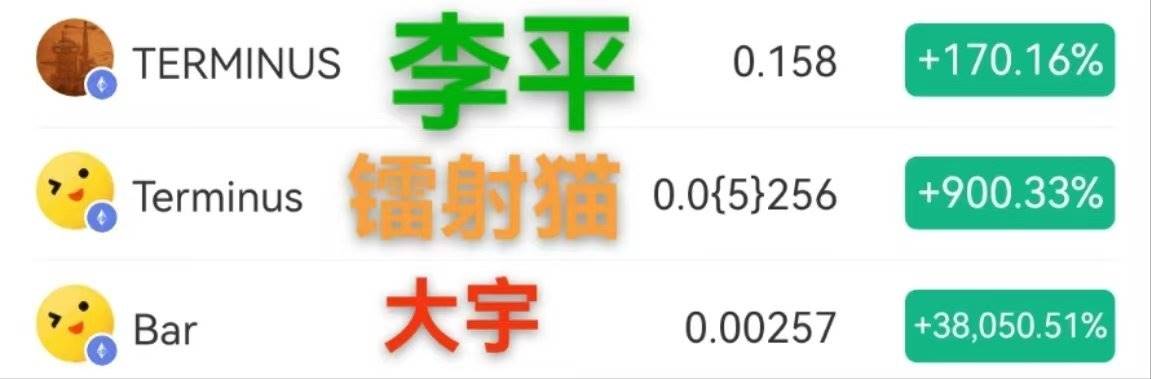
Rotating narratives spawn million-dollar market caps one after another, creating wave after wave of overnight millionaires. But where there are “get rich quick” stories in the on-chain market, there are equally “get poor quick” tales.
Exploiting Human Weakness: Are Organized Groups Playing Psychological Warfare?
The Fragility of Narratives
Even if a trader wins the battle among concepts and angles, they still face numerous “force majeure” threats. Take $MISHA, tied to the “Vitalik’s dog” narrative: it surged from $0 to $20 million in market cap in a single day, only to halve and halve again the next day after Vitalik tweeted, “I don’t have a dog.” Token holders scrambled to exit, gas prices spiked during the panic sell-off, and countless dreams of instant wealth plummeted alongside the price.
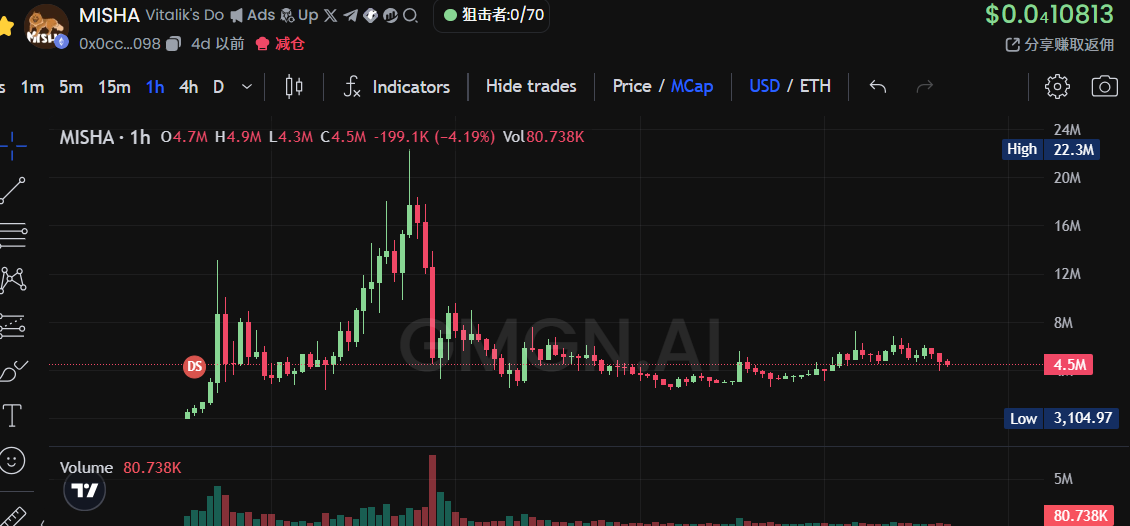
Indeed, some so-called “narratives” are extremely fragile—ignited by a celebrity’s tweet and extinguished just as quickly by another.
Yet this very fragility is being precisely exploited by organized groups, who set psychological traps that prey on human nature during this heated weekend.
Hardcore Narrative?
Compared to centralized exchanges, on-chain primary trading is more transparent and tool-rich, making individual moves nearly visible to anyone paying attention. In the on-chain world, trading “battles” are more direct and face-to-face.
On Saturday, a token called $DOGGO emerged out of nowhere, rising sharply—reaching nearly $20 million in market cap within four hours. While many were still enjoying their weekend sleep, $DOGGO had already completed its pump phase.
Digging deeper, $DOGGO leaned into a classic OG narrative:
Veteran players know that Dogecoin founder Shibetoshi Nakamoto long ago sold all his $DOGE holdings. This time, the $DOGGO team sent 6.56% of the supply to Shibetoshi Nakamoto, who promptly sold all of it. This “sold too early” narrative has been used before, but this time Shibetoshi Nakamoto didn’t just sell—he actively engaged with $DOGGO-related topics.
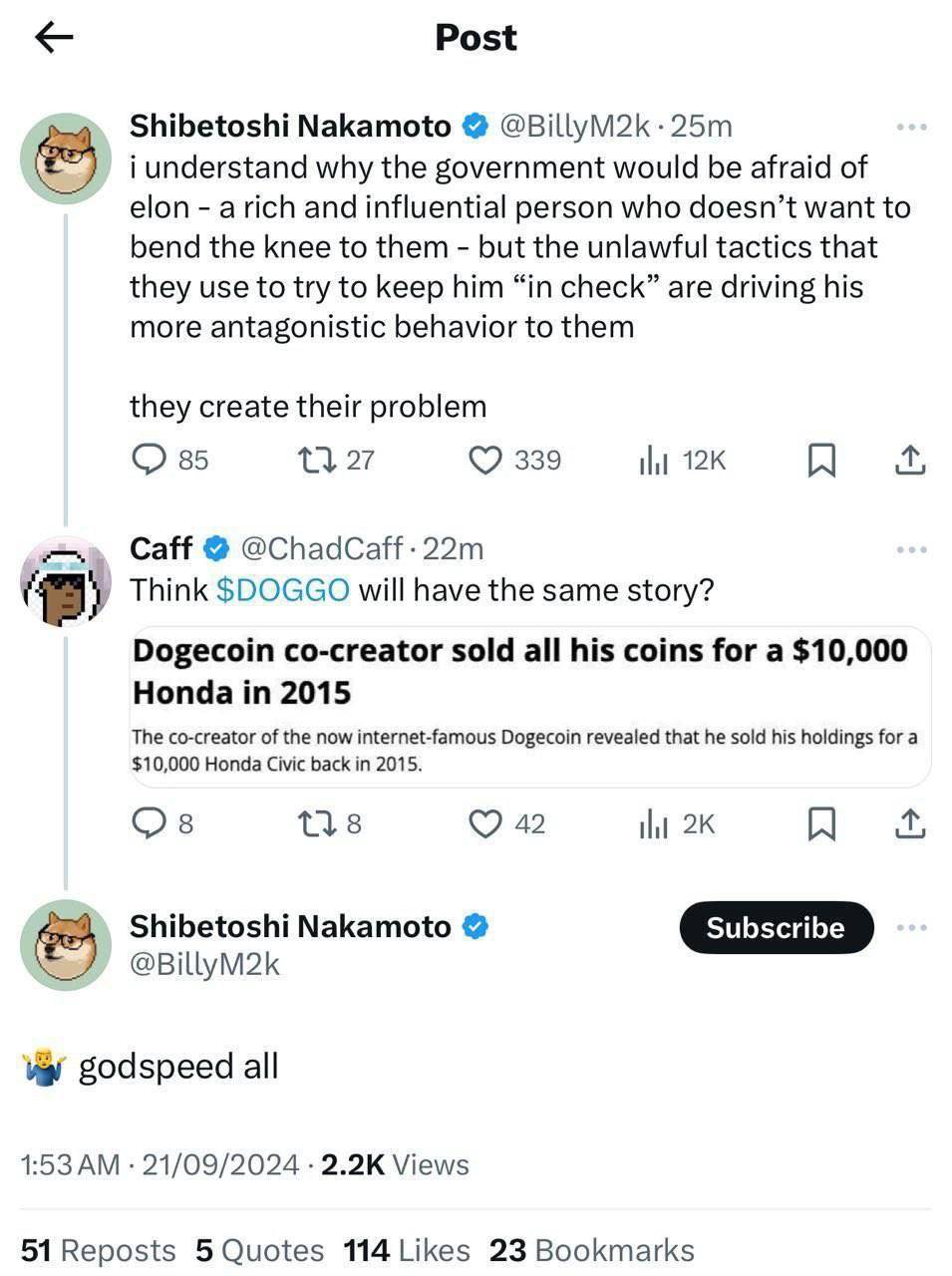
To sharp observers, Shibetoshi Nakamoto’s engagement looked suspiciously like ambiguous endorsement. Combined with $DOGGO’s straightforward OG story, it added a layer of intrigue. Degens tired of fragile narratives and endless PVP saw this as a solid opportunity. Smart wallets piled in, and $DOGGO’s price soared before most even noticed.
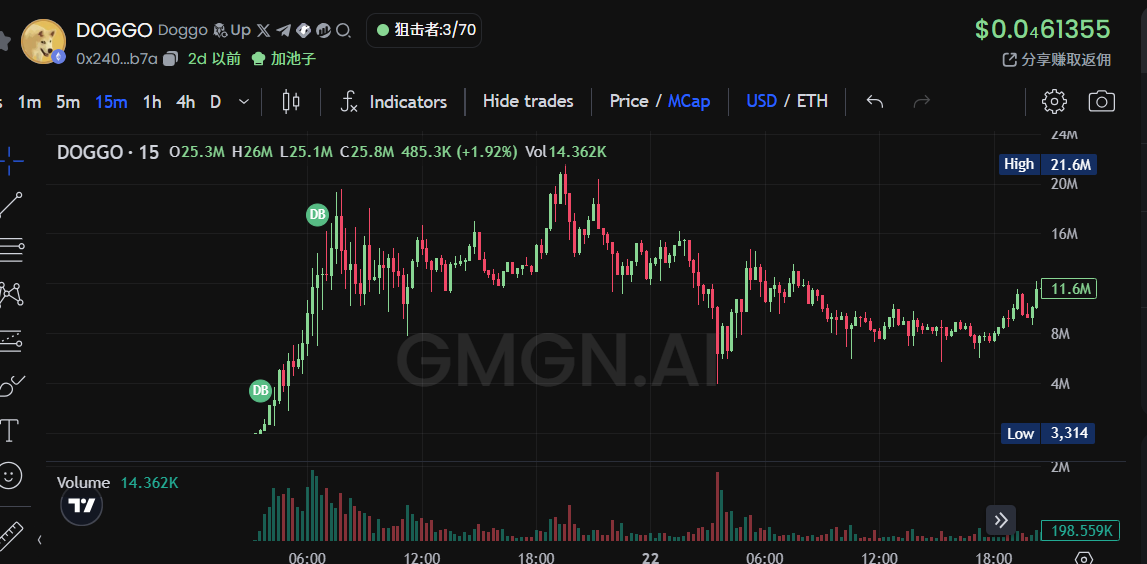
With apparent backing and strong buying pressure, price and market cap surged. $DOGGO seemed on track toward the ultimate goal: a CEX listing. But what followed reminded everyone once again that the on-chain world isn’t a gentle fantasyland—it’s a bloody dark forest.
From Whale Control to Community Takeover? The Hidden Battle Behind the Rebirth
Twists and Turns
Less than a day after $DOGGO exploded, Dogecoin’s founder Shibetoshi Nakamoto clearly stated he takes no responsibility for any memecoins—effectively denying any prior endorsement of $DOGGO.
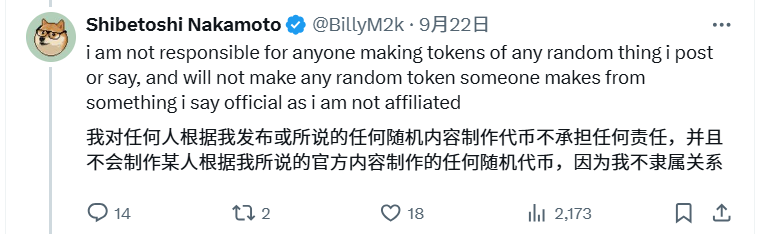
That statement immediately triggered alarm among players recently burned by fragile narratives like $MISHA. Panic set in—time to run! FUD spread through the community, large wallets dumped en masse, and $DOGGO’s pullback turned into a full crash.
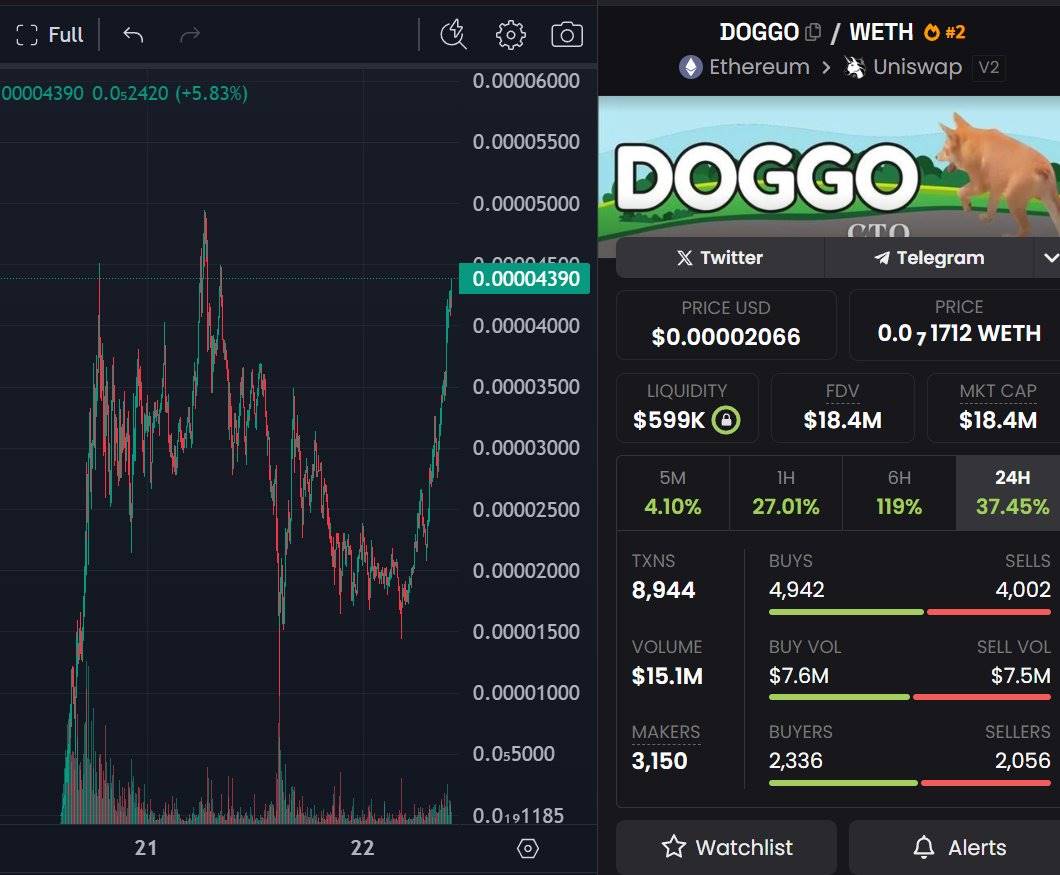
But this time, $DOGGO didn’t keep falling to zero. Instead, right after widespread panic selling, it V-rebounded—price snapping back to pre-crash levels, even announcing a CTO (Community Takeover) the next day. The brutal overnight FUD dump seemed forgotten. Even after the CTO announcement, $DOGGO saw a second dip, making some suspect the CTO itself was just another trap laid by the whales. Retail panicked again, and market cap dropped back to around $6 million—similar to the previous night’s low.
Then, just as many believed $DOGGO was finally dead—yes, it flipped again. This time, market cap surged from $6 million back up, breaking new highs into the $20–30 million range.
On the surface, $DOGGO underwent repeated reversals over two days—a rebirth from whale control to community takeover. Trust gradually rebuilt, and sustained price growth appeared to validate the power of the community.
But was it really that simple?
Not Rebirth—More Like Washout?
After the $DOGGO spectacle, some argued the event was far more complex than it appeared. The so-called “rebirth” looked more like a series of multi-stage “washouts,” with “community takeover” merely a cover story for deep manipulation by organized groups.
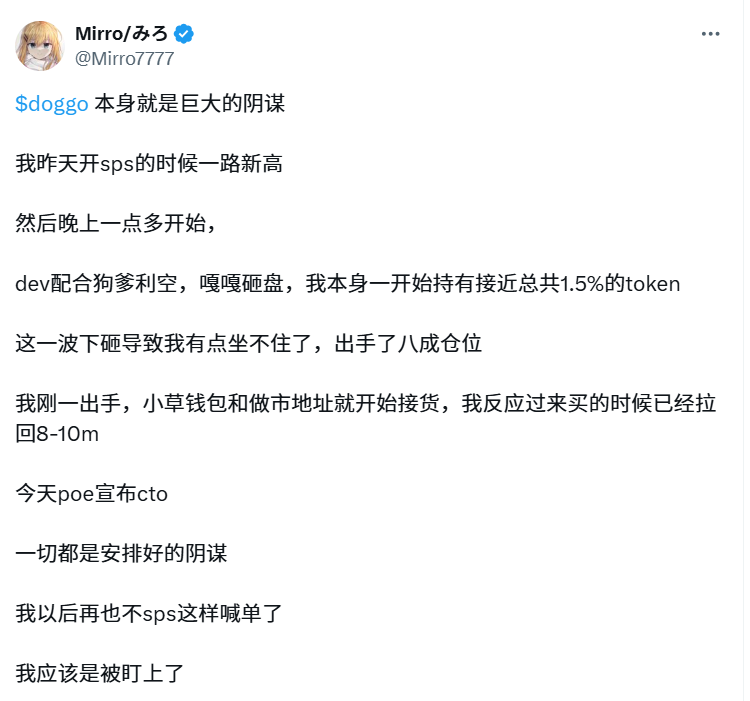
On-chain trader @Mirro7777 admitted being one of the targets in this washout, selling off about 1% of total $DOGGO supply during the nighttime dump fueled by negative news, turning a profitable position into a loss.
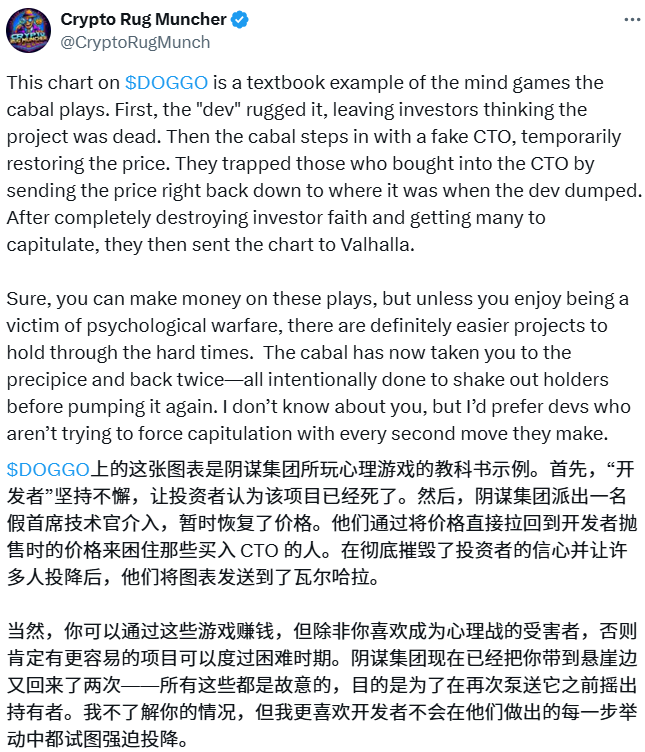
Crypto analyst @CryptoRugMunch, known for exposing scam patterns, called $DOGGO’s maneuvers a textbook case of psychological warfare by organized groups:
Pump + FUD to trigger retail panic → Announce CTO to temporarily recover price → Crash again to destroy retail confidence → Once retail exits, pump hard to break previous highs
Moreover, @CryptoRugMunch emphasized that the organized group never left—they orchestrated every move to force retail surrender. Unless you enjoy being a victim in psychological warfare, better opportunities exist elsewhere.
Summary
Fighting over narratives and grinding angles due to profit disputes or differing consensus isn’t new. BTC and ETH hard forks were fundamentally similar. But unlike hard forks, which at least had a “dignified” rationale, today’s memecoin “splits” are brutally direct: purely for profit. If we're hyping the same idea, why should I carry your bags?
Clashing consensus creates different opportunities. The battle between organized groups and community takeovers has become a widely accepted dynamic in today’s meme market.
The rivalry between uppercase and lowercase Neiro proved community-driven pumps can lead to riches, fueling enthusiasm for the CTO narrative.
But the real danger isn't just big players—it's when big players work harder than you. The $DOGGO saga shows modern manipulators now wear the mask of “community takeover.”
As on-chain liquidity grows, even seasoned degens risk being targeted—let alone the vast majority of inexperienced traders. For most, the crypto world remains an unrelenting dark forest. The moment you succumb to FOMO, countless addresses are already lining up to exploit you.
Market conditions constantly evolve, but one truth remains unchanged: crypto is a negative-sum game. Adapt flexibly, avoid being blinded by survivorship bias, never recklessly go all-in, and always remember—the majority still lose money. Stay safe.
Join TechFlow official community to stay tuned
Telegram:https://t.me/TechFlowDaily
X (Twitter):https://x.com/TechFlowPost
X (Twitter) EN:https://x.com/BlockFlow_News
 深潮TechFlow