Opinion: Cryptocurrency applications should focus less on technology and more on user needs
TechFlow Selected TechFlow Selected
Opinion: Cryptocurrency applications should focus less on technology and more on user needs
Innovation should be reflected in user experience, not in technology itself.
 Navigating Web3 tides with focused insights
Author: rm
Compiled by: TechFlow
Building consumer applications is really hard! We “notorious” early adopters might be the only ones genuinely excited about transaction speeds faster than real life. But honestly, if there’s a great loading screen that keeps users engaged, speed isn’t that critical.
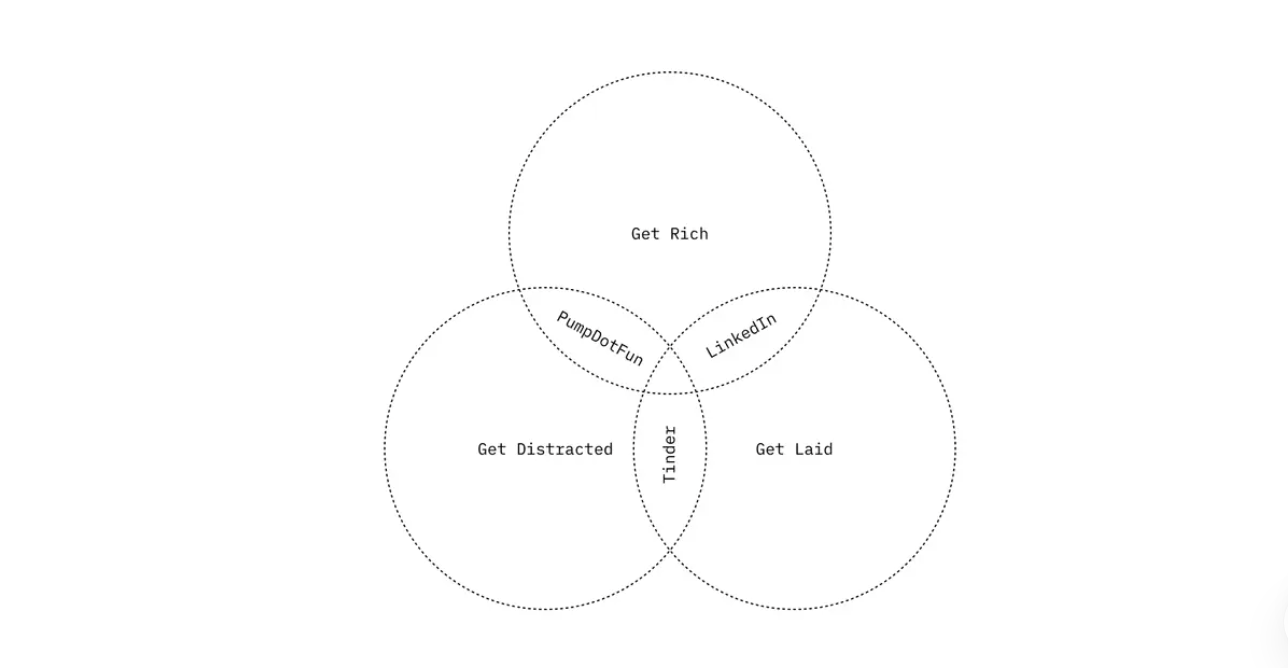
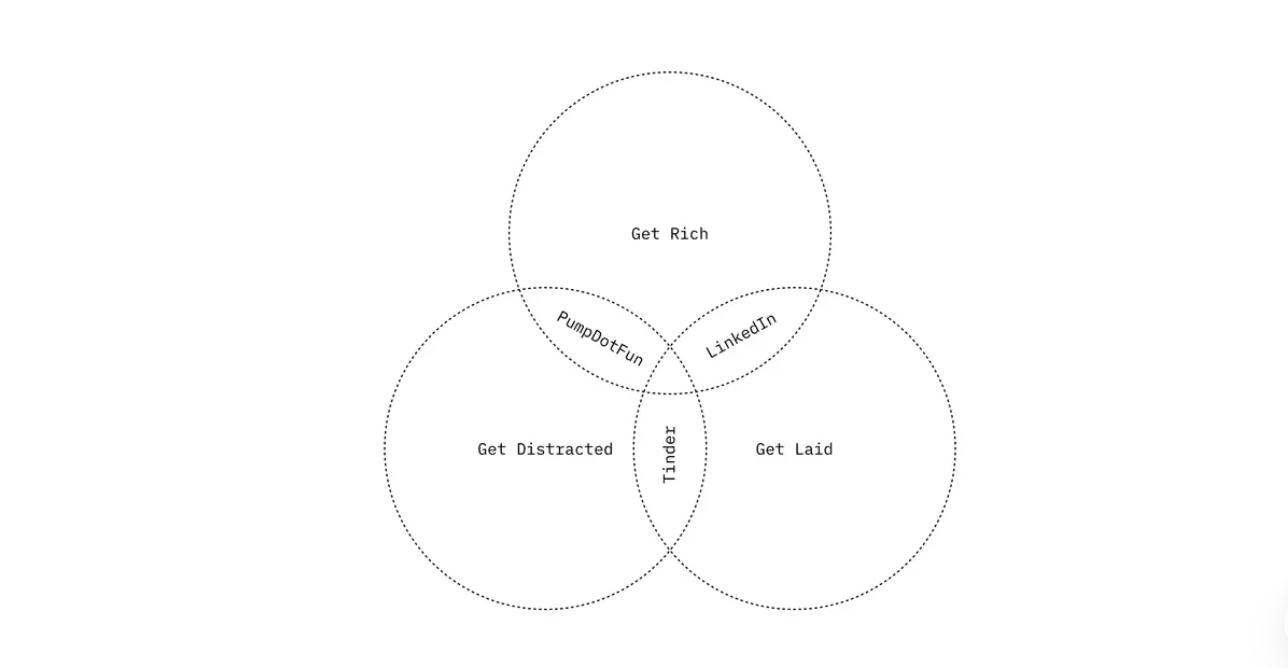
What truly matters—borrowing Nikita Bier’s framework—is this: Most consumer apps fall into three categories: getting rich, socializing, and entertainment, along with their intersections.
People want to make or save money, be entertained, or connect with others (whether colleagues, friends, or future partners). These are the fundamental needs consumer apps should target—not the technology itself.
For years, we’ve been asking, "What can this technology do?" But for most consumer apps, the more important question is: What do people actually want? And how can technology enable those desires in entirely new ways? Starting from technology often leads to impractical ideas.
So step one: What need are we fulfilling? Is it wealth, social connection, or entertainment? Then, how can we leverage technology or infrastructure to deliver it?
User onboarding and retention are two critical moments for any successful app. During onboarding, don’t ask users to connect services, tap through settings, or fill out forms before they’ve seen what the app does. Every extra click risks losing them before they experience any value. Don’t even require login—just show content based on my address. Keep it simple, fast. Show value first, then ask for commitment.
Capture attention quickly and deliver a positive experience immediately. The more interfaces and clicks involved, the higher the drop-off rate. Onboard rapidly so users instantly think, “This is interesting.”
Now, retaining users is the new challenge. Users leave when the app fails to meet the expectations they had upon signing up. While there are many reasons people return, for consumer apps, the key lies in compelling content and relationships. Remember, everything on-chain resembles a massive online service game.
Acquiring high-quality content is extremely difficult due to the high cost of migrating from existing platforms. You don’t want endless posts saying “Just signed up, happy to be here.” You need meaningful, high-quality content. New content formats help, but they’re easily copied, and novelty rarely lasts long these days.
If content is hard to obtain, relationships become crucial. People join platforms because their friends are already there. We face two main challenges: First, growing the user base requires building the right community and strategy. Starting with niche markets often leads to stickier products. Second, with crypto-enabled incentive structures, if your consumer app attracts too many “speculators,” it will only succeed if designed around wealth creation.
If users come for socializing or entertainment, they may feel alienated. Therefore, design for the right community from day one.
How to build an app?
In short: What problem does your app solve? Can users get rich, make friends, or be entertained? Can they have a great experience without going through cumbersome steps? Will content and other users bring them back? How can you use user-generated content and users themselves to drive new user acquisition?
This is fundamentally different from traditional on-chain thinking: Less “contracts first,” more “needs first.”
In Web2, building consumer apps usually means starting from scratch—building account systems, social graphs, payment layers, and data storage. On blockchain, these components are already available. So instead of imagining what’s technically possible, rethink how to assemble existing modules into something new. Use Farcaster or Lens for social layers, wallets as identities, Enso or similar tools for on-chain actions, and iterate heavily through prototyping.
In the past, on-chain development was so complex that you needed extreme confidence in your idea due to the heavy engineering required. Consumer apps are different: Start by clarifying the need, then use existing modular tech, iterate quickly until you find a solution that resonates with consumers. Consumer products rarely start from a single idea—they evolve through continuous real-time iteration.
Innovation should shine through user experience, not the underlying technology. Make full use of existing modules.
Join TechFlow official community to stay tuned
Telegram:https://t.me/TechFlowDaily
X (Twitter):https://x.com/TechFlowPost
X (Twitter) EN:https://x.com/BlockFlow_News
 @NilsEdison