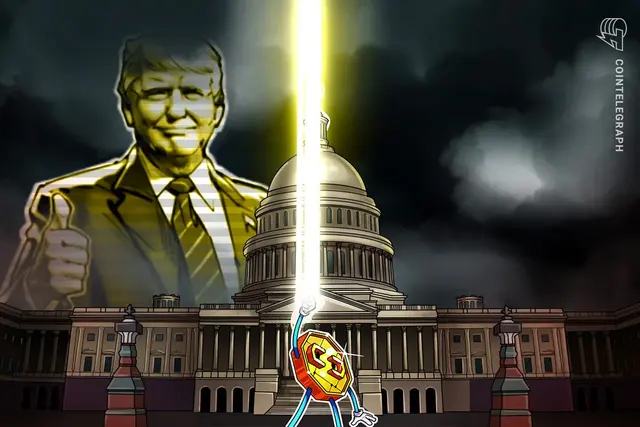
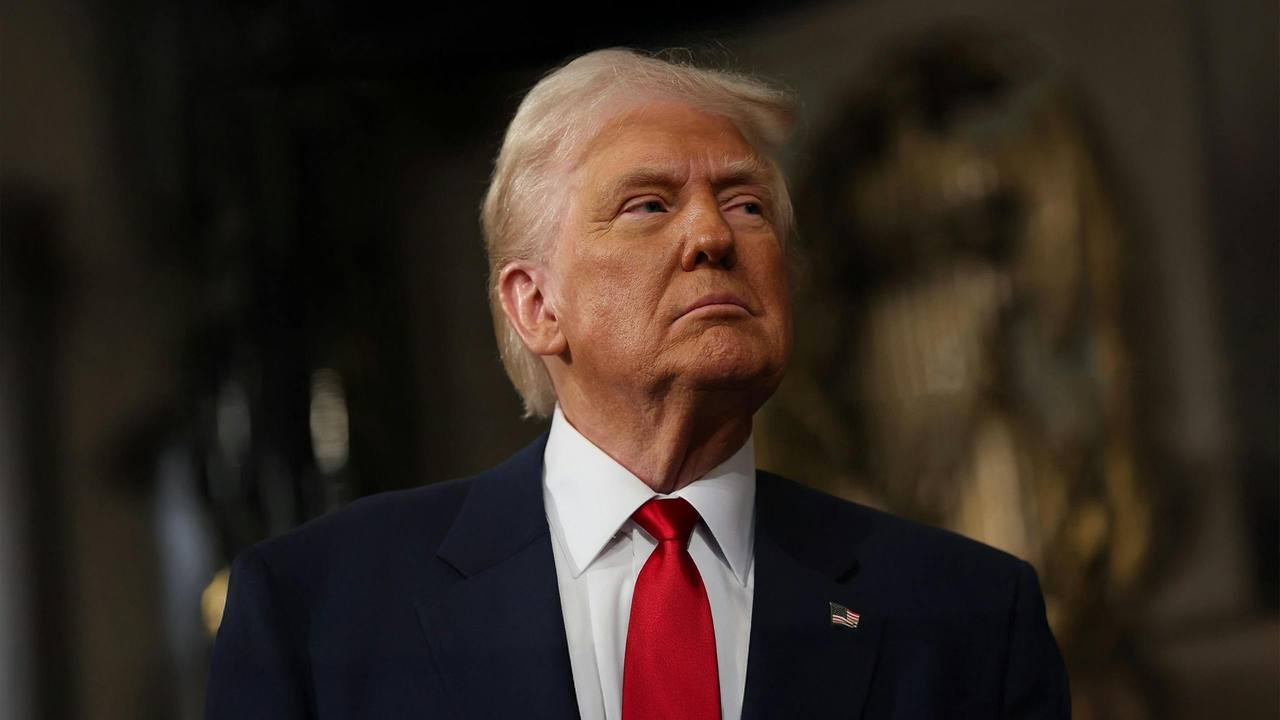
Despite suffering a second shooting, Trump still insists on launching his family's cryptocurrency project
TechFlow Selected TechFlow Selected
Despite suffering a second shooting, Trump still insists on launching his family's cryptocurrency project
Trump Family Space Recap: Establishing a Legal Framework for the Crypto Industry Post-Election, with WLFI Token Distribution Drawing Attention.
 Navigating Web3 tides with focused insights
Written by: Fu Ruhé, Odaily Planet Daily
Recently, U.S. presidential candidate Donald Trump, along with key members of World Liberty Financial, held an interview on the X platform with Farokh, founder of Rug Radio. This livestream took place just one day after Trump survived a second assassination attempt.
During the session, Trump shared his views on the crypto industry, criticized the U.S. Securities and Exchange Commission (SEC) for its hostility toward crypto, outlined potential policies for the sector if elected, and discussed topics such as NFTs.
After Trump concluded his portion of the discussion, his close associate Steve Witkoff shared his thoughts on the cryptocurrency industry and World Liberty Financial, followed by insights from other core team members. Finally, Zak Folkman, Chief Operating Officer of World Liberty Financial, officially disclosed key project details.
Trump's Core Views on the Crypto Industry
-
The U.S. should become the global crypto capital: Trump believes the United States must act swiftly to lead the world in cryptocurrency. If America does not take initiative, countries like China will seize dominance.
-
Current regulatory environment is hostile: He criticized the SEC’s adversarial stance toward the crypto industry, attributing it to the Biden administration’s lack of support. Without proper regulatory frameworks, American innovation risks falling behind other nations.
-
Support for a clear legal framework: Trump emphasized the need for a well-defined legal structure for the crypto industry so businesses can thrive domestically. He noted that uncertainty currently forces many crypto entrepreneurs to leave the U.S.
-
Widespread adoption of crypto payments: He observed a growing trend of people using cryptocurrencies for transactions—a phenomenon nearly unheard of just a few years ago. He believes crypto will continue expanding and may become a primary payment method.
-
Insights from NFT experience: Trump expressed surprise at the success of his NFT series, which prompted him to reevaluate the potential of cryptocurrency. Notably, most buyers used crypto rather than traditional dollars, deepening his appreciation for digital payments.
-
Technological competition in the future: Trump stressed that the U.S. must maintain leadership in emerging technologies like cryptocurrency and artificial intelligence (AI), or risk being overtaken. These fields, he said, will define global competitiveness.
Key Points on the World Liberty Financial Token
Token Plan:
-
World Liberty Financial will issue a governance token called WLFI, exclusively for platform governance purposes.
-
The token grants only voting and proposal rights, carries no economic benefits, and is non-transferable.
Purchase Eligibility:
-
Sales of WLFI tokens will be restricted; U.S. investors must qualify as accredited investors under Regulation D.
-
Sales outside the U.S. will also comply with applicable local regulations.
Token Distribution:
-
63% of tokens will be publicly sold, with no pre-sale or early discounts for venture capitalists (VCs).
-
17% allocated for user rewards, 20% reserved for team compensation.
-
A 5% cap on voting power ensures fair governance—no single holder can wield disproportionate influence regardless of holdings.
Author’s personal view: Watching the livestream, it felt more like a political address aimed at crypto voters. While Trump clearly supports the industry, he appears to lack deep understanding of native crypto culture, instead framing his views through a nationalistic, macro-level lens. His endorsement, however, signals significant recognition.
Judging from responses by other core members of World Liberty Financial, the project seems less targeted at existing Web3 users and more focused on attracting new participants. Much of what was said leaned heavily into broad, inspirational rhetoric without concrete technical or product specifics.
When COO Zak Folkman finally announced the tokenomics, aside from differences in allocation compared to earlier reports by CoinDesk, the rest remained largely consistent: a non-transferable governance-only token.
Below are selected excerpts from the livestream, compiled and translated by Odaily Planet Daily.
Trump on the Crypto Industry
Farokh: You've said the U.S. should become the global crypto capital—why isn't it already?
Trump: I believe the U.S. will soon become the leader in crypto. Right now, the SEC is extremely hostile toward the industry, which is hard to comprehend—it reflects the current Biden administration’s stance. Their opposition borders on disbelief. My approach is different: if we don’t act fast, China will get there first—and they already are. Yes, there are issues in crypto, like reputation concerns, but overall the industry is still young and rapidly evolving. If we don’t move, others will take the lead.
My children understand crypto very well, especially Barron—he has four crypto wallets. Eric and Barron are deeply involved too. Younger generations naturally grasp these technologies better than older ones. I respect their judgment. Crypto is still nascent, but its potential is enormous. I’ve noticed more and more people using crypto for payments—something rarely seen even a year or two ago. So yes, I believe crypto will grow significantly.
Farokh: Why is it so important for the U.S. to lead in crypto adoption and innovation?
Trump: Whether it’s crypto or artificial intelligence (AI), these are foundational future technologies. If America doesn’t act quickly, others will surpass us. China is already building power infrastructure dedicated to AI, while here in the U.S., environmental regulations make constructing such facilities extremely time-consuming. I will create conditions to accelerate infrastructure development and ensure America leads in both AI and crypto.
We must lead in every critical domain, especially technology like crypto and AI. Just as we reclaimed leadership in space exploration during my presidency—with Elon Musk achieving remarkable things as my friend and strong supporter—we must do the same here.
Farokh: Should the U.S. establish a legal framework so crypto businesses can thrive here?
Trump: Absolutely, it’s essential. The crypto industry needs a clear legal framework to grow. Of course, some necessary regulation is needed. I’ve spoken with many crypto company leaders—they want sensible oversight. But right now, the SEC’s crackdown is inexplicable. Since I became interested and involved in crypto, I’ve seen a slight shift in the SEC’s attitude. They seem to recognize its potential—or perhaps they sense the political implications of my involvement.
But if we don’t win the election, the SEC could revert to hostility and resume suppressing the industry. That’s why we must keep advancing in future technologies—crypto, AI, and beyond—to maintain America’s global leadership.
Farokh: Can you share your experience with NFTs? Were you surprised by its success?
Trump: When I entered the NFT market, the hype had already faded—many thought the market was cold. We launched 45,000 NFTs, expecting it might take months or even a year to sell out. But they sold almost instantly. Then we released second, third, and fourth batches—all huge successes. I even asked early buyers whether new releases would dilute their value, but most supported further drops. That surprised me.
This experience opened my eyes to crypto’s payment potential. Nearly all purchases were made in cryptocurrency—not via dollar checks. That gave me a deeper understanding of crypto payments. It was truly the moment I began taking crypto seriously. Initially, I wasn’t paying much attention, but this real-world application showed me its actual utility and promise.
Farokh: Did NFTs change your view on digital assets?
Trump: Yes, absolutely. The NFT success reshaped my perspective on crypto. Had payments been in dollars, I wouldn’t have reacted strongly. But seeing nearly every transaction done in crypto was eye-opening. Plus, my kids are passionate about it—their deep understanding influenced me. I realized this isn’t just a youth trend; many of my peers are strong crypto supporters too. That reinforced my interest and confidence in the industry.
Renowned Real Estate Developer Steve Witkoff on the Origins and Potential of WLFI
Farokh: How did this collaboration begin? I know there’s a great story—can you walk us through it?
Steve Witkoff: My son introduced me to two partners, Chase Herro and Zach Folkman—very smart young men. They dress differently, more tattoos—but brilliant. Through Chase and Zach, I met traders from around the world. As sharp as any financial traders I’ve ever encountered. They began explaining decentralized finance—“frictionless finance”—and how it benefits ordinary people, especially those excluded from traditional systems. Credit drives our economy, yet so many lack access to it.
As I grasped this, I thought: no one understands this challenge better than the Trump family. So we started talks with Eric Trump Jr., President Trump, and his advisory team. We spent nearly nine months conducting thorough due diligence, hiring top legal counsel to ensure full compliance. Now we’re at this pivotal moment—it’s the result of years of work.
Farokh: Do you believe this can truly transform how wealth is created in America?
Witkoff: I firmly believe DeFi is the future. Today, getting a loan feels like needing a royal “blessing” to join the privileged class. Even when I left law practice representing the president, breaking into business and accessing credit was tough. Credit fuels our economy—and crypto makes it possible. DeFi, as a crypto application, makes credit far more accessible.
We see a massive market opportunity, especially for those shut out by traditional banks. They can’t find institutions willing to serve or listen to them. We see this as both a business opportunity and a way to democratize credit. We can make the process fairer—and potentially earn solid returns, given the vast underserved population. It’s tragic: young people with brilliant ideas can’t realize them. That contradicts the American Dream.
Digital & Strategy Lead Chase Herro on WLFI’s Vision and Impact
Farokh: What’s the overarching vision for this project?
Chase Herro: It’s an ambitious goal. My focus is liquidity. We often conflate Bitcoin, Ethereum, and other tokens—they’re great assets, but the real game is simpler. People understand dollars, accounts, simplicity.
That’s why I dove into stablecoins—I love their underlying concept. To me, stablecoins are the easiest entry point for newcomers unfamiliar with speculation. Like a gym membership: once you pay, you’re more committed. I want people to enter with just $5, gradually engaging more. That’s when real transformation happens.
If you’re unfamiliar with stablecoins, they’re incredible assets backed by U.S. Treasuries. I believe this is the perfect way to secure America’s role as the global financial foundation for the next century.
History shows: a strong America means a stronger world. Today, that foundational role is challenged. With growing uncertainty, the dollar’s position matters more than ever. Right now, the dominant medium in crypto trading is dollar-pegged stablecoins. My goal is twofold: empower individuals with financial freedom, protect U.S. economic sovereignty, and give people full control over their assets. When have you ever heard of average citizens buying Treasuries or bonds directly?
Farokh: How do you see this project reshaping finance in the coming years?
Chase Herro: It all comes down to accessibility. Any major project must be easy to use. That’s where we need to go—and it’s why I admire the Trump family. From start to finish, they prioritize comfort and usability. No one does it better.
Our mission aligns perfectly: build a system that everyday Americans and global users can easily access—unlocking opportunities previously out of reach. The tech is advanced but complex. Early on, we tested on my mom, grandma, and sisters—even offering $10,000 rewards if they could successfully create a MetaMask account. If they asked for help, the prize dropped. You’d be shocked how quickly they got stuck.
That’s the key to the future: enabling regular Americans to enter and use this space, experiencing true financial freedom. Imagine: your bank is always with you, money in your pocket wherever you go. This level of control is revolutionary.
Yet it’s also the hardest intersection to achieve—which is why we need the simplest possible interface to reach the widest audience. I’ve never seen anyone simplify complexity like the Trump family. I truly believe combining their communication power with our vision will deliver sovereign financial freedom to the American people.
This will transform everything. Ordinary people have never had a chance to earn yield on $1. But deposit dollars into a stablecoin on-chain, and you instantly earn yield—backed by U.S. debt. So we must ask: why exclude the public from this? Sometimes I think certain players do it intentionally—they don’t want this to happen. Powerful interests may resist because it undermines their control and profit efficiency. In 2008, some bought mansions while millions lost retirement savings.
Farokh: What do you hope to achieve with this project?
Chase Herro: Zac is more pragmatic; I’m more visionary. My goal? Break our debt chains and rebuild America’s debt structure—in a way that benefits both crypto and the nation. Whoever holds the debt holds the power. As interest rates begin to fall, capital will shift from traditional investments. We aim to create a product that captures this flow. My priority is America’s interest—and we’ll build tools to serve that end.
Beyond that, we want to illuminate the entire crypto ecosystem. Crypto is fragmented—tribalism over Layer 2 solutions or best tokens. We aim to showcase everything DeFi offers: from decentralized media platforms like Rug Radio to lending protocols like Aave. We want to bring these innovations to the mainstream.
COO Zak Folkman: Simplifying DeFi’s Future Goals and Usability Challenges
Farokh: How does World Liberty Financial tackle usability challenges? Who are you aiming to bring into the DeFi ecosystem?
Zak Folkman: Usability is indeed a major hurdle. Many DeFi protocols—some of our favorites—are powerful but difficult for average users to understand and use.
I have technically savvy friends who own Bitcoin and Ethereum but keep their assets on exchanges like Coinbase, completely missing out on DeFi’s potential. They don’t even realize there’s more to do beyond speculation. Stablecoins are the ideal tool to help these users move beyond pure speculation—as Chase mentioned, they offer stable yields with minimal volatility thanks to dollar pegging.
Our opportunity lies in showing users who already hold Bitcoin or Ethereum that they can do more—earn yield, gain exposure to DeFi—through a simple, intuitive product.
I know over 70,000 people are closely following this project—true members of the crypto and DeFi community. For them, entering a DeFi platform can still feel daunting. You open an app, face unclear instructions, multiple markets, staking options—no guidance—and eventually give up.
For example, Eric tried with us to explore looping ETH on Aave, but gave up quickly. The process was too complex—even for someone tech-savvy. That’s the problem: DeFi lacks usability. To achieve mass adoption and drive liquidity, we must build products so simple that anyone can use them seamlessly.
Farokh: How does World Liberty Financial plan to achieve these goals?
Zak Folkman: We’re not reinventing the wheel. We aim to bring the best of DeFi to those who haven’t yet participated. Our products will be simple, intuitive, and require no help from friends to operate.
With such simplicity, we hope to onboard more people into DeFi—helping them earn yield via stablecoins instead of gambling on the next meme coin.
We also plan to help users unlock liquidity from their existing assets—like Ethereum or other cryptos. This is how we’ll achieve our mission: through stable yield mechanisms and effortless design, making DeFi accessible to everyone.
WLFI Advisor Corey Caplan: Security Architecture Outlook
Farokh: Given the high profile and expectations around this project, how are you ensuring robustness and reliability in security and architecture? The crypto community cares deeply about platform safety.
Corey Caplan: Security is a journey, not a destination. In early crypto and open finance days, we assumed certain systems were secure—but over time, threats evolved. We must stay agile, continuously learn, adapt to new methods, and never cling to outdated models. Our team must remain open-minded, embracing new technologies and practices to ensure long-term security and resilience.
World Liberty Financial: Token Plans and Community Feedback
Farokh: What are the token plans for World Liberty Financial?
Zak Folkman: This is likely one of the most anticipated questions, and there’s been a lot of speculation. I’ve seen wild predictions. Let me now formally clarify: yes, we will have a token. I’ve prepared a statement to provide context and ensure everyone understands its purpose.
At World Liberty Financial, we believe the future of our platform—and DeFi as a whole—requires broad participation. We see governance tokens as the best path forward. Therefore, we plan to issue and distribute a governance token named WLFI. WLFI will be strictly for governance—granting holders the right to propose and vote on platform-related matters. It will be non-transferable and confer no economic rights, such as dividends or profit shares. We want only those genuinely committed to shaping World Liberty Financial’s direction to hold this token—not speculators seeking quick profits.
Please note: sharing these plans today does not constitute an offer to sell tokens. Any future sales will be officially announced through our verified channels.
Farokh: Who can buy the token?
Zak Folkman: Great question. Although we don’t classify WLFI as a security, due to current regulatory uncertainty in the U.S. regarding tokens and token sales, we are proceeding cautiously. Token sales will be limited to accredited investors who meet exemptions under U.S. federal securities laws (Regulation D).
This means U.S. participants must be verified accredited investors. Sales to non-U.S. persons will also be restricted and compliant with applicable regulations.
Farokh: How will tokens be distributed?
Zak Folkman: As I’ve said, the crypto space has many scams—so beware of projects claiming affiliation with World Liberty Financial. If it’s not from our official channels (Twitter, Telegram, or website), it’s fake.
Regarding distribution, many prior reports were inaccurate. Here’s the truth: like other fair DeFi projects, we’ll have a highly equitable allocation. Approximately 63% of tokens will be sold directly to the public—no pre-sale, no VC discounts. First access goes straight to the public. 17% will go to user rewards, 20% to team compensation (including advisors and future hires). To promote broad governance participation, we’re capping voting power at 5%. Even if someone holds a large number of tokens, their voting influence cannot exceed 5%.
Farokh: What kind of feedback has the crypto community given on this project?
Zak Folkman: As with any project, some support you, some envy you, some disagree—that’s normal. What amazes me most is the strong backing we’ve received from leaders in the crypto space—true pioneers of the industry. We’ve already announced several advisors: Corey Caplan, Sandy Pang, Luke, Raphael, and others.
There are also major figures quietly supporting us who remain low-key to balance their own investor relationships. If I could name them, you’d be stunned. These individuals have tremendous confidence in both the crypto community and the potential of World Liberty Financial.
Join TechFlow official community to stay tuned
Telegram:https://t.me/TechFlowDaily
X (Twitter):https://x.com/TechFlowPost
X (Twitter) EN:https://x.com/BlockFlow_News
 Odaily