The Rise and Fall of South Korea's NFT Market: From Boom to Bust, Where Is It Headed?
TechFlow Selected TechFlow Selected
The Rise and Fall of South Korea's NFT Market: From Boom to Bust, Where Is It Headed?
Despite market downturns, practical use cases such as tickets and product certificates have still emerged in South Korea's NFT market.
 Navigating Web3 tides with focused insights
Author: Tiger Research Reports
Translation: TechFlow
Key Takeaways
-
Since 2021, various domestic NFT projects have emerged in South Korea, including platforms and communities led by major corporations. However, since 2022, the market has remained unstable.
-
The market's decline has been even steeper than that of the global market due to excessive localization, lack of practical utility, and regulatory challenges.
-
Despite the downturn, real-world applications such as ticketing and product certification have emerged within the Korean NFT market. This suggests that NFTs could evolve into a technology with tangible value beyond speculation, making their future development worth watching.
1. Introduction
The South Korean NFT market has evolved in tandem with global trends, experiencing rapid growth since 2021—especially driven by the popularity of blue-chip NFTs like Cryptopunks and Bored Ape Yacht Club (BAYC). This expansion was accelerated by the swift development of multiple projects on Klaytn, a local blockchain network. High-profile projects such as Metakongz and Sunmiya Club attracted international investors and achieved significant trading volumes on OpenSea, one of the world’s leading NFT marketplaces. Additionally, the launch of domestic NFT platforms further energized the industry.
However, starting in May 2022 with the collapse of Terra Luna and followed by the FTX incident in November of the same year, major shocks altered the market environment, ushering in what is known as the "crypto winter." As a result, the NFT market declined, and many projects struggled or ceased operations prematurely. Nevertheless, some companies continue to operate or are launching new initiatives despite these challenges.
This report provides a comprehensive analysis of the current state of South Korea's NFT market, focusing on projects that shut down during the downturn and those that have managed to sustain operations amid adversity. By comparing and analyzing the strategies of these projects, we aim to identify key trends shaping the Korean NFT landscape and offer insights into its future trajectory.
2. Overview of the Korean NFT Market in 2024
The South Korean NFT market experienced strong growth at the beginning of 2022. With large enterprises from finance, retail, and telecommunications actively entering the NFT space, the market quickly became dominated by these corporate players.
2.1. NFT Platforms
Content cannot be displayed outside Feishu Docs
During this period, competition among NFT platforms intensified, with each striving to capture domestic users through localized services offering end-to-end solutions—from NFT creation to trading. This strategy aimed to rapidly attract a stable user base by leveraging the convenience and trust associated with established companies. Furthermore, these firms utilized their extensive experience and resources in transaction processing, sales, and settlement systems to quickly build integrated markets and develop various supporting features.
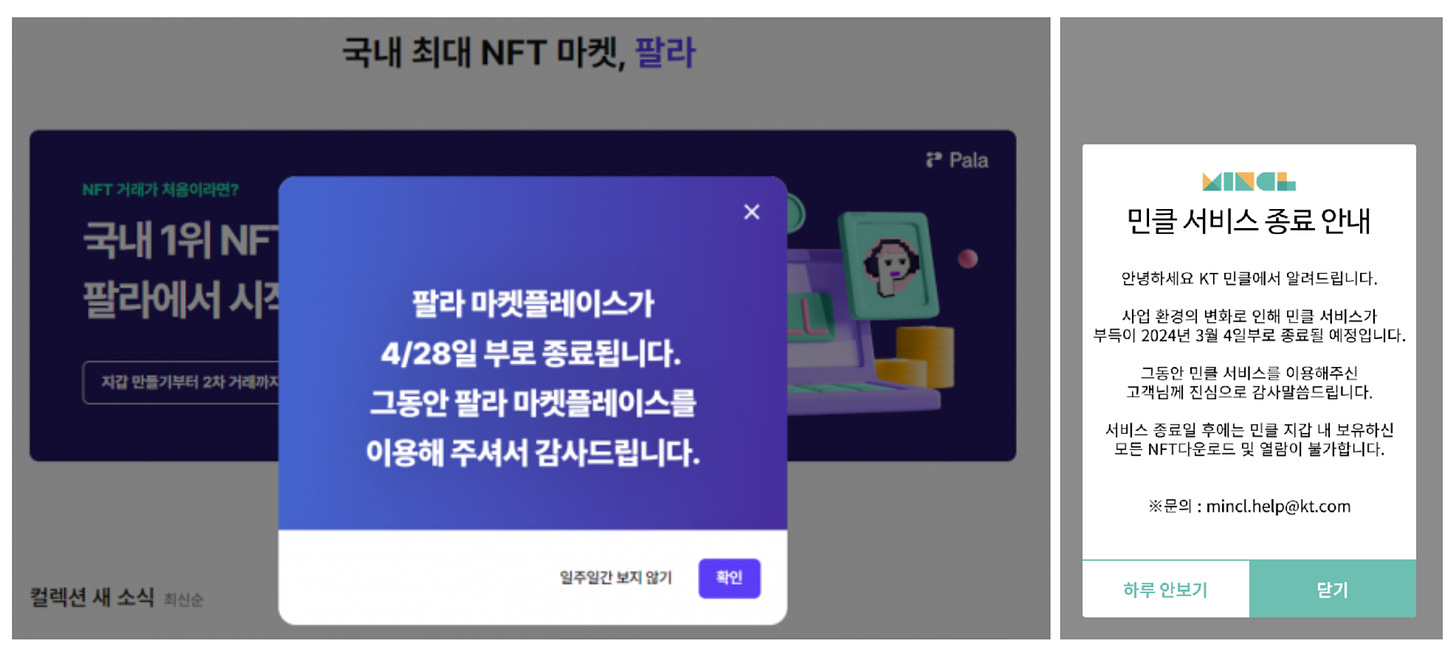
Source: Pala (left), KT Mincl (right)
In 2023, however, the market landscape shifted dramatically. Many companies began shutting down their NFT platform services for various reasons. Their heavy focus on the domestic market limited their user base and left them unable to compete with global platforms such as OpenSea, Magic Eden, and Blur. Additionally, the absence of compelling NFT projects capable of sustaining consistent trading volume weakened their market positions. Finally, the overall downturn in the NFT market led to declining demand, which likely served as the decisive factor behind these closures.
2.2. NFT Projects
Content cannot be displayed outside Feishu Docs
NFT projects continue to emerge across entities ranging from large corporations to community-driven groups. Companies are leveraging existing intellectual property (IP) or creating new character IPs to launch NFT initiatives designed to enrich brand experiences and enhance customer loyalty through exclusive benefits. Notable examples include Lotte Shopping’s Belly Bear NFT and Shinsegae Department Store’s Puuvilla NFT project, which issued 9,500 and 10,000 NFTs respectively. Both projects incorporated membership perks and sold out quickly, becoming early success stories in South Korea’s NFT market.
Most of these projects rely on a simple membership-based business model, primarily generating revenue through secondary market transactions. However, as the NFT market declined, they struggled to maintain sustainable income, resulting in many discontinuing their community channels or shutting down entirely. Even NFT projects backed by major brands face difficulties in maintaining active communities. Despite initial success, these projects failed to deliver long-term value and practical utility, ultimately hindering sustained development and user engagement.
3. Continued Decline of the NFT Market
Amid a prolonged downturn in the global cryptocurrency market, South Korea's NFT sector is experiencing an even more pronounced contraction. This sharper decline stems from three primary factors: 1) excessive localization of the domestic NFT market, 2) a prevalence of NFTs lacking real-world utility, and 3) increasing regulatory hurdles related to cryptocurrencies.
3.1. Excessive Localization of the Korean NFT Market
Korea's preference for localized social media platforms and online communities has contributed to the over-localization of its NFT market. When NFT trends gain traction domestically, they often form closed ecosystems that limit participation by international users. Moreover, the proliferation of NFT platforms tailored specifically for Korean speakers reinforces this isolation, as users naturally favor platforms in their native language. This insular environment hinders integration between Korea’s NFT market and the broader global ecosystem.
This characterization of the Korean market stands in stark contrast to the global NFT ecosystem. Internationally, NFT projects largely operate through English-language community channels and marketplaces. Platforms such as Reddit, X (formerly Twitter), OpenSea, and Warpcast serve as central hubs for discussing and promoting NFTs—all operating primarily in English. This linguistic divide poses a significant barrier for Korean NFT projects seeking to expand internationally.
3.2. NFTs Yet to Prove Their Value

Source: Left)SeoulArtistNFT, Right) BlueberryNFT
Similar to global trends, Korea’s NFT market initially gained attention through collectible NFTs. Numerous NFTs linked to well-known Korean artists and sports figures were launched, with some achieving high trading volumes due to the creators’ fame. However, NFTs perceived mainly as digital collectibles or speculative assets struggled to sustain long-term interest and gradually became marginalized in the market.
Following this initial phase, a second wave emerged in the form of membership-based NFTs, primarily backed by large corporations. While these NFTs saw sharp price increases upon release, both trading volume and prices subsequently plummeted without signs of recovery.
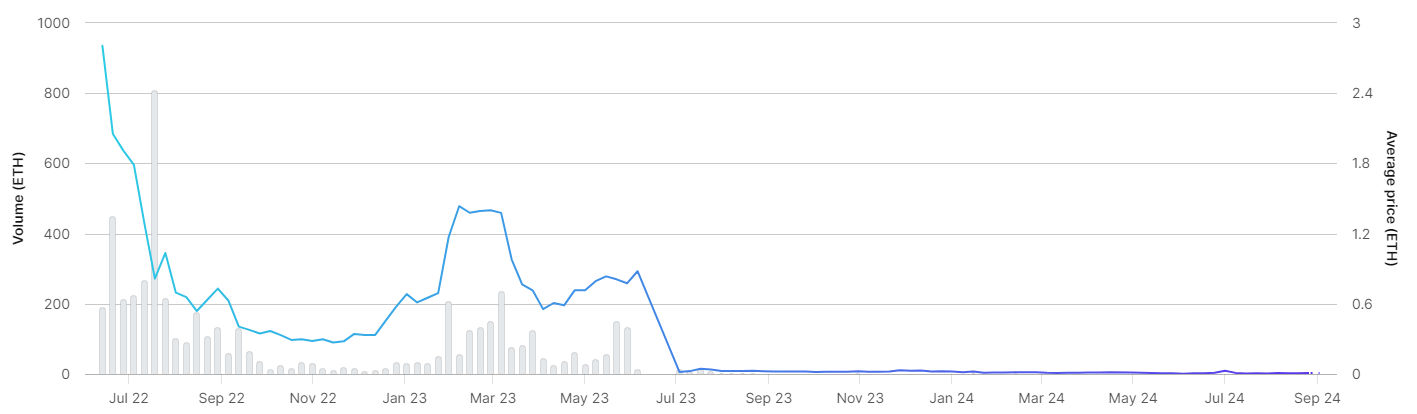
MetaKongz NFT Sales Trend, Source: OpenSea
This phenomenon reflects ongoing skepticism about the intrinsic value of NFTs. Although advancements in digital technology popularized the concept of “digital collectibles” and sparked a wave of speculation, that momentum has now faded. Merely owning digital images has failed to sustain public interest or recognition. Similarly, while membership-based NFTs initially offered holders discounts and exclusive event access, they struggled to create lasting value. This is largely because these NFTs failed to meet expectations and lacked practical use cases, preventing them from achieving sustainable growth in the market.
3.3. High Barriers Due to Regulation
Another major challenge facing the domestic NFT market is the rising regulatory burden. The enforcement of the *Virtual Asset User Protection Act* in July, along with subsequent NFT guidelines, has made operating NFT-related businesses more complex. According to the guidelines, an NFT may be classified as a virtual asset if it meets any of the following conditions:
-
When large quantities or series of identical or similar types of NFTs are issued
-
When an NFT can be subdivided
-
When an NFT can be used as a direct or indirect method of payment for goods or services
-
When an NFT functions as a medium for exchanging virtual assets among unspecified individuals or as a means of payment for goods or services tied to other virtual assets
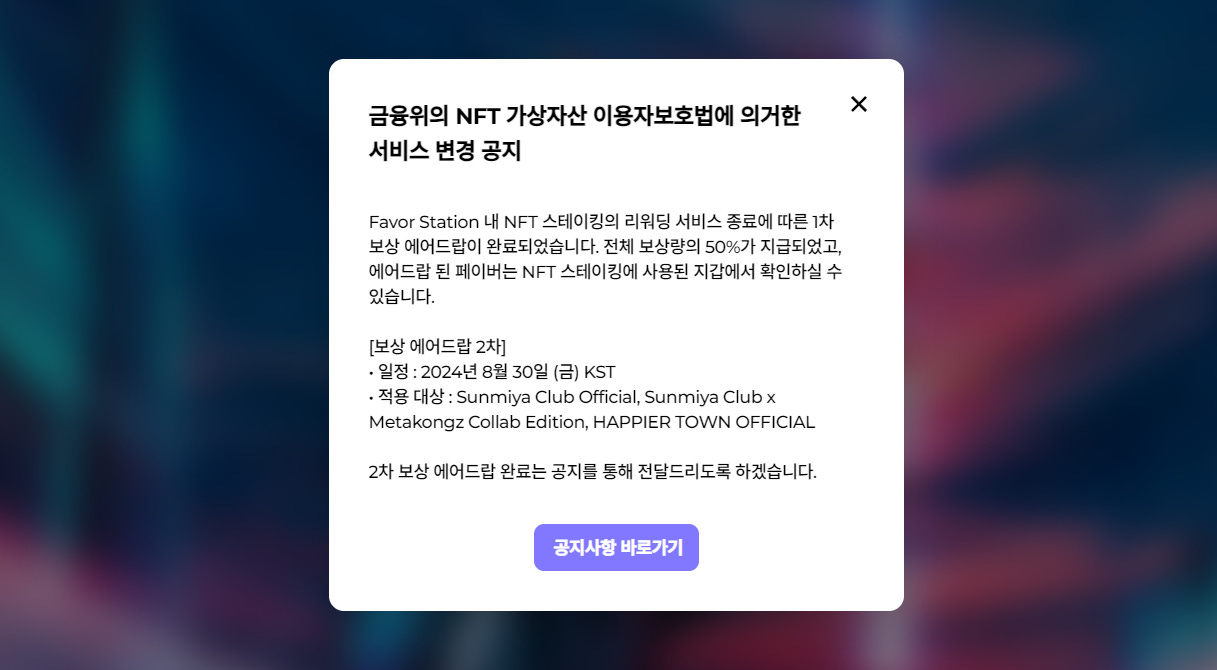
Sunmiya Club will discontinue its NFT staking rewards service after the Virtual Asset User Protection Act takes effect, Source:sunmiya.club
Classifying NFTs as virtual assets presents a significant challenge for businesses. In South Korea, operating a virtual asset-related business requires obtaining a Virtual Asset Service Provider (VASP) license. After securing the license, companies must also undergo Information Security Management System (ISMS) certification—a process that is both costly and time-consuming. For startups or small project teams with limited financial and human resources, this poses a major obstacle, making entry into the NFT space difficult. It also raises the barrier for innovation in novel NFT applications.
Prior to the implementation of the *Virtual Asset User Protection Act*, several existing services chose to scale back or shut down operations to avoid stringent regulatory requirements. Many NFT-related businesses may shift their focus or exit the market altogether.
4. How Will the Korean NFT Market Evolve?
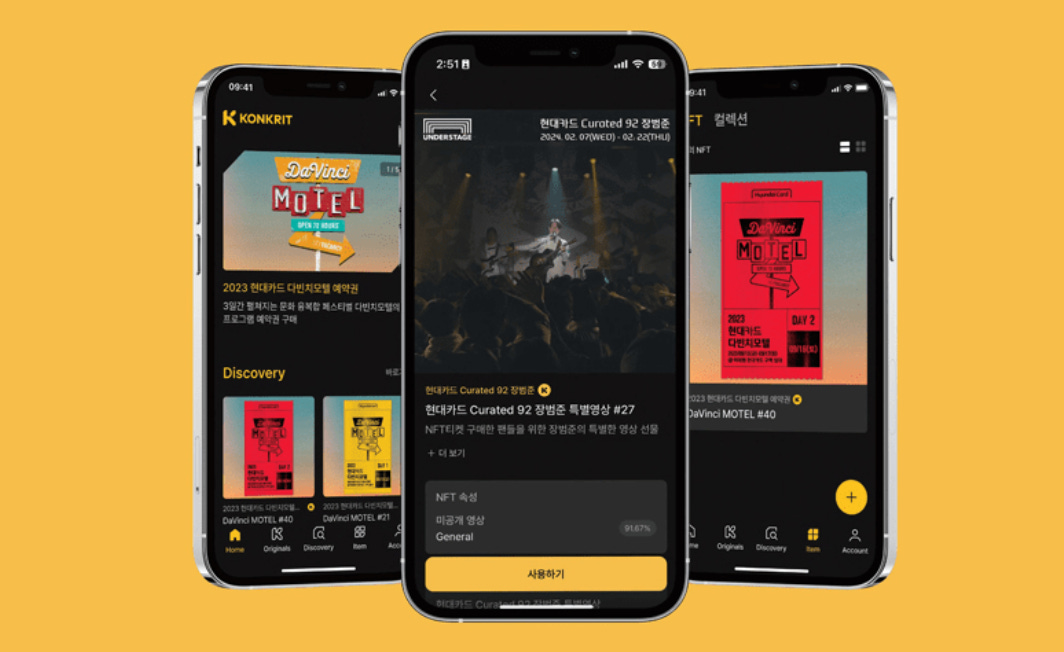
Source: Hyundai Card
Despite the current market slump, there are still numerous successful applications of NFTs in South Korea. A prime example is Hyundai Card’s NFT-based concert tickets, introduced to prevent counterfeiting and curb scalping. This demonstrates how NFT technology can generate real value within existing industries. Hyundai Card’s initiative goes beyond simply adopting new technology—it addresses real societal problems and highlights the practical benefits of NFTs. As NFT technology continues to advance, it may help resolve everyday inconveniences and improve public service experiences.
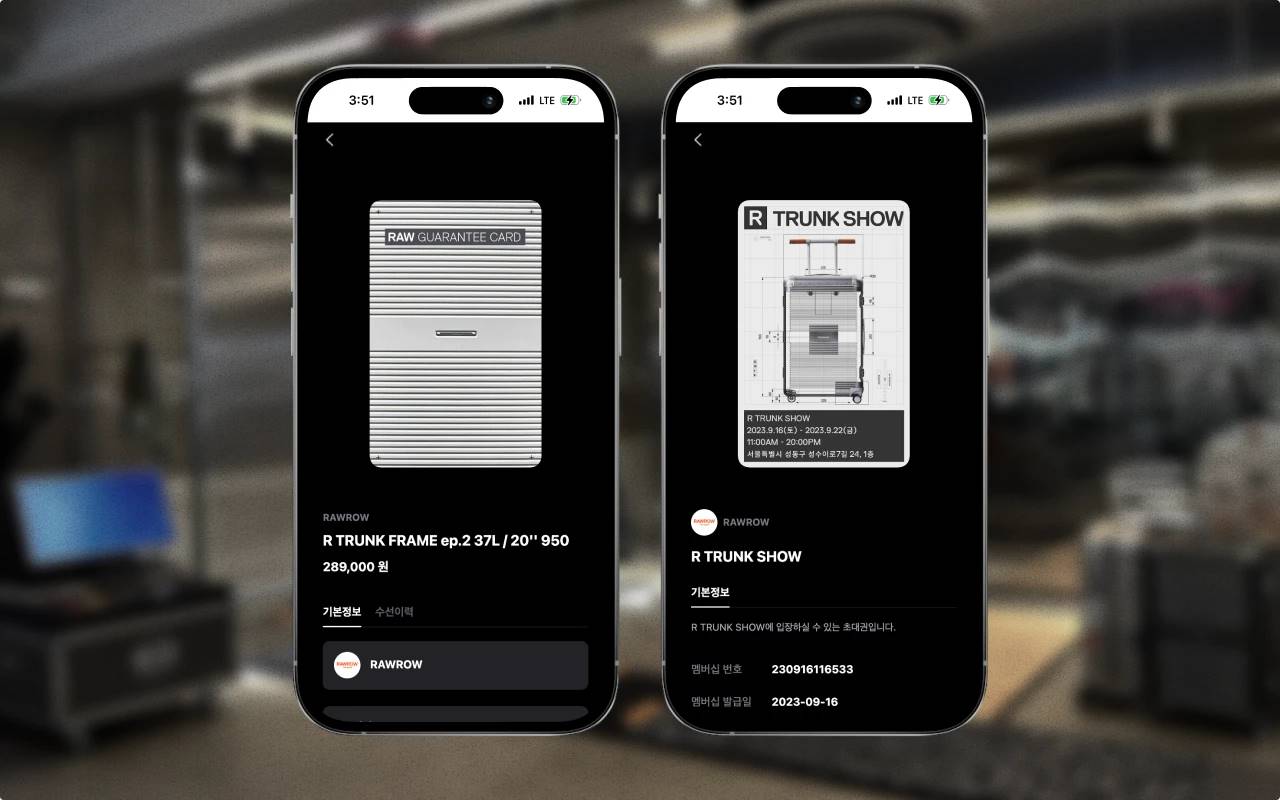
Source:Vircle
NFT technology is also being applied in areas such as product authentication and customer relationship management (CRM). A notable example is Vircle, which offers NFT-based product warranty services. The company is expanding its business through partnerships with fashion and electronics brands—industries where verification and after-sales support are critical.
Digital warranties via NFTs offer multiple advantages, including solving the problem of lost paper warranties and enabling customers to easily activate and access after-sales services via mobile devices. For businesses, this data can support more efficient CRM. Additionally, digital warranties can function as membership systems, consolidating customer information from various channels into a unified platform. These examples illustrate the potential of NFT technology to deliver tangible benefits for both businesses and consumers.
5. Conclusion
The South Korean NFT market continues to face numerous challenges on its path to recovery. Beyond the previously mentioned factors, several negative incidents involving NFTs have further damaged public perception. Particularly damaging were scandals involving Korean influencers and multiple "rug-pull" scams, which severely undermined public trust. Moreover, the widespread perception of NFTs as mere speculative tools remains a significant barrier to broader market adoption.
To overcome this situation, it is essential to accumulate successful cases that demonstrate how NFT technology creates real, measurable value. A positive shift in public perception is crucial to achieving this goal. This challenge is not unique to the NFT industry—most Web3 projects face similar obstacles when seeking wider acceptance and understanding.
South Korea holds competitive advantages in areas where NFTs can be effectively applied, such as gaming, webtoons, and K-pop. Although the market currently faces challenges due to its localized nature and uncertain regulations, new experiments with NFTs are gradually emerging within the existing framework, offering promising developments. As successful implementations grow in number and expertise in NFT technology advances—with increased investment from both government and private sectors—South Korea is well-positioned to introduce innovations that could lead the global NFT market.
Join TechFlow official community to stay tuned
Telegram:https://t.me/TechFlowDaily
X (Twitter):https://x.com/TechFlowPost
X (Twitter) EN:https://x.com/BlockFlow_News
 @tiger_research