An Overview of the Most Popular Stablecoins in the Market and Their Trilemma
TechFlow Selected TechFlow Selected
An Overview of the Most Popular Stablecoins in the Market and Their Trilemma
Stablecoin designs face a trilemma, making it difficult to simultaneously achieve exchange rate stability, capital efficiency, and decentralization, with different types of stablecoins balancing trade-offs among these three.
 Navigating Web3 tides with focused insights
Author: Kenji Mitsusada
Translation: Baihua Blockchain
Stablecoins have become a key component of the cryptocurrency ecosystem, offering stable value in a market known for extreme volatility. From facilitating everyday transactions to supporting complex decentralized finance (DeFi) operations, stablecoins are essential to the functioning of the broader crypto economy. However, their design involves several intricate trade-offs collectively known as the "stablecoin trilemma."
1. Understanding the Stablecoin Trilemma
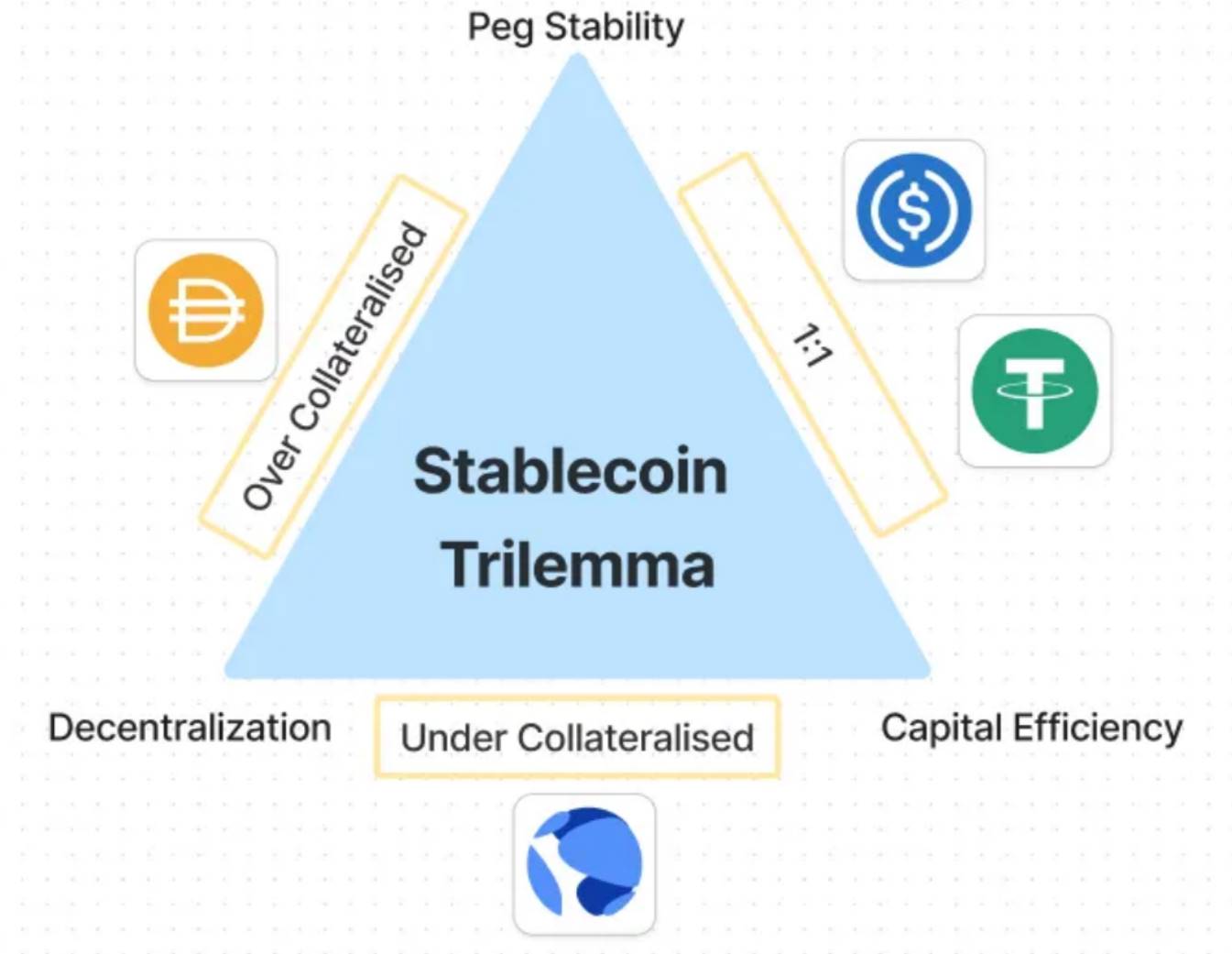
The stablecoin trilemma refers to the near-impossibility of simultaneously achieving three critical objectives when designing a stablecoin:
1) Exchange rate stability: Maintaining a stable value, typically pegged to fiat currencies like the U.S. dollar. This is crucial for user confidence, as stablecoins should consistently preserve their value.
2) Capital efficiency: Effectively utilizing collateral or backing assets. Ideally, a stablecoin should rely minimally on collateral to maintain its peg, thereby improving system efficiency and scalability.
3) Decentralization: Distributed control across a network, avoiding centralized authority. Decentralization is a core principle of cryptocurrencies, ensuring transparency and reducing the risk of single points of failure.
Striking a balance among these three goals is extremely challenging. Most stablecoins tend to prioritize one or two at the expense of the others. In this article, we will explore how different types of stablecoins—particularly algorithmic and fiat-backed stablecoins—navigate this trilemma.
2. Algorithmic Stablecoins: Innovation and Risk
Algorithmic stablecoins attempt to maintain price stability through algorithms and market mechanisms rather than direct asset collateralization. The most infamous example is TerraUSD (UST), a project that initially attracted significant attention for its innovative approach but ultimately collapsed dramatically.
1) TerraUSD (UST): Rise and Fall
Launched by the Luna Foundation Guard (LFG), UST aimed to maintain its 1:1 peg to the U.S. dollar through a balancing mechanism with its native token, Terra (LUNA). The design principle was to mint UST by burning LUNA and vice versa, relying on supply-demand dynamics to keep UST stable.
This mechanism, combined with high annual percentage rates (APRs) offered by the Anchor Protocol, attracted numerous investors and users. At its peak, UST was one of the most widely used stablecoins, and LUNA’s market capitalization surged accordingly.
However, when market confidence wavered, the system began to unravel. In May 2022, a massive sell-off caused UST to de-peg, losing its $1 value. As panic spread, the very algorithms designed to stabilize UST exacerbated the situation, triggering a so-called "death spiral" that caused both UST and LUNA to plummet in value.
The collapse of UST had far-reaching consequences, wiping out tens of billions of dollars in value and sending shockwaves throughout the broader crypto market. The event also triggered extensive regulatory scrutiny, highlighting the inherent risks of algorithmic stablecoins. As you may recall, after the LUNA crash, the crypto winter intensified, ushering in an "ice age."
While algorithmic stablecoins may offer high capital efficiency and decentralization, their reliance on market dynamics makes them vulnerable to extreme volatility and loss of confidence.
2) FRAX: Transitioning from Algorithmic to Fiat-Backed
FRAX was initially launched as a partially algorithmic stablecoin, backed by USDC and its native token FXS. The system dynamically adjusts the ratio between USDC and FXS to balance stability and capital efficiency.
However, following the collapse of TerraUSD (UST), the FRAX team reevaluated its strategy. To avoid similar risks, FRAX is gradually shifting toward a fully fiat-backed model, relying 100% on USDC reserves. This strategic shift aims to enhance stability and reduce vulnerabilities associated with algorithmic mechanisms, positioning FRAX as a safer option within the stablecoin landscape.
3. Fiat-Backed Stablecoins: Stability at the Cost of Decentralization
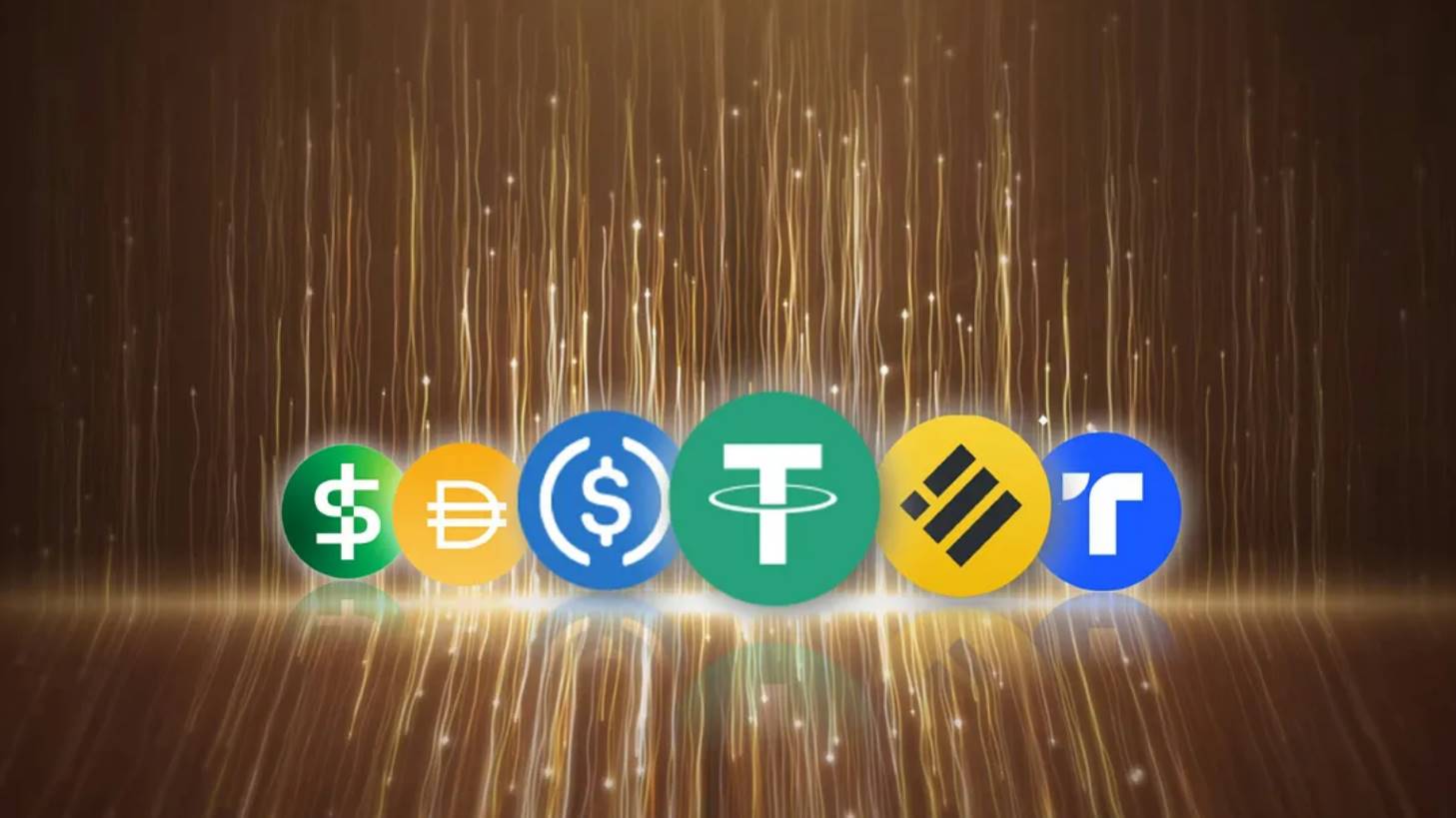
In contrast to algorithmic stablecoins, fiat-backed stablecoins like Tether (USDT) and USD Coin (USDC) maintain their pegs by holding reserves of fiat currency or equivalent assets. This model offers strong exchange rate stability and capital efficiency, making these stablecoins indispensable in the cryptocurrency market.
1) Tether (USDT): The Pioneer
Tether (USDT) is one of the earliest widely adopted stablecoins and remains the largest by market capitalization. In theory, each USDT is backed by one dollar or equivalent assets held in reserve. This model has proven effective in maintaining price stability during major market fluctuations.
However, Tether has long faced questions about the transparency of its reserves. Debates over whether USDT is fully backed by U.S. dollars or whether Tether holds higher-risk assets in its reserves have led to regulatory investigations and market skepticism. Despite these concerns, Tether continues to dominate the stablecoin market due to its liquidity and widespread adoption.
2) USD Coin (USDC): A Regulated Alternative
USD Coin (USDC), issued by Circle in partnership with Coinbase, positions itself as a more transparent and regulated alternative to Tether. USDC's reserves are regularly audited and fully backed by cash and short-term U.S. Treasury securities. This transparency has made USDC a popular choice among institutions and DeFi projects seeking a reliable stablecoin.
Nonetheless, USDC is not without risk. In early 2023, the collapse of Silicon Valley Bank (SVB)—where a portion of USDC’s reserves were held—impacted USDC, causing it to temporarily de-peg and fall to around $0.90 as markets feared potential losses in its reserves. Although the issue was eventually resolved, the incident revealed that even fully collateralized fiat-backed stablecoins can be vulnerable to external financial shocks.
3) Centralization Risks and the Stablecoin Ecosystem
Both USDT and USDC illustrate the inherent trade-offs of fiat-backed stablecoins. While they provide strong exchange rate stability and capital efficiency, they remain centralized entities dependent on trust in their issuing companies. This centralization introduces risks such as regulatory intervention, poor reserve management, or external shocks like the banking crisis that affected Circle.
Moreover, the centralized nature of these stablecoins stands in stark contrast to the decentralized ideals championed across the cryptocurrency world. Many users and developers remain cautious about relying on centralized entities that could impose censorship, freeze addresses, or take other controlling actions that undermine the permissionless nature of blockchain technology.
Despite these concerns, fiat-backed stablecoins have become an indispensable part of the cryptocurrency ecosystem. Their stability and liquidity make them vital for trading, DeFi, and even cross-border payments. Nevertheless, ongoing efforts continue to explore more decentralized and resilient solutions due to the centralization and associated risks.
4. Conclusion: The Real-World Test of the Stablecoin Trilemma
The stablecoin trilemma presents a fundamental challenge to the cryptocurrency industry. Algorithmic stablecoins like TerraUSD and early versions of FRAX pursued decentralization and capital efficiency but struggled to maintain stability under market stress. In contrast, fiat-backed stablecoins like USDT and USDC deliver stability and efficiency at the cost of decentralization and introduce trust-related risks.
Each type of stablecoin represents a different approach to navigating the trilemma, and their successes and failures offer valuable lessons for the future of digital finance. As the market evolves, we may see new models emerge that more effectively balance these trade-offs.
In upcoming articles, we will examine crypto-backed stablecoins, focusing on 'DAI'—a decentralized, over-collateralized stablecoin that has become a cornerstone of the DeFi ecosystem. Despite lower capital efficiency, DAI has achieved notable success by leveraging Ethereum's capabilities and maintaining a robust decentralized structure. We will analyze how DAI addresses the trilemma and its impact on the broader cryptocurrency market.
We hope this article has deepened your understanding of the stablecoin ecosystem and the challenges these digital assets face.
Join TechFlow official community to stay tuned
Telegram:https://t.me/TechFlowDaily
X (Twitter):https://x.com/TechFlowPost
X (Twitter) EN:https://x.com/BlockFlow_News
 @mitsusada25