Has Bitcoin's price hit bottom? Miner metrics reveal key market signals
TechFlow Selected TechFlow Selected
Has Bitcoin's price hit bottom? Miner metrics reveal key market signals
This article will guide readers through an analysis from the miner's perspective, using three indicators—miner shutdown price, miner transfers to exchanges, and exchange balances—to help assess the current market price level of Bitcoin.
 Navigating Web3 tides with focused insights
Author: WOO
Background
Bitcoin does not emerge out of thin air. It is produced by miners who purchase mining machines, contribute computing power to solve complex mathematical problems, and in return receive Bitcoin as a mining reward. Therefore, miners effectively determine Bitcoin's supply, and mining costs significantly influence Bitcoin's price.
WOO X Research will analyze the current Bitcoin market price level from the miner's perspective using three key indicators: miner shutdown price, miner transfers to exchanges, and exchange balances.
Miner Shutdown Price: Approaching Cost, Near Shutdown
When the Bitcoin price falls below the cost of mining, miners stop operations because continued mining would lead to greater losses. This threshold is known as the "shutdown price."
The primary mining cost is electricity, though other expenses such as mining hardware, facility, and management fees also apply. Current mainstream calculations focus mainly on electricity costs, excluding other operational expenses, thus making the estimated shutdown price slightly higher than actual break-even levels.
The shutdown price represents a "floor" for Bitcoin’s price and is commonly used to assess whether prices have bottomed. This is due to psychological expectations—most miners are unwilling to sustain losses or accept shrinking profits. As prices approach the shutdown level, miner selling pressure tends to ease. At this point, secondary market investors often adopt a "buying the dip" mentality and accumulate Bitcoin.
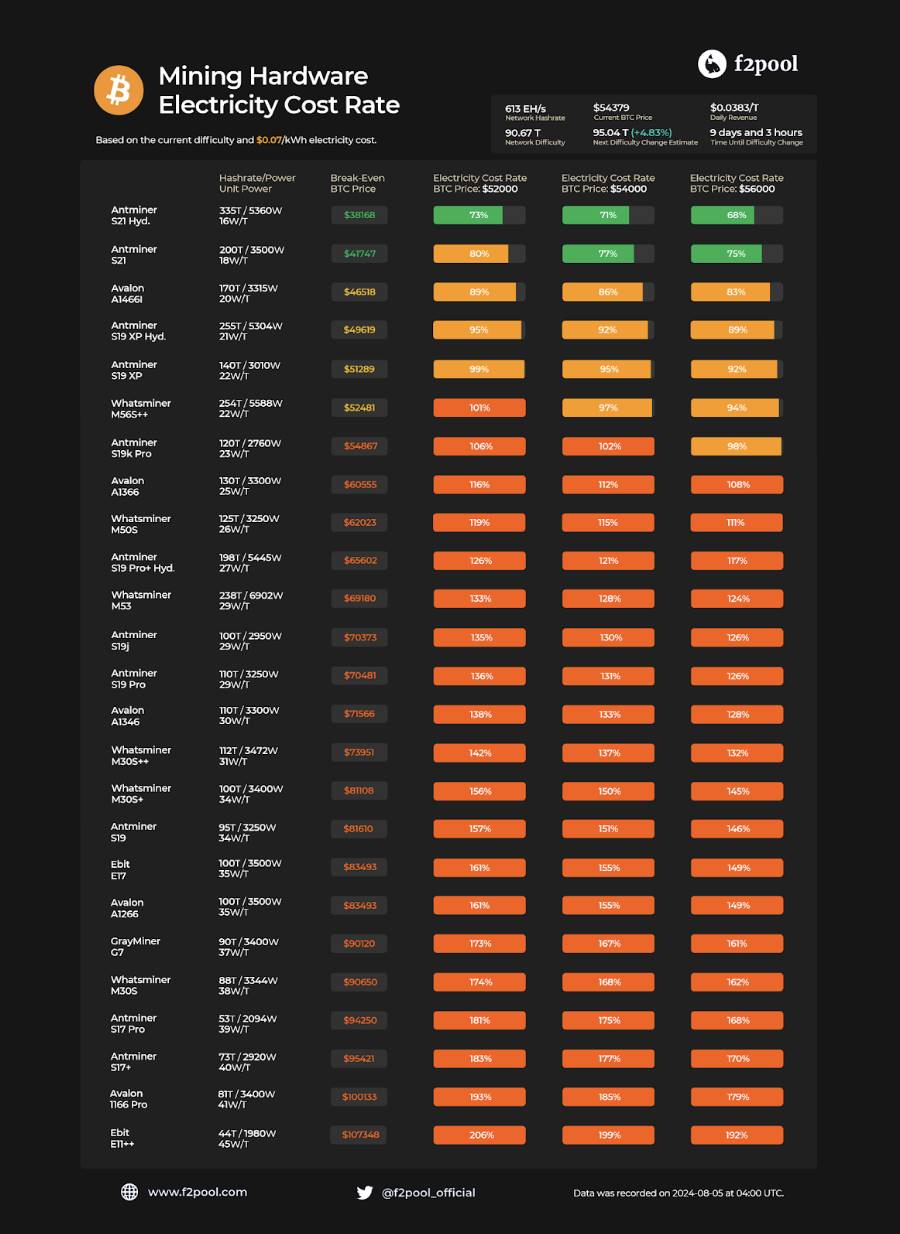
At an electricity cost of $0.07 per kWh and a Bitcoin price of $56,000, among the 25 mainstream mining models currently available, only 7 high-end models remain profitable, while the other 18 operate below cost. Note that this calculation excludes additional operational expenses mentioned earlier. If we conservatively estimate these extra costs at just 10% of electricity expenses, only 3 mining models in the market remain profitable.
Therefore, from the perspective of the "shutdown price," Bitcoin is highly likely near its bottom.
Miner Transfers to Exchanges: Slight Decline, No Significant Change
Miners must transfer their mined Bitcoin to exchanges to sell and realize profits, covering ongoing operational costs. Higher transfer volumes indicate increased potential selling pressure, signaling bearish sentiment; lower volumes suggest reduced selling pressure, indicating bullish sentiment.
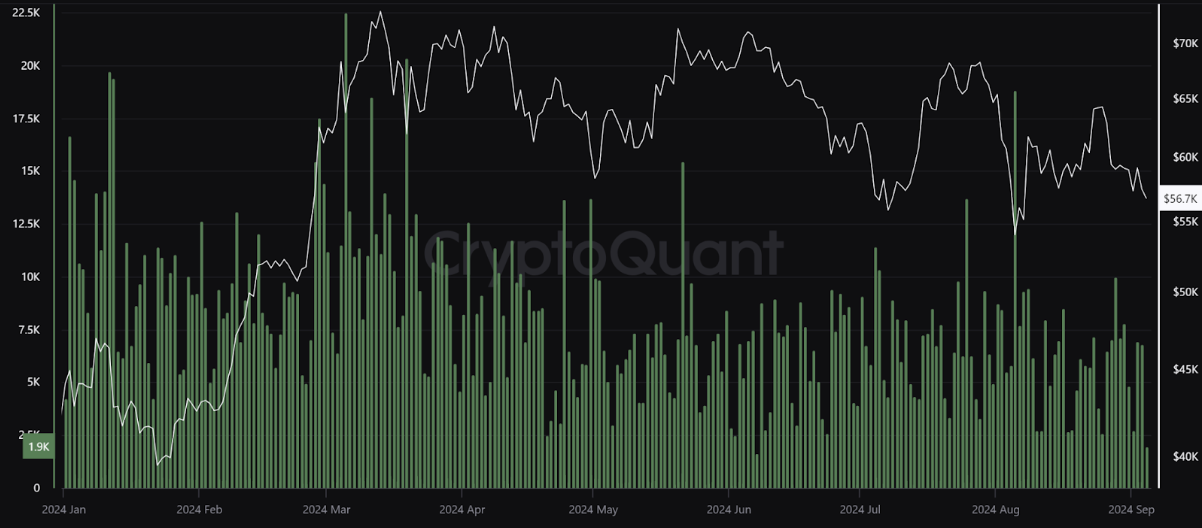
As shown in the chart below, miner transfer volumes have significantly declined since April this year. This trend likely correlates with the Bitcoin halving event on April 20, which cut block rewards in half, reducing both production and transfer volumes.
Recently, however, transfers to exchanges have shown no significant change, with slight reductions only during non-trading days. From Monday to Friday, daily outflows range between 7,500 and 10,000 BTC, while weekends see outflows drop to around 2,500 BTC per day, down from previous levels of 3,500–4,500 BTC.
Exchange Balances: Bullish Signal, Lowest Level in One and a Half Years
Bitcoin balances held on centralized exchanges serve as another indicator for identifying price bottoms.
Centralized exchanges are the primary venues for cryptocurrency trading. When Bitcoin balances rise on exchanges, it typically indicates inflows from on-chain wallets, suggesting preparation to sell Bitcoin for stablecoins or other assets—a bearish signal.
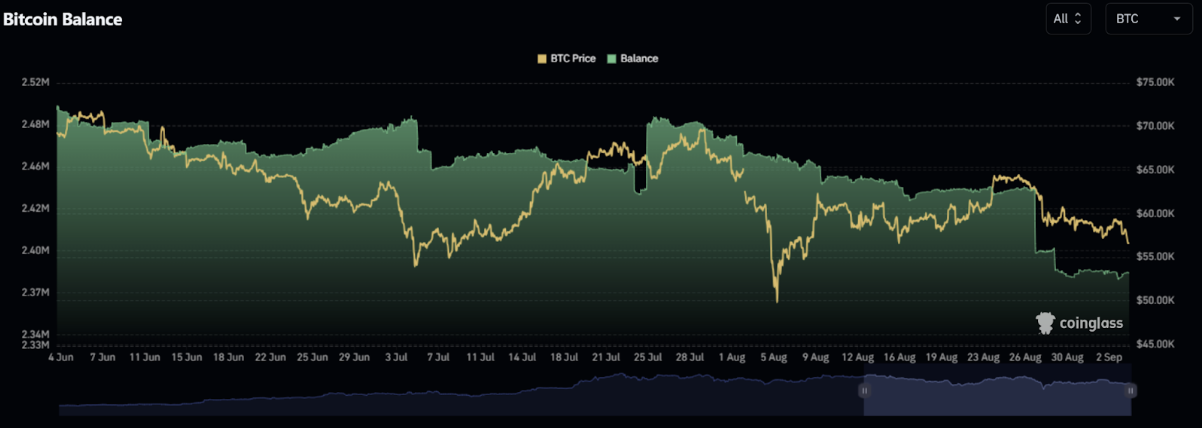
Conversely, when exchange balances decline, Bitcoin is being moved to private on-chain wallets. Since on-chain trading liquidity is lower than on centralized platforms, such movements are generally not associated with immediate selling. Lower exchange balances imply reduced future selling pressure, indicating a bullish outlook.
The chart below shows Bitcoin balances across major centralized exchanges over the past three months. The current total stands at approximately 2.4 million BTC, the lowest level in one and a half years. Notably, Binance alone reduced its Bitcoin holdings by about 53,000 BTC over the past 30 days.
Conclusion: Price Nears Cost Floor, Exchange Reserves Hit New Lows—Bottom Likely In Sight
Currently, miner production costs are approaching the shutdown price, and transfers to exchanges are gradually declining, indicating diminishing potential selling pressure. Meanwhile, Bitcoin balances on exchanges continue to hit new lows, further reinforcing a bullish signal. Taken together, these metrics suggest that Bitcoin may have reached a cyclical bottom, with market conditions potentially poised for a gradual recovery.
Join TechFlow official community to stay tuned
Telegram:https://t.me/TechFlowDaily
X (Twitter):https://x.com/TechFlowPost
X (Twitter) EN:https://x.com/BlockFlow_News