








Good things come to those who wait, moving forward amid downturn: infrastructure and innovative applications jointly drive crypto development
TechFlow Selected TechFlow Selected
Good things come to those who wait, moving forward amid downturn: infrastructure and innovative applications jointly drive crypto development
Much of the fear, uncertainty, and doubt surrounding cryptocurrency isn't very rational—what matters is recognizing how far we've actually come.
 Navigating Web3 tides with focused insights
By Gaby Goldberg & Bridget Harris
Compiled by TechFlow
On crypto Twitter, negativity is more rampant than ever. Prices drive sentiment, so it's understandable that people feel uneasy about the industry and its use cases. Yet if we take a step back, much of the fear, uncertainty, and doubt around crypto isn't particularly rational—and it’s important to recognize just how far we’ve actually come. After all, good things take time.

“But crypto has no use cases!!!”
Actually, it does—you may just not have noticed them. Many expect progress to unfold in a specific way, perfectly aligned either 1) with their expectations or 2) with the trajectory of other industries. Progress in every industry differs—especially when an entirely new asset class is being built from scratch. Within our own circles, it's easy to grow cynical about perceived stagnation. But that’s simply not true. Below, we’ll try to offer a positive perspective on the current state of crypto and how it continues to improve.

Crypto Has Achieved Product-Market Fit—if You Know Where to Look
Broadly speaking, over 66% of crypto users live in developing countries, and lower-middle-income nations continue to show sustained demand (as of March 2024, India, China, Brazil, and Vietnam lead in crypto adoption). The U.S. situation is also solid, though Americans don’t necessarily need crypto to hedge against inflation or access stable money. For developing nations, however, crypto is now a necessity—it’s a mechanism to protect themselves from their own (often dysfunctional) governments and financial systems. In Latin America, for example, it’s common practice to “immediately put [one’s paycheck] into USDT or USDC” upon receipt. Over one-third of Latin Americans already use stablecoins for daily transactions, indicating that companies are beginning to accept crypto as well. Globally, USDT is especially strong on Tron, with around $60 billion in circulation and approximately 44 million unique addresses holding it. In short, global access to the U.S. dollar has become crypto’s killer use case.
“If people only see monkey JPEGs, that’s not crypto’s fault.” — Scott Alexander
Crypto as a Competitive Advantage
In the above example, crypto itself—the technology—is the product. But there’s also a full ecosystem of applications where crypto serves merely as infrastructure, enabling user experiences superior to what came before. One such breakthrough application is Polymarket, the world’s largest prediction market. What makes Polymarket unique is that it’s built atop crypto infrastructure. There are many obvious and less obvious reasons why crypto provides competitive advantages for such applications:
-
Global accessibility. Without global reach, markets face major liquidity and accuracy issues.
-
Chargeback risk. How do you place a $100,000 bet using a credit card? If you lose, could you simply request a refund? This risk is enormous for non-crypto betting sites, which is why they historically charge high fees. Polymarket currently charges zero fees.
-
Complex coordination. For prediction markets operating across borders without crypto, there are massive coordination challenges between banks, regulatory jurisdictions, and foreign exchange providers. This adds extra costs for users and makes these platforms slow, painful, and difficult to scale.
Polymarket exemplifies crypto because it’s a powerful emerging example of how crypto unlocks use cases that were previously impossible at scale. Polymarket is largely 1) faster than traditional news sources and 2) evolving into an entirely new form of media—one that sources truth, functions as a peer-to-peer social platform, and incentivizes correctness (or at least getting as close as possible given available information).

We’re even seeing real-time Polymarket embeds on Substack today (Example A):
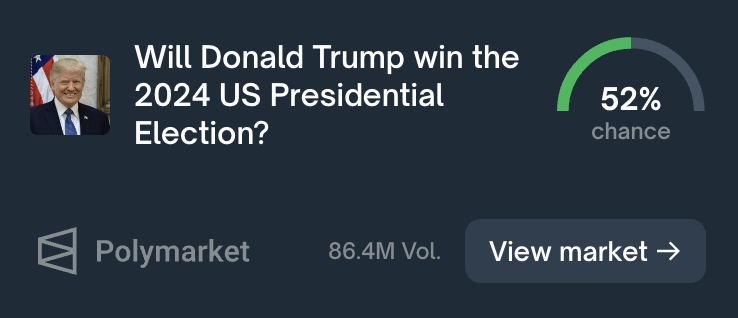
These small wins keep piling up, gradually bringing crypto into the mainstream.
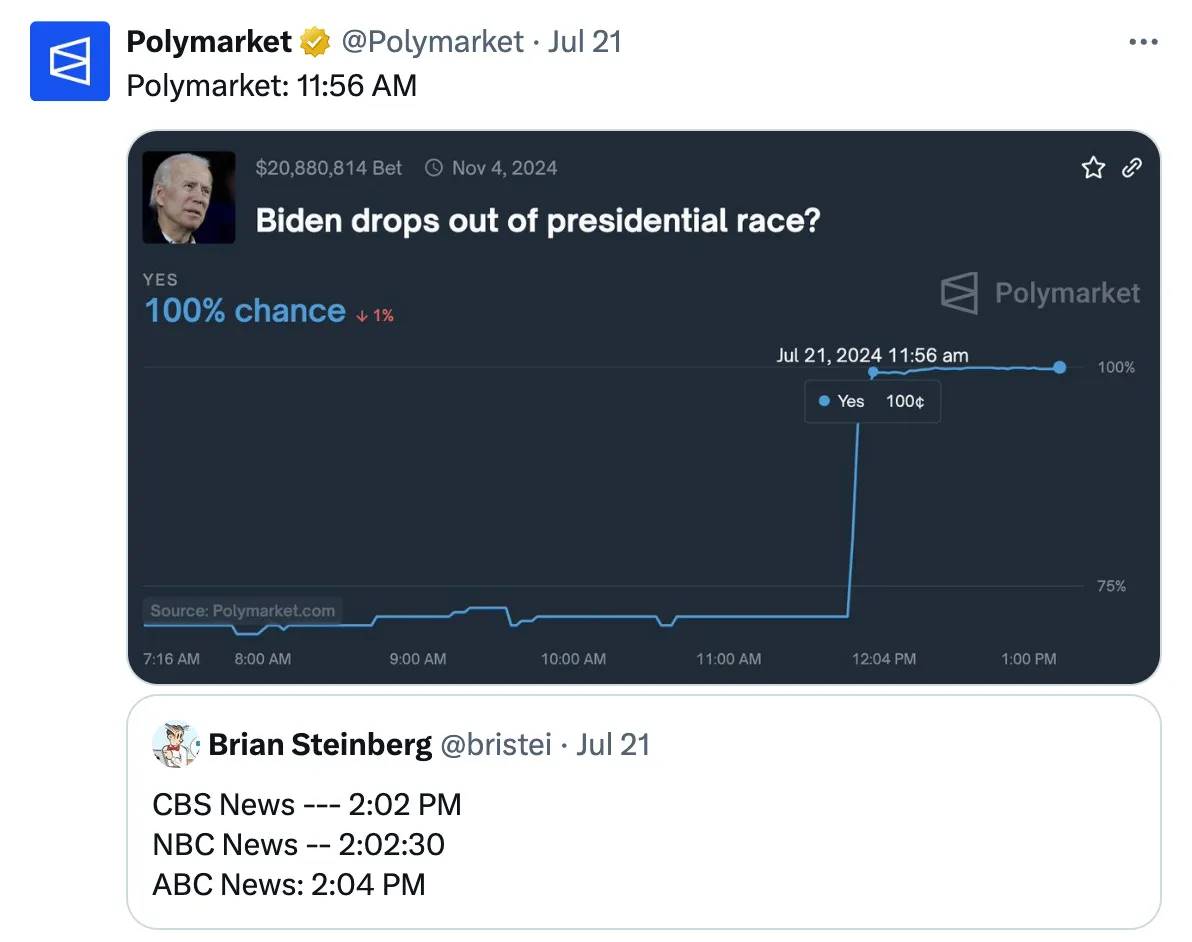
Polymarket predicted news before it was officially announced
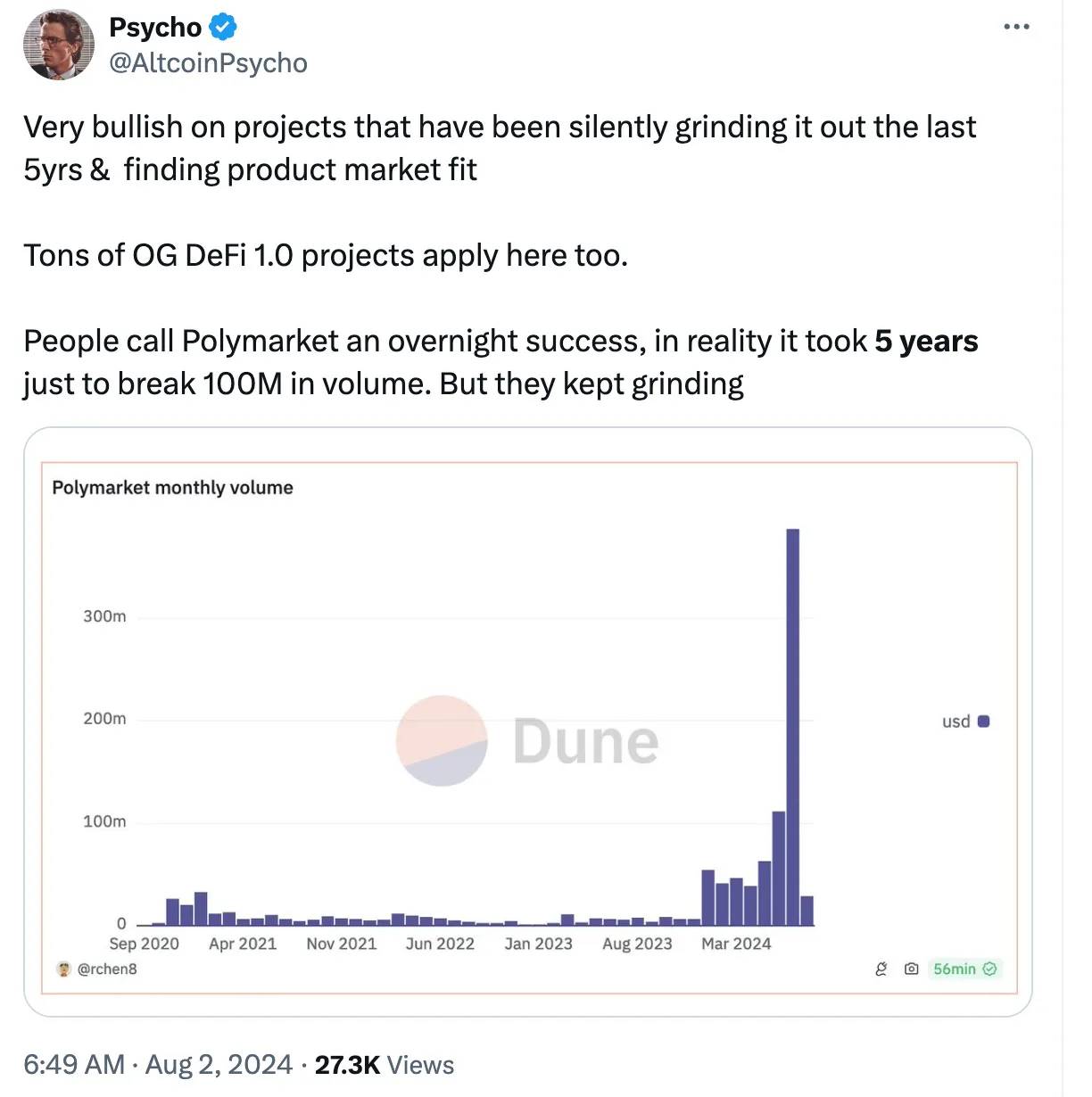
One final note about Polymarket: how long the team has worked toward this vision. Their trading volume remained low and steady for nearly five years, yet they persisted—even when the company nearly collapsed due to a $1.4 million fine from the CFTC. Crypto always has an inherent bias toward current events™, but people often fail to realize just how much time (and work) goes into what eventually appears as an “overnight” success.
Another company reaching beyond crypto users is Pudgy Penguins, whose products are now sold at Target, Walmart, and Walgreens across the U.S. (to date, over one million toys have been sold). They’re using their distribution channels as a gateway to onboard the masses into crypto. Rather than adopting a “build it and they will come” strategy, Pudgy actively serves existing user bases. Specifically, they’re building an easy-to-use Layer 2, a blockchain-integrated game, and even a TV show based on their lovable brand (originally just an NFT collection). Notably, Pudgy first secured its own distribution channels before building low-level infrastructure into its tech stack. Most other Layer 2s have taken the opposite approach: build the technology first, then try to bootstrap communities and attract apps to build within their ecosystems.
Pudgy has devised creative ways to engage users—for instance, each physical Pudgy toy comes with a QR code redeemable in the Pudgy World game (in the style of Webkinz). By gently guiding users through crypto and ensuring fun along the way, they’re more likely to 1) stay engaged and 2) potentially dive deeper into crypto.

Bridging the Gap Between Applications
A company providing critical infrastructure across multiple consumer-facing projects is Bridge. They’re developing a stablecoin API focused on issuance and orchestration—a problem previously solved internally by companies, but which Bridge has modularized. Bridge demonstrates that excelling at one (important) thing is a sound strategy in crypto, explaining why they’ve attracted so many customers. The seemingly simple API is actually quite complex behind the scenes: Bridge handles all KYC and compliance, allowing businesses to integrate seamlessly and instantly convert between fiat and stablecoins (or between different types of stablecoins). Despite stablecoins being a core crypto use case, finding solutions for fast, compliant on/off ramps has historically been difficult. Additionally, there are many stablecoins on the market, with each platform typically favoring a particular one. Bridge solves this in a flexible and user-friendly way.
You get a wallet!

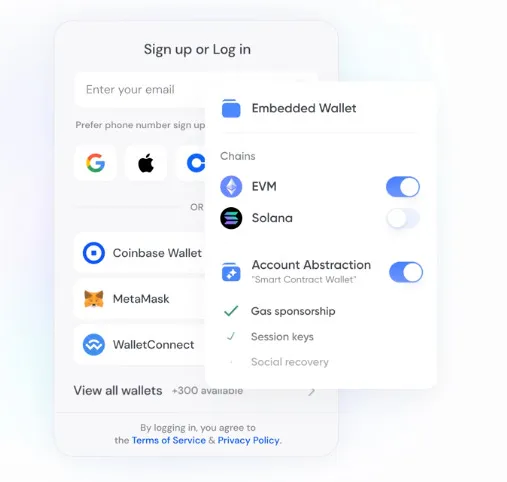
In crypto (especially among newcomers), a common complaint is wallets—figuring out which one to choose, how to pick one compatible with the most decentralized apps (dapps), and whether alternatives exist. Multiple providers—including Dynamic, Privy, Capsule, and Coinbase WaaS—are solving this for crypto apps and their users, allowing individuals to move on-chain without downloading third-party wallet apps or managing seed phrases. Constantly fixing integrations, managing updates, and adding support for new wallets (to ensure total addressable market isn’t limited) consumes critical engineering resources. On the user side, the pain point is clear: without embedded wallets, users might lack a supported wallet (or, if they’re new to crypto, might not have any wallet at all). Simplifying onboarding for new users is a crucial part of achieving mass adoption. These companies—many founded only in the past few years—are playing pivotal roles.
Embracing the Unfamiliar
That said, we still have plenty of work ahead as an industry—but that doesn’t negate what we’ve already achieved. Ultimately, if you believe financial systems should be fast, global, low-cost, accessible, and serve people, then crypto is the only ultimate solution.
It’s worth noting that every new category faces growing pains—or outright opposition—during maturation. When the printing press was first introduced, monks and religious authorities opposed it because it undermined their control over information. Printing was even completely banned by Islamic authorities. A Swiss scholar, Conrad Gessner, once “asked rulers of European states to make laws regulating the sale and distribution of books. He believed ordinary people shouldn’t have access to so many books.” At the end of the 15th century, Italian writer Filippo di Strata wrote: “The pen is a virgin, but the printing press is a whore.”
If the printing press was a whore, I’m not sure public descriptions of crypto would be fit for print. But we gladly accept such criticism in the name of progress. Embracing the unfamiliar means understanding that new technologies often look strange at first.
We also acknowledge that the vast majority of crypto experiments may fail. But if you're still making that argument, you fundamentally misunderstand how breakthrough technologies evolve. This isn’t new. The internet matured by leaving behind on-premise server farms, web rings, and Sony’s AIBO robot dogs. This is a natural and healthy evolution as people experiment with new technologies. The “power law” of successful products is exactly what investors sign up for when entering these spaces.

Infrastructure Empowering Applications
Many breakthrough applications in this cycle are enabled by brand-new infrastructure that barely existed in the last cycle. Indeed, there’s currently more infrastructure than applications—but without robust underlying frameworks, applications cannot truly exist or scale. Now that this infrastructure is finally ready, innovation at the application layer is accelerating.
Joel Monegro famously introduced the concept of “fat protocols” in 2016, arguing that in blockchain networks, most value accrues at the protocol layer rather than the application layer:
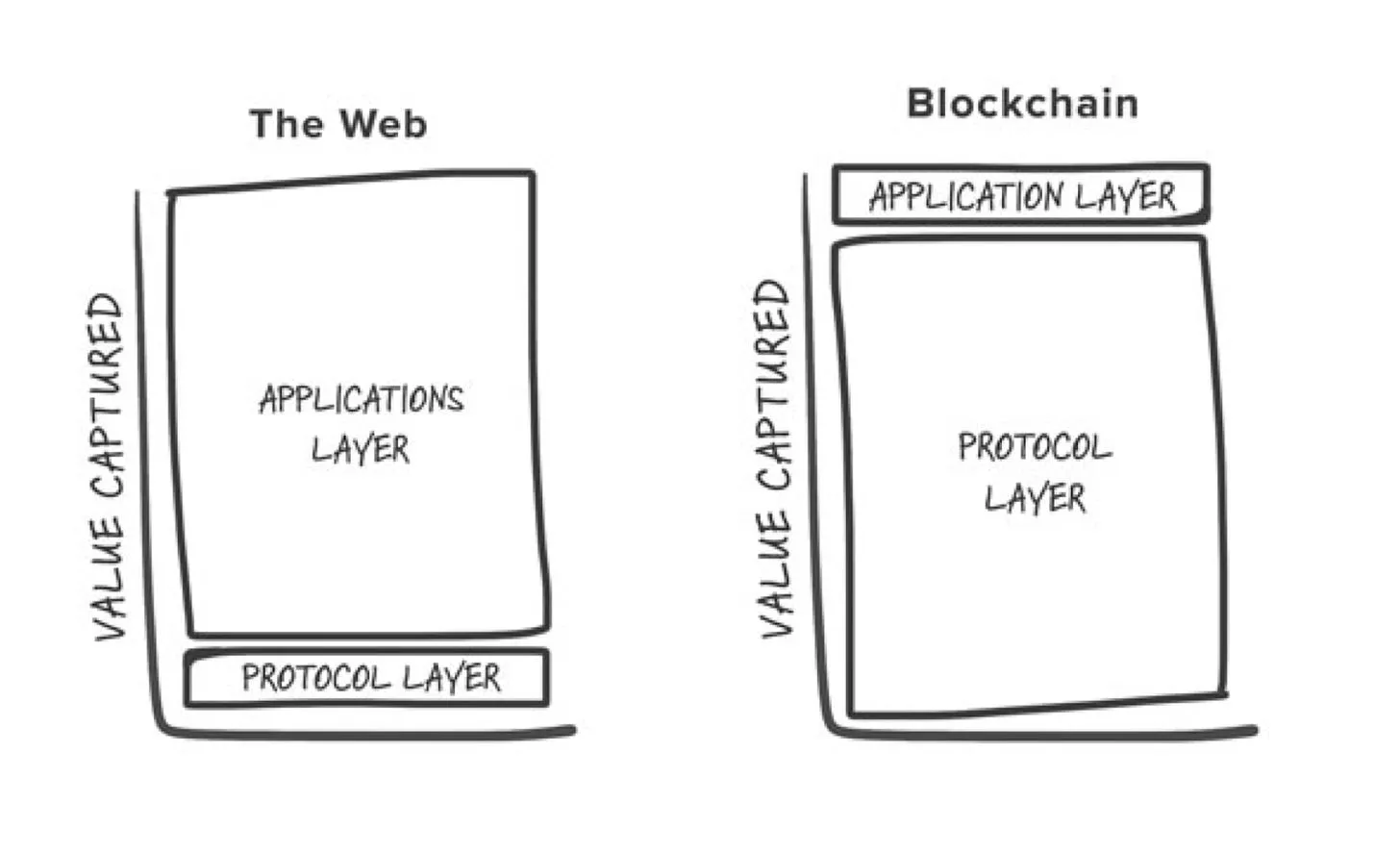
In our view, modularity at the infrastructure layer reduces the share of value captured by the “protocol layer,” freeing up flexibility for applications. Apps can now select, combine, and customize modular components from the protocol layer to create better user experiences (and greater profitability). Users now essentially pay apps through increasingly abstracted frontends that hide the complexity of the protocol layer.
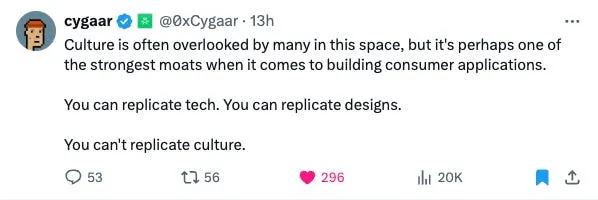
Interestingly, this modularity means many challenges facing Ethereum app developers today are less technical and more cultural. For these builders, the ecosystem they choose to build on significantly impacts their brand, community, and long-term viability. Sometimes, apps are referred to as “projects built on [insert your favorite L2 here],” which risks diluting their own product and brand identity if the L2 fails. Building on Solana, by contrast, is unified—everyone defaults to the same platform. Ethereum poses a key question to developers: Where should I build? Since most chain abstraction protocols aren’t ready yet, deploying everywhere isn’t a viable option. When ecosystems become more important than the apps themselves, parasitic relationships can emerge, with both fighting for the same limited attention.

Perhaps this all stems from Ethereum’s deliberate lack of marketing, forcing L2s to create their own brands and identities. This credibly neutral approach fostered a rich and diverse L2 ecosystem, but inevitably led to fragmentation. Vitalik recently highlighted this in an article, likening L2s to cultural extensions of Ethereum itself: “For a subculture, Layer 2 is the ultimate arena of action.” These subcultures may actually be the best breeding grounds for emerging applications: users are deeply engaged, communities tightly knit, and developers highly productive. Moreover, the underlying L2’s culture can reinforce and enhance its applications’ cultural resonance. From an infrastructure standpoint, many Ethereum L2s are maturing, enabling more applications to exist and scale.
Closing Thoughts
By now, we’ve lived through enough cycles to know that infrastructure drives applications, and applications in turn push infrastructure forward—a virtuous cycle. The very innovations we often complain about are the ones pushing low-fee chains, better distribution, and higher-quality user experiences, ultimately driving adoption. We still have much work to do, but it’s worth acknowledging how much we’ve accomplished despite collapses like FTX, regulatory headwinds, and extreme market volatility. Our industry is still small and early-stage, so our work should be mutually reinforcing. It’s time to embrace real ambition again. As the saying goes, good things take time—just a little more patience.
Join TechFlow official community to stay tuned
Telegram:https://t.me/TechFlowDaily
X (Twitter):https://x.com/TechFlowPost
X (Twitter) EN:https://x.com/BlockFlow_News
 @gaby_goldberg









