Exclusive Interview with Vitalik Buterin, the Man Behind Ethereum: Discussing Cryptocurrencies and U.S. Crackdowns
TechFlow Selected TechFlow Selected
Exclusive Interview with Vitalik Buterin, the Man Behind Ethereum: Discussing Cryptocurrencies and U.S. Crackdowns
In Vitalik, the crypto world is not just hype and speculation, but also a place where meaningful things can be accomplished.
 Navigating Web3 tides with focused insights
Translation: Elsa
Editing, Layout: Soleil
Design: Daisy
Original English article published on September 22, 2023
Translator's Note
This article is based on CNBC’s September 2023 interview with Vitalik Buterin, founder of Ethereum. It portrays Buterin’s position amid global crackdowns on cryptocurrency and highlights his confidence in Ethereum and passion for cryptographic technology. In the interview, he discusses how he and the Ethereum Foundation are responding to intensifying U.S. regulatory pressure and expresses concern for cryptocurrency development in emerging economies. He hopes technology can be truly used for humanity and serve a positive role. In him, we see that the crypto world is not just hype and speculation—crypto technology can genuinely help advance human progress.
Key Points:
1. Vitalik Buterin, co-founder of the second most popular cryptocurrency, met with CNBC’s MacKenzie Sigalos in Prague—one of Europe’s new crypto hubs.
2. He discussed the escalating crypto crackdown in the United States and suggested that developing nations should continue leading the crypto revolution.
3. He also addressed his significant role in the cryptocurrency he created but emphasized that his creation (Ethereum) has taken on a life of its own, making it more resistant to government intervention.

Ethereum co-founder Vitalik Buterin in Prague, where he collaborates with like-minded programmers aiming to change the world through cryptography
CNBC
Prague — For Vitalik Buterin, the concept of home is fleeting.
The Russian-born programmer created Ethereum when he was just 18 or 19. Now, he doesn’t stay in any single city for long. At the same time, there are increasing numbers of places he simply won’t go.
In an interview with CNBC in the Czech Republic, Buterin said, “Three years ago I was very happy to visit certain countries. Today, I’m very worried about visiting them.”
Buterin specifically pointed out that his native Russia is now one of the destinations he avoids. The Canadian citizen, of both Ukrainian and Russian heritage, actively supports Ukraine’s resistance movement. Also evident is the growing risk associated with privacy technologies and open-source code in certain global jurisdictions—such as the case of Tornado Cash, whose developers face charges in both the Netherlands and the United States. While some in the nascent crypto market use Tornado Cash to protect their privacy, mixing services can also be exploited by criminals or nation-states for money laundering. Many in the industry fear these enforcement actions don’t just target bad actors using such tools, but set a dangerous precedent for the developers who build them.
“Even in countries that mainstream media still considers quite normal, I am definitely more concerned,” Buterin said.
This decentralized lifestyle suits Buterin well. The 29-year-old programmer’s influence in the crypto space extends far beyond lines of code or geography. Prague has become a new hub where he now finds refuge, collaborating with fellow programmers who share his vision of changing the world through cryptography.
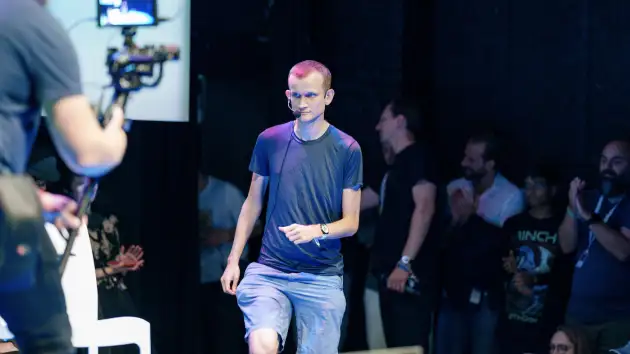
Ethereum co-founder Vitalik Buterin speaks at ETHPrague 2023, an international conference attracting crypto developers from around the world
Photo: Pavel Sinagl
We meet in a sparsely furnished room atop a vast industrial complex in the Holešovice district. Once associated with slaughterhouses and steam mills, the area is now home to bohemian artists and some of the most rebellious crypto believers. Inside this seemingly ordinary building lies a hive-like maze of winding staircases and labyrinthine corridors leading to fortress-like interiors—a structure that mirrors the complexity of cryptocurrency itself for those unfamiliar with the field.
Today, Buterin and the Ethereum community face their biggest challenge yet: ensuring crypto delivers real-world value.
“The way I see the Ethereum ecosystem is that the past decade was about experimenting and refining Ethereum. This next decade must be about actually building things people use,” Buterin says, leaning forward on an ergonomic kneeling chair, hands clasped.
He may be one of today’s most influential crypto developers, but when Buterin wrote the Ethereum white paper in 2013, he never intended to become a public figure. Yet despite years of avoiding fame and declining countless media invitations, he cannot escape his reputation—or the glowing titles bestowed upon him.
When the crypto market peaked in 2021, the 27-year-old Buterin was named the world’s youngest crypto billionaire. In China, he’s known as “V God.” Time magazine featured him on its April 2022 cover story as part of the “Crypto Royal Family.” Almost wherever he goes on Earth, crowds of fans eagerly seek his attention—and selfies with him.
But in reality, Buterin is none of those things.
He is not royalty in the crypto world. He is not a fiery leader of a new generation of cypherpunks. He’s neither the hardest worker nor the biggest nerd. He frequently donates his wealth to worthy causes, reducing his net worth. And by his own estimation, he is not the ultimate authority over the Ethereum network.
Yet he deeply cares about realizing his vision: a world where anyone, regardless of who they are or where they live, has equal access to money.
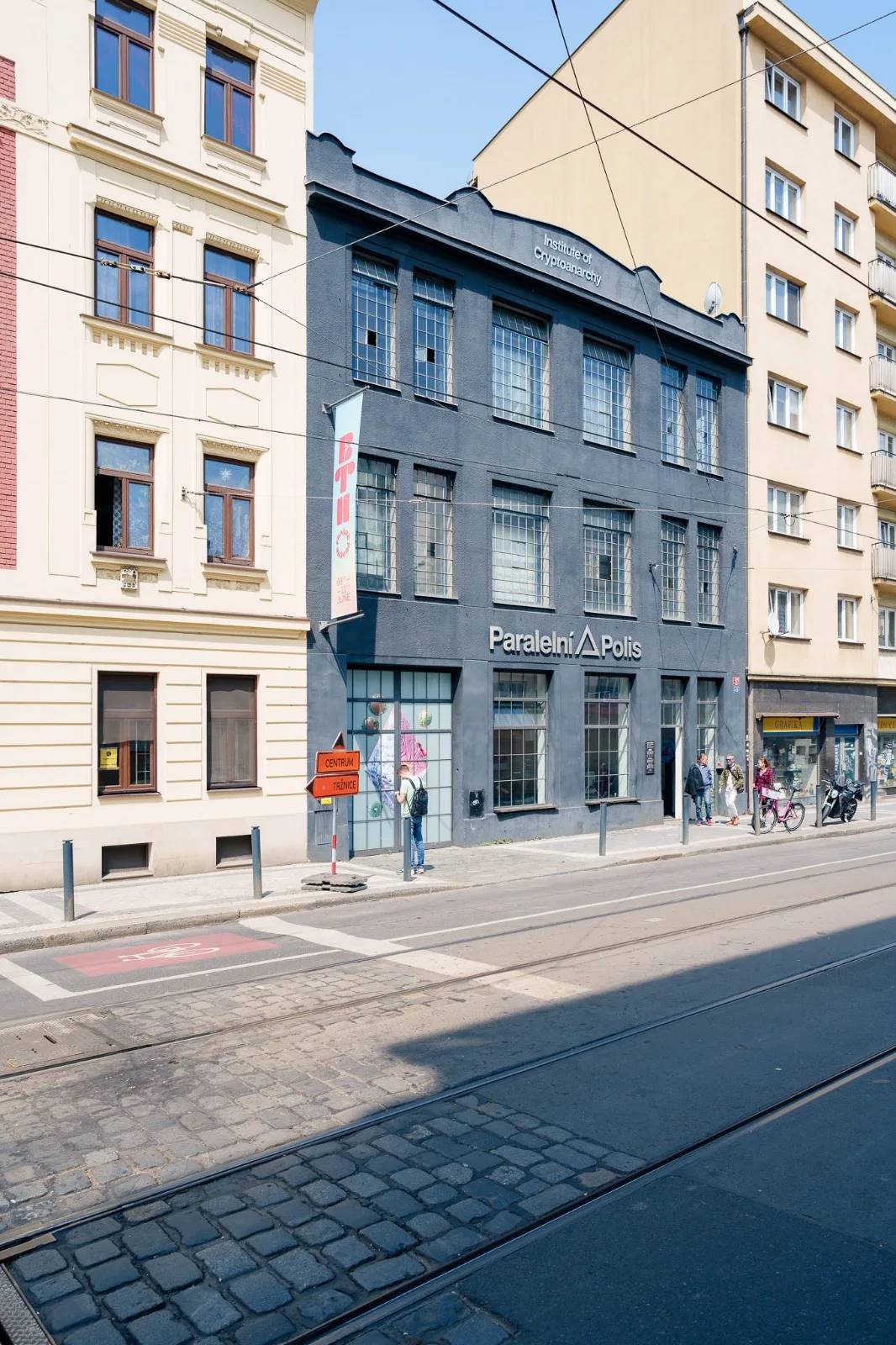
ETHPrague 2023 takes place at Paralelní Polis in the Czech Republic
Photo: Pavel Sinagl
Buterin finds that cryptocurrency has the greatest impact in emerging economies—a trend gaining momentum in recent years.
Regarding low-income countries, Buterin said, “Things we often consider basic and boring—like regular payments and savings—can bring immense value to them.”
“Being able to participate in the global economy—these are things they lack, and they can provide tremendous value,” Buterin told CNBC. “When you don’t even have these basics, it’s hard to care about something very abstract like decentralized social media.”
As U.S. investigators file criminal charges against figures like Sam Bankman-Fried and federal regulators such as the SEC crack down on so-called unregistered securities offerings, crypto activity is shifting overseas.
In contrast, U.S. investors often view crypto as a get-rich-quick scheme and a way to make volatile trades in markets with less regulation than traditional securities. But Buterin typically focuses more on developing markets around the world—including Africa, which he visited in February—where he sees practical applications of the technology he helped build in everyday life.
“When I visited Argentina at the end of 2021, many people were using crypto, and many loved it. I was actually recognized more on the streets of Buenos Aires than in San Francisco,” Buterin said.
But Buterin told CNBC that for crypto to truly work globally, it ultimately needs to move away from centralized entities like custodial exchanges and become much easier to use.
“It was easy to find cafes accepting Bitcoin and Ether—but the problem was, they all used Binance,” Buterin said.
He appreciates centralized exchanges like Binance for offering smoother user experiences to non-technical users in countries with per capita GDP below $10,000. Still, he believes the system must become more decentralized.
“These centralized players are vulnerable to external pressure and internal corruption,” he said.
Last year (2022), a series of bankruptcies across the crypto sector exposed widespread fraud.
Many became wealthy before interest rates rose, but then in May 2022, the collapse of Luna triggered a chain reaction, sending the entire market into a prolonged crypto winter. For example, former FTX CEO Bankman-Fried faces criminal charges for allegedly orchestrating a multibillion-dollar fraud scheme. Binance, the world’s largest crypto exchange by trading volume, is being sued by the U.S. Securities and Exchange Commission (SEC) and the Commodity Futures Trading Commission (CFTC) over various allegations, including commingling billions of dollars in customer funds with its own.
Buterin believes the ideal solution lies in writing better code so users can transact directly on-chain instead of blindly trusting centralized intermediaries to act in their best interests.
“We need an on-chain experience that truly works for ordinary people,” Buterin said.
“We need Ethereum payments that cost less than five cents per transaction; that don’t fail randomly 2.3% of the time; and that don’t require a PhD in Ethereum science to understand what’s going on,” he added.

Ethereum co-founder Vitalik Buterin speaks at ETHPrague 2023, an international conference attracting crypto developers from around the world
Photo: Pavel Sinagl
Privacy and security are also top priorities.
“People need wallets that are truly secure—even if they lose their private key, they shouldn’t lose everything,” Buterin added.
National digital currencies could offer the ease of use he envisions, but he believes decentralization is crucial; otherwise, they would merely become another version of the existing banking system—with even more built-in surveillance.
“Five years ago, I had more hope—maybe even naivety—because many wanted to make governments blockchain-friendly, provide real transparency and verifiable guarantees, and some level of true privacy,” Buterin said, referring to central bank digital currencies (CBDCs).
CBDCs are blockchain-based virtual currencies fully regulated and backed by national central banks. The People’s Bank of China is arguably the leader in CBDCs, having piloted its digital currency for nearly a decade. As of June 2023, transactions using the digital yuan (e-CNY) reached nearly $250 billion. But as CBDCs gain popularity, concerns grow about financial surveillance and monitoring tools embedded within these government-issued digital currencies.
“As these projects mature,” Buterin said, “the privacy-preserving aspects fade away, and everything becomes closer to version 1.0. The systems we end up with aren’t much better than existing payment systems because they’re ultimately just different front-ends of the current banking infrastructure.”
“They end up being less private and essentially break down all existing barriers against enterprises and governments,” he said.
Building a Brave New World
Vitalik’s father, Dmitry, introduced him to Bitcoin in 2011.
Vitalik and his computer scientist father Dmitry Buterin, who once lived in the suburbs of Moscow, were both intrigued by the idea of a decentralized currency not controlled by governments or central banks. But Vitalik was eager to advance this new decentralized ledger technology for broader applications.
What ultimately made him famous was embedding smart contracts—programmable code designed to replace intermediaries like banks and lawyers in certain types of business transactions—into the blockchain. This groundbreaking innovation led to a surge of projects and initial coin offerings (ICOs) on Ethereum.
Today, the network has become the foundational building block for a wide range of crypto projects, including non-fungible tokens (NFTs), decentralized finance (DeFi), and Web3. The latter remains an ambiguous buzzword representing the internet’s third generation: decentralized and built on blockchain technology. Meanwhile, Ethereum’s native token, Ether, is the second-largest cryptocurrency by market cap after Bitcoin.
In Ethereum circles, hackers are called BUIDLers—the intentional misspelling of “builders”—a nod to Bitcoin’s HODL meme or “Hold on for dear life.” This playful comparison might seem silly, but it highlights the distinction between two fundamentally different groups.
Bitcoin developers tend to move slowly, prioritizing security and decentralization, while Ethereum programmers are bolder. Though they don’t necessarily break existing systems during development, they act quickly and adapt proactively.
For example, last year, Ethereum fundamentally changed how its blockchain secures the network and validates transactions, cutting its energy consumption by over 99%. Before this upgrade, both Bitcoin and Ethereum relied on massive global networks of miners running highly specialized computers to validate transactions by solving complex mathematical equations. Proof-of-work (PoW) consumes enormous energy, drawing heavy criticism toward the industry.
With the upgrade, however, Ethereum transitioned to a system called proof-of-stake (PoS), replacing miners with validators. Instead of running large computing rigs, validators use their existing Ether holdings to verify transactions and mint new coins.
Buterin insists that Ethereum’s shift to PoS makes it more resilient against government interference.
“Compared to proof-of-work, proof-of-stake is actually easier to anonymize and harder to shut down,” he said. “Proof-of-work requires massive physical equipment and huge amounts of electricity—the exact things drug enforcement agencies have been tracking for decades.”
“On the other hand,” he added, “you just need a laptop. Install a VPN somewhere, hide it in a corner. It’s not perfect, but definitely easier to conceal.”
The Programmer Behind the Scenes
In previous appearances in Denver and Paris, Buterin’s stage presence carried subtle unease. But in Prague, during this one-on-one conversation, he truly comes alive—letting go of nervous gestures and effortlessly shifting from elusive programmer to open-minded educator.
His transparent communication style, combined with his willingness to engage in deep philosophical discussions—such as quadratic funding (crowdfunding a central crypto treasury, then using an algorithm designed to optimize spending decisions to fund Ethereum public goods) and soulbound digital identities on blockchains—has made him a trusted thought leader within the crypto community.
Notably, Buterin is also unusually willing to answer any question posed to him—especially criticisms regarding the Ethereum network and the scope of his current leadership role.
Take his prominent role in the cryptocurrency he created. Unlike Bitcoin’s anonymous creator, Satoshi Nakamoto, Buterin is more of a spokesperson for Ethereum.
Some view this as a major vulnerability, arguing that governments could target Buterin or the Ethereum Foundation. But Buterin rejects this argument. Five years ago, much depended on him personally and on the foundation, he admits. But today, clients—software applications that run independently on top of the blockchain—handle much of the work. Ethereum, he says, has evolved into an autonomous ecosystem with no single point of failure.
“Even if the foundation somehow got a magical freeze order in every jurisdiction simultaneously, and if something happened to me at the same time,” Buterin explained, “the distributed group of Ethereum client maintainers could continue operating just fine.”
They call it the philosophy of subtraction.
“I think one way to describe the goal is that the Ethereum Foundation doesn’t want to be fanatics, long-term operators, or rulers,” he said. “The foundation’s aim is to nurture things that, once started, can continue completely independently.”
For Ethereum’s next phase, Buterin says the priority is focusing on privacy and scalability through ZK Rollups.
ZK-rollups bundle transactions into batches and execute them off-chain. This Layer-2 technology plays a key role in future upgrades, ultimately helping make Ethereum faster and cheaper to use.
“There’s certainly a divergence of interests to some extent,” Buterin said. “I think the ecosystem really needs to find a way to fight for the right to continue building things with the kind of privacy we’ve been accustomed to for thousands of years.”
Clarification: Buterin does not believe he is personally targeted by any specific country or that he is a lawbreaker, but due to his work, he has concerns about traveling to certain countries.
Join TechFlow official community to stay tuned
Telegram:https://t.me/TechFlowDaily
X (Twitter):https://x.com/TechFlowPost
X (Twitter) EN:https://x.com/BlockFlow_News
 @CNBCi