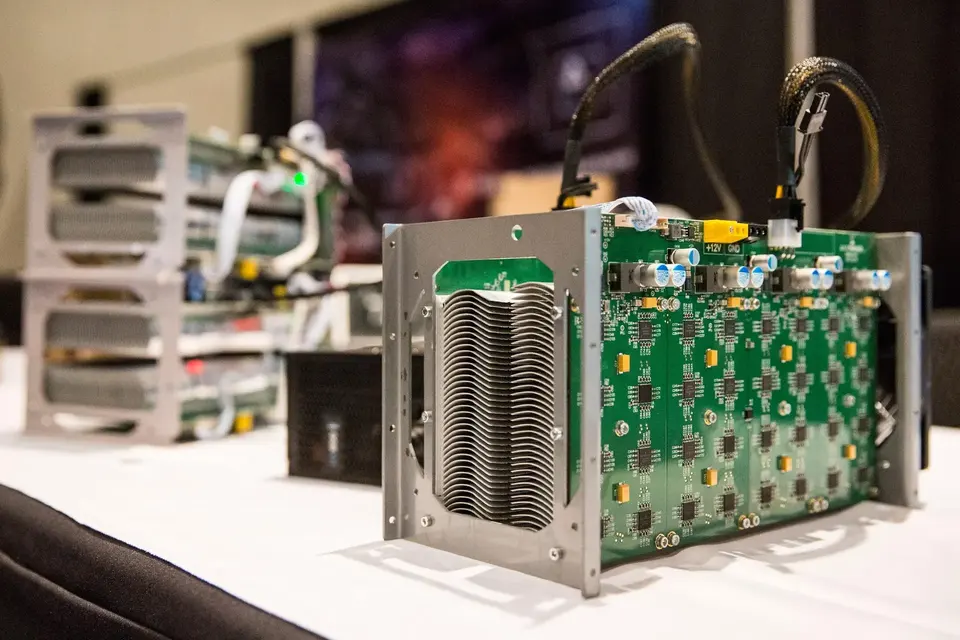
Bitcoin Welcomes "Made in USA," Cryptocurrency Mining Becomes New Battleground in Great Power Competition
TechFlow Selected TechFlow Selected
Bitcoin Welcomes "Made in USA," Cryptocurrency Mining Becomes New Battleground in Great Power Competition
Cryptocurrency mining is not merely a technical issue, but a complex topic involving global politics, economics, and energy.
 Navigating Web3 tides with focused insights
Author: Lawyer Liu Honglin, Shanghai Manqin Law Firm
Recently, bitcoin mining company Marathon Digital Holdings announced it will label every bitcoin block it mines with the words "Made in USA."

Fred Thiel, chairman of the company, emphasized on social media: "Every block mined by MARA Pool proudly carries the 'Made in USA' label. We are the only major miner capable of doing this because we operate our own mining pool and ensure all blocks mined by MARA Pool are produced in the United States." This statement has not only drawn significant industry attention but also revealed the complex global political dynamics behind cryptocurrencies.
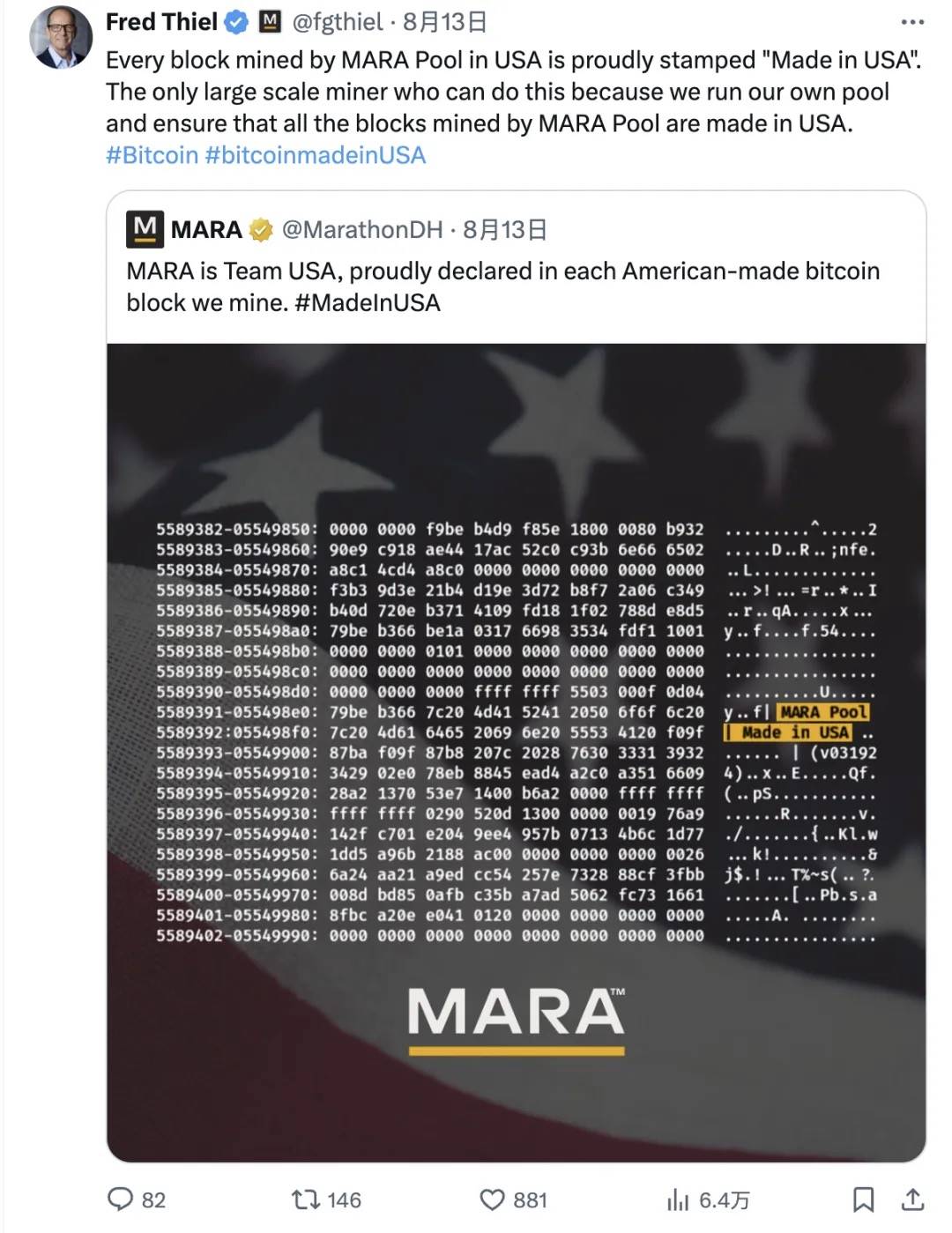
Marathon Digital Holdings was incorporated in Nevada on February 23, 2010, and is one of the leading bitcoin mining companies in the United States. The company has rapidly risen through advanced hardware and low-cost energy resources, known for its strict compliance and security standards. Since 2021, Marathon Digital has declared that all its bitcoin mining operations comply with regulations set by the U.S. Office of Foreign Assets Control (OFAC), enhancing both its market credibility and brand value. This latest move to label each bitcoin block as "Made in USA" is not merely a branding effort by Marathon, but also part of America's broader strategy to strengthen its dominance in the global cryptocurrency market.
Great Power Competition: Why Has Bitcoin Become a Focus?
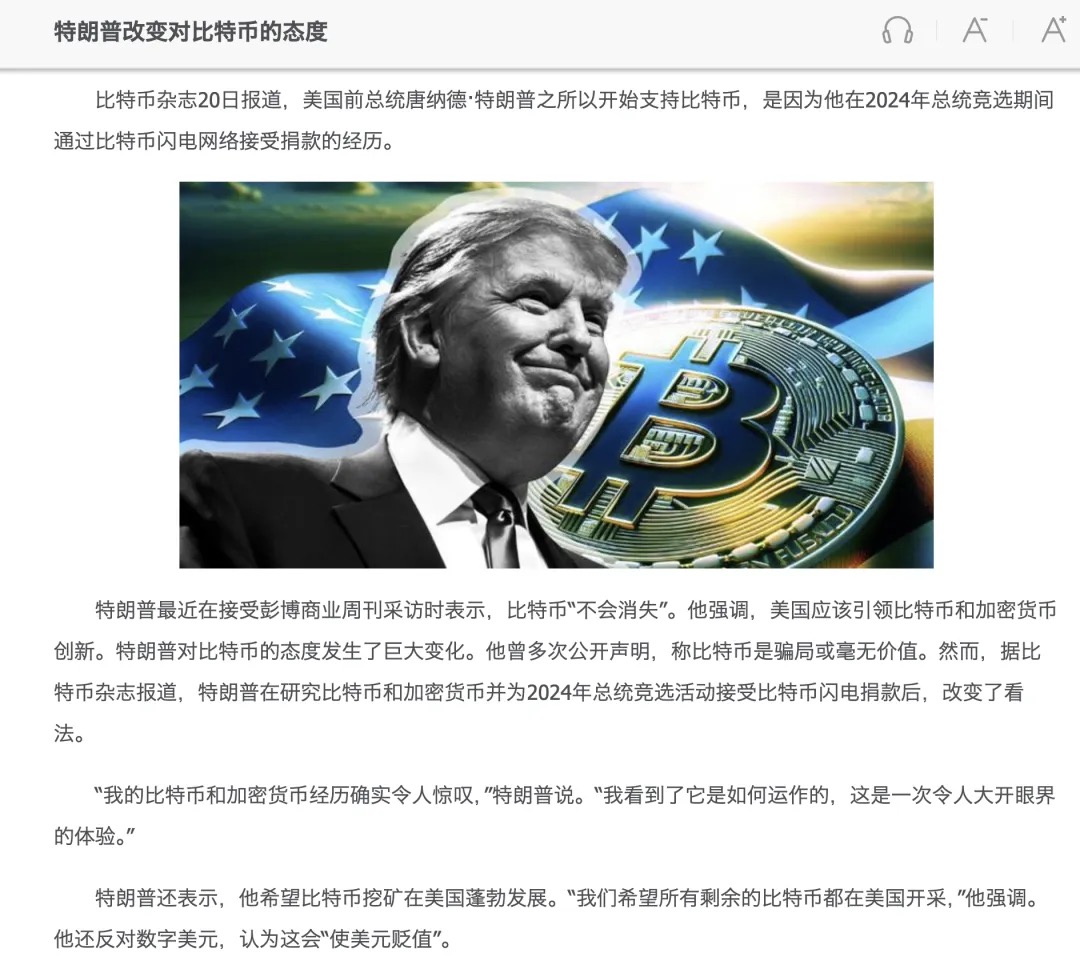
The bitcoin issue has emerged as a focal point in the 2024 U.S. presidential election. Several major candidates have expressed varying degrees of support for bitcoin. Former President Trump explicitly stated he wants "all remaining bitcoins to be made in America," and has met with executives from multiple bitcoin mining firms—signaling that future U.S. administrations may further promote policy support for cryptocurrency mining to gain an edge in global fintech competition. This indicates that bitcoin is no longer just a symbol of technological and financial innovation, but has become part of great power strategic planning.
Russia’s recent moves also highlight how major powers view bitcoin as strategically important. In 2024, Russia officially passed a bill legalizing bitcoin mining, allowing legitimate mining activities. This legislation reflects Russia’s recognition of cryptocurrency mining as a key emerging industry, which it now seeks to regulate and harness—particularly in Siberia, where abundant energy resources are being leveraged to expand bitcoin mining operations using hydropower.
More importantly, facing economic sanctions from Western countries—especially the United States—Russia experiences immense pressure within the international payment system. The SWIFT system, dominated by the U.S., restricts Russia's access to global financial transactions, marginalizing it economically. However, through virtual currencies like bitcoin, Russia can bypass traditional financial constraints and maintain capital flow in international markets. Thus, bitcoin functions as “digital gold” under economic sanctions, enabling cross-border payments and trade.
The convergence of strategic, social, and economic value in cryptocurrency mining becomes particularly significant amid this great power rivalry. Possessing cryptocurrency mining capabilities grants a country greater influence within the global financial system—not only in terms of financial leadership, but also control over energy and technology. Bitcoin mining consumes vast amounts of energy, but this consumption isn’t purely wasteful; it generates substantial economic benefits. Through cryptocurrency mining, major powers can optimize energy use and drive technological innovation. For example, U.S. mining companies are increasingly adopting renewable energy sources, improving energy efficiency while supporting grid stability. In contrast, countries like Russia and Canada are using policy incentives to position cryptocurrency mining as a tool for boosting economic and technological strength, thereby securing advantageous positions in the global market.
China May Need to Adjust Its Cryptocurrency Mining Policy at the Right Time
While considering cryptocurrency mining policies, China must also reassess the strategic significance of this industry from the perspective of national financial security. In recent years, many countries and regions have begun treating bitcoin as a critical strategic reserve. For instance, El Salvador became the first country to adopt bitcoin as legal tender and started accumulating national bitcoin reserves. Meanwhile, some nations like Switzerland are gradually incorporating bitcoin into their national reserve assets. This trend shows that digital assets like bitcoin are already being integrated into long-term strategic frameworks by certain countries.
In the future, decentralized digital assets such as bitcoin will become indispensable components of the global digital economy. These assets are more than investment tools—they are elements of national economic security. If control over bitcoin reserves remains concentrated in Western nations led by the United States, the global digital economy could tilt even further toward these powers. Therefore, China should consider including bitcoin and other digital assets in its national strategic reserve system—just as it values gold reserves—to avoid falling behind in global financial competition.
As lawyer Honglin previously suggested in his article “Web3 Lawyer: Recommend Government Adjust Virtual Currency Mining Ban Policy at the Right Time,” to promote China’s leadership in the next-generation internet centered around blockchain technology, regulators might reconsider and revise the current blanket ban on cryptocurrency mining.
First, shutting down the mining industry weakens China’s influence in global blockchain technology and digital currency markets, resulting in a brain drain of skilled professionals experienced in high-performance computing, algorithm optimization, and hardware development. China was once the world’s largest bitcoin mining market. According to Bloomberg data, Chinese bitcoin hash rate accounted for 65% of the global total in 2021, but dropped to less than 10% by 2023. This shift not only cost China its dominant position in the global digital currency market but also prompted many top-tier talents and enterprises to relocate to other countries like the U.S., weakening China’s innovation capacity and competitiveness in this field and placing it at a disadvantage in future digital economy contests. The development of mining is closely tied to advances in computer hardware, especially innovations in high-performance computing chips, cooling technologies, and large-scale computing systems. These technologies find wide application not only in cryptocurrency mining but also positively impact other high-tech industries. Governments could provide special funding and policy support to encourage R&D and practical applications—such as establishing dedicated science and technology funds to sponsor enterprises and research institutions developing high-efficiency, low-energy mining equipment and technologies.
Second, banning mining affects not only technology and the economy but also represents a significant loss of commercial profits. Media reports indicate that prior to the ban, 13 A-share listed companies, 7 Hong Kong-listed firms, and 9 U.S.-listed Chinese companies were involved in cryptocurrency mining, including Xin Yuan Technology (300472.SZ), Lianluo Interactions (002280.SZ), and Fortune Information (000836.SZ). The mining industry once provided substantial employment opportunities and tax revenues for local economies. Regions such as Inner Mongolia, Yunnan, and Sichuan attracted numerous mining companies due to their energy advantages, contributing positively to regional economic growth. For example, Sichuan leads the nation in installed hydropower capacity and electricity generation. Utilizing surplus hydropower for cryptocurrency mining could create a win-win scenario: stable mining operations, effective absorption of otherwise wasted hydroelectric output, increased transmission fees for power suppliers, and enhanced local government revenue from funds and taxes.
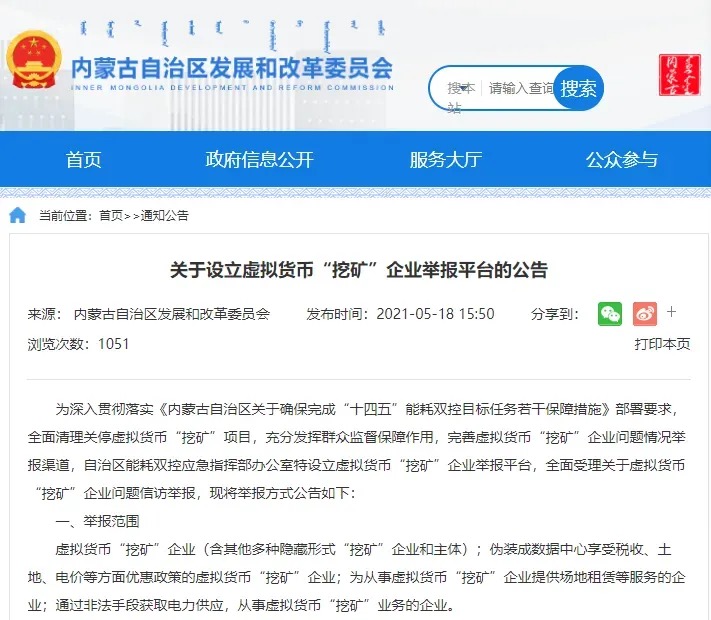
The negative impacts of the blanket mining ban on these regions have been evident. According to the *South China Morning Post*, Inner Mongolia lost thousands of jobs due to departing mining firms and suffered weakened local fiscal revenue. In contrast, prominent U.S. cryptocurrency mining companies like Riot Blockchain and Marathon Digital Holdings are publicly traded on Nasdaq and have reaped substantial profits. Riot Blockchain reported total revenue of $213 million in 2022, a 65% year-on-year increase, rising further to $275 million in 2023. Marathon Digital Holdings achieved $250 million in revenue in 2022, up 75% year-on-year, increasing to $310 million in 2023. Data from CoinDesk shows that stock prices for Riot Blockchain and Marathon Digital Holdings rose by 45% and 60% respectively in 2023, reflecting investor confidence and positive market outlook. If China could guide the mining industry toward legal and compliant development, similar profits and economic growth could be realized domestically. A PwC research report estimates that China’s potential annual income from cryptocurrency mining could reach several billion dollars—and possibly higher when combined with clean energy development and technological innovation. China could explore models involving state-owned enterprises (SOEs) holding or investing in mining firms, ensuring mining activities occur under government oversight. Local SOE participation would not only help manage risks effectively but also ensure steady tax and economic returns.
Moreover, according to a report by the International Energy Agency (IEA), global bitcoin mining energy consumption is progressively shifting toward clean energy sources. Mining companies in the U.S., Canada, and elsewhere are actively adopting hydropower, wind power, and other renewables to reduce carbon footprints and improve energy efficiency. For example, some mining firms in Texas collaborate with power providers to use wind and solar energy for mining operations. Additionally, the Electric Reliability Council of Texas (ERCOT) allows these companies to reduce power usage during peak demand periods, helping stabilize the grid. Quebec province in Canada imposes strict energy efficiency standards on high-consumption mining operations and encourages the use of clean energy. Hydro-Québec partners with mining firms, supplying renewable electricity to cut emissions. This trend demonstrates that with proper policy guidance and regulation, cryptocurrency mining and environmental protection can coexist successfully. Governments can establish clear policies to steer the mining sector toward greener, more energy-efficient practices while strengthening supervision to prevent illegal activities. A well-designed regulatory framework can standardize industry behavior while avoiding the adverse effects of an outright ban. For example, governments could mandate that mining firms use a minimum percentage of renewable energy, promoting green energy adoption and overall energy efficiency improvements, while imposing strict penalties on violators.
By learning from successful international experiences, China can develop appropriate policies and regulatory frameworks to foster healthy growth in the cryptocurrency mining industry, achieving comprehensive benefits in technological advancement, economic growth, and environmental protection.
Conclusion
Cryptocurrency mining is not merely a technical matter—it is a complex issue intertwined with global politics, economics, and energy. The strategic positioning of major powers in this domain reflects their contest for financial supremacy and underscores the growing importance of cryptocurrencies in the future global economy. For China, adjusting its mining policies at the right moment could not only boost domestic blockchain technology development but also enhance its influence and voice in the global cryptocurrency market. We look forward to deeper discussions among industry experts and research institutions on cryptocurrency mining regulation, collectively offering scientific and rational policy recommendations for China’s digital economic development.
Join TechFlow official community to stay tuned
Telegram:https://t.me/TechFlowDaily
X (Twitter):https://x.com/TechFlowPost
X (Twitter) EN:https://x.com/BlockFlow_News