








How should startups build a product-to-community growth flywheel?
TechFlow Selected TechFlow Selected
How should startups build a product-to-community growth flywheel?
Today, what people buy is no longer the product itself, but the stories and characters associated with it.
 Navigating Web3 tides with focused insights
Translation: TechFlow
Today’s story continues several threads from the past. In my last piece, I talked about people, not decks, and how they ultimately determine a company's outcome—especially founders.
This time, the focus is on users. I’ll explore how a company builds its community over a decade, and why founders should pay attention to community-building as a path to scale.
This article also serves as a prelude to our upcoming series of interviews with Chief Marketing Officers (CMOs). Over the next month, I’ll be speaking with senior leaders across multiple protocols to understand how they’ve built communities. My goal is to assemble a collection of stories that can guide founders in building their own companies.
A few weeks ago, I flew back to Pune—the Indian city where I grew up. It’s now home to many tech startups. Escaping Dubai’s heat, I found comfort in Pune’s monsoon rains. But I wasn’t there for the weather.
I left the office with one purpose: to visit the offices of SuperGaming. We’ve been advising SuperGaming for over a year. They’re one of the region’s largest gaming publishers, with over 100 million active downloads, 20+ games, and five titles surpassing 10 million downloads each. Their vision for the metaverse goes far beyond what most imagine.
I’ve long followed their CEO, Roby John, and admired his approach to community-building. Every time we speak about product, he emphasizes how their community supports what they build. They don’t have tokens or protocols—just beloved games.
So I spent two days shadowing him at their office, discussing his founder journey over samosas and hot filter coffee. We dug into what it takes to build massive communities and why they matter. What follows is a distillation of Roby’s 10+ years of experience into a few thousand words.
For readers in a hurry, here’s the core breakdown of this article. I’ll walk through how to build community at each stage:
-
I explain why, at the seed stage, you should operate under a more recognizable, established banner.
-
We explore how communicating with users and making them feel seen and heard can have an outsized impact during scaling.
-
I also explain why “culture” is the ultimate challenge every growing company must confront.
Don’t worry—I won’t leave you with abstract quotes. For the next 15 minutes, we’ll walk through 15 years of Roby’s experience building a company.
Getting Started
2011. A young, idealistic Indian founder entered Y Combinator. He was no stranger to startups. At 21, during the dot-com boom, he’d landed million-dollar consulting contracts—but building something new was more exciting. Roby was developing a game to help people better understand math, specifically targeting the then-upcoming iOS devices, especially the iPad.
Early traction was limited, but he soon noticed young users posting videos of his product on YouTube.
This sparked a realization. Around the same time, Airbnb’s founders were flying to New York to photograph listings themselves because user-submitted photos were often unappealing. By taking professional photos, they made onboarding personal and turned hosts into advocates. Roby took inspiration from this.
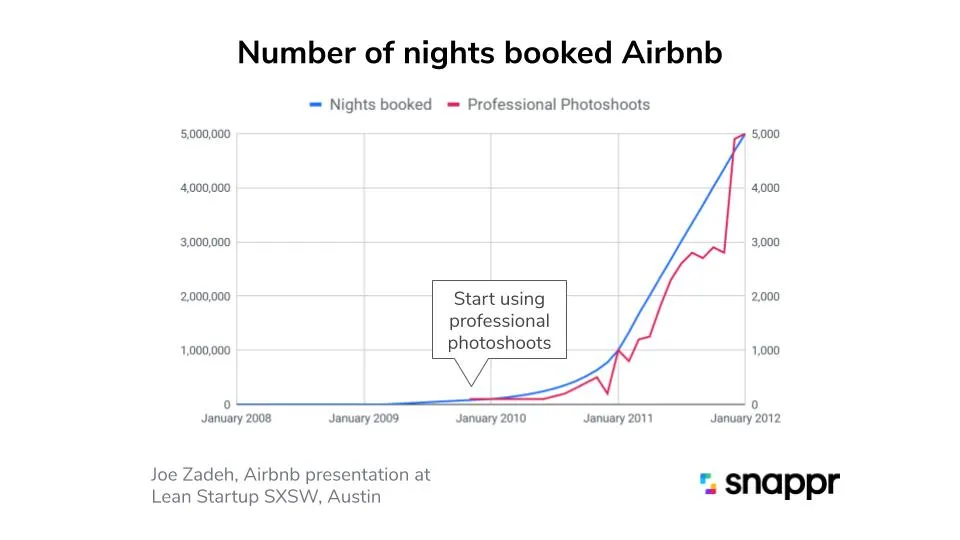
The image above is from Snappr’s blog, which includes a more detailed study of the phenomenon.
Roby realized that empowering users to spread his product could mean the difference between relevance and rapid death. His focus naturally shifted toward community-building.
If you’re a small studio from India, immediate recognition is unlikely. This was before smartphones and widespread internet access. The gaming industry then resembled today’s crypto space—plagued by stigma. People looked down on those working in games.
So how do you build a credible brand?
One way: operate under a bigger, more recognized name.
Recognition
In 2012, Roby and his team raised $1 million in seed funding for June Software (which later merged into Super), including investment from Backflip Studios, a well-known publisher at the time. This partnership gave Roby access to popular intellectual property (IP) loved by users. Think of it this way: people rarely search for a game studio by name.
For example, few recognize Rockstar Games, but kids search for “Spider-Man,” hoping to play games featuring their favorite characters. We saw a similar dynamic when Niantic partnered with Pokémon GO to build an augmented reality (AR) success story. Studios often leverage strong IP for user discovery.
So Roby began co-developing games like NinJump with Backflip, acquiring users at minimal cost. In the early days, this collaboration helped surface June Software’s games to players. More importantly, it taught Roby how game studios operate—giving him both distribution and operational expertise in one move.
Even today, Super’s platform supports Pac-Man globally through a partnership with Bandai Namco, publisher of Elden Ring, Tekken, and Dragon Ball. They joined SuperGaming as investors in 2023.
This pattern has repeated in blockchain protocols. In 2021, joining Polygon meant access to a broader DeFi ecosystem migrating to the chain. In 2024, building on Solana gives you exposure to users exploring meme assets. Or on Base, access to consumer-facing products.
Right now, a similar dynamic is unfolding with AVS launches on EigenLayer. Growth happens when large brands combine with operational excellence and aligned incentives.
Operating under a larger banner demands more than just capability. Big protocols (or brands) won’t partner with startups unless they deliver real value and meet user needs. In large organizations, small, agile teams avoid failure caused by committee-driven decisions. If you’re a founder building for a big brand, come prepared with proof-of-concept or research to back your claims.
SuperGaming achieved this by focusing on core strengths. By 2014, the team had five years of experience building iOS apps and cloud servers. Instead of chasing trends, they focused on building multiplayer mobile games for iPhone over 3G networks.
At the time, few saw mobile phones as the next medium for MMOs—but that’s exactly where the team focused. This unique positioning helped them influence decision-makers during conversations with larger companies.
In such cases, tangible results impress decision-makers who want to save time. Writing proposals and navigating internal bureaucracy, however, can trap you. The nuance here is that June Software didn’t find users solely by partnering with a big brand. You can land these partnerships via business development (BD). But they also built a product users loved.
A great product works even with mediocre distribution. A mediocre product fails even with excellent distribution. For operators, the challenge lies in finding that middle ground.
In July 2013, Hasbro acquired 70% of Backflip Studios for $112 million. Interestingly, Hasbro owns the IP rights to Nerf toy guns. Roby and his team quickly got to work creating a Call of Duty-style game based on Nerf, leveraging that IP. Plans for a Nerf-based shooter were eventually shelved, but this set the stage for the next chapter.
Identity
Development of MaskGun’s early version began in 2015. By 2022, the game neared 60 million downloads. This success didn’t happen overnight.
In MaskGun’s early days, smartphone performance was limited. The oldest device that could run it was the iPhone 3GS, with 350ms latency. Roby and his six-person team named the game MaskGun because they lacked a 3D animator. Masks meant they wouldn’t need to animate facial expressions. Born out of constraint, it worked.
After two years of iterative improvements, the product gained wider acceptance. At the time, Facebook’s login flow allowed developers to see users’ social media usernames. Roby engaged directly with the most active Facebook users, starting conversations to understand why they spent time in MaskGun.
He spoke directly with thousands of users to learn why they spent dozens of hours daily in the game. In return, they shared their lives with him.
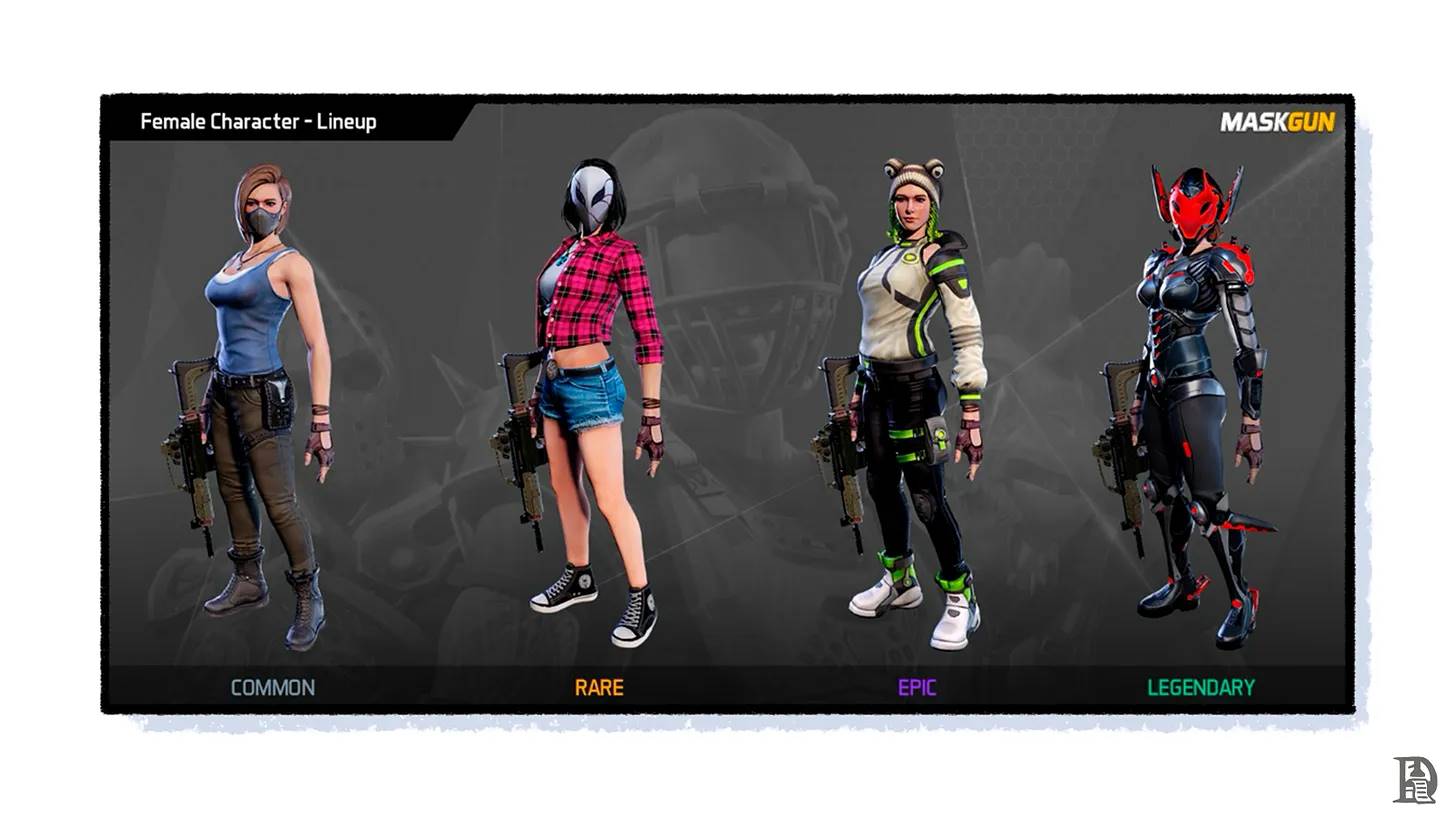
A character with a prosthetic limb was created to honor an active MaskGun player.
Some stories were deeply moving. When one player told Roby about losing a limb, Roby quickly added a custom skin in the game honoring that user. The conversation started around adding a MaskGun sticker to a prosthetic leg.
Roby ensured users felt seen and heard within the product.
In another case, he reached out to a player who had spent over $2,000 and played for five years. Roby wanted to sponsor his favorite bicycle. These weren’t names marketing managers would typically target. But Roby’s focus wasn’t on reach or distribution.
He focused on building relationships with the players who invested the most time.
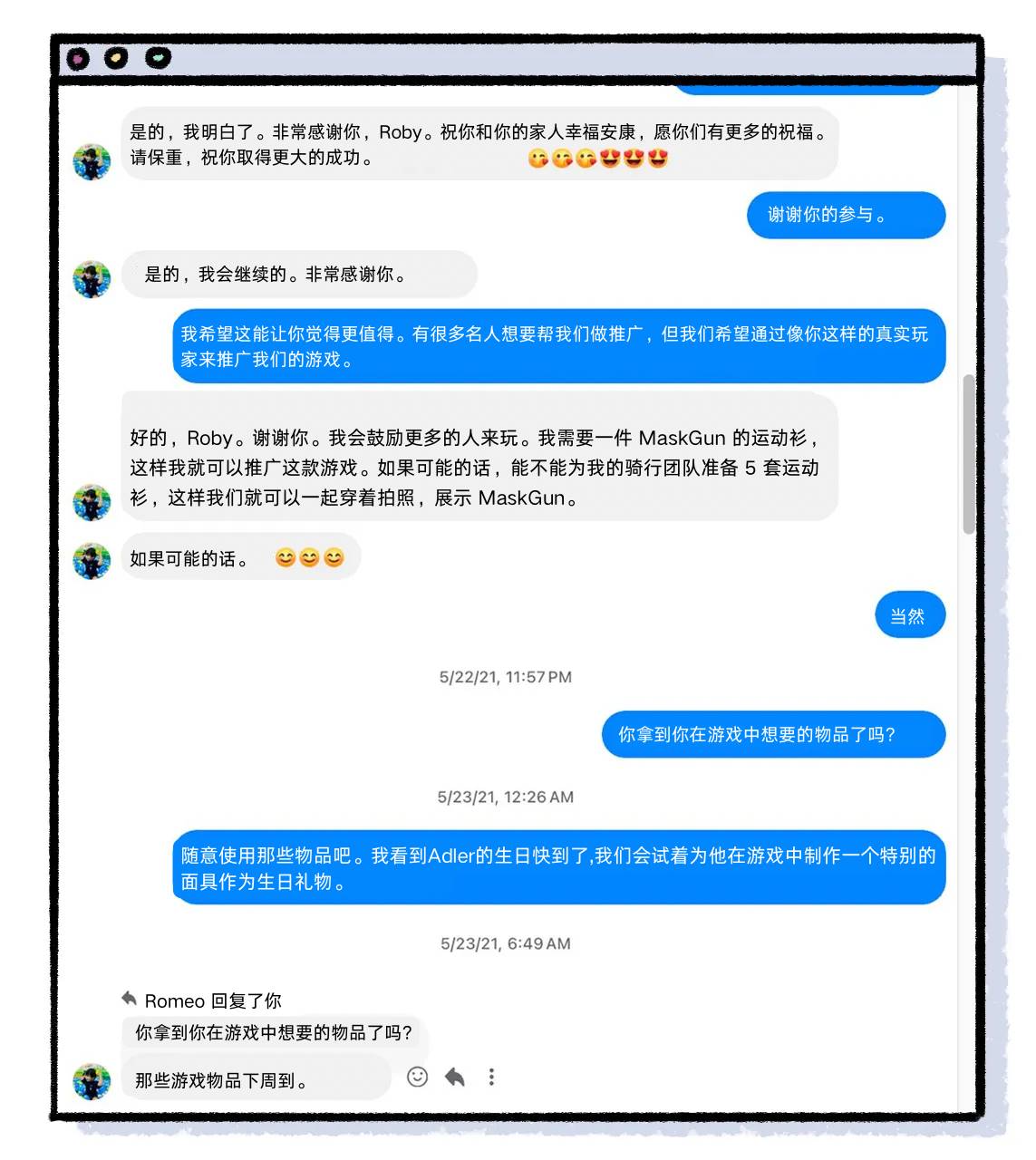
One effective way to build loyalty is direct engagement with your most active users. While not scalable, it has an outsized impact on retaining core users. The screenshot above shows one of hundreds of personal Facebook messages Roby exchanged with users.
When I visited Roby’s office, he showed me his Facebook account. Nearly ten years of private messages remain—users asking for quick bug fixes, requesting rank reductions, or sharing life updates. One user even asked Roby to become the godfather of his child. These things didn’t happen because a marketing manager spent money on ads—they happened because the founder stayed close to customers. What leads to better products: conversations with top VCs, or with hundreds of users who spend real time using your product?
This choice shaped the product in unique ways. MaskGun released weekly updates, and Roby created in-game characters modeled after his most active users. When a player messaged him at 3 AM requesting custom gun skins for his crew, Roby had a breakthrough moment. That player was part of a gang in Australia who wanted to express their identity in-game.
Users began adding gang names to their avatars and soon wanted clothing that represented them. These requests led to the creation of an in-game marketplace.
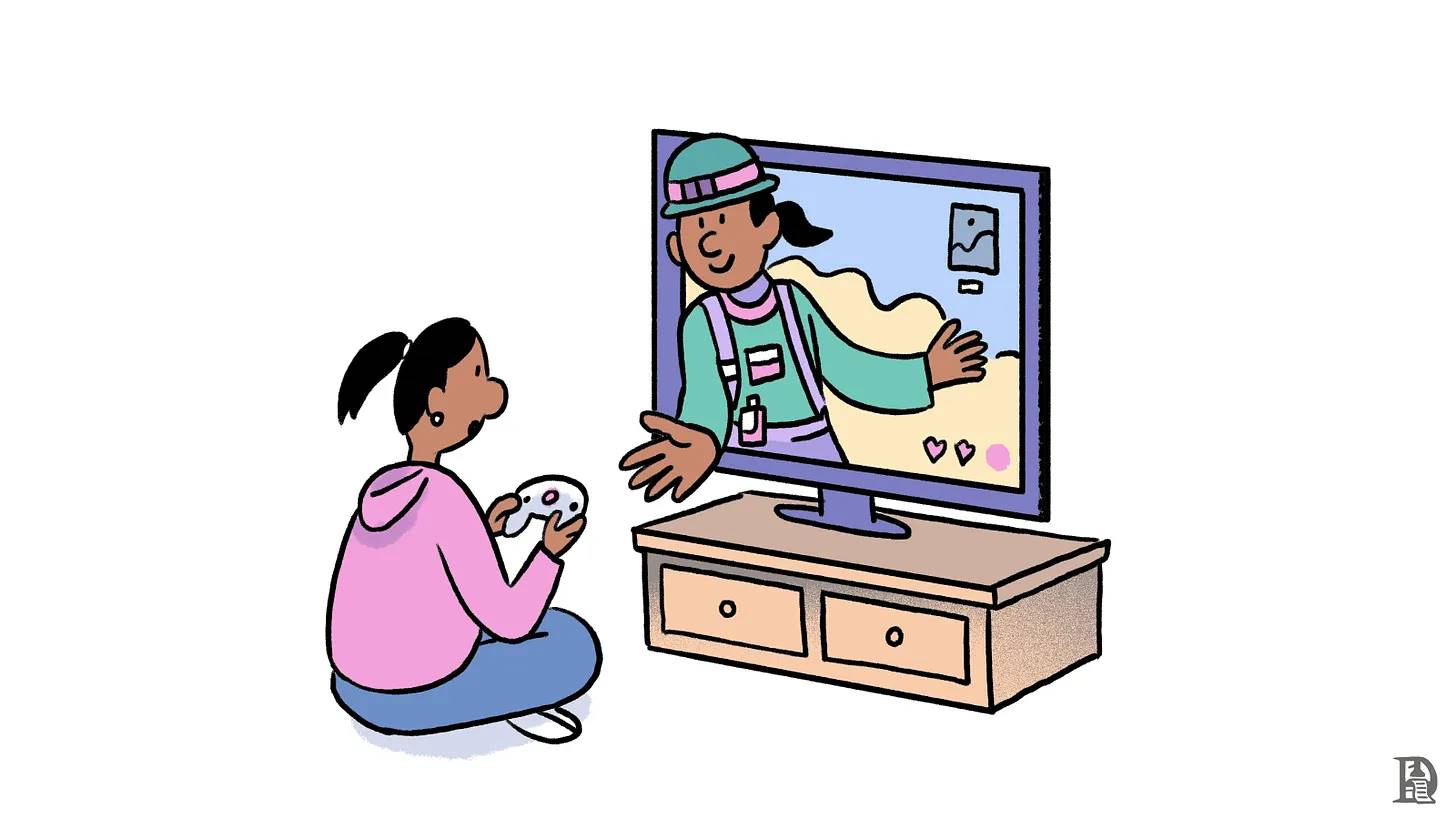
We seek reflections of ourselves in the art we engage with most. One way products retain users is by reflecting the spirit users identify with, embedding it into product decisions.
This need for self-expression isn’t limited to games. Products we spend the most time with are often those that let us express our truest selves. Reddit, Instagram, and YouTube fulfill the human need to be seen and heard. Games can’t easily replicate the user base of social networks. But once a user base grows large enough, people want to differentiate or rank themselves.
When building a product, you can incorporate identity in three ways:
-
Engage users in dialogue, make them feel seen and heard. Invest in their success. This helps create a critical mass of users.
-
Provide avenues for self-expression so users can interact with the product in ways tied to their unique identities.
-
When user numbers grow, introduce ranking systems that reflect social status and influence.
Our world may be digital, but humans remain social creatures. Our need to be seen, recognized, and ranked persists across eras.
How does this show up in Web3? Look at Dune’s approach to empowering users. Their “Wizards” section highlights top contributors. Similarly, Layer3 features a leaderboard where users compete for top scores while using the product. When users are highlighted through the product, they feel belonging—which improves retention.
This applies to developers too. Dan Romero famously held consecutive 15-minute calls with developers interested in Farcaster. These conversations made onboarding to the original protocol more personal.
Of course, these practices don’t scale. With a billion users, products grow colder. But another force can bind users together: culture.
Culture
By 2022, MaskGun approached 60 million users. After nearly eight years, something was still missing. Between PUBG and Fortnite, the shooter market had evolved. Roby admits the product could have grown further.
A year earlier, Roby and a four-person team began talking to users near their office. Over six months, they collected insights from 1,000 users—students, commuters, gamers—a full cross-section. Through these conversations, they captured the psychology behind what they were building.
A blank canvas was ready. Art needed to be created.
These dialogues inspired that art.
It became clear that despite India being a massive gaming market, representation in games was nearly absent.
In MaskGun, Roby saw how self-expression fostered belonging. In NinJump, he saw the unifying power of IP. In the next chapter, he combined both ideas—and their flagship game, Indus, was born. Still in early testing, I’ll avoid detailing Indus’s unique features or why it might be the next big hit.
What fascinates me is how Roby began thinking about his product through the lens of IP and self-expression. Combine the two over time, and you form culture.
Culture is the shared beliefs and forms of expression within a society. It doesn’t focus on individuals, but on what we do collectively.
Sending personalized messages to tens of thousands of users has limits. But distill it into culture, and you have a system that scales. When Apple ran this ad in 1984, they transitioned into culture—urging viewers to rebel against Big Brother, to think differently.
One of my favorite examples of product becoming culture is sneakers. Functionally, all shoes serve the same purpose—they cushion your feet. But add decades of manufactured desire, link them to stories of athletic greatness, and encourage a parallel market, and suddenly you have sneaker culture. The product transcends its utility.
But what if you don’t have decades to build culture? The answer lies in representation and mythmaking.
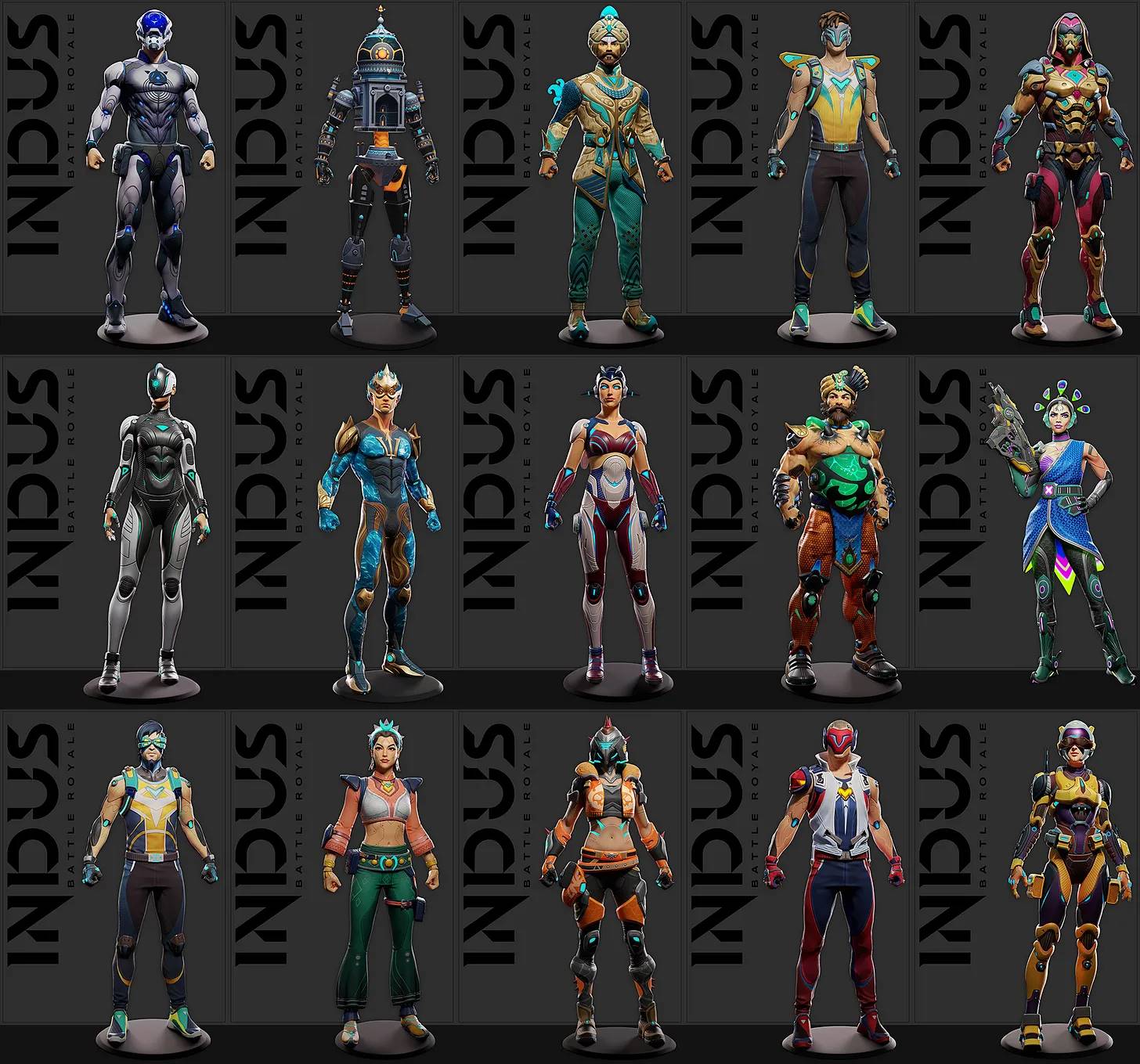
Concept art from Indus’s game. Many characters are abstract references to Indian myths and legends.
Indus is building culture by featuring Indian characters and content in its game. This is a double-edged sword. Representation without depth won’t work. But crafting myths and legends people can believe in gives users imaginative space to connect with the product. Before building, the team sat down to envision what “Indo-futurism” could look like.
Through gaming, they present a vision of India’s future. Characters pay homage to mythological figures many players have known since childhood.
They also launched multiple creator programs to involve the community. Most founders build alone in public. Inviting creators to use and publicly critique the product is like building the game in public. The company regularly hires top creators to join their team in-office. Indus also hosts offline events in small Indian towns—markets often overlooked by game developers.
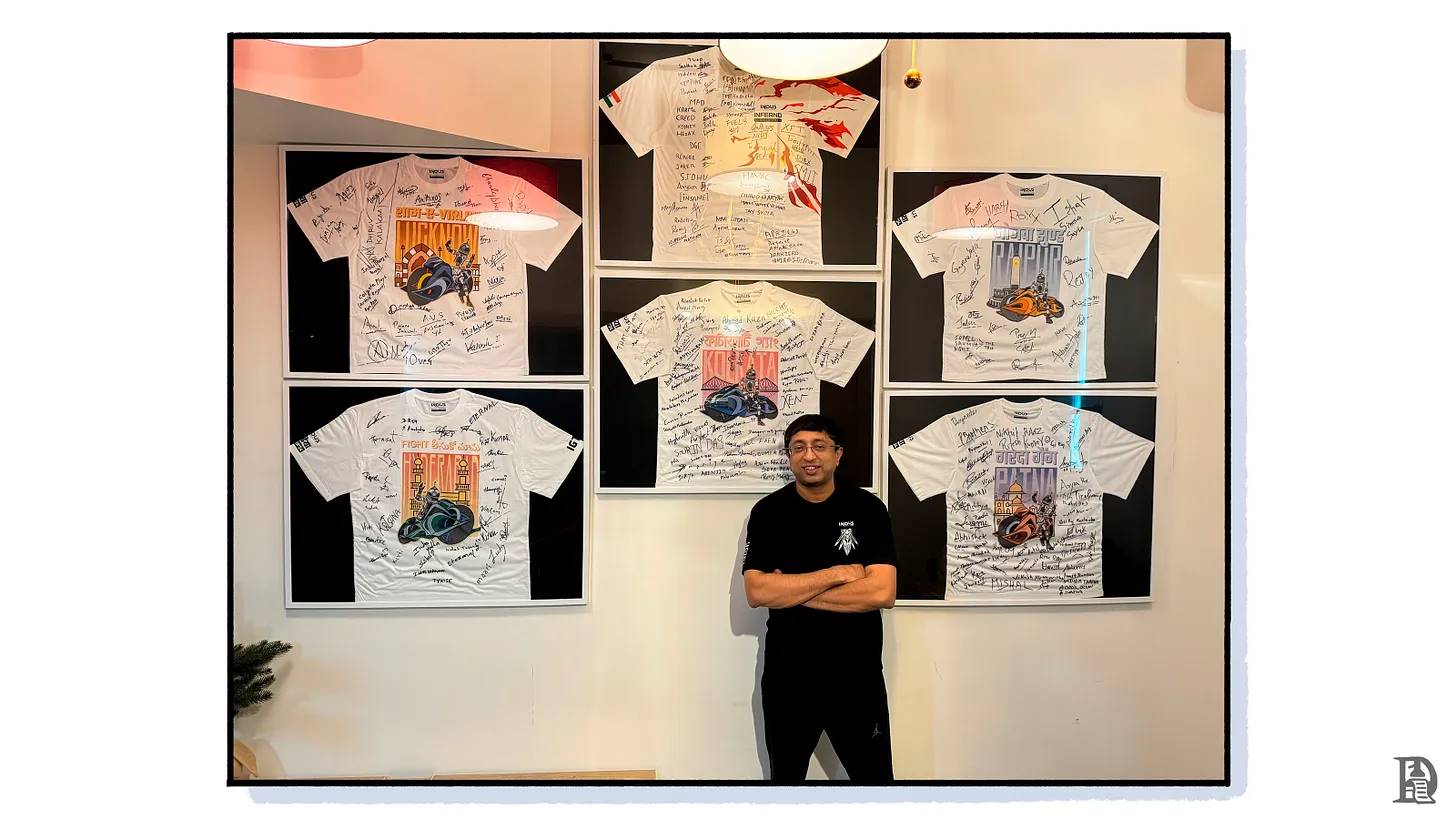
T-shirts signed by users hang in a room at SuperGaming’s office. Each is custom-designed, representing towns the team visited while promoting Indus. It underscored for me how clearly the studio understands its audience.
When a brand enters underserved markets, it can build lasting loyalty. This strategy creates distribution while gathering crucial feedback. Naturally, some feedback is negative. For example, this video critiques current game flaws.
In community-building, you must welcome both criticism and praise. A healthy community embraces both.
Indus now collaborates with many of the region’s biggest creators. Techno Gamerz—one of South Asia’s largest YouTube creators—was turned into a character in their game. The studio focuses on lasting relationships, not one-off media buys.
Web3 products try to build culture through branding. Our conferences flood Twitter algorithms to enable real-world interaction. Yet we rarely credit a brand for culture. The closest might be Berachain, which gained attention for its noise. At Token2049 Dubai, they ran a full drone show and advertised on taxi rooftops.
Yet when viewed from the lens of a game trying to leave a mark, their strategy makes sense.
Creators (or researchers) rarely get deep insight into how products are built. Teams face fragmented feedback loops, and creator incentives suffer. In Web3, paid creator interactions only happen when financial incentives are involved.
In other words, participants are expected to portray the product (or protocol) in a positive light. To progress, sponsorship needs more honesty. Creators, given space, often produce work far superior to anything most marketing managers can assemble. But as an industry, we haven’t reached that point yet.
The Digital Third Place
While writing this, I realized the metaverse isn’t a distant future—it’s already here, in the games we play and platforms we inhabit. Twitter is a third place. So is Telegram. For some, Uber Eats might be. But not all platforms replace the third spaces we used to frequent or fulfill their original roles.
A major driver of rising depression is the lack ofthird places. Historically, village squares, cafes, and playgrounds were where we spent time. As interaction moves online, we need new town squares. Games are increasingly filling this void. Many Super users use their IP for self-expression and identity.
In the analog world, people used religion and politics as mechanisms of identity. In the digital world, we’ll use our online presence and the worlds we spend time in as extensions of identity.
So how can founders leverage this? It comes down to four core elements:
-
Build sufficient distribution by partnering with well-known brands. If you’re a small startup, collaborating with brands (or creators) positioned well in your target segment is ideal.
-
Make users feel seen and heard—this creates a mechanism for capturing feedback in shorter cycles.
-
Create culture by adhering to a set of values and letting the product reflect them.
Today, people don’t buy products—they buy the stories and people attached to them. Bored Apes surged in 2021 partly because many celebrities endorsed them. Owning a Bored Ape signaled you owned the same asset as Jay-Z. By 2024, owning one might signal distress, as prices crashed.
To cultivate and spread stories, you need community, and that can’t be done overnight or artificially. For Roby, it took a decade. For some protocols we work with, it averages 3–4 years.
Strong communities require high-quality products that act as unifiers. Users miss products when they’re gone. Think how anxious we feel when Twitter or WhatsApp goes down.
Some games in SuperGaming’s catalog persist because 20 users still play them years after updates ended. Whether NinJump in 2014 or MaskGun in 2022, Super’s focus remains on continuously iterating high-quality products. Our observation: great products create vibrant communities.
When leveraged correctly, this creates a flywheel that retains users longer and gives teams a competitive edge in building. To date, MaskGun has organically grown to 90 million players, and Indus has 12 million pre-registrations. The former hasn’t updated in a year but still gains 50,000 new users daily. That’s the power of a healthy community.
Ultimately, investing in community and curating atmosphere isn’t just about pleasing people—it’s about investing in user retention and consumer feedback through organic, authentic, and brand-true mechanisms. When Roby built community in the early 2010s, his goal was organic word-of-mouth. Over the decade, he realized a healthy community is one where users interact with each other.
People come for the product, but stay for the other users. The culture driven by the product shapes how users treat one another. That’s why we see vastly different behaviors across platforms. Whether 4chan, TikTok, or Instagram, underlying culture defines the community. Part of a founder’s job is to guide culture in the desired direction.
We’re all building worlds through our products. Communities make these worlds livable, ensuring residents aren’t lonely when they arrive.
Join TechFlow official community to stay tuned
Telegram:https://t.me/TechFlowDaily
X (Twitter):https://x.com/TechFlowPost
X (Twitter) EN:https://x.com/BlockFlow_News
 @Decentralisedco


