OKX Exchange Compliance Storm: Delisting Accounts Related to Tornado Cash, How Should Users Respond?
TechFlow Selected TechFlow Selected
OKX Exchange Compliance Storm: Delisting Accounts Related to Tornado Cash, How Should Users Respond?
Any transfer activity between Tornado Cash and OKX will trigger account termination.
 Navigating Web3 tides with focused insights
Author: Lawyer Liu Honglin, ManQin Law Firm
On August 9, a statement posted by OKX on social media sparked widespread controversy. OKX announced that any deposit to OKX from Tornado Cash, or any withdrawal from OKX to Tornado Cash, would trigger account termination without exception. This announcement quickly ignited extensive discussions, especially around user privacy and platform compliance.
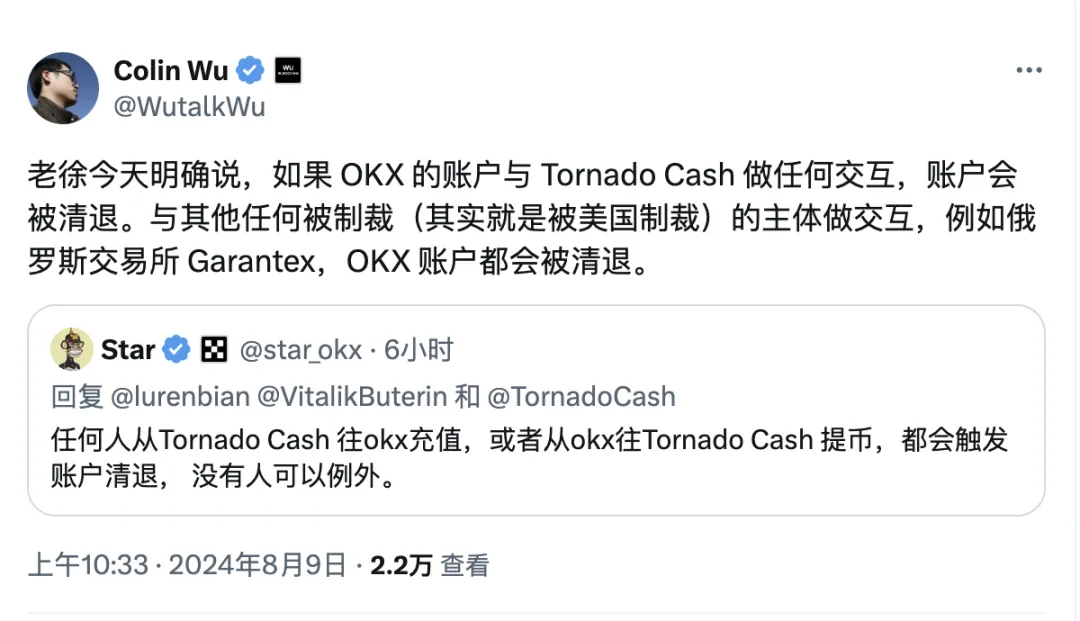
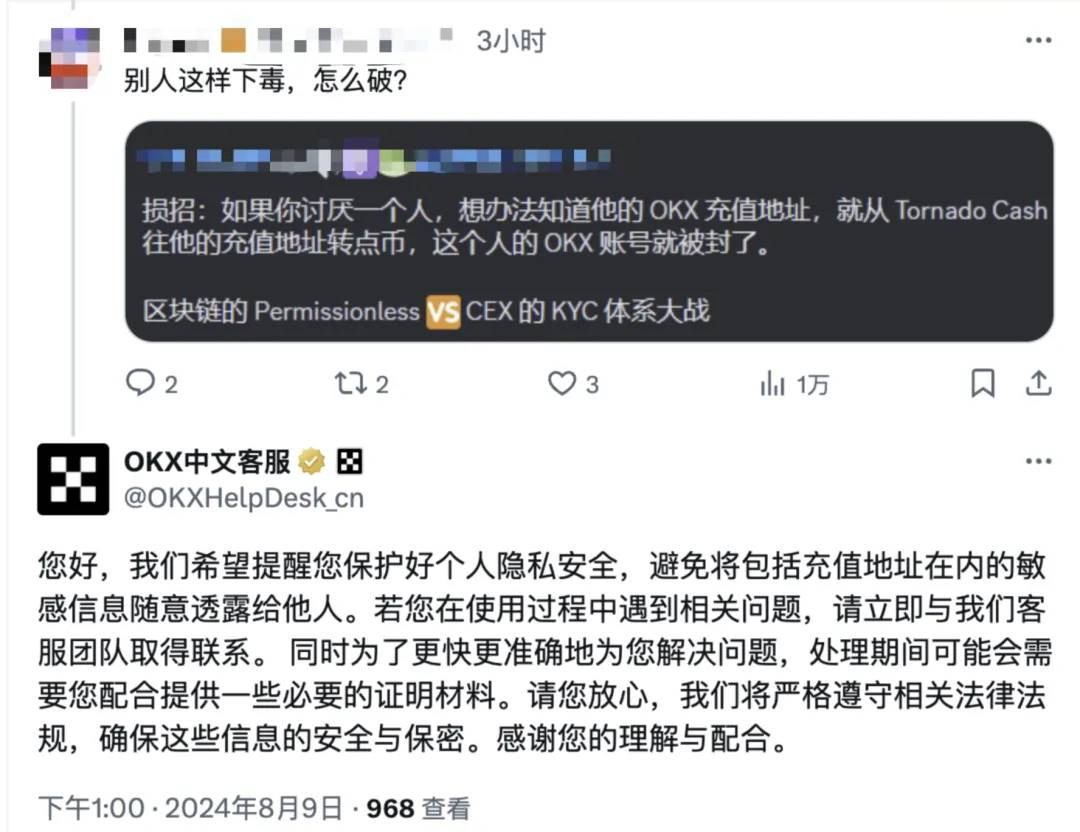
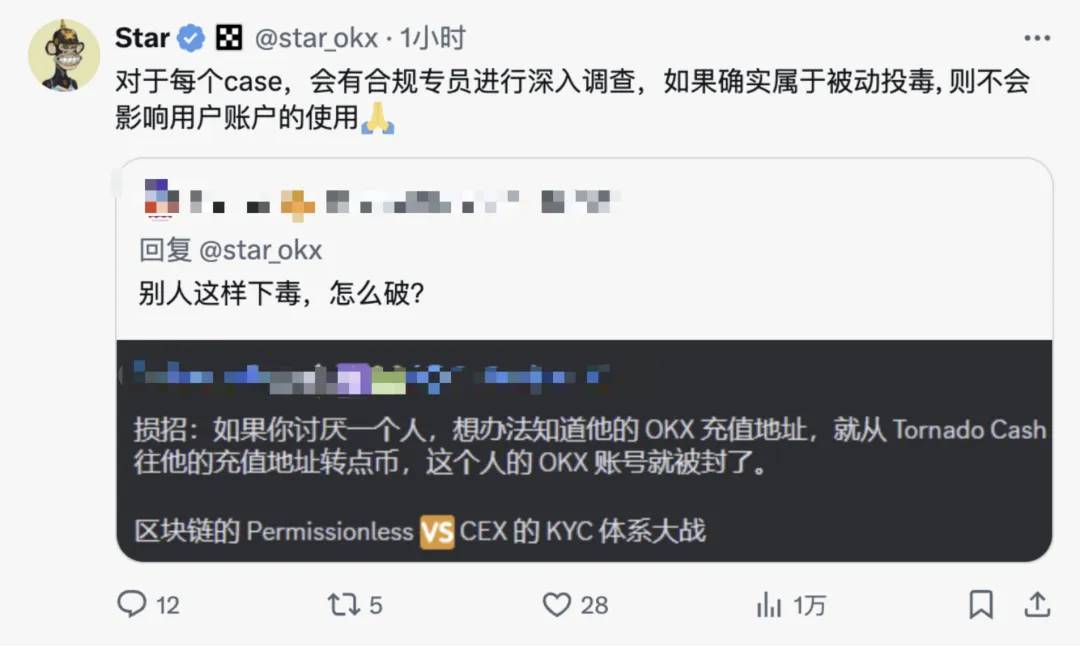
In this context, users raised concerns about how to respond to "dusting attacks," where malicious third parties deliberately transfer funds via Tornado Cash to an OKX account in order to get it banned. In response, OKX stated it would conduct thorough investigations into each individual case and would not automatically ban accounts simply for passively receiving such funds.
Satoshi Friends also issued a related statement. He pointed out that since 2019, he had been a partner of the OKX exchange and actively promoted the platform. However, since May 2024, OKX's policies toward users from Commonwealth of Independent States (CIS) countries suddenly became exceptionally strict, forcing him to urge all affected users to immediately withdraw their funds and suspend use of the platform. He emphasized that his own account had been blocked and years of referral incentives had been frozen—only after persistent communication with the exchange was there a possibility of recovering these assets. He warned users that everyone faces the risk of account freezing, regardless of whether they are ordinary users or influencers/partners.
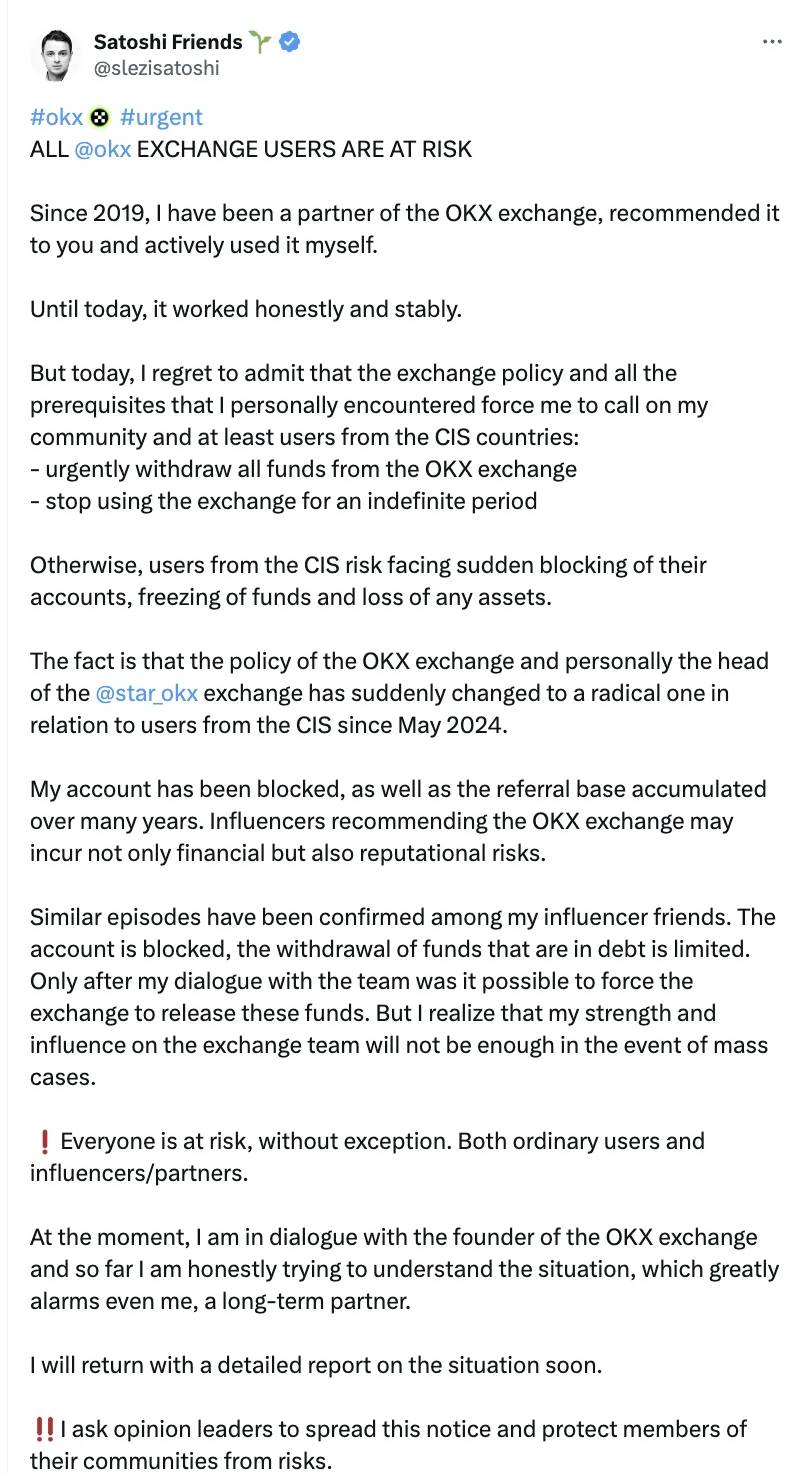
Satoshi Friends' remarks drew significant attention within the cryptocurrency community, particularly after he mentioned that multiple influential users had encountered similar issues. This further fueled skepticism about OKX’s compliance policies and raised concerns over user asset security.
In-Depth Legal Compliance Analysis
The influence of the U.S. Department of the Treasury's Office of Foreign Assets Control (OFAC) in the cryptocurrency space cannot be underestimated. OFAC regularly publishes and updates its sanctions lists, including the Specially Designated Nationals and Blocked Persons List (SDN List). Any transaction involving entities or individuals on the SDN List—whether intentional or not—may constitute a violation of U.S. law, potentially leading to severe legal consequences such as asset freezes, fines, or even criminal charges.
In the case of OKX, Tornado Cash has already been included on OFAC’s sanctions list. Tornado Cash is a decentralized privacy protocol that enables users to conduct anonymous cryptocurrency transactions (see further reading: “Tornado Cash Founder Sentenced to 64 Months, Leaving Crypto Users Divided”). However, due to its privacy features, it has also become a tool for illicit activities such as money laundering and sanctions evasion. As a result, any transaction associated with Tornado Cash may trigger OFAC sanctions, which is the primary reason why OKX must enforce strict measures.
In recent years, several enforcement actions related to transactions with sanctioned entities have demonstrated the U.S. government’s strict stance on violations. For example:
-
Bittrex Case: In 2020, the U.S.-based cryptocurrency exchange Bittrex was fined $24 million by OFAC for allowing transactions with individuals from sanctioned regions, including Crimea, Cuba, Iran, Sudan, and Syria. This case illustrates the U.S. government’s tough approach toward exchanges violating sanctions.
-
BitMEX Case: Also in 2020, the founders and executives of BitMEX faced legal proceedings for violating the Bank Secrecy Act (BSA), partly due to transactions occurring on the platform with users from sanctioned countries. Ultimately, BitMEX was fined $100 million, with part of the penalty attributed to failure to prevent illegal transactions.
-
Tornado Cash Case: In August 2022, OFAC added Tornado Cash to its sanctions list, accusing it of aiding the North Korean hacking group Lazarus Group in money laundering. According to OFAC, Tornado Cash helped launder over $455 million in illicit funds. This incident not only led to Tornado Cash being blocked by major global exchanges but also triggered broad legal debates over decentralized privacy tools.
The U.S. International Emergency Economic Powers Act (IEEPA) and the Bank Secrecy Act (BSA) are the primary legal instruments regulating cryptocurrency transaction compliance. IEEPA grants the President broad authority to impose economic sanctions on any entity or individual deemed a threat to national security. The BSA requires financial institutions to implement anti-money laundering (AML) measures, including reporting suspicious activities and conducting customer due diligence (KYC).
For users, these legal frameworks mean exercising caution when choosing counterparties in cryptocurrency transactions. Any interaction with sanctioned entities could lead to account freezes or even legal action. For cryptocurrency platforms, complying with these regulations is not only a legal obligation but also essential for protecting their reputation and ensuring user asset security.
Compliance Recommendations and Best Practices
In an increasingly complex and evolving regulatory environment, both platforms and users face significant compliance challenges. To operate legally and securely under such conditions, ManQin Law Firm offers the following constructive recommendations to help platforms and users better manage current and future legal risks.
Platform Compliance Measures
Enhance KYC and AML Procedures
-
Strengthen User Verification: Platforms must further refine their Know Your Customer (KYC) processes through stricter identity verification methods to ensure user legitimacy. This includes multi-layered identity checks, background screening, and continuous monitoring of user transaction behavior.
-
Real-Time Transaction Monitoring: By leveraging advanced artificial intelligence and big data technologies, platforms can monitor all transactions in real time to detect suspicious activities—such as frequent small-value transfers or cross-border transactions—and take prompt action to prevent violations.
Maintain Communication with Global Regulators
-
Establish a Global Compliance Team: Platforms should form dedicated global compliance teams responsible for maintaining close contact with regulators across jurisdictions to ensure ongoing adherence to the latest legal requirements. Regular participation in international conferences and seminars helps stay informed about regulatory developments and prepare proactively.
-
Transparent Compliance Policies: While safeguarding user privacy, platforms should publicly disclose their compliance strategies and measures so users understand how their assets are protected and how international legal standards are followed. Transparent policies help build user trust.
Adopt Blockchain Analytics Tools
-
Implement On-Chain Analysis: By using blockchain analytics tools, platforms can trace and analyze the origins and destinations of on-chain transactions, identifying those linked to sanctioned entities. These tools enable swift responses such as freezing suspicious accounts or flagging high-risk transactions.
-
Data Sharing and Collaboration: Platforms can share analytical data with other exchanges and blockchain firms to jointly build a safer cryptocurrency ecosystem and prevent the spread of criminal activity.
User Education and Alert Systems
-
Regular User Education: Platforms should regularly publish educational materials on compliance risks and best practices, using formats such as online webinars, articles, and videos to inform users about safe platform usage and avoiding unintentional legal violations.
-
Risk Alert Mechanism: Provide users with a real-time risk alert system that notifies them immediately upon detecting fund flows linked to sanctioned entities and recommends appropriate actions. Such mechanisms help users avoid potential legal risks in advance.
User Compliance Measures
Diversified Asset Management
-
Asset Diversification: Users should avoid concentrating all assets on a single platform, instead spreading them across multiple legitimate and trustworthy platforms. This minimizes risk exposure if one platform encounters problems.
-
Combine Hot and Cold Wallets: Store the majority of long-term holdings in cold wallets to reduce exposure to platform-related risks, while using hot wallets for daily transaction needs.
Improve Legal Awareness and Compliance Practices
-
Conduct Proactive Due Diligence: Before engaging in any major transaction, users should make every effort to learn about the counterparty’s background to avoid inadvertently transacting with a sanctioned entity. This can be achieved through third-party due diligence services or consultation with legal counsel.
-
Maintain Compliance Records: Users can keep personal compliance records documenting details and context of large transactions, enabling them to provide clear explanations and evidence in case of disputes.
-
Seek Legal Assistance Promptly: Users should establish relationships with professional cryptocurrency legal advisors to obtain timely legal support when needed, especially in cases of account freezing or legal proceedings.
ManQin Lawyer Conclusion
In summary, the OKX account purge related to Tornado Cash and Satoshi Friends’ urgent warning once again highlight the significant compliance challenges facing cryptocurrency users and platforms. As regulatory scrutiny intensifies, more such incidents are likely in the future. Therefore, both platforms and users must proactively prepare by adopting comprehensive compliance strategies and protective measures to ensure asset safety and lawful operations, while continuing to benefit from the innovation and convenience offered by decentralized finance.
Join TechFlow official community to stay tuned
Telegram:https://t.me/TechFlowDaily
X (Twitter):https://x.com/TechFlowPost
X (Twitter) EN:https://x.com/BlockFlow_News