









DeFi Players in the Face of Market Volatility: One Wave, Then a Thousand
TechFlow Selected TechFlow Selected
DeFi Players in the Face of Market Volatility: One Wave, Then a Thousand
On the turbulent waves of the blockchain, DeFi is directly rising to the challenge.
 Navigating Web3 tides with focused insights
Author: Pzai, Foresight News
Yesterday, as global markets experienced significant volatility, the crypto market was not spared. On-chain data showed that Ethereum alone recorded over $350 million in liquidations within a single day. Market turbulence is triggering ripple effects across DeFi—how are DeFi protocols responding? And who’s left exposed when the tide recedes? This article aims to summarize DeFi's performance amid recent market fluctuations.
Stablecoins
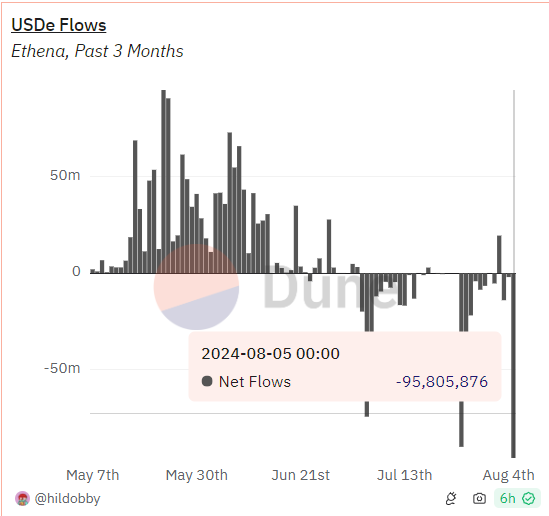
Regarding Ethena, its stablecoin USDe saw a record outflow of $95.8 million yesterday, with total supply declining from a peak of 3.6 billion to around 3.1 billion. Due to Ethena’s mechanism requiring high long positions, falling markets and potential collateral liquidations prompted users to manage risk by redeeming their tokens.
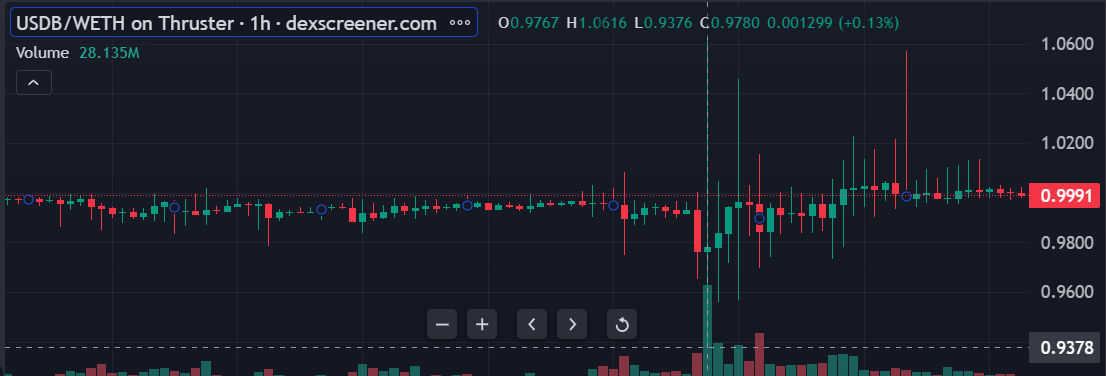
Additionally, Blast’s native stablecoin USDB briefly depegged to a low of $0.937 yesterday. Because Blast’s stablecoin ecosystem is relatively closed and early incentives for USDB were substantial, capital outflows during market swings had an amplified impact. USDB has since largely re-anchored.
Lending Protocols
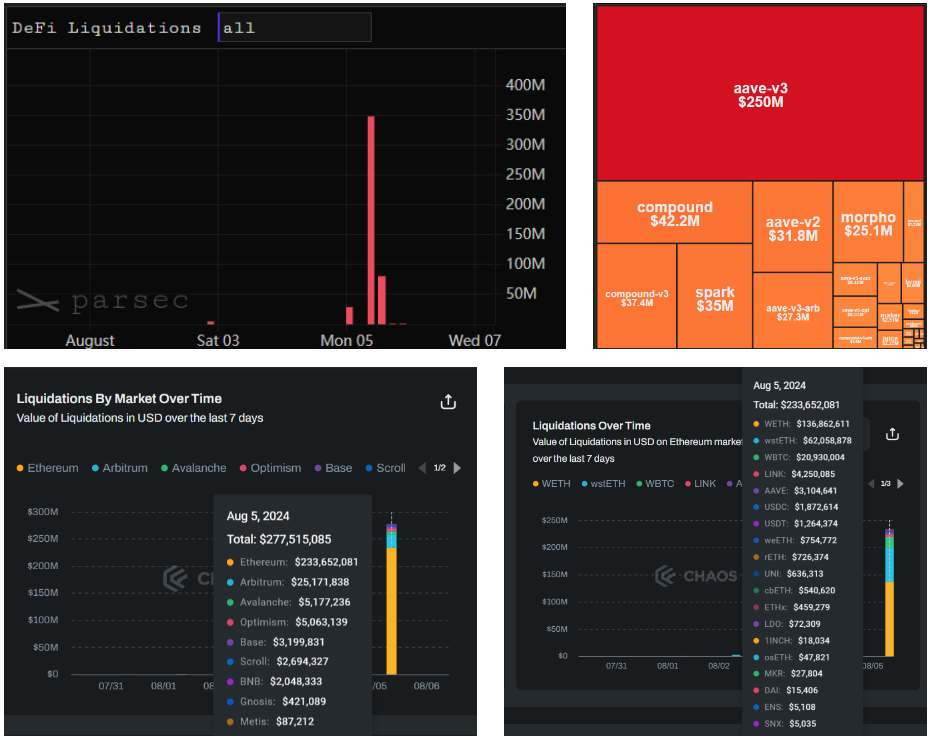
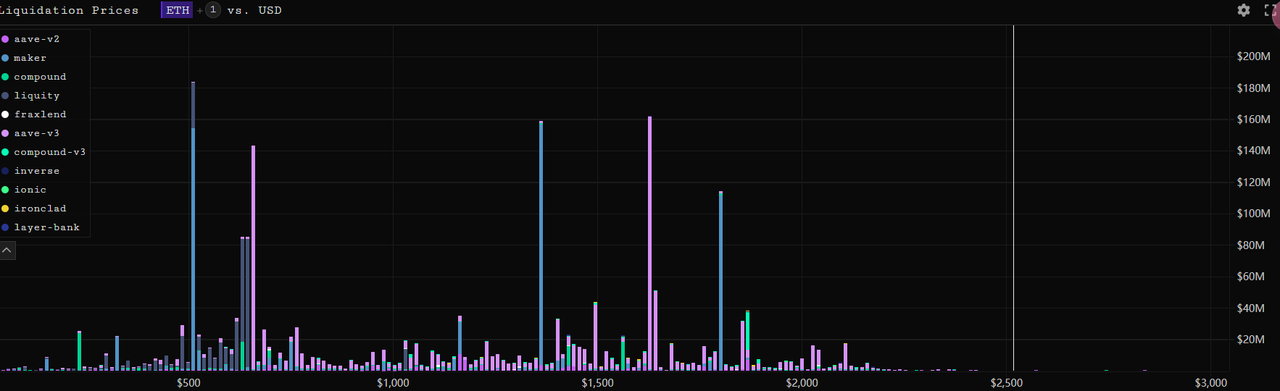
In terms of liquidations, August 5 marked the most severe day, with total liquidations exceeding $350 million. By protocol distribution, Aave V3 suffered the largest amount at $250 million, followed by Compound with $79.6 million in liquidations. Within Aave V3, liquidations were concentrated in major Ethereum assets, led by WETH, wstETH, and WBTC.
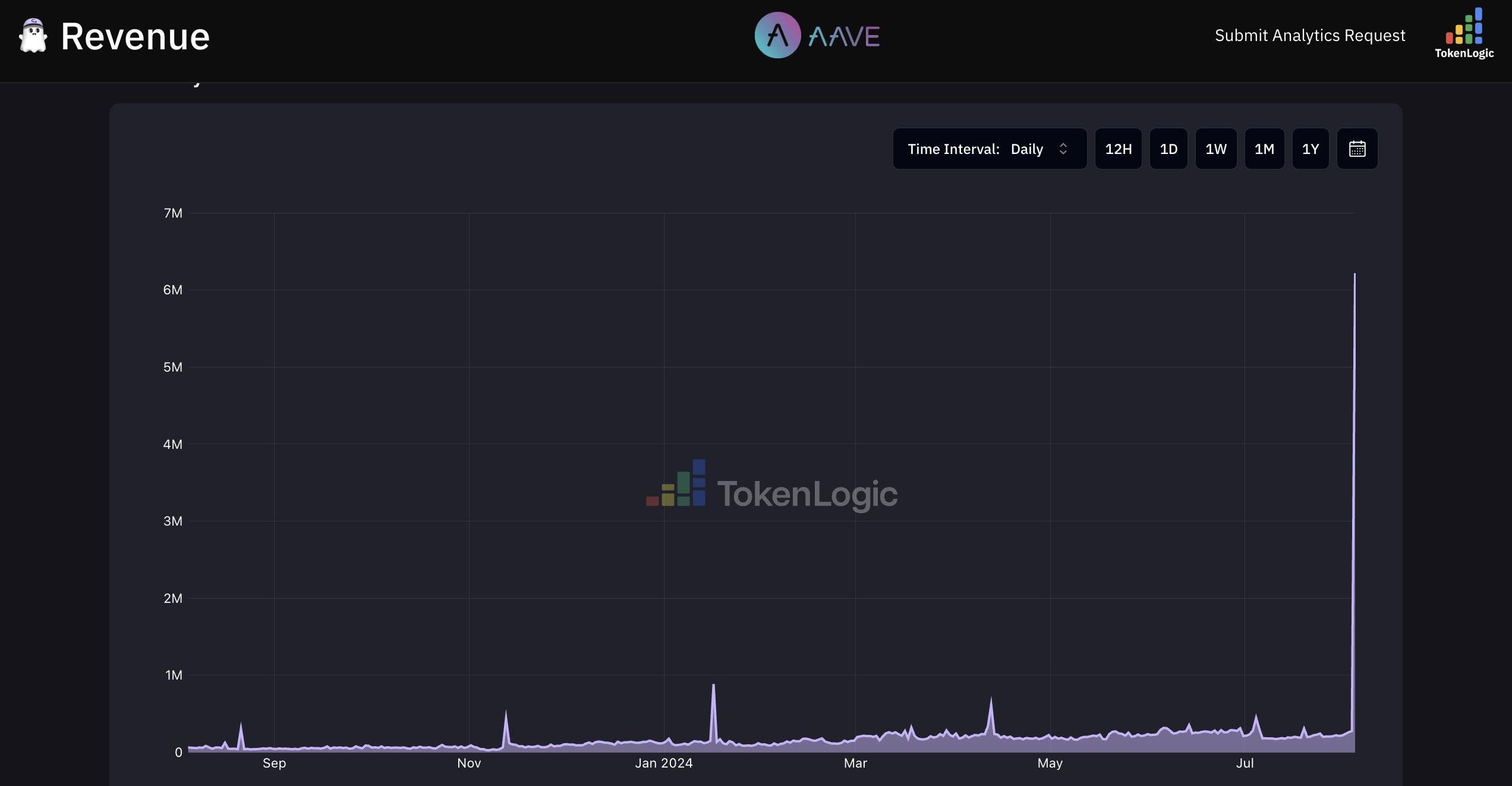
During this market volatility, Aave also generated over $6 million in revenue.
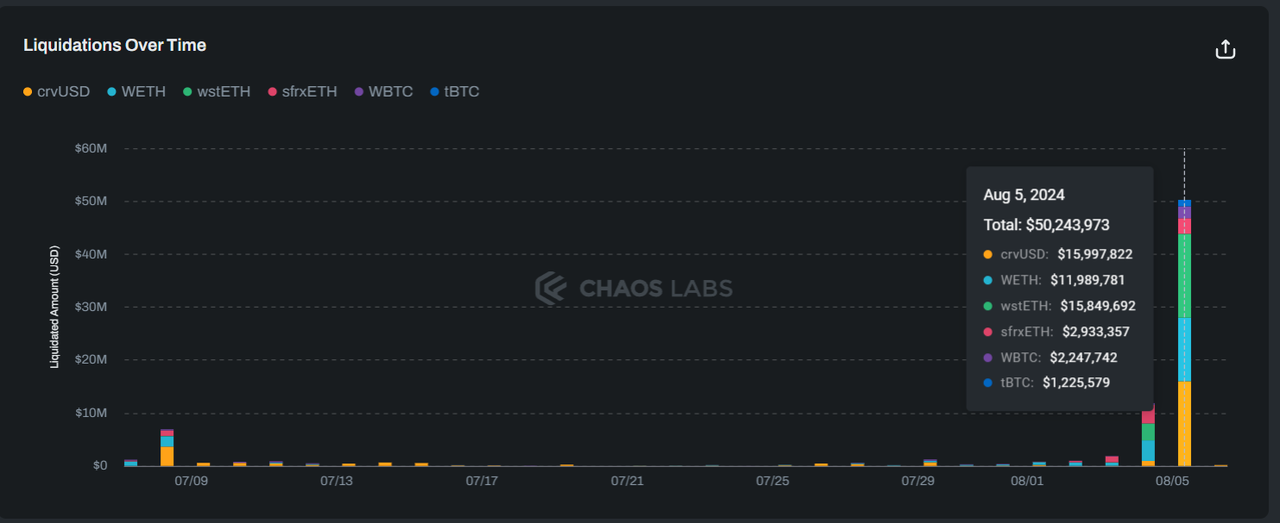
After the wave of liquidations, overall on-chain health improved, with average liquidation thresholds now below $2,000. However, due to their design, some protocols are prone to bad debt during sharp moves—Aave V3 incurred approximately $350,000 in bad debt over the past seven days. In contrast, Curve Llamalend avoided most forced liquidations thanks to its soft-liquidation mechanism, which handled $50.24 million in soft liquidations on August 5 alone.
Overall, lending protocols performed reasonably well under pressure.
Decentralized Exchanges (DEXs)
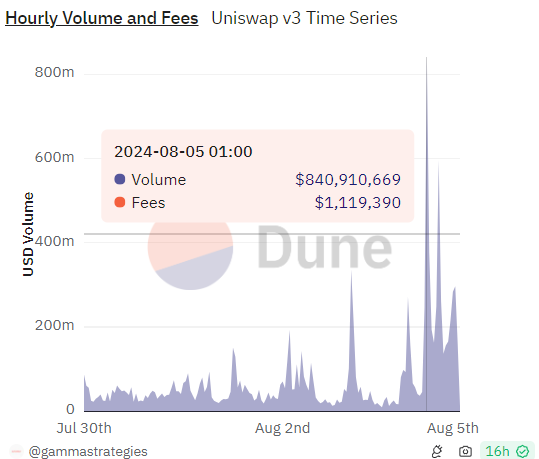
On Uniswap V3, trading volume peaked at $840 million on August 5, generating $1.119 million in fees for liquidity providers.
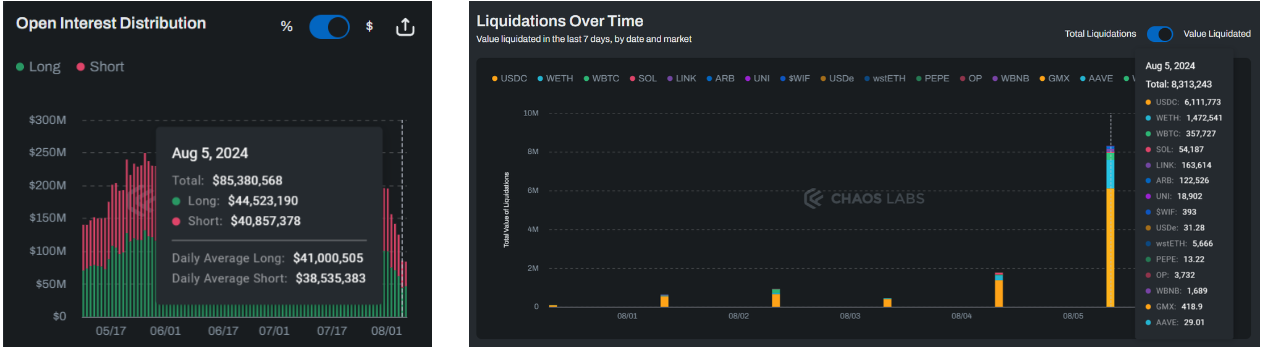
As for GMX, open positions dropped by about 30% compared to the previous day on August 5, with $8.3 million in assets liquidated, primarily denominated in USDC.
Restaking
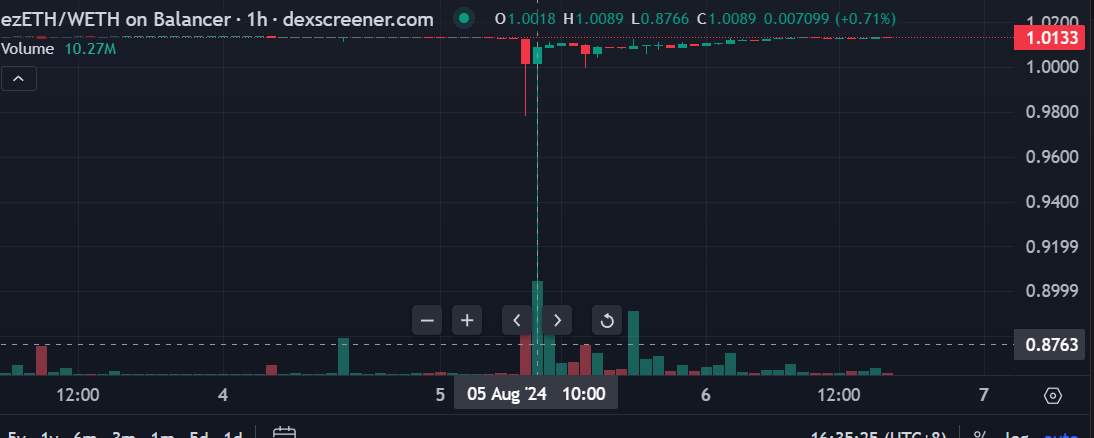
As one of Ethereum’s core asset categories today, restaked assets also saw notable outflows during market volatility. For example, Renzo’s staked token ezETH temporarily depegged to as low as 0.876 WETH.
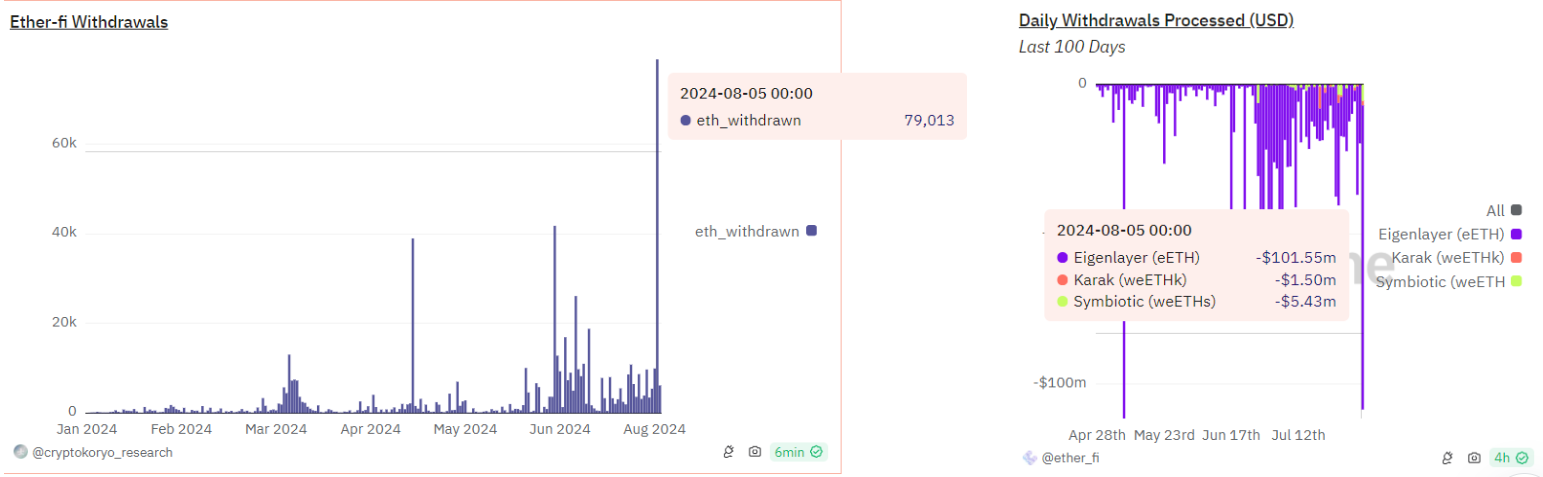
In terms of protocol withdrawals, ether.fi saw 79,013 ETH withdrawn on August 5—worth over $100 million—with most attributed to eETH redemptions via EigenLayer. Thanks to more than 77,000 ETH in liquidity and a DeFi utilization rate above 73%, the protocol faces no systemic run risk.
Overall, Lido’s stETH withdrawal queue did not see significant growth, and major liquid staking tokens (LSTs) remained stable. Therefore, the restaking ecosystem currently shows no signs of systemic risk.
Join TechFlow official community to stay tuned
Telegram:https://t.me/TechFlowDaily
X (Twitter):https://x.com/TechFlowPost
X (Twitter) EN:https://x.com/BlockFlow_News
 Foresight News





