19 Bitcoin ETFs and Their Fees, Promotions, and Holdings
TechFlow Selected TechFlow Selected
19 Bitcoin ETFs and Their Fees, Promotions, and Holdings
Are there custody risks associated with spot Bitcoin ETFs?
 Navigating Web3 tides with focused insights
Author: Sam Taube
Translation: Baic Blockchain
On Wednesday, January 10, 2024, the U.S. Securities and Exchange Commission (SEC) approved the first batch of spot Bitcoin ETFs, including those from Fidelity, BlackRock, and Invesco. A total of 11 spot Bitcoin ETFs were approved, with 10 beginning trading on Thursday, January 11.
1. What Is a Spot Bitcoin ETF?
A spot Bitcoin ETF is an exchange-traded fund—a highly liquid fund whose price fluctuates throughout the trading day like a stock. This fund directly tracks the price of Bitcoin, primarily by holding large amounts of Bitcoin itself.
This is similar to a spot gold ETF, which holds physical gold on behalf of its shareholders.
But wait—weren't there already Bitcoin ETFs in the market? Yes and no. There have been cryptocurrency-related ETFs and trusts in the market, but prior to January 2024, there had never been a spot Bitcoin ETF. These recently approved ETFs are the first crypto funds to trade on major exchanges and directly hold Bitcoin.
2. Top 11 Spot Bitcoin ETFs Ranked by Fees
Below is a list of the approved ETFs and their fees, ranked from lowest to highest:
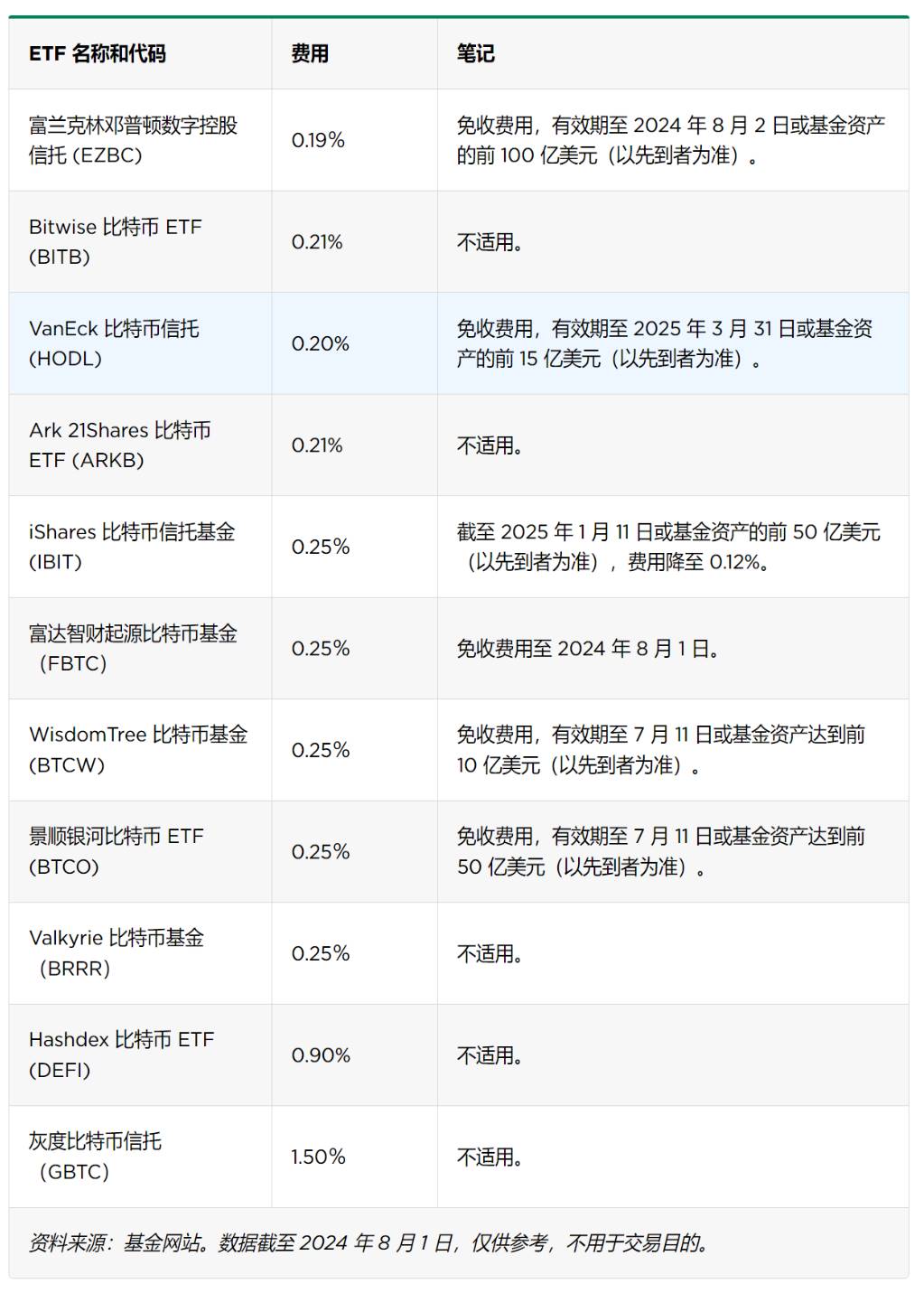
It's important to note that while spot Bitcoin ETFs aim to track the price of Bitcoin directly by holding Bitcoin, they do not guarantee returns identical to those of the cryptocurrency itself.
3. What Is a Bitcoin Strategy ETF?
Bitcoin strategy ETFs attempt to track the price of Bitcoin indirectly. Many such ETFs began trading before the approval of the first spot Bitcoin ETFs and continue to trade today.
Some funds invest in Bitcoin futures, while others invest in Bitcoin mining stocks. Due to the indirect nature of these investments, their returns are particularly prone to deviating from Bitcoin’s actual performance.
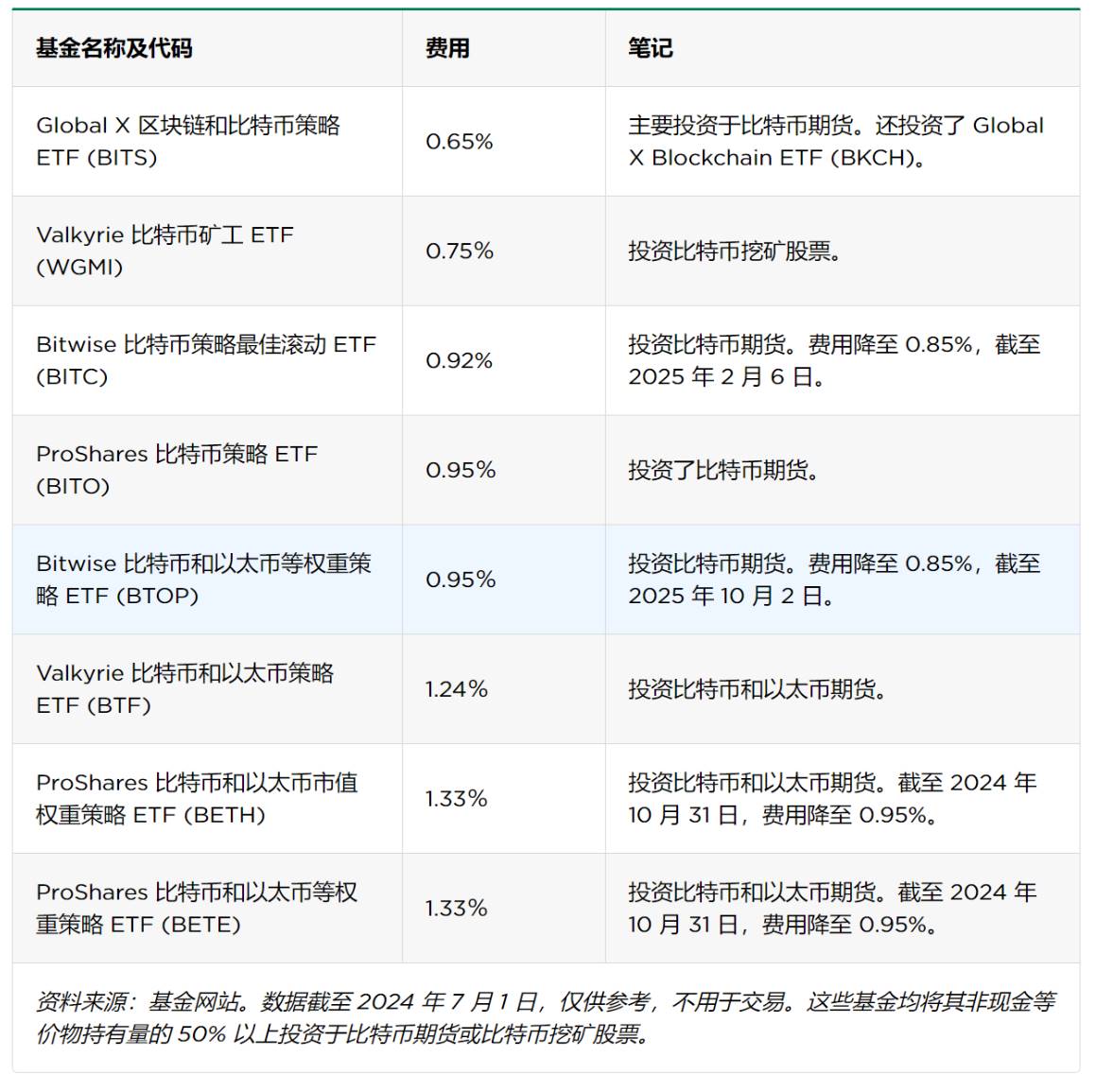
Top 8 Bitcoin Strategy ETFs Ranked by Fees
Below is a list of Bitcoin strategy ETFs and their fees, ranked from lowest to highest:
4. The Bitcoin ETF Price War
In January, ten different potential issuers of spot Bitcoin ETFs filed forms with the SEC disclosing the fees they intended to charge. Some launched new funds, while others converted existing Bitcoin strategy ETFs into spot Bitcoin ETFs.
The surge of SEC filings—continuing right up until hours before the SEC’s approval announcement, and potentially ongoing—reflects an ongoing price war among issuers. Many Bitcoin ETFs, including both spot and strategy varieties, are significantly cutting fees and offering time-limited fee waivers.
5. Do Spot Bitcoin ETFs Have Custody Risk?
Most spot Bitcoin ETFs rely on third-party custodians to physically store their Bitcoin holdings—similar to how spot gold ETFs typically keep their physical gold in vaults managed by third-party custodians.
Of the 10 spot Bitcoin ETFs currently trading, eight use Coinbase (COIN) as their Bitcoin custodian. The only exceptions are the Fidelity Wise Origin Bitcoin Fund (FBTC), which uses Fidelity itself as custodian, and the VanEck Bitcoin Trust (HODL), which uses Gemini.
Coinbase’s dominance in Bitcoin ETF custody has raised concerns about custody risk. If Coinbase were to face serious financial difficulties in the future (for example, due to a cyberattack, government penalties, or declining revenue), would the Bitcoin held in these ETFs remain safe?
If Coinbase were to go bankrupt, ETFs and investors could recover their assets through certain mechanisms, but these processes may not be immediate or automatic. Therefore, custody risk is a factor worth considering when investing in spot Bitcoin ETFs.
6. What Do These Approvals Mean for Bitcoin?
Peter Eberle, chief investment officer at California-based crypto investment firm Castle Funds, said in an email interview that the approvals will have a positive impact on Bitcoin’s price.
“Many investors currently lack access. For instance, individuals with 401(k)s, IRAs, and similar accounts cannot easily invest in Bitcoin. These investors will now be able to allocate funds in the future. This will drive demand over the coming years,” Eberle said.
However, Eberle also cautioned that bullish sentiment might be overstated, as ETF approval does not necessarily guarantee billions of dollars in inflows on the first trading day.
“Expectations may be too optimistic to produce short-term impacts,” he said.
7. What Do These Approvals Mean for Other Crypto Investments?
“Crypto tokens are highly correlated. If BTC’s price moves significantly, other tokens will likely follow to some extent. This also makes ETH ETFs very likely, which could provide a significant boost to ETH,” said Eberle, using “BTC” to refer to Bitcoin and “ETH” to refer to Ethereum.
Eberle believes that ETF approvals will likely remain limited to Bitcoin and Ethereum for the foreseeable future.
“BTC and ETH ETFs appear to be the most likely candidates because BTC and ETH are already traded as commodities on the Chicago Mercantile Exchange (CME),” he said, referring to the futures exchange. “Other tokens face higher hurdles, as the SEC still views many tokens as unregistered securities.”
Join TechFlow official community to stay tuned
Telegram:https://t.me/TechFlowDaily
X (Twitter):https://x.com/TechFlowPost
X (Twitter) EN:https://x.com/BlockFlow_News
 @NerdWallet