








Trump: Never sell this asset, it will surpass gold
TechFlow Selected TechFlow Selected
Trump: Never sell this asset, it will surpass gold
From "an internet scam" to "a lever for political lobbying," what has enabled Bitcoin to rise over the past decade?
 Navigating Web3 tides with focused insights
Author: Viee, Core Contributor at Biteye
Editor: Crush, Core Contributor at Biteye
"Never sell your Bitcoin"—these words from Trump during his speech at the Bitcoin 2024 conference in Nashville this weekend delivered the strongest emotional boost to the crypto community in recent times.
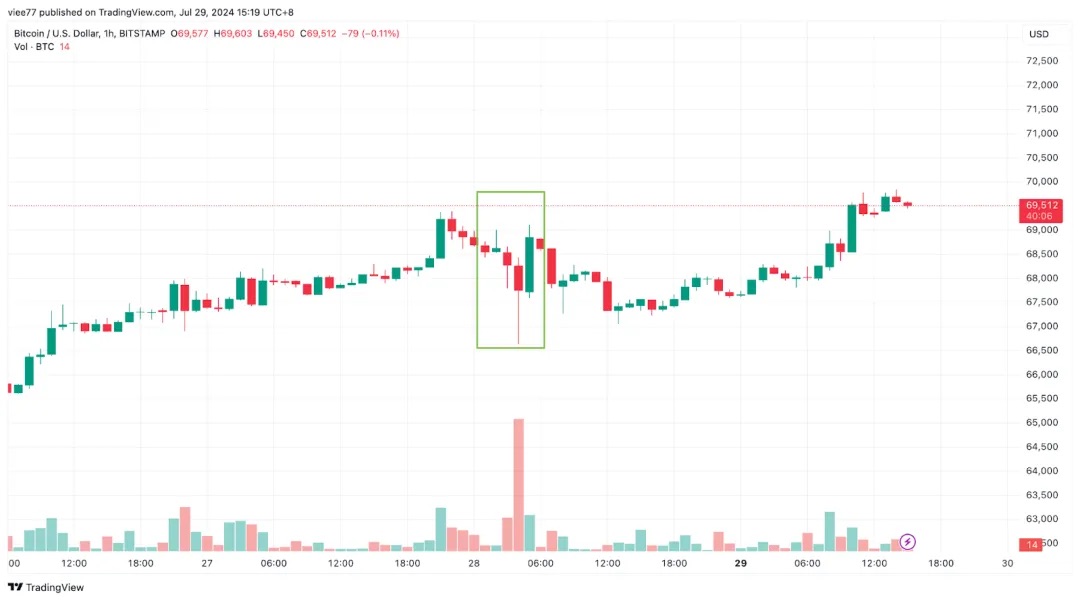
During Trump’s address, Bitcoin made a V-shaped move—initially dipping below $67,000 before surging back as he concluded by announcing plans to list Bitcoin as a strategic reserve asset, ultimately breaking above $69,000 and recovering all losses.
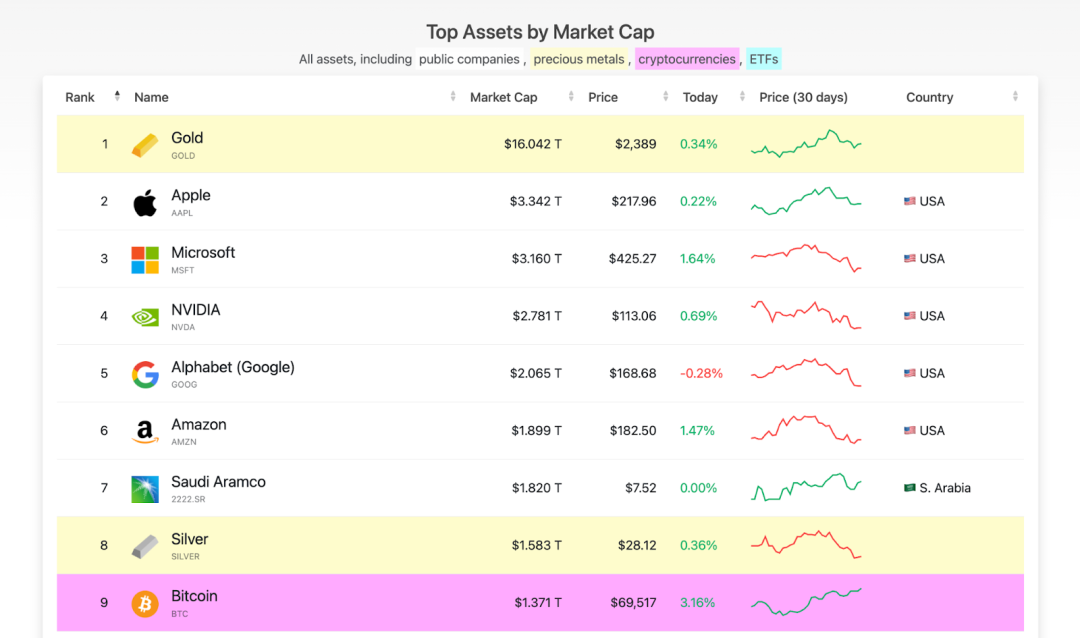
Previously, during his presidency, Trump harshly criticized cryptocurrencies, calling them a "scam." Now, however, he boldly declared at the Bitcoin conference that “Bitcoin has become the ninth-largest asset by market cap globally, soon surpassing silver and eventually gold.”
Such a dramatic shift shows that cryptocurrency users are emerging as an increasingly influential political force.
From being labeled a “fraud on the internet” to becoming a lever for lobbying politicians—after ten years, what exactly enabled Bitcoin’s remarkable turnaround?
01 Gold Steps Back, Bitcoin Steps Forward: Value Storage for a New Era
Trump isn’t alone. Mike Novogratz, CEO of asset management firm Galaxy Digital, has also publicly stated, “Although Bitcoin’s current market cap is still less than one-tenth of gold’s, it is rising fast and will surely surpass gold—and not too far off.”
Michael Saylor, CEO of MicroStrategy, shares similar views, believing that “digital gold” will replace physical gold by the end of this century.
Have you ever wondered why so many global thought leaders openly express faith in Bitcoin? Is it fantasy—or grounded in logic?
First, understand why Bitcoin can be compared to gold:
- Scarcity. The total supply of Bitcoin is capped at 21 million coins, with full mining expected by 2140. This fixed supply gives Bitcoin scarcity comparable to gold.
- Inflation resistance. As “digital gold,” Bitcoin is considered an effective hedge against inflation. Though only around a decade old and tested primarily during the post-COVID inflation surge, its unique algorithm and decentralized network grant it strong anti-inflation properties. A JPMorgan study shows institutional investors are increasingly favoring Bitcoin over gold as a safe-haven asset.
- Intrinsic value. Gold derives value from widespread use in luxury goods and electronics. Bitcoin's value stems from its innovation in monetary systems—its cryptography and distributed network enable financial inclusion for billions unbanked globally.
Given both assets are popular, what makes Bitcoin truly superior to gold?
The answer lies in return performance and supply control. Over the past decade, Bitcoin has delivered nearly 120% annual returns, while gold returned just 2%. Unlike gold, Bitcoin has a hard-coded supply cap, guaranteeing inherent scarcity.
Gold has long symbolized wealth preservation. Yet after decades of inflation ended in the 1970s, its performance began to fade.
From 1980 to the end of 2023, gold’s inflation-adjusted total return was -4%. Over the last decade, its annual return averaged only 2%.
Moreover, gold’s supply is unpredictable due to ongoing mining and new discoveries. Historically, the U.S. even seized private gold holdings via Executive Order 6102—an example of government vulnerability.
Bitcoin, however, stands out with unmatched advantages. As the first cryptocurrency, it enforces strict supply limits—fixed at 21 million coins—unchangeable by anyone, ensuring true scarcity.
Over the past decade, Bitcoin achieved an astonishing 120% average annual return, dwarfing gold. Furthermore, secured by a global blockchain network, Bitcoin is immutable and non-confiscatable, offering unprecedented security for investors.
As markets mature, Bitcoin’s volatility continues to decline, creating more stable opportunities for long-term investors.
More importantly, Bitcoin grants holders genuine financial sovereignty, immune to currency manipulation and perfectly suited for the digital age.
Thus, Bitcoin emerges as the new era’s premier store of value!
02 Global Financial Shift: Bitcoin Moving Toward National Strategic Reserves
Recall Trump’s earlier mention of listing Bitcoin as a strategic reserve asset—this directly pushed Bitcoin’s price above $69,000.
He said: “If I am elected, my administration’s policy will be that the United States will retain 100% of all Bitcoin currently held or acquired in the future. We will keep 100%. I hope you do well. This will effectively form the core of a national strategic Bitcoin reserve.”
Though relatively cautious, this pledge undoubtedly highlights Bitcoin’s growing importance as a global financial asset. Trump also sharply criticized the Biden administration’s suppression of crypto, claiming such policies have harmed the U.S. economy.
In contrast to Trump’s restraint, independent presidential candidate Robert F. Kennedy Jr. presented a bolder vision.
He pledged that if elected, he would launch an ambitious Bitcoin reserve program—buying 550 BTC daily until reaching a stockpile of 4 million coins. Far more aggressive than Trump’s plan, this aims to establish Bitcoin as a strategic national asset.
Meanwhile, in Wyoming, Senator Cynthia Lummis is actively promoting a state-level Bitcoin reserve initiative. She plans to draft legislation requiring the government to build up to 1 million BTC over five years, using the holdings solely to reduce national debt over the following two decades.
This proposal further strengthens Bitcoin’s standing as a long-term financial asset.
These public statements have rapidly elevated Bitcoin into the spotlight of global finance and politics. We know governments can—and already do—hold Bitcoin as reserves. For instance, the U.S. federal government is among the largest holders, possessing nearly 210,000 BTC, about 1% of total supply.
In 2021, El Salvador adopted Bitcoin as legal tender, becoming the first country to anchor BTC as official currency. Switzerland has also passed legislation incorporating Bitcoin into its central bank reserves.
What does this actually mean?
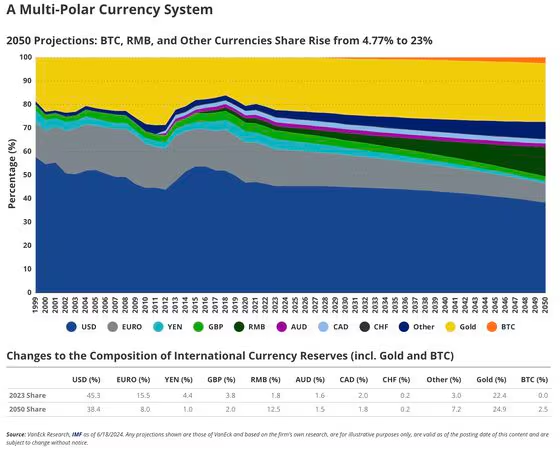
Consider this data point: According to a VanEck report, amid rising geopolitical tensions and mounting debt servicing costs straining existing systems, Bitcoin could become a key component of the international monetary system in coming decades.
The report forecasts Bitcoin’s status as a global reserve asset will gradually rise, potentially accounting for 2.5% of global foreign exchange reserves.
Clearly, Bitcoin is evolving from a nascent asset into a vital part of the global financial architecture. Whether in the U.S. or abroad, its status is rising swiftly.
Hong Kong is no exception.
Recently, Horace Fang, Co-Chairman of the Hong Kong Blockchain Association, suggested that the city’s government should leverage Bitcoin’s inflation-resistant qualities to diversify its Exchange Fund portfolio and reduce reliance on the U.S. dollar—by continuously purchasing and holding Bitcoin as part of its foreign reserves.
He believes Bitcoin not only has the potential to surpass gold but could significantly enhance Hong Kong’s influence in global financial markets.
Legislative Council member Junius Wu commented on Trump’s Bitcoin Summit speech, expressing support for this trend.
He noted that Bitcoin and Web3 represent pivotal developments in globalization, and under compliant frameworks, Bitcoin could eventually be included in official fiscal reserves.
He emphasized that Hong Kong must accelerate Web3 ecosystem development to attract top global talent and investment.
By actively exploring Bitcoin integration into its reserves, Hong Kong demonstrates how Bitcoin may become a cornerstone of the global financial system.
From the U.S. to Hong Kong, governments and financial institutions are increasingly recognizing Bitcoin’s unique strengths.
03 Conclusion
In an increasingly digital world where fiat currencies continue to devalue, Bitcoin—with its scarcity, high returns, and promise of financial sovereignty—is gradually replacing gold as the preferred store of value for a new generation.
In the coming years, this trend is likely to propel Bitcoin’s further rise in global markets.
If seeing Bitcoin drop from $60,000 to $50,000 keeps you up at night, here’s a horror story: If Bitcoin reaches gold’s market cap, its price could soar from today’s $69,000 to nearly $600,000 per coin.
Then you might finally grasp the weight behind the phrase: “Never sell your Bitcoin.”
Join TechFlow official community to stay tuned
Telegram:https://t.me/TechFlowDaily
X (Twitter):https://x.com/TechFlowPost
X (Twitter) EN:https://x.com/BlockFlow_News
 @BiteyeCN









