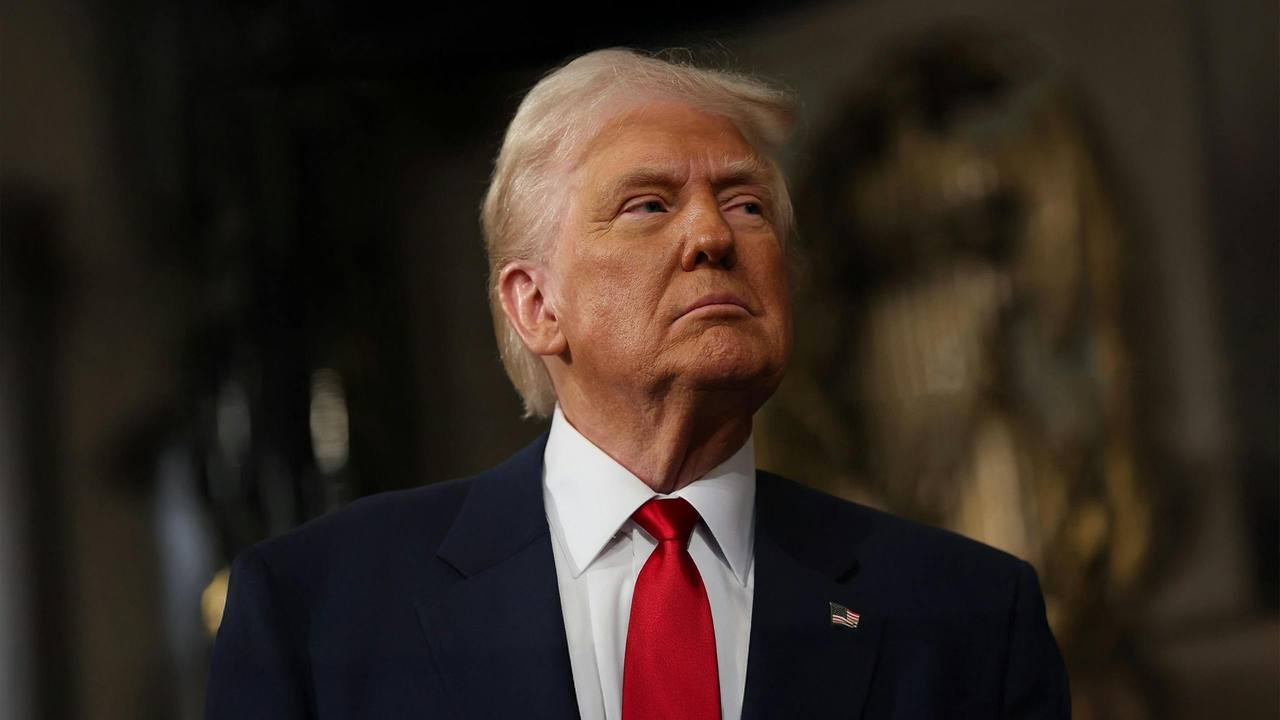
Trump becomes a believer in cryptocurrency—let's start with the NFTs he issued
TechFlow Selected TechFlow Selected
Trump becomes a believer in cryptocurrency—let's start with the NFTs he issued
After deciding to launch an NFT, Trump began spending time studying cryptocurrency.
 Navigating Web3 tides with focused insights
By Olga Kharif, Stephanie Lai, David Pan and Teresa Xie, Bloomberg
Translated by Luffy, Foresight News
This was meant to be a cryptocurrency conference, but it could easily have been mistaken for a Trump political rally.
At an event where vendors sold red hats emblazoned with “Make Bitcoin Great Again,” the crowd erupted in applause when Donald Trump vowed that, upon returning to the White House, he would fire U.S. Securities and Exchange Commission Chair Gary Gensler and appoint crypto-friendly regulators in his place.
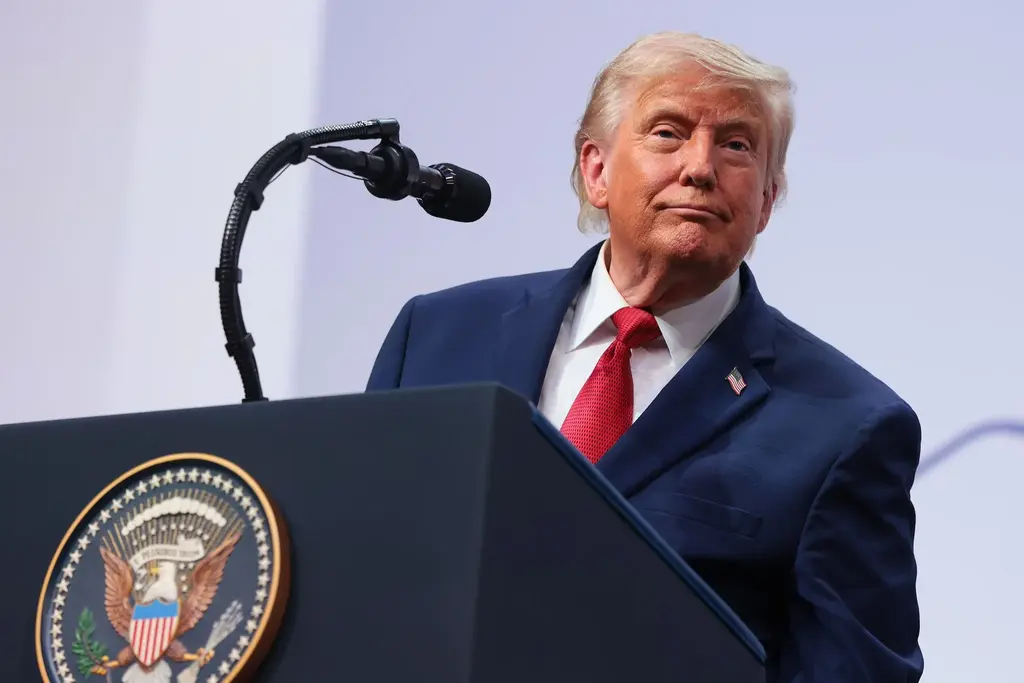
Speaking Saturday at the Bitcoin 2024 conference in Nashville, Trump said: "I promise the Bitcoin community that on the day I am sworn in, Joe Biden and Kamala Harris’s anti-crypto campaign will come to an end." He compared cryptocurrencies to the steel industry a century ago. "If Bitcoin is going To The Moon," he added, "I want America to be the nation leading this wave."
The speech marked a complete reversal of the former president's stance on crypto—once calling it a fraud-ridden fad during his presidency—and signaled the growing mainstream embrace of a movement once considered politically marginal.
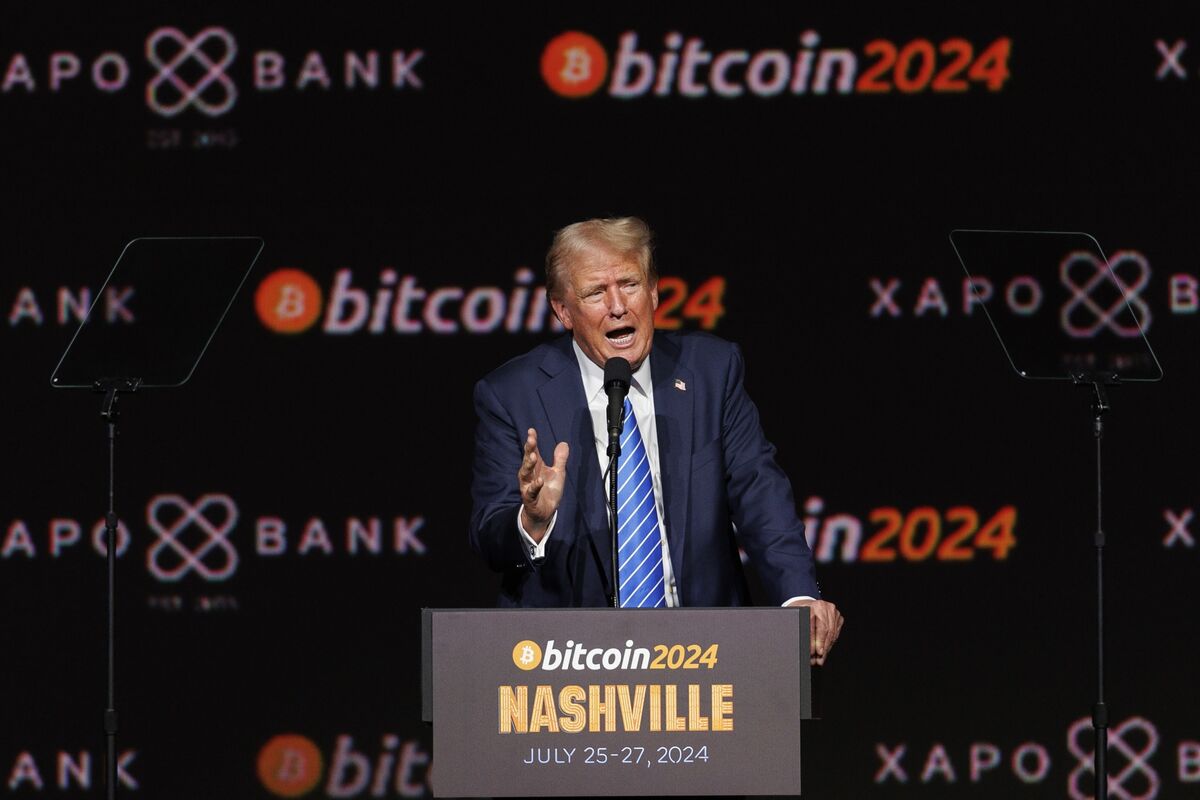
Donald Trump speaks at the Bitcoin 2024 conference in Nashville on July 27. Once a critic of crypto, his views shifted after launching NFTs. Photographer: Brett Carlsen/Bloomberg
Conventional wisdom sees this as classic Trump deal-making. In a tight presidential race, he needs votes and money—and is courting a group alienated by the Biden administration’s crackdown on the crypto industry.
If so, it’s already working. Dominated publicly by well-funded online warriors, the crypto ecosystem has provided Trump with tens of millions of dollars in campaign funding and a growing army of loyal supporters. This has earned him endorsements from Dogecoin enthusiast Elon Musk, billionaire Winklevoss twins, and venture capitalists Marc Andreessen and Ben Horowitz.
Yet beyond political calculation, other forces have helped transform Trump into a crypto believer. He has grown fond of Trump-themed non-fungible tokens (NFTs)—and the people buying them. Though long skeptical of crypto assets, calling promoters “nonsense artists” and blaming Bitcoin for enabling crime, Trump didn’t let that stop him from selling NFTs of himself. That became clear in May, when he improvised at a Mar-a-Lago gathering of supporters who had bought at least 47 digital trading cards—pop-art renderings of the former president dressed as a cowboy, superhero, and other characters—priced at $99 each.
Not long ago, Trump himself criticized crypto promoters as charlatans, accusing Bitcoin and other digital currencies of fueling crime. During his presidency, he dismissed their value as “made out of thin air.” But that changed once he and his wife began selling NFTs.
“Trump’s NFTs were really what first put him face-to-face with the crypto community,” said Kristin Smith, CEO of the Blockchain Association, a trade group that has served as a liaison between Trump’s campaign and the industry.
For an industry besieged by scandals and legal actions threatening its survival, Trump’s flip-flop on crypto may make him something of a superhero in the NFT world. For Trump, the issue offers another wedge against Democratic rivals—one tilted heavily in his favor given the sector’s enthusiasm for mobilizing voters and record-breaking fundraising. Pro-crypto Fairshake PAC and two allied super PACs have raised $170 million this cycle, despite pledging to focus on congressional races and donate to both parties.
The symbiotic relationship between Trump and the crypto world was evident in Nashville: as fans cheered the prospect of friendlier regulation, they opened their wallets for Trump. A seat at his crypto “roundtable” cost $844,600, while photo ops went for $60,000 per person or $100,000 for a couple. On Monday, Mike Belshe, CEO of crypto firm BitGo, is hosting a fundraiser in Palo Alto, California, to raise more.
While nearly every crypto celebrity now associates with Trump, some lesser-known figures played key roles in guiding him into the strange rabbit hole of crypto assets. One is Bill Zanker, founder of adult education company The Learning Annex and co-author of the 2007 book *Think Big and Kick Ass with Trump*. Zanker says he’s a longtime friend who once invited Trump to speak at Learning Annex events.
About two-and-a-half years ago, Zanker approached Trump with an idea: NFT artwork based on cartoon versions of the former president. Trump was interested but didn’t want to call them NFTs, Zanker recalled. “Call them digital trading cards on a computer,” Trump told him. “If you call them NFTs, nobody will understand.” Then came the collapse of SBF’s FTX exchange and a string of other bankruptcies in 2022, triggering a harsh Biden-era crackdown on crypto. During the “crypto winter” of December 2022, Zanker visited Mar-a-Lago and asked: “Mr. President, do you still want to do this?” According to Zanker, Trump replied: “Bill, you know, a lot of my friends told me not to do this. But I like it, so let’s go ahead.”
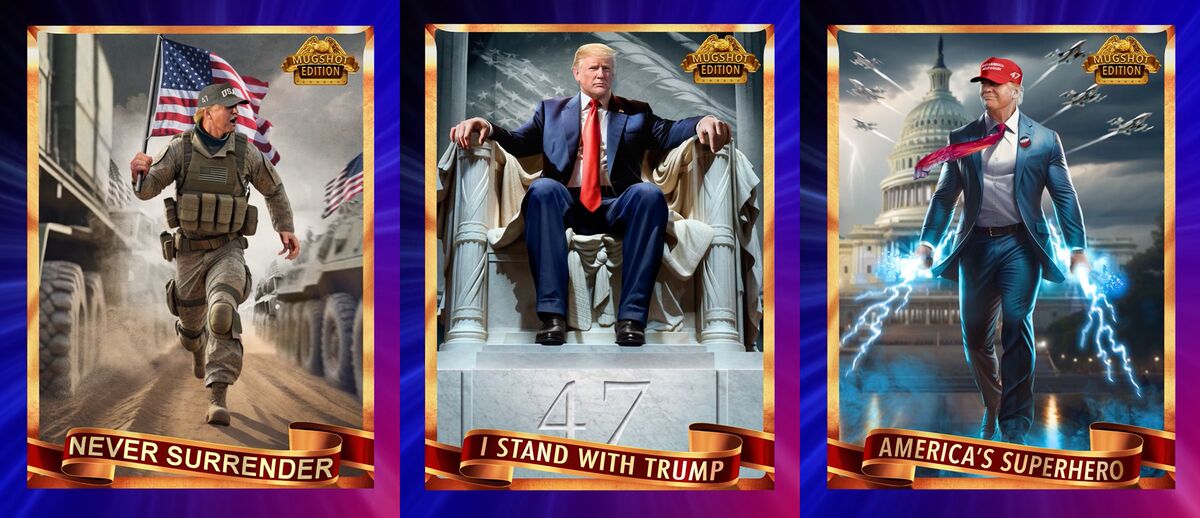
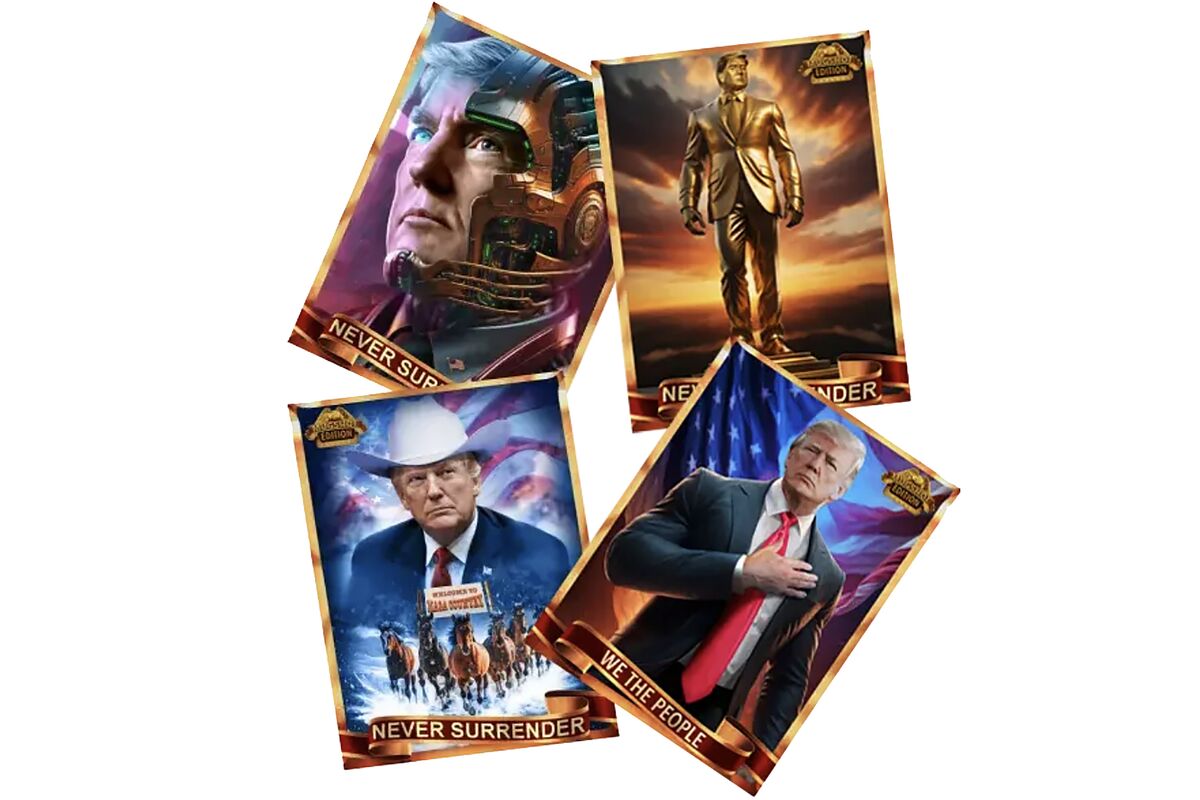
MugShot Edition digital cards released, priced at $99 each. Source: collecttrumpcards.com
Trump was far from passive in the project. “He approved every single image,” Zanker said. “He spent hours creating these. He loved it, called it pop art.” Zanker added that the project led Trump to spend time learning about crypto, asking questions that helped him grasp how the Ethereum blockchain works.
According to Zanker, the NFTs were a huge success, with each new series selling out within hours. Trump later hosted two events at Mar-a-Lago—one at the end of last year and another in May—to meet buyers. “He fell in love with these people: young, ambitious, unregulated,” Zanker said. When someone asked, “What do you think about crypto?” Trump responded, “I like it. I don’t want it all going overseas.” The crowd went wild.
At one point, talk turned to accepting campaign donations in cryptocurrency. Trump reportedly asked from the stage: “Zanker, should we accept crypto donations?” Zanker recalled saying yes. “And just like that, he became the crypto president.” So far, Trump’s campaign says it has raised over $4 million in crypto donations, plus millions more in contributions from industry backers. According to Zanker, the Trump trading card NFTs—nearly 200,000 across three series—have generated over $20 million in revenue for Trump and his partners, though he declined to say how it’s split. Trump’s campaign declined further comment.
After the NFT launch, industry support for Trump and his outreach to potential donors continued to grow.
The next big event was in June, held in the tea room at Mar-a-Lago, where Trump and guests snacked on cookies. It drew a small group of executives from crypto mining firms.
“We discussed how to get Bitcoin users involved in the political process,” said Brian Morgenstern, public policy lead at Riot Platforms Inc., who previously worked at the White House and Treasury Department during Trump’s administration. “If you don’t engage, if you don’t talk to candidates, you can’t change policy.”
Trump clearly engaged. At the mining meeting, he became an enthusiastic cheerleader for crypto, posting on his Truth Social account that he wants all remaining Bitcoin “MADE IN AMERICA!!!” He also suggested Bitcoin mining might be “our last line of defense” against CBDCs (central bank digital currencies). Critics warn CBDCs could become surveillance tools, giving governments easier tracking of financial flows—and stiff competition to dollar-pegged stablecoins.
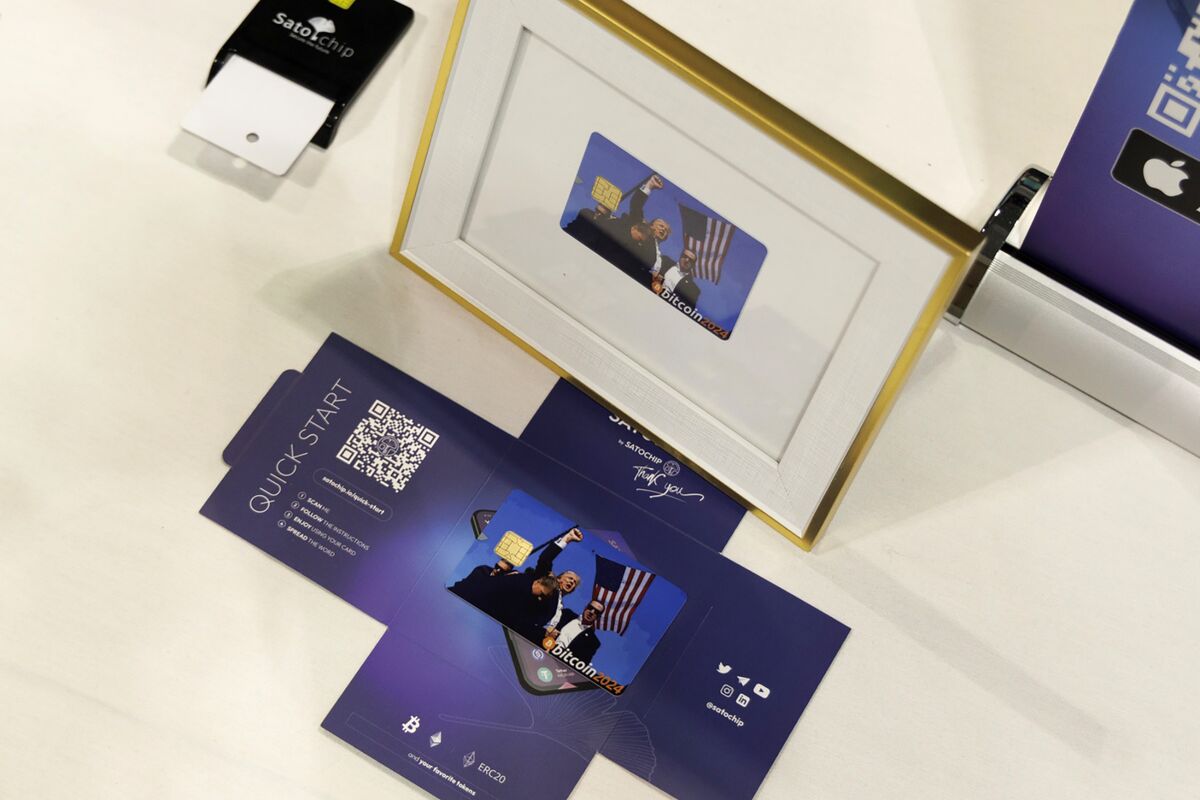
Satochip crypto wallet displayed at the Bitcoin 2024 conference, featuring a photo of Trump taken after he was shot. Photographer: Brett Carlsen/Bloomberg
Trump’s circle of crypto advisors has expanded. Billionaire Elon Musk frequently weighs in on industry matters. Vivek Ramaswamy, Trump’s former rival in the Republican primary, said he has discussed potential crypto policies with Trump.
On Capitol Hill, Trump has found allies among Republican lawmakers. Senator Bill Hagerty of Tennessee attended both the June mining meeting at Mar-a-Lago and the Nashville Bitcoin conference, emerging as a de facto spokesperson for Trump on crypto issues.
Earlier this month, the crypto industry took center stage at the Republican National Convention in Milwaukee. Representative Bryan Steil of Wisconsin participated in a blockchain panel discussion on crypto, while Hagerty advocated for the sector during a panel on manufacturing.
“We must rein in the bureaucrats in Washington, D.C., re-establish boundaries,” Hagerty said. “We’ve seen agencies overreach their authority, creating uncertainty—which has a very negative impact on capital investment.”
Outside the secured perimeter of the Republican National Committee, supporters handed out paper fans promoting MAGA memecoin, a crypto project that has recruited Trump ally Roger Stone as a partner. Trump has become a focal point for memecoin traders—memecoins being the least innovative yet most hyped and risky category of tokens.
According to CoinGecko, MAGA is the largest Trump-related memecoin, with a market cap exceeding $300 million. These tokens have no official link to Trump, but that hasn’t stopped them from gaining popularity. The Pump.fun memecoin platform noted that more than 2,000 Trump-related tokens were created in the aftermath of the July 13 assassination attempt alone.
Of course, there are political risks if another FTX-style collapse occurs—or even just a price drop sours market sentiment—given Trump’s close ties to this notoriously volatile asset class. Yet Hilary Allen, a professor focusing on financial law at American University Washington College of Law, said the greater risk may be that the crypto industry itself becomes ideologically aligned with the Republican Party.
“Given that crypto is itself such an ideologically charged investment, it could alienate some users,” she said. “It may increase appeal among Republican users, but on the other hand, could alienate Democratic ones.”
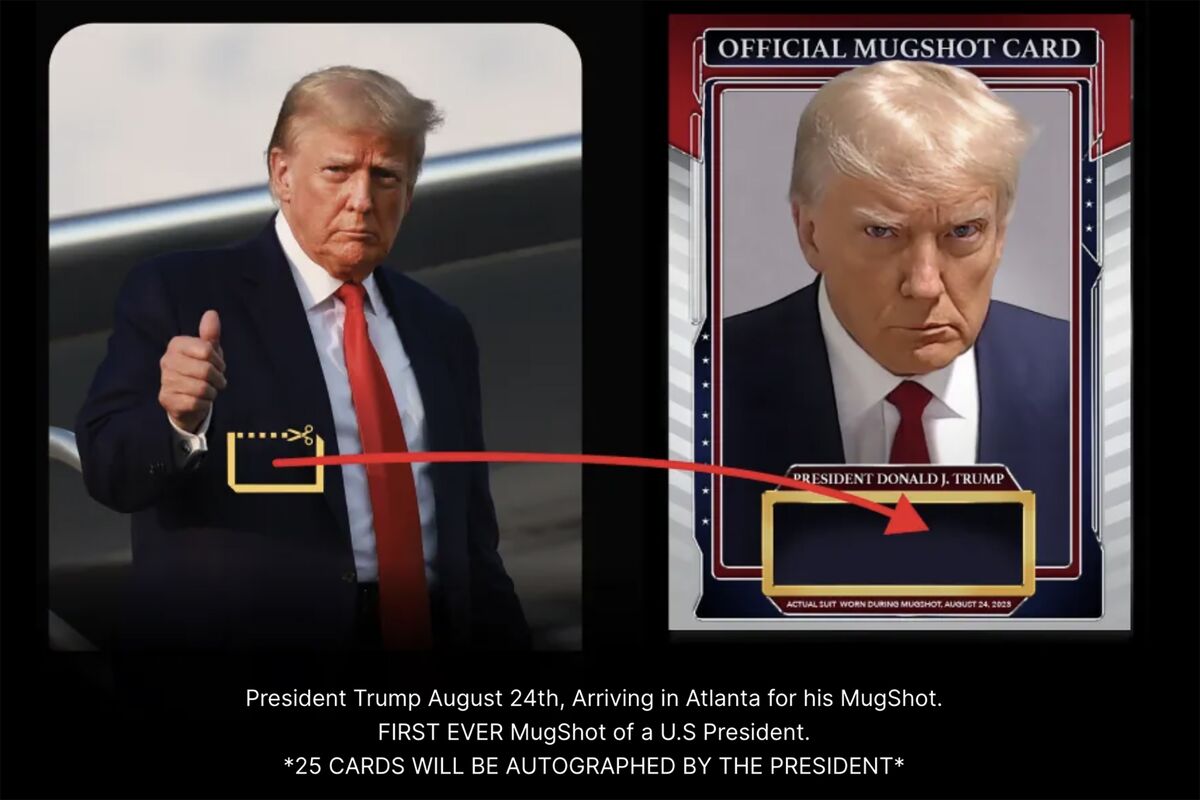
Trump trading card website advertises real-world benefits for NFT purchases, including a physical trading card embedded with fabric from the suit he wore during his arrest in Fulton County, Georgia, on August 24, 2023. Source: collecttrumpcards.com
Only time will tell whether Trump wins a second term and delivers the favorable regulatory environment the crypto industry desires. Current bets on Polymarket, a crypto-based platform allowing non-U.S. users to wager on political outcomes, give Trump a 57% chance of victory.
Friendly regulators may not be the only gift of a Trump victory.
In Nashville, Trump said he would order the government to stop selling crypto seized in criminal cases, instead using it as the foundation for a so-called strategic Bitcoin reserve. However, Bitcoin gave up gains made before the speech, as Trump did not confirm plans to direct the government to buy up to 1 million coins—a move his rival Robert F. Kennedy Jr. said Friday at the conference that Trump might announce.
Meanwhile, even amid a packed campaign schedule, Trump is planning his next steps in the crypto space.
A fourth Trump NFT series is in the works, with Zanker hoping for an August launch and promising it will be the “best NFT series ever,” bringing “a lot of surprises.”
“We met with him before the shooting to review the artwork,” Zanker said. “He looked at every single image.”
Join TechFlow official community to stay tuned
Telegram:https://t.me/TechFlowDaily
X (Twitter):https://x.com/TechFlowPost
X (Twitter) EN:https://x.com/BlockFlow_News
 @Bloomberg