








Market shifts to uncertain bullish: the tug-of-war between ETFs, political factors, and internal innovation
TechFlow Selected TechFlow Selected
Market shifts to uncertain bullish: the tug-of-war between ETFs, political factors, and internal innovation
Uncertainty is the fuel for growth.
 Navigating Web3 tides with focused insights
Author: IGNAS | DEFI RESEARCH
Translation: TechFlow
The market has shifted from dullness to uncertain bullishness. Since May, the crypto market has been flat.
Prices have stagnated, airdrops have disappointed, infrastructure projects feel exhausting (people no longer care about technical posts), and regular investors (not us, but casual buyers) are inactive. Crypto Twitter now discusses politics more than crypto.
The market remains uncertain, but this uncertainty leans more toward bullish than bearish. Let me explain.
External Uncertainty
First, Ethereum ETFs have finally launched, and data is starting to come in.
On day one, ETH ETF trading volume hit $1 billion, reaching 25% of BTC ETF volume. Most analysts expected ETH ETF volume between 10% and 20%, suggesting this is a bullish signal.
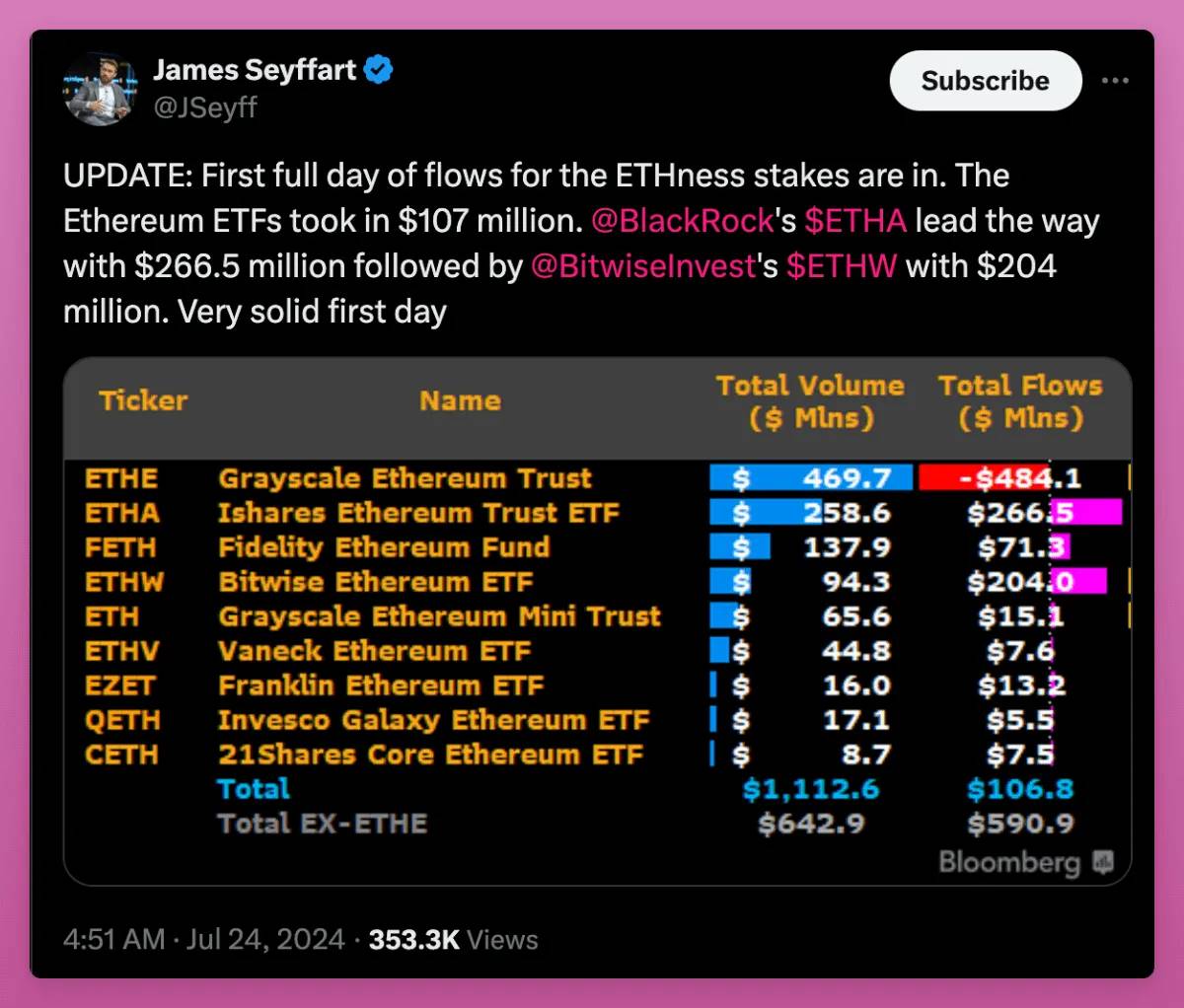
But will this trend continue? Will inflows exceed outflows from Grayscale?
This is currently the main uncertainty for ETH, causing price declines. But over time, this uncertainty will fade as Grayscale's ETH holdings diminish.
If we maintain this price level every day, that’s a bullish sign.
Next is the U.S. election. Will Trump win? Will he declare Bitcoin a reserve asset (not currency) at his Nashville conference? Is Kamala truly willing to shift the Democratic Party's stance on crypto?
Too much uncertainty.
Markets dislike uncertainty; they crave answers. Yet I believe the U.S. government will eventually shift from its negative stance on crypto—it’s a natural progression in technological development.

Tweet content:
- First they ignore you,
- Then they laugh at you,
- Then they fight you,
- Finally, you win. We're now at the "finally you win" stage—those who fought us for years now realize opposition isn’t the right path. They know it’s a losing battle and are seeking ways forward. When politicians go from never mentioning you to Congress passing bipartisan bills, and your former fiercest opponents try to engage more—that’s victory.
Just as I wrote about the cliché “first they ignore you… then you win,” I saw Adam post the same thing on Twitter. I fully agree. Governments gain little by opposing crypto but lose much. We will win.
It’s not just the U.S. Reports suggest China is also considering lifting its ban on crypto. While unconfirmed, this uncertainty itself is bullish.
Third, Mt. Gox creditors. Will they dump their BTC, hold it, or sell BTC to buy other crypto assets?
We don’t know yet. This uncertainty negatively impacts crypto prices, but eventually we’ll realize it doesn’t matter. Like Germany selling BTC, the Mt. Gox episode will pass, leaving behind years of feared sell pressure.
So what’s my view?
People often say markets are driven by fear and greed. But I believe fear is stronger than greed.
Loss aversion is a powerful force in investing, making fear a dominant driver over greed. The pain of losing money outweighs the excitement of gaining it, making us overly cautious. This fear leads to early selling or hesitancy to invest, even when good opportunities arise.
In markets, fear often drives decisions more than the allure of potential gains, leading to conservative and overly bearish reactions.
Over time, our fears subside and FOMO (fear of missing out) kicks in. Current external uncertainties are temporary. Grayscale will eventually burn through ETH, Mt. Gox creditors who want to sell will do so, and even if Trump loses and Democrats remain anti-crypto, we can still thrive—as we’ve done for years under such governments.
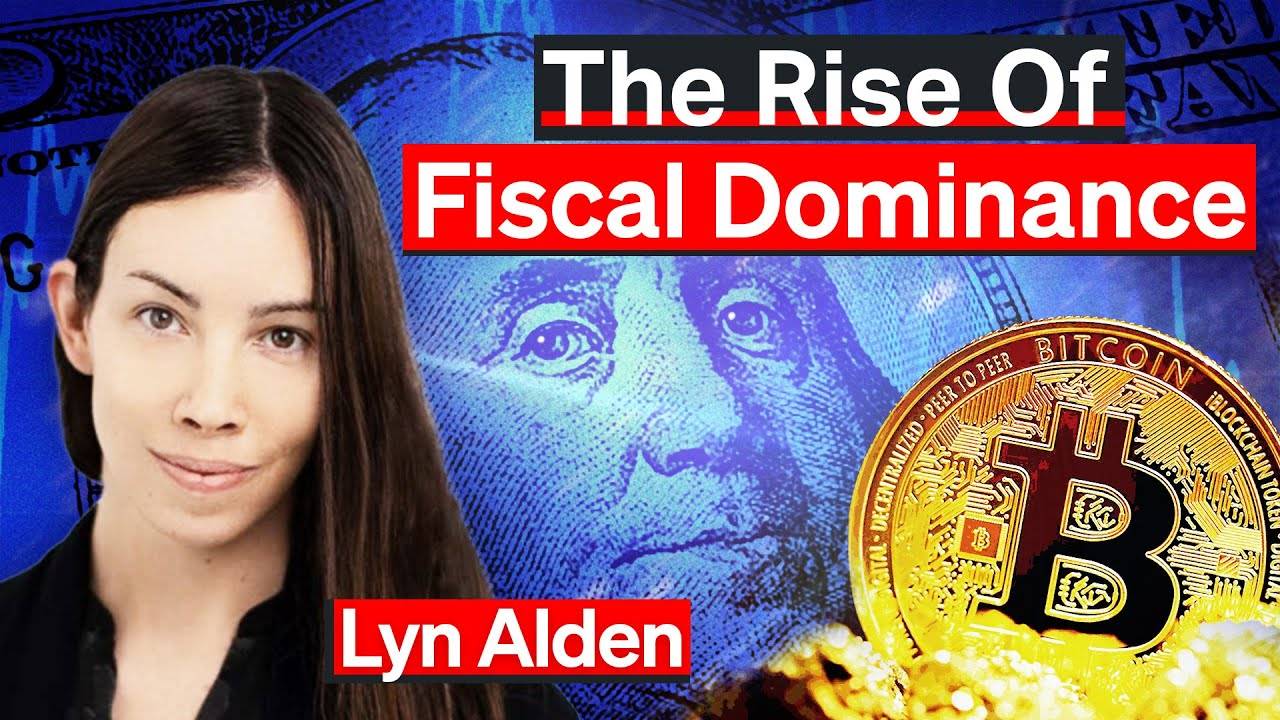
Still not convinced? On the Blockworks podcast, Lyn Alden predicted a classic liquidity cycle, expecting a boom in 2025. If the above positive events unfold, upside potential increases.
However, external uncertainty is only part of the bullish sentiment. Internally, crypto is finally seeing some interesting developments.
Internal Uncertainty
Internal uncertainty refers to decisions made by the local crypto community—developers, traders, and airdrop farmers. This bull run feels boring because it’s primarily driven by external factors like:
-
BTC/ETH ETFs
-
Government policy volatility
-
Potential rate cuts, etc.
-
We genuinely lack strong internal innovation to attract and retain retail investors. So far, only two internal factors have triggered FOMO in this cycle:
-
Memecoins
-
Airdrops
Airdrop farming reactivated old and new DeFi dApps, generating seemingly positive engagement metrics—but these are mostly fake, driven by speculators solely using dApps for airdrops.
Excitement around airdrops has cooled, evident in declining sentiment on X and falling lending platform rates as farmers borrow assets to maximize yields.
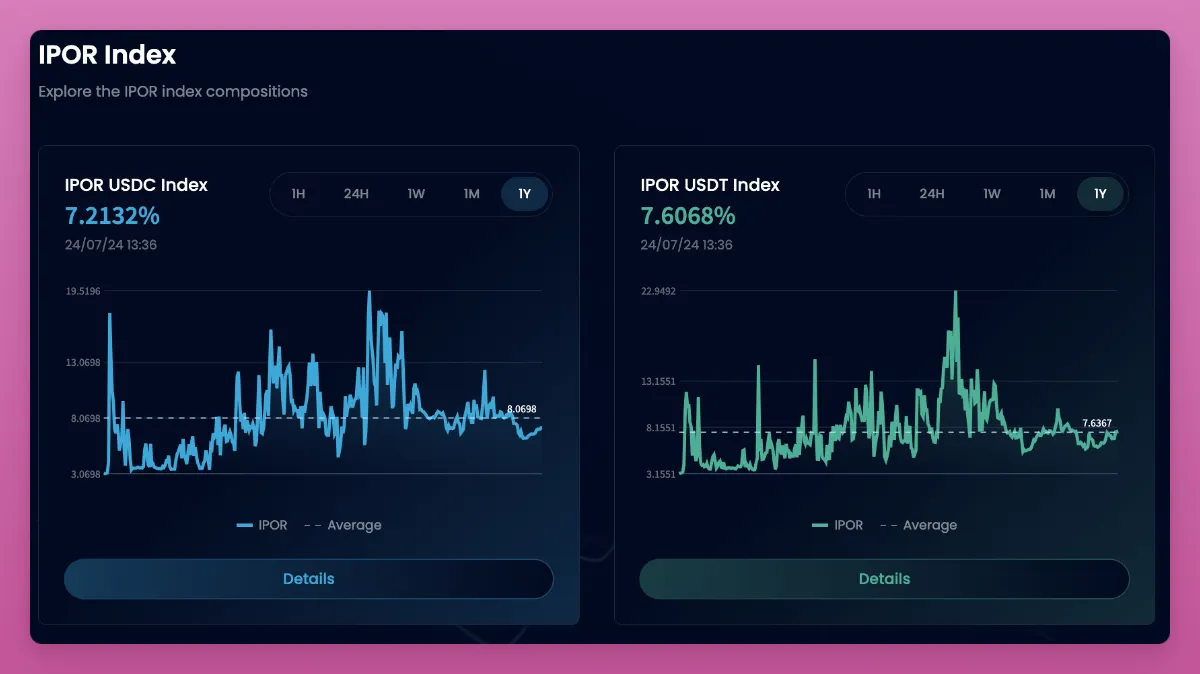
You can see stablecoin IPOR index dropped from 20% in March to 7%, though still higher than a year ago.
This isn’t news to anyone. The uncertainty lies in how we keep issuing tokens to the market and convincing people to buy them.
This troubles me most. Each cycle, we find new ways to issue tokens. Points-for-airdrops is just the latest trend, certainly not the last. Those who figure it out first get the highest ROI. I wrote about how it works before this bull run began.

Echoes of the Past: What Déjà Vu Markets Tell Us About the Next Bull Run.
I bet Friend Tech could revive the "fair launch" model via 100% airdrops, but I was wrong. Similarly, Nostra’s 100% unlock at launch and Ekubo’s 1/3 community airdrop (plus 1/3 sold over two months) yielded mixed results. Tokens eventually rose, but airdrops were small and market caps remain low.
We’ve also experimented with gamified points systems. I mentioned seven emerging trends in a previous blog post. Yet results remain mixed—$CLOUD’s airdrop disappointed me.
Brand “rebranding” token migrations also show promise. This happens when protocols adopt new brands and migrate tokens instead of simple v2/v3 upgrades. We’ll see how Fantom’s move to Sonic performs, but Connext to Everclear and Arweave’s new AO token alongside AR farming had mixed outcomes.
Right now, only memecoins seem to be performing well.
As the market turned bullish this week, memecoins became the top-performing sector. This means speculators are bullish but waiting for the right moment to enter.
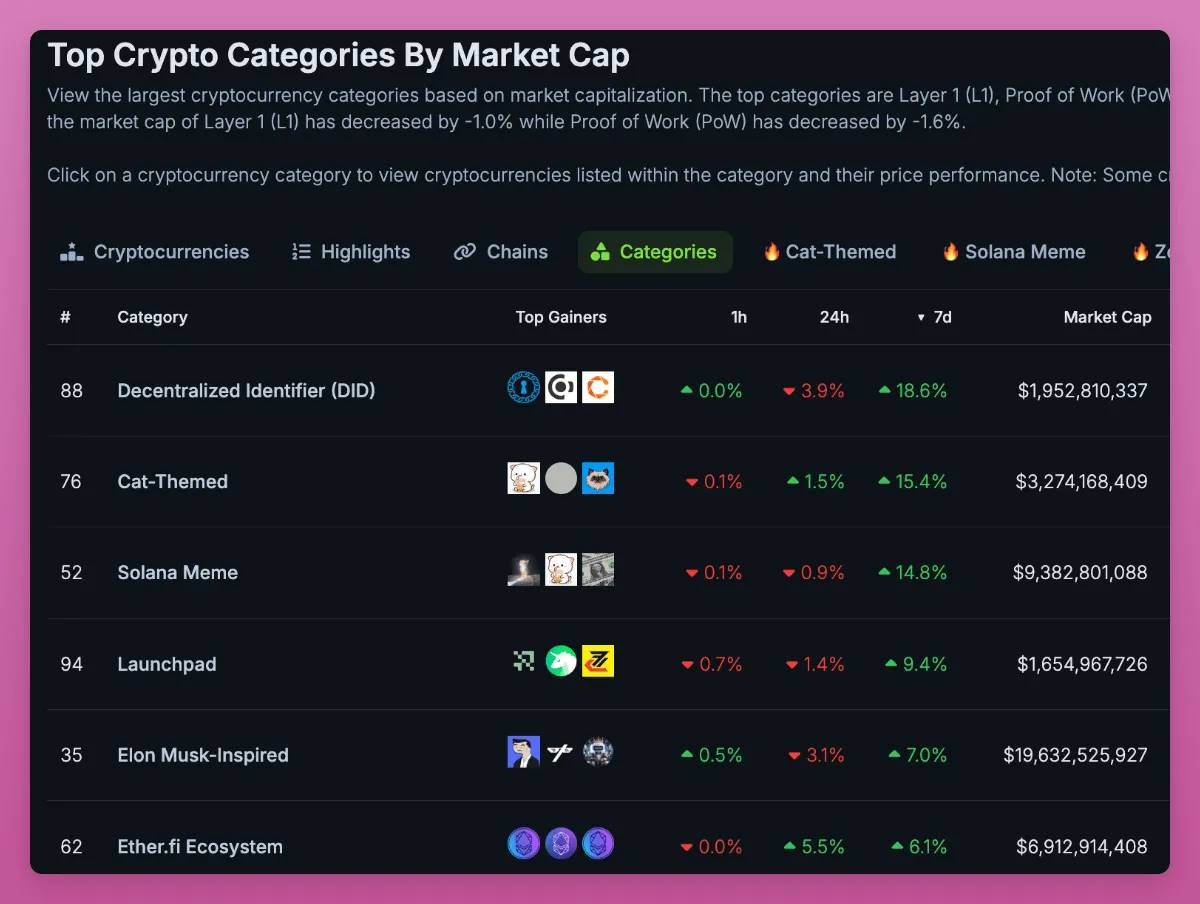
With nothing else rising, teams are desperate. So it’s no surprise Jupiter decided to partner with Irene to launch a new “experimental” memecoin.
In short, some crypto teams innovate, but most prefer safe paths (like deBridge) because nothing new is compelling enough—newly launched tokens sell off under unlocking pressure (though ZRO performed well).
Making money on memecoins is equally challenging, as thousands flood the market, most going straight to zero.
I believe this uncertainty around future token distribution is why DeFi tokens may perform well later in the cycle.
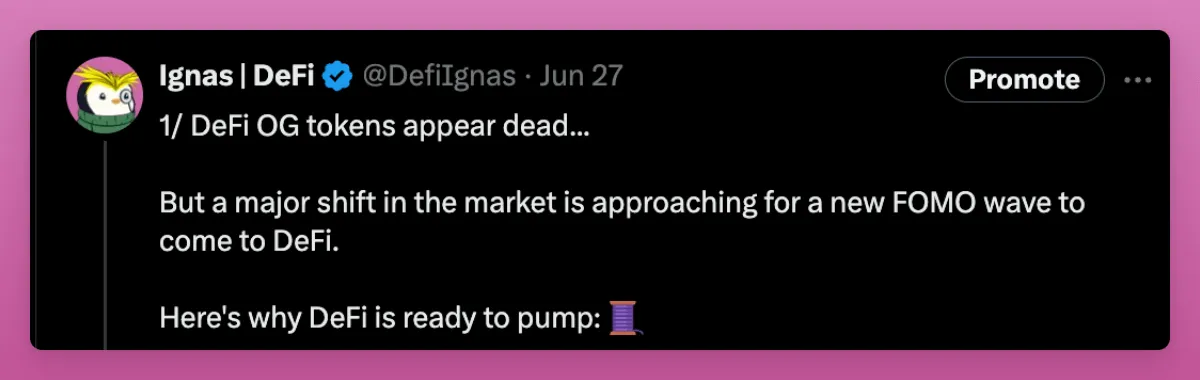
DeFi OG tokens like UNI, MKR, LDO, AAVE, and SNX have large circulating supplies, reducing risks of massive sell-offs.
With potential regulatory clarity, these tokens backed by solid business models and revenue generation could attract more capital. Especially when the market tires of memecoins and new tokens flood in, DeFi OGs offer an interesting hedge.
Currently, memecoins perform well because utility-bearing tokens are seen as “securities” by regulators, while memecoins lack utility and thus carry lower regulatory risk. Positive signals from governments could significantly shift crypto sentiment.
But everything remains uncertain.
Consumer Applications
Fatigue toward expensive infrastructure projects is real. While few get excited about new AI-powered zk Layer 2s like Zircuit, that’s actually a positive sign.
We’re finally recognizing the need to build consumer applications atop this infrastructure.
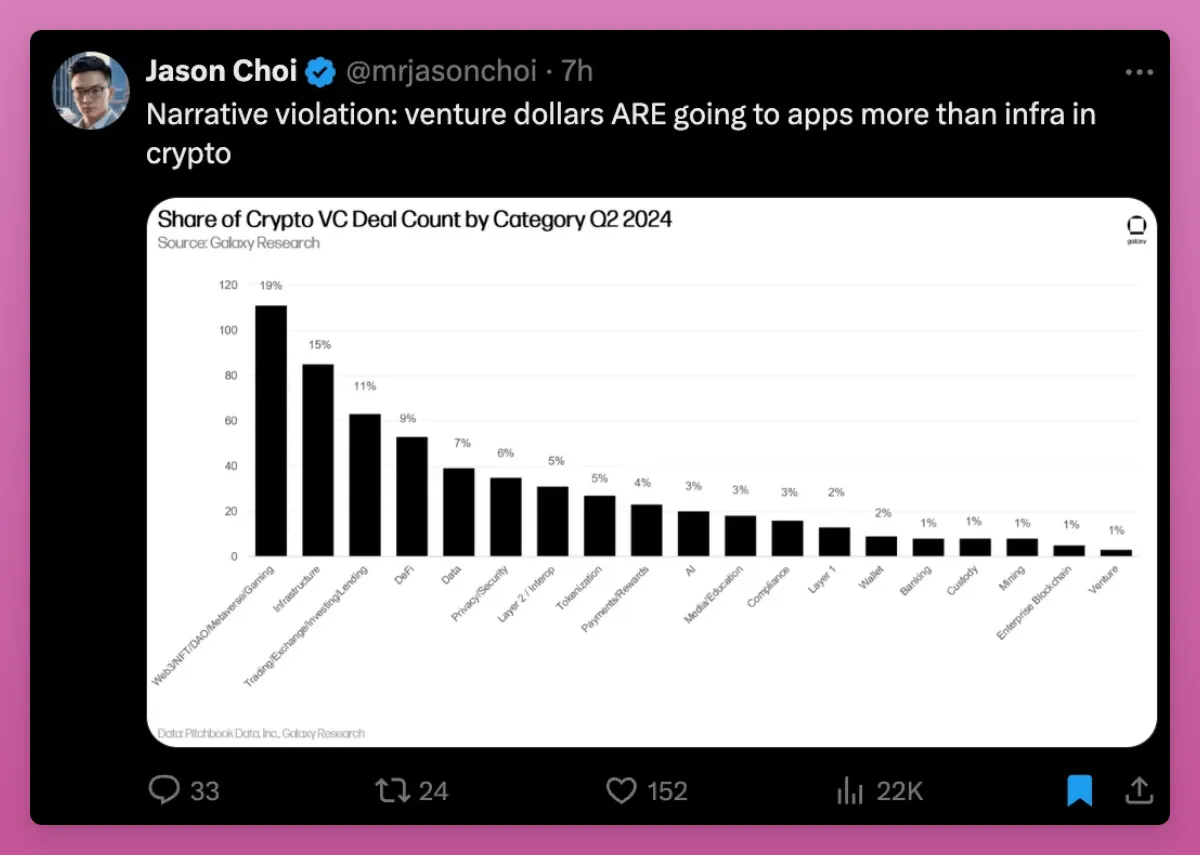
VC funding is finally shifting more toward apps than infrastructure. Hopefully useful products emerge.
The biggest winner in consumer apps is Polymarket. It’s not just for speculation—it provides a reliable source of truth in an era dominated by biased traditional media.
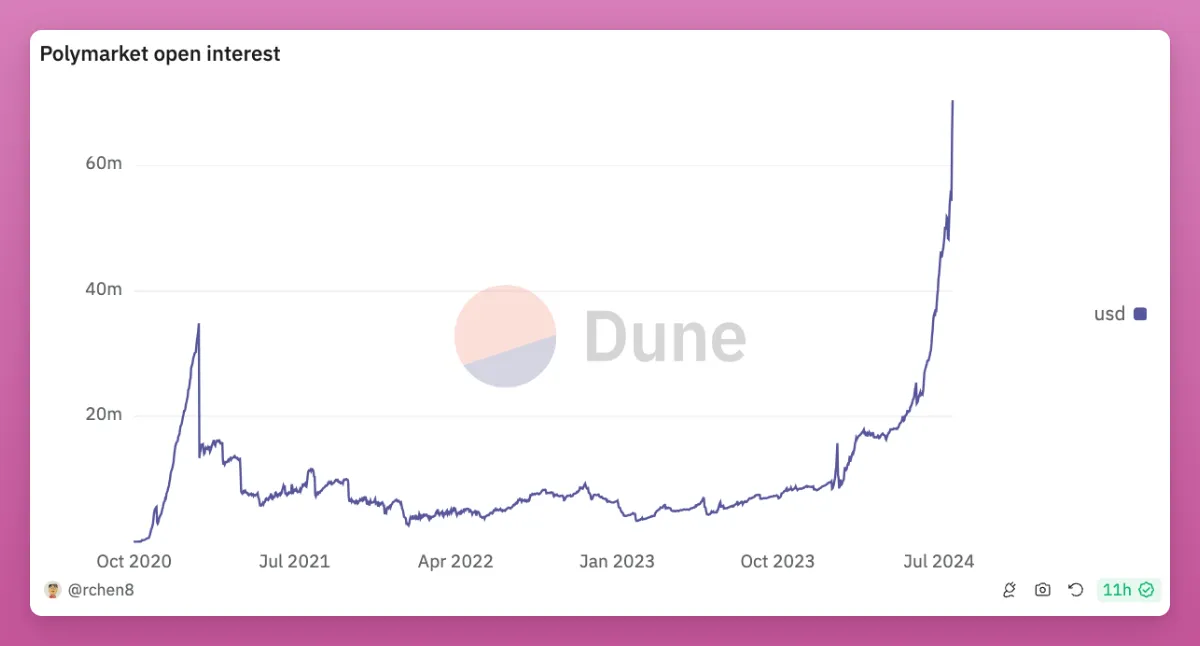
Despite being one of the coolest crypto consumer apps, we currently have no direct way to invest in Polymarket! Still, I’m preparing for a potential airdrop by placing bets across multiple markets with multiple wallets.
If Polymarket is bold enough, they should launch their token before the U.S. election, when market interest peaks.
If consumer apps become the next trend, I recommend trying them out, finding ones you like, and figuring out how to invest before others. That’s exactly what I plan to do.
Some consumer apps worth trying:
-
Receipts: Share your running, cycling, and workout logs to earn points (not live yet)
-
Sound.xyz: Discover new music and prove you were first
-
Fileverse: Privacy-enhanced peer-to-peer document sharing
-
See more apps in David’s thread.
Finally, you must try Farcaster and Lens. These could be the biggest winners in the consumer app trend.
New Tokenomics
This cycle has underdelivered on internal innovation. Radical innovation in tokenomics is urgently needed.
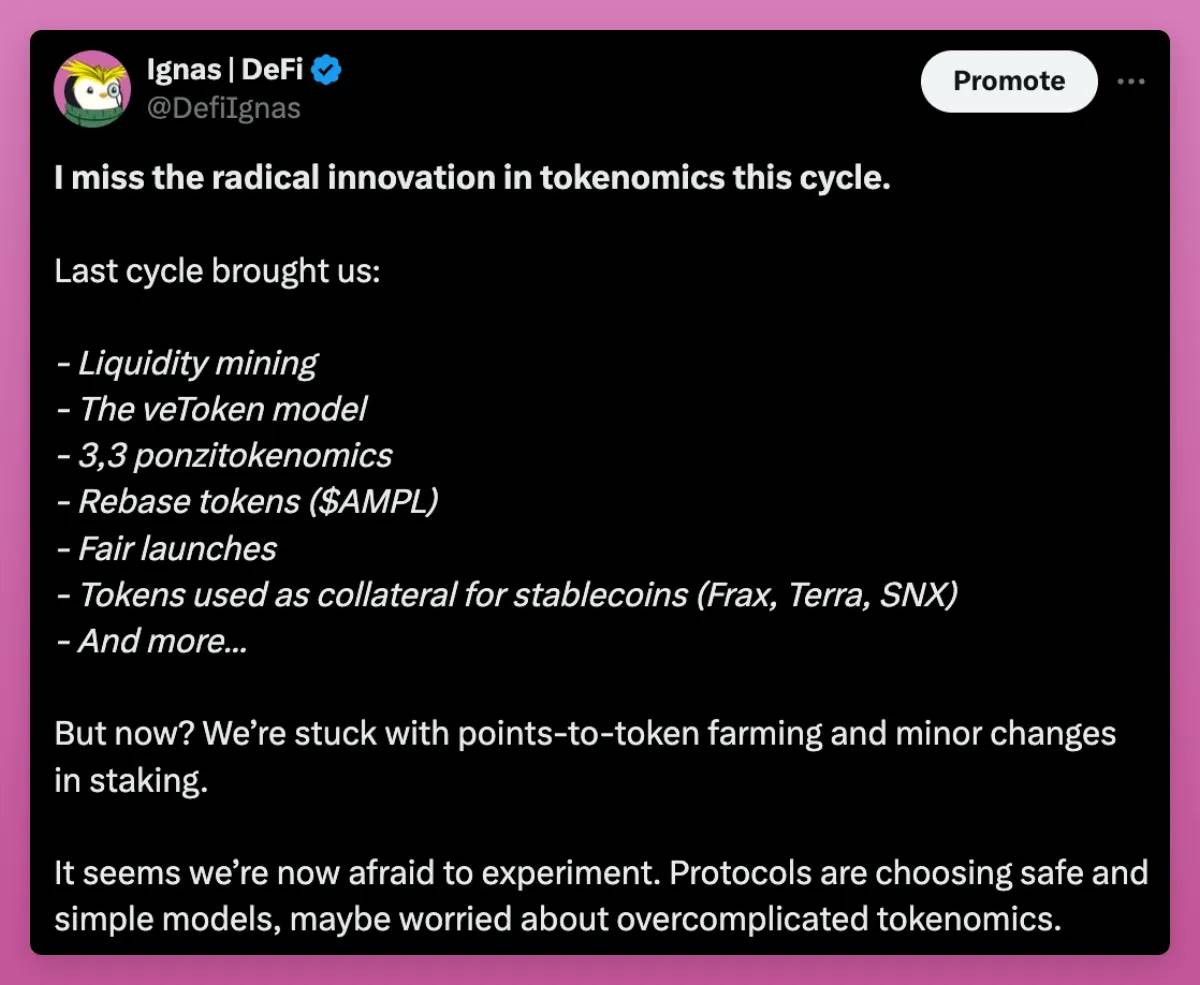
Tweet content in image:
I miss radical innovation in tokenomics.
-
Last cycle gave us:
-
Liquidity mining
-
veToken model
-
3,3 Ponzi tokenomics
-
Rebase tokens ($AMPL)
-
Fair launches
-
Tokens as collateral for stablecoins (e.g., Frax, Terra, SNX)
-
And more...
But now? We’re stuck in minor tweaks of points-for-airdrops and staking. Seems we’re afraid to experiment. Protocols choose safe, simple models, possibly fearing overly complex tokenomics.
Even memecoins on pumpdotfun show more innovation in bonding curve launches than DeFi. But beyond bonding curves, memecoins have abandoned past experiments like transfer taxes.
One true 0-to-1 innovation is restaking via AVSes.
-
Eigenlayer’s dual-token structure (EIGEN and staked bEIGEN) enables social consensus-based fork management.
-
Dual-staking model: Extra demand for tokens helps maintain a floor price.
-
Ethena and Symbiotic are experimenting with utility-driven tokens to enhance economic security.
Recently, Karak announced collaboration with Etherfi and Maker to launch their restaking token.
Karak’s “universal restaking” brings staking functionality to any token. It boosts token utility by enabling decentralization on any chain and adding unique features unreachable otherwise.
We’ll see how it performs in practice, but staking on Karak will automatically migrate your MKR to Maker’s NewGovToken under its Endgame roadmap.
Likewise, you can restake ETHFI to earn Karak XP points, but I’m very curious what other restaking features Etherfi and Karak will introduce.
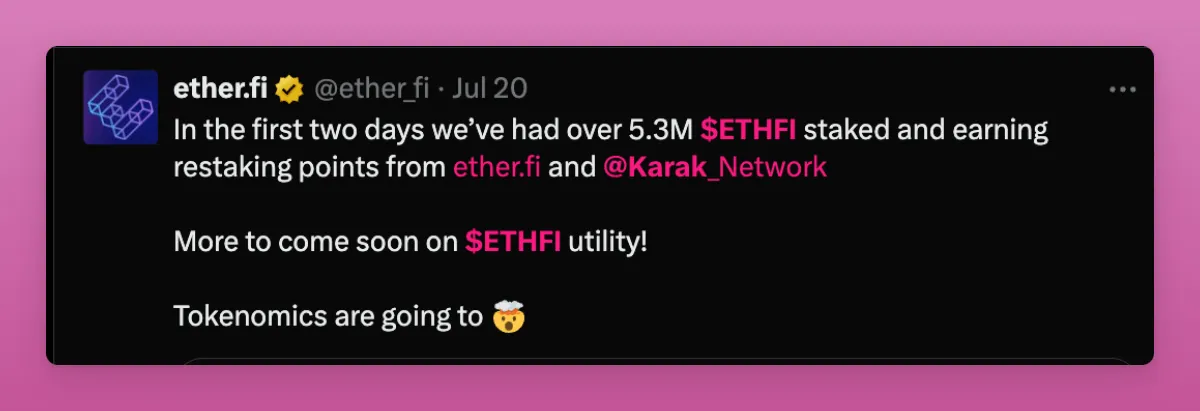
If Ethena, Etherfi, and Karak’s utility-focused restaking models succeed, we may see significant growth in liquidity restaking tokens (LRTs) from other DAOs, greatly increasing valuations of restaking platform tokens (especially Symbiotic and Karak, since Eigenlayer doesn’t support other assets yet)—and boosting DAO tokens themselves.
Imagine a world with lrtMKR, lrtAAVE, and any other token.
Speaking of restaking, Aave launched a quite interesting new feature.
Aave’s Umbrella is a new safety module allowing aTokens to be used as staked assets.
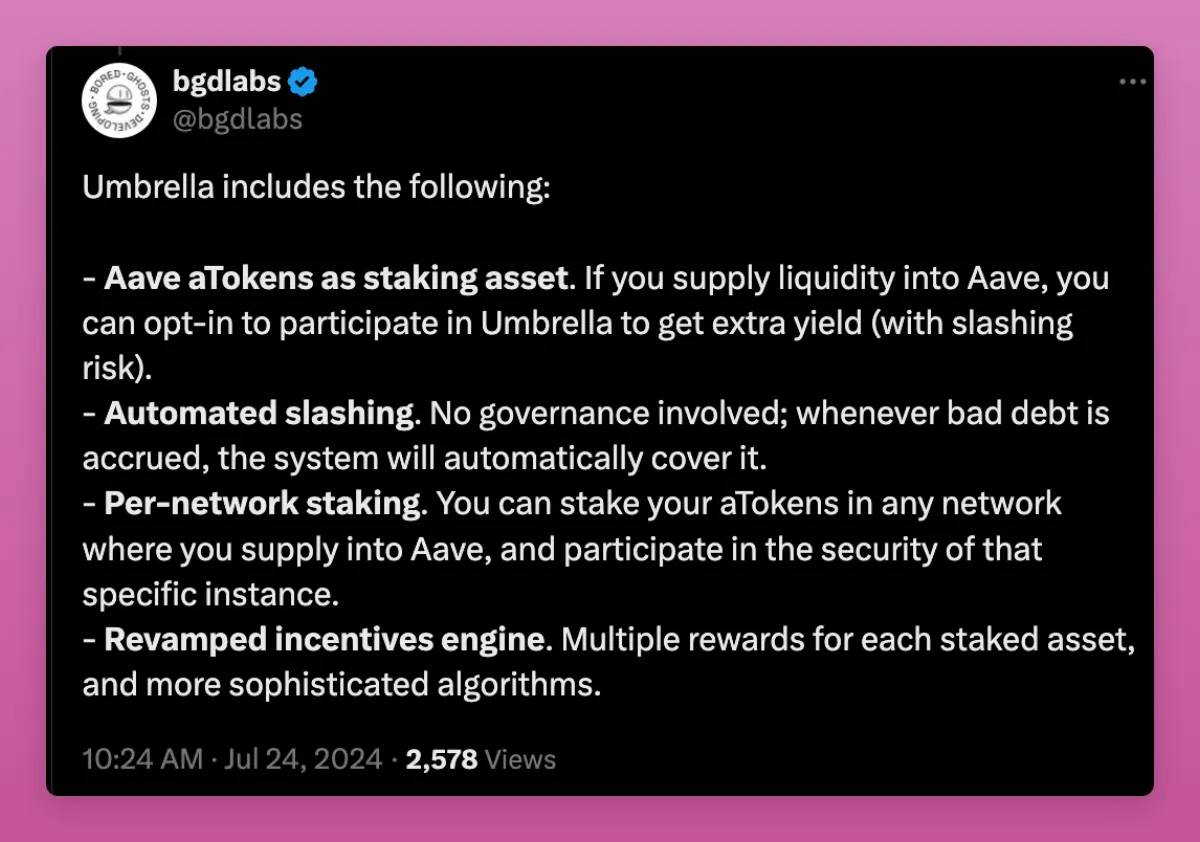
Image tweet content:
Key features of Umbrella
-
Aave aTokens as staked assets. If you provide liquidity on Aave, you can opt into Umbrella for extra yield (but face slashing risk).
-
Automatic slashing mechanism. No governance needed—system automatically covers bad debt when it occurs.
-
Per-network staking. You can stake your aTokens in any network supported by Aave and contribute to that network’s specific security.
-
Enhanced incentives. Multi-tiered rewards per staked asset, using more sophisticated algorithms.
Imagine lending USDT and wanting extra yield. You deposit aUSDT into the safety module—in case of bad debt, part of your aUSDT gets slashed to cover it.
The concept is both simple and powerful—I don’t understand why no one thought of it earlier.
It’s also a major shift from prior reliance on stkAAVE as “governance token security.” Think about it—if Aave becomes insolvent, the token would be dumped anyway.
Uncertainty around crypto markets remains high. Yet we have success stories in global crypto adoption—ETFs, RWAs, crypto becoming a political issue. I believe this adoption trend will continue.
This uncertainty is actually bullish—it allows us to overcome obstacles and progress. Like religion, crypto is reaching more people. But once it becomes dominant and uncertainty fades, growth potential diminishes.
Uncertainty is fuel for growth.
Internal uncertainty is different. What worked before no longer does. We’ve hit a bottleneck and need new innovative ways forward. While some innovation is emerging, it’s unclear what will truly disrupt the new token issuance mechanism.
I’m bullish on crypto because I believe I can be among the first to find it.
Join TechFlow official community to stay tuned
Telegram:https://t.me/TechFlowDaily
X (Twitter):https://x.com/TechFlowPost
X (Twitter) EN:https://x.com/BlockFlow_News
 Ignas | DeFi Research






