Analyzing the impact of macroeconomic factors on Bitcoin's price during bull markets
TechFlow Selected TechFlow Selected
Analyzing the impact of macroeconomic factors on Bitcoin's price during bull markets
The bull market in the cryptocurrency sector offers significant opportunities for investors.
 Navigating Web3 tides with focused insights
Author: Greythorn
Introduction
Today we explore key macroeconomic factors—global liquidity, interest rates, inflation, and Federal Open Market Committee (FOMC) announcements—and how they influence Bitcoin’s price during bull markets. Using historical data from early 2014 to the present, we apply statistical and econometric analysis to identify trends and correlations, offering insights into how these factors affect market behavior and inform investment strategies.
Data Collection
We collected the following data from reliable sources:
● Interest Rates: Federal Reserve Economic Data (FRED).
● Inflation: U.S. Bureau of Labor Statistics (BLS).
● Market Prices: Historical prices of stocks and Bitcoin from financial databases.
● FOMC Announcements/News: Federal Reserve announcements and news archives, along with press releases from the U.S. Treasury Department.
Global Market Liquidity
Liquidity—the availability of cash and easily tradable assets—is crucial for a healthy economy. Increased liquidity drives up asset prices as more funds flow into markets, enabling fast and stable transactions. During periods of high liquidity, trading volumes and prices rise. Understanding these trends helps investors seize market opportunities and make informed decisions to maximize returns.
Liquidity is measured through several indicators, including:
Money Market Funds: These funds typically consist of highly liquid, short-term securities and serve as a good proxy for available liquidity in the financial system. They reflect institutions’ ability to meet short-term obligations.
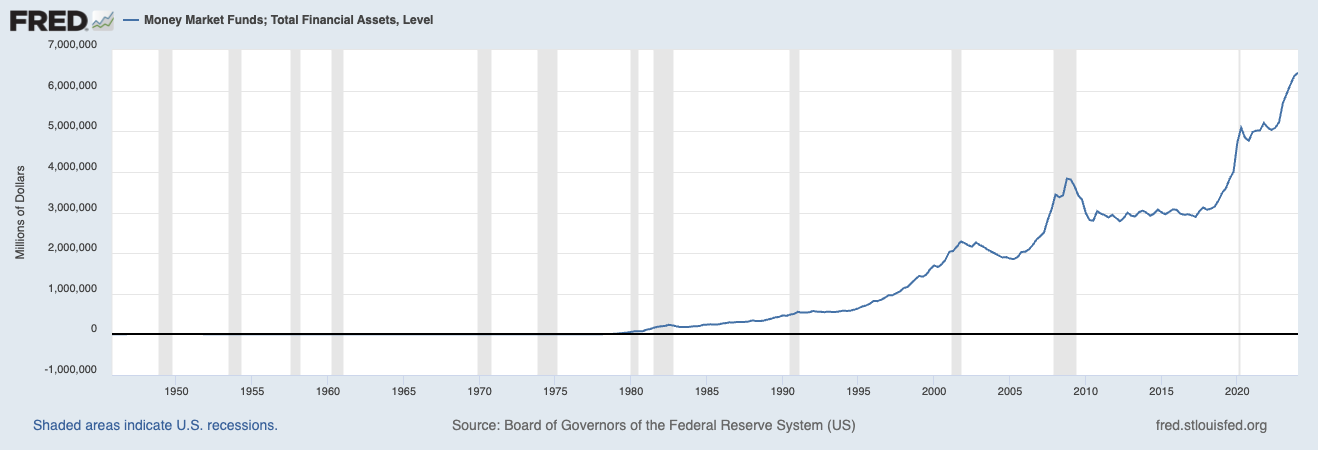
Source: Federal Reserve Economic Data
Bank Reserves: Reserves held by banks at central banks also indicate liquidity. Higher reserves mean more liquidity is available within the banking system to support lending and investment.
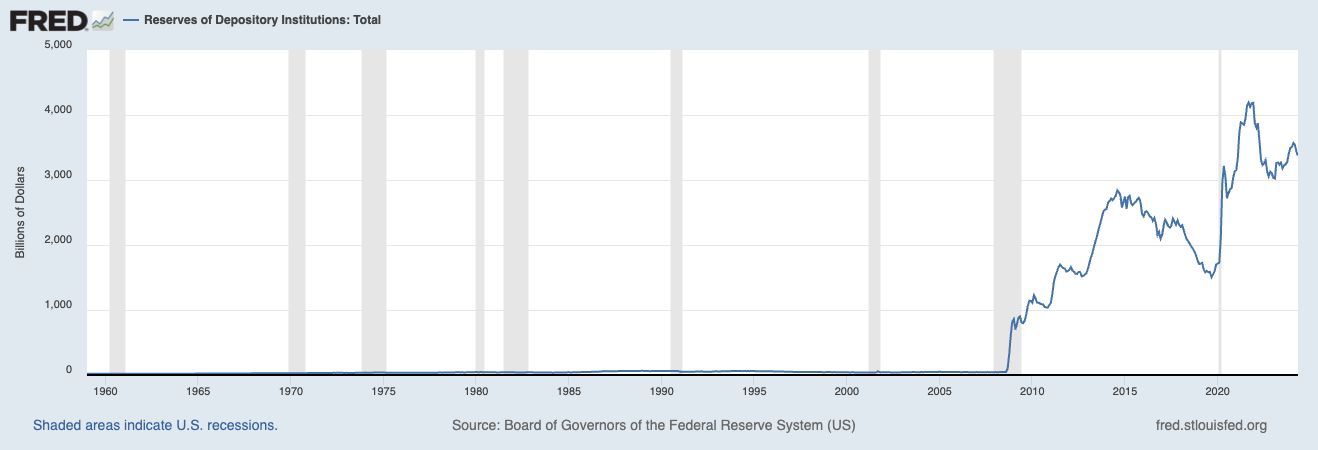
Source: Federal Reserve Economic Data
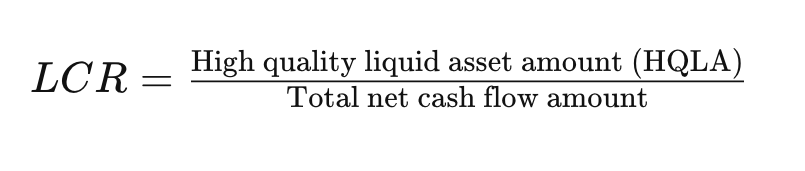
Liquidity Coverage Ratio (LCR): This regulatory standard ensures financial institutions hold enough high-quality liquid assets to cover total net cash outflows over 30 days. It is a critical measure of a bank’s liquidity health.
Source: Investopedia
Turnover Ratios: The turnover ratios of stocks and bonds indicate market liquidity. Higher turnover suggests a more liquid market where assets can be bought and sold quickly without significant price changes.

Source: Investopedia
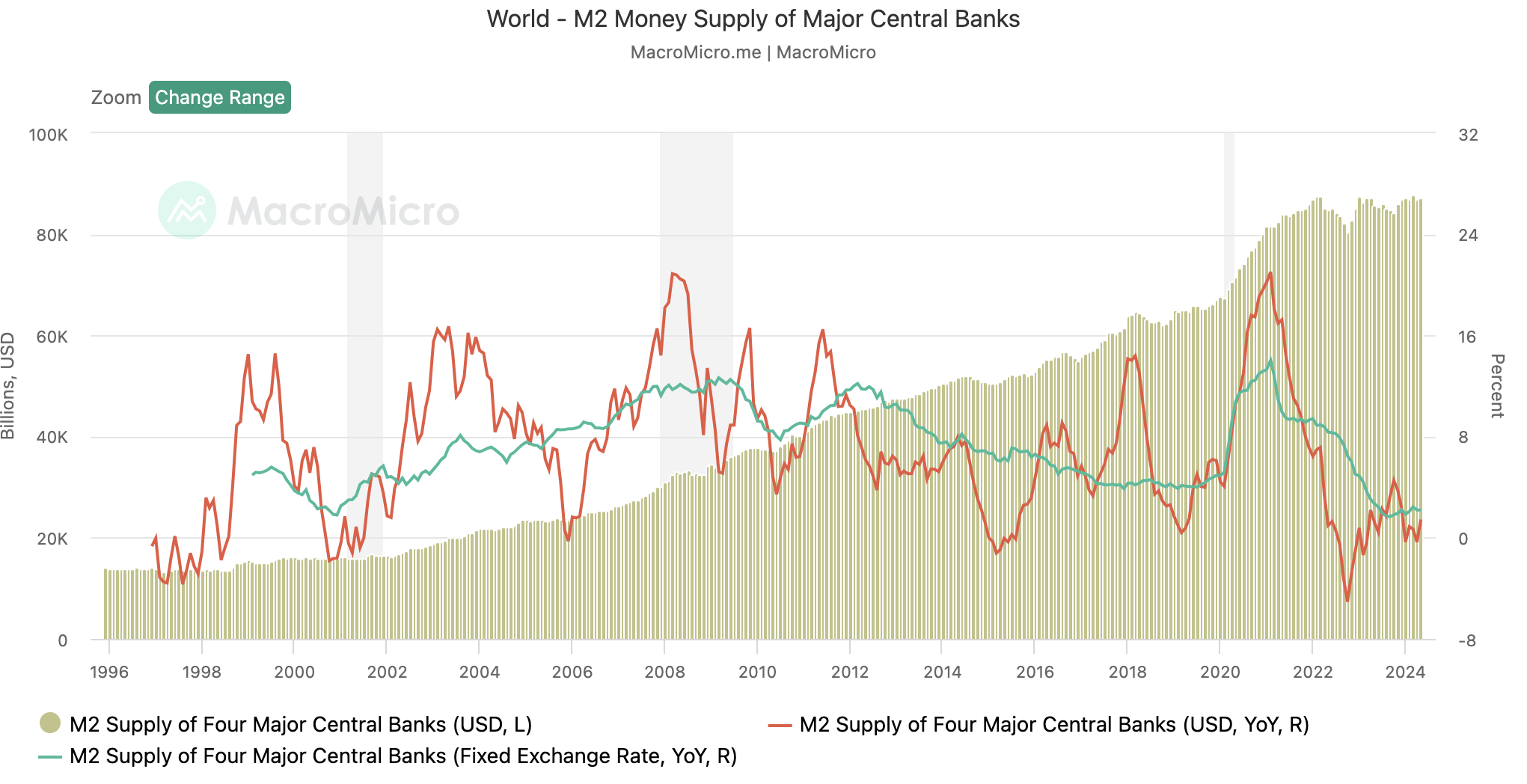
However, one of our primary metrics is the ‘M2’ money supply. M2 includes all cash in circulation and in bank accounts, covering physical currency, checking accounts, savings accounts, and other near-money assets. Tracking M2 helps us understand overall economic liquidity and gauge the amount of money available for spending and investing.
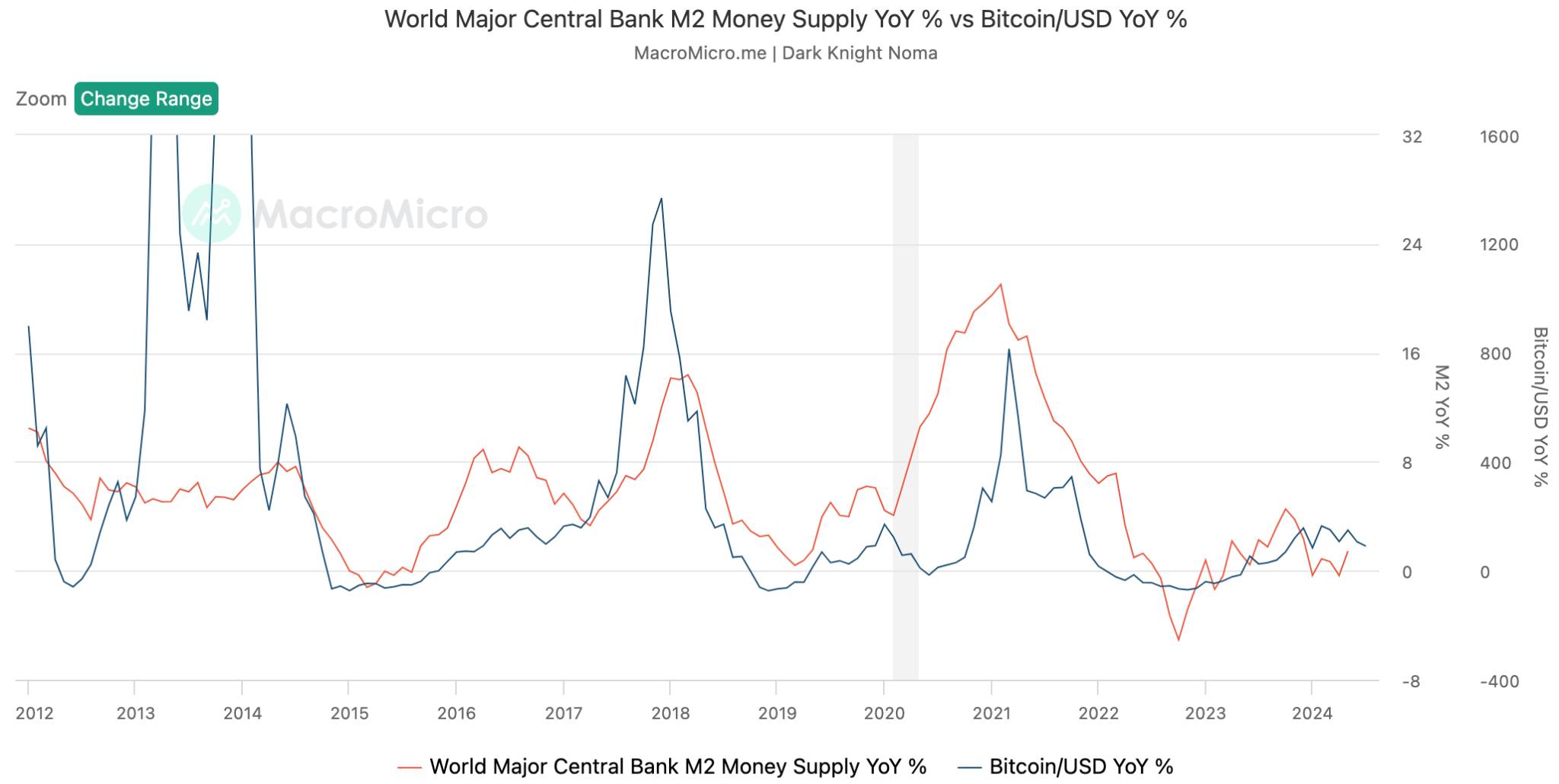
Historically, peaks in global M2 growth have coincided with Bitcoin bull markets. It is not only the absolute amount of money in circulation that matters, but also the rate of change in money supply. Bitcoin’s volatility often aligns with shifts in M2 momentum. Monitoring M2 becomes especially important during bull runs, as increased liquidity typically fuels market rallies by making more capital available for investment, thereby pushing up asset prices.
Source: MacroMicro
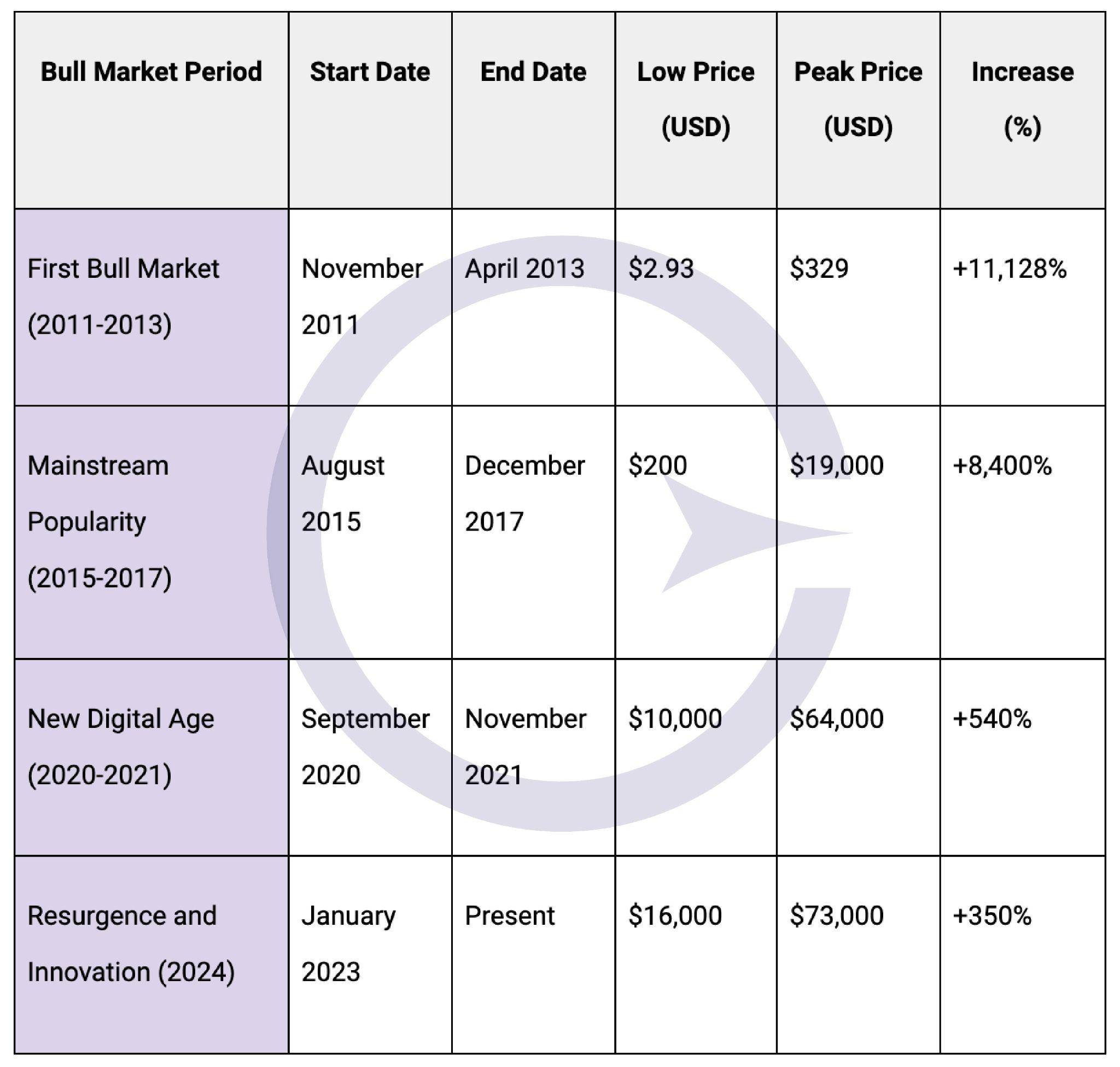
Bull markets in the cryptocurrency space offer significant opportunities for investors. Below are some notable crypto bull runs in history:
Source: Greythorn
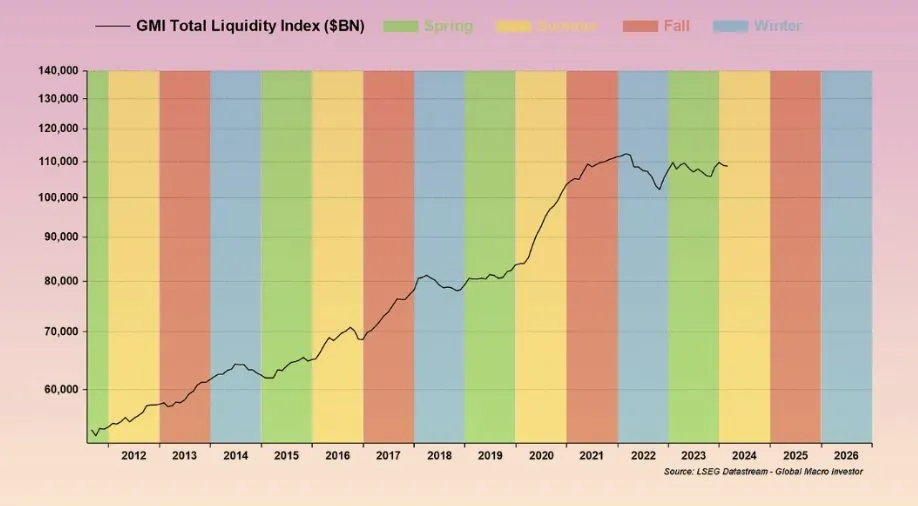
As shown above, global liquidity cycles exhibit clear periodicity.
Source: Global Macro Investor
Historically, as previously noted, there is a strong correlation between global M2 money supply growth and Bitcoin bull markets.
Source: MacroMicro
First Bull Run (2011–2013)
● M2 Growth: Central banks expanded liquidity during the European financial crisis and Cyprus banking crisis to stabilize economies.
● Bitcoin Response: Amid surging liquidity, Bitcoin's price surged from $2.93 to $329, reflecting rising demand for alternative financial assets. However, this rally was largely driven by Bitcoin’s novelty and small market cap, making it prone to sharp price swings.
Mainstream Adoption Bull Run (2015–2017)
● M2 Growth: Low interest rates and expanding money supply persisted after financial turmoil.
● Bitcoin Response: Bitcoin rose from $200 to $19,000, fueled by growing mainstream media attention and institutional interest amid increasing liquidity.
New Digital Era Bull Run (2020–2021)
● M2 Growth: The COVID-19 pandemic triggered unprecedented monetary easing and stimulus measures, significantly boosting M2 money supply.
● Bitcoin Response: Bitcoin surged from $10,000 to $64,000 as investors sought alternatives to fiat currencies amid concerns about inflation and currency devaluation.
Recovery and Innovation (2024)
● M2 Growth: Efforts to curb post-COVID inflation led to higher interest rates, resulting in an overall downward trend in liquidity. Liquidity has slightly increased since early 2023 but remains moderate compared to previous cycles.
● Bitcoin Response: In 2024, Bitcoin reached new all-time highs, climbing from $25,000 to $85,000. This surge occurred ahead of the next halving event despite high interest rates. This cycle is unique in that Bitcoin achieved record highs without a significant liquidity spike, indicating unprecedented maturity in the Bitcoin market.
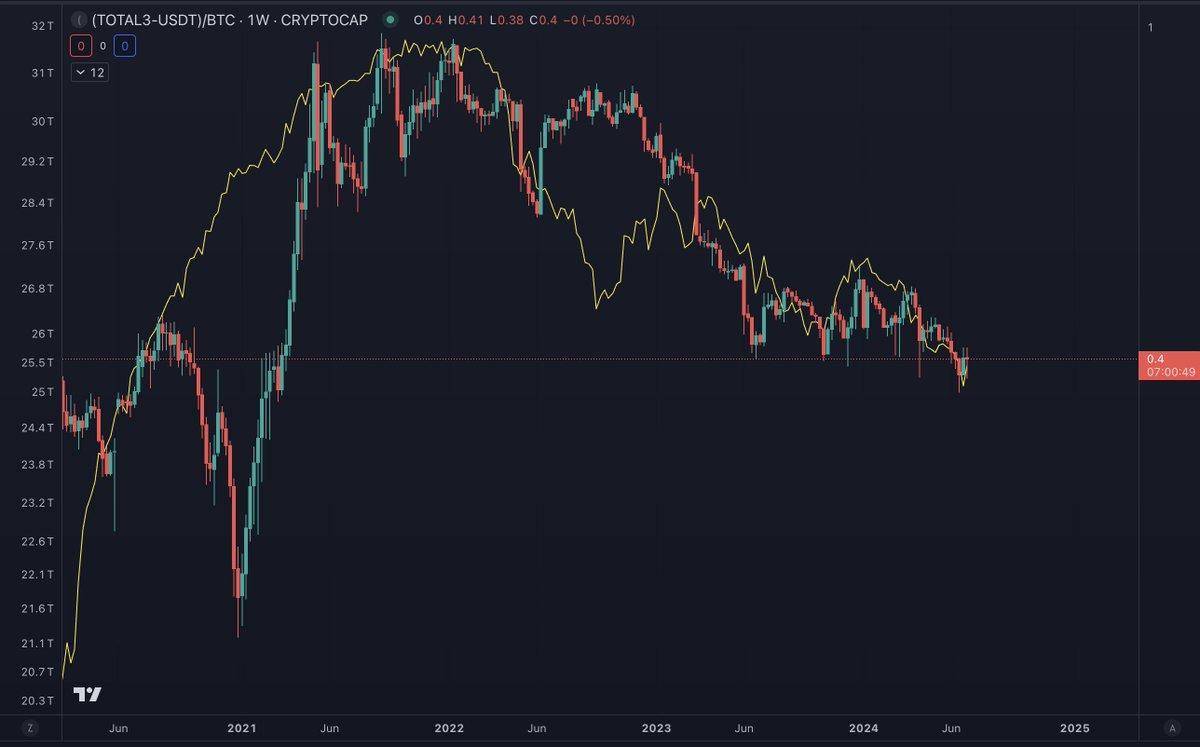
However, altcoins tell a different story. As trader Benjamin Cowen pointed out, the Alts/BTC ratio has been tracking estimates of global net liquidity. We may need to see a broader increase in liquidity before altcoins enter a sustained growth phase.
Source: TradingView
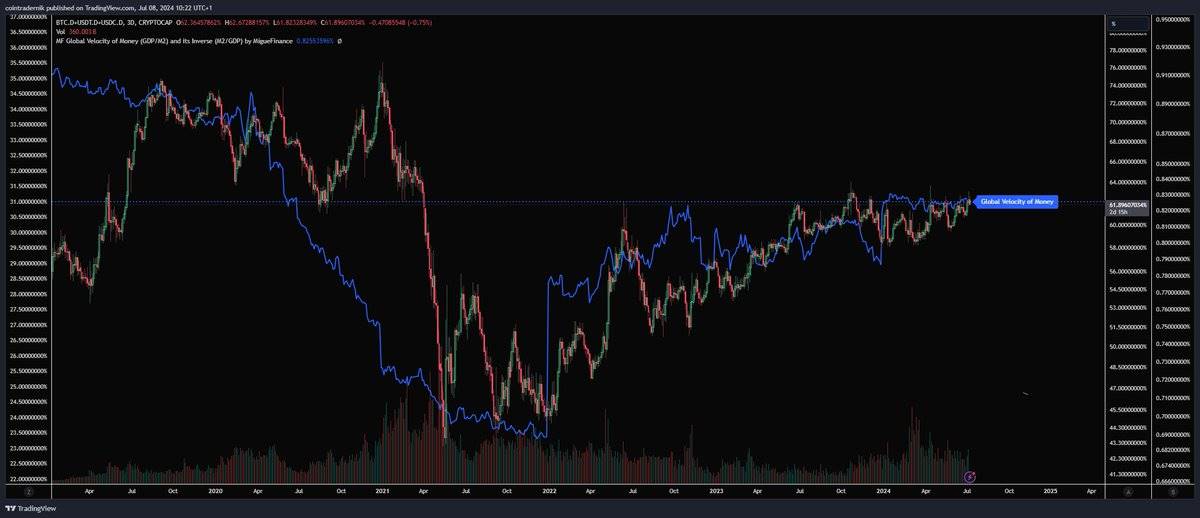
Further analysis shows trader Nik demonstrates that the dominance of BTC, USDT, and USDC is inversely correlated with global money velocity. This means that when money supply grows faster than GDP, financialization increases, leading to asset bubbles and lower Bitcoin dominance. Conversely, if GDP grows faster than money supply, financialization decreases, resulting in higher stablecoin and Bitcoin dominance.
Source: TradingView
We recommend analyzing macroeconomic policies to gain insights into future liquidity trends. Monitor global M2 money supply to understand shifts in liquidity and their impact on asset prices. Additionally, study market sentiment and flows of attention to anticipate and position for market changes.
Interest Rates and Inflation: Insights from FRED Data and FOMC Announcements
Although Bitcoin is decentralized, it exhibits significant volatility around monetary policy events, reacting to changes in interest rates and economic outlooks. Let’s examine whether Bitcoin’s sensitivity to central bank decisions has changed as it gains popularity and integration into the financial system.
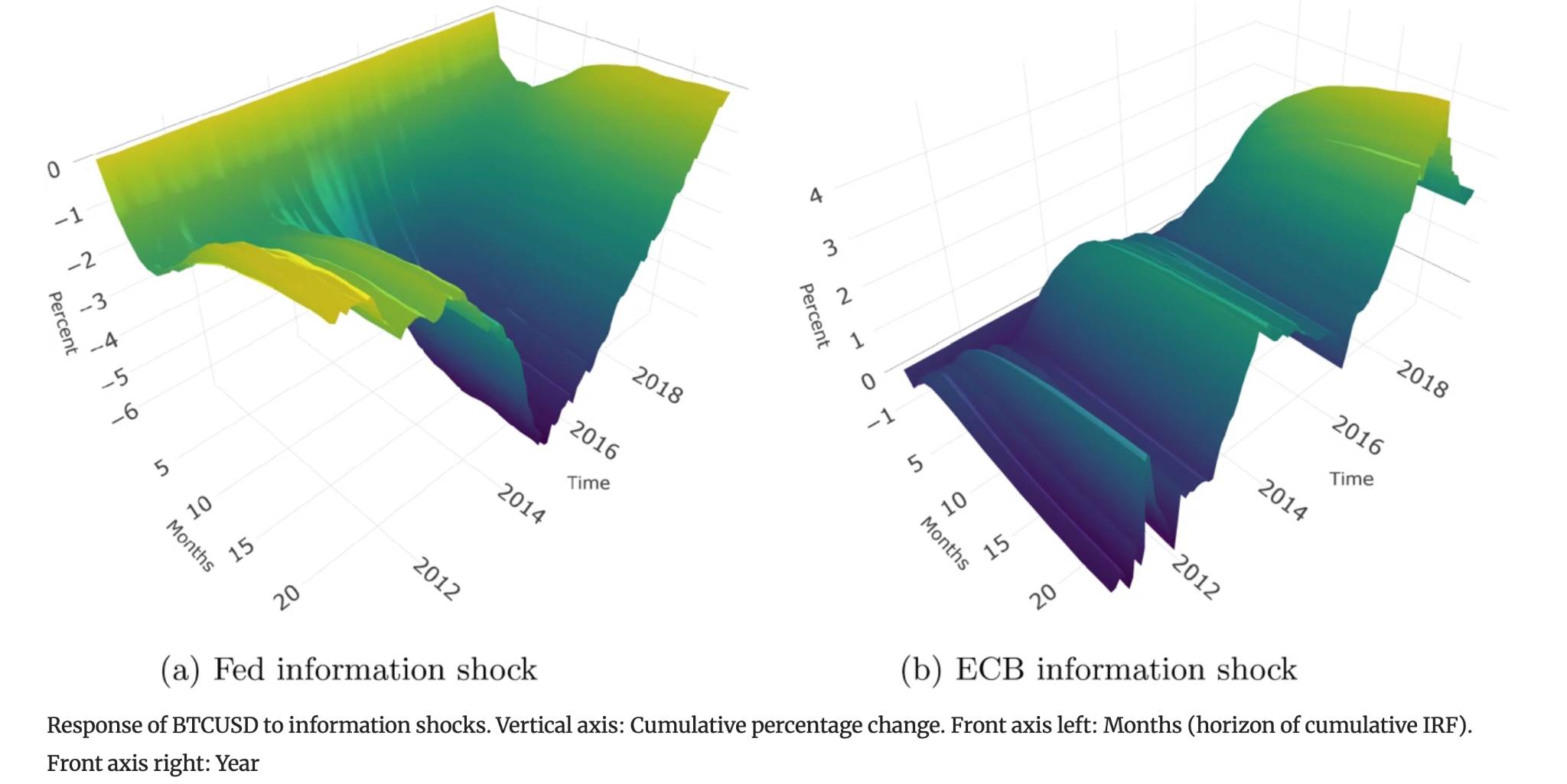
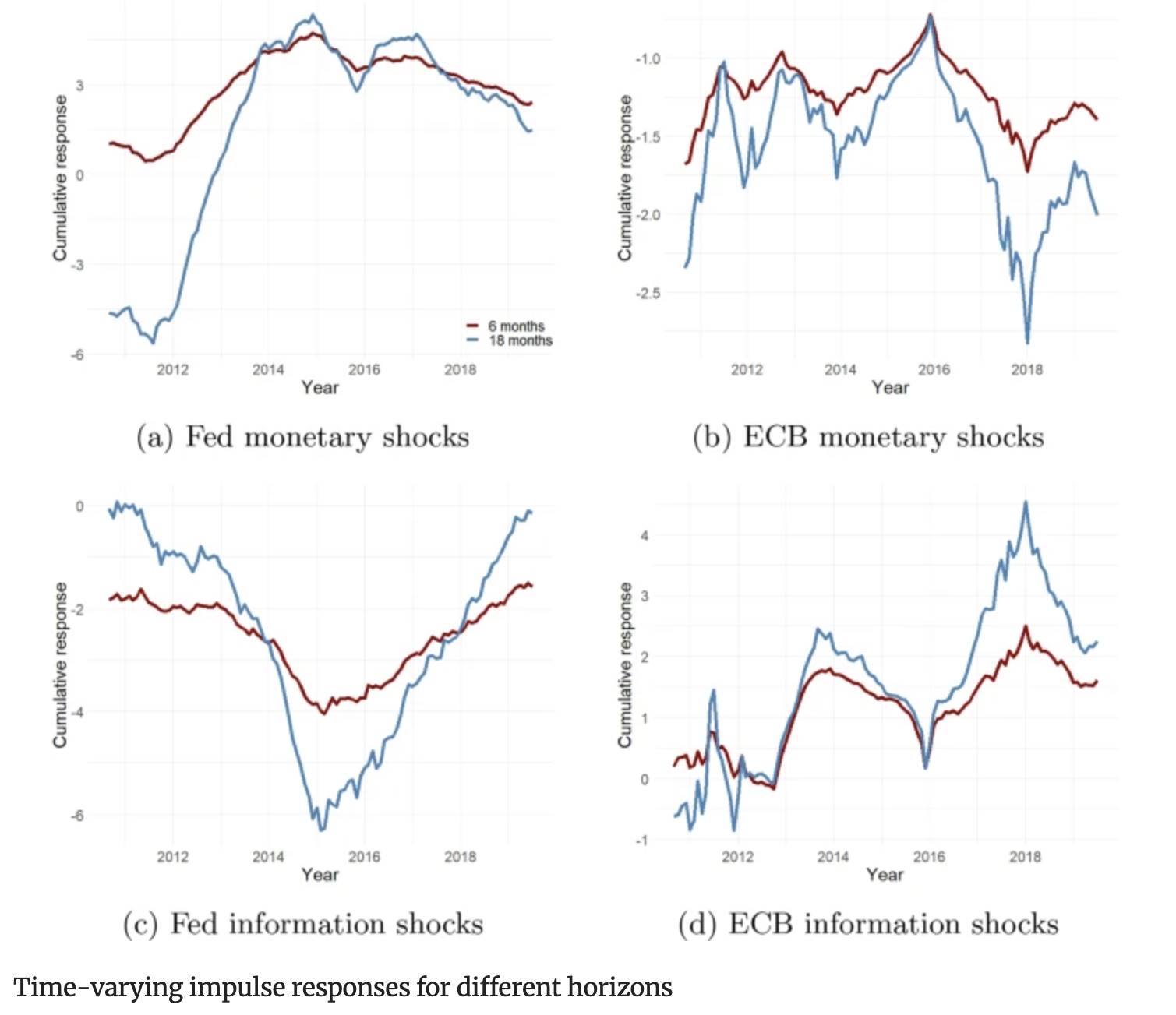
An interesting study shows that although Bitcoin is designed to be independent of monetary policy, it actually responds to decisions by the Federal Reserve and the European Central Bank (ECB), with effects evolving over time.
Before 2013, monetary shocks from the Fed significantly reduced Bitcoin prices. After 2013, however, these shocks began to push Bitcoin prices upward, suggesting a shift in market perception. Meanwhile, ECB disinflationary shocks consistently lowered Bitcoin prices, indicating that Bitcoin behaves like digital gold in response to ECB policies.
Source: Springer
Monetary information shocks from central banks affect Bitcoin differently in the U.S. and EU. Positive Fed shocks tend to reduce Bitcoin prices, while positive ECB shocks generally increase them, peaking in early 2018. Initially, Bitcoin was unaffected by such economic signals.
The chart below shows that Bitcoin prices typically adjust within the first few months after a shock, with similar effects observed at 6-month and 18-month horizons. Since 2016, the impact of ECB shocks has become more persistent, with stronger reactions after 18 months than in the initial six.
This study only includes data up to 2019. However, starting in 2020, Bitcoin’s actual volatility around FOMC announcements began to rise, particularly after the outbreak of the COVID-19 pandemic in late 2020. Bitcoin prices reacted almost immediately to Fed tightening, indicating a tighter and more direct correlation with monetary policy decisions. Bitcoin’s valuation response has become qualitatively similar to other risk assets like equities, forex, and gold—but quantitatively stronger.
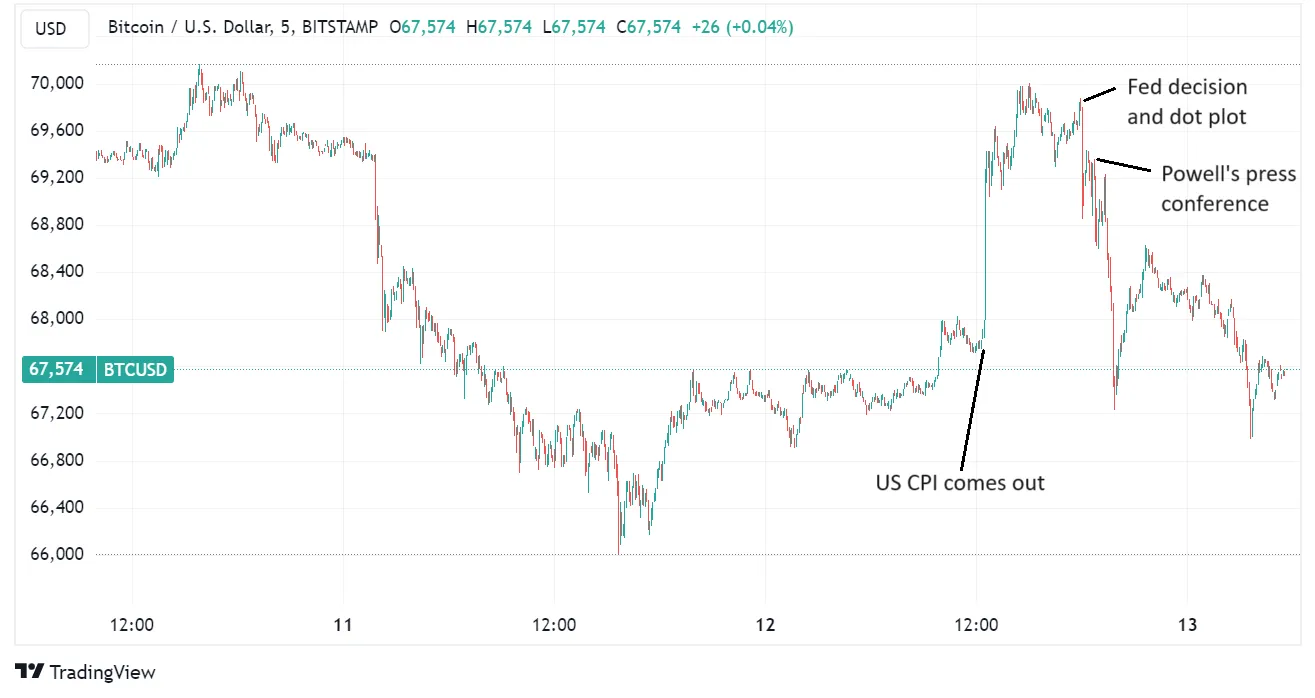
Indeed, even in recent CPI releases, we observe heightened sensitivity of Bitcoin valuations to inflation news in the high-inflation environment post-2020.
In fact, during the most recent CPI announcement, Bitcoin showed an immediate reaction. When the U.S. inflation rate came in at 0.0% month-on-month for May—an unexpected result—Bitcoin prices rose alongside most other assets. However, this initial rally was quickly corrected as the FOMC signaled efforts to temper liquidity expectations.
Source: TradingView
Conclusion
Bitcoin has attracted significant interest from investors and academics as a potential hedge against inflation. Initially valued for its scarcity and decentralized nature, Bitcoin has been viewed by some as a safeguard against inflation. However, empirical studies yield mixed results regarding its effectiveness in this role.
Initially, Bitcoin prices did not react significantly to monetary policy announcements. Until 2019, any response typically took months to materialize. Since 2020, however, Bitcoin prices have started falling immediately after Fed tightening, indicating a closer and more direct correlation with monetary policy decisions. This shift highlights Bitcoin’s increasing sensitivity to central bank actions.
Evidence suggests the relationship between Bitcoin and inflation is complex and evolving, influenced by market maturity and broader economic conditions. Nevertheless, Bitcoin’s price dynamics are closely tied to global liquidity conditions, driven by central bank policies, investor behavior, and institutional investment trends.
These findings suggest that initial demand for Bitcoin stemmed more from its use as borderless, decentralized digital cash rather than as an inflation hedge. However, post-2020, the sharp decline in Bitcoin prices following Fed tightening underscores speculative motivations, a broader investor base, and wider acceptance.
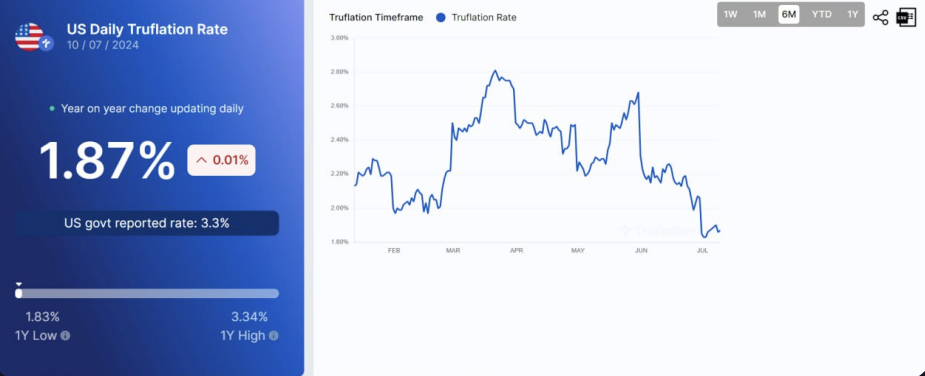
For the upcoming CPI release (Thursday, July 11, 2024), market expectations predict no significant change, as outlined below.
Note that the Truflation ratio shown above offers additional insight and could be relevant if actual results again come in below expectations.

Source: Truflation.com
Disclaimer
This presentation has been prepared by Greythorn Asset Management Pty Ltd (ABN 96 621 995 659) (Greythorn). The information contained herein should be regarded as general information only and not as investment or financial advice. It is not an advertisement nor a solicitation or offer to buy or sell any financial instrument or participate in any particular trading strategy. Greythorn did not take into account the investment objectives, financial situation, or particular needs of any recipient in preparing this document. Recipients should consider their personal circumstances and seek professional advice from their accountant, lawyer, or other advisor before making any investment decision. This presentation contains statements, opinions, forecasts, projections, and other materials (forward-looking statements) based on various assumptions. Greythorn has no obligation to update this information. These assumptions may or may not prove correct. Neither Greythorn nor its officers, employees, agents, advisors, or any other person mentioned in this presentation makes any representation as to the accuracy or likelihood of realization of any forward-looking statement or the underlying assumptions. To the fullest extent permitted by law, Greythorn and its officers, employees, agents, and advisors disclaim all liability for any loss, claim, damage, expense, or cost arising from the information contained in this presentation. This presentation is the property of Greythorn. Receipt of this presentation constitutes agreement to keep its contents confidential and not to copy, provide, disseminate, or disclose any information contained herein without prior written consent.
Join TechFlow official community to stay tuned
Telegram:https://t.me/TechFlowDaily
X (Twitter):https://x.com/TechFlowPost
X (Twitter) EN:https://x.com/BlockFlow_News
 Greythorn