JD.com Re-Embraces Blockchain by Entering the Stablecoin Arena
TechFlow Selected TechFlow Selected
JD.com Re-Embraces Blockchain by Entering the Stablecoin Arena
Announcing the issuance of a stablecoin at a time when Hong Kong is vigorously expanding its stablecoin infrastructure shows that JD.com continues to actively explore development opportunities in the blockchain sector.
 Navigating Web3 tides with focused insights
Author: Peisen
On July 24, according to Cailian Press, JD Binance Technology (Hong Kong) will issue a cryptocurrency stablecoin pegged 1:1 to the Hong Kong dollar in Hong Kong.
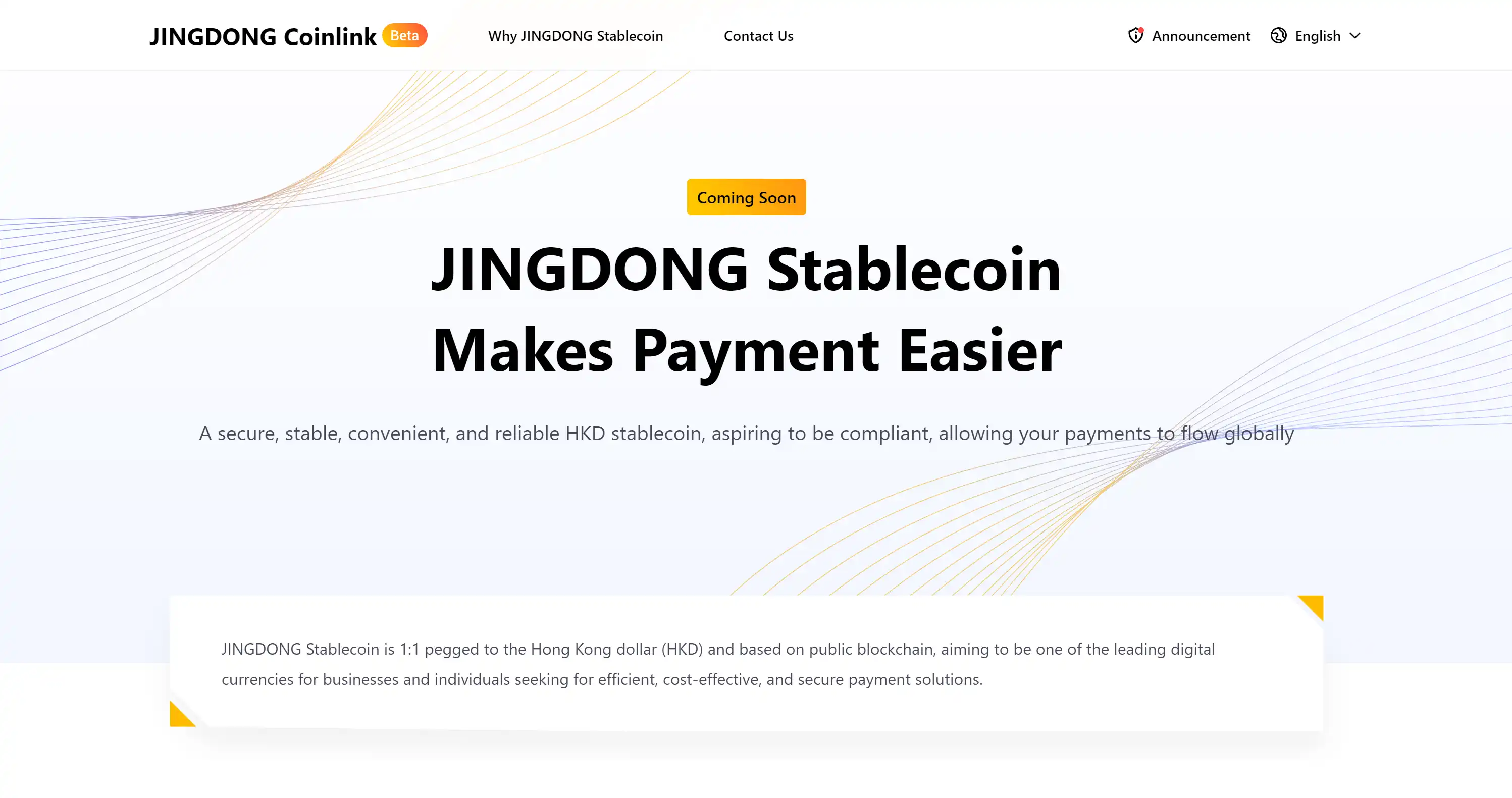
JD Binance Technology (Hong Kong) is a subsidiary of JD Technology Group and the only potential stablecoin issuer within JD. According to official website information, the JD stablecoin is a stablecoin based on public blockchains and pegged 1:1 to the Hong Kong dollar (HKD), which will be issued on public blockchains.
Each JD stablecoin can be redeemed at a 1:1 ratio, with reserves composed of highly liquid and credible assets securely held in separate accounts at licensed financial institutions. The integrity of the reserves is strictly verified through regular disclosures and audit reports. In terms of regulation, the JD stablecoin will actively cooperate with global regulators and comply with existing and evolving legal and regulatory standards.
Claims to be "Co-Founder of WeChat Pay": Who Is Coinlink's CEO?
Liu Teddy, CEO of JD Binance Technology Company, describes himself as a "co-founder of WeChat Pay" on his LinkedIn profile. However, according to sources familiar with the matter speaking to BlockBeats, there was no such title as "co-founder" for WeChat Pay, suggesting he may have previously served as a product manager or head of a specific business unit within WeChat Pay.
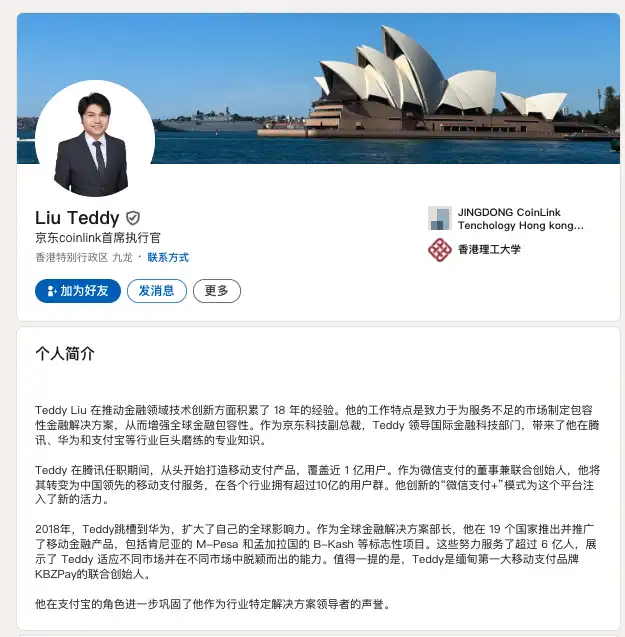
According to LinkedIn, Liu Teddy also serves as Vice President of JD Technology. He graduated from Beijing University of Technology in 2006 with a degree in Computer Science and Technology and is currently pursuing a Ph.D. in Fintech at Hong Kong Polytechnic University.
From 2010 to 2018, Liu Teddy served as co-founder and product director of WeChat Pay, building the payment product from scratch. As a core product team member, he created WeChat Red Packet, a phenomenon-level product. In terms of the "WeChat Pay+" business model, he led operations across more than 15 industries including food and beverage, tourism, transportation, logistics, retail, and education—such as developing the QR code ordering solution for restaurants.
Starting in 2018, Liu Teddy took on the role of Head of Global Mobile Payment Product Operations and Director of Aggregation Operations at Huawei, responsible for global financial solutions. He completed the expansion, development, and implementation of mobile financial products in 19 countries and regions overseas, serving over 600 million users, including Kenya’s M-Pesa, Bangladesh’s bKash, Indonesia’s T-Cash, Thailand’s K Bank, East Africa’s largest bank KCB, Ghana’s GCB, Pakistan’s JAZZCASH, and Myanmar’s KBZ Bank. Notably, as co-founder of KBZPay in Myanmar, he drove KBZPay from inception to become Myanmar’s leading payment brand.
In May 2022, Liu Teddy became Vice President of JD Logistics Group and head of logistics technology R&D. Starting in 2023, he served as Vice President of JD Technology, overseeing overseas fintech operations. Since March 2024, he has served as CEO of JINGDONG Coinlink Technology Hong Kong Limited.
JD Revisits Blockchain
This is not JD’s first foray into blockchain.
In May 2016, JD Finance joined the “Financial Blockchain Cooperation Alliance.” Although JD entered the blockchain space later than other internet companies, its growth momentum was equally strong, focusing primarily on consortium chains.
In May 2017, JD Finance partnered with China UnionPay to build the consortium chain “Zhizhen Chain.” That same month, Wanda and China Merchants Bank joined JD’s consortium chain. In 2018, JD Finance improved the underlying blockchain technology of its ABS Cloud Platform, establishing a multi-party independently deployed consortium chain where each party first deploys separately in independent environments before networking. It also built a business infrastructure supporting various asset types.
At that time, as China’s highest-revenue retailer, JD collaborated with the Ministry of Agriculture, the General Administration of Quality Supervision, Inspection and Quarantine, and the Ministry of Industry and Information Technology in June 2017 to launch the “JD Quality Traceability and Anti-Counterfeiting Alliance,” jointly building a blockchain traceability platform. In December of the same year, JD established China’s first blockchain traceability alliance for safe food. In August 2018, JD officially launched its Blockchain-as-a-Service (BaaS) anti-counterfeiting and traceability platform and released the first edition of the “JD Blockchain Technology Practice White Paper.”
Beyond consortium chains, JD also operated an NFT platform called “Lingxi,” officially launched at the end of 2021 and supported technically by “Zhizhen Chain.” Initially launched as a mini-program within the JD app, the first batch of NFTs sold were designed around JD’s mascot, “Joy.”
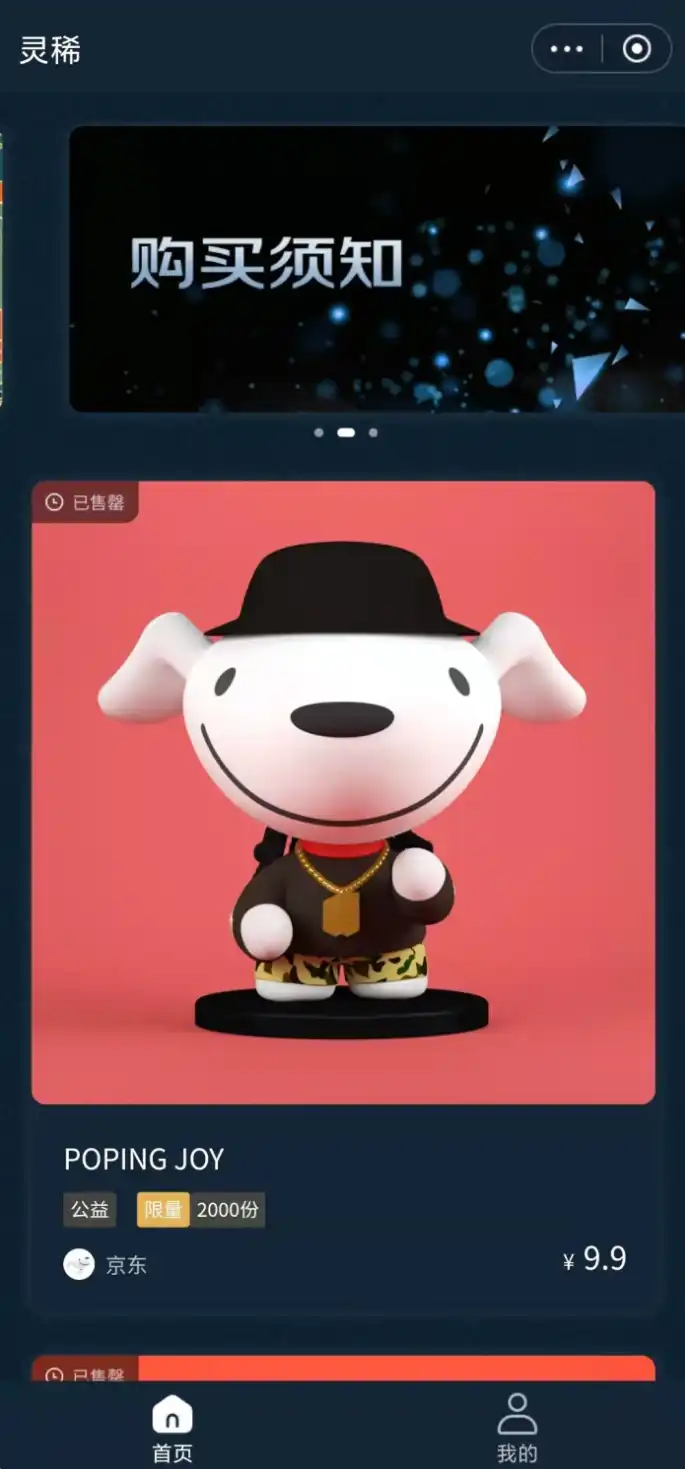
Main page of Lingxi in JD mini-program, image source: Jiemian News
At the time, among Chinese tech giants launching NFT platforms domestically, “Lingxi” stood alongside Ant Group’s “Jingtan” and Tencent’s “Huanhe,” forming a tripartite rivalry. However, both “Zhizhen Chain” and “Lingxi” have since faded from public view.
On July 18, the Hong Kong Monetary Authority (HKMA) released the list of participants in the stablecoin issuer “sandbox,” including JD Binance Technology (Hong Kong). Currently, JD Binance Technology (Hong Kong) has obtained licenses from the Securities and Futures Commission (SFC) of Hong Kong for Type 1 (Securities Trading), Type 4 (Advising on Securities), and Type 9 (Asset Management).
Launched in March this year, the sandbox is one of HKMA’s initiatives to promote the sustainable and responsible development of Hong Kong’s stablecoin ecosystem. Through the sandbox, HKMA allows institutions intending to issue stablecoins in Hong Kong to test their operational plans and engage in two-way communication regarding proposed regulatory requirements, helping shape purpose-driven and risk-based regulations.
JD Binance Technology (Hong Kong)’s issuance of a stablecoin marks JD Technology Group’s first entry into the cryptocurrency market. Announcing the launch amid Hong Kong’s aggressive push into stablecoins indicates that JD continues to actively explore new directions in the blockchain field.
However, due to regulatory and other factors, JD’s stablecoin business may not proceed smoothly. Nevertheless, this step taken by JD could potentially encourage other tech companies to revisit blockchain initiatives, sending more positive signals to the crypto industry.
Join TechFlow official community to stay tuned
Telegram:https://t.me/TechFlowDaily
X (Twitter):https://x.com/TechFlowPost
X (Twitter) EN:https://x.com/BlockFlow_News
 BlockBeats