








US Bitcoin Ownership Survey: Younger Men Hold More, Bitcoin Has Cross-Partisan Appeal
TechFlow Selected TechFlow Selected
US Bitcoin Ownership Survey: Younger Men Hold More, Bitcoin Has Cross-Partisan Appeal
What correlates most strongly with Bitcoin ownership is not who you are, but how much you know about Bitcoin.
 Navigating Web3 tides with focused insights
Author: Troy Cross
Translation: TechFlow
I'm extremely proud of this report on Bitcoin ownership. We surveyed 3,538 adults in the United States and found that Bitcoin ownership:
-
Spans the entire political identity spectrum
-
Skews younger and male
-
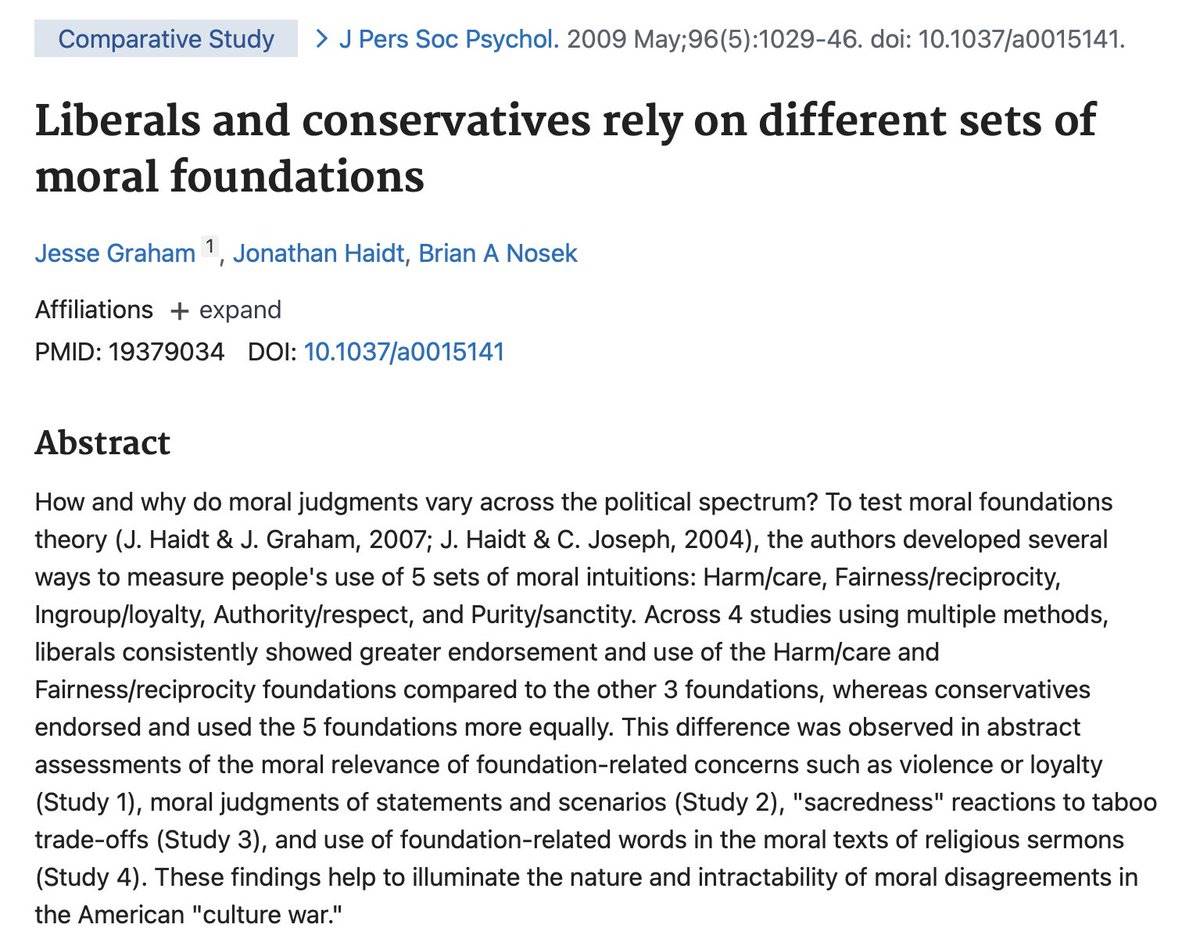
Is weakly associated with unique configurations of moral values
-
Is strongly correlated with knowledge about Bitcoin
We wanted to understand who owns Bitcoin, who doesn't, and why. This required going beyond surface-level statistics and delving into the roots of our psychosocial identities. Many frameworks claim to do this, but my research partner @andrewwperkins chose "moral foundations" and designed a comprehensive set of questions. Then we hired a professional firm to help us achieve a representative sample.
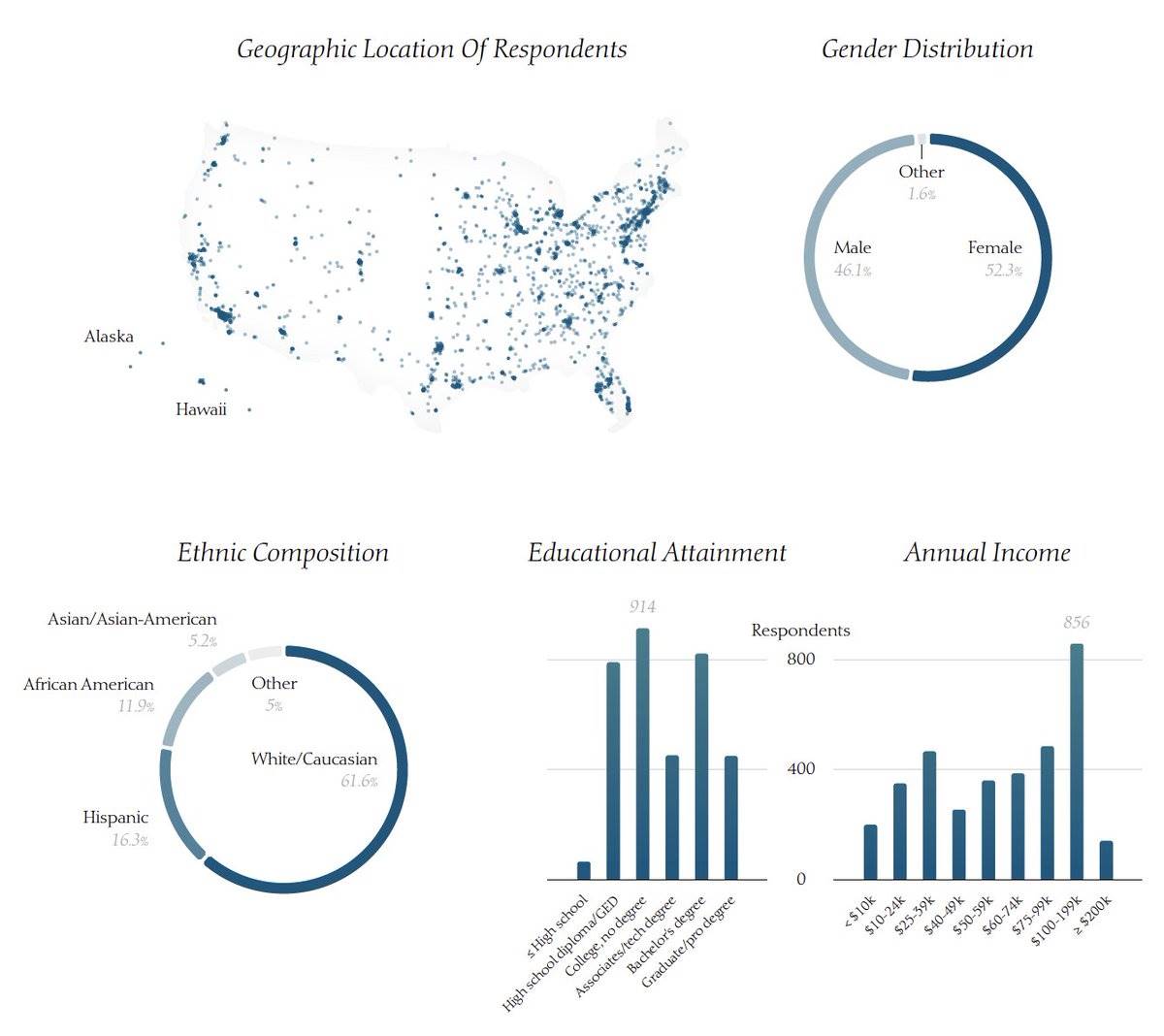
Every Bitcoin holder knows true randomness is hard to achieve, but we believe even visually you can see we did quite well across several dimensions in achieving a fairly representative sample. And it's large—3,538 people.
Demographics
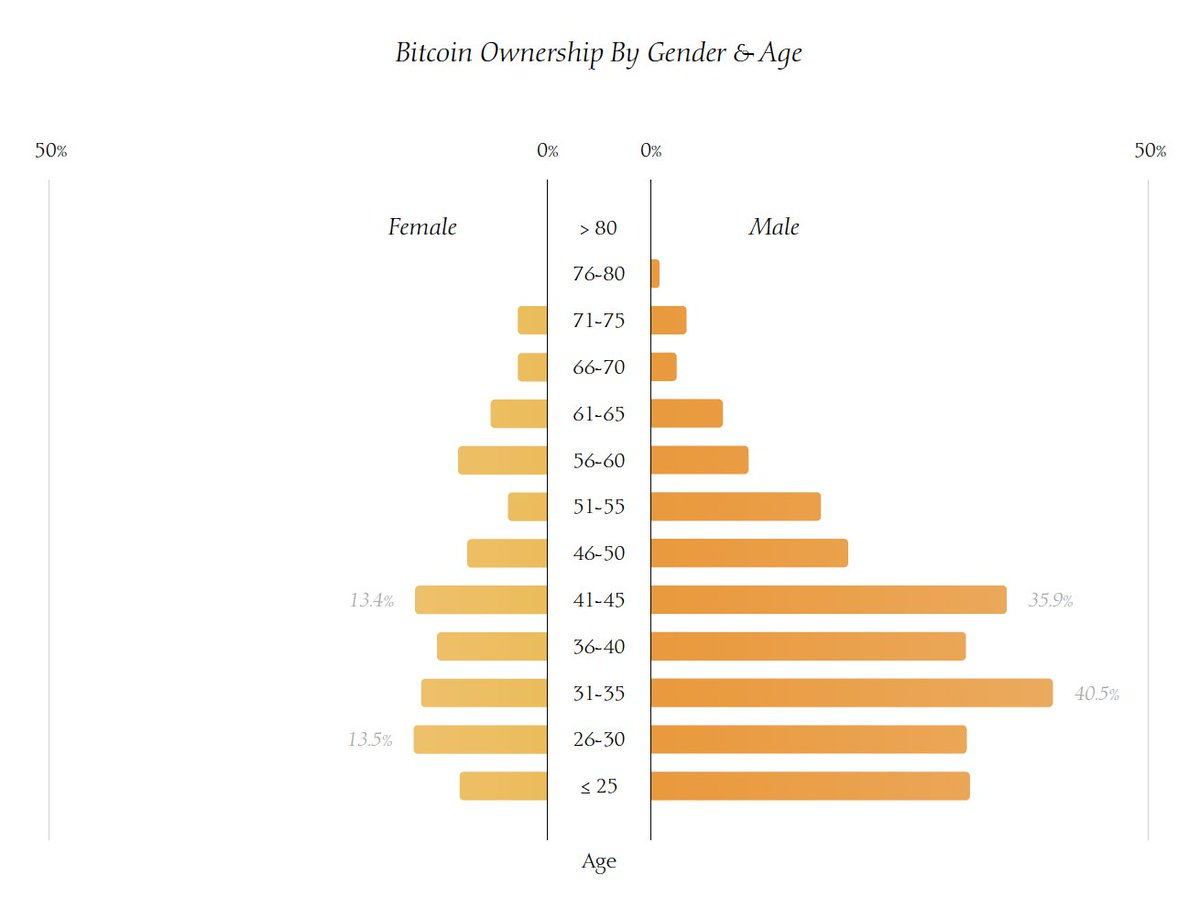
We found no strong correlations across many dimensions—race, ethnicity, religion, relationship status, income, education, or financial literacy—with owning Bitcoin. Age and gender are the exceptions. Bitcoin holders in the U.S. tend to be younger and male.
Politics
Part of what shapes American identity and behavior is surprisingly political orientation. Our political divides appear not only to be deepening but becoming the most important fact about identity, surpassing all other factors. So we measured it five different ways:
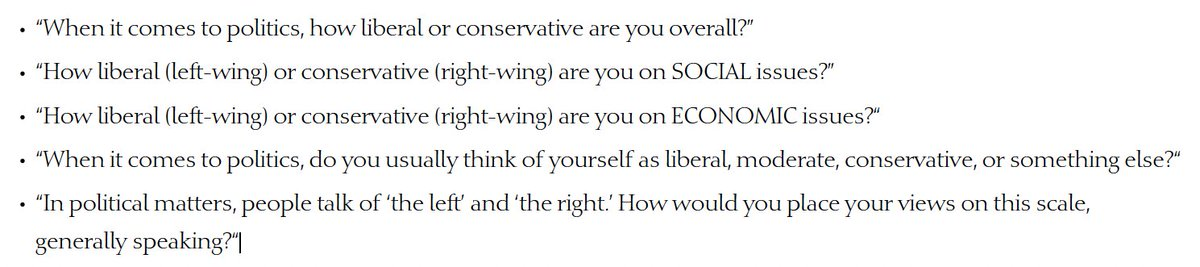
The results we found were absolutely shocking. Like most people on this app, our media critics, academics writing about Bitcoin, and nearly all politicians, we assumed Bitcoin ownership would lean right-wing and libertarian. Wrong!
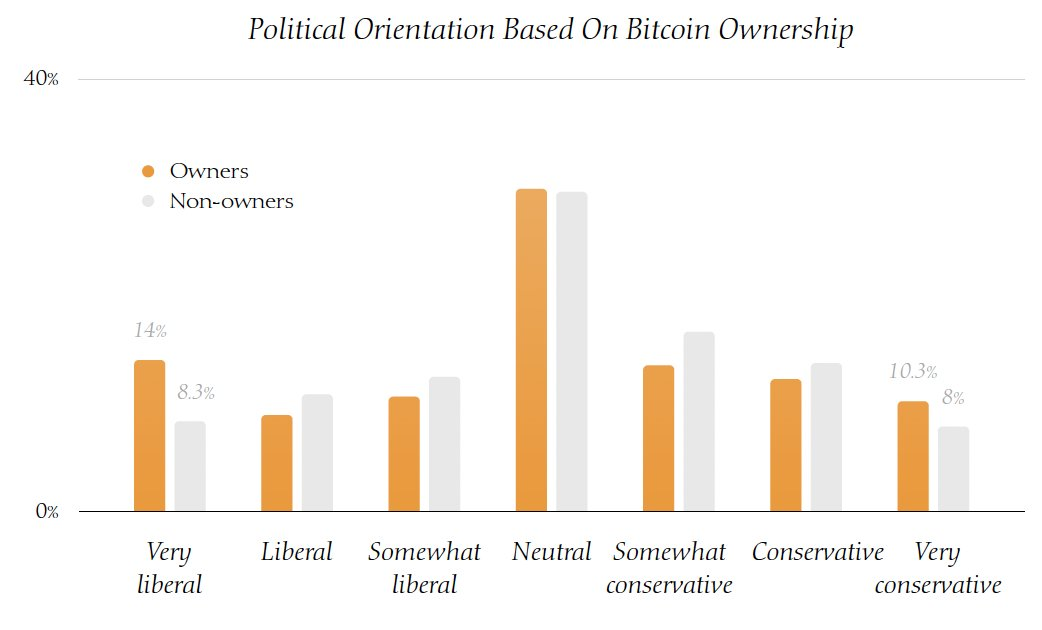
Bitcoin holders in our sample look almost identical to non-holders: the majority are moderates! They are still slightly more likely than non-holders to lean toward political extremes, whether liberal or conservative. (Statistically significant but small.)
Stranger still, those who identify as "very liberal" or place themselves at the far left on a 10-point scale are more likely to own Bitcoin than any other political group.
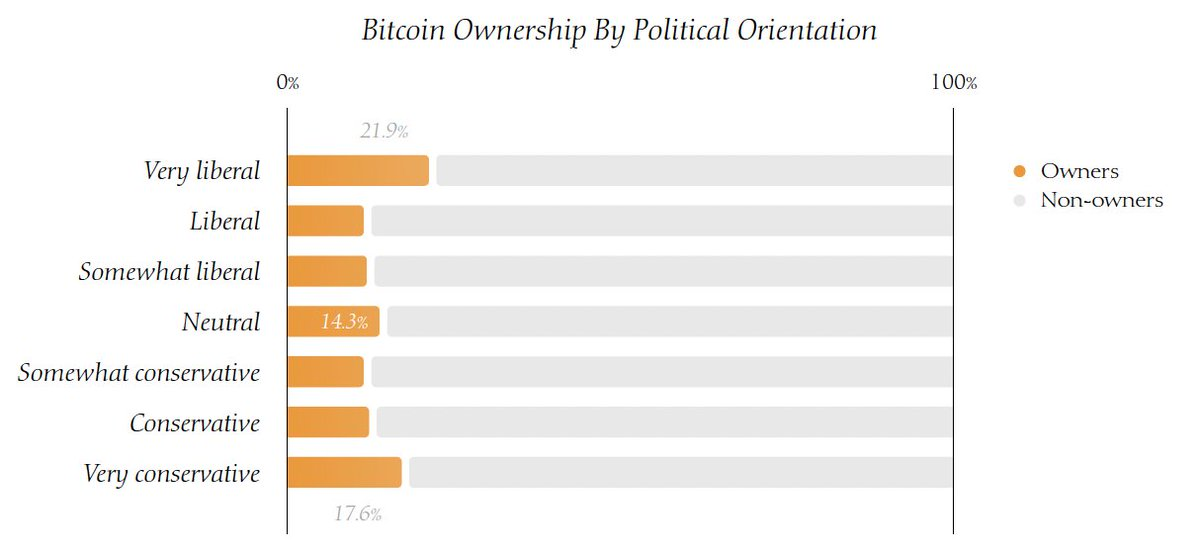
Note that the chart above does not mean there are more very liberal Bitcoin holders than any other political group. That’s not true. Most Bitcoin holders are moderates. It means that if you randomly select one very liberal person and one moderate person, the liberal is more likely to own Bitcoin.
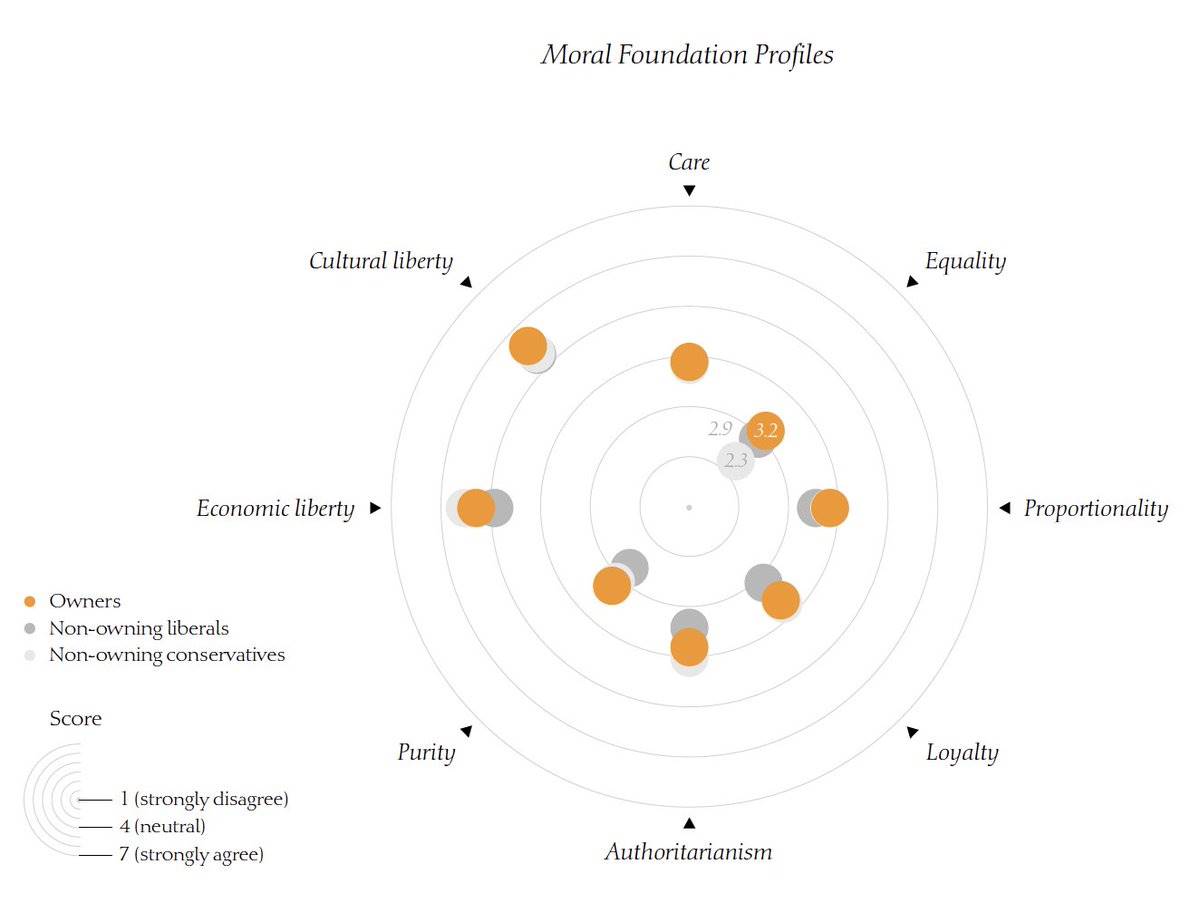
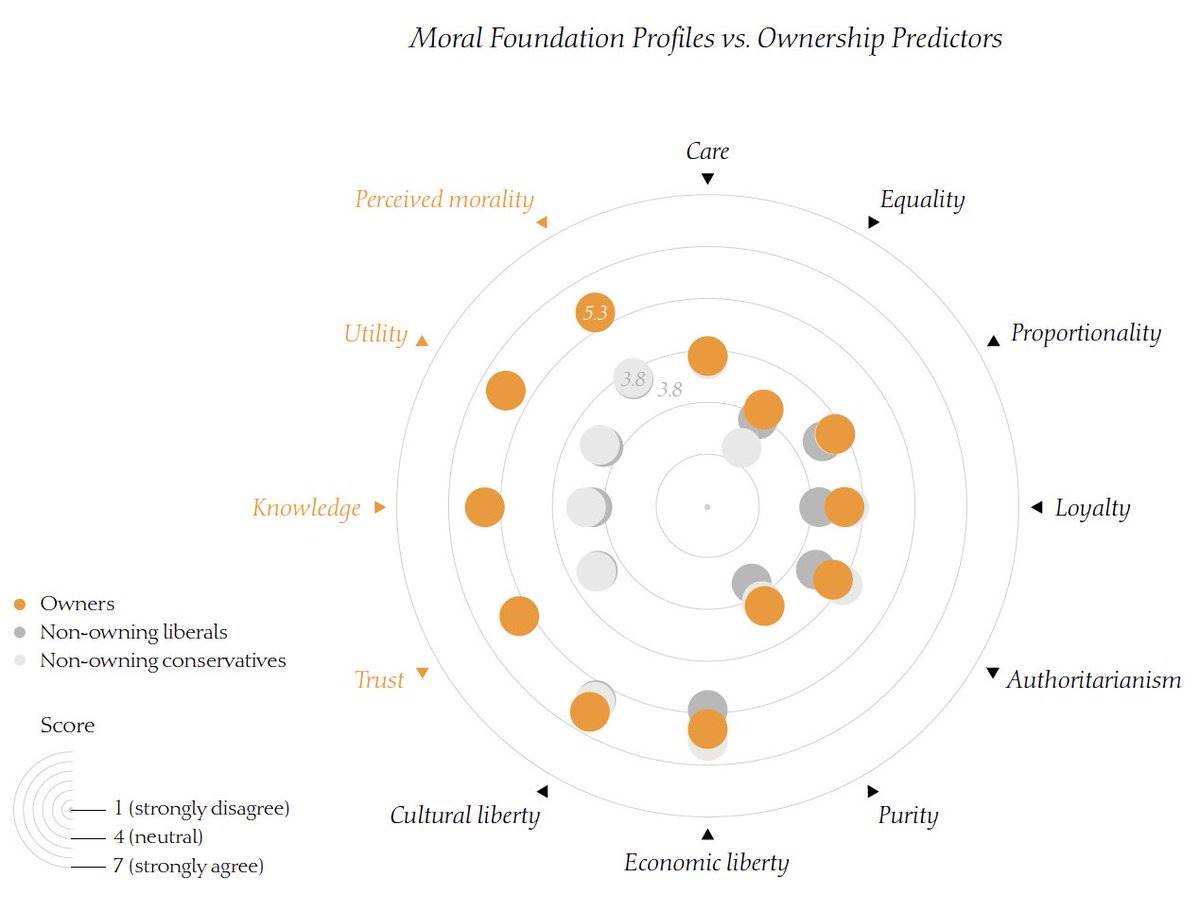
Regarding "moral foundations," we know liberals and conservatives value different things. For example, liberals prioritize "care," while conservatives emphasize "loyalty." We wanted to see which side Bitcoin holders favored. The answer? Both.
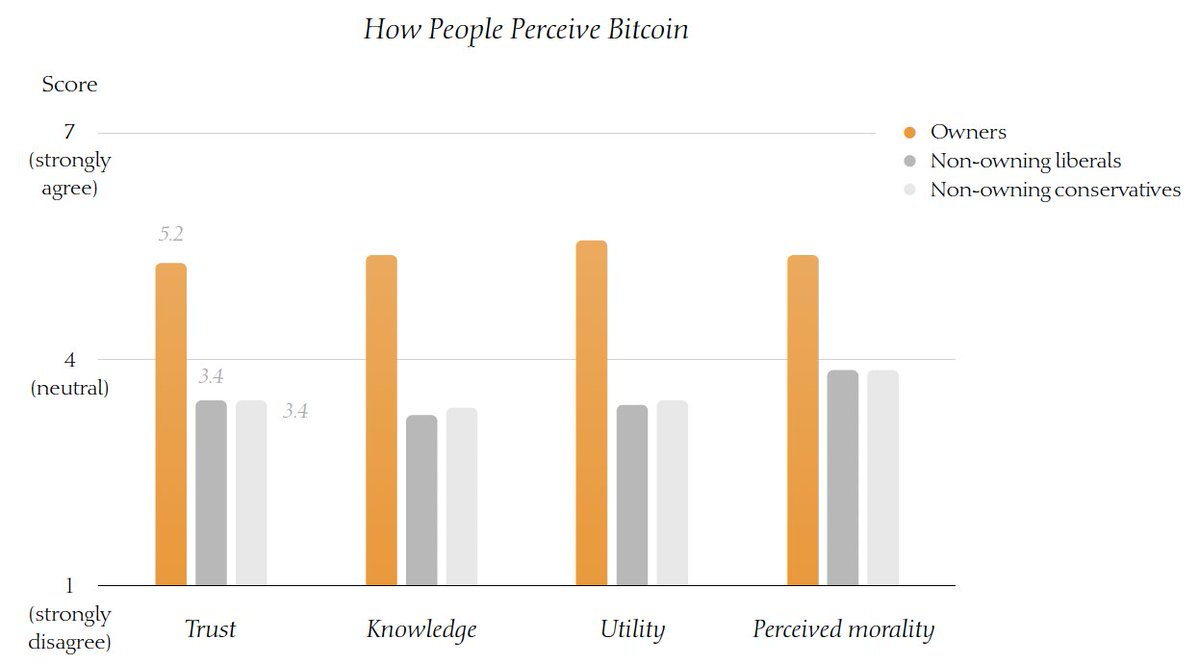
Finally, we examined whether people understand Bitcoin, trust it, perceive it as useful, and view it positively. We asked four questions for each dimension. The results show Bitcoin holders differ significantly from non-holders across all political affiliations in these areas.
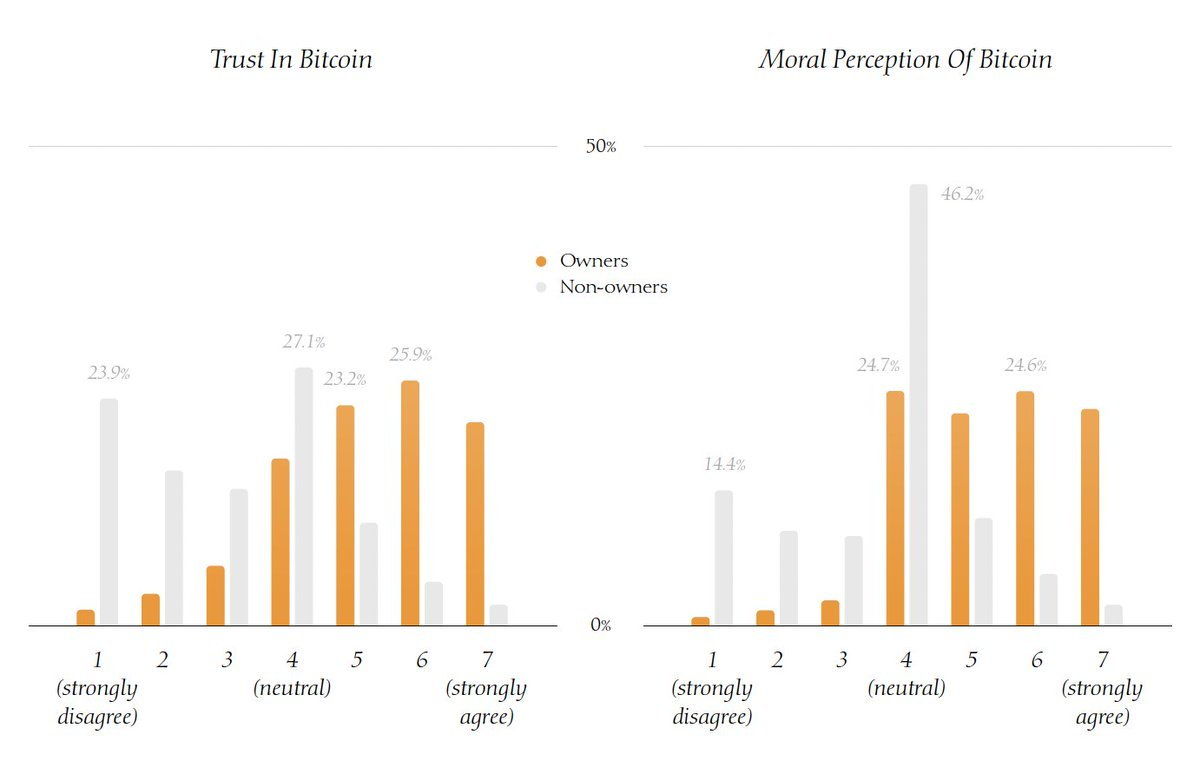
Looking specifically at trust and perceived morality, you can clearly see the stark contrast between Bitcoin holders and non-holders.
These four factors—trust, knowledge, usefulness, and perceived morality—are the strongest correlates of Bitcoin ownership in our data. They are also highly interrelated. Here, you can see how these factors compare with moral foundations.
To summarize our findings, I quote the conclusion from our report:
"Given our polarized political discourse, one might assume Bitcoin ownership is an identity—particularly one reflecting political affiliation."
But we found this isn't true. Bitcoin owners are politically similar to other Americans: mostly moderates, with only small numbers of conservatives and liberals.
Bitcoin owners resemble other Americans across most demographic dimensions, with one notable exception: they tend to be younger and male.
The strongest predictors of Bitcoin ownership aren't who you are, but how much you know about Bitcoin and whether you believe it is useful, trustworthy, and good.
It turns out the 14% of Americans who own Bitcoin aren't members of a particular political tribe. They're ordinary Americans who took the time to study the technology and formed a positive opinion about it.
(Full report available at: https://thenakamotoproject.org)
Join TechFlow official community to stay tuned
Telegram:https://t.me/TechFlowDaily
X (Twitter):https://x.com/TechFlowPost
X (Twitter) EN:https://x.com/BlockFlow_News
 @thetrocro


