From crypto-native to CEX-native: Why are exchanges so keen on building their own blockchains?
TechFlow Selected TechFlow Selected
From crypto-native to CEX-native: Why are exchanges so keen on building their own blockchains?
This report explores the background and objectives behind CEXs developing native blockchains, and analyzes the impact of these strategies on the cryptocurrency market and Web3 ecosystem.
 Navigating Web3 tides with focused insights
Authors: CHI ANH, JAY JO & YOON LEE
Translation: TechFlow

Summary
-
Purpose of Native Chains: Exchanges like Binance and Coinbase build their own blockchain platforms to strengthen ecosystems and diversify revenue models, adapting to rapidly changing market conditions.
-
Types of Native Chains: Native chains can be broadly categorized into two types. The first is token-centric native chains, such as Binance’s ecosystem, which enhance exchange and ecosystem value through their own tokens. The second is technology-centric native chains, focused on blockchain performance and functionality without relying on a token.
-
Challenges of Native Chains: Despite the significant advantages demonstrated by Binance and Coinbase, developing and adopting native chains still faces major challenges and regulatory risks. Huobi's HECO Chain serves as an example illustrating these difficulties, requiring substantial resources to attract initial users and applications.
1. Introduction
The cryptocurrency market is known for its dynamic and rapid growth. Despite fast-changing market conditions, centralized exchanges (CEXs) continue to maintain a critical position. From past to present, these exchanges have consistently expanded their influence.
CEXs play a key role in the Web3 ecosystem, supported by strong business models and stable revenue streams. Recently, their roles have further evolved to include providing blockchain infrastructure. Notable examples include Binance’s BNB Chain and Coinbase’s BASE Chain, both of which have enhanced their market presence by building proprietary Web3 ecosystems. The recent launch of HashKey Chain by HashKey Exchange—a Layer 2 solution based on Ethereum—further reinforces this trend.
This report explores the motivations and objectives behind CEX development of native chains, analyzing how these strategies impact the cryptocurrency market and the broader Web3 ecosystem. Through this analysis, we aim to provide insights into the evolution of centralized exchanges and the future direction of the Web3 market.
2. How Do CEXs Generate Revenue Through Native Chains?
CEXs develop and operate native chains according to different strategic goals. Their approaches can be broadly divided into two categories. The first is token-centric native chains, the most commonly adopted strategy among CEXs, which builds ecosystems around their proprietary tokens. The second is technology-centric native chains, focusing on blockchain performance and functionality rather than token utility.
2.1 Token-Centric Native Chains
Source: OKX
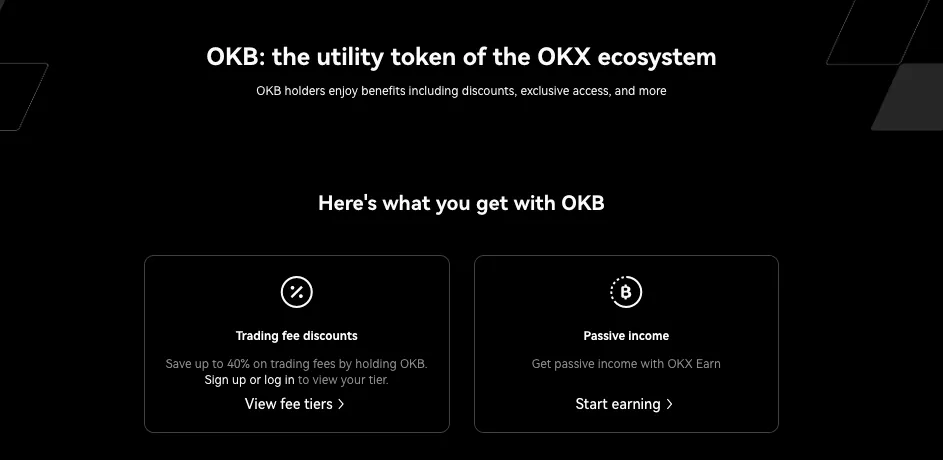
Token-centric native chains are the most common approach among centralized exchanges (CEXs). Exchanges such as Binance, OKX, and Crypto.com adopt this model. By issuing tokens to enhance the value of existing trading operations, offering incentives based on tokenomics, and leveraging tokens to attract numerous projects into their ecosystems, this strategy enables rapid expansion of users and ecosystem participants. Furthermore, it diversifies business models and locks users into the exchange by linking various services and delivering direct, visible benefits.
For instance, Cronos by Crypto.com supports staking and network rewards while allowing users to access DeFi functions using their $CRO token. This token also grants higher cashback rates, discounts, online shopping privileges, and exclusive rewards. OKX offers reduced trading fees and helps users generate stable yields via OKX Earn. Binance expands its token value by building DeFi and GameFi ecosystems within its platform.
This token-centric model effectively positions exchanges as integrated blockchain ecosystems, offering greater value and incentives to users. However, it should be noted that this model is vulnerable to token price volatility and regulatory risks.
2.2 Technology-Centric Native Chains (Non-Token Model)
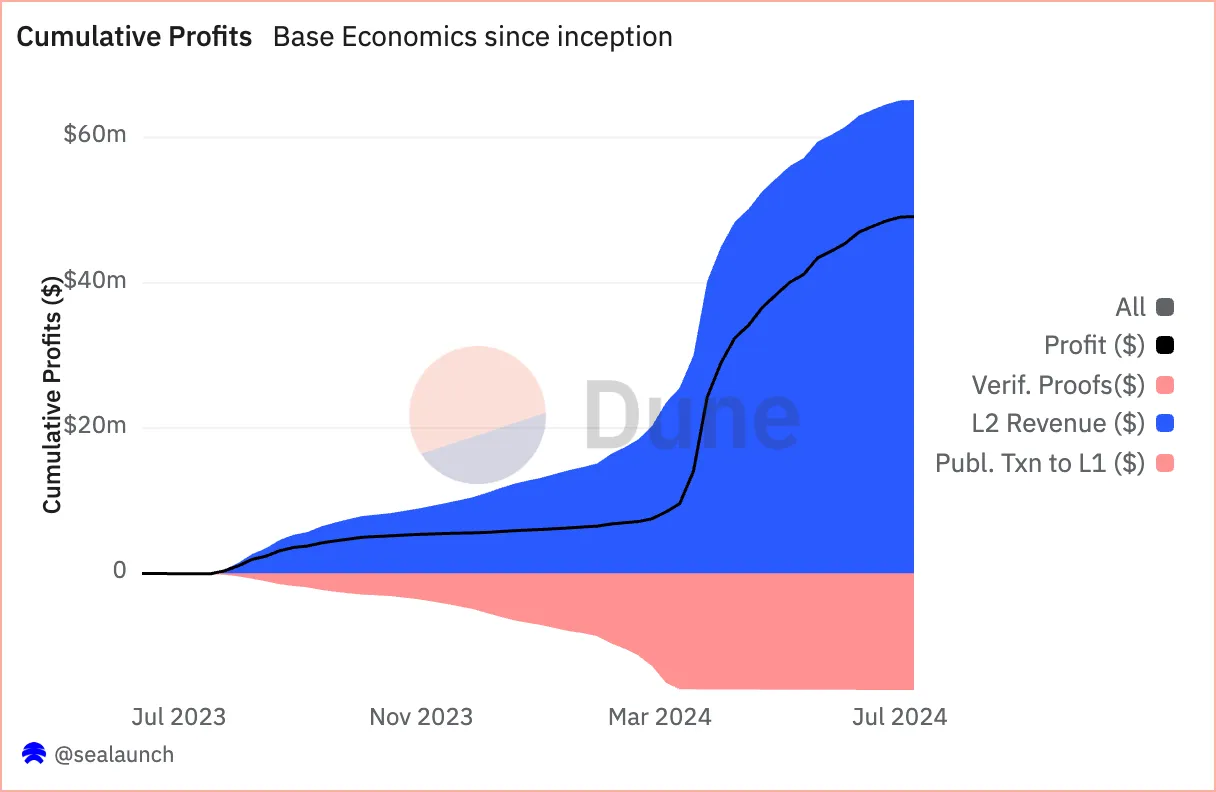
Coinbase is a prime example of a technology-centric native chain. Developing a native chain brings multiple strategic advantages to Coinbase, particularly in diversifying revenue streams. The primary source of revenue in this model comes from transaction fees. As the sole sequencer of the BASE chain, Coinbase controls all transactions on the chain, generating substantial income.
Source: @sealaunch
BASE maximizes revenue and reduces costs by batching multiple user transactions into a single transaction on Ethereum. As an L2, BASE must roll up transactions to Ethereum (L1), and bundling more transactions lowers the per-transaction cost.
For example, if Chain A and BASE each charge $1 per transaction, Chain A earns $50 from bundling 50 transactions, while BASE earns $100 from bundling 100. If both pay $50 to Ethereum for posting data, Chain A breaks even, whereas BASE nets $50. This efficiency allows BASE to maximize profits by batching more transactions effectively.
Since the launch of BASE in August 2023, the chain has generated approximately $65.1 million in fees. Of this, $16 million was paid to the Ethereum network, while $49.1 million went to Coinbase as profit. However, BASE shares revenue with Optimism—the developer of the underlying OP Stack technology. Under the agreement, Coinbase must share either 2.5% of BASE’s revenue or 15% of its net profit, whichever is higher, with the Optimism DAO. Additionally, future decentralization of BASE’s sequencing could further limit profitability.
Another important revenue strategy involves issuing stablecoins on-chain. Coinbase partnered with Circle to launch USDC on BASE, earning interest from the USD collateral backing USDC. In Q1 2024 alone, this collaboration brought Coinbase $197.32 million, accounting for 12% of its total quarterly revenue. Given that $3 billion worth of USDC is already on BASE, Coinbase and Circle likely have a favorable arrangement for BASE-issued USDC, potentially generating substantial interest income—possibly exceeding transaction fee revenue.
The benefits of BASE for Coinbase extend beyond financial gains. BASE strengthens Coinbase’s brand image, showcasing the exchange’s leadership in industry innovation and solidifying its unique position within the ecosystem. Moreover, BASE serves as a foundation for business expansion, enabling Coinbase to extend its reach into various industries powered by blockchain technology.
3. Is a Native Chain an Attractive Option or a Bubble?
The decision by centralized exchanges (CEXs) to build native chains varies depending on each exchange’s goals and environment. This approach involves a multifaceted decision-making process that goes beyond mere technical choice, encompassing complex real-world scenarios and various risks.
Advantages:
-
Flexible Customization: Ability to build optimized infrastructure tailored to the exchange and its users’ needs.
-
Revenue Diversification: Creation of new revenue streams through proprietary blockchain operations.
-
Ecosystem Expansion: Business scope expansion by cultivating independent ecosystems.
Disadvantages:
-
High Development Costs: Blockchain development and maintenance require significant resources.
-
Intense Competition: Challenges in attracting initial users and achieving network effects, similar to other blockchains.
-
Regulatory Risks: Need to navigate complex regulatory environments as operators of crypto assets.
Building a native chain is undoubtedly an attractive option, but it also entails numerous risks and challenges. Successful cases like Binance’s BNB Chain and Coinbase’s BASE demonstrate various benefits, such as creating new revenue streams and expanding user bases.
In contrast, failures like Huobi’s HECO Chain show that success is not guaranteed. Achieving network effects and securing a meaningful user base in the highly competitive blockchain market remains a formidable challenge.
Regulatory risk is another critical consideration. For example, Coinbase’s decision not to issue a native token for BASE may reflect concerns about potential reactions from regulators like the SEC. This highlights the need for exchanges to carefully assess the regulatory landscape when formulating native chain strategies.
Developing a native chain may be an appealing option for exchanges, but it is a complex strategic decision—not simply a passing trend or bubble. Each exchange must comprehensively evaluate its strengths, target markets, regulatory environment, and technical capabilities to determine whether this strategy is appropriate.
4. Conclusion
Recently, interest among centralized exchanges (CEXs) in developing native chains has surged across the cryptocurrency industry. Hong Kong-based HashKey Exchange announced the launch of HashKey Chain, an Ethereum Layer 2 solution. South Korea’s Korbit exchange has also begun developing its own blockchain platform, drawing inspiration from Coinbase’s BASE. This indicates that blockchain designs centered on technological infrastructure are now seen as having significant profit potential.
In particular, given South Korea’s Virtual Asset User Protection Act, which restricts exchanges from listing tokens in which they have a vested interest, Korbit’s move may reflect confidence that sufficient revenue can be generated through transaction fees alone.
Although blockchain infrastructure has primarily developed in the Western world, Asian exchanges are now entering the chain development space, intensifying global competition in infrastructure. With relatively abundant capital and stability, the participation of Asian exchanges is expected to enhance diversity and innovation across the blockchain ecosystem.
Ultimately, the success of these initiatives is expected to deliver tangible value to users, drive widespread adoption, and significantly advance blockchain technology. Beyond expanding exchange business models, these efforts will catalyze innovation and growth across the entire blockchain ecosystem. Closely monitoring how these developments shape the future of the cryptocurrency market and the Web3 ecosystem is essential.
Join TechFlow official community to stay tuned
Telegram:https://t.me/TechFlowDaily
X (Twitter):https://x.com/TechFlowPost
X (Twitter) EN:https://x.com/BlockFlow_News
 @tiger_research