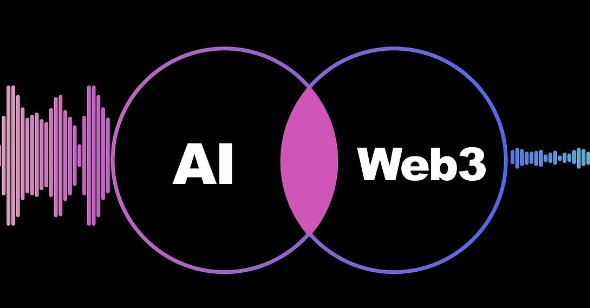
Will AI + Web3 become the catalyst for this bull market?
TechFlow Selected TechFlow Selected
Will AI + Web3 become the catalyst for this bull market?
AI + Web3 is indeed a major trend, but actual implementation and development aren't progressing as quickly.
 Navigating Web3 tides with focused insights
Author: Haotian
There's widespread hope that AI+Web3 will become the catalyst for this bull market, evident from the high valuations and heavy investments poured in by VCs. But here's the question: what are the current challenges facing the AI+Web3 convergence space? Drawing insights from @web3caff_zh’s systematic report, here are my thoughts:
1) AI training requires massive datasets, and Web3’s strength lies precisely in data tracking and the incentive mechanisms derived from it. In the long run, AI will inevitably benefit from Web3, but we must recognize that Web3 can only solve a limited set of AI-related problems.
For example, core areas such as large-scale data training, continuous algorithm optimization, computer vision, speech recognition, and game AI primarily depend on centralized computing power, chips, and software-hardware co-optimization. Advancements pushing the boundaries of AI—like deep learning convolutional neural networks, reinforcement learning, and brain-inspired computing models—have no viable short-term role for Web3.
2) Generative AI represents just a small segment within the broader AI landscape, yet it has accelerated the convergence between AI and Web3. This is because generative AI is an application-oriented, democratized technology. Ideally, foundational large models would be developed by major companies using centralized compute resources and released under open-source policies, thereby driving innovation in upper-layer applications. As a result, the overall AI market will gradually become more long-tailed, with fine-tuning and inference gaining prominence.
However, if companies controlling core compute and model resources were to retract their open-source policies, the entire AI ecosystem would face immediate disruption. To mitigate such risks, infrastructure based on distributed computing and decentralized inference collaboration becomes essential.
3) Web3 can play a pivotal role in building these distributed AI frameworks. For instance: during model training, blockchain can assign unique identifiers to data sources, enabling deduplication and improving training efficiency; when compute capacity is insufficient, blockchain-based tokenomics can incentivize the creation of a distributed AI compute network; during parameter fine-tuning, blockchain can record different model versions, track their evolution, and enable granular control;
during model inference, technologies like ZK (zero-knowledge proofs) and TEE (Trusted Execution Environments) can be leveraged to build decentralized inference networks that enhance communication and trust among models; in edge computing and DePIN integration, Web3 can help establish decentralized edge AI networks, advancing the convergence of AI and DePIN-powered IoT.
4) Vitalik previously noted that AI could gradually integrate into the Web3 world as a participant, implying that the fusion of AI and Web3 will necessarily be slow.
On one hand, mainstream Web2 attention remains focused on AI’s functional outputs rather than its underlying collaborative frameworks, resulting in a disconnect with Web3. On the other hand, Web3’s efforts in AI integration remain at the foundational infrastructure stage—such as distributed compute networks, decentralized inference architectures, tokenomic application layers, and collaborative AI agent tooling—with limited validation or adoption among mainstream Web2 user bases.
In summary, while the convergence of AI and Web3 is undoubtedly a long-term trend, real-world progress won’t happen quickly. It may take an entire cycle—or even span multiple cycles—before significant advancements emerge. Patience is key.
Join TechFlow official community to stay tuned
Telegram:https://t.me/TechFlowDaily
X (Twitter):https://x.com/TechFlowPost
X (Twitter) EN:https://x.com/BlockFlow_News
 Haotian | CryptoInsight