








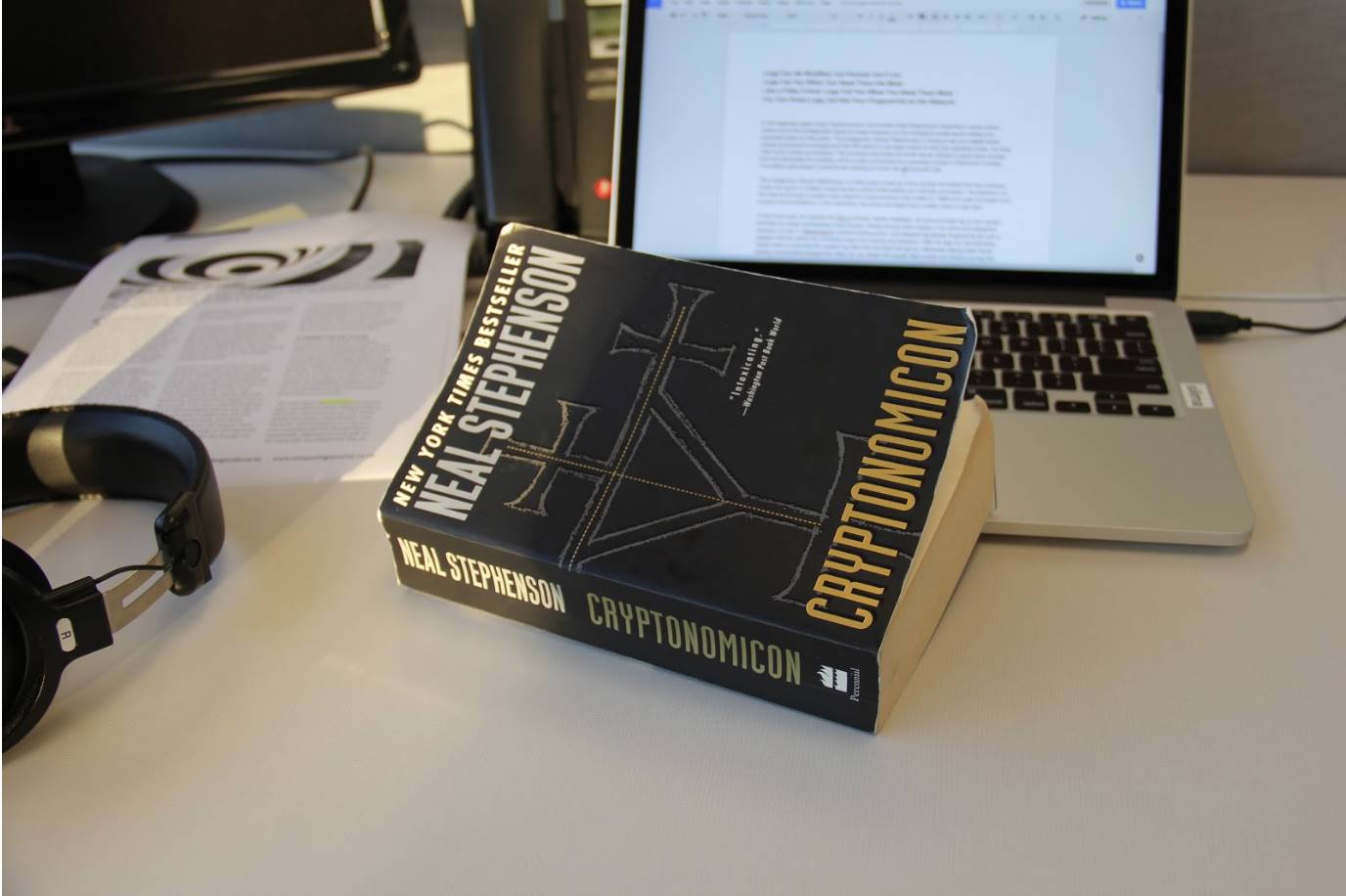
The Oracle: How 'Cryptonomicon' Foretold the Rise of Bitcoin?
TechFlow Selected TechFlow Selected
The Oracle: How 'Cryptonomicon' Foretold the Rise of Bitcoin?
This article will explore how Neal anticipated the future of cryptocurrency through *Cryptonomicon*.
 Navigating Web3 tides with focused insights
In 1999, when the internet was not yet widespread and digital technology was still in its infancy, Neal Stephenson foresaw the potential of cryptocurrencies and decentralized systems in his novel Cryptonomicon. This foresight is not only evident in this classic work but also runs through many of his other writings—such as the concept of the "metaverse" in Snow Crash. Many ideas from his books have now become reality, prompting an important question: Could Neal Stephenson’s works have inspired Satoshi Nakamoto and Bitcoin?
In this article, we will explore how Neal anticipated the future of cryptocurrency through Cryptonomicon, analyze the similarities and differences between the technological concepts in the novel and Bitcoin, examine Neal’s unique insights, and introduce his latest endeavor, Lamina1. Let’s take a closer look at how he has envisioned—and helped shape—the future of cryptocurrency through literary creation.
1. Neal Stephenson and Cryptonomicon
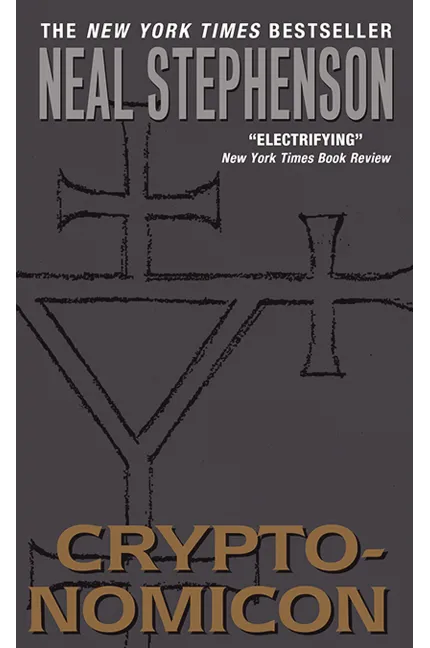
Neal is a renowned figure in contemporary science fiction literature. His 1999 masterpiece Cryptonomicon caused a sensation not only in the literary world but also sparked profound discussions in the fields of technology and finance. Cryptonomicon is an epic novel spanning time and space, blending historical events, technology, and adventure. The story unfolds across two timelines—World War II and the modern era—following the journeys of cryptographers, hackers, and mathematicians.
In the WWII timeline, the novel follows Lawrence Waterhouse, an Allied cryptographer, and Bobby Shaftoe, a Marine, as they collaborate with the Allies to crack Nazi Germany's encryption systems. In the modern timeline, Randy Waterhouse—Lawrence’s grandson—is a computer scientist who teams up with friends to build a cryptography-based digital currency system aimed at enabling anonymous online banking using electronic money and (later) digital gold currency. The book also features dramatized portrayals of numerous historical figures such as Alan Turing, Albert Einstein, Douglas MacArthur, Winston Churchill, Isoroku Yamamoto, Karl Dönitz, Hermann Göring, and Ronald Reagan. Notably, the novel is celebrated for its technical depth, offering detailed explanations of modern cryptographic principles—like RSA—built on information theory, modular arithmetic, and prime factorization, along with references to topics in computer security such as the UNIX operating system.
Known for his meticulous technical descriptions and complex narrative structures, Neal delivers no less in Cryptonomicon. The novel captivates readers with rich historical and technical detail while underscoring the importance of cryptographic technology in safeguarding information security and personal privacy. More than just a thrilling adventure, Cryptonomicon functions as a prophetic vision of modern digital currencies and decentralized systems. As Bitcoin and cryptocurrencies rise, many of Neal’s late-20th-century speculations are gradually becoming reality. So, what specific elements in this novel foreshadow today’s cryptocurrencies? And how has it exerted a lasting influence on the modern digital economy?
2.1 Early Depictions of Cryptocurrency Concepts
2.1 Vision of Electronic Money
In Cryptonomicon, Neal describes a company called “Epiphyte Corporation,” dedicated to developing a cryptography-based digital currency system. This company aims to leverage advanced encryption and distributed networks to create a secure, anonymous, and decentralized electronic payment system. The e-money in the novel is designed as a globally accessible means of electronic payment that bypasses traditional banking systems, enabling direct peer-to-peer transactions.
This vision bears striking resemblance to today’s cryptocurrency systems. Although Bitcoin did not emerge until 2008, Neal had already articulated similar ideas in 1999—an undeniably forward-thinking achievement.
2.2 Public-Key Cryptography and Digital Signatures
In Cryptonomicon, Neal describes the use of public-key cryptography and digital signatures. Virtual currency transactions are secured via public-key encryption, where each user possesses a key pair: a public key for encrypting transaction data and a private key for decryption and signing. These technologies form the foundation of modern cryptocurrency systems.
Public-key cryptography is an asymmetric encryption method centered on the generation and use of key pairs. Each user generates two keys: a public key and a private key. The public key is openly shared, while the private key must remain strictly confidential. This design ensures secure and private communication. In the novel, Randy Waterhouse and his team frequently exchange sensitive information protected by public-key encryption. When Randy sends encrypted data, he uses the recipient’s public key to encrypt the message. This process converts plaintext into ciphertext, ensuring that even if intercepted, only the holder of the corresponding private key can decrypt it. The recipient then uses their private key to decrypt the ciphertext back into readable plaintext. Only someone with the correct private key can perform this decryption, making communications both secure and highly private. This method allows Randy’s team to transmit classified data confidently, preserving confidentiality throughout transmission.

Digital signatures represent another critical technology used to verify data integrity and authenticity. They ensure that data has not been altered and was indeed created by a specific sender. In Cryptonomicon, Randy and his team extensively employ digital signatures to maintain the reliability of transactions and communications. When Randy initiates a transaction or sends important data, he first computes a hash value of the content. A hashing algorithm transforms data of any length into a fixed-length hash, ensuring consistency and integrity. He then encrypts this hash with his private key to generate a digital signature—a step that guarantees only Randy could have produced it, preventing forgery. Upon receiving the signed data, the recipient decrypts the signature using Randy’s public key to retrieve the original hash. They independently compute the hash of the received data and compare it with the decrypted one. If both hashes match, the verification succeeds, proving the data is unaltered and genuinely originated from Randy. Thus, digital signatures not only protect data integrity but also authenticate the sender’s identity.
These mechanisms closely mirror how Bitcoin transactions operate. Bitcoin users hold a key pair: a public key (which serves as the Bitcoin address) and a private key. The public key receives Bitcoin, while the private key signs transactions to prove ownership. This cryptographic framework ensures the security and non-repudiation of Bitcoin transactions, enabling safe peer-to-peer exchanges.
2.3 Decentralized Networks
Neal envisions a distributed system in the novel that operates without a central authority, where multiple nodes collectively maintain data integrity and security. This concept parallels Bitcoin’s blockchain technology in remarkable ways.
In Bitcoin, the blockchain acts as a distributed ledger recording all transactions. Every node stores a complete copy of the ledger, ensuring transparency and immutability. Through the Proof-of-Work (PoW) mechanism, nodes collaboratively validate and record transactions, maintaining the network’s decentralization and security.
2.4 Privacy Protection and Anonymity
Privacy protection and anonymity are central themes in Cryptonomicon. Neal illustrates how encryption safeguards user privacy, rendering transactions untraceable and immune to surveillance—a principle echoed in modern cryptocurrencies.
While Bitcoin is not fully anonymous, it offers a degree of privacy through public key addresses and obfuscation techniques. Users’ real identities are not directly linked to their Bitcoin addresses, granting a high level of transactional anonymity. Furthermore, subsequent cryptocurrencies like Monero and Zcash have enhanced privacy protections by employing more sophisticated cryptographic methods to achieve greater transactional anonymity.
2.5 Realizing Digital Currency
Cryptonomicon presents an early vision of a digital economy built on cryptographic technology. In the real world, Neal’s predictions are increasingly materializing, with digital currencies gaining global adoption. Cryptocurrencies have not only transformed payment and transaction methods but also driven blockchain applications across finance, supply chains, healthcare, and beyond. The future Neal depicted in his novel is steadily unfolding, demonstrating his exceptional foresight and insight into technological evolution.
It’s possible that Satoshi Nakamoto, Bitcoin’s creator, drew inspiration from Cryptonomicon, adopting key technical concepts and design philosophies. In the following sections, we’ll delve deeper into Bitcoin’s origins and analyze the differences between the digital currency in Cryptonomicon and Bitcoin.
3. Satoshi Nakamoto and the Birth of Bitcoin
3.1 Background and Origins of Bitcoin
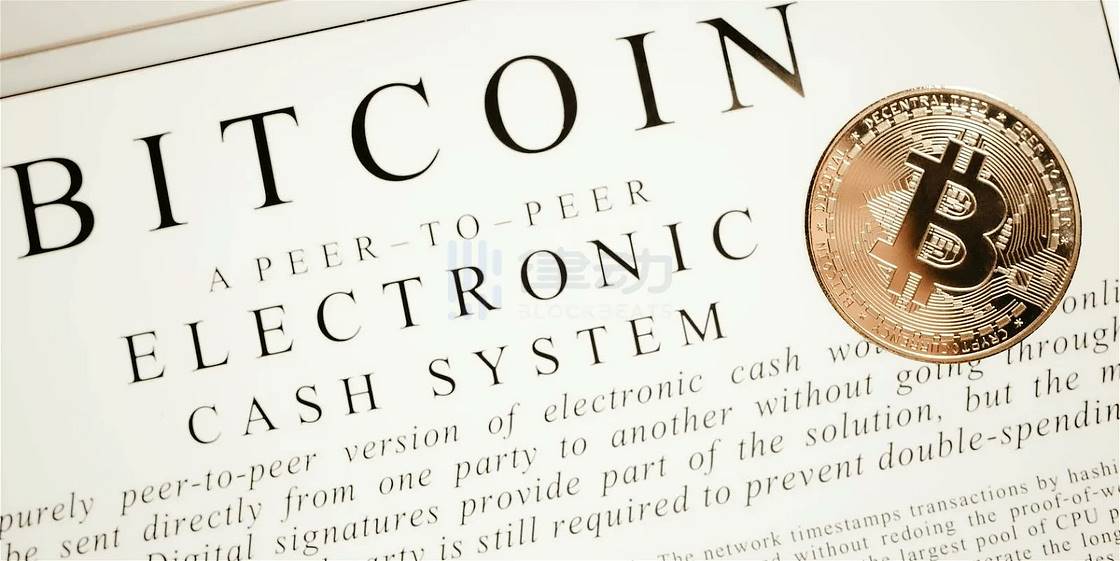
In 2008, a mysterious individual using the pseudonym Satoshi Nakamoto published the whitepaper titled “Bitcoin: A Peer-to-Peer Electronic Cash System,” introducing a revolutionary decentralized digital currency—Bitcoin. This document outlined a trustless electronic payment system powered by peer-to-peer networking and cryptography. In 2009, the Bitcoin network officially launched, and Satoshi mined the first block—the Genesis Block—marking Bitcoin’s birth.
Bitcoin emerged against a backdrop of deep socioeconomic significance. The 2008 global financial crisis eroded trust in traditional financial institutions, creating fertile ground for a decentralized alternative. Satoshi envisioned Bitcoin as a solution to systemic flaws in conventional finance—high transaction fees, delays, centralized control, and corruption risks.
3.2 Core Ideas in the Bitcoin Whitepaper
Satoshi’s Bitcoin whitepaper introduced several foundational concepts that shaped Bitcoin and subsequent cryptocurrencies:
- Decentralization: The Bitcoin network achieves decentralization through a distributed ledger (blockchain), with all nodes jointly maintaining the ledger, eliminating reliance on a central authority.
- Peer-to-peer transactions: Users can transact directly without intermediaries like banks or payment processors, reducing costs and complexity.
- Proof-of-Work (PoW): Bitcoin employs PoW, requiring miners to solve computationally intensive puzzles to secure the blockchain and validate transactions.
- Limited supply: The total Bitcoin supply is capped at 21 million coins, ensuring scarcity and guarding against inflation.
The articulation and implementation of these ideas made Bitcoin the first successful decentralized cryptocurrency, profoundly influencing the global financial landscape over the following decade.
3.3 Influence of Cryptonomicon on Bitcoin

Although Cryptonomicon is a work of fiction, its depictions of cryptographic technology, electronic money, and decentralized systems may have significantly influenced Satoshi’s design of Bitcoin. Neal’s detailed portrayal of a cryptography- and distributed-system-based electronic currency aligns closely with many of Bitcoin’s core principles.
3.3.1 Application of Cryptography
In Cryptonomicon, Neal provides an in-depth exploration of cryptography, illustrating how public-key encryption and digital signatures can ensure the security and anonymity of electronic transactions. When designing Bitcoin, Satoshi drew heavily from these cryptographic techniques, implementing SHA-256 hashing and ECDSA (Elliptic Curve Digital Signature Algorithm) to secure transactions and enable verification.
3.3.2 The Idea of Decentralization
Stephenson proposed a distributed system free from central authority in his novel—a concept fully realized in Bitcoin’s architecture. Satoshi leveraged blockchain technology to distribute transaction records across countless global nodes, each maintaining a full copy of the ledger. This decentralized design enhances system resilience and security while mitigating single points of failure and risks associated with centralized control.
3.3.3 Anonymity and Privacy Protection
Cryptonomicon emphasizes the importance of privacy and anonymity, depicting an electronic currency system where encryption protects user identity. Bitcoin offers partial anonymity by decoupling users’ real identities from their public addresses through cryptographic obfuscation. This design inherits the privacy-preserving ethos found in Cryptonomicon.
3.4 Differences Between Cryptonomicon and Bitcoin
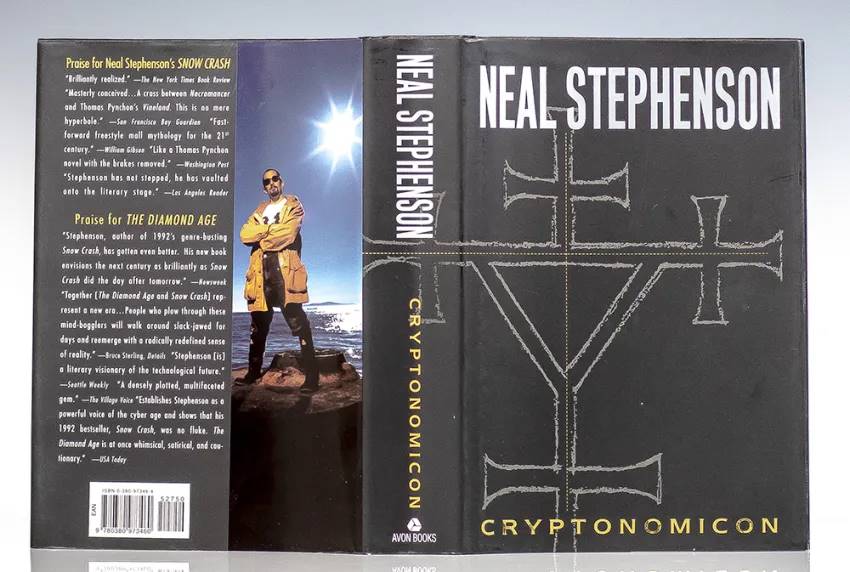
Despite Cryptonomicon anticipating many cryptocurrency concepts, as a fictional work it remained theoretical—more a conceptual or sci-fi speculation than a practical economic system. While it shares philosophical roots with Bitcoin, there are significant differences in actual design and implementation. Below are the main distinctions:
(1) Full Decentralization and Trust Mechanism:
In Cryptonomicon, Randy and his team design an electronic currency system focused on anonymous transactions and privacy. It relies on cryptography for security and authenticity, utilizing public-key encryption and digital signatures—key components of decentralized systems. However, the system in the novel does not achieve full decentralization.
Bitcoin, by contrast, is entirely decentralized, operating on a global peer-to-peer network without a central authority. Its trust model is based on Proof-of-Work: miners compete to solve complex mathematical problems to validate transactions and secure the blockchain. This mechanism allows every participant to verify transactions and blocks independently, removing reliance on any single entity.
(2) Ledger and Data Storage:
The “data haven” in Cryptonomicon imagines a highly secure and private environment where data is distributed across nodes to prevent single points of failure and central control. However, the ledger implementation resembles a more centralized or partially decentralized model, relying on storage systems hosted by specific nodes—contrasting sharply with Bitcoin’s fully decentralized ledger.
Bitcoin uses blockchain as a distributed ledger, where each block contains a set of transactions cryptographically linked to the previous one. All nodes maintain and validate copies of the entire chain, ensuring transparency and immutability. This structure eliminates dependency on any central party, giving Bitcoin superior decentralization in data storage and transaction recording.
(3) Encryption Algorithms and Security:
Cryptonomicon discusses various cryptographic concepts—including symmetric encryption, public-key encryption, and digital signatures—but does not specify exact algorithms or implementation details. While it emphasizes privacy and encryption, it lacks reference to standardized cryptographic protocols.
Bitcoin, however, implements specific cryptographic standards: ECDSA for transaction signatures and verification, SHA-256 for generating block hashes and ensuring data integrity, and double-SHA-256 for address generation to enhance security further.
The electronic currency system in Cryptonomicon differs significantly from Bitcoin in design and execution. While the novel anticipated many cryptocurrency concepts, Bitcoin achieved a fully decentralized system through blockchain, decentralization, and Proof-of-Work. In contrast, Cryptonomicon focuses more on cryptography, privacy, and security, lacking detailed specifications on decentralization and ledger mechanics. These technical and architectural differences enabled Bitcoin to become the first successful real-world decentralized cryptocurrency, while Cryptonomicon served primarily as a source of conceptual inspiration.
4. Neal Stephenson’s Unique Insight

Beyond predicting the rise of cryptocurrency, Neal Stephenson has introduced numerous groundbreaking technological visions in his other works. For instance, in Snow Crash, he envisioned a virtual reality “metaverse”—a concept now widely discussed and explored in today’s tech industry.
The decentralized electronic currency system in Cryptonomicon can be seen as a precursor to today’s diverse cryptocurrency projects. Following Bitcoin, platforms like Ethereum enabled smart contracts, accelerating the development of decentralized applications (DApps) and decentralized finance (DeFi), opening vast possibilities for the digital economy.
Moreover, Cryptonomicon’s emphasis on privacy and anonymity has inspired new cryptocurrency projects focused on stronger privacy protections, such as Monero and Zcash. These projects leverage advanced cryptographic techniques and privacy protocols to further strengthen transaction confidentiality and data security.
Neal’s works are not only treasures of science fiction literature but also profound reflections on the future of technology and society. With imaginative storytelling and rigorous technical detail, he reveals the transformative potential of technology, inspiring countless readers and professionals in the tech field.
5. Lamina1: Neal’s New Frontier

Neal’s foresight regarding cryptocurrencies and decentralized systems, first expressed in Cryptonomicon, has now come to life. In 2022, Neal Stephenson co-founded Lamina1 alongside Peter Vessenes, a founding member of the Bitcoin Foundation. The launch of this platform reflects deep vision and purpose.
Lamina1 aims to build a true “open metaverse,” providing robust technical infrastructure that enables seamless transitions between virtual worlds and consistent digital experiences. Neal and his team are developing tools and platforms to support developers and enterprises in building innovative decentralized applications on Lamina1, laying solid groundwork for the Web3 ecosystem.
As stated in the Lamina1 whitepaper: “To unlock trillions of dollars in virtual world economies, we must first focus on infrastructure, support, and usability. Lamina1 will host and drive economic and social transactions in the open metaverse, overcoming technical barriers to accelerate adoption and unlock capabilities.”
On May 28, the Lamina1 mainnet officially launched—a major milestone in its journey. Lamina1 is more than just a metaverse ecosystem; it is a tangible realization of Neal Stephenson’s vision for the future of digital society and technology. Through innovative blockchain solutions and open infrastructure, coupled with growing global impact, Lamina1 is poised to become a benchmark and marvel in the Web3 and metaverse space. In the future, Lamina1 will serve as the foundational layer of the metaverse, supporting billions of users and countless applications, emerging as a central force driving metaverse development and technological progress.
Join TechFlow official community to stay tuned
Telegram:https://t.me/TechFlowDaily
X (Twitter):https://x.com/TechFlowPost
X (Twitter) EN:https://x.com/BlockFlow_News










