








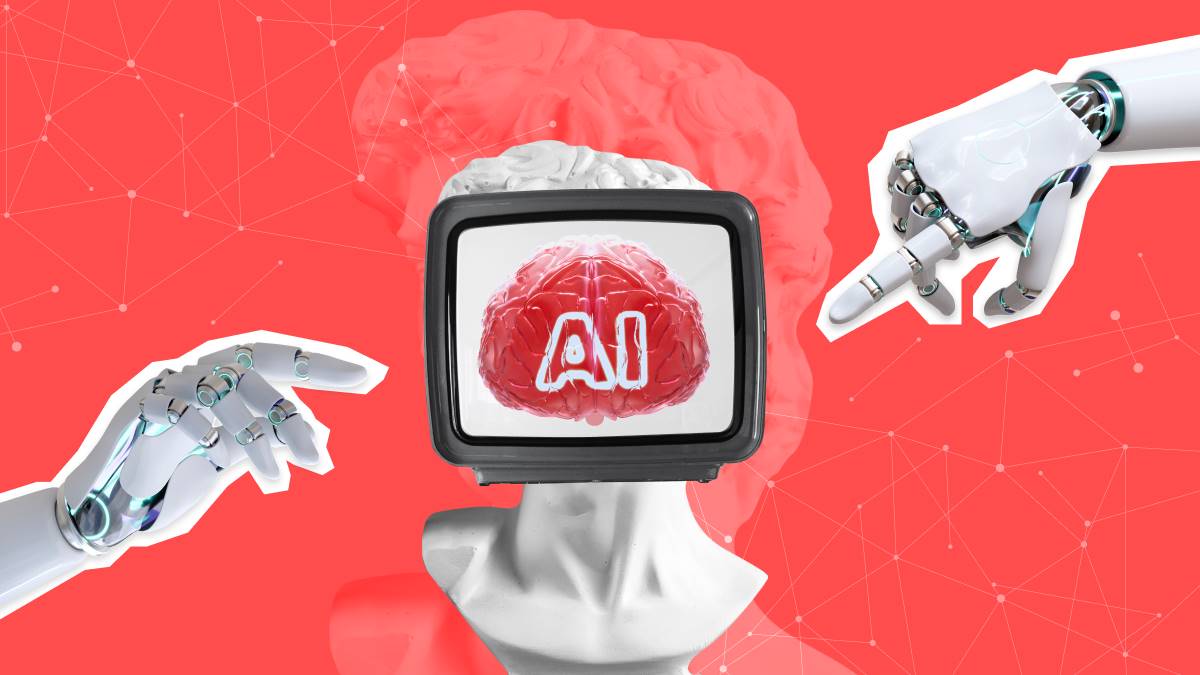
Why AI Agents Will Become the Next Hype Narrative in Web3?
TechFlow Selected TechFlow Selected
Why AI Agents Will Become the Next Hype Narrative in Web3?
This article begins with the functions of AI agents, analyzes their advantages and development directions, and introduces their broad applications in Web3.0.
 Navigating Web3 tides with focused insights
Author: Sonny Youn
Translation: Wanxiang Blockchain
This article is translated from Sonny Young's in-depth industry analysis on Medium titled "Why AI Agents Will Become the Next Hot Narrative in Web3," with minor edits that do not affect the original meaning. The article begins by exploring the functionality of AI agents, analyzes their advantages and development directions, and introduces their broad applications within Web3. Let’s dive in with Xiao Wan!
What Are AI Agents?
Imagine you’ve developed a game similar to Mario Kart. Mario, as an AI agent in the game, plays a crucial role in determining the outcome. Throughout the game, he must continuously make decisions—such as when to accelerate, turn, or jump—to skillfully avoid obstacles, overtake other racers, and ultimately win. In this example, the entire game environment and the behaviors of other racers constitute the AI agent’s surroundings. The agent makes optimal decisions based on these inputs. For instance, if the road ahead turns left, the intelligent agent will steer left accordingly.
At its core, an AI agent is a system capable of perceiving its environment, making decisions toward a given goal, and taking actions. These decisions are based on the agent’s understanding of its environment—such as its destination, current position, and surrounding obstacles. One of the most impressive features of AI agents is their adaptability. They can “learn,” meaning they improve their decision-making through interactions with the environment. For example, after multiple rounds of gameplay, the agent might learn how to better avoid obstacles or discover the optimal racing path, demonstrating its ability to evolve and adapt.
In summary, an AI agent is an artificial intelligence system that can perceive and understand its environment, make decisions, take actions, and continuously learn and evolve.
AI Agents—The Next Big Trend
In the evolution of large language models (LLMs), the next stage will unfold along two paths. On one hand, there’s a “downward” direction focused on refining and enhancing underlying systems. On the other, a “upward” expansion increases complexity, intelligence, and automation—essentially advancing agent-based models. A typical agent module integrates components such as memory, planning, execution, and reflection, enabling significantly higher intelligence compared to traditional LLM interaction modes.
Moreover, to meet diverse needs, people continue adding exciting new functionalities to these systems, constantly expanding the boundaries of imagination. Innovative ideas—such as integrating search engines and compiler capabilities—are already being realized in recent research.
While single agents are powerful and user-friendly, OpenAI GPTs represent the future of AI business models built on independent agents. In this model, developers and users co-create, customizing and purchasing GPTs tailored to their needs. OpenAI then shares profits generated from these creations with developers. This collaborative business model strengthens community cohesion and tightly connects communities, developers, platforms, and users around a shared vision of AI advancement.
However, our vision should not be limited by current possibilities. The future of AI is boundless, and so should our imagination. The potential for AI evolution is immense—an infinite potential that inspires and energizes us. For instance, could agents within GPTs gain the ability to independently learn and evolve?
Challenges of AI in Web3
Simply put, the core challenge in Web3 is the lack of truly user-centric projects. Here, “users” refer to the broad population who lack knowledge of complex trading strategies, aren’t familiar with Rust programming, and don’t know how to extract precise data from platforms like Massari, Dune, or DeBank. These users are especially critical during Web3’s early stages, as they form the largest segment of the ecosystem and must be effectively attracted and retained.
Migration from Web2
Smoothly transitioning Web2 users to Web3 has profound implications. First, Web3 marks the dawn of a decentralized era, granting users unprecedented control over their data, identity, and digital assets. By migrating Web2 users to Web3, we democratize technology and reinforce user sovereignty, enabling individuals to truly own and manage their online identities and data flows. This shift directly addresses public concerns about data privacy, censorship, and surveillance on centralized platforms, offering users a transparent, secure, and empowering alternative.
Second, bringing in Web2 users is essential for driving widespread adoption and mainstream acceptance of Web3. Beyond finance, Web3 holds revolutionary potential across healthcare, supply chain management, voting systems, content creation, and more. As Web2 users join, we expand the user base and ecosystem of decentralized applications (dApps). This network effect accelerates the maturation of decentralized networks. Broad adoption not only validates the practical value and viability of Web3 but also stimulates greater investment, research, and innovation in decentralized technologies—building a more robust, inclusive, and vibrant digital future.
Mass Adoption and Market Transformation
In today’s market landscape, numerous teams are quietly developing AI agent projects within the Web3 space. As competition intensifies, forward-looking strategic vision becomes critical for navigating this dynamic environment. Clearly, efficiency lies in precise market transformation—focusing on cultivating a unique, high-quality AI agent project rather than spreading resources thin trying to become a hub for multiple AI initiatives.
This approach deeply recognizes the complexity and multifaceted nature of the competitive landscape, where differentiation and innovation are prerequisites for market leadership. By concentrating resources and efforts on developing an exceptional AI agent project, companies can position themselves at the forefront of the evolving Web3 revolution. Moreover, this strategy extends beyond serving the Web3 community—it embodies a grand vision of transforming global Web2 users and providing them with services.
By adopting this comprehensive and forward-thinking strategy, businesses can capture market share in the emerging Web3 ecosystem, facilitate seamless integration and adoption of decentralized technologies among global audiences, establish themselves as industry leaders in transformative digital domains, and ensure sustained growth in this opportunity-rich yet challenging market.
Limitless Possibilities
Integrating AI agents with Web3 technologies creates powerful synergies, significantly enhancing the functionality of decentralized applications (dApps), improving user experience, and driving innovation. Below are specific ways AI agents integrate with Web3 technologies and the benefits they bring:
01 Decentralized Autonomous Organizations (DAOs)
-
Smart Decision Support: AI agents provide key insights by analyzing data in depth, helping DAOs make smarter, more efficient decisions.
-
Automated Governance Processes: AI agents automate governance procedures such as voting and proposal evaluation, enabling DAOs to respond faster and more effectively to various situations.
02 Smart Contracts
-
Advanced Automation Capabilities: AI agents can trigger and manage smart contracts based on complex conditions and data inputs, enabling more sophisticated and refined process automation.
-
Predictive Analytics and Optimization: Using advanced machine learning models, AI agents can predict contract execution outcomes and optimize the performance of smart contracts accordingly.
03 Personalized dApp Experiences
-
Deep User Customization: AI agents analyze user behavior and preferences to deliver highly personalized services and content recommendations, creating unique user experiences within dApps.
-
Smart Chatbots and Assistants: Integrating advanced AI chatbots provides users with real-time, efficient support and interaction, enhancing usability and accessibility on decentralized platforms.
04 Enhanced Data Privacy and Security
-
Intelligent Anomaly Detection: AI agents monitor blockchain transactions and user activities in real time, intelligently identifying and preventing potential security threats and fraudulent behaviors.
-
Data Privacy Protection: Through advanced data management techniques, AI agents ensure user data security and privacy while maintaining transparency and trustworthiness in blockchain systems.
05 Improved Interoperability and Scalability
-
Optimized Cross-Chain Interaction: AI agents enable seamless interoperability between blockchain networks, facilitating smooth transfer of data and assets across chains.
-
Transaction Processing and Resource Optimization: They significantly enhance the scalability and performance of decentralized networks by intelligently optimizing transaction processing and resource allocation.
06 Enhanced Supply Chain Transparency and Traceability
-
AI agents deeply analyze and verify data at every stage of the supply chain, enabling full transparency and ensuring authenticity and traceability of product origins.
-
With AI technology, supply chain operations become more efficient—demand forecasting, intelligent inventory management, and delay reduction are all optimized.
07 Intelligent Content Creation and Curation
-
AI agents can automatically generate and curate content for decentralized platforms (like social media dApps), ensuring it precisely matches user interests and delivers personalized, engaging experiences.
-
In content management, AI agents perform decentralized content moderation, effectively identifying and filtering inappropriate or harmful content to maintain platform integrity.
08 Healthcare and Self-Sovereign Identity Management
-
By deeply analyzing health data, AI agents empower users with personalized medical advice and predictive health management solutions.
-
Supported by blockchain technology, AI agents assist users in managing self-sovereign identities, giving individuals full control over their personal information and credentials, ensuring data security and privacy.
Combining AI agents with Web3 technologies not only optimizes decision-making and enables process automation but also delivers personalized user experiences, significantly enhances security, and ensures cross-chain interoperability. This integration fully leverages the strengths of both AI and blockchain, jointly building a smarter, more efficient, and user-friendly decentralized ecosystem.
Join TechFlow official community to stay tuned
Telegram:https://t.me/TechFlowDaily
X (Twitter):https://x.com/TechFlowPost
X (Twitter) EN:https://x.com/BlockFlow_News










