AI and Blockchain Convergence: A New Trend Disrupting the Computing Power Resource Allocation Landscape
TechFlow Selected TechFlow Selected
AI and Blockchain Convergence: A New Trend Disrupting the Computing Power Resource Allocation Landscape
This article will guide you through notable projects excelling in the AI and computing power market赛道.
 Navigating Web3 tides with focused insights
Author: dt
Editor: Lisa
The integration of AI and blockchain is currently one of the most watched topics in the industry, with developers actively exploring the possibilities of this convergence. Blockchain technology is now seen as an ideal solution to many issues—such as the inability to properly access AI services and computing power—and several projects have already begun forging their own paths in this space.
Today, Dr.DODO will walk you through some standout projects in the AI and computing power market sector.
AI + Blockchain
Projects focusing on AI within the blockchain space can primarily be categorized into three tracks:
-
Computing Power Resource Sharing: Blockchain technology can build decentralized cloud computing platforms that enable the sharing and efficient use of computing resources. Through smart contracts, idle computing power can be leased out to computational tasks in need, thereby improving resource utilization and reducing costs. Representative projects include io.net and Aethir.
-
AI Data Security and Verifiable Computing: Both AI and blockchain require processing vast amounts of data. Blockchain storage networks offer secure data storage and transmission, while AI analyzes this data to generate valuable insights. Combining the two can protect user privacy while providing reliable data sources for AI. Arweave is a leading project in this direction.
-
Decentralized AI: Deploying AI models onto blockchain networks enables decentralized artificial intelligence services, increasing system reliability and stability while reducing the risk of single points of failure. Bittensor is a representative project pursuing this vision.
io.net
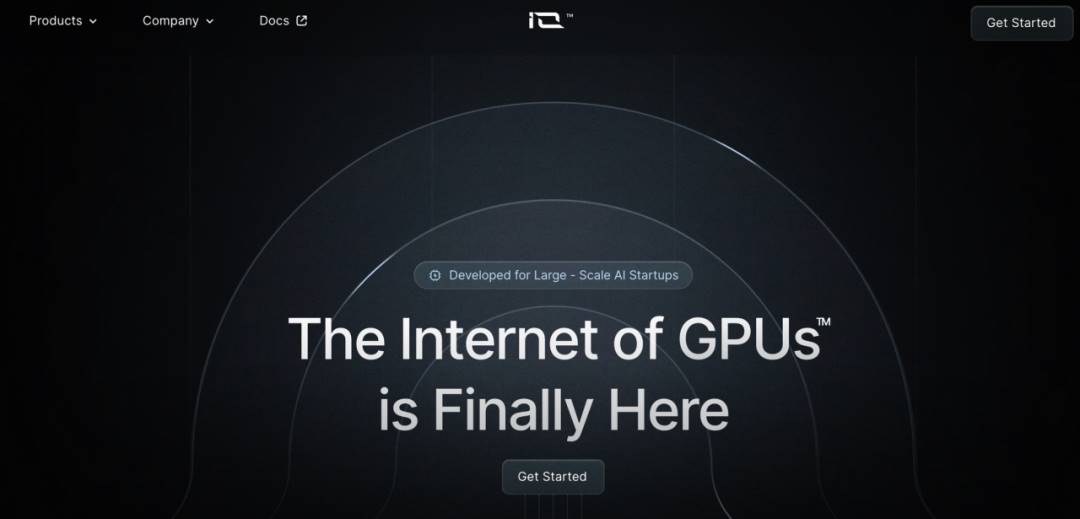
Recently listed on Binance, io.net has become the breakout star in this sector. io.net is a decentralized GPU network designed to provide massive computing power for machine learning applications. Its vision is to unlock fair access to computing power by aggregating over one million GPUs from independent data centers, crypto miners, and projects like Filecoin, making computation more scalable, accessible, and efficient.
io.net offers a radically different approach to cloud computing, leveraging a distributed and decentralized model to give users greater control and flexibility over computing resources. Their service is permissionless and low-cost. According to io.net’s official claims, their computing power is 90% cheaper than centralized providers like Amazon AWS. This combination of advantages positions io.net as a leading player among decentralized providers.
Source: io.net
Aethir
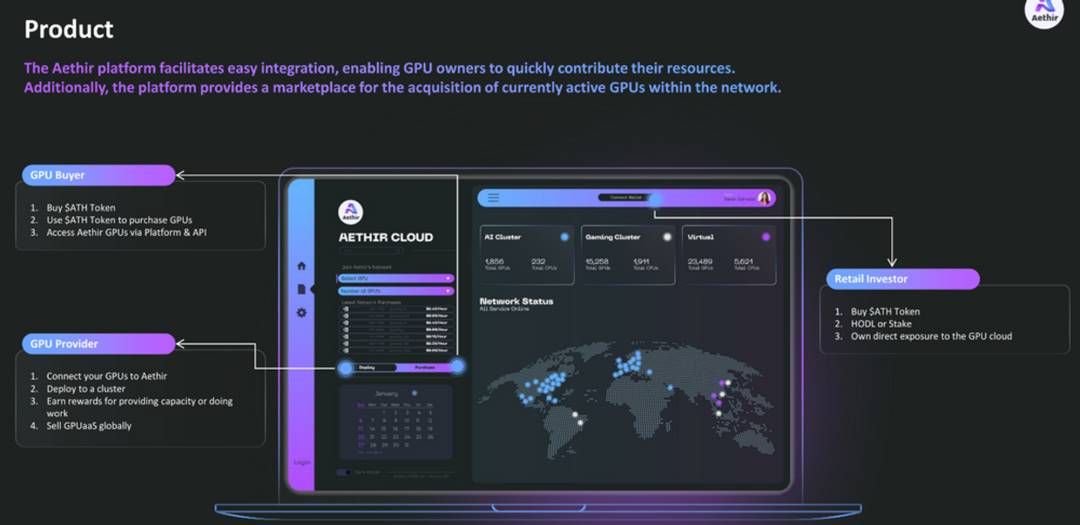
Aethir offers a disruptive yet highly feasible solution to the complex challenge of efficiently utilizing global computing resources. Their network aggregates and intelligently reallocates new and idle GPUs from enterprises, data centers, cryptocurrency mining operations, and individual consumers. The market opportunity for better GPU capacity allocation is vast, and Aethir aims to increase global GPU computing availability by over tenfold.
A key feature of Aethir is its focus on repurposing existing idle resources rather than requiring node participants to purchase new hardware. Typically, underutilized GPU capacity in a device ranges between 50% and 75%, indicating a significant pool of computing power that can be tokenized. Aethir aims to tap into this abundant idle capacity by targeting small and medium-sized data centers and enterprises.
Aethir’s token is currently listed on exchanges including OKX and Bybit. The project previously raised $9 million in a Pre-A round led by prominent firms such as Sanctor Capital and Hashkey.
Source: aethir.com
Arweave
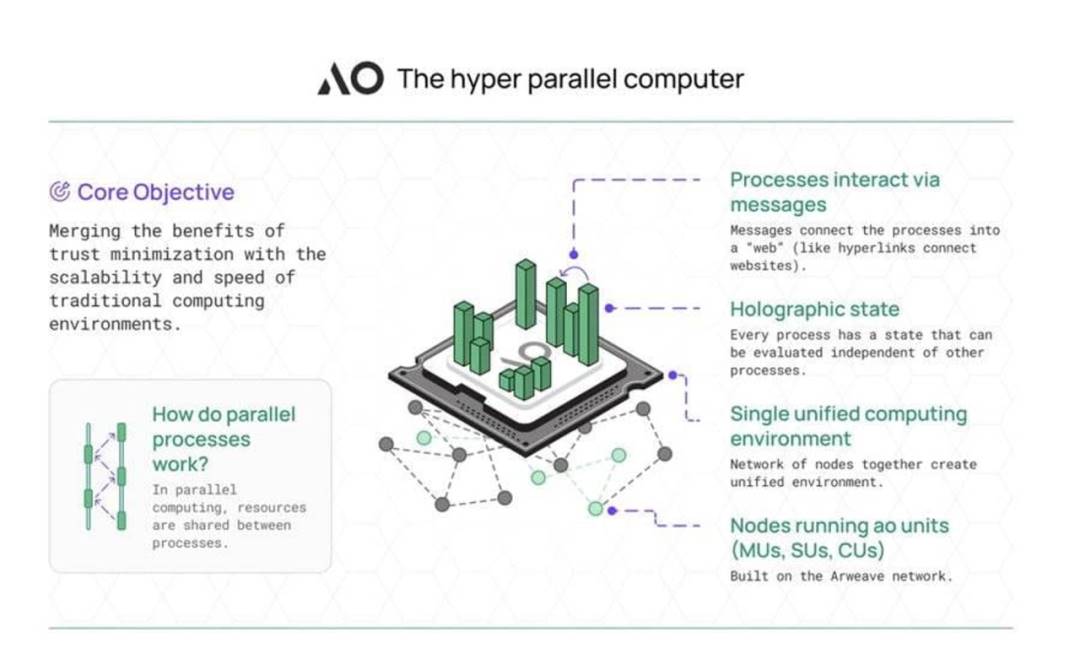
AO is a distributed, decentralized, participant-oriented computing system built on Arweave. AO’s core goal is to deliver trustless, collaborative computing without practical scale limits, offering a new paradigm for blockchain-integrated applications. Compared to other high-performance blockchains, AO supports storing large volumes of data, such as AI models. Unlike Ethereum, AO allows an unlimited number of parallel processes to run simultaneously within compute units, coordinated via open message passing without relying on a centralized memory space.
With the launch of AO, Arweave is expanding from decentralized storage into the broader domain of decentralized cloud services. Its permanent on-chain storage is no longer just for user data—it aims to become a permanent host for cloud computing, focusing on large-scale verifiable computation.
Recently, Arweave also unveiled the tokenomics between its dual tokens, $AR and $AO. According to the official announcement, $AO is a 100% fairly launched token with no pre-sale or pre-allocation. The total supply of $AO is 21 million, with a halving cycle of four years, distributed every five minutes, and a monthly issuance rate of 1.425% of the remaining supply.
-
Approximately 36% (100% during the first four months, then 33.3% thereafter) of $AO tokens are distributed every five minutes to $AR holders, incentivizing the security of AO’s foundational layer—Arweave.
-
The remaining ~64% of $AO tokens are allocated to bridging users, incentivizing external yield generation and the onboarding of assets into AO.
Source: https://ao.arweave.dev/
Bittensor
Training AI models requires massive data and computing power, but high costs have led to monopolization by large corporations and research institutions. This centralization restricts the accessibility and collaboration of AI models, hindering the development of the AI ecosystem. Bittensor (TAO) aims to build the world’s first blockchain-based neural network, enabling network participants to exchange machine learning capabilities and predictions.
Bittensor seeks to promote peer-to-peer sharing and collaboration of machine learning models and services. However, TAO remains technically challenging and is still some distance away from practical application.
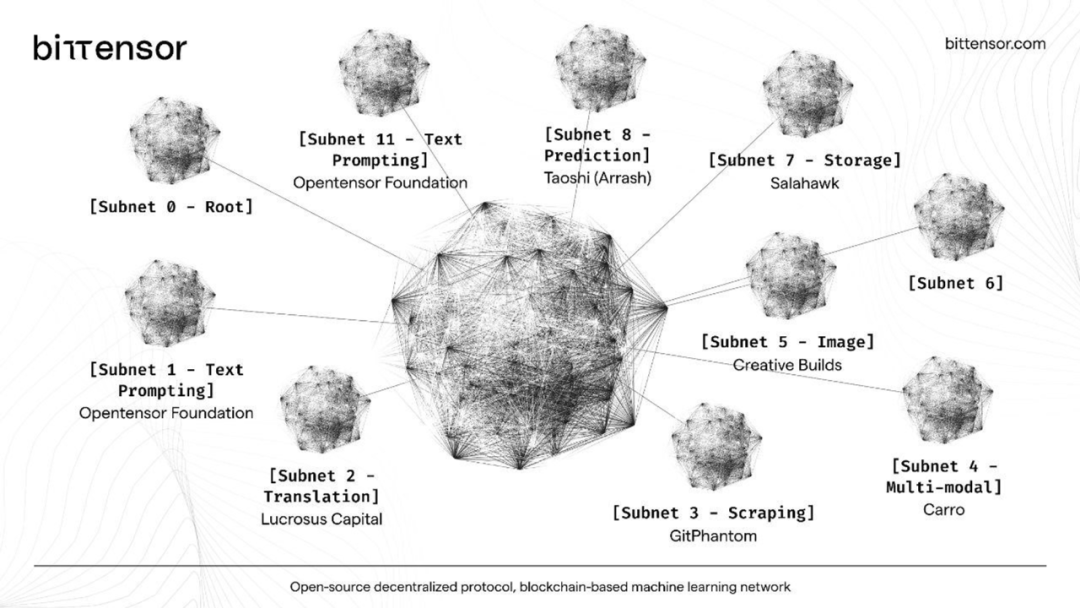
Source: https://futureproofmarketer.com/blog/what-is-bittensor-tao
Author's Perspective
These AI + blockchain projects could very well reshape the future landscape of computing resource distribution. Decentralized deployment based on distributed ownership and collaborative cross-cluster operations may pave the way for a new wave of economic and technological advancement. These projects harbor grand ambitions—to transform the future of cloud computing and AI applications and shape a more interconnected, efficient, and innovation-driven global cloud economy. Against the backdrop of countries actively pushing for productivity transformation, these directions are well worth deep exploration. However, given the strong technical and financial requirements of this field, entry barriers remain high. While still in the experimental phase, it remains to be seen whether these projects can evolve into widely adopted infrastructure in the future.
Join TechFlow official community to stay tuned
Telegram:https://t.me/TechFlowDaily
X (Twitter):https://x.com/TechFlowPost
X (Twitter) EN:https://x.com/BlockFlow_News
 Dr.DODO

![In-depth Analysis of Trade[XYZ]: How Were 92 Markets and 98% HIP-3 Trading Volume Established?](https://upload.techflowpost.com/upload/images/20260716/20260716061117965147.jpeg?x-oss-process=image/resize,p_50/quality,q_80)