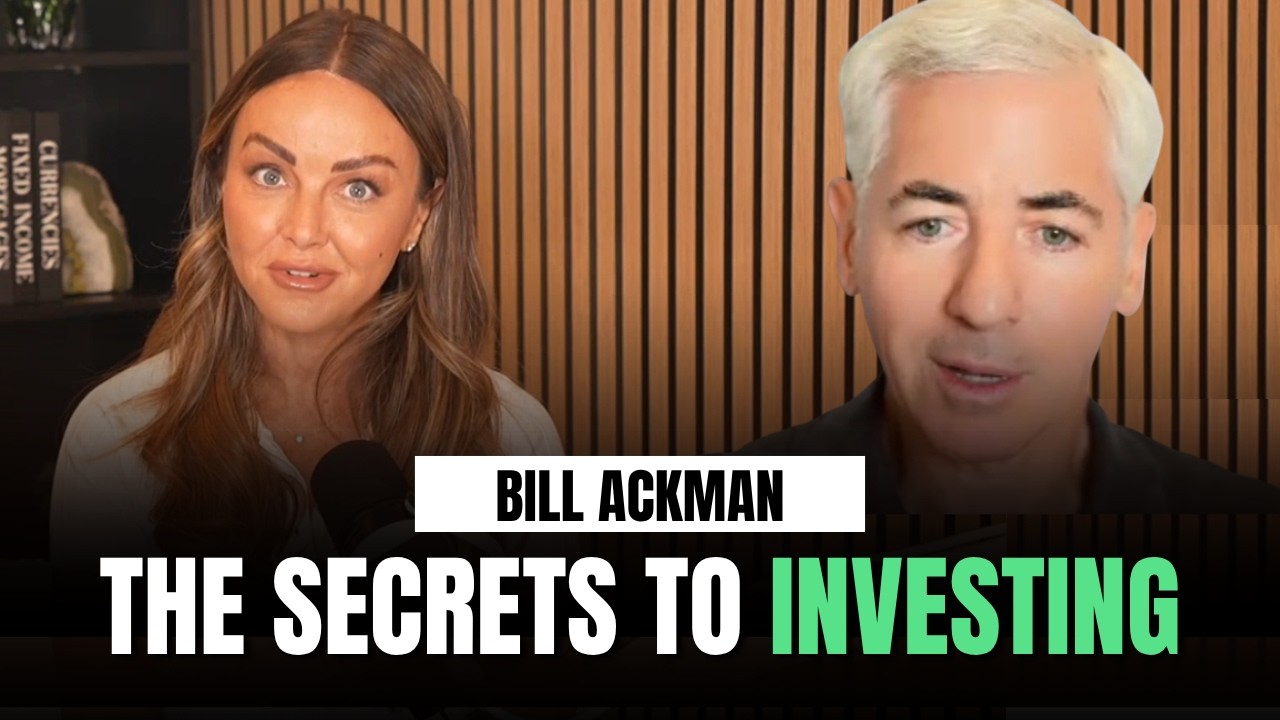
Podcast Notes | Investment Guru Bill Ackman: Sold Alphabet, Added to Microsoft Position, Betting on AI Infrastructure
TechFlow Selected TechFlow Selected
Podcast Notes | Investment Guru Bill Ackman: Sold Alphabet, Added to Microsoft Position, Betting on AI Infrastructure
$14 billion bet on just 11 stocks, just reduced Google position to switch $2 billion into Microsoft, if you want to copy the portfolio you can directly buy the PSUS fund.
 Navigating Web3 tides with focused insights
Edited & Compiled: TechFlow
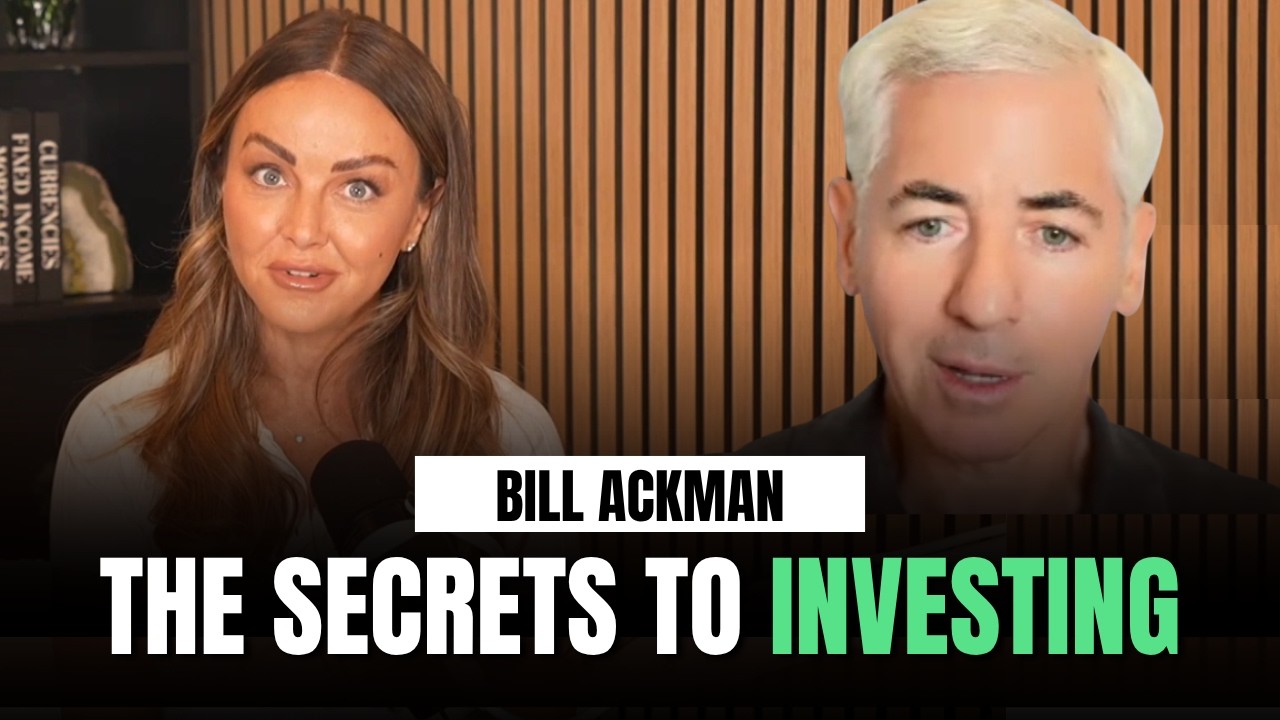
Guest: Bill Ackman, CEO and Founder of Pershing Square Capital Management
Host: Nicole Lapin, Money Rehab
Podcast Source: Money News Network
Original Title: Which Companies Bill Ackman Is Bullish and Bearish on Right Now
Air Date: July 20, 2026
Disclosure: Pershing Square manages approximately $14 billion in assets, concentrated in 11 US stocks, with revenue derived from management fees and performance fees. This episode discusses overall market and individual stock judgments; Ackman himself does not hold Bitcoin or gold. The interview contains promotional content for PSUS (Pershing Square's publicly traded fund).
Key Takeaways
Bill Ackman manages one of Wall Street's most concentrated hedge fund portfolios: $14 billion bet on just 11 stocks, with the top five holdings accounting for 78%. In this interview, he revealed some specific cards: recently sold Alphabet, added $2 billion to Microsoft, betting on the hyperscaler AI infrastructure boom. He didn't speak in riddles; the core logic comes down to a few words: buy companies with high predictability, earn compound interest. His biggest worry about the market isn't valuation, but highly leveraged players being forced to flee en masse at some point. Regarding Bitcoin and gold, his exact words were: "I don't know if it's worth $50,000, $70,000, or $5,000 or $1 trillion, but I don't need to know. Investing only requires knowing what you know and what you don't know."
Highlights
AI is the Main Thread, Everything Else is Noise
- "This is a very special point in history. AI is driving a lot of entrepreneurship, giving a very wide range of people access to intelligence at extremely low cost."
- "The largest companies are competing to build models leading to superintelligence; they are grabbing land, building data centers, filling GPUs. This is a 'land grab'."
- "I'm not very willing to bet on frontier model companies. Open-source models are getting better and better; people will soon be able to access models sufficient to solve most problems at low cost or for free."
Every Stock in the Portfolio is Carefully Selected
- "There are some companies we've always wanted to buy but were too expensive before; Amazon, Meta, Uber, and Microsoft are on this list. A lot of capital is chasing 'new new things,' semiconductors, memory, running wherever the money is. We are focusing on where we can get high compound returns over the next three to five years."
- "Uber is very cheap now because the market thinks Tesla's robotaxis will disrupt it. I think consumers will still open the Uber App to call a car; they want the cheapest, fastest car to get me from A to B."
- "Want to know which giant will win? SpaceX is the only place where you can rent 100,000 GPUs, and the returns are extremely high. The only concern is the price; at a $6-7 trillion market cap, the upside is smaller."
Don't Touch Bitcoin and Gold Because They Are Speculation
- "Satoshi Nakamoto is a genius. If I had read the white paper when Bitcoin was 20 cents, I might have bought some. But I don't buy it because it doesn't produce yield. Companies have value because they can generate cash flow in the future; gold and Bitcoin only have what others are willing to pay. This isn't called investing, it's called speculation."
- "I have indirectly invested in blockchain companies through some VC funds; I am very interested in the technology. But trading various coins is not my thing."
What the Market Fears Most is Not High Valuation
- "The market is indeed not cheap in some places, but looking at the overall PE to say whether it's expensive or not is meaningless. The top few companies now, Nvidia, Microsoft, Google, are of much higher quality than the top few companies 20 years ago and deserve higher valuation multiples."
- "My biggest concern is that there are too many leveraged players in the market. If some external shock occurs, people panic sell, leveraged people will be forced to liquidate, triggering a chain reaction. If you don't use leverage, hold good companies in hand, and you don't need the money to spend tomorrow, then a big drop is actually a buying opportunity for you."
- "Don't borrow money to trade stocks; that's how you get wiped out. Carl Icahn leveraged his own stocks, turning a $20 billion net worth into three or four billion; even rich people can lose big money."
Don't Play Intraday Options
- "I don't like this trend of intraday options; that is gambling. No one can predict whether a stock will rise or fall within a day unless you have insider information. It's just a crazy game."
"We Are Not Predicting the Future, Just Noticed What Others Didn't Pay Attention To"
Nicole Lapin: Your moves in 2008 made people feel like you could predict the future. What did you see?
Bill Ackman: So-called predicting the future is often just carefully studying the present and then finding similar cases in history. A few years before 2008, we saw a batch of companies doing crazy things: bond insurance companies, holding AAA ratings, as good as government credit, yet running to guarantee high-risk mortgage loans, collecting some premiums, with all profits on the financial statements. This is unsustainable. It's not predicting the future; it's seeing problems now and knowing it will explode sooner or later.
As for the future, the market will always fluctuate. I don't know what the specific trigger is, but there is massive speculation in the market; professional investors and retail investors are both using massive leverage. If I can only give you one piece of advice: don't borrow money to trade stocks. Also, don't take the money you use to live on to gamble.
How These 11 Stocks Were Selected
Nicole Lapin: Pershing Square holds only 11 to 12 stocks, why so concentrated?
Bill Ackman: We are looking for the best businesses in the world, capable of standing the test of time, at least not being disrupted by AI, ideally beneficiaries of AI.
There are some companies in our portfolio that we've always wanted to buy but were too expensive before, only becoming reasonable recently. Amazon, Meta, Uber, and Microsoft are on this list. A lot of capital is chasing places that have recently made money in the market, semiconductors, memory, while we are focusing on assets that can bring us high compound returns over the next three to five years.
Brookfield also fits this model perfectly. It does asset management, private equity, real estate, infrastructure, especially power and energy-related businesses. The boom in data center construction will require a lot of infrastructure, and Brookfield happens to be in that position. It manages money for others, collecting equity and fees from it; it's a good business.
Nicole Lapin: You recently bought $2 billion worth of Microsoft, while selling some Alphabet. Are you no longer bullish on Alphabet?
Bill Ackman: Two things are very important to us: business quality and price. We hope to buy at a price that can provide a very attractive return. Sometimes a stock we hold rises to a level where future returns are below our threshold, so we sell. Selling Google is not being bearish on it; Google is still a great company. It's just that its price reached a point where subsequent returns are not as good as taking that money to buy Microsoft.
Microsoft is now about $387 per share. If you want to buy Microsoft at $310, you don't need to wait for it to drop to that price; just buy PSUS. PSUS is a publicly traded fund we manage, now trading at a 22% discount to net asset value; this basket contains Microsoft.
Ackman's Most Bullish and Bearish
Nicole Lapin: Let's play a game called "Bullish or Bearish". Gold?
Bill Ackman: No view. I don't buy gold, although I have bought jewelry for my wife. My dad bought gold many years ago, around the 70s, and held it. It's not a good investment. I told him, sell when gold rises to over $4,000, and he listened. I prefer to hold companies that can compound growth.
The problem with gold is that its value is just what others are willing to pay; it doesn't give any return. And every asset I invest in produces some yield: profits, dividends, rent. I only view gold as speculation, not called investment.
Nicole Lapin: What about Bitcoin?
Bill Ackman: Don't buy either. Very similar, about the same as gold. Satoshi Nakamoto is a genius. If I had read the white paper when Bitcoin was 20 cents, I might have bought some. But I don't know if it's worth $50,000, $70,000, or $5,000 or $1 trillion. The beauty of investing is that you don't need to have a view on every category; you just need to know what you know and what you don't know. I don't understand Bitcoin, nor do I understand gold, so I touch neither.
I have indirectly invested in companies with blockchain and crypto as core businesses through some VC funds; I am very interested in the technology. But trading various coins is not my thing.
Nicole Lapin: What about Chipotle?
Bill Ackman: One of our most successful investments. We bought when it erupted in a food safety crisis and helped recruit Brian Niccol for it. He later went to Starbucks, and the succeeding management encountered some challenges. I think long-term the company is positioned well, but I don't have a strong directional view on the stock price at this stage.
Nicole Lapin: Starbucks?
Bill Ackman: There is a very talented CEO managing it. But Starbucks has pushed prices to quite a high level over a long period in the past; I don't think there is much room for price increases left. The consumer experience is also declining; Brian is trying to pull it back.
Nicole Lapin: Treasury bonds?
Bill Ackman: Treasury bonds are a place to put idle cash. But if I have to choose, I would rather hold high-quality companies long-term than choose Treasury bonds.
The Risks He Is Truly Worried About
Nicole Lapin: What is the next crisis? Will there be a second 2008?
Bill Ackman: There is always something to worry about. First, the US government spends more than it collects; we have about $34 trillion in national debt and are constantly issuing bonds to fill the deficit. To make matters worse, the AI infrastructure boom has caused a large number of companies to also issue bonds for financing; demand for credit has surged, while the government itself is issuing more national debt. So much supply needs to be digested by investors, which could lead to rising interest rates.
The second risk is more lethal: there are too many leveraged players in the market. If some external shock comes out of the blue, people panic, sell, those who borrowed money will be forced to liquidate, the chain reaction will drag more people to sell. Stock prices will fall a lot.
But if you have a non-leveraged portfolio, hold a batch of high-quality companies, and you don't need this money tomorrow, this is your buying opportunity. If you are carrying margin debt, you will be forced to liquidate at the bottom; that is the last thing you want to do.
Buffett's secret is longevity. He designed Berkshire to never be margin called, so it can continuously compound. We have had years where we rose 30%, 40%, and some years where we fell; this year also fell slightly; that's okay. You don't need to make money every year. You need to survive and let good companies continue to compound.
Nicole Lapin: Is the overall market expensive now?
Bill Ackman: Expensive in some places. But generally saying the market PE is now 21, historical average 17, so it feels high; this kind of statement is not useful. Market value depends on future earnings, and earnings have been exceeding expectations, growing faster than most times in history. Moreover, the few companies with the largest market caps now, Nvidia, Microsoft, Google, Meta, are far higher quality and faster growing than the top few companies 20 years ago; they deserve higher valuation multiples.
If Microsoft, Amazon, and Meta are all cheap, it's hard for you to say the whole market is expensive.
Roadmap for Young People
Nicole Lapin: If someone has $1,000 to invest now, how do you suggest they allocate it?
Bill Ackman: Find a few companies that do not use leverage heavily, companies you like, you admire, whose decisions are always reliable. And you must firmly believe: if the stock market closes for ten years tomorrow, you are still willing to hold it for ten years.
Don't invest in what looks hottest now. Invest in what you think can stand the test of time. The value of a business is the discounted value of all cash flows it generates in its lifetime; you have to be sure it can live for a long time.
Where is the specific starting point? Actually, as a consumer, you often discover good things earlier than Wall Street. Many of Tesla's earliest shareholders were retail investors; institutions didn't understand how powerful it was. Look at what products and services you use in your life that you admire, think clearly about whether it can withstand competition. Amazon, every time I want to buy a book I go to Amazon. You may have experienced the pharmacy experience in New York; everything is locked behind plastic shields, and you have to find a clerk to open it. Amazon delivers in two hours. Who can compete with it?
Nicole Lapin: What do you think about young people playing intraday options every day?
Bill Ackman: It is gambling. No one knows whether a stock will rise or fall within a day. Unless you have insider information.
Nicole Lapin: What is the formula for success?
Bill Ackman: It's all the most basic things: show up on time, do a little more than what others don't do, keep your word, promise less deliver more. If you enter an industry, spend time turning yourself into the person who knows the most in this industry, you will be seen.
When I had my first real estate job, I went to McGraw Hill bookstore every lunch to read real estate books. That knowledge took my peers several years of experience to learn. In the AI era, you can let AI teach you anything; this is much simpler than flipping through books in a bookstore back then.
The workplace winners I have seen are usually not the ones with the highest IQ. It is the one who others like, others trust, works a little more than others, has a little creativity, and never gives up. You can have these things tomorrow. You cannot change IQ, but you can work harder than others, you can be honest; these are all choices.
Don't Gamble Away Tomorrow's Compound Interest with Today's Pocket Money
Nicole Lapin: Last question, what advice would you give listeners that can be "taken straight to the bank"?
Bill Ackman: First, start investing early, save a little money every month to invest in the market. If you don't have time to pick stocks, buy index funds. If you have time, find the best company in the industry. Don't buy high-leverage companies. Buy companies you believe will be much bigger in five, ten, twenty years. Buy companies unlikely to be disrupted by "something two Stanford graduates just cooked up in a garage".
The most powerful part of compound interest is time. Most investors are short-sighted, while long-term players have a huge competitive advantage. Moreover, the government currently only taxes you when you sell; your profits can snowball tax-free continuously. If you can open an IRA or Trump Savings Account, then the compound interest is also tax-free.
Join TechFlow official community to stay tuned
Telegram:https://t.me/TechFlowDaily
X (Twitter):https://x.com/TechFlowPost
X (Twitter) EN:https://x.com/BlockFlow_News
 深潮TechFlow