Podcast Notes|Conversation with GSR Head of Asset Management: To Tell If This Round of Crypto Rebound Is Real or Fake, Just Check the Lending Rates on Aave
TechFlow Selected TechFlow Selected
Podcast Notes|Conversation with GSR Head of Asset Management: To Tell If This Round of Crypto Rebound Is Real or Fake, Just Check the Lending Rates on Aave
If Aave's borrow rate is similar to Treasury yields, it indicates that no one is in a hurry to leverage up, and we are still far from a true trend reversal.
 Navigating Web3 tides with focused insights
Organized & Compiled: TechFlow
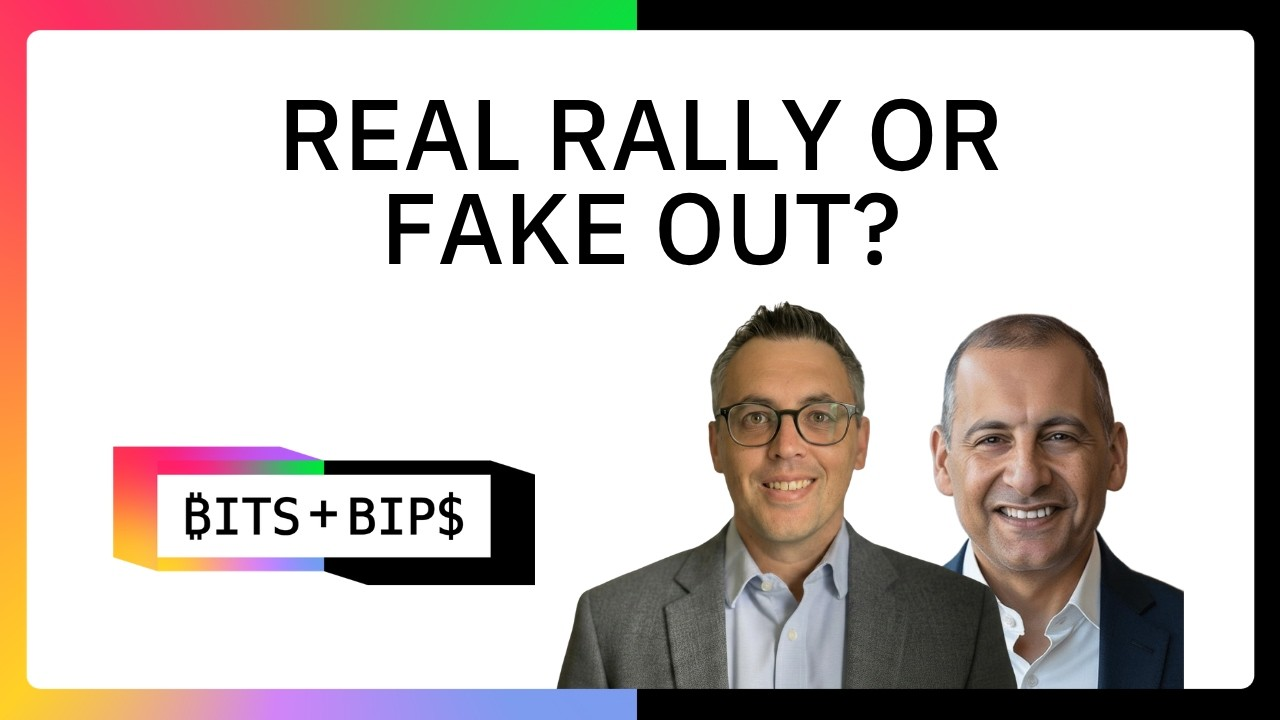
Guest: Andy Baehr, Managing Director of Asset Management at GSR
Host: Steve Erlic, Head of Research at Sharplink
Podcast Source: Bits & Bips (Interview segment under Unchained)
Original Title: Is This Crypto Rally Real? GSR's Andy Baehr Maps the Signals to Watch
Broadcast Date: July 17, 2026
Disclosure: GSR is a top global crypto market maker, with revenue dependent on market trading volume and volatility; its asset management division recently launched the Core3 ETF (BESO) holding BTC/ETH/SOL. The guest in this episode discusses overall market trends and does not involve recommendations for single assets.
Key Points Summary
Andy Baehr was previously responsible for products and research at CoinDesk Indices, and has held leadership positions in the derivatives departments at Credit Suisse, BNP Paribas, Morgan Stanley, and Deutsche Bank. He now manages the asset management business of GSR, one of the largest crypto market makers globally. The framework he uses to gauge market state is simple: the market slides on a spectrum, with "ambivalence" at one end and "conviction" at the other. The current market is stuck at the ambivalence end; every rebound is like a single-stage booster rocket, once the first stage burns out, there is no second stage. He gave three signals to track: DeFi lending rates, the unexpected passage of the CLARITY Act, and the formation of a consensus on the Fed's "hawkish peak". The most direct judgment is: to see if the rebound triggered by last week's CPI decline can sustain, just look at the USDC borrowing rate on Aave. It's currently around 3.75%, similar to US Treasury yields. What low energy looks like, this number says it all.
Highlights Summary
What is "Fed Solstice"
- "Since 2022, we haven't truly seen a hawkish peak. Back then the Fed aggressively raised rates to digest post-pandemic fiscal stimulus, crypto assets and stocks were both having a tough time, because we didn't know to what degree rate hikes would go before ending."
- "Imagine there is a 'Fed Solstice', that moment when we collectively feel 'okay, we know where rate hikes will end'. Before that, it's hard to believe any rebound can sustain."
- "Once we cross that peak, and can see the scenery on the other side of the hill, market sentiment will change very fast."
Three Levels of Market Energy
- "The entire crypto market is approximately 2/3 to 3/4 derivatives trading, only 1/4 to 1/3 is spot. Derivatives are too important in determining price direction."
- "Last year's perfect rebound had three stages: First step was an ETH short squeeze; second step was crypto-native traders seeing the trend form and flooding into spot and perpetual contracts; third step was ETF funds starting net inflows, by May-June ETH ETF inflows even exceeded BTC."
- "If the rebound doesn't have new layers of buying joining in one after another, it is just a single-stage booster rocket. Burns out and falls down."
Watching DeFi Rates is More Useful than Watching K-Line Charts
- "After the presidential election last November, lending rates on Aave surged to over 20%. Now? Approximately around the risk-free rate, 3.75% to 4.1%."
- "No credit spread, indicates no one is willing to pay a premium to borrow money for leverage. This is the most direct evidence of low energy."
- "Imagine a scenario where Warsh drinks a particularly strong coffee one morning, feels good, and announces an unexpected rate cut. Asset prices will rise, Bitcoin will rise. Then people will flood Aave to borrow. Because this is a supply and demand priced pool, Aave rates, every Vault on Morpho, Gauntlet, Stakehouse, Beta, Concrete lending pool rates will instantly surge. People will be impatient to add leverage."
DAT Treasury Companies Temporarily Absent
- "Strategy just sold nearly $500 million stock via ATM, didn't buy a single cent of Bitcoin. They kept the money to pay preferred stock dividends."
- "DAT should be buyers joining in the middle of the rebound, because shareholder sentiment transmission needs time. But ETF funds are not long-term capital, the past eight weeks have proven this."
CLARITY Act: From 75% to Less Than 40%
- "A thing that drags on longer, the probability of ultimately completing is lower. Now we need almost zero interference and a strong tailwind to complete within just three weeks."
- "Polymarket's probability linearly declined from 75% in May to less than 40% now. Every additional day passes without passage, is wasting a day."
- "Ethics clause issue, in my view, is a 'delicious political snack' some people want to package and take home. The disclosure of the President's family profiting over $1 billion in digital assets is adding fuel to the fire for Democrats."
- "But if it really passes, the market will treat it as a surprise. This isn't a 'expected it, no big deal' thing. Surprises are one of the most effective emotions driving price fluctuations up and down. Hard to imagine the market won't rise a wave after passage."
Authenticity of the Rebound: Don't Just Watch CPI
Steve Erlic: June CPI year-over-year 3.5%, core CPI month-over-month flat for the first time in five years. This is the most direct trigger for this rebound. But many reasons for the CPI decline look one-off, may not be reproducible next month. Kevin Warsh said at a Congressional hearing 'inflation is a choice', implying he can remain hawkish. How do you view the nature of this rebound?
Andy Baehr: We have always used the word "ambivalence" to mark the market state for most of Q2 and even late Q1. Ambivalence doesn't mean the market doesn't care what it's doing. The market will appear to have decent pulse-like rebounds, you might even see a bit of energy return in the perpetual contracts market, then the rebound quickly dissipates, liquidations happen, and back to square one.
Bitcoin surged past 80,000 from a high near 79,000 around the Consensus conference in spring, then was smashed down to around 61,000, near the production cost line. This process actually brought some energy back to the market, but we are still in this ambivalent stage.
The opposite of ambivalence is conviction, meaning you can reliably depend on the rebound sustaining, truly forming a different momentum cycle. The key question is: is this again just a single-stage booster rocket, or is this time finally starting to grow legs?
Zooming out, we are currently in an environment where we don't know where the "hawkish peak" is. The last similar situation was before 2022, when the Fed aggressively raised rates to digest post-pandemic fiscal stimulus, crypto assets and stocks were both having a tough time. Why? Because we didn't know where the hawkish top was.
Imagine a "Fed Solstice". That moment when we collectively feel comfortable, knowing where rate hikes will end. We have a new Fed Chair, everyone is not too familiar with him yet, but he is clearly not someone who will soothe the market. Before collective cognition truly reaches that node, it's hard to believe any rebound can reliably sustain.
Steve Erlic: What do you think of Warsh as Fed Chair? He doesn't want to give forward guidance, nor release dot plots. He wants the Fed to react to data. But at the same time, he has a President who wants low rates.
Andy Baehr: Obviously this is not a Fed Chair who soothes the market. He declared independence in bold letters in his inauguration statement, will not attempt to soothe the market, nor over-disclose information to the market. This is a brand new relationship for the world and the Fed Chair.
His situation isn't simple either. Energy prices have quieted down now, but geopolitical situations could make them surge again in a very short time. People are largely uncertain what will happen, just pricing expectations into interest rate futures. Whether early or late, how much, rate hikes will come, we don't know the endpoint.
For crypto, this ultimately boils down to two variables: inflation expectations and nominal interest rate expectations. In 2022 nominal rates accelerated upward, directly breaking through inflation expectations, very tough for Bitcoin, because expected real rates were rising. Only when expected real rates can be better understood, will it form macro support more favorable for Bitcoin. More practically, it will also give people clearer cognition of fiat financing costs, thereby providing more leverage to the crypto system. And the crypto market urgently needs leverage to restore volatility and trading energy that has been continuously declining since October last year.
Stock Market is Spinning Wildly, Crypto Left Aside
Steve Erlic: Mag 7 continues to struggle, AI stocks are soaring wildly. We see rotation into small-cap cyclical stocks like Russell 2000. What does this mean for risk sentiment? How does it affect your view on the crypto market?
Andy Baehr: This reminds me of crypto's performance in Q2. Although Q2 was bad, small-cap crypto tokens actually outperformed relative to BTC, ETH, SOL, even XRP was rising, quite amazing.
I worked on the CoinDesk 80 Index at CoinDesk, covering mid-small cap tokens ranked 21 to 100. Under any healthy or even just neutral market conditions, you should see large-cap tokens outperform small-cap, because market collective attention focuses on those with better liquidity, larger names, this is a reliable market normalcy indicator. What Q2 saw was the reverse: small coins fell less than large coins. This indicates funds are withdrawing from those主力 assets in ETFs, perpetual contracts market, spot market, DAT treasury companies. This might be a capitulation signal to some extent at the end of Q2.
As for stock market rotation, traders are chasing where the action is. Crypto lacks energy, also because other sectors have more dazzling things, SpaceX IPO, Anthropic, OpenAI, funds flow out of crypto ETFs to grab these opportunities.
Steve Erlic: So from the trading desk perspective, how is smart money positioning now? Who will be the structural buyers? ETF funds are not permanent capital, the past eight weeks have proven. Stablecoin supply has decreased by about 10 billion since May, this is the largest contraction since the Terra/Luna collapse. DAT treasury companies are not in the buyer camp either. Strategy just sold nearly $500 million via ATM, didn't buy a single cent of BTC, keeping it to pay preferred stock dividends. Metaplanet is similar.
Andy Baehr: We are bullish on DAT, they can indeed help complete the puzzle of the digital asset market: a treasury focused on a single digital asset plus local skills managing that asset. Your company and other well-done DATs provide stock investors an interesting way of digital asset exposure with extra features.
But what role did DAT play in last year's perfect rebound? They were not the first to enter. The textbook process of last year's rebound was: First step, ETH short squeeze, at that time a concentrated long BTC, short ETH hedge fund position started closing. Second step, crypto-native traders saw the trend form, flooded into spot and perpetual contracts. Third step, May-June 2025 ETF funds started reversing to net inflow, even ETH ETF inflow volume exceeded BTC, at the time it was very shocking. Then the passage of the GENIUS Act added fuel to ETH, because too many stablecoins rely on the Ethereum network.
DAT should be buyers joining after this, in the middle of the rebound, shareholder sentiment needs time to transmit, stock price rise can create more momentum for token purchases. They are structural, more permanent holders, not as short-sighted as ETF holders.
A Most Direct Signal: Go Watch DeFi Lending Rates
Steve Erlic: Have you seen any specific signals changing? Like put/call ratio, DeFi rates rising?
Andy Baehr: I spent a lot of time looking at Aave rates when I was at CoinDesk, we published a daily annualized rate based on Aave. That month after the presidential election last November, these rates surged to over 20%. Now? They are around the risk-free rate, SOFR to one-year Treasury yield approximately 3.75% to 4.1%. DeFi has no credit spread to money markets, indicates no one is rushing to borrow money for leverage.
The most interesting part is, imagine a scenario: Warsh drinks a particularly strong coffee one morning, feels good, announces an unexpected rate cut. Asset prices will rise, Bitcoin will rise. Then people will flood Aave to borrow. Because this is a supply and demand priced pool, Aave rates, every Vault on Morpho, Gauntlet, Stakehouse, Beta, Concrete all lending pool rates will instantly surge. People will be impatient to add leverage.
Leverage is what truly pushes prices up. Push to levels that might trigger ETF fund inflows, might trigger DAT increased holdings, might trigger long-term holders entering. But before that, if you look at DeFi rates hovering around the risk-free rate, that is low energy.
This is a very easy signal to monitor. These rate models are simple supply and demand linear functions, more supply lower rates, less demand lower rates. When large supply floods into these platforms saying "give me any yield",rates naturally are at the lowest level.
DeFi's Fixed Income Market is Quietly Taking Shape
Steve Erlic: You briefly mentioned new fixed income products and Vaults on-chain. How do traders use these things now? How should ordinary investors judge market energy through DeFi rates?
Andy Baehr: Think about how most people interact with crypto assets. Buying and selling tokens, trading perpetual contracts or options, these are asset-based things, feel more like stocks or commodities in the traditional world. These models aren't very suitable for creating fixed income markets, money markets, or establishing a yield curve parallel to the traditional world.
DeFi is gradually making fixed income solutions. No central bank, only supply and demand, DeFi money markets don't need large institutions to influence next day's SOFR rate through overnight repo, it's people buying and selling instantly. Now these activities are forming clusters, letting us see where stablecoin lending rates should approximately be.
Vaults are a great packaging. Managers identify various lending pools, put them into a portfolio, this portfolio will issue a token representing ownership or yield rights. Essentially it is a money market fund. Of course it's not a fund, not a security, mostly unregulated. But it is 7x24, widely accessible globally. As long as people do their homework, know what they are participating in, this is a very efficient product.
From our asset manager perspective, the Vault manager role shoulders similar fiduciary responsibility: need to be responsible for results, make information disclosure to Vault holders. This is my CFA criteria and values way of looking at this, regardless of whether law requires. Money market funds are securities, this growth process inevitably accompanies some liquidation of what standards managers should maintain.
CLARITY Act: The Forgotten Catalyst
Steve Erlic: Right at this moment we are speaking, the White House is holding a meeting. President, Chief of Staff Susie Wilds, several Republican Senators participating in negotiations, and Blockchain Association's Kristen Smith, they are trying to finalize an agreement on the ethics clause. This is key to winning Democratic support. New version of the Senate bill could come out anytime. If it can pass before the August 7 deadline, will this be a shot in the arm for the market?
Andy Baehr: From a long-term perspective, passing legislation is very important. You think about how much time this industry or related industries might have wasted to get to this step today, it's painful. But a thing that drags on longer, the probability of ultimately completing is lower.
Probability on Polymarket declined from 75% in May to less than 40% now, almost linear下滑。Every day not completed, is wasting a day. Ethics clause issue, personally I find it hard not to see it as a 'delicious political snack' some people want to package and take home to enjoy later. Disclosure of the President's family profiting over $1 billion in digital assets, for Democrats it is a ready-made target.
But I do think, if passed, the market will treat it as a surprise. This isn't a 'expected it, no big deal' thing. Surprises are the most effective emotion driving price fluctuations up and down. Hard to imagine the market won't rise a wave after passage.
Join TechFlow official community to stay tuned
Telegram:https://t.me/TechFlowDaily
X (Twitter):https://x.com/TechFlowPost
X (Twitter) EN:https://x.com/BlockFlow_News
 深潮TechFlow