ZKsync airdrop exposed with "shady practices"—12,000 addresses with no interactions still received tokens?
TechFlow Selected TechFlow Selected
ZKsync airdrop exposed with "shady practices"—12,000 addresses with no interactions still received tokens?
The 12,725 wallets with no transactions also appear to qualify for the airdrop.
 Navigating Web3 tides with focused insights
Author: Crypp, crypto KOL
Translation: Felix, PANews
Editor's note: Crypto KOL Crypp published a post questioning the zkSync airdrop, citing concerns over excessive centralization, distribution of tokens to projects within its ecosystem, and eligibility of wallets with no transaction history. He recommends a full re-airdrop and revision of the airdrop list.
Didn't get the zkSync airdrop? I know who took your tokens.
1) One of the strongest qualifying criteria was "depositing liquidity into DeFi protocols." This multiplier awarded thousands of additional ZK tokens.
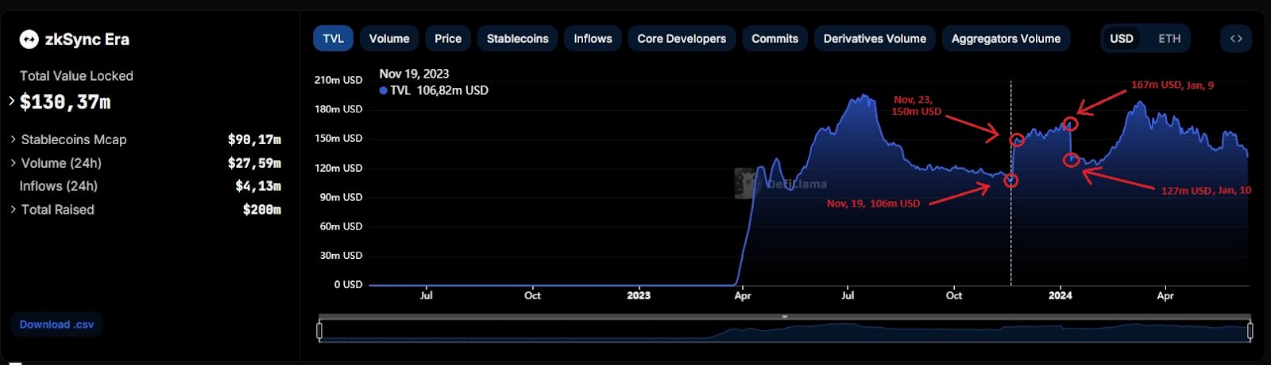
So on November 19, 2023, the TVL of the zkSync Era network unexpectedly surged by $44 million (from $106 million to $150 million). Over the following three months, it only increased by another $17 million. Then on January 9, 2024, TVL dropped by $40 million (from $167 million to $127 million). Is that just a coincidence?
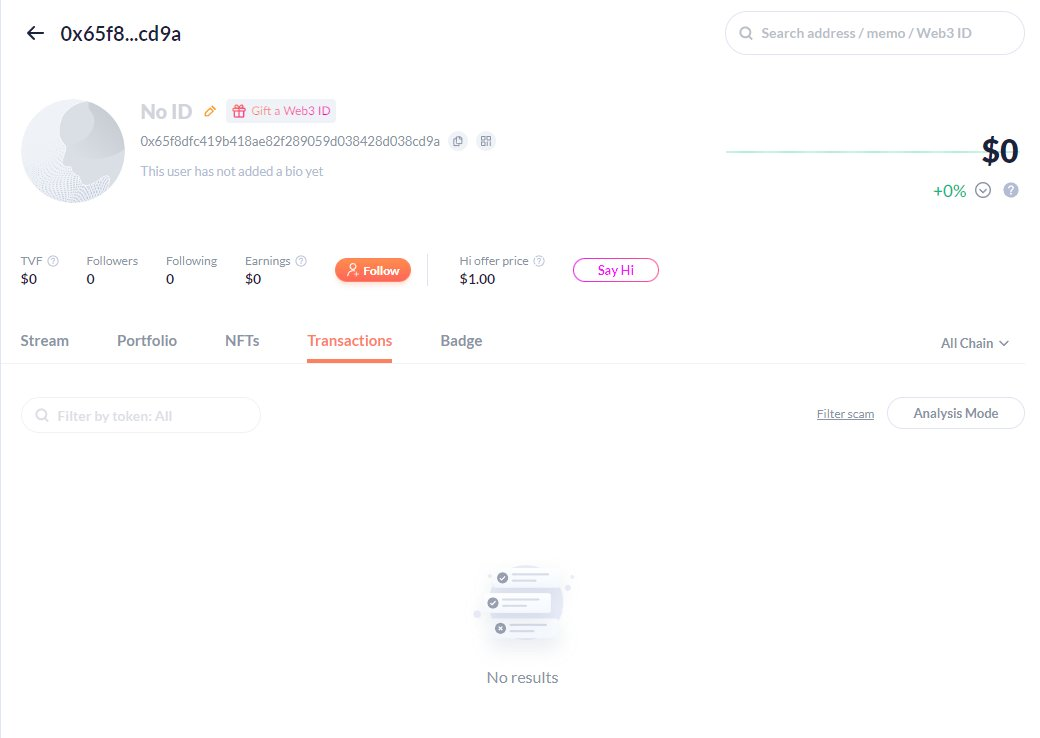
2) Another criticism of the airdrop is that wallets with zero transactions qualified. There were 12,725 such wallets in total. Some met absurd criteria like "owning a Fat Penguin or Milady Maker NFT" or "claiming the BONSAI Season 1 airdrop," while others were completely empty, with no transaction history at all (e.g., 0x65f8dfc419b418ae82f289059d038428d038cd9a).
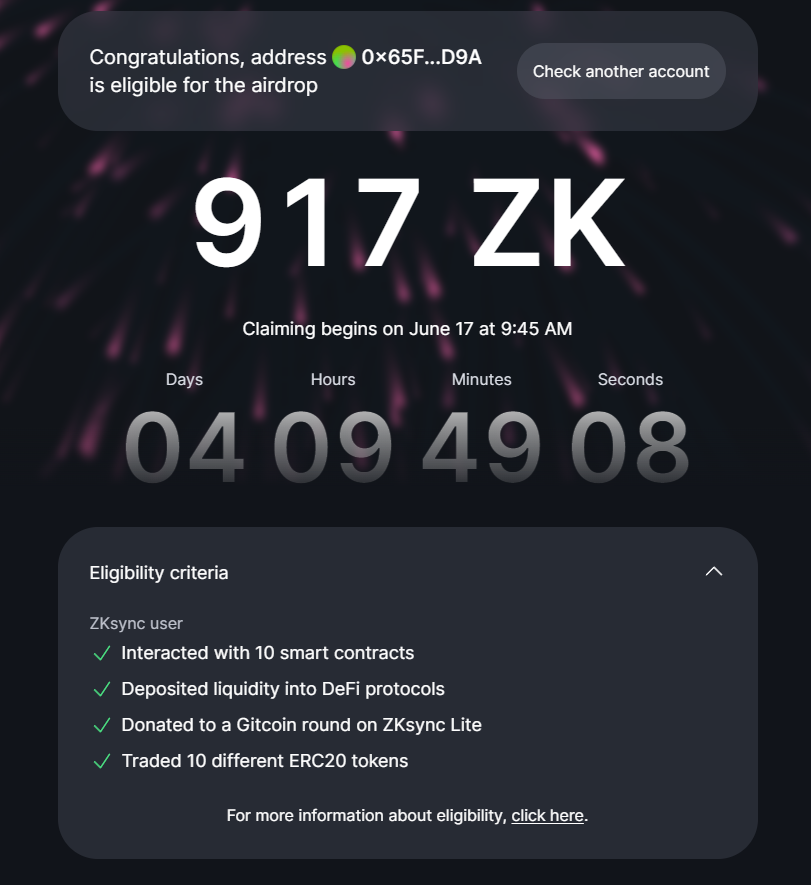
3) Finally, there’s the issue of “decentralization.” zkSync frequently uses terms like “community” and “decentralized.” Yet 71,538 wallets received 15.6% of the total token supply (out of 17.5% allocated for the airdrop). This means the airdrop is far from decentralized—large portions of tokens will be concentrated in the hands of a small group.
Moreover, the allocation itself is strange: exchange address Bybit received 52,816 tokens, and Orbiter Finance received 5,151 tokens. Meanwhile, major ecosystem projects such as WOOFi, Element NFT Marketplace, zkApes, Rollup.Finance, and zkPEPE received no allocation at all.
zkSync had ample time to conduct high-quality wallet checks, yet chose to proceed their own way—even rejecting help from Nansen. The most anticipated project in crypto over the past two years has performed worse than startups with no funding at all.
Rumors are spreading that certain KOLs received massive airdrops, but the author notes he has been involved since the first testnet and only received 1,155 tokens. Despite posting over 50 long-form threads, he was only invited to the ZK Success program, whose main reward was a role (with no tangible benefits).
Under these circumstances, the best solution would be to reschedule the airdrop and revise all qualification lists to fully correct these errors. Additionally, the team should openly respond to all questions: What are these wallets with no activity on zkSync? Who deposited $40 million into the network? How many qualifying wallets does @gluk64 (zkSync founder) have? (The author believes the number is 12,725.)
Join TechFlow official community to stay tuned
Telegram:https://t.me/TechFlowDaily
X (Twitter):https://x.com/TechFlowPost
X (Twitter) EN:https://x.com/BlockFlow_News
 @cryppinfluence