








Crypto corporate services' three-pronged approach: stablecoins, DePIN, and asset tokenization—non-speculative demand is emerging
TechFlow Selected TechFlow Selected
Crypto corporate services' three-pronged approach: stablecoins, DePIN, and asset tokenization—non-speculative demand is emerging
The modern global asset ledger will become the preferred settlement layer for more assets.
 Navigating Web3 tides with focused insights
Author: James Ho, Co-founder of Modular Capital
Translation: TechFlow
Vincent and I founded @Modular_Capital two years ago because we believe that cryptocurrency use cases will expand. The previous cycle was primarily focused on decentralized finance (DeFi) and non-fungible tokens (NFTs). While we see both as powerful primitive assets—whether speculative or not—we believe crypto’s potential extends far beyond these.
Below are some examples we’ve identified in the B2B space, each driven by real, non-speculative demand. These are just three instances that come to mind.
Stablecoins
Over $160 billion in stablecoins have been issued (with over 90% being Tether and USDC), generating monthly transaction volumes exceeding $2–3 trillion. Instant, global, 24/7 real-time payments—instead of T+1 settlement and weekend closures—represent a massive innovation. Traditional infrastructure struggles to modernize due to coordination challenges.
Over the past two years, several primitives have accelerated adoption: native stablecoin issuance across more blockchains, fast and low-cost cross-chain bridges (like @AcrossProtocol and Circle’s CCTP), low-fee chains reducing transaction costs (both Solana and Base charge less than one cent per transaction), and multi-currency stablecoins (euro, pound, yen).
Becoming a stablecoin issuer is an extremely profitable business. Every consumer and enterprise holds idle cash balances—for payments, working capital, etc.—that do not earn interest. Issuers capture roughly 5% yield on these reserves, keeping most of it as profit. Tether earns billions annually, while Circle has quietly filed for an IPO.
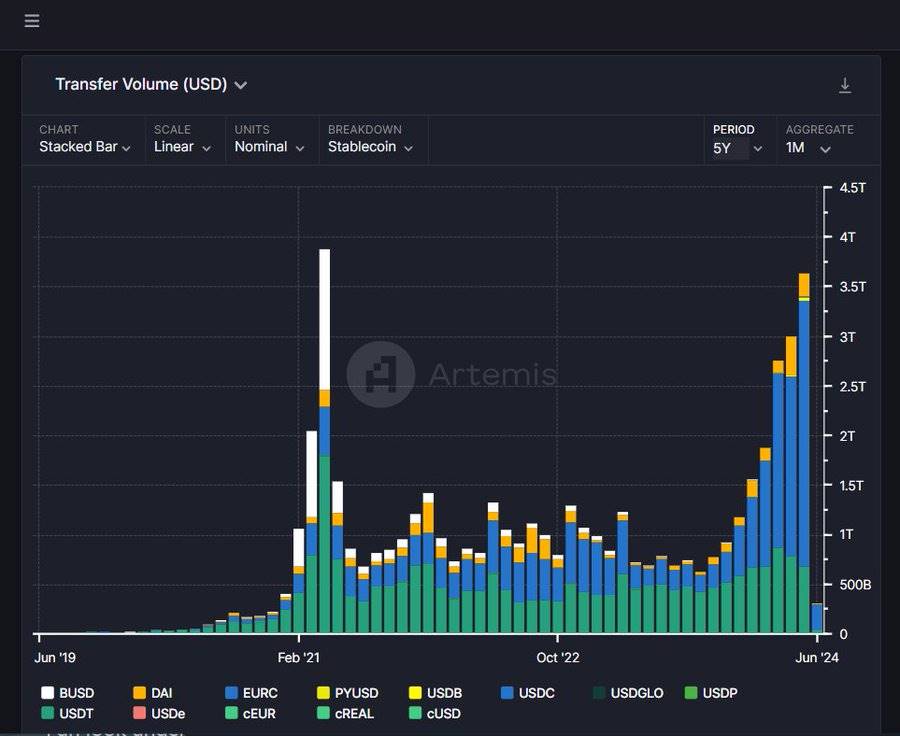
Source: @artemis__xyz
DePin (Decentralized Physical Infrastructure Networks)
In the last cycle, Helium sold over 2 million boxes globally for IoT coverage. Though this generated little actual demand and was often mocked, the key idea was democratizing capital formation for physical networks through a global asset ledger and micropayments at scale.
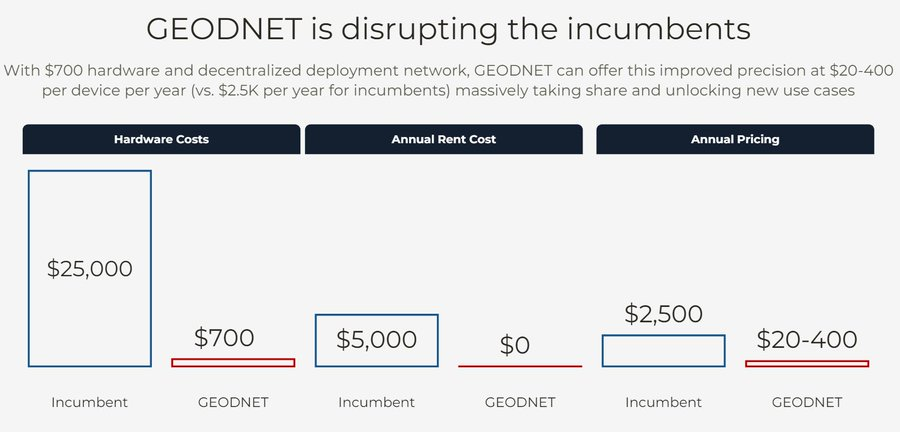
Since then, we've seen successful DePin stories such as @helium Mobile (over 100k telecom users), @Hivemapper (~150k contributors mapping ~13 million unique kilometers—nearly half of Google Maps’ coverage), and @GEODNET_ (the world’s largest RTK GPS data network with over 6,000 miners).
DePin can reduce setup and operational costs for these networks by over 90%. Traditionally, deploying hardware requires balance sheet capital expenditures, leasing land or facilities, and dispatching technicians for ongoing maintenance. It turns out there are millions of consumers worldwide willing to perform these tasks in exchange for small ownership stakes via tokens. This is uniquely enabled by blockchains, which allow programmable, global micropayments.
Supply-side growth is only half the battle for DePin networks. They also need demand. And now we’re seeing that happen. Hivemapper and Geodnet are both approaching $1 million in annualized revenue (driven by native token buybacks on-chain over the past 2–3 months). This new wave of DePin networks is finding product-market fit and acquiring paying customers.
Asset Tokenization
Asset tokenization has been discussed for a long time, but progress has been slow due to its regulated nature—more so than interest-bearing stablecoins.
We see two approaches. Traditional issuers going on-chain—especially Blackrock’s tokenized treasury fund ($BUIDL), which has issued around $500 million on Ethereum. The other approach involves crypto-native firms launching new funds under existing regulatory frameworks: @OndoFinance, @superstatefunds, @maplefinance are all examples. Both paths are valid. Notably, this didn’t happen with stablecoins (all were launched by crypto-native companies like Tether and Circle); now, traditional financial institutions finally recognize the importance of issuing on-chain.
Tokenized treasuries have reached nearly $1.5 billion in issuance. Major institutions will join, existing products will scale, and new asset classes will be tokenized.
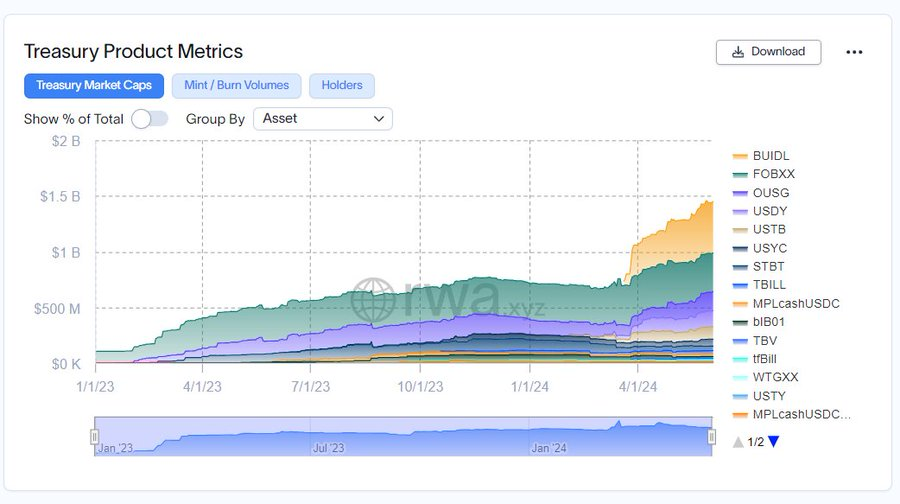
Source: @rwa_xyz
Tokenization unlocks critical features including 24/7 transfers and settlements, composability, and significant upgrades to legacy back-office infrastructure—reconciliation, clearing, etc.—for most financial institutions. JPMorgan estimates it could save over $20 million annually by tokenizing its repo operations. Blockchain is becoming the modern asset ledger of the 21st century.
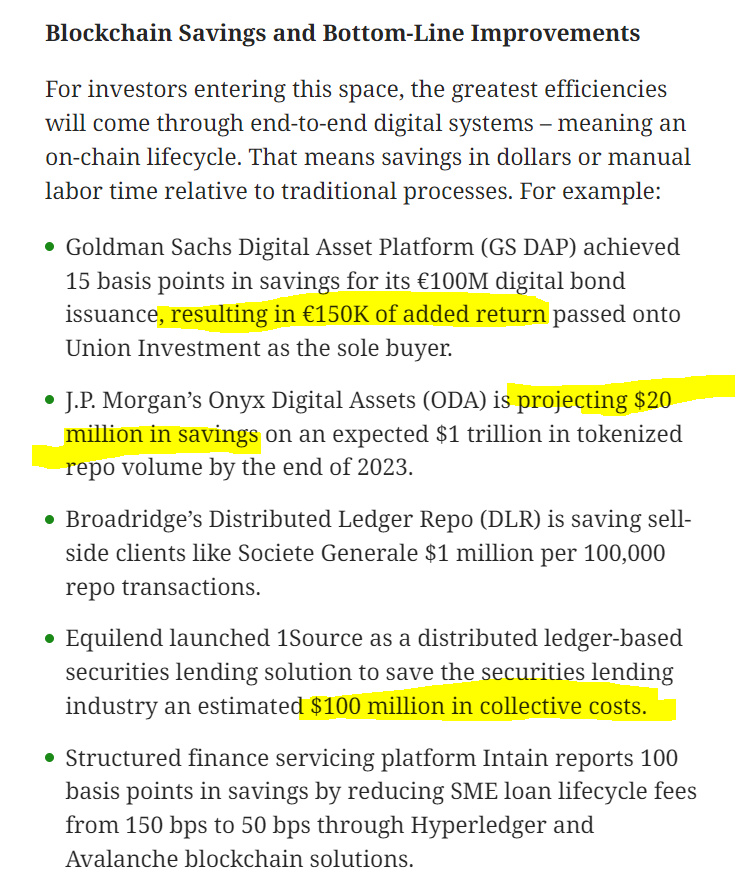
Source: CoinDesk
Yesterday during the GameStop trading frenzy, the NYSE experienced technical failures—system outages, halted trades, and erroneous displays showing Berkshire and gold prices down 98–99%.
In contrast, Ethereum and Solana had no volatility halts, trading errors, or price glitches yesterday.
Ethereum launched in 2015, Solana in 2020—while both have faced major outages and bugs in the past, they’ve evolved into systems tested by time and stress.
The modern global asset ledger will become the preferred settlement layer for more assets.
Stablecoins, tokenized treasuries, ETFs—and beyond. This is just the beginning.
Join TechFlow official community to stay tuned
Telegram:https://t.me/TechFlowDaily
X (Twitter):https://x.com/TechFlowPost
X (Twitter) EN:https://x.com/BlockFlow_News
 @Modular_Capital


