









Following Cautiously or Overtaking? A Brief Analysis of the Hong Kong Government's Crypto Strategy
TechFlow Selected TechFlow Selected
Following Cautiously or Overtaking? A Brief Analysis of the Hong Kong Government's Crypto Strategy
Is Hong Kong's crypto policy tightening or continuing to loosen?
 Navigating Web3 tides with focused insights
By: TechFlow Asher Zhang
The U.S. has launched spot Bitcoin ETFs, and so has Hong Kong. Then came spot Ethereum ETFs—on the surface, it may seem like Hong Kong is simply following in America’s footsteps. But is that really the case? Recently, established crypto exchanges such as OKX, Gate, and Bybit have withdrawn their license applications in Hong Kong, prompting some to claim that Hong Kong is moving backward. So, are Hong Kong's crypto policies tightening or continuing to liberalize? And what are the fundamental differences between Hong Kong and the U.S. when it comes to crypto regulation?
Hong Kong’s Crypto Policies Are More Advanced Than the U.S.
Overall, Hong Kong’s crypto policies are more open and bolder than those of the United States. This is evident in three key areas: the design mechanism for crypto asset ETFs, exchange licensing approvals, and security token offerings (STOs).
In terms of crypto asset ETF mechanisms, Hong Kong pioneered a physical creation model, and its Ethereum ETFs may even participate in staking. In contrast, U.S. spot Bitcoin ETFs are limited to cash-based transactions only. The physical creation mechanism offers investors greater trading flexibility and significantly benefits Web3 development by serving as an exit channel for Web3 investors, bridging traditional finance with Web3 and improving capital liquidity. Regarding spot Ethereum ETFs, Hong Kong regulators are reportedly discussing allowing issuers to stake Ethereum. Bloomberg reported on May 23 that the Securities and Futures Commission (SFC) of Hong Kong is negotiating this possibility. Conversely, U.S. financial institutions have removed staking provisions from their Ethereum ETF filings submitted to the SEC.
Although Hong Kong maintains strict standards for crypto exchange approvals, its approach remains relatively more lenient than that of the U.S. Currently, Coinbase is essentially the only crypto exchange listed on U.S. stock markets. In contrast, Hong Kong has extended invitations to multiple platforms. On June 1, the SFC updated its list of virtual asset trading platforms. Under the Anti-Money Laundering and Counter-Terrorist Financing Ordinance, 11 platforms—including HKbitEX, PantherTrade, Accumulus, DFXLabs, Bixin.com, xWhale, YAX, Bullish, Crypto.com, WhaleFin, and MatrixportHK—were added to the “licensed” list. Six others—BGE, HKVAX, VDX, bitV, HKX, and bitcoinworld—remain in the application pipeline without formal approval. While the SFC clarified that none of these applicants have officially received full licenses yet, licensing appears imminent for several, suggesting broader market access compared to the U.S.
Hong Kong is also ahead of the U.S. in tokenized securities. In November last year, the SFC issued a circular outlining requirements for tokenizing authorized investment products under Part IV of the Securities and Futures Ordinance. Beyond tokenized securities, the SFC has already taken steps toward recognizing tokenized investment products. As early as September last year, Taichi Capital launched the PRINCE Token, marking Hong Kong’s first real estate fund STO targeted at professional investors. On May 27, according to Wen Wei Po, the SFC recently confirmed that Security Token Offerings (STOs) and RWA investments might soon be opened up to retail investors—an expansion expected to attract more capital and fintech talent to Hong Kong. Moreover, in February last year, the Hong Kong government successfully issued an HK$800 million tokenized green bond, a prime example of an RWA tokenization project.
Has Hong Kong’s Web3 Journey Ended Before It Even Began?
Recently, veteran crypto exchanges including OKX, Gate, and Bybit have successively withdrawn their license applications in Hong Kong. Some voices in the market argue this indicates Hong Kong is “moving backward,” with more extreme claims asserting that “Hong Kong’s Web3 ambitions ended before they even started.” But is this truly the case?
This article argues that Hong Kong still holds strong competitiveness in the Web3 space, driven by substantial government support and visible achievements. On May 19, Paul Chan, Financial Secretary of the Hong Kong Special Administrative Region, published a blog post titled “Strengthening Foundations and Enhancing Quality Development,” revealing that over the past year, Cyberport attracted more than 400 new companies, bringing its total community to over 2,000 firms—including eight unicorns. Startups based there have raised over HK$40.6 billion cumulatively, with clear strengths in fintech and Web3 sectors. Meanwhile, AI development is accelerating and actively supporting digital transformation across Hong Kong enterprises.
Additionally, Hong Kong possesses fertile ground for crypto adoption. A recent joint survey by KPMG China and Aspen Digital found that 92% of Hong Kong respondents expressed interest in investing in virtual assets, with 58% of family offices and high-net-worth individuals already making such investments and another 34% planning to do so. Furthermore, while 60% of family offices and HNWIs currently allocate less than 5% of their portfolios to virtual assets, 54% intend to increase allocations to between 5% and 30% in this asset class.
Looking at the performance of crypto asset ETFs, despite the absence of major crypto-native exchanges, traditional financial markets have shown strong enthusiasm, and many prominent crypto influencers remain highly optimistic.
Eric Balchunas, senior ETF analyst at Bloomberg, initially predicted it would take Hong Kong two years to reach a $1 billion scale in virtual asset ETFs—but the market hit $292 million on day one. He further noted that although trading volumes lag behind the U.S., proportionally speaking, a $310 million Hong Kong ETF equates to a $50 billion ETF in the U.S. market. Therefore, the impact of Hong Kong’s virtual asset ETFs on its local market is already comparable to that of U.S. spot Bitcoin ETFs on their domestic market.
Sui Chung, CEO of CF Benchmarks under Kraken, forecasts that Hong Kong Bitcoin ETF assets under management will reach $1 billion by the end of 2024.
Onn Wisely, COO of HashKey Group and CEO of HashKey Exchange, stated that the exchange’s custodied assets grew from HK$2.2 billion pre-ETF launch to HK$3.3 billion afterward, and he expects continued inflows. He believes ETFs will draw more traditional investors into the virtual asset market, potentially reaching 20% of the U.S. market size—around $10 billion—within a year, indicating that the virtual asset market is far from saturated.
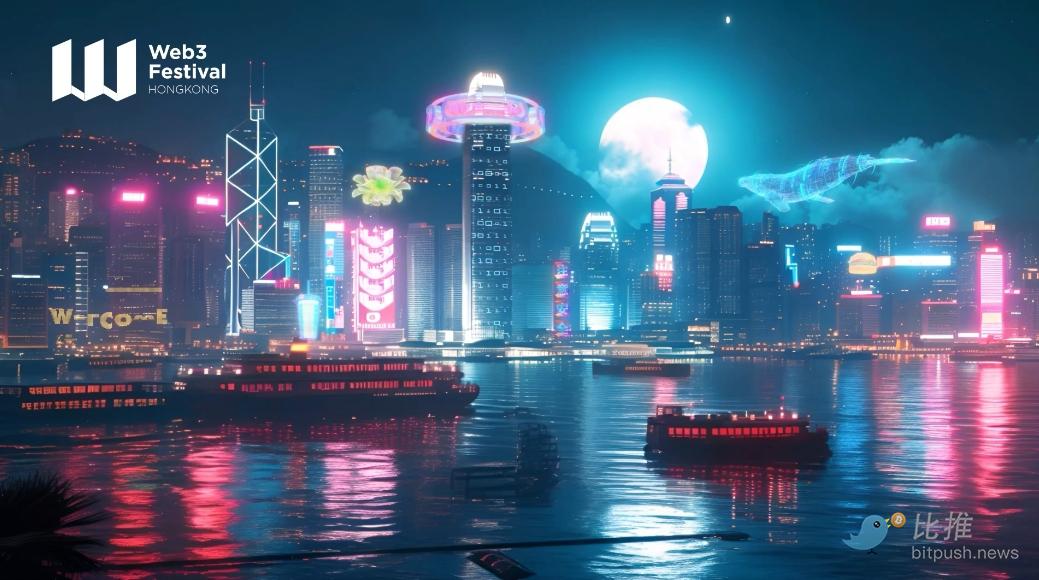
Hong Kong’s Web3 Strategy May Be Even Broader
Hong Kong’s Web3 strategy is highly diversified—not only launching Bitcoin ETFs and welcoming various crypto exchanges but also aggressively promoting STOs and RWAs. Behind this multi-pronged approach lies perhaps the most significant goal: integrating digital RMB into this Web3 economic ecosystem and building an innovative financial market infrastructure—a vision that the U.S., constrained by partisan gridlock, would struggle to achieve quickly.
As Hong Kong rolls out various cryptocurrencies and tokenizes traditional assets, what payment method will best serve digital asset purchases? Native digital RMB is inherently more trustworthy than stablecoins issued by centralized corporations. As Hong Kong pushes forward with Web3 development, the digital RMB stands to benefit immensely. On May 17, the Hong Kong Monetary Authority (HKMA) announced expanded cooperation with the People's Bank of China on cross-border digital RMB payment pilots, broadening the scope of digital RMB trials in Hong Kong. This facilitates easier opening and use of digital RMB wallets by Hong Kong residents and allows top-ups via the Faster Payment System (FPS). With this expansion, users can now open personal digital RMB wallets using just a Hong Kong mobile number. These wallets can be topped up through 17 local retail banks via FPS. Digital RMB can be used not only within the Greater Bay Area but also in other pilot regions across mainland China.
Statements from Hong Kong officials suggest active efforts in this direction. On May 9, Lam Bo-lin, an SFC-licensed individual, revealed that there is market anticipation for interoperability in virtual asset trading and security tokenization (STO). The HKMA has been exploring tokenized deposits for interbank settlement through sandbox testing, preparing for future payment tests involving digital Hong Kong dollars and stablecoins, laying solid groundwork for innovative financial infrastructure and the broader digitization agenda.
Conclusion
Although Hong Kong may appear to trail behind the U.S. in launching crypto initiatives, a deeper analysis reveals that Hong Kong’s crypto policies are actually more open and diverse. From a macro perspective, Hong Kong advances its crypto agenda through comprehensive top-level design and ongoing sandbox experimentation, whereas the U.S. progresses haltingly amid political polarization. This article believes that as Hong Kong completes its regulatory sandboxes, its crypto policies will be implemented faster and more systematically, potentially revitalizing Hong Kong’s position in the Web3 era and positioning digital RMB as a foundational economic pillar in the Web3 world.
Join TechFlow official community to stay tuned
Telegram:https://t.me/TechFlowDaily
X (Twitter):https://x.com/TechFlowPost
X (Twitter) EN:https://x.com/BlockFlow_News
 比推 BitpushNews









