Notcoin popularizes the "tap-to-earn" model—this generation of blockchain games embraces entertainment downgrade as the right path
TechFlow Selected TechFlow Selected
Notcoin popularizes the "tap-to-earn" model—this generation of blockchain games embraces entertainment downgrade as the right path
Bottom-up, entertainment downgrade—that's the brilliant insight Notcoin and its peers have brought to industry practitioners.
 Navigating Web3 tides with focused insights
By: TechFlow
Notcoin is hot.
Its market cap surged by $200 million in a week, with trading volume second only to stablecoins, Bitcoin, and Ethereum. After initial skepticism over its instant listing on Binance, the price rally has silenced critics—nobody turns down profits.
As a result, people are once again FOMOing into the TON ecosystem and acknowledging that Notcoin’s "Tap to Earn" model might actually be onto something.
No one expected a simple tap-based mini-game to explode like this—so now everyone is hunting for the next tap-to-earn sensation.
Chasing NOT at its peak is clearly not the highest-odds move. Instead, more attention should go to similar yet still-unlisted potential projects.
Tap to Earn Is Now Trending
It's been proven: last cycle’s "Play to Earn" was a flawed concept.
The inherent motivational conflict in “play to earn” turned “play” into an empty shell. Projects overly focused on gameplay ended up awkward and underdeveloped.
Thus, most blockchain games from the previous cycle were half-hearted—often prioritizing asset issuance before actual game development, rushing through the “earn” part via NFTs or presales.
In contrast, Telegram-based mini-games like Notcoin don’t even pretend otherwise—they’re upfront: this is about earning. It’s essentially a clone of WeChat’s mini-game “Jump Jump.”
Just tap lightly, play casually, and naturally share (forward).
Lower entertainment value, higher virality—lightweight Tap to Earn mini-games are now trending.
Beyond Notcoin, what other tap-and-go mini-games deserve attention?
Hamster Kombat: Tap Your Way from Crypto Worker to CEO
If you're asking about the hottest similar game right now, it’s undoubtedly Hamster Kombat.
At its core, Hamster Kombat is just another endless tapping game where coins accumulate with each tap, with the expectation they’ll eventually convert into tokens—but its viral speed is almost unbelievable.
Since launching in Q1 this year, its Twitter following has skyrocketed to 5.1 million in just three months, its Telegram group boasts 25 million members, and its YouTube channel hit 10 million subscribers in just seven days—now standing at 14.2 million.

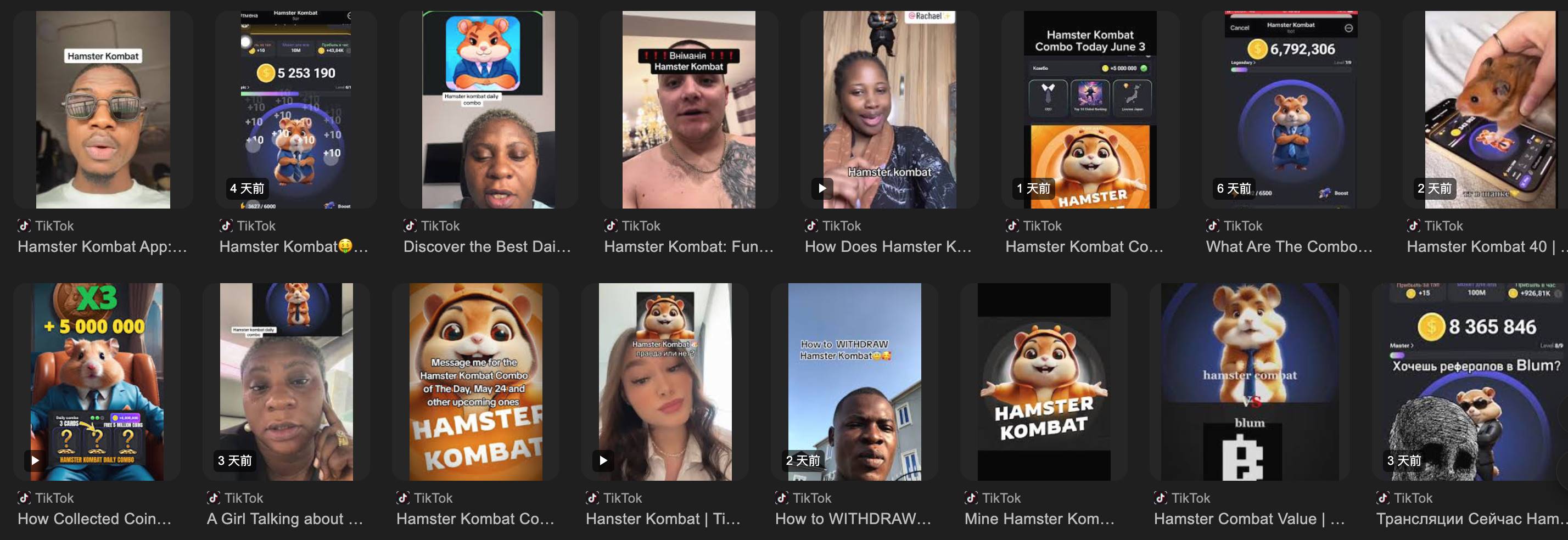
If you have access, search for the game on TikTok (the international version of Douyin), and you’ll see it’s already creating a cultural moment—its reach is undeniable.
This hamster-themed tap game even wraps itself in a layer of crypto-themed edutainment.
You start as a regular hamster and pick your favorite CEX brand. The system gives you coins to collect by tapping, and as you accumulate coins, you upgrade your exchange, eventually becoming its CEO.
Interestingly, beyond tapping for coins, you can also invest them to “build your exchange,” increasing production capacity through reinvestment.
These exchange-building options mirror real-world CEX concerns: marketing, PR, legal, listing new trading pairs, etc.
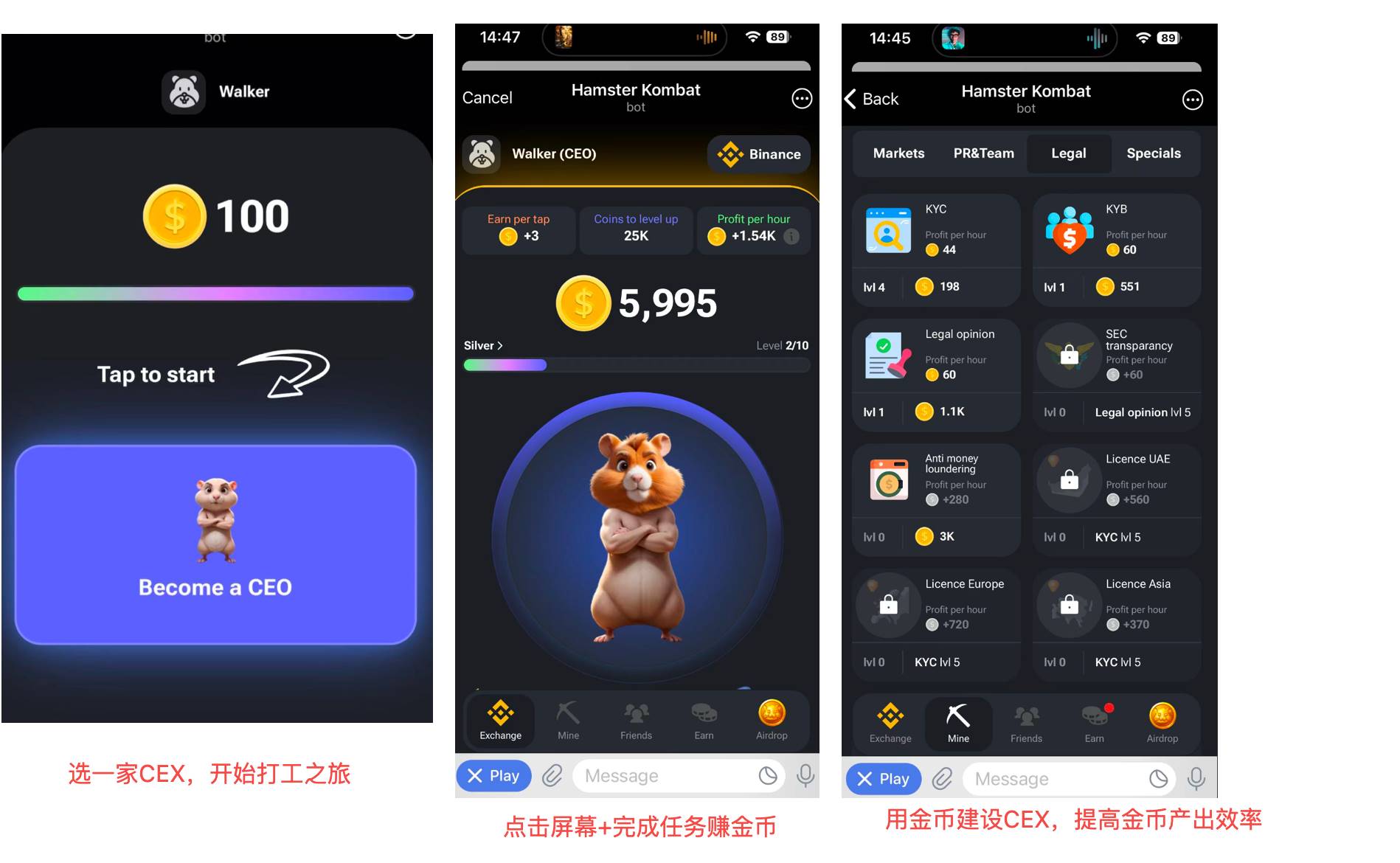
For example, spend 50 coins to improve KYC capabilities, or 100 coins to list a trending asset. While purely virtual, these mechanics subtly educate users on how crypto exchanges operate day-to-day.
For outsiders, it’s a fun way to learn while mindlessly tapping for coins—a win-win-win.
Eventually, your hamster levels up, coin output increases, your simulated CEX improves, and you get to live out your fantasy as a virtual CEO.
Like Notcoin, it runs on Telegram—perfect for quick taps during idle moments, chasing promised airdrops.
But tapping alone won’t maximize earnings. You’ll need to complete daily logins and referral tasks to accelerate coin accumulation—clearly incentivizing daily engagement and inviting friends.
Interested players can click here to try it.
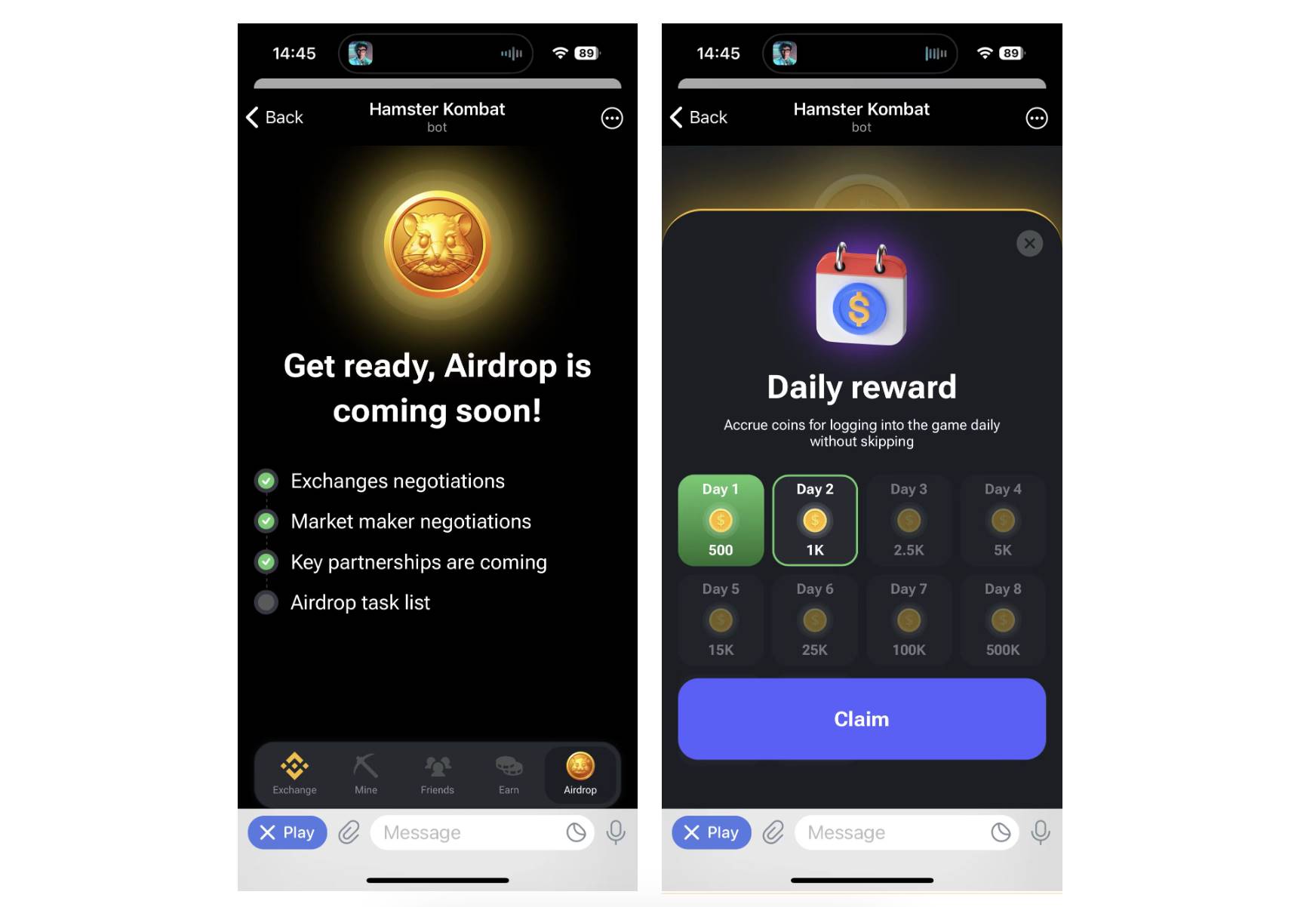
In today’s world where virality trumps entertainment, Hamster Kombat—with its strong distribution metrics—is clearly full of potential.
Catizen: Run a Cat Café, Virtual Cat Petting
Another popular mini-game is Catizen, though it’s been around longer.
According to its official X account, the game has surpassed $13 million in on-chain trading volume, with over 12 million players, more than 730,000 on-chain users, and over 2.2 million transactions.
The premise: you run a cat café, attracting customers to pet cats and earn money.
Gameplay is simple: via a Telegram bot, tap to merge two lower-level cats into a higher-level one. Higher-level cats attract more customers and generate more income.
More income lets you buy more cats, creating a loop to increase coins and rankings, ultimately aiming for airdrops and higher rewards.
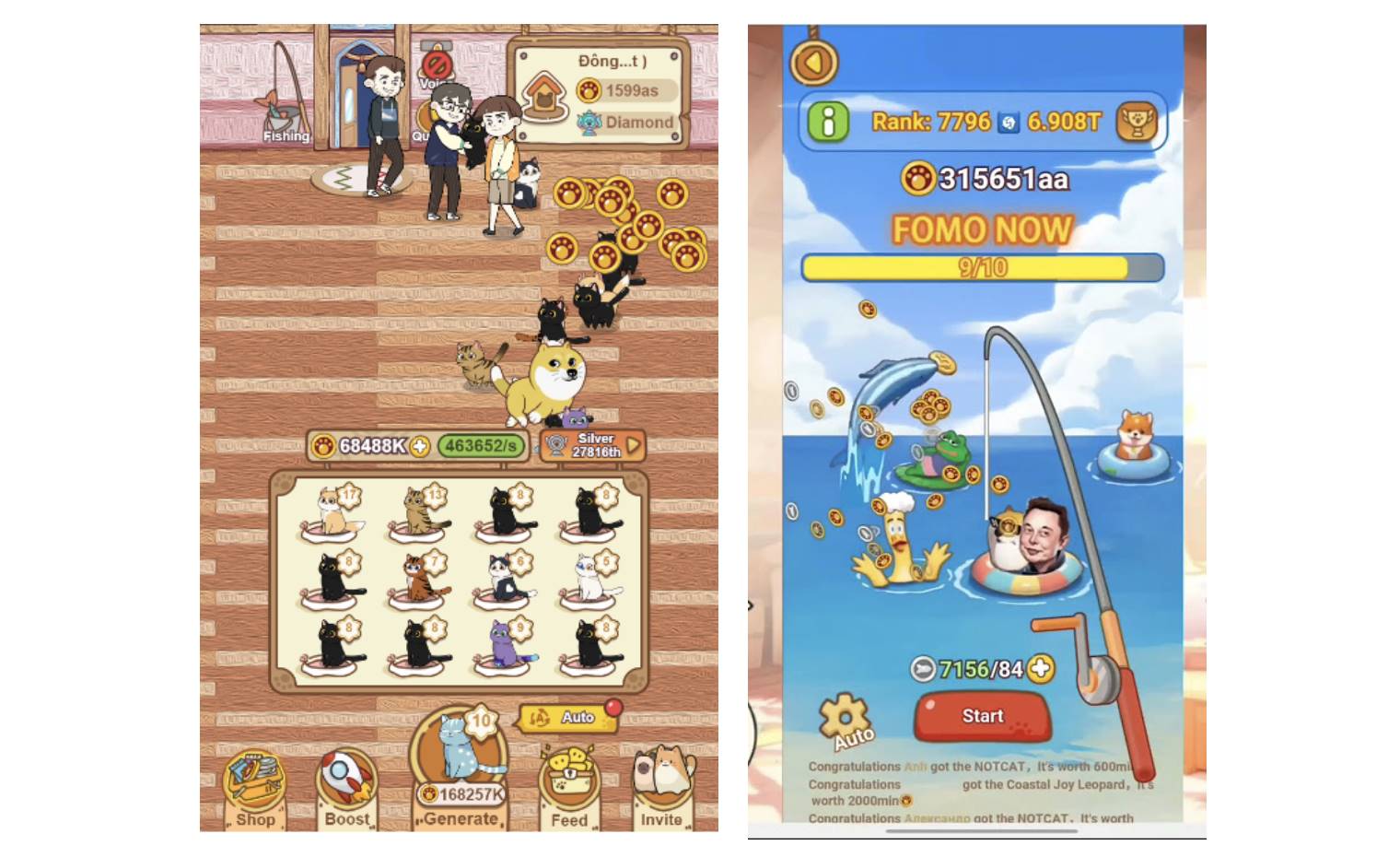
Note: while the game is free-to-play, you’ll quickly find coin generation insufficient for buying cats. To speed things up, you can recharge using Fishcoin (exchangeable for TON) to accelerate coin farming, or directly purchase food to boost cat productivity.
Given the game has been out for a while, PVP is highly competitive. For average players, investing more TON may no longer offer good ROI. Casual, zero-cost participation might be wiser.
Interested players can click here to join.
MomoAI: Plant a Tree—the Best Time Was Yesterday
Beyond the two above, there’s another less saturated tap-to-earn game: Momo AI.
Also based on tapping for continuous coin generation, its theme is tree planting.
Use a Telegram bot to plant a tree, collect Kiwi points, and as the tree grows, its Kiwi yield increases. Eventually, Kiwi points can be exchanged for MomoAI’s native token $MTOS.
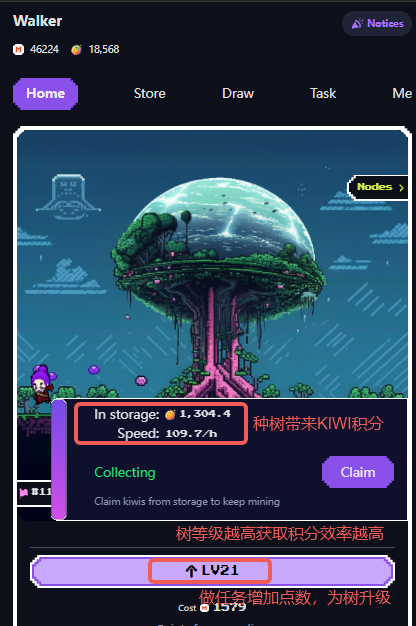
Since tree level determines Kiwi output rate, the resource needed to level up—Points—has become the key lever for viral growth:
Points are primarily earned through in-game “lucky draws.” To increase draw attempts and winning odds, players must complete tasks like following, sharing, and referrals—designed to trigger user-driven virality.
We previously covered the game in detail in our article “Understanding MOMO AI: An AI-Powered Social Gaming Platform on TON and Solana”. For deeper insights into gameplay and earning mechanics, please refer to the full piece.
Currently, the game has surpassed 500K users and is rising fast on active dApp rankings. Interested players can use invite code 0HMXQ2 and visit here to play.
Three Simple Tricks: No Thinking Required, Entertainment Downgraded
Clearly, the new wave of lightweight Tap-to-Earn blockchain games isn’t limited to these three—more will emerge as the TON ecosystem grows.
But why do such simple games rapidly attract users and gain momentum in word-of-mouth?
Traditional AAA blockchain games seem more fun, but for most outsiders and even crypto natives, high-end games come with a downside: “they require too much thinking.”
When entertainment demands effort and knowledge, it becomes a luxury for the few. This is evident in annual AAA titles, literature requiring reading skills, or classical music steeped in history.
In contrast, mass-market users prefer “no-brainer” entertainment.
This isn’t a judgment—it reflects product-market fit across different demographics and lifestyles.
The rise of short videos and popularity of “feel-good” novels prove the point: I just want a quick dopamine hit—tap, scroll, done. Don’t talk to me about meaning, art, or depth.
So “no thinking required” isn’t degradation—it meets the fundamental needs of the masses.
Looking at this generation of “tap games,” they fully embrace this truth and deploy a powerful three-step playbook optimized for acquisition and virality:
-
Just Tap: Play = tapping. No thinking needed. Repetitive but simple. Just tap and relieve stress.
-
Referrals Pay Big: Invite friends, get massive coins. No explanation needed—just send a link. Referrals dwarf tapping earnings, so everyone shares widely.
-
Short Video Marketing: This is the biggest difference from last cycle. Short video platforms are now essential marketing tools. Combined with the games’ simplicity and profit promise, content spreads like wildfire.
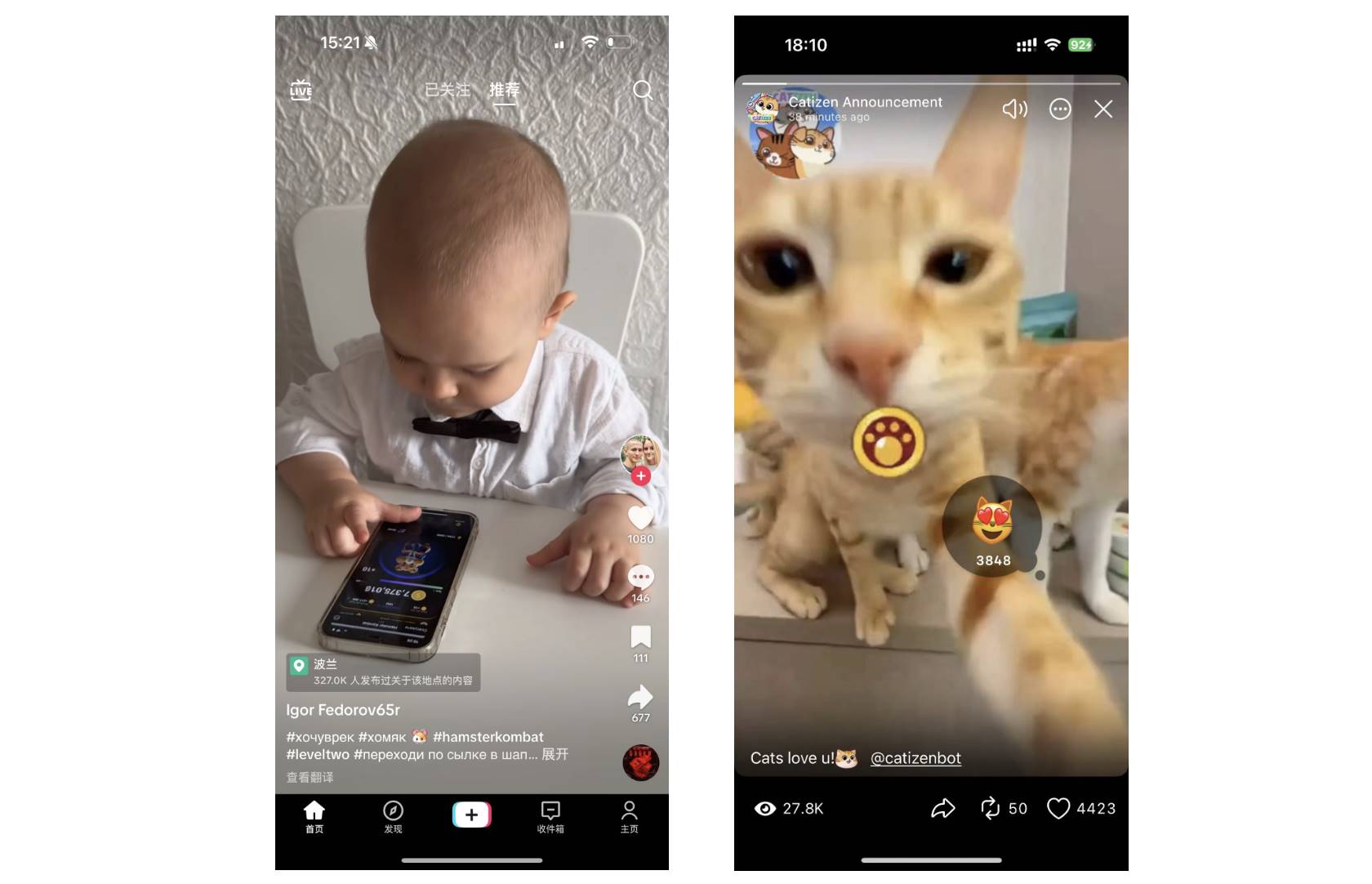
Search Hamster or Catizen on TikTok and Instagram, and you’ll see countless UGC videos. Given Telegram’s easy global access, it’s natural that overseas users are going wild.
The result? A perfectly engineered dopamine loop:
Extremely low entry barrier, excellent virality, maximum freeloader psychology.
Isn’t this exactly what blockchain games originally aimed for?
To be honest, you’re not really “playing”—you’re fast-scrolling, shifting from play to swipe, from watch to tap. Entertainment is downgraded. Goals are clearer, time cost is lower.
Bottom-Up: The Escape Hatch for Blockchain Games
Previously, blockchain games were top-down: “I have AAA studio talent, I’m building a masterpiece, I’m strong”—but had no users.
Now, they’re bottom-up: “I made a web game even AI could build, but it’s simple and spreads fast”—and suddenly, I have millions of users.
This is a shift in mindset.
Products don’t need to be increasingly sophisticated. Sometimes, entertainment downgrading is the escape hatch for blockchain games.
As argued in *Amusing Ourselves to Death*, when everything becomes entertainment, serious discourse gets sidelined, critical thinking declines, and society becomes broadly trivialized.
High-brow entertainment simply doesn’t work in crypto.
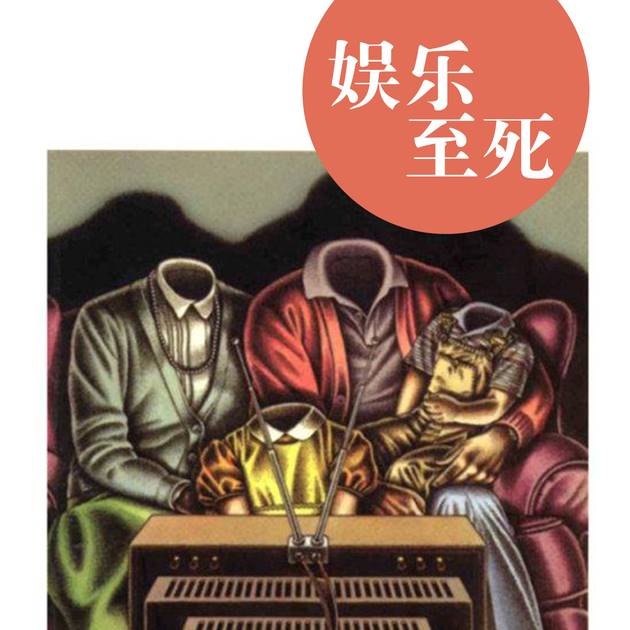
You can’t say whether this is right or wrong—and in crypto, products don’t care about morality, only effectiveness.
Bottom-up growth and entertainment downgrading—that’s the powerful lesson Notcoin and its peers offer to builders.
Join TechFlow official community to stay tuned
Telegram:https://t.me/TechFlowDaily
X (Twitter):https://x.com/TechFlowPost
X (Twitter) EN:https://x.com/BlockFlow_News
 深潮TechFlow