Starknet: Why We Decided to Scale Bitcoin?
TechFlow Selected TechFlow Selected
Starknet: Why We Decided to Scale Bitcoin?
My dream is to see Bitcoin reach the scale it needs and continuously serve everyone.
 Navigating Web3 tides with focused insights
Author: Eli Ben-Sasson
Translation: TechFlow
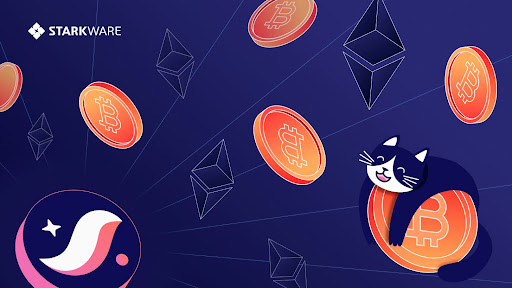
Starknet will become the first network to settle and scale Bitcoin on both Bitcoin and Ethereum, achieving thousands of transactions per second on Bitcoin. This will be realized within six months of a potential Bitcoin upgrade, OP_CAT. This is my proposal for Starknet’s future—and for blockchains, the global economy, and individual rights. We have already taken concrete steps toward this vision and are publicly supporting the adoption of OP_CAT.
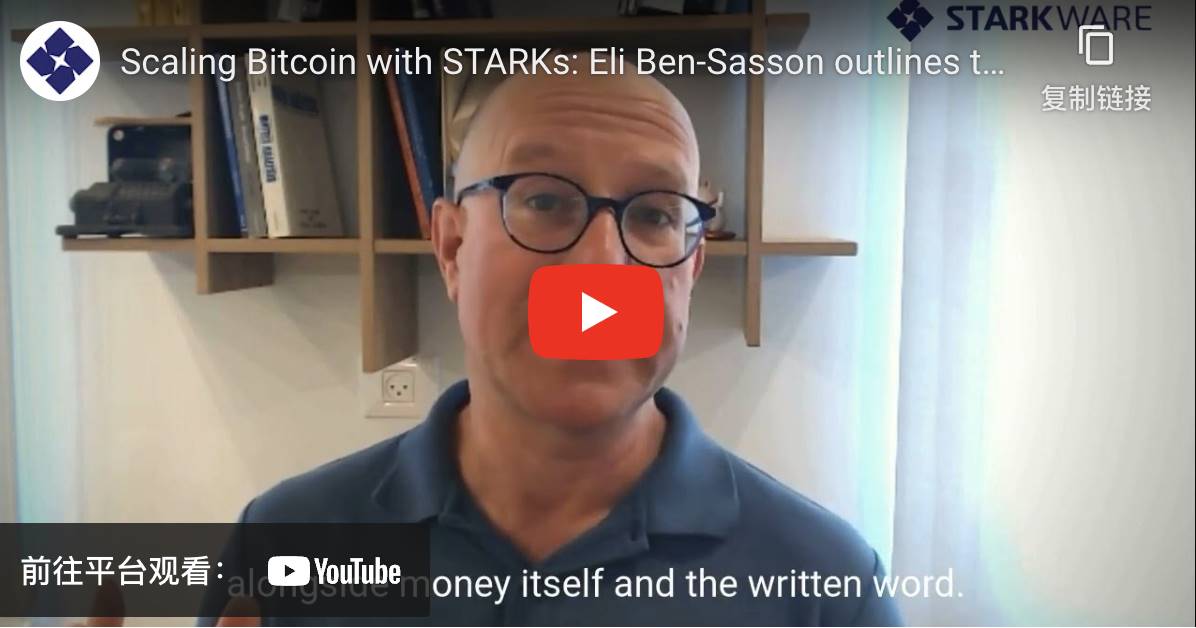
The moment has come for STARKs to rise to their next challenge. The time is ripe for STARKs to demonstrate their scaling capabilities on Bitcoin—the most egalitarian currency in history. Once Bitcoin adopts OP_CAT, implementing a STARK verifier in Bitcoin script becomes feasible. This opens a secure, self-custodial channel between Bitcoin and Starknet, creating a single-layer Layer 2 network that scales both Ethereum and Bitcoin.
Cryptography can purify the digital and financial world, bring integrity to money, and rebalance power away from Big Tech back into the hands of sovereign individuals. It is a tool that empowers humanity and grassroots communities. In short, it is a force for good. Therefore, we need a vision that demonstrates this and matters to everyone. I left behind a quiet academic career to pursue this vision.
No vision can be fulfilled without scaling the foundational chain of this great project. By scaling Bitcoin, we will unleash blockchain’s power to transform the world. StarkWare is backing this plan with concrete actions, including launching a one-million-dollar fund to support new research examining the pros and cons of Bitcoin adopting OP_CAT.
Our strategic collaboration with Weikeng Chen from L2 Iterative Ventures (L2IV) via the ZeroSync Foundation has been highly productive, culminating in the creation of the Bitcoin Wildlife Sanctuary. We are leveraging their team's hands-on engineering and research expertise to advance open-source work on OP_CAT-based covenants and STARK verifiers in Bitcoin script. We also thank BitVM and the ZeroSync Foundation for helping many recognize Bitcoin’s potential. Carter Feldman from QED has been influential as well, showing us what fresh perspectives and openness toward Taproot can reveal.
Following this article, StarkWare and Starknet will release many official updates. But for now, I want to return to first principles and state why we do what we do.
2008: The Break
It’s 2008. Global finance has just collapsed. In response, Satoshi Nakamoto released the revolutionary Bitcoin whitepaper. At this moment of rupture, Satoshi showed us how we could do things differently. We, the public, could demand and enforce higher standards of integrity and transparency in finance. Satoshi introduced an inclusive protocol that invited everyone in—instead of relying on the fortresses and skyscrapers of traditional banks. Through Bitcoin mining and fees, this protocol fairly and transparently distributes value to its broad base of contributors. The broader the contributor base, the better and more secure Bitcoin becomes.
Bitcoin gave us far more than a ledger—it gave us confidence in change. It arrived precisely when banks had messed up, were busy foreclosing homes, and hoped we wouldn’t realize that even with all their “trust us” attitude backed by mortgages, houses aren’t always “as safe as houses.”
Once fully realized, Bitcoin’s impact can go beyond today’s reality. Its destiny can and should be widespread use as global reserve. It can become the foundation of a global “integrity network,” supporting all social functions essential to our free society: money, property rights management, and social interaction.
The Bitcoin whitepaper envisioned a large and small-scale network used for payments, operated collectively by everyone, rich or poor. Today, 1.5 billion people globally remain unbanked. For them, Bitcoin payments are not just an alternative—they represent their first access to financial infrastructure. Today’s Bitcoin offers too little capacity, and existing capacity is too expensive for nearly all of these 1.5 billion people. My motivation is to develop technologies that make Bitcoin—and the free society it enables—accessible to all.
The Elephant in the Room
Some view StarkWare as Ethereum maximalists. While we deeply respect Ethereum’s values and are committed to its success, we are first and foremost STARK maximalists. Starknet was deployed as a Layer 2 on Ethereum, but connecting Starknet to Bitcoin is a natural extension of its capabilities. This aligns with our unwavering vision since founding StarkWare: STARKs are a public good required to scale all truly decentralized blockchain projects. Of course, Ethereum embodies the same ambitious mission outlined earlier, albeit through a different path with different trade-offs. That’s beneficial—it increases our collective chances of building protocols resilient against nation-state actors. Ethereum’s core values are why we chose it as Starknet’s settlement layer, and those values remain intact. We firmly believe in Ethereum and are committed to its long-term success. Bringing ZK-STARKs to Bitcoin isn’t a departure from our path—it’s a return to our origins. So far, StarkWare has deployed all its systems on Ethereum. But the idea of using STARKs to scale blockchains originated at a Bitcoin conference in spring 2013.
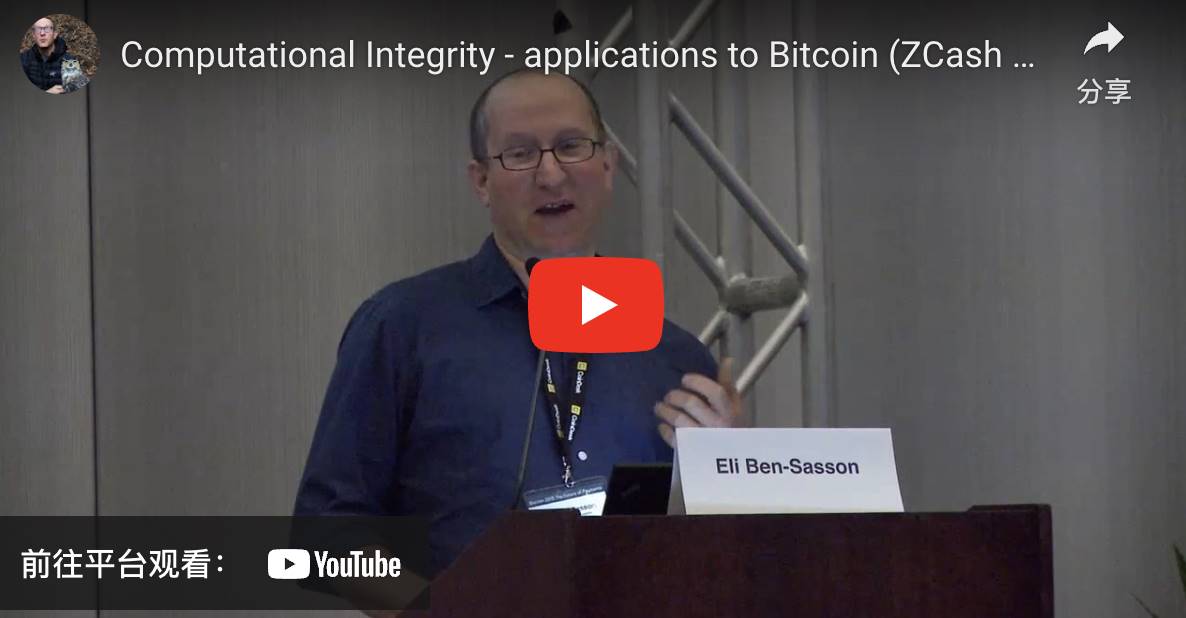
I took the stage at that conference to present my early, somewhat eccentric research on what would later be called STARKs. Many attendees responded that this kind of cryptography was exactly what blockchains needed. In other words, I was “orange-pilled” by Bitcoin—two years before Ethereum launched.
So StarkWare has been deeply involved with Bitcoin from the start, observing the network with admiration. Now, with Taproot and the potential of OP_CAT shaping Bitcoin’s possibilities, I feel it’s time to openly enter this conversation.
We’ve also supported breakthrough Bitcoin projects like ZeroSync, which integrates ZK proofs with Bitcoin to enhance privacy and scalability. StarkWare also commissioned researcher John Light to write the “Validity Rollups on Bitcoin” report, reassessing the potential for integrating validity rollups with Bitcoin and concluding that an ideal match may exist. Our next-generation circular STARK prover-verifier Stwo operates over the finite field M31—a field that works well with Bitcoin script, making us ideally suited to deliver next-generation Bitcoin scaling.
What I Want to See
My dream is to see Bitcoin reach the scale it needs to serve everyone, continuously and inclusively. This includes being open to all, without economic barriers. I believe this must uphold Satoshi’s commitment to decentralization and security.
The internet began as a niche playground for engineers and academics. Expanding it into the infrastructure underpinning our lives took years. Blockchain is a tool running atop the internet that can democratize it—rebalancing power by distributing trust and integrity to sovereign individuals in large communities, rather than delegating it to a few big corporations. But to truly reclaim power and return it to the people, it must scale.
I also believe the opportunity to scale Bitcoin should be used to advance a value important to many in the Bitcoin community: privacy. The same cryptography enabling Bitcoin scalability also provides the raw materials to enhance privacy. Over time, we’ll see that you can have it all: your keys, your coins, your confidentiality.
How Do We Plan to Achieve This?
Today, StarkWare is taking three concrete steps to scale Bitcoin:
-
We will propose a new Starknet design that unifies the space by making Starknet a self-custodial, decentralized Layer 2 that settles simultaneously on both Ethereum and Bitcoin. A single layer settling on two chains. Our team will carry out or sponsor all necessary work to achieve this. Architectural details will be published in the coming weeks.
-
StarkWare is launching a one-million-dollar fund to award grants to Bitcoin researchers and developers studying OP_CAT and its implications. Grants will go to individuals and projects conducting good-faith research—both in favor of and opposed to the upgrade—as well as contributors providing proof-of-concepts for OP_CAT use cases. Details about the fund will be announced next week.
-
Finally, we believe the OP_CAT soft fork represents the safest path forward for Bitcoin scaling—especially by enabling STARK verification and rollups. Therefore, we are announcing our public support for OP_CAT. OP_CAT makes trustless rollups on Bitcoin possible by enabling recursive covenants that can automatically manage and update their state, significantly increasing transaction throughput without overloading Bitcoin.
What Could Scaling Bitcoin Unlock?
By scaling Bitcoin, we could process transactions for millions of users per second—compared to about thirteen today. Some use cases enabled by the Bitcoin scaling we envision include:
-
Scaling both Bitcoin and Ethereum simultaneously: Blockchains today are fragmented. You can choose Bitcoin as “digital gold”—great for holding value but limited in functionality—or Ethereum, intended as the “world computer,” or smaller chains. By bridging both and offering choice across the two largest chains (dApps can pick one or both), Starknet will eliminate this fragmentation. Without interfering in either chain’s independent governance, it will scale both.
-
Privacy: STARKs—the cryptographic proofs used in scaling—have immense, unrealized privacy potential built in. This privacy potential is a perfect match for the Bitcoin community. The “zero-knowledge” aspect of the technology is already well understood, but still needs to be unlocked and translated into practical solutions. Integrating private Layer 2s into the Bitcoin ecosystem, using technologies like Zcash, MimbleWimble, or Noir, could significantly enhance transaction privacy.
-
Financial services for the excluded: For us, Bitcoin’s mission has always been partly about empowering the marginalized. About 1.5 billion people globally lack access to traditional banking, hindering upward financial mobility. Previous attempts to scale Bitcoin haven’t delivered mass-usable solutions. With new scaling methods and additional tools, Bitcoin could provide an inclusive, global financial system for the world’s unbanked.
-
Financial innovation on Bitcoin: Today’s Bitcoin supports digital cash payments, but modern markets require more: better self-custody options with programmable vaults, risk management and hedging tools, credit, lending, derivatives, futures contracts, and more. All these require greater functionality and cannot or should not be built directly on Bitcoin. Making Starknet a Layer 2 on Bitcoin delivers the best of both worlds: massive financial innovation secured by Bitcoin’s strength as digital gold.
-
Improved user experience: Bitcoin’s original self-custody security also makes it difficult for average users to handle safely. Modern Layer 2s will give users secure and simple self-custody interactions for most daily needs, while relying on Bitcoin’s robust—but clunky—Layer 1 security for long-term value storage.
Why OP_CAT, STARKs, and Starknet?
Why OP_CAT? STARKs need to verify hash chains—that’s it. Their main verification loop consists of simple algebraic operations (addition and multiplication modulo a small prime) and verifying correct openings of entries pre-committed via Merkle trees. OP_CAT uniquely enables creating and opening Merkle tree entries in Bitcoin script, because the core operation enabling Merkle tree creation and verification is concatenating two values and then hashing them (OP_CAT enables concatenation). Although other covenant-enabling opcodes might be more powerful, OP_CAT is the only one currently discussed that allows Merkle tree verification.
Why STARKs? Briefly: they offer the greatest scale, are the most battle-tested, most secure, require no trusted setup (“toxic waste”), rely on no exotic cryptographic primitives, and are even post-quantum secure. The new STARK prover-verifier Stwo uses small numbers suitable for Bitcoin’s stack, making it more efficient.
Why Starknet? Starknet already has a vibrant developer community on Ethereum and a programming language that puts the full power of scaling into developers’ hands. For any developer familiar with Rust, Starknet’s native (and open-source) Cairo language will feel familiar. The current Bitcoin community lacks a clear high-level language for building on-chain applications. I hope Cairo fills this gap and becomes one of Bitcoin’s native languages.
Join TechFlow official community to stay tuned
Telegram:https://t.me/TechFlowDaily
X (Twitter):https://x.com/TechFlowPost
X (Twitter) EN:https://x.com/BlockFlow_News
 @StarkWareLtd