








Meme Coin Live Streaming Chaos: To Pump the Price, You Might Even Burn Yourself
TechFlow Selected TechFlow Selected
Meme Coin Live Streaming Chaos: To Pump the Price, You Might Even Burn Yourself
Meme coins叠加直播乱象,attention economy is everything.
 Navigating Web3 tides with focused insights
By TechFlow
How can you make a meme coin go up?
Broadly speaking, the answer is gaining recognition and attention from the community and market. But exactly how to capture people's attention? That’s where everyone uses their own unique tricks.
Among these methods, live streaming to attract traffic has recently become a popular strategy.
On Pump.fun, a meme coin launch platform, thousands of new meme coins appear every day. To stand out and create some buzz, a shareable meme image or catchy tagline simply isn’t enough anymore.
Developers (Devs) behind these coins now increasingly appear on camera themselves, hosting live streams and passionately promoting their projects.
“Brothers, chip in another 1 SOL to pump it up,”—you can easily picture this kind of donation-driven livestream, similar to Chinese live-stream tipping culture.
But where there's excitement, chaos often follows. The current ecosystem around meme coin live streams is, in fact, rife with disorder.
Pumping at the Cost of Self-Harm
Want your coin to pump? Then set off some fireworks to celebrate.
Mikol, the developer behind a meme coin called DARE, took fire-based antics to extremes during his live stream.
To grab attention, boost visibility, and drive up the token price, Mikol chose a dangerous way to stand out: he doused himself in alcohol and had a friend shoot fireworks at him.
Unfortunately, the fireworks hit their target all too well. Video footage shows his body catching fire. No fire extinguishing equipment was prepared beforehand. Mikol’s screams are clearly audible, followed by his friend shouting:
"He's fully burned, bro, stop the stream—come help!"
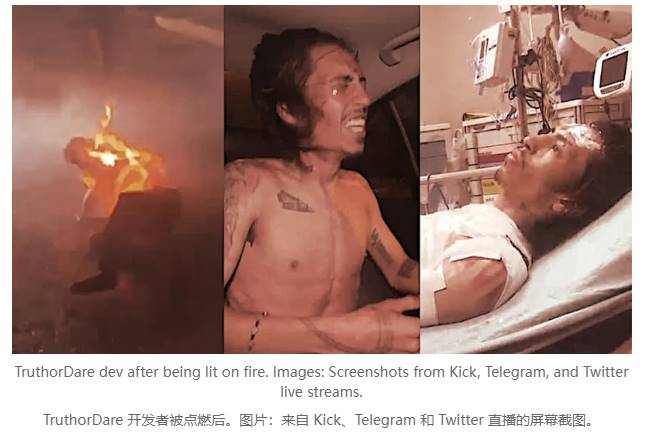
He meant to ignite the coin’s price—but ended up igniting himself instead.
According to follow-up reporting by Decrypt, Mikol was hospitalized at a trauma center in Miami. A fan with firefighting experience who spoke with him concluded that Mikol had suffered third-degree burns, resulting in irreversible damage.
Such extreme, dangerous, and self-destructive behavior poses serious risks not only to Mikol’s safety but also sets a harmful example for viewers.
All this for a temporary price surge? Clearly, the cost far outweighs any gain.
Even more chilling is how DARE’s investors seemed indifferent to Mikol’s condition, focusing only on whether the coin’s price was dropping. Cold-hearted traders suspected it was a staged act and tweeted:
"F*** it, I don't care about anything in crypto anymore."
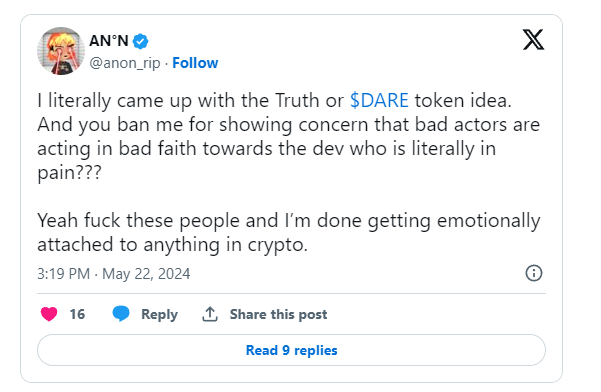
Whether the injury was real or fake, risking serious harm just to push up a token price has clearly gone too far.
Lowbrow Chaos
Mikol’s alcohol-and-fireworks stunt isn’t the only outrageous tactic used to hype a meme coin.
Another project, Livemom (“Living with Mom”), brought on a pair claiming to be mother and son for live streams. They frequently interacted with viewers, promising specific actions whenever the Livemom price hit certain milestones.
The content quickly turned vulgar, filled with sexual innuendos and borderline explicit acts. At one point, the so-called “son” openly made conditional offers: once the coin reached a certain price, he asked viewers if they wanted to see certain parts of the “mother’s” body, then poured milk over her.
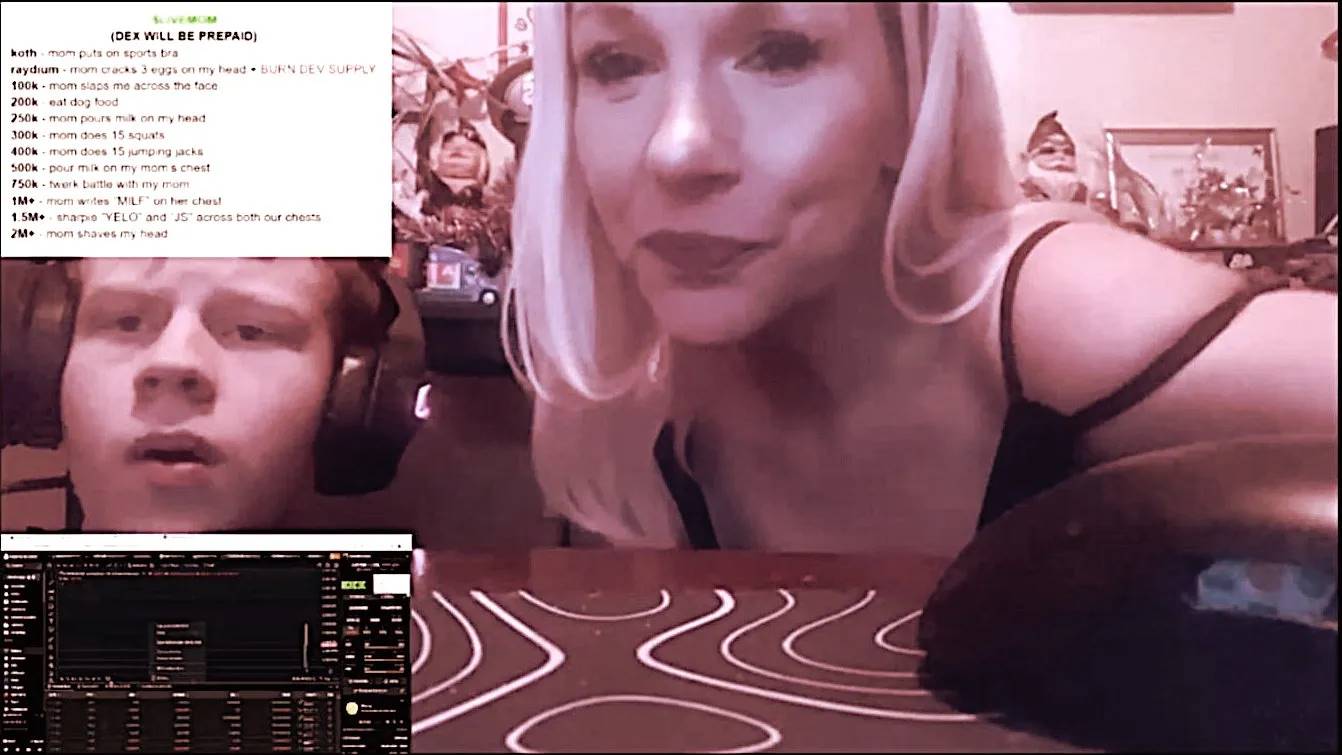
Ironically, the stream worked—Livemom’s price moved directly with the mother’s actions. When she left the screen, the coin dropped; when she performed suggestive acts, the price surged.
At this point, the meme coin had effectively become a “popularity ticket” for a porn-adjacent show—more effort, more views; dull performance, declining interest...
This unethical, tasteless gimmick tied directly to price movements is truly disturbing. After the duo deleted their social media accounts, Livemom’s value collapsed, ultimately fading into obscurity like so many others.
Attention Is Everything
The fusion of meme coins and chaotic live streams reflects the core principle of attention economics.
The more extreme and vulgar the act, the more traffic it draws—quickly rallying a small, self-amused crowd that jokingly pumps the token price higher.
Anything goes, as long as it grabs attention.
And this phenomenon isn’t new—it already has precedents in China.
As short-video platforms rapidly captured public attention, grotesque and lowbrow live streams flourished: eating bizarre foods, making strange faces, inserting odd objects into their bodies—the more shocking, the higher the traffic.
Human nature is universal. The dark side of attention economics is increasingly evident—not limited to niche markets or single cultures, but a global trend.
In the crypto space, such chaos is especially visible due to inherent volatility and its blend of niche communities and cutting-edge tech. The rapid rise—and potential sudden collapse—of meme coins is the most direct manifestation of “fast-food culture.” Under this influence, investors chase short-term gains over long-term value.
Players, chasing instant thrills and attention, gradually neglect content quality—a trait that ironically aligns perfectly with meme coins: hollow in substance, yet highly viral.
But if such tactics dominate, the perception of crypto as a dirty, chaotic space may become impossible to shake.
After all, a good meme should embody love & peace—the spirit of punk—not be an extreme, vulgar hypocrite trampling all norms.
Join TechFlow official community to stay tuned
Telegram:https://t.me/TechFlowDaily
X (Twitter):https://x.com/TechFlowPost
X (Twitter) EN:https://x.com/BlockFlow_News
 深潮TechFlow








