








Morph's New Take on the L2 Walled City: How Can Users and Developers Share the Benefits of Ecosystem Growth?
TechFlow Selected TechFlow Selected
Morph's New Take on the L2 Walled City: How Can Users and Developers Share the Benefits of Ecosystem Growth?
Points airdrops plus developer-centric ecosystem development, balancing users and use cases, might be what it takes to end the seesaw of "ghost town blockchains" and "false TVL prosperity."
 Navigating Web3 tides with focused insights
Imagine you were to build a massive and thriving L2 ecosystem from scratch. How would you approach it?
Before 2023, public blockchains and L2s primarily competed through on-chain innovations such as yield-generating products, derivatives, and structured financial instruments. However, they were widely criticized for the "ghost city effect"—most networks suffered from extremely poor user engagement and liquidity. Over the past year, however, the L2 space has begun experimenting with new strategies. Blast, acting as a disruptive force in the L2 arena, leveraged anticipated points-based airdrops to achieve cold-start success at minimal cost, rapidly amassing hundreds of millions—or even billions—of dollars in TVL.
But has the core problem truly been solved? Looking back today, while the L2 sector may have overcome the “ghost chain cities,” it now appears to be entering a new dilemma: one of "false TVL prosperity." The old and new issues have become two opposing ends of a seesaw, each undermining the other.
In this context, Morph offers a fresh, dual-pronged solution: combining testnet points incentives for cold-starting with a dedicated ecosystem development fund targeting developers and DApps. This strategy aims to balance both user acquisition/liquidity and ecosystem growth/consumer use cases, seeking to deliver a novel framework that transcends both extremes—the ghost chains and the illusion of TVL growth.
The “L2 Dilemma”: Traffic or Ecosystem?
Blast’s emergence in November 2023 served as an outlet for accumulated market dissatisfaction with Ethereum's prior L2 landscape. Relying solely on transparent airdrop expectations—a powerful incentive—Blast surpassed $500 million in TVL within just five days, overtaking high-profile L2 projects like zkSync, Starknet, and Linea.
Notably, at that time, Blast had not yet launched its mainnet nor offered any DApps for users to interact with. Yet, its TVL continued breaking successive milestones, attracting up to $2 billion in capital within months:
This placed it fourth among Ethereum L2s by TVL—behind only established giants Arbitrum and Optimism, and Base (backed by Coinbase)—with a growth rate nothing short of explosive.
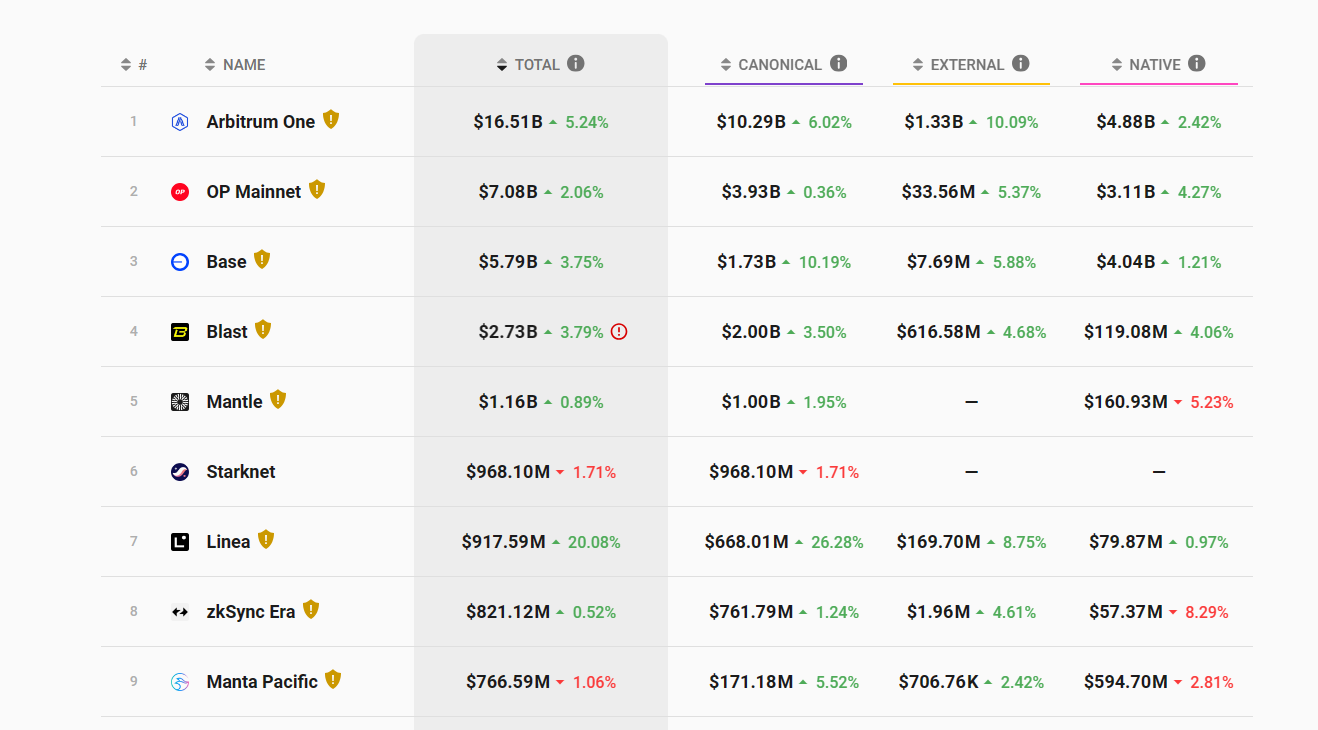
Blast sparked widespread community debate about liquidity versus real-world utility in L2 ecosystems. Its novel “users and liquidity above all” approach disrupted traditional L2 growth models, suggesting a potential path forward where massive TVL precedes application development.
At its core, Blast’s model—combining anticipated airdrops with social virality—overturned the conventional playbook focused purely on technology and ecosystem building. By getting closer to market psychology and tapping directly into users’ investment-driven behaviors, Blast effectively replicated Web2-style growth tactics akin to Pinduoduo’s marketing strategies within Web3.
This represented a paradigm shift—an almost "dimensional downgrade" attack against legacy L2 strategies—and achieved remarkable success in both reach and velocity. However, marketing is ultimately just a tool for initial traction. Recent controversies around Blast’s point system and exit mechanisms highlight that long-term retention depends on solid ecosystem development and user experience—not locking users in, but earning their loyalty.
This also raises a deeper strategic question for L2s: Should one follow the path of veteran L2s like Arbitrum and Optimism, focusing on offering diverse, compelling applications to organically attract users and capital? Or emulate Blast’s playbook—first aggregating vast amounts of users and funds, then drawing in builders and DApps to populate the network?
Each approach has strengths, yet each faces distinct limitations.
Morph’s proposed solution challenges the notion that market-driven growth (via points and incentives) and service-driven development (via rich on-chain use cases) are mutually exclusive.
Instead, these two can be seamlessly integrated: leveraging points-based airdrop incentives to drive early user and capital inflow, while simultaneously launching developer-focused initiatives—including an ecosystem fund (estimated at up to tens of millions, representing roughly 30% of total token allocation), incubators, and hackathons—to cultivate robust on-chain activity, especially consumer-grade applications capable of sustaining the surge in traffic and liquidity:
-
For communities and users: On May 6, Morph officially launched the Morph Holesky testnet, featuring enhanced performance and infrastructure fully aligned with the upcoming mainnet. This allows users to preview all planned functionalities ahead of launch, ensuring a smooth transition. Concurrently, Morph introduced a corresponding points incentive program encouraging active participation in early network testing and liquidity seeding;
-
For ecosystem development: Morph has consistently hosted developer-centric events—including incubators, hackathons, workshops, and lectures—encouraging teams building in AI, GameFi, and other domains to develop on Morph. It has further committed to launching a dedicated ecosystem fund to support long-term builders.
How Can Regular Users and Developers Participate?
So what specific opportunities exist currently for regular users and developers?
For ordinary users, the primary opportunity is “Morph Zoo,” a multi-phase campaign launched on May 13 with its first season titled “Genesis Jungle.” Users can earn Morph Points via DApp interactions, check-in voting, and platform tasks—accumulating eligibility for future token airdrops or exclusive rewards.
For developers, the options are richer and more varied. Whether participating in hackathons and incubator programs targeting AI, DeFi, GameFi, or infrastructure projects, or attending online/offline workshops exploring Web3 use cases, developers are encouraged to join Morph’s early ecosystem development. Selected participants will benefit from comprehensive support including initial airdrop allocations, quarterly rebates of 100% of the first-year sequencer fee profits, and more.
Regular Users: “Morph Zoo” Season One – “Genesis Jungle”
On May 13, Morph launched “Morph Zoo,” a multi-stage initiative aimed at attracting and rewarding participants in the Morph testnet and eventual mainnet, kicking off with the first season, “Genesis Jungle.”
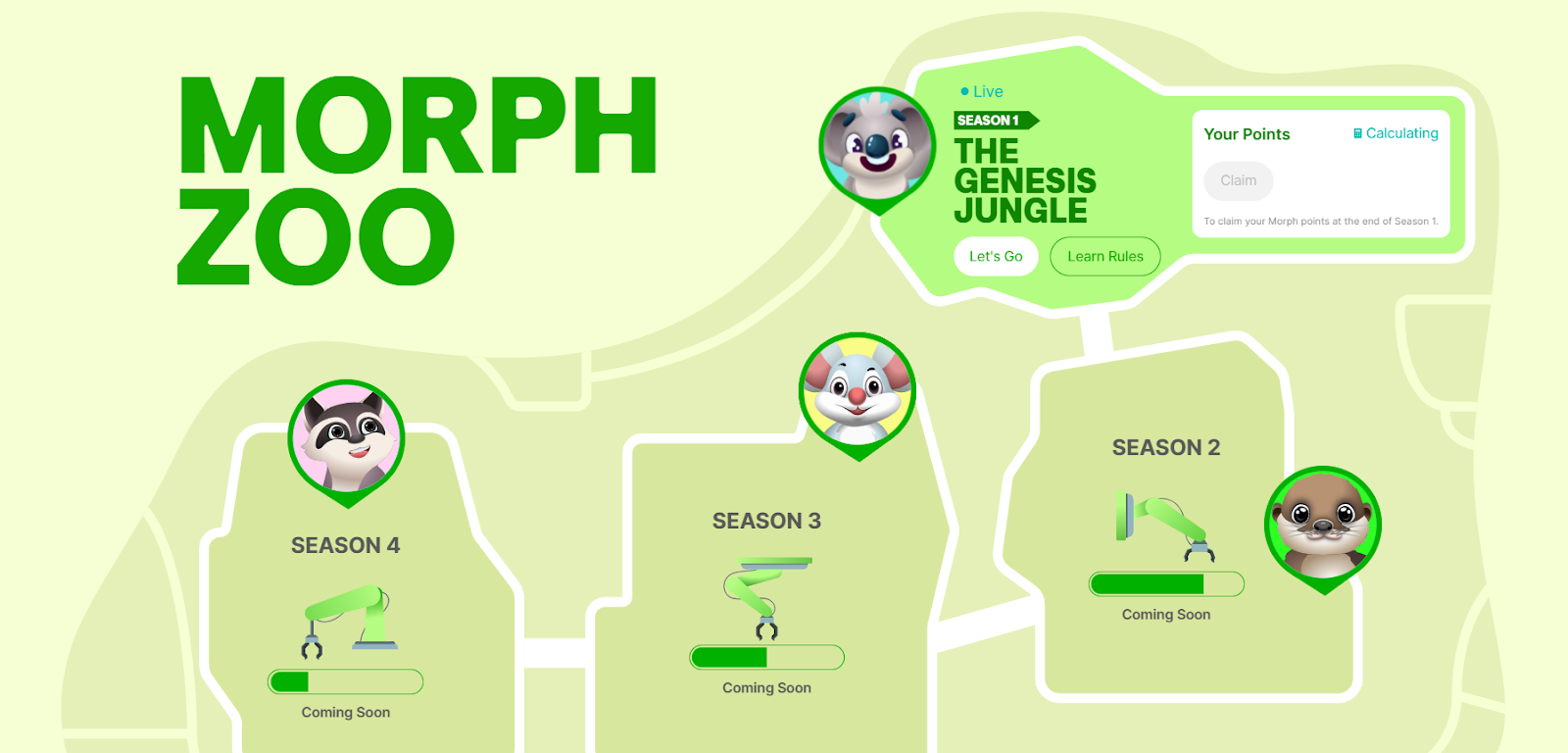
Every interaction made by ecosystem participants earns them Morph Points, reflecting their activity level, engagement, and contribution to the Morph ecosystem. The official documentation strongly implies that these points will play a key role in determining eligibility for future airdrops and other exclusive rewards.
It’s important to note that Morph Points function similarly to soulbound tokens—they are bound to a user’s wallet and cannot be transferred. Currently, there are three ways users can earn Morph Points during the “Genesis Jungle” phase: Discovery Trail (DApp interactions), Voice of the Jungle (check-in voting), and Partners' Expedition (partner task platforms).
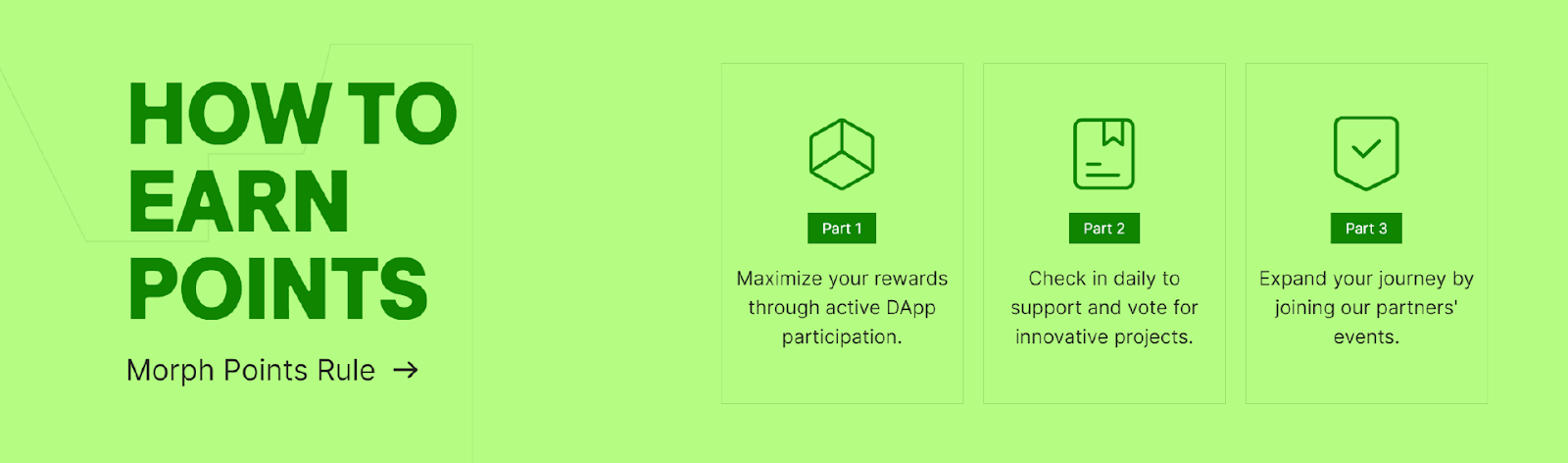
1. Discovery Trail: DApp Interactions
According to the official description, the Discovery Trail allows users to explore Morph’s DApp ecosystem and discover Morph Points along the way—essentially a standard round of DApp interaction activities on the Morph Holesky testnet.
Currently, four DApps are available for interaction on the official site. In addition to the familiar cross-chain bridge Morph Bridge, the list includes the liquidity protocol BulbaSwap, lending protocol Abra Finance, and NFT marketplace Morpha.NFT. More DApp types are expected to go live soon.
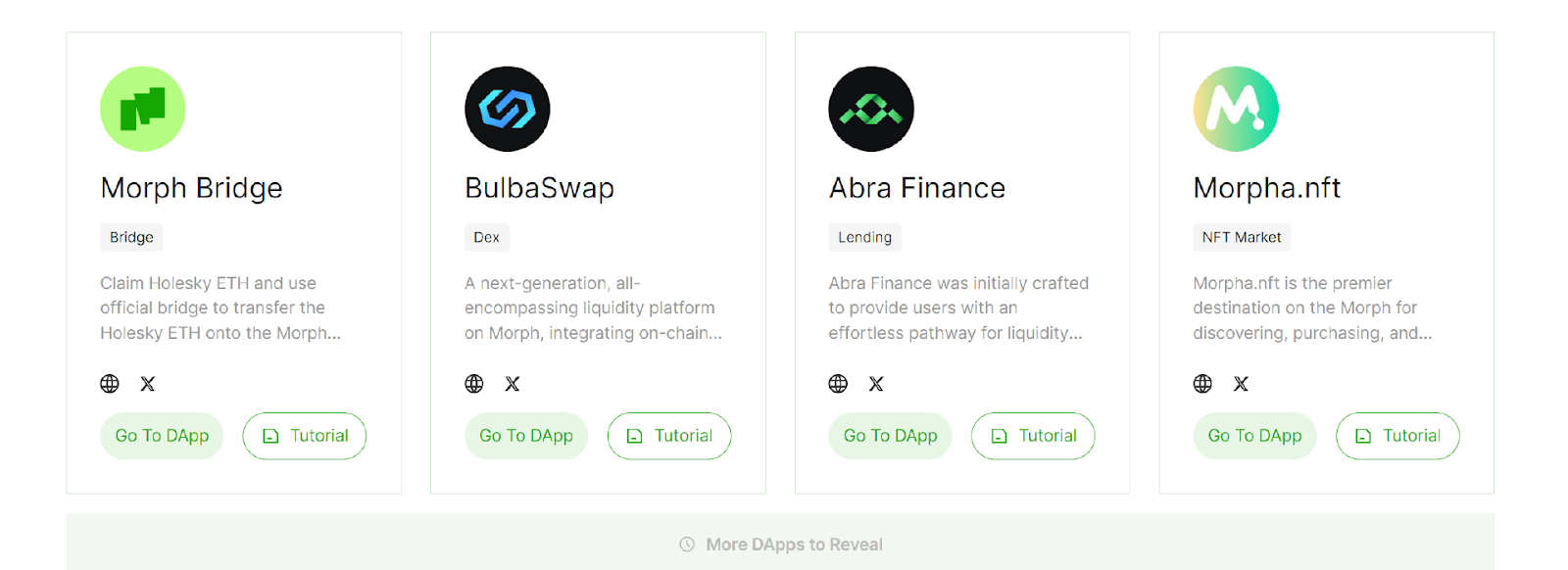
Morph Bridge
The full interaction flow across these four DApps is quite smooth. As in previous testnet rounds, users begin with the “Morph Bridge” to transfer tokens between the Ethereum Holesky testnet and the Morph Holesky testnet.
First, ensure your wallet holds Holesky testnet ETH. (The Morph official docs recommend using faucets from QuickNode, Stakely.io, or PoWFaucet.)
You can also join the Morph Discord community, enter the “discord-faucet” channel, and use the command “/faucet + address” to receive test USDT.

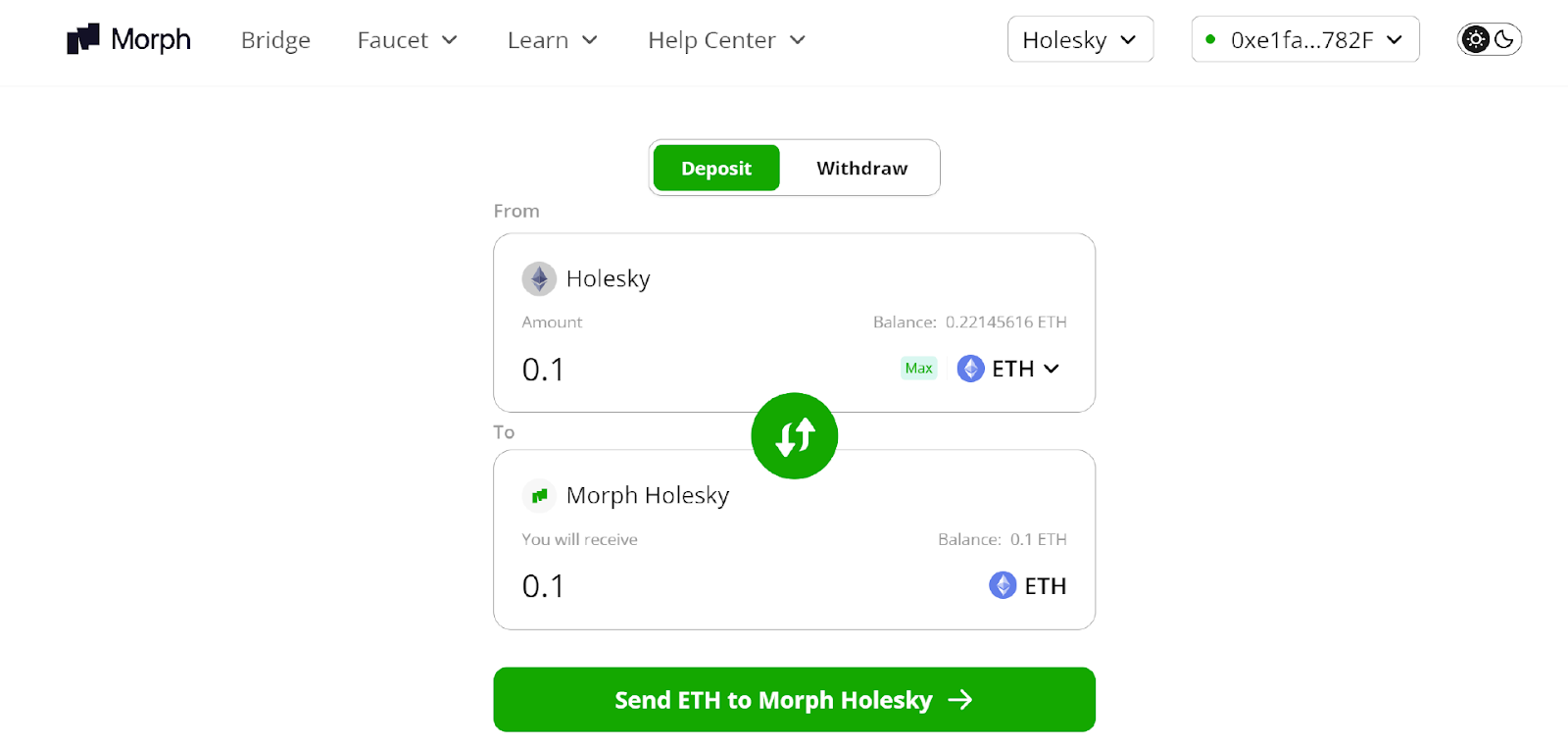
Once you have Holesky testnet ETH and test USDT, proceed to the “Morph Bridge” for cross-chain transfers:
Select the token and amount, then deposit from the Ethereum Holesky testnet to the Morph Holesky testnet via the “Deposit” page; the “Withdraw” page performs the reverse operation.
BulbaSwap
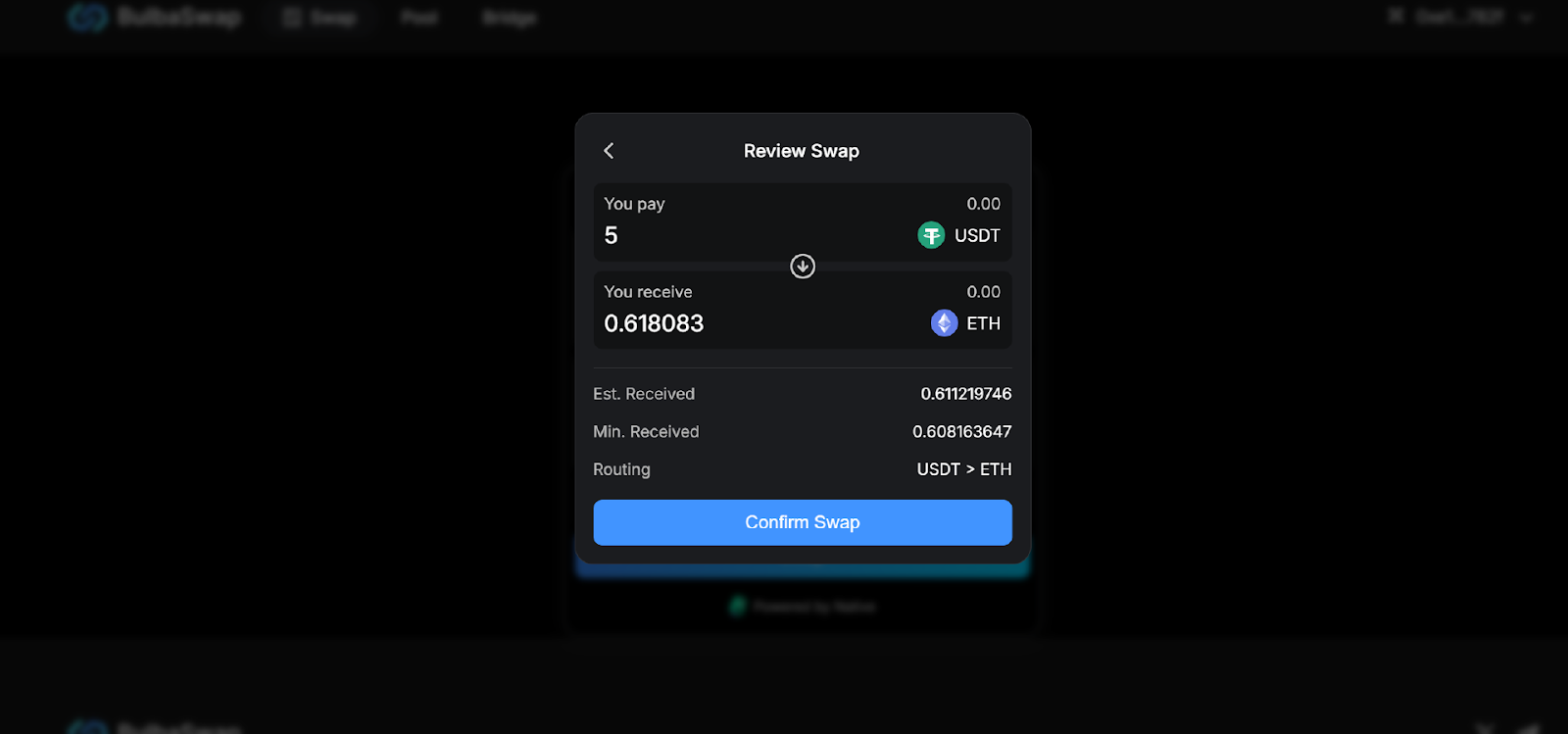
Next is “BulbaSwap,” where you can use the test ETH and test USDT previously bridged to perform standard Swap and Pool (LP provision) operations.
For example, swapping 5 USDT for ETH: First approve the USDT contract, then confirm the swap to receive 0.628083 ETH.
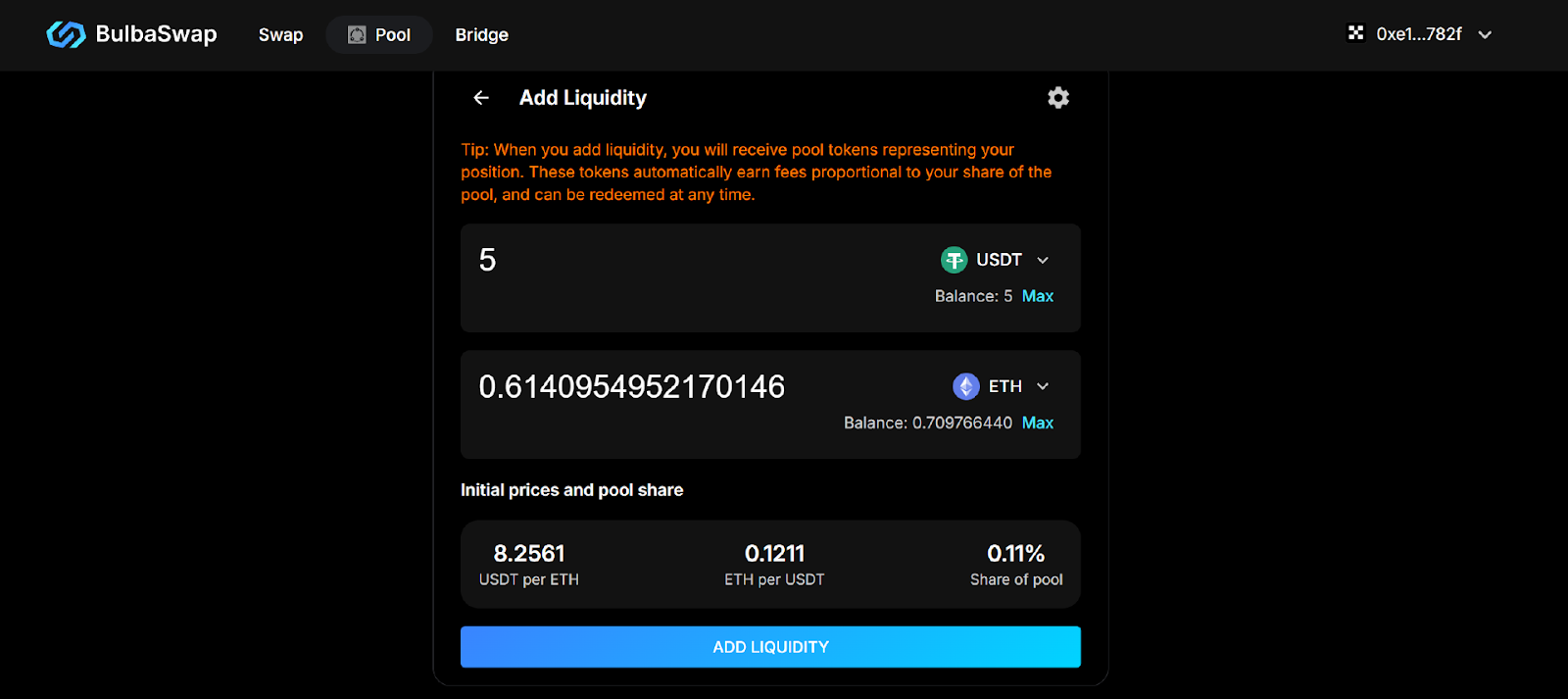
Then go to the “Pool” page, click “Add V2 Liquidity,” select USDT and ETH, input 5 USDT (ETH amount auto-matched), and finally click “ADD LIQUIDITY” and confirm in your wallet.
To remove liquidity later, go to your positions, select the LP position, click “Remove,” and confirm.
Abra Finance
Abra Finance provides an Aave-like crypto lending experience. Start by opening the “Dashboard” page, selecting USDT under “Assets to supply,” and clicking deposit.
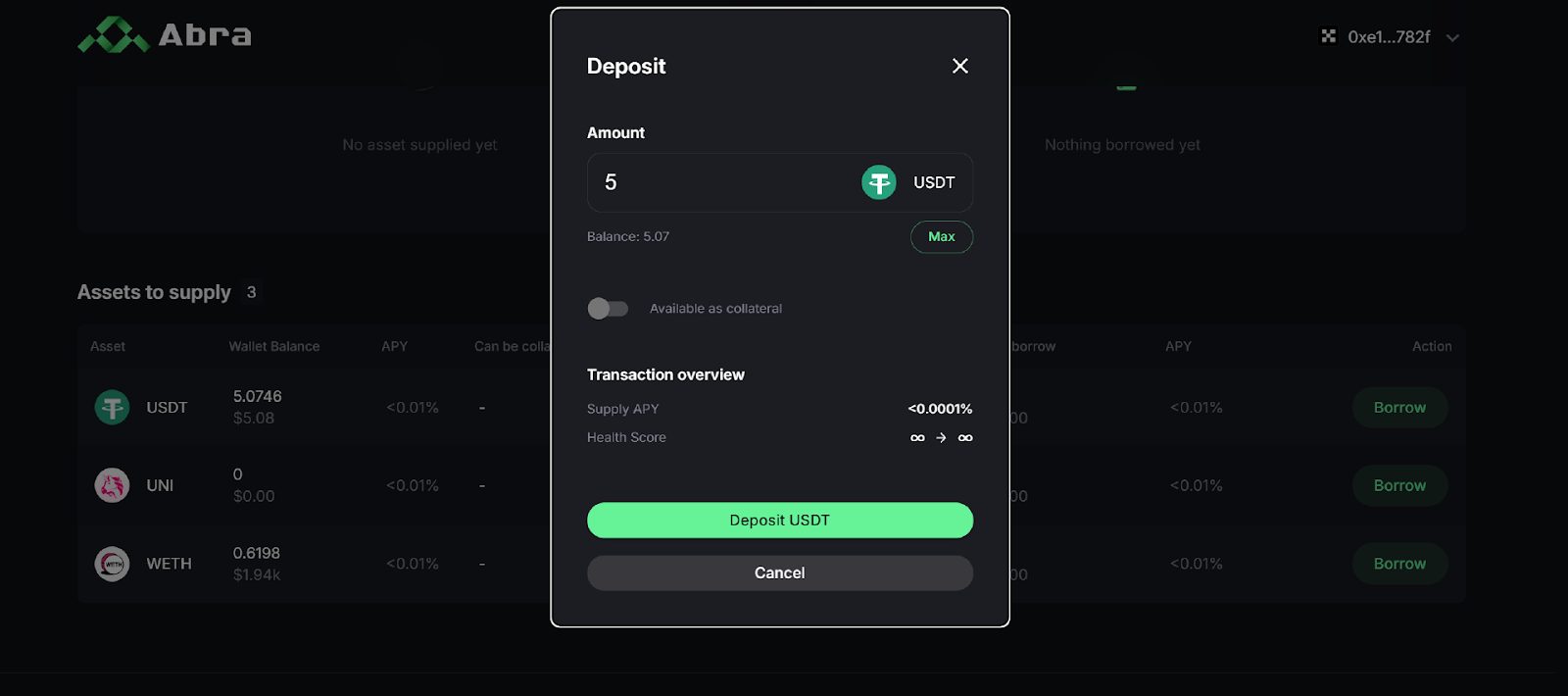
After depositing assets, enable collateral functionality to borrow other supported assets under the “Assets to borrow” section.
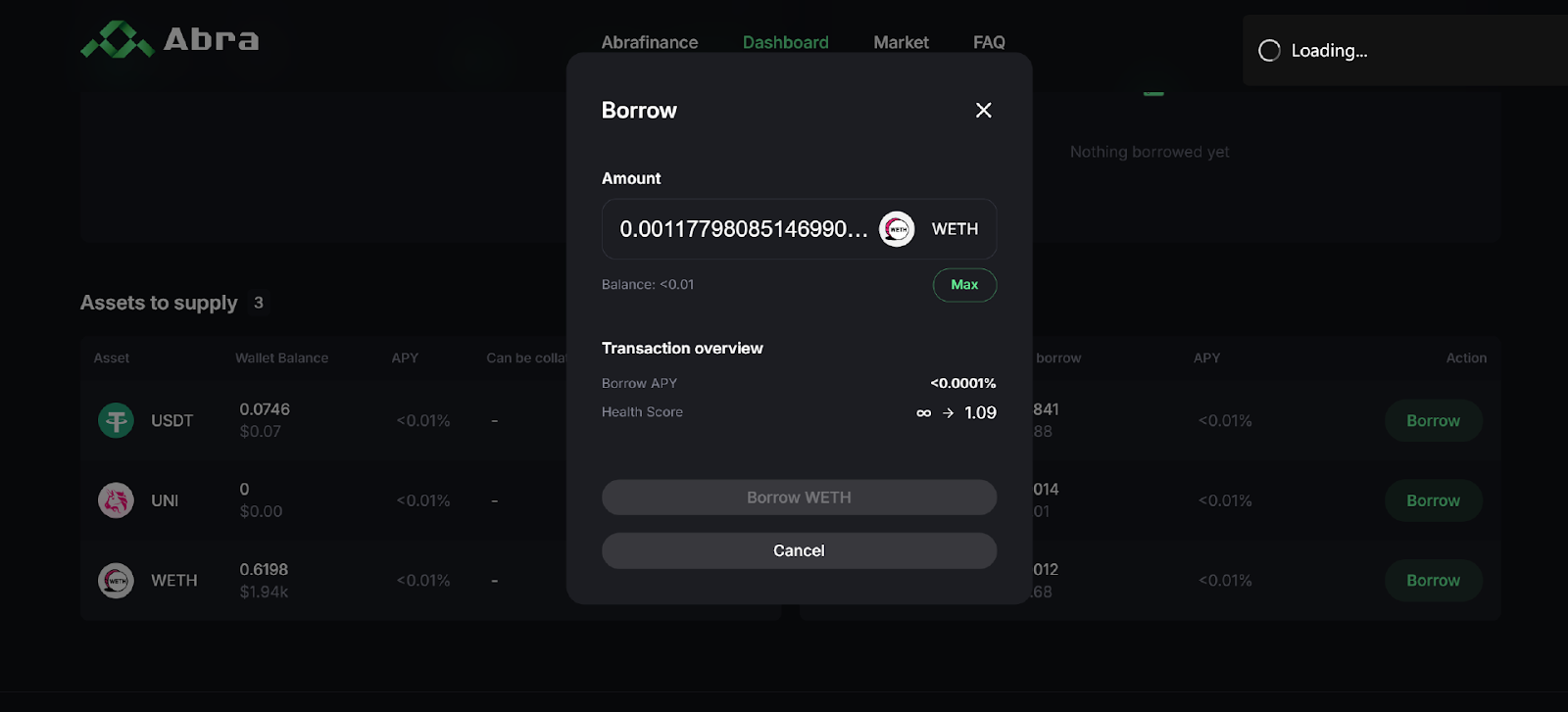
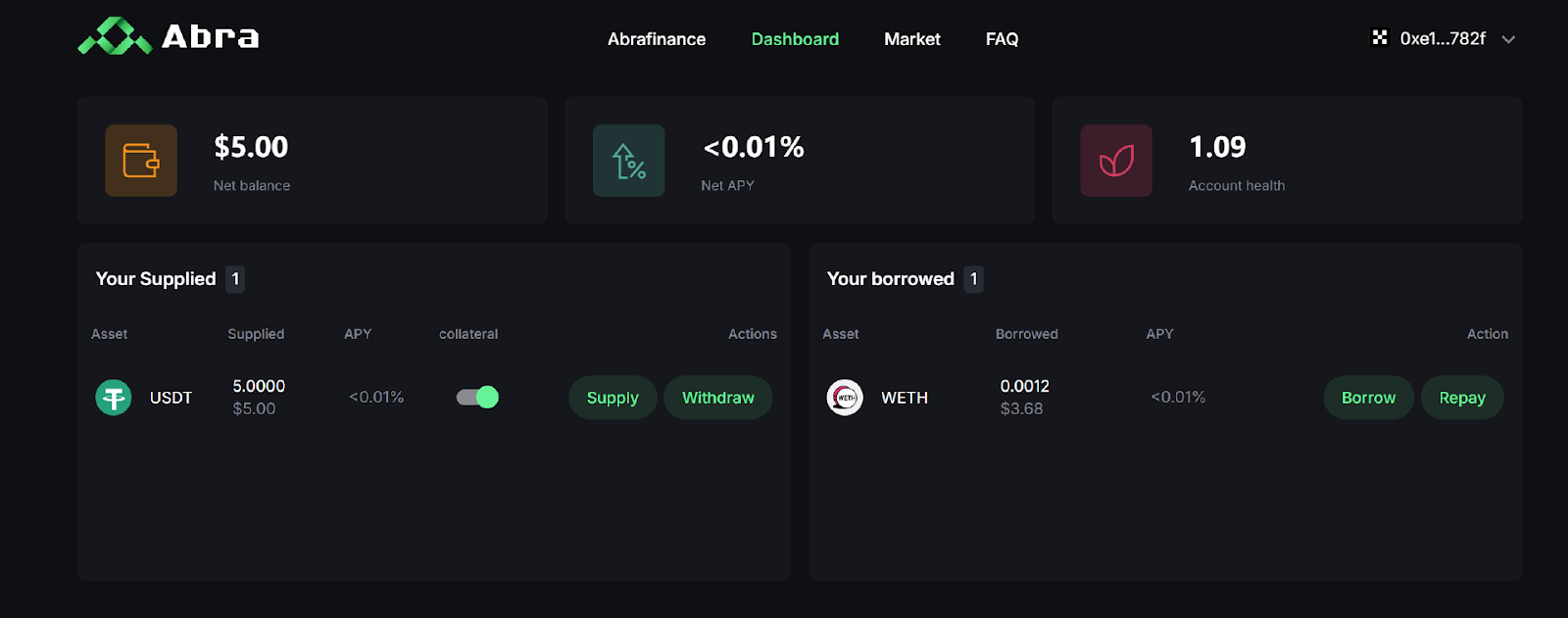
Users can also track, manage, and monitor their borrowing positions in real time.
Morpha.NFT
As an NFT marketplace, “Morpha.NFT” enables users to search for, select, and trade NFTs from various collections.
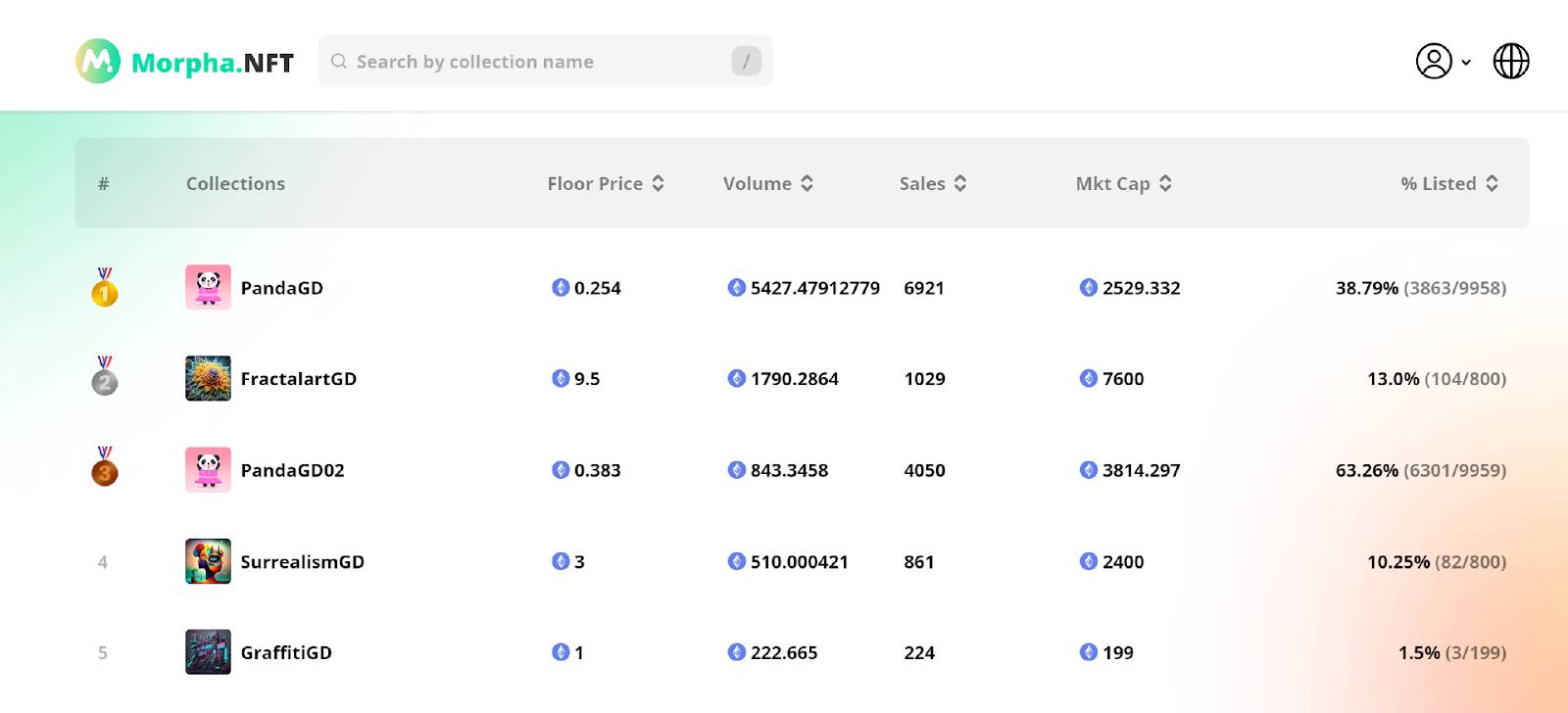
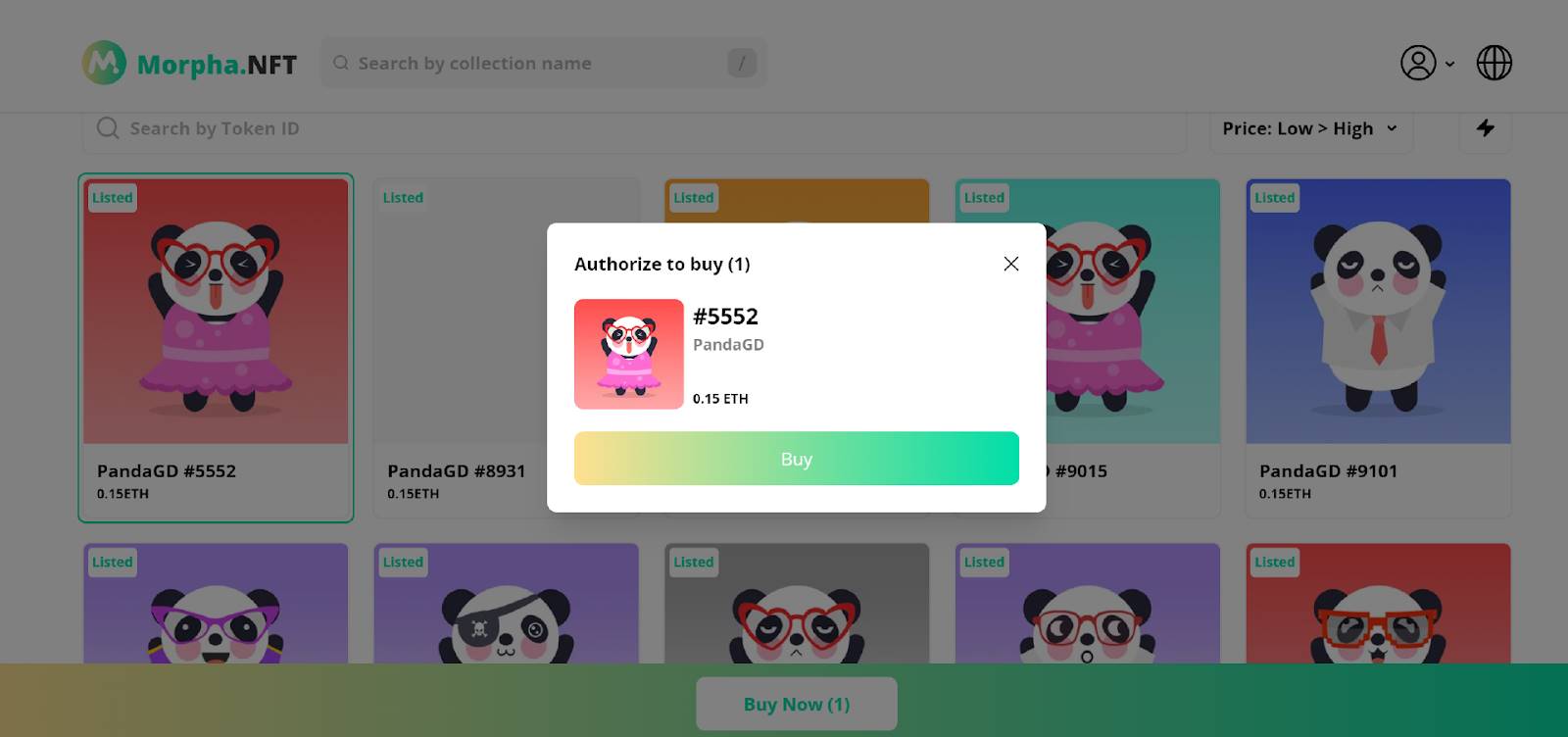
Take the top-traded PandaGD collection as an example: You can pick any listed PandaGD NFT, click “Buy,” sign via wallet to complete purchase. To sell, click “Sell,” sign to list your NFT.
2. Voice of the Jungle: Check-In Voting
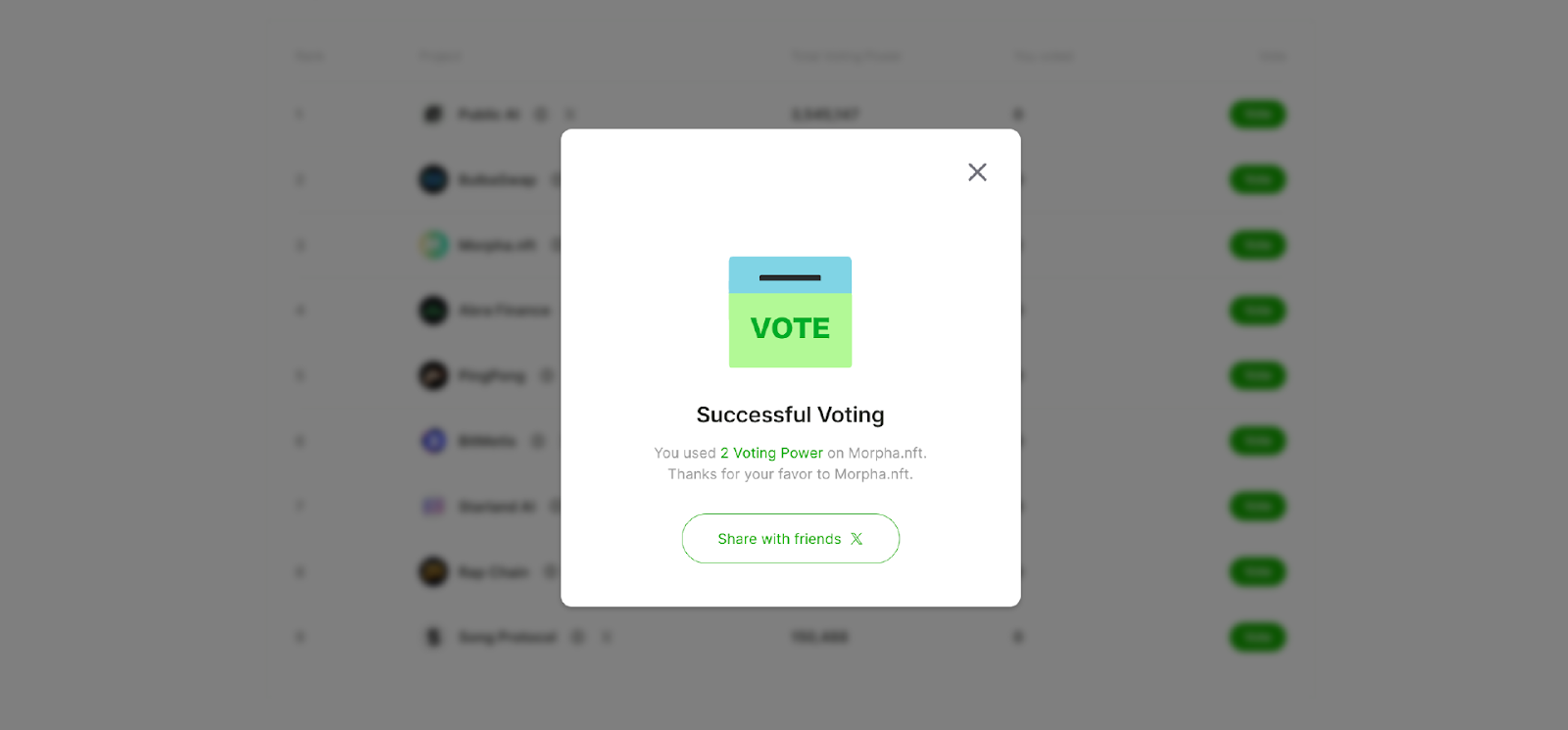
The “Voice of the Jungle” component allows users to shape the Morph ecosystem through voting and earn Morph Points as rewards—in essence, voting for projects currently listed on the Morph website.
There are currently nine eligible projects, including the aforementioned BulbaSwap, Abra Finance, and Morpha.NFT, plus Public AI, PingPong, BitMetis, Starland AI, Rap Chain, and Song Protocol—all likely candidates for future deployment on the Morph Holesky testnet or mainnet.
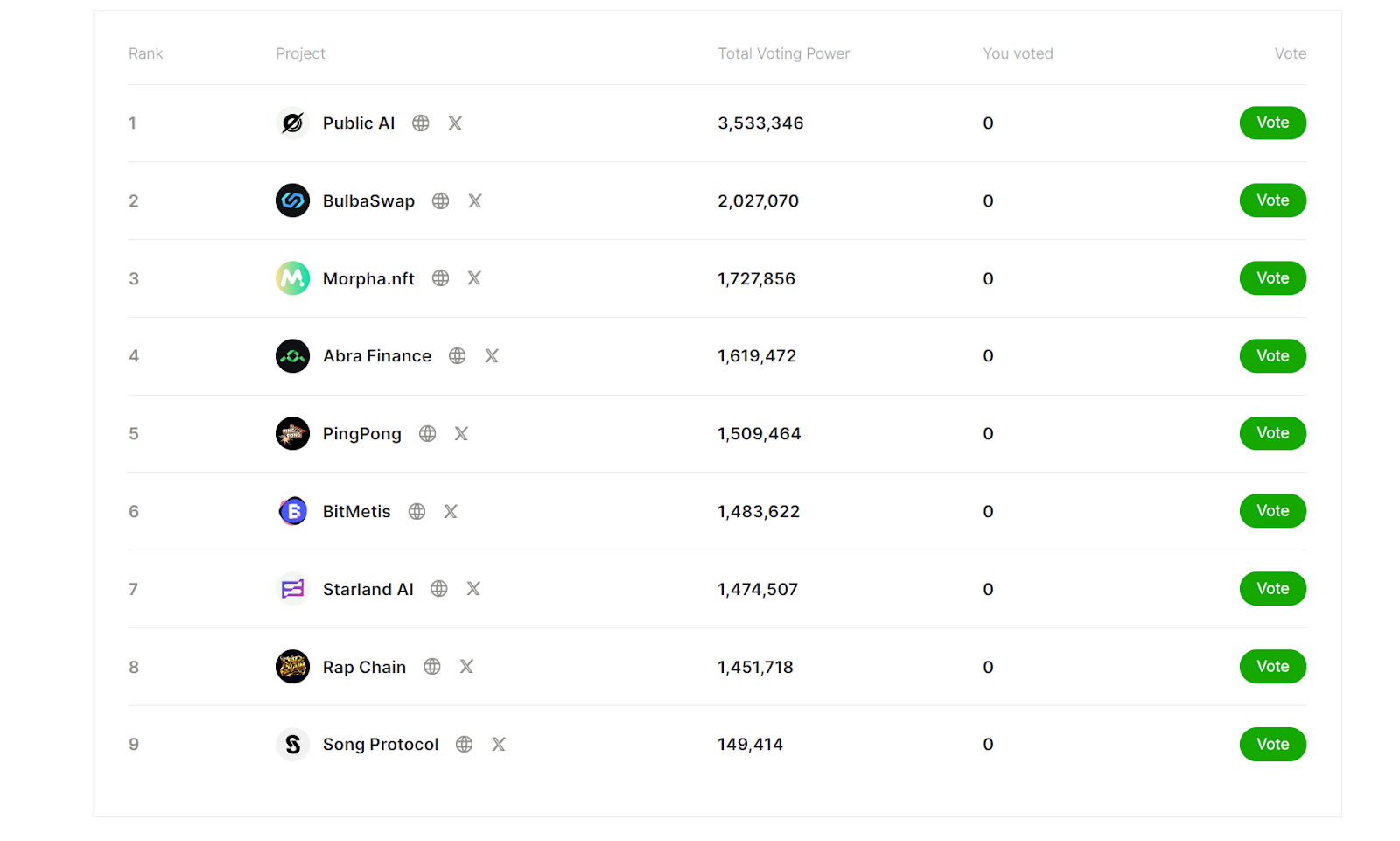
The key mechanism here is “voting power.” Initially, users cannot vote—they must first earn voting rights through daily check-ins.
Critically, the official documentation emphasizes: “Only actual voting actions earn Morph Points. Accumulating voting power without using it does not grant points.” This makes clear that voting—not merely checking in—is the sole determinant for earning points.
The daily check-in rules are interesting: structured in 7-day cycles with escalating multipliers to incentivize consistency: 2 (Day 1) + 4 (Day 2) + 6 (Day 3) + 8 (Day 4) + 10 (Day 5) + 12 (Day 6) + 28 (Day 7, bonus 2x = 14×2) = 70 voting rights per week.
On Day 8, the cycle resets. However, to reward sustained participation, the bonus multiplier increases every 14 days: reaching 4x (2×2) on Day 14, yielding 14×4=56 voting rights. Subsequent final days of each cycle follow the pattern: 28, 56, 84, 112.
For example, after 28 consecutive days (four weeks), total voting rights earned would be 448: (2+4+6+8+10+12) × 4 = 168 from the first six days weekly, plus (28+56+84+112) = 280 from the seventh-day bonuses, totaling 448.
In short, consistent daily check-ins yield increasingly higher voting rights, with particularly significant gains upon completing full weekly cycles.
3. Partners' Expedition: Task Platforms
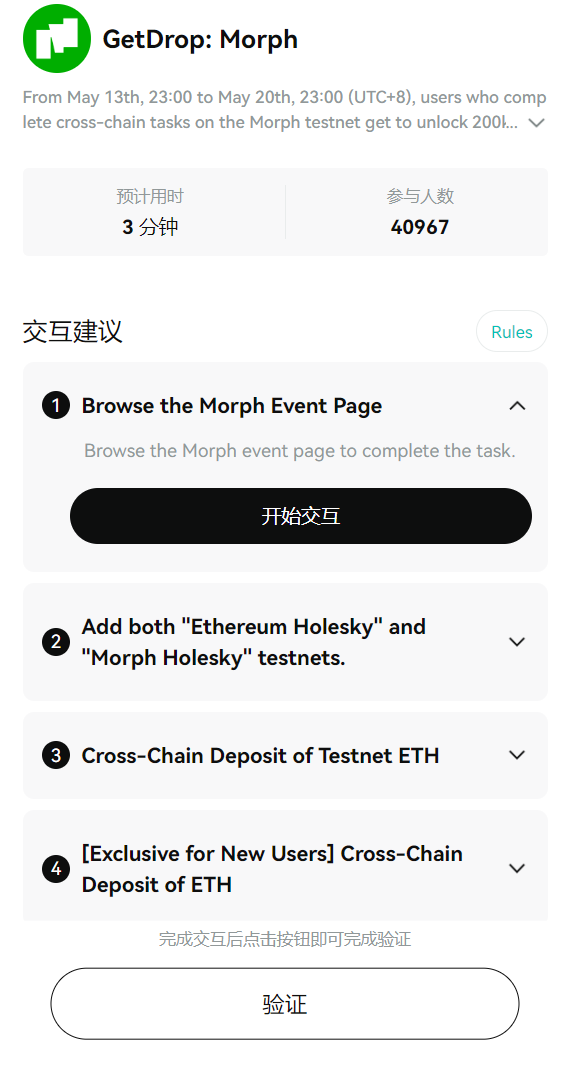
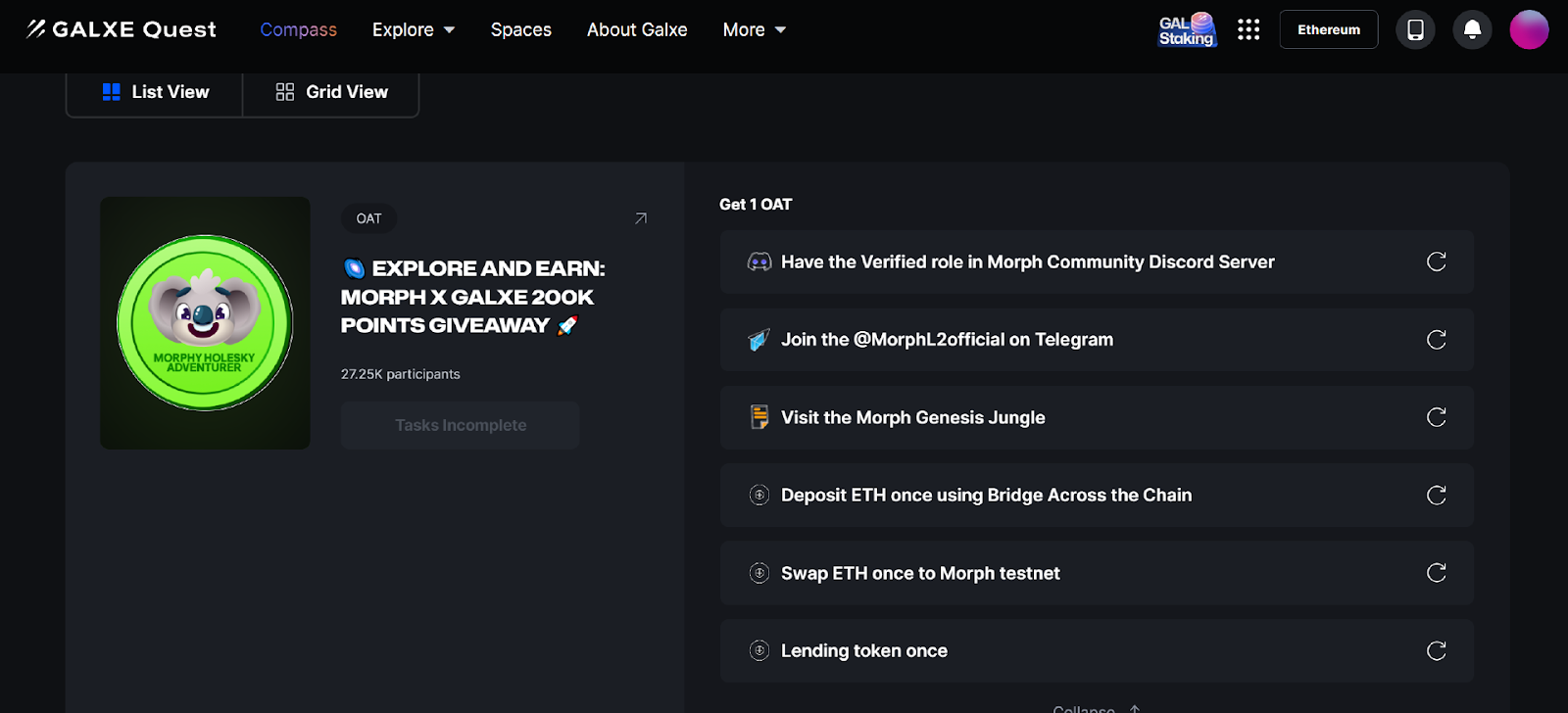
The third component, “Partners' Expedition,” invites users to explore Morph’s partner network and earn Morph Points by completing tasks on Bitget Wallet and Galxe.
The Bitget Wallet tasks are straightforward: visit the event page, add Ethereum Holekey testnet and Morph Holesky testnet, and complete a cross-chain transaction (for new users). At the time of writing, over 40,000 users have participated.
Galxe tasks are more comprehensive, requiring users to join the official Discord and Telegram groups, experience Genesis Jungle, deposit ETH via the bridge, perform token swaps, and complete lending interactions. Over 27,000 users have completed these tasks so far.
Finally, when the “Genesis Jungle” campaign concludes, Morph will tally each user’s total points, which will almost certainly serve as a key reference for future token airdrops and exclusive rewards.
Developers: A Golden Window for Ecosystem Building
From the developer perspective, Morph has recently launched a series of ecosystem initiatives and long-term plans, including incubators and hackathons targeting developers and specialized projects, offering generous funding and support to encourage broad participation.
Considering its incubator programs and the types of DApps already available for interaction, Morph is likely to dedicate substantial resources toward promoting and incubating Consumer (social, entertainment, points), DeFi, and AI projects—its current blue-ocean frontiers. This push aims to build a richer, more comprehensive L2 ecosystem. (Recommended viewing: “How to Deploy Contracts on Morph”). For developers and project teams, this represents a clearly visible golden opportunity to capture early ecosystem advantages.
Sparkloom Builder Program
On March 25, Morph announced the Sparkloom Builder Program, a four-month initiative comprising an online hackathon and incubator. The hackathon features a $20,000 prize pool, with winners invited into the Morph incubator. Top incubator graduates can receive up to $100,000 in funding and share 30% of Morph’s total airdrop allocation.
Sparkloom Incubator Program
Additionally, last month Morph launched the two-month Sparkloom Incubator Program, running from April 29 to June 30, open to high-potential projects across DeFi, GameFi, Infrastructure, NFT markets, Metaverse/NFT, middleware/tools, and more.
Through this program, Morph aims to provide selected projects with a comprehensive hub of funding, mentorship, and incentives, delivering full-spectrum support:
-
Expert mentorship: Selected projects gain access to tailored courses covering Web3 community building, marketing strategies, tokenomics, and smart contract audits, plus guidance from heavyweight mentors at Dragonfly, LayerZero, The Block, Nansen, Pyth, and other leading institutions;
-
Funding and airdrop incentives: Projects committed to long-term collaboration with the Morph ecosystem can receive grants up to $100,000 and share 30% of the total initial airdrop;
-
Access to over 30 million crypto users: Through strategic partnerships with top-tier exchanges like Bitget and MEXC, and leading wallets such as Bitget Wallet and Trust Wallet, selected projects gain direct exposure to a global user base;
-
Premium resource connections: Selected projects receive direct access to industry leaders—including renowned investors, successful founders, and top exchange executives;
-
Full refund of first-year sequencer fee profits: After collecting sequencer fee revenue in the first year, Morph will return 100% of the profit to selected projects, disbursed quarterly;
Overall, users/funds and developers are two indispensable pillars for building a thriving L2 ecosystem. Both must be nurtured simultaneously. Therefore, how to properly incentivize both groups and attract broad participation becomes the critical challenge in scaling from zero to one, and then to one hundred.
From this perspective, Morph’s new approach—whether through the newly launched “Morph Zoo” points campaign or recent incubators, hackathons, and developer outreach events—maximizes early benefits for both users and developers, fostering collective effort toward a virtuous cycle of on-chain utility and user capital growth.
For sharp, action-oriented users and developers, this presents a rare window of opportunity:
Whether earning points through the “Morph Zoo” campaign as a community member, or being among the first to deploy Consumer DApps, AI, or GameFi applications as a builder, now is the blue-ocean phase. Early adopters—users, projects, traffic, and community—will become each other’s greatest allies.
What’s past is prologue. From a macro perspective, if all goes well, this coordinated strategy could lay the foundation for a new wave of DApps, users, and ultimately, sustainable TVL growth—charting a course distinctly different from the previous L2/public chain boom.
Join TechFlow official community to stay tuned
Telegram:https://t.me/TechFlowDaily
X (Twitter):https://x.com/TechFlowPost
X (Twitter) EN:https://x.com/BlockFlow_News


