Analyzing friend.tech: One of the most successful Web3 dApps in the SocialFi sector
TechFlow Selected TechFlow Selected
Analyzing friend.tech: One of the most successful Web3 dApps in the SocialFi sector
friend.tech offers an interesting concept in the SocialFi platform space.
 Navigating Web3 tides with focused insights
Author: Greythorn
● Introduction
According to the 2024 Global Social Media Market Report, the social media industry has experienced significant expansion, with its market value projected to grow from $219.06 billion in 2023 to $251.45 billion in 2024, representing a compound annual growth rate of 14.8%. Approximately 62.3% of the global population uses social media, spending over two hours daily on average.
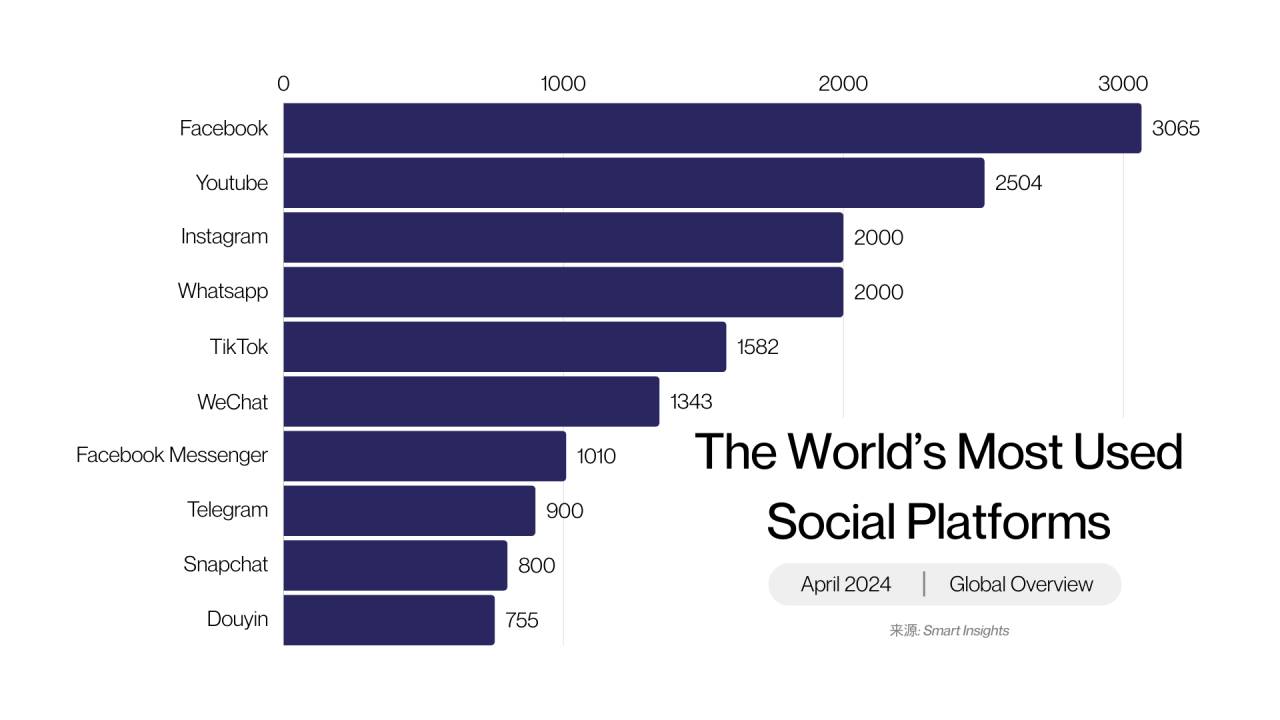
Source: Smart Insights
Decentralized social media (DeSoc) offers a fresh perspective by revolutionizing how creators monetize content and manage online relationships. It promises improved privacy, security, and most importantly, gives creators full control over their data and its monetization.
Although the concept of decentralized social networks is not new, it only began attracting major attention in 2023 with advancements in Web3 technology. The launch of friend.tech, a decentralized blockchain-based social network designed to pioneer this emerging market, marked a turning point. The platform distinguishes itself by addressing common issues in centralized networks, such as corporate ownership of user data, limited privacy options, and risks of content censorship.
In 2023, friend.tech not only achieved substantial growth but also generated revenue rivaling some top-tier protocols, offering creators the freedom to monetize their work on their own terms.

Source: DuneAnalytics
In today's article, we will dive deep into the platform, examine its controversial token distribution, compare it with competitors, and assess its potential and associated risks for 2024.
We previously covered friend.tech before 2023. You can click here to read the full article.
● Project Overview
friend.tech is a decentralized social platform built on Coinbase’s Layer 2 network, "Base chain". It integrates closely with X to obtain users’ Web2 identities, allowing them to potentially monetize based on these identities. On this platform, each user can be tokenized, and their influence directly priced by the market.
It is one of the most successful Web3 dApps in SocialFi, achieving the highest-ever revenue-to-net-deposit ratio, generating over $2 million in revenue within its first month while recording $33 million in net deposits.
The project's core revolves around the concept of fan economy. To get started, users need an invitation code/referrer and must deposit 0.01 ETH, which serves as the primary currency for purchasing shares of other users within the app. These shares represent a portion of a user’s influence. When someone buys shares, they gain the ability to start one-on-one chats with the person they’ve invested in. This setup allows users to connect directly and personally with their favorite influencers. Additionally, access to these chat sessions—represented by tokens known as “keys” or “shares”—can be traded, enabling users to potentially profit from a content creator’s growing popularity.
For KOLs (Key Opinion Leaders), there is a financial incentive: they earn a 5% fee every time someone buys or sells their key. To increase their income, KOLs need to boost trading activity around their keys. Another 5% goes to the friend.tech treasury, resulting in a total 10% fee on each relevant transaction.
As previously noted, decentralized social media protocols attracted significant attention last year but have recently experienced a decline.
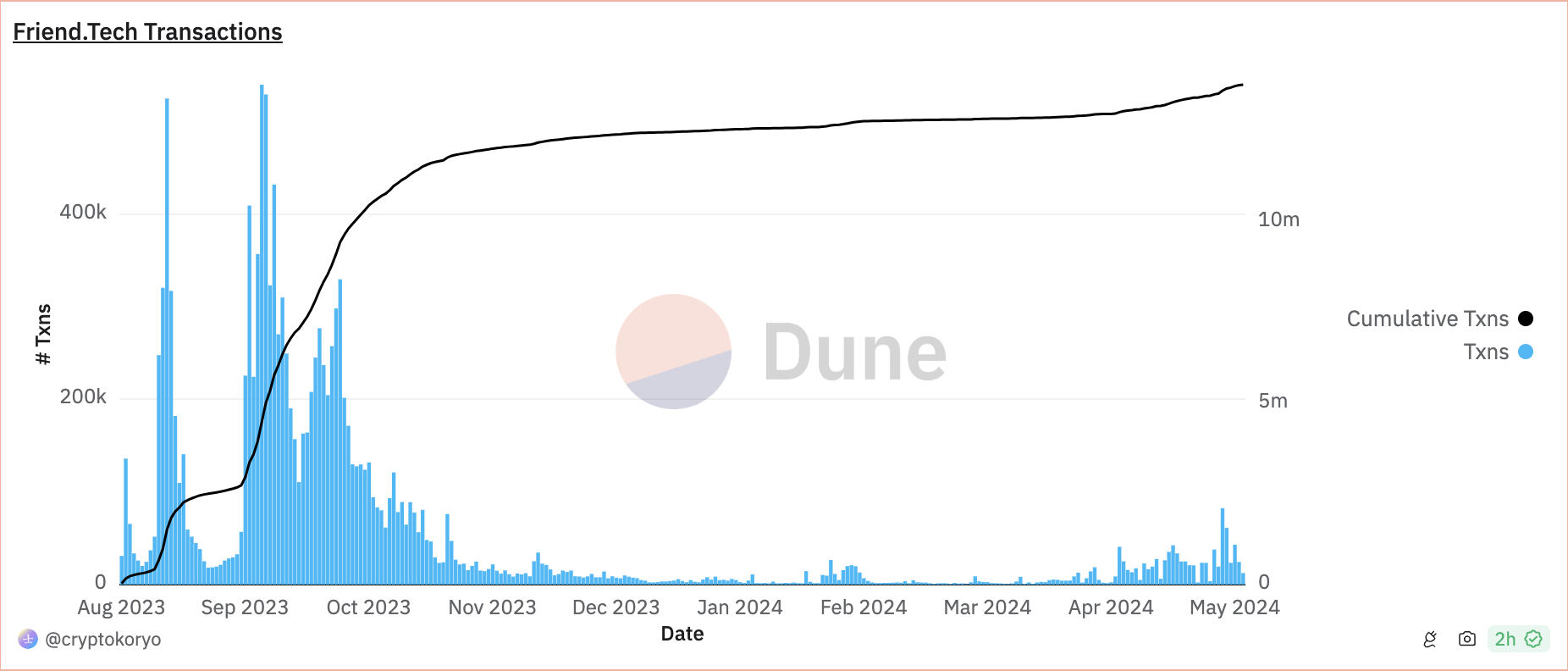
Source: Dune Analytics
On-chain data shows that since peaking on September 13—with 539,810 transactions recorded—daily activity on friend.tech has significantly declined. Since then, interest in the platform has clearly waned.
However, despite this downturn and criticism, there is active discussion among friend.tech users about a potential revival. This excitement is driven by anticipation of an upcoming airdrop, announcements that users will gain full control over their tokens, and expectations surrounding the release of version 2—all of which have been positively received by the community.
Let us now explore the differences between Friend Tech V1 and its updated version, V2.
Introduction to Friend Tech V1:
Friend Tech V1 is an innovative decentralized social platform connecting crypto influencers with their followers. By enabling users to create and trade influencers’ “Keys,” the platform gained significant traction. This model was particularly popular during the bear market, helping the platform see massive growth in both users and activity. The platform generated approximately $13 million in fees from a high trading volume of $130 million and paid out around $6 million in revenue to its users.
However, this model had drawbacks, primarily due to high fees involved. With a 10% fee on both buying and selling shares, users found it difficult to profit unless they sold their shares at a price far exceeding their purchase cost. The need for high turnover to realize profits led to inconsistent user experience and ultimately became a barrier for new users joining the platform.
Introduction and Unique Aspects of Friend Tech V2:
Friend Tech V2 launched on March 3, 2024, introducing several new features and changes. Notably, users can now claim their $FRIEND tokens—a significant update. However, the launch was criticized for lacking clear information and guidance, especially regarding new elements like “Clubs.”
Club is a major addition in V2, serving as a group space owned and managed by key holders. Clubs have their own governance structures, including voting to elect a president who manages the club and appoints moderators. All transactions within clubs use $FRIEND tokens, with a 1.5% fee applied per transaction. This opens possibilities for referral fees and more flexible trading terms among club members.
However, implementation and user experience were less than smooth. Users expressed confusion about how to claim their airdrops, join clubs, or even locate clubs they had already created, as the platform failed to provide clear instructions or interface cues.
In summary, V1 focused on rapid growth and revenue generation through high fees, whereas V2 aims to enhance user governance and interaction via clubs, yet faces challenges in execution and clarity that may affect its long-term viability.
● Team, Foundation Support, and Strategic Partnerships
friend.tech was developed in August 2023 by two anonymous individuals with controversial histories in the crypto community: 0xRacerAlt and shrimppepe. On platform X, members pointed out that these developers were also involved in a failed NFT project. Further scrutiny by Kalland revealed that 0xRacerAlt deleted several tweets linking to this NFT project and held an official role in the Kosetto Discord. These findings raised concerns about their credibility and the possibility of similar issues arising with friend.tech.
In August 2023, friend.tech secured seed funding from Paradigm, though the amount was undisclosed, and partnered with the venture capital firm to build tools for online social interactions.
Rumors on X also suggest that friend.tech completed its Series A funding round at a $50 million valuation. This round included token allocation, hinting at their eventual plan to issue their own token—which indeed came to pass.
● Controversies
friend.tech originated from a developer named Racer, who initially experimented with TweetDAO, a decentralized social media project. That platform allowed users to post tweets from a shared account by holding a native NFT called “TweetDAO Egg.” Although the project initially saw viral success, it eventually faded, leading to the shutdown of its main Twitter account and website.
Following TweetDAO, Racer teamed up with a co-developer named Shrimp to launch Stealcam, a Web3 platform where users could mint and buy images as NFTs that remained hidden until purchased. However, due to difficulties in sustaining profitable returns for creators, the developers eventually rebranded Stealcam into friend.tech. Launched in May 2023, friend.tech aimed to attract Web3 influencers and creators seeking more effective ways to monetize their content, adopting a supply-and-demand-driven economic model.
However, friend.tech initially sparked controversy due to its ambiguous privacy and data security practices. The platform required users to download an app without an easily accessible privacy policy. This lack of transparency raised concerns about how personal data would be handled, though these issues have since been partially addressed.
Additionally, the platform faced serious criticism regarding sustainability. Initially, friend.tech grew rapidly due to its influencer-centric strategy, but as initial excitement faded, doubts about its long-term feasibility deepened. Critics pointed out that the platform’s heavy reliance on influencers represents a critical vulnerability. Without active participation from key figures, the platform’s value could diminish.
This prompted the strategic shift introduced in the V2 update—from a KOL-centered model to one emphasizing broader community engagement. Nevertheless, questions remain about the level of involvement from influential users and the actual value they bring when inactive.
But that’s not all—friend.tech struggles to differentiate itself and retain users amid competition from X, Farcaster, and other decentralized rivals such as Lens.
On the positive side, friend.tech now benefits from having its own token, opening opportunities for trading and speculation. The project has over 160,000 followers on its X social media platform and is actively promoted by influential figures like Hsaka and Ansem, who encourage others to try the app. While this promotion clearly serves their economic interests, it also suggests potential upside for the project.
At the time of writing, friend.tech has a market cap of $184 million, matching its fully diluted valuation. Compared to other DeFi protocols or meme coins with higher valuations, and considering the project’s profitability at the base level, $FRIEND is viewed by many on-chain traders as an attractive risk-reward investment. The involvement of reputable investors like Paradigm further enhances the project’s credibility.
● Competitive Analysis: friend.tech vs Farcaster
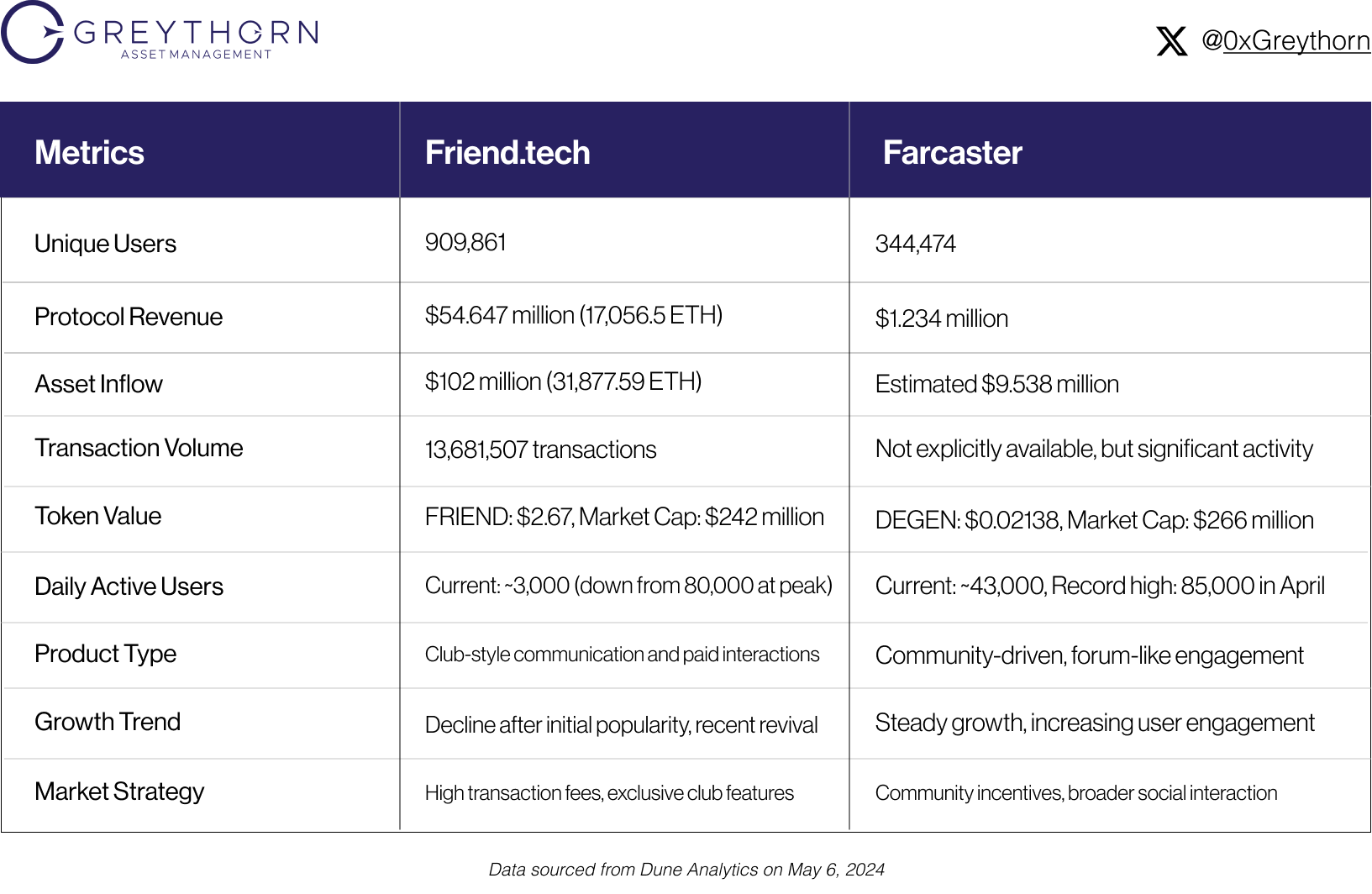
friend.tech initially gained strong traction by charging high fees and offering unique club features, achieving early success. However, its popularity has since declined, raising concerns about maintaining long-term user interest. In contrast, Farcaster does not have its own token but uses the DEGEN token, widely accepted across its ecosystem. This approach has helped Farcaster build a loyal community akin to traditional internet forums, resulting in steady growth in user numbers and daily activity.
In conclusion, although friend.tech earned substantial revenue early on, fluctuating user metrics make its future uncertain. Farcaster’s focus on building a robust community using the DEGEN token appears more likely to yield sustainable success, thanks to its dedicated user base and diverse utility within the ecosystem. As both platforms continue evolving and responding to user needs, their success in the competitive SocialFi market will depend on adaptability.
● Tokenomics
$FRIEND is central to friend.tech V2—not just as a currency, but as a key tool to drive community engagement. Its current market cap and fully diluted valuation stand at $185.26 million. A total of 92.63 million tokens were fully allocated to the community during the token generation event.
The tokenomics are designed to incentivize participation: users can claim tokens by interacting with the platform—following ten people grants 10%, while the remaining 90% requires joining a club. This ensures token distribution supports active ecosystem engagement.
$FRIEND can only be traded within friend.tech’s own system, which uses a native swap function with a 1.5% fee. This promotes liquidity and ensures the platform benefits from fee revenue, but also requires users to trust the platform’s stability.
The Club feature on friend.tech functions like a micro-government, allowing users to manage and customize their clubs—from setting names to economic parameters. This structure supports decentralized governance, with club leaders and moderators elected by key holders, reflecting DAO-like transparency.
Despite retaining a similar user interface to V1, the introduction of $FRIEND tokens and clubs adds new layers of engagement and monetization. Transactions within clubs incur a 1.5% fee, distributed between liquidity providers and the platform, helping sustain the ecosystem’s financial health and rewarding active participants.
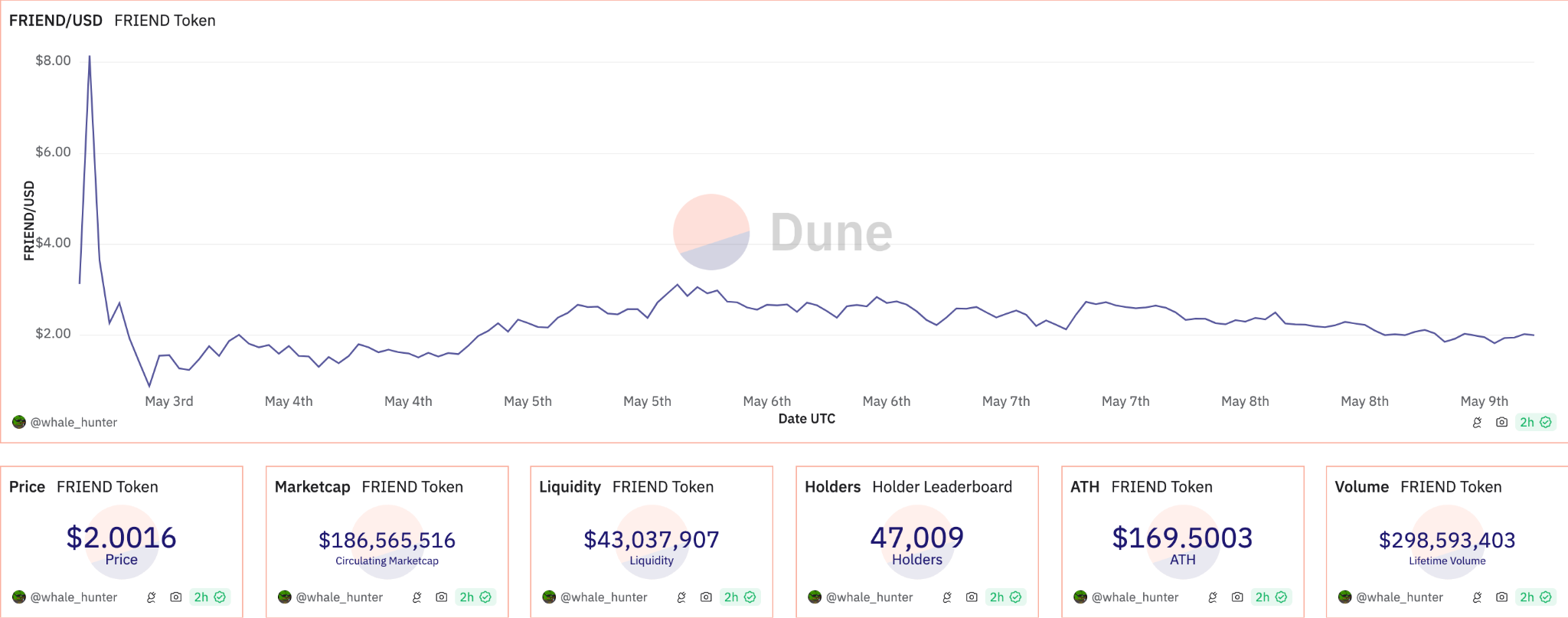
Source: Dune Analytics
● Bullish Fundamentals
According to data from Dune Analytics, Friend Tech has seen surges in user adoption and activity following its controversial airdrop and v2 upgrade.

Source: Dune Analytics
● Despite its relatively low market cap—especially compared to other projects and meme coins generating less revenue—$FRIEND presents an attractive proposition for potential price appreciation, appealing to on-chain traders. Although currently unlisted on major exchanges, investors should closely monitor any potential listings on top-tier platforms, which would significantly improve token accessibility.
● friend.tech is considered one of the two most popular applications on Coinbase L2, while its competitor Farcaster holds a $1 billion valuation.
● The app generated $50 million in revenue during its V1 phase, indicating the team’s potential to expand its addressable market beyond the crypto Twitter community with V2. With ample funds available for marketing, infrastructure improvements, and other initiatives, Friend Tech’s outlook remains promising.
● Bearish Fundamentals
● Despite platform initiatives, the crypto community still harbors concerns about potential system abuse and risks of pump-and-dump schemes.
● When new Web3 apps like friend.tech promise significant returns and strong community engagement, influencers tend to jump in quickly. However, the project’s unclear objectives and the founders’ history of past failures should caution users about its long-term viability.
● It lacks a clear roadmap or whitepaper, making it difficult to outline a coherent long-term vision.
● Conclusion
friend.tech offers an intriguing concept in the SocialFi space, allowing users to invest in their “friends” by purchasing social tokens or keys. These keys grant access to exclusive content, private chat rooms, and clubs, primarily targeting users and the corresponding influencers they follow. The pricing mechanism for these keys is complex, with purchase prices increasing exponentially as supply and quantity rise. While friend.tech shows improved bullish fundamentals following the release of its V2 version, it also faces bearish factors, including concerns about downside liquidity and potential pyramid-like dynamics.
The current valuation of friend.tech may appear attractive to many on-chain enthusiasts, potentially driving up its price. However, we remain cautious about its long-term sustainability.
● Disclaimer
This presentation was prepared by Greythorn Asset Management Limited (ABN 96 621 995 659) ("Greythorn"). The information contained herein should be regarded as general information only and not as investment advice or financial advice. It is neither an advertisement nor an offer or solicitation to buy or sell any financial instrument or participate in any particular trading strategy. In preparing this document, Greythorn did not take into account the investment objectives, financial situation, or particular needs of any recipient or reader. Before making any investment decision, recipients of this presentation should consider their personal circumstances and seek professional advice from their accountants, lawyers, or other advisors. This presentation contains statements, opinions, forecasts, estimates, and other materials (forward-looking statements) based on various assumptions. Greythorn has no obligation to update this information. These assumptions may or may not prove correct. Neither Greythorn nor its officers, employees, agents, advisors, or any other persons mentioned in this presentation make any representation or warranty as to the accuracy or likelihood of realization of any forward-looking statement or the assumptions upon which they are based. Greythorn and its officers, employees, agents, and advisors make no representations, warranties, or guarantees regarding the accuracy, completeness, or reliability of the information contained in this presentation. To the extent permitted by law, Greythorn and its officers, employees, agents, and advisors shall not be liable for any loss, claim, damage, expense, or costs arising from or related to the information contained in this presentation.
Join TechFlow official community to stay tuned
Telegram:https://t.me/TechFlowDaily
X (Twitter):https://x.com/TechFlowPost
X (Twitter) EN:https://x.com/BlockFlow_News
 Greythorn