









"Beating the VC Game": Crypto Becomes KOLs' Get-Rich-Quick Handbook
TechFlow Selected TechFlow Selected
"Beating the VC Game": Crypto Becomes KOLs' Get-Rich-Quick Handbook
VCs are unhappy, and KOLs are panicking too.
 Navigating Web3 tides with focused insights
Source: bloomberg
Translated by: Ning
In the world of crypto, KOLs (Key Opinion Leaders) are undoubtedly a unique presence.
Often commanding large followings, KOLs can serve as powerful tools for driving traffic—but they're also prime candidates for "harvesting韭菜" (a metaphor for profiting at the expense of retail investors). To put it imprecisely, KOLs can act both as referees and players in the game.
Yet in an industry where sentiment and liquidity play crucial roles, KOLs—being closer to frontline investors than institutions—are often more beneficial than harmful. After all, the marginal cost of launching a token is nearly zero, but liquidity is priceless. Clearly, project teams have caught onto this trend.
In recent months, debates over the relationship between KOLs and VCs have intensified. KOLs often receive shorter lock-up periods and greater valuation discounts compared to VCs, who not only invest substantial capital but also contribute resources in sales, operations, and technical development. In contrast, KOLs may fulfill their obligations with just a few social media posts.
Unsurprisingly, some VCs have voiced complaints, and even retail investors believe KOLs are better positioned to profit during bull markets. But is this really true?
Amid these controversies, Bloomberg recently published an in-depth report on KOL rounds, analyzing both their advantages and challenges. Below is TechFlow's full translation:
Rewind to March, when the cryptocurrency market was booming. Bitcoin kept hitting new highs, and billions of dollars were flowing into spot ETFs. Among investor groups, one stood out as particularly ecstatic.
At that time, startup Monad Labs completed a new funding round, with investors including Paradigm valuing the company at a staggering $3 billion. By crypto standards, Mona was already a major fundraising deal—but it had one distinctive feature: according to insiders, certain individuals known in the industry as "KOLs" were allowed to invest at just one-fifth of Paradigm’s valuation.
These so-called “KOL rounds” resemble celebrity marketing campaigns that U.S. regulators have cracked down on in recent years. As digital assets emerge from bear markets, KOL rounds have sprung up like mushrooms after rain, becoming a striking phenomenon in the crypto world. Compared to traditional celebrity endorsements, the beneficiaries here are more likely to be crypto writers or influencers rather than athletes or mainstream celebrities.
Based on interviews with KOLs, entrepreneurs, and legal experts, it has become common practice for KOLs to receive favorable terms—such as valuation discounts and shorter lock-up periods—in exchange for promoting crypto projects. In recent months, such deals have become sources of controversy, with critics focusing on inadequate disclosure and potential risks to retail investors.
Several industry insiders familiar with these arrangements said at least some startups do not require KOLs to disclose their affiliations with projects—a clear violation of U.S. regulations.
That said, there is currently no indication that Monad Labs violated any U.S. securities laws. One investor noted the company made no explicit demands of KOLs, while CEO Keone Hon declined to comment on what lock-up terms or disclosure rules were applied to such investors.
San Francisco-based Paradigm also declined to comment. The firm manages one of the largest crypto venture funds.
01 KOLs and Cryptocurrency
Michael Selig, a partner at Willkie Farr & Gallagher LLP specializing in securities law, replied via email: “Including KOLs and influential figures in a funding round with the expectation that they will promote the project’s tokens could attract scrutiny from the U.S. Securities and Exchange Commission (SEC).”
The existence of KOL rounds stems partly from the uniqueness of the crypto market. In crypto fundraising, digital asset startups typically offer equity to raise venture capital, while others raise funds by selling issued or affiliated tokens. A project’s valuation depends on the number and price of tokens sold—similar to stock offerings—with some rounds combining both tokens and equity, as was the case with Monad Labs mentioned earlier.
Purchasing tokens generally does not grant investors the same protections as equity investments, but it offers a clear advantage: investors can sell tokens within months, whereas equity investors are often locked in for years until a liquidity event such as an IPO.
Moreover, KOLs play a uniquely influential role in the crypto market. Over the years, as everyone from celebrities to athletes and self-proclaimed experts promoted projects online, cryptocurrencies have fostered an entire ecosystem of meme coins. During the 2017 ICO boom, having a large Twitter following could be a golden ticket to wealth—by acquiring hot tokens at a discount ahead of price surges and then selling for massive profits.
02 The Temptation of Getting Rich Quick
Notably, becoming a KOL investor doesn’t necessarily require a massive following.
Simon Chadwick, co-founder of the cryptocurrency platform Eclipse Fi, said: “Almost anyone with some influence or a community can become a KOL.” He added, “For example, someone with 5,000 followers on Twitter who writes research reports.” He was referring to the social media platform now known as X.
Eclipse Fi primarily helps projects launch tokens on the Cosmos blockchain. Chadwick mentioned that to streamline token launches, the company built a network of over 400 KOL investors that startups can tap into. “The potential for quick returns is so high that some KOLs try to create multiple fake social media accounts to invest multiple times in the same funding round.”
Chadwick emphasized that participating KOLs typically receive 20% to 50% discounts and shorter unlock periods—meaning they can sell tokens earlier than other investors.
KOL rounds are indeed profitable. “Some KOLs have invested in hundreds of rounds and made a lot of money,” he said.
The U.S. SEC has long been cracking down on KOL marketing by crypto projects. In October 2022, Kim Kardashian agreed to pay $1.3 million to settle regulator allegations that she violated U.S. rules by promoting a digital token without disclosing she was being paid, although she did not admit or deny the charges. Four years earlier, the SEC fined Floyd Mayweather for failing to disclose similar crypto promotion deals.
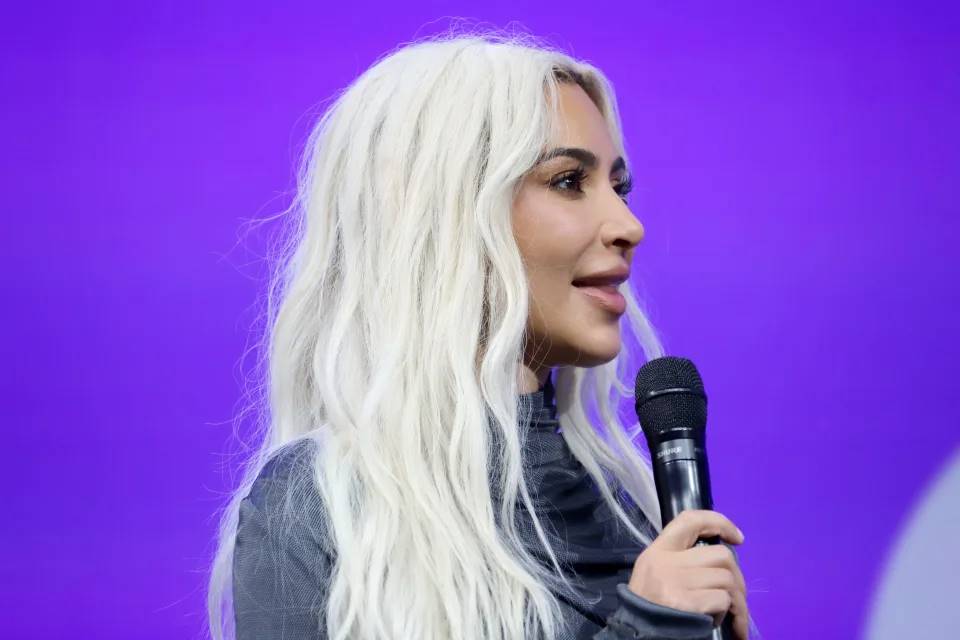
Emily Meyers, general counsel and chief compliance officer at crypto venture fund Electric Capital, said that given the SEC’s action against Kardashian and similar cases last year, she advises projects against conducting KOL rounds. In one such case last year, the SEC accused eight celebrities—including Lindsay Lohan—of failing to disclose compensation received for promoting tokens.
Six of the accused, including Lohan, settled without admitting or denying the SEC’s allegations.
As of now, the SEC has not responded to Bloomberg’s request for comment on KOL rounds.
03 Pump and Dump?
Regardless of regulatory implications, KOL rounds remain highly controversial in the crypto space.
CL, a crypto KOL who uses a pseudonym and posts on X, is a member of early investment group eGirl Capital. She admitted receiving continuous pitches from crypto projects recently, seeking her participation as a KOL investor. Based outside the U.S., CL requested anonymity due to the sensitivity of the topic and has since avoided such deals due to potential reputational risks.
With nearly 200,000 followers on X, CL described the surge in KOL deals as “an extension of low-market-cap token accumulation, pump, and dump schemes—but on a larger scale.”
Chadwick of Eclipse Fi said that in large deals backed by major VCs, KOLs are usually willing to accept longer lock-up periods. However, in return, they demand higher discount rates in the deal.
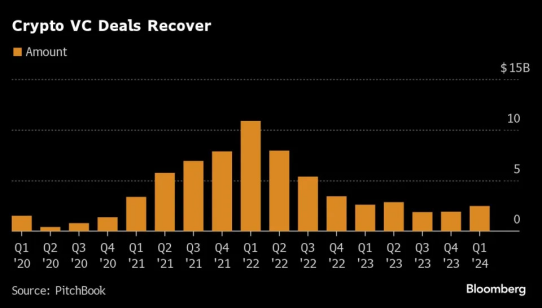
Orla Browne, strategic director at Dealroom, believes that because details about KOL investments are often opaque, risk investment data aggregators do not separately track or report KOL rounds.
In practice, these deals take various forms: some are formalized through written contracts outlining promotional responsibilities for KOLs, while others are arranged informally via Telegram. Some are part of VC-backed financing rounds, while others involve earlier-stage projects not yet mature enough to attract major VCs.
While the vast majority of KOL deals consist solely of tokens, some combine equity with warrants for yet-to-be-launched digital currencies.
Bloomberg reviewed a written contract for a KOL funding round, which required discounted investors to promote the project through podcasts and TikTok videos. The agreement also stipulated that KOLs must disclose their affiliation with the project when promoting it.
But many projects choose not to follow this practice.
“It’s not a requirement,” said 0xJeff, operator of Steak Capital, a crypto consulting firm that offers KOL management as a service. “It really depends on whether the KOL wants their community to know about their investment ties and whether they’re affiliated with the project.” Like CL, 0xJeff requested anonymity and preferred not to use his real name in publications.
04 Growing Unease
Jed Breed, founder of Breed VC, said large crypto projects typically don’t impose specific requirements on KOL investors. Instead, issuers aim to build what he calls a “secret network” within the crypto KOL community. “I’ve never seen a venture deal structured like this, where to get allocation you have to do X, Y, Z tasks,” Breed said.
Of course, some startups are so hot they don’t need to offer preferential terms to KOLs.
Humanity Protocol, building a blockchain network using palm prints for identity verification, raised funds this month at a $1 billion valuation from VCs including Animoca Brands. KOLs invested around $1.5 million in March, but their terms were “the same as some venture capital firms,” with individual investment caps limited to $25,000, founder Terence Kwok revealed.
Joshua Cheong, product engineer at Parity Technologies, participated in Monad Labs’ funding as a KOL. He said the company did not require him to promote the project upon investing. He declined to comment on valuation or lock-up periods.
According to 0xJeff, KOLs based in the U.S. are more cautious about SEC scrutiny and thus tend to disclose their relationships with projects when promoting tokens.
However, 0xJeff believes unease is spreading across the entire community regardless of location. This is largely due to “chain detective” ZachXBT—an X user with nearly 600,000 followers—who has begun publicly exposing and criticizing KOL deals.
“If I say KOLs aren’t worried, I’d be lying. Right now, all KOLs are panicking,” 0xJeff said. “Especially since there are countless KOL rounds happening, and many aren’t going smoothly.”
Join TechFlow official community to stay tuned
Telegram:https://t.me/TechFlowDaily
X (Twitter):https://x.com/TechFlowPost
X (Twitter) EN:https://x.com/BlockFlow_News
 @Bloomberg









