Web3 + AI Agent: How Does BOGX Break the Imagination of Traditional Games?
TechFlow Selected TechFlow Selected
Web3 + AI Agent: How Does BOGX Break the Imagination of Traditional Games?
The Void Labs team expects AI Agents to be more than just in-game assistance tools, but rather a core technological force capable of fully participating in game operations, content innovation, and driving community development.
 Navigating Web3 tides with focused insights
By LINDABELL
As a tool powered by large language models, one of the primary applications of AI Agents is content generation—particularly in content-intensive industries such as gaming. Several projects have already demonstrated this potential, including Mudulas Labs' chess game "Leela vs the World," a16z and its portfolio companies’ "AI Town," and the virtual companion game "AI Waifu" integrated with Virtual Protocol.
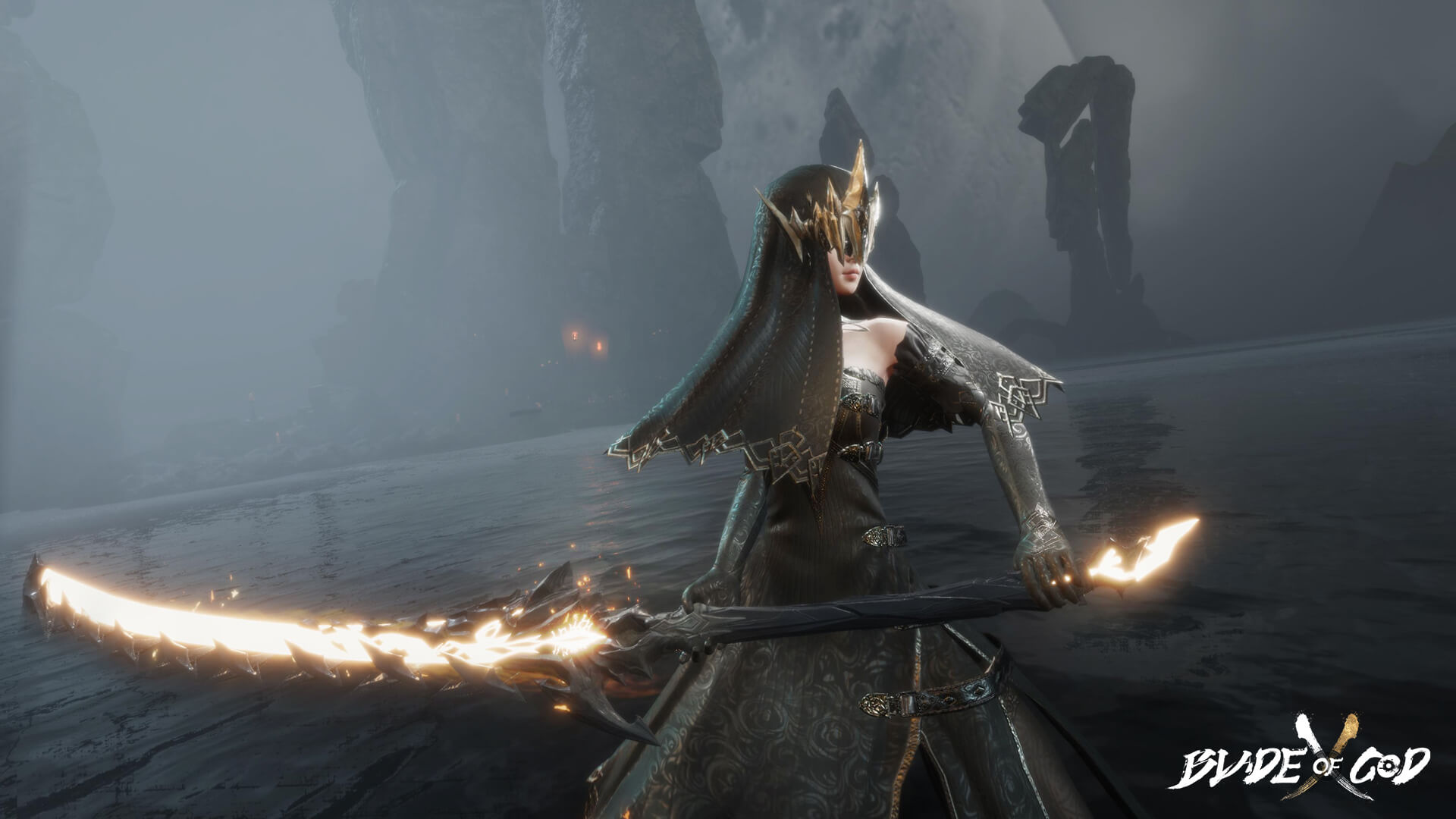
Under this trend, traditional game development teams have also begun actively exploring the integration of "AI Agent + Web3." For instance, the game studio behind Void Labs plans to introduce AI Agents into their upcoming AAA action role-playing game "Blade of God X" to enhance interactivity and diversity, thereby enriching player experience.
From Web2 to Web3: Exploring New Development Paths
Since 2006, the game studio behind Void Labs has been navigating the gaming industry, progressing from single-player games to MMORPGs, and then to mobile games. As globalization deepened, the team gradually recognized the limitations of the Web2 gaming market in terms of consumer power and international go-to-market (GMT) strategies, prompting them to seek new growth avenues. The maturation of blockchain technology offered a novel business model and user engagement framework, whose decentralized nature breaks through traditional geographical and platform barriers, enabling global players to participate in a fair and transparent environment.
Moreover, they argue that with advances in AI technology, "modes of production" are being redefined, making traditional monetary systems inadequate for these new relationships. Blockchain’s transparency, immutability, and decentralization provide an ideal foundation for supporting such emerging modes of production. When combined with AI, it not only enhances in-game interactions but also enables the construction of complex economic and social structures.
Therefore, based on their insights into future trends in the gaming industry, they began exploring Web3 game development years ago and launched Blade of God X in 2023—an AI-integrated action RPG. Recently, the game secured millions in funding from prominent institutions such as Delphi Ventures, OKX Ventures, Yield Guild Games, and Longhash Capital.
Blade of God X is an action RPG blending Norse mythology with Lovecraftian elements, featuring Souls-like gameplay mechanics. In the game, players take on the role of a reincarnated "Heir" who journeys from Muspelheim through mysterious realms like Voidom, Primglory, and Trurem. Players can choose paths of sacrifice or redemption to obtain divine artifacts or gain wisdom from gods such as All-Father Odin and the trickster Loki, ultimately reshaping their destiny. Additionally, Blade of God X is actively developing an AI Agent system to boost interactivity, with gameplay dynamically adapting to individual player behavior to deepen immersion and engagement.
Enhanced Training and Core Technology: Advancing AI Capabilities
Previously, research teams from Stanford University and Google introduced a project called "Stanford Town," where 25 virtual characters driven by large language models interacted and lived within a sandbox environment. This experiment sparked significant interest among both developers and players. Nevertheless, practical challenges remain, including high generation costs, slow response times, and repetitive content. The studio behind Void Labs recently announced plans to deploy AI Agents in the next testing phase of Blade of God X, aiming to overcome these hurdles.
In Blade of God X, AI Agent behaviors and decisions are controlled by models of varying scales. Smaller models handle simple tasks like combat actions, while larger ones manage complex strategies and decision-making. This scalable approach allows sophisticated game logic to run efficiently without compromising performance. Unlike conventional character control via limited state machines, Blade of God X introduces the concept of "reinforcement training," using neural networks to support AI decision-making, enhancing autonomy and efficiency while reducing predictability and exploitability. According to the team, over six million user behavior data points were used to build reinforcement learning environments across different playstyles, with hundreds of thousands of stack simulations conducted for each character class.
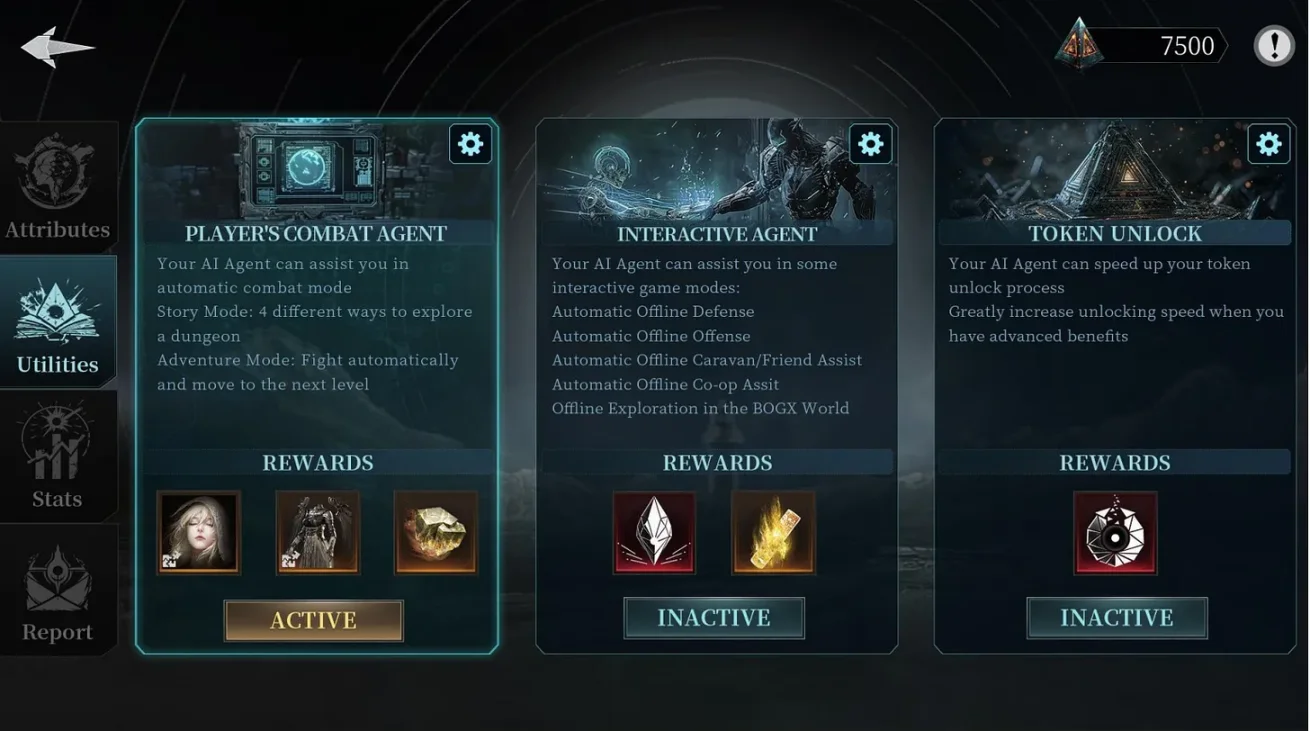
After reinforcement training, Blade of God X incorporates vision and language inputs into a 3D Lab system, enabling AI to more accurately perceive and understand the game environment, thus improving immersion. To reduce server load and significantly shorten response time, the optimized AI can run directly on users’ mobile device GPUs. Furthermore, to lower the barrier to entry, the studio has designed a customizable AI Agent dashboard, allowing players to adjust AI combat styles and skill configurations according to personal preferences—making AI behavior more aligned with individual players and enhancing personalized experiences. The team refers to this approach as "Play ARPG to Train AI Agents."
"Agents as a Service": Building Personalized Intelligent Agents
Rather than simply boosting AI capabilities through machine learning alone, the studio behind Void Labs prioritizes enhancing player experience and has introduced a new concept: "Agents as a Service." Under this model, AI Agents serve not only as assistants during active gameplay but also function as digital twins (AI Twins) when players are offline—behaving in ways highly reflective of the player's own thinking and decision patterns. For example, you could invite a friend’s AI Agent to assist in battle when they’re unavailable, and it would mimic their equipment choices, skills, combat habits, and damage output techniques, increasing realism and engagement. Moreover, leveraging blockchain technology, Blade of God X ensures all AI Agent activities are transparent and verifiable, generating tangible economic value. Even if your AI Agent completes a team mission and wins while you're offline, you still receive corresponding rewards. The team also revealed plans to develop a more advanced and interactive Group AI Agents feature in the next-generation system, enabling AI entities to collaborate and compete strategically.
At the core of "Agents as a Service" lies VLA (Visual Language Action)-based reinforcement training powered by large language models. This method integrates three dimensions—vision, language, and action—enabling AI to better identify objects and scenes, interpret and execute text commands, and make behavioral decisions based on visual and linguistic inputs within the game world.
Additionally, "Agents as a Service" operates as a continuous automated service typically running when players are offline or inactive, ensuring no disruption to normal gameplay. On the contrary, this model reduces MMORPGs’ dependence on simultaneous online presence while significantly boosting active users’ overall contribution to the game ecosystem. Looking ahead, the studio plans to integrate on-chain random number generation and other components to enable AI Agents to autonomously generate unique emotions and behavioral strengths, breaking free from content loops and realizing a truly scalable, value-backed AIGC model. Thus, in the third-generation Blade of God X AI Agent system, AI Agents will possess independent content creation abilities based on the game engine and asset library—achieving what they call "Generative AI Agents."
Does Web3 Really Need AI?
Although the integration of AI Agents is seen as one of the most promising innovations in crypto, it has sparked debate: Do these projects genuinely need AI, or are they merely chasing hype? The Void Labs team offers its perspective from the gaming domain.
First, from the standpoint of production relations, most current AI tools focus on boosting productivity—such as AI-powered problem solvers or image generators. However, there remains a lack of technologies or teams addressing the production relationships *between* AIs themselves, such as asset interactions between humans and AI or transactions and empowerment among different models. Void Labs emphasizes that Blade of God X aims to fill this gap by combining gaming, AI, and Web3—through mechanisms like tokenomics and AI Agent marketplaces.
Second, the impact of AI differs notably between Web2 and Web3 in terms of gameplay experience. In Web2, AI primarily serves to increase player retention and spending potential, yet personalization is limited due to centralized data processing and decision-making systems, lacking sufficient flexibility and customization. In contrast, AI Agents in Web3 can be individually tailored and optimized according to specific player needs. Each user effectively receives a unique AI Agent solution, maximizing individual experience in PVP scenarios. This is precisely what "Agents as a Service" delivers.
Furthermore, the team notes that today’s AI model networks suffer from centralization—each model competes to dominate vertical markets by improving computational efficiency and output accuracy. Instead, they envision a future where AI models evolve toward freely composable usage, operating independently based on their unique characteristics and market demand, unbound by centralized infrastructures. In such a decentralized network, every AI Agent could become an independent economic entity, earning rewards proportional to the value it generates. The team believes that Web3’s decentralization provides a new operational and value-distribution paradigm for AI Agents—one that may fundamentally transform our understanding of AI interaction and economic contribution.
Recent Developments
The first Alpha test of Blade of God X concluded successfully at the end of March, creating 2,445 accounts and distributing 3,660 access codes, earning a perfect 5.0 rating on the Epic Games Store Alpha test. The studio behind Void Labs announced that the upcoming second round of testing will fully deploy AI Agents, allowing players to interact with them across more than ten distinct scenarios. They emphasized that their exploration of AI Agents extends beyond the current stage—the ultimate goal is to create intelligent agents capable of interpreting game engines and logic. These AIs will leverage user-generated content tools and game engines to invent new gameplay modes and rules.
Overall, the Void Labs team envisions AI Agents not merely as in-game assistants, but as core technological forces capable of fully participating in game operations, driving content innovation, and advancing community development.
Join TechFlow official community to stay tuned
Telegram:https://t.me/TechFlowDaily
X (Twitter):https://x.com/TechFlowPost
X (Twitter) EN:https://x.com/BlockFlow_News
 @ChainFeedsxyz